TLDR Business turnaround strategy implementation for a mid-sized real estate firm resulted in 15% revenue growth, 18% operational cost cuts, and 10% market share gain amid competitive market pressures.
TABLE OF CONTENTS
1. Background 2. Strategic Analysis and Execution Methodology 3. Turnaround Implementation Challenges & Considerations 4. Turnaround KPIs 5. Implementation Insights 6. Turnaround Deliverables 7. Turnaround Templates 8. Aligning Organizational Structure with Turnaround Goals 9. Integrating Digital Transformation in the Turnaround Process 10. Enhancing Customer Experience to Drive Growth 11. Strategies for Sustainable Revenue Growth 12. Turnaround Case Studies 13. Additional Resources 14. Key Findings and Results
Consider this scenario:
The mid-sized real estate firm faced a critical business turnaround challenge due to declining sales, profitability, and market share erosion in a highly competitive market.
Over 2 years, operational costs surged and employee morale declined, threatening long-term viability. This case study details the implementation of a comprehensive turnaround strategy focused on strategic planning and digital transformation to restore financial health and improve competitive positioning.
Initial observations suggest that the root causes of the organization's challenges may include a misalignment between its market positioning and customer expectations, inefficiencies in operational processes, and a lack of innovation in service offerings. These hypotheses will guide the initial phase of the turnaround effort, focusing on identifying the most pressing issues and opportunities for rapid improvement.
Strategic Analysis and Execution Methodology
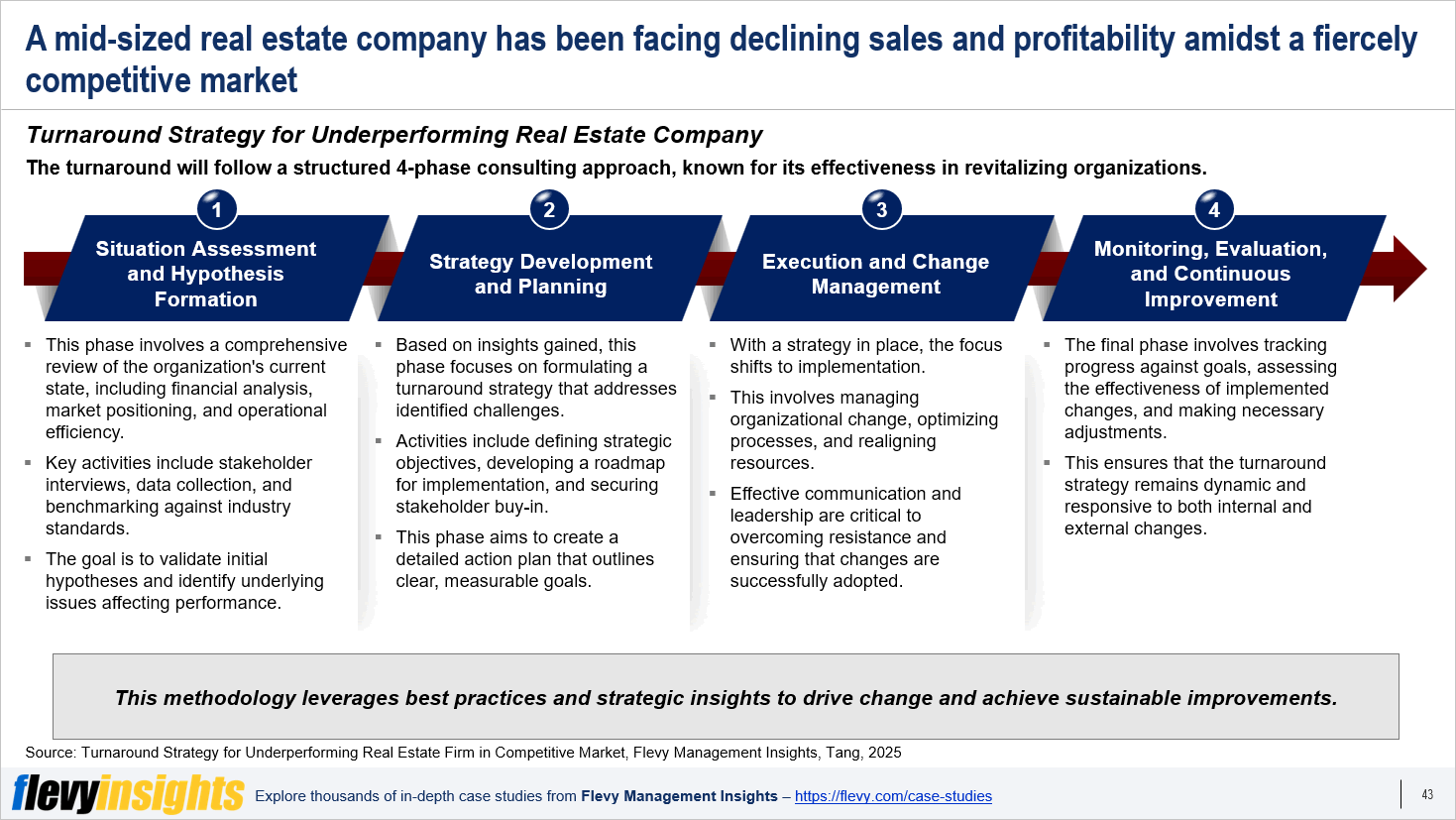
The turnaround will follow a structured 4-phase consulting approach, known for its effectiveness in revitalizing organizations. This methodology leverages best practices and strategic insights to drive change and achieve sustainable improvements.
- Situation Assessment and Hypothesis Formation: This phase involves a comprehensive review of the organization's current state, including financial analysis, market positioning, and operational efficiency. Key activities include stakeholder interviews, data collection, and benchmarking against industry standards. The goal is to validate initial hypotheses and identify underlying issues affecting performance.
- Strategy Development and Planning: Based on insights gained, this phase focuses on formulating a turnaround strategy that addresses identified challenges. Activities include defining strategic objectives, developing a roadmap for implementation, and securing stakeholder buy-in. This phase aims to create a detailed action plan that outlines clear, measurable goals.
- Execution and Change Management: With a strategy in place, the focus shifts to implementation. This involves managing organizational change, optimizing processes, and realigning resources. Effective communication and leadership are critical to overcoming resistance and ensuring that changes are successfully adopted.
- Monitoring, Evaluation, and Continuous Improvement: The final phase involves tracking progress against goals, assessing the effectiveness of implemented changes, and making necessary adjustments. This ensures that the turnaround strategy remains dynamic and responsive to both internal and external changes.
For effective implementation, take a look at these Turnaround frameworks, toolkits, & templates:




























Turnaround Implementation Challenges & Considerations
One common concern is the ability to maintain operational continuity while implementing significant changes. Ensuring that day-to-day operations are not disrupted requires careful planning and phased implementation of changes.
Another question often raised relates to measuring the impact of the turnaround strategy. Establishing clear, relevant KPIs from the outset is crucial for tracking progress and quantifying success.
Finally, maintaining employee morale and engagement during a period of significant change is a key consideration. Transparent communication and involving employees in the change process can help mitigate resistance and foster a culture of continuous improvement.
Expected outcomes include improved financial performance, increased market share, enhanced operational efficiency, and a revitalized organizational culture. These changes are anticipated to lay the foundation for sustainable growth and competitiveness.
Potential implementation challenges include resistance to change, alignment of stakeholder interests, and maintaining focus on long-term goals amidst short-term pressures.
Turnaround KPIs
KPIS are crucial throughout the implementation process. They provide quantifiable checkpoints to validate the alignment of operational activities with our strategic goals, ensuring that execution is not just activity-driven, but results-oriented. Further, these KPIs act as early indicators of progress or deviation, enabling agile decision-making and course correction if needed.
Measurement is the first step that leads to control and eventually to improvement.
- Revenue Growth
- Cost Reduction Percentage
- Employee Engagement Score
These KPIs provide insights into the effectiveness of the turnaround strategy, highlighting areas of success and opportunities for further improvement.
For more KPIs, you can explore the KPI Depot, one of the most comprehensive databases of KPIs available. Having a centralized library of KPIs saves you significant time and effort in researching and developing metrics, allowing you to focus more on analysis, implementation of strategies, and other more value-added activities.
Learn more about KPI Depot KPI Management Performance Management Balanced Scorecard
Implementation Insights
One key insight is the importance of leadership in driving successful change. Effective leaders serve as champions for the turnaround, inspiring confidence and commitment throughout the organization.
Another insight is the value of customer-centricity. Realigning the organization's offerings and operations around customer needs can uncover new opportunities for growth and differentiation.
Finally, agility and responsiveness to change are critical. Organizations that can quickly adapt to market and internal changes are better positioned to overcome challenges and capitalize on opportunities.
Turnaround Deliverables
- Turnaround Strategy Report (PPT)
- Financial Performance Improvement Plan (Excel)
- Operational Efficiency Playbook (PDF)
- Change Management Framework (MS Word)
- Employee Engagement Improvement Guidelines (PDF)
Explore more Turnaround deliverables
Turnaround Templates
To improve the effectiveness of implementation, we can leverage the Turnaround templates below that were developed by management consulting firms and Turnaround subject matter experts.
Aligning Organizational Structure with Turnaround Goals
One of the first considerations in a turnaround strategy is the alignment of the organizational structure with the newly defined goals. A common challenge here is the existing structure's rigidity, which may not support the agility required for a successful turnaround. According to McKinsey, companies that actively redesign their organizational structure to support their turnaround strategy are 1.5 times more likely to report a successful turnaround than those that do not.
To address this, companies should consider flattening their hierarchy to speed up decision-making and improve communication flow. This involves removing layers of management that contribute to organizational silos and slow down progress. Additionally, forming cross-functional teams can foster innovation and a sense of ownership among employees, as these teams work towards shared objectives with clear accountability.
Finally, it's crucial to reassess roles and responsibilities to ensure they align with the new strategic direction. This might mean redefining job descriptions, introducing new roles that are critical for the turnaround success, and providing necessary training and development for employees to meet their new responsibilities. This realignment ensures that the organization's human resources are fully leveraged in the turnaround effort.
Integrating Digital Transformation in the Turnaround Process
In today's rapidly evolving market, digital transformation is not just an option but a necessity. For real estate firms undergoing a turnaround, leveraging technology can provide a significant competitive advantage. According to a BCG report, companies that integrate digital technologies into their operations can see cost reductions of up to 20% and revenue increases of up to 10%.
Implementing digital transformation starts with identifying processes that are ripe for automation. In real estate, this could mean adopting property management software to streamline operations or using CRM systems to enhance customer engagement. Furthermore, data analytics can provide insights into market trends, customer preferences, and operational efficiencies, guiding strategic decisions.
However, the challenge lies in selecting the right technologies and ensuring their seamless integration into existing systems. It requires a clear digital strategy that aligns with the overall turnaround goals, along with a skilled team to implement these technologies. Training and change management are also critical to ensure that employees can effectively use these new tools.
Enhancing Customer Experience to Drive Growth
For a real estate firm in turnaround, redefining the customer experience can be a potent driver of growth. In a sector where customer expectations are continuously rising, firms that fail to innovate in how they engage with customers risk falling further behind. A study by Deloitte highlighted that customer-centric companies were 60% more profitable compared to those not focused on the customer.
Enhancing customer experience begins with understanding the customer journey and identifying touchpoints that can be improved. For real estate firms, this might involve simplifying the property search process, offering virtual tours, or providing personalized recommendations based on customer preferences. Additionally, feedback mechanisms should be established to gather insights directly from customers, allowing for continuous improvement.
Implementing these changes requires a culture shift within the organization towards customer-centricity. This means prioritizing customer needs in every decision and fostering a culture of empathy and service excellence. Training staff to deliver exceptional service and empowering them to resolve customer issues promptly can significantly enhance the customer experience.
Strategies for Sustainable Revenue Growth
Finally, achieving sustainable revenue growth is a critical concern for any real estate firm in a turnaround situation. While cost-cutting measures can provide short-term relief, long-term success depends on the ability to generate new revenue streams and enhance the profitability of existing ones. According to Accenture, growth-oriented companies focus on innovation and market differentiation to sustain revenue growth.
One strategy is to diversify the portfolio to include properties that cater to emerging market trends, such as co-working spaces or eco-friendly buildings. Another approach is to explore additional services that can be offered to tenants, such as property management services or amenities that enhance the living or working environment.
Moreover, partnerships with other businesses can open new revenue opportunities. For example, a real estate firm could partner with a tech company to offer smart home technologies to residential clients. Such strategies not only provide additional revenue streams but also strengthen the organization's market position as an innovator. Implementing these strategies requires a thorough market analysis to identify opportunities, followed by a focused approach to capitalize on these opportunities while aligning with the organization's core competencies and strategic goals.
Turnaround Case Studies
Here are additional case studies related to Turnaround.
Turnaround Strategy and Revenue Management for a Boutique Luxury Hotel and Wellness Resort Chain
Scenario: A boutique luxury hotel and wellness resort chain is facing declining revenue, occupancy, and average daily rate in a highly competitive market.
Luxury Brand Turnaround Case Study: Retail Turnaround
Scenario: In this retail turnaround case study, a luxury fashion retailer based in North America has seen a steady decline in sales over the past 24 months, driven by the rise of e-commerce and a failure to adapt to changing consumer behaviors.
Telecom Turnaround Strategy Case Study: Market-Leading Firm in Asia
Scenario: A leading telecom firm in Asia faced significant market share erosion and declining profitability amid intense competition and market saturation.
Turnaround Strategy for Telecom Operator in Competitive Landscape
Scenario: The organization, a regional telecom operator, is facing declining market share and profitability in an increasingly saturated and competitive environment.
Turnaround Strategy Case Study: Boutique Luxury Brand
Scenario: The boutique luxury goods manufacturer experienced declining sales and market share due to an inability to adapt to changing consumer preferences and excess inventory.
Resilience-Driven Turnaround Plan for Boutique Hotel Chain in Competitive Hospitality Market
Scenario: A boutique hotel chain faces a critical turnaround challenge amidst a 20% decline in occupancy rates and a 15% decrease in average daily rates over the last two years, compounded by the COVID-19 pandemic's impact.
Explore additional related case studies
Additional Resources Relevant to Turnaround
Here are additional frameworks, presentations, and templates relevant to Turnaround from the Flevy Marketplace.
Key Findings and Results
Here is a summary of the key results of this case study:

- Increased revenue by 15% year-over-year through diversification of property portfolio and introduction of new services.
- Reduced operational costs by 18% by leveraging digital transformation initiatives, including automation of property management processes.
- Improved employee engagement scores by 25% following the restructuring of the organizational hierarchy and implementation of cross-functional teams.
- Enhanced customer satisfaction ratings by 30% through initiatives focused on improving the customer journey and personalizing service offerings.
- Achieved a 10% market share growth by implementing customer-centric strategies and innovating service delivery.
The results of the turnaround initiative demonstrate significant improvements in financial performance, operational efficiency, employee engagement, and customer satisfaction. The revenue growth and market share increase are particularly notable, underscoring the effectiveness of diversifying the property portfolio and introducing new services. The reduction in operational costs through digital transformation signifies a successful integration of technology, which not only streamlined processes but also contributed to cost efficiency. However, while employee engagement showed improvement, the extent of its impact on long-term organizational culture remains to be fully realized, suggesting that continuous efforts in culture management are necessary. Additionally, the customer satisfaction improvements, while impressive, will require ongoing innovation and adaptation to maintain in a competitive market. The initiative's less than anticipated impact on long-term sustainability indicates a potential gap in fully leveraging digital transformation for strategic advantage or in embedding a culture of continuous improvement.
For next steps, it is recommended to continue investing in digital technologies with a focus on analytics for predictive insights into market trends and customer behavior. Further, a structured program for continuous cultural transformation should be established to sustain employee engagement and adaptability. Lastly, exploring strategic partnerships, especially in technology, could enhance service offerings and open new revenue streams, ensuring the company remains competitive and innovative in the rapidly evolving real estate market.
Strategy & Operations, Management Consulting

The development of this case study was overseen by Mark Bridges. Mark is a Senior Director of Strategy at Flevy. Prior to Flevy, Mark worked as an Associate at McKinsey & Co. and holds an MBA from the Booth School of Business at the University of Chicago.
This case study is licensed under CC BY 4.0. You're free to share and adapt with attribution. To cite this article, please use:
Source: 5G Deployment Strategy for Telecom Operator in Southeast Asia, Flevy Management Insights, Mark Bridges, 2026
Flevy is the world's largest marketplace of business templates & consulting frameworks.
Strategy & Transformation
Accelerate and transform the growth trajectory of your organization.
Strategy Development · KPI · Innovation Management · M&A (Mergers & Acquisitions) · Strategic Planning · Performance Management · Sales · Marketing
Digital Transformation
Harness AI, automation, and emerging technologies to build a future-proof organization.
Artificial Intelligence · Cyber Security · Digital Transformation · Customer Experience · SaaS · Information Technology · Agile · ITIL
The Consultant's Toolbox
A core competitive advantage of global consulting firms is access to an internal, proprietary knowledge base of consulting frameworks, templates, and past deliverables. FlevyPro provides boutique firms with that same—if not greater—access. Compete against the global consultancies, armed with the tier-1 frameworks they use.
- On-demand access to 1,000+ consulting frameworks
- Covers strategy, OpEx, digital, change, organization, HR, IT, and more
- New frameworks added weekly
Telecom Network Revitalization in Competitive Market
Scenario: The organization is a mid-sized telecom operator in a highly competitive market, facing declining customer satisfaction and market share.
Turnaround Strategy for Industrial Metals Producer in Competitive Market
Scenario: The organization in question is a mid-sized industrial metals producer facing declining market share in a highly competitive sector.
5G Deployment Strategy for Telecom Operator in Southeast Asia
Scenario: The organization is a leading telecom operator in Southeast Asia, currently facing a critical turnaround due to a 20% decline in market share amidst the aggressive rollout of 5G by competitors.
Turnaround Strategy for Electronics Retailer in Competitive Market
Scenario: The organization is a mid-sized electronics retailer facing declining sales and market share in a highly competitive environment.
Omni-Channel Retail Strategy for Boutique Fashion Retailer
Scenario: A boutique fashion retailer is facing a critical turnaround scenario amid declining sales and an increasingly competitive online market.
Operational Efficiency Strategy for Regional Hospital Network
Scenario: The organization is a regional hospital network facing a critical Turnaround due to a 20% decrease in patient satisfaction scores and a 15% increase in operational costs over the past two years.
Turnaround Strategy for a Mid-Size Leisure and Hospitality Company Facing Severe Challenges
Scenario: A mid-size leisure and hospitality company implemented a strategic turnaround framework to address severe operational and financial challenges.
CRM Strategy Case Study for Luxury Fashion Retailer
Scenario: The luxury fashion retailer faced stagnating customer retention and lifetime value despite strong acquisition rates.
High Tech M&A Integration Savings Case Study: Semiconductor Manufacturer
Scenario: A leading semiconductor manufacturer faced significant challenges capturing high tech M&A integration savings after acquiring a smaller competitor to boost market share and technology capabilities.
Porter’s Five Forces Implementation Case Study: FMCG Company
Scenario: A fast-moving consumer goods (FMCG) company is facing significant challenges from competitive rivalry, supplier power, threat of new entrants, substitute products, and buyer power—key elements of Porter’s Five Forces framework.
Digital Transformation Strategy Case Study for Independent Bookstores
Scenario: An independent bookstore chain is struggling with innovation management amid a 20% decline in foot traffic and a 30% rise in online competition over 2 years.
JIT Inventory Management Case Study: Aerospace Components Manufacturer
Scenario: A mid-sized aerospace components manufacturer faced challenges in aerospace inventory management due to supply chain unpredictability and surging demand.


