
Crafted by BCG and EY Consultants and Adopted by Fortune 500 Titans: The Ultimate Revenue Growth Strategy Framework provides a ready to use toolkit for Skyrocketing Sales and Sustained Profitability.
Editor Summary
The Ultimate Revenue Growth Strategy Guide is a 44-slide PowerPoint framework with a supplemental Word reference (PPTX + DOCX) developed by BCG and EY consultants, presenting 16 strategies across 5 revenue levers: Sales & Distribution, Marketing, Pricing, Product & Market Development, and Customer Development.
Read moreIncludes templates such as a sales territory planning template, sales compensation plan framework, performance marketing budget template, customer segmentation model, upselling/cross-selling playbook, and loyalty program design guide. Used by corporate executives, sales and marketing leaders, business consultants, and product managers for strategic planning, workshops, and executive reviews; sold as a digital download on Flevy.
Use this guide when an organization must set or recalibrate revenue targets, align sales and marketing efforts, redesign sales motions, or plan pricing and product launches for the coming fiscal year.
Corporate executives developing company-wide revenue targets and evaluating growth opportunities during strategic planning sessions.
Sales leaders redesigning territory assignments and compensation plans to improve coverage and quota attainment.
Marketing leaders allocating performance marketing budgets and building account-based marketing plans targeting high-value accounts.
Product managers planning new product launches or market entries and aligning go-to-market motions.
The guideās lever-based, strategy-to-execution approach mirrors consulting practice used at BCG and EY by linking identified levers to templates, metrics, and assigned accountability.
In a business landscape where growth is THE key measure of success, driving increases in your revenue and profits isn't just desirable, it's imperative. The Ultimate Revenue Growth Strategy Framework, developed by seasoned consultants from BCG and EY, and trusted by Fortune 500 giants, serves as your master plan to drive both immediate and enduring revenue growth.
Key Benefits: - Holistic Alignment: Bridge the realms of marketing, sales, and product around a unifying objective: driving revenue and elevating profitability. - Versatile Strategies: Discover a spectrum of 16 potent strategies spread across 5 crucial levers, each tailored to propel your revenue growth journey. - Actionable Insights: Derive actionable insights from a comprehensive template and a detailed reference guide, empowering you to craft and convey your revenue growth narrative compellingly.
Framework Breakdown: 1. Sales & Distribution:
• Perfect your sales territory planning, align compensation with company aspirations, harness sales automation, and explore new partnerships and channels to widen your sales horizon and entice new customers.
2. Marketing:
• Dive into performance marketing for a swift uplift in customer engagement, experiment with growth hacking techniques, personalize your campaigns with account-based marketing, and foster an enduring brand connection to differentiate in the marketplace.
3. Pricing:
• Employ strategic pricing—from short-term discounts to premium pricing and bundling—to not only attract a broader customer base but also maximize revenue and margin per unit sold.
4. Product & Market Development:
• Unleash new revenue streams by introducing innovative products aligned with your core competencies, and venture into fresh market territories with your existing product line.
5. Customer Development:
• Engage in up-selling and cross-selling, design a captivating loyalty program, and offer customization to enhance customer satisfaction and loyalty, thereby fostering revenue growth.
Ready-to-Use Templates:
• The encompassed PowerPoint template provides a structured canvas to articulate your chosen strategies from this toolkit, while the accompanying Word document serves as an in-depth reference guide, making the process of strategizing for revenue growth seamless and effective.
Adopt the Ultimate Revenue Growth Strategy Framework to not merely survive but thrive in the competitive market terrain. With each strategy you adopt, step closer to the track of robust revenue growth and sustained profitability, mirroring the success of Fortune 500 trailblazers.
The guide begins by addressing six critical questions to shape your revenue growth strategy, ensuring alignment with your business goals and current standing. It also delves into both traditional and innovative approaches for goal alignment, role-specific incentives, and advanced analytics-based target setting.
Got a question about the product? Email us at support@flevy.com or ask the author directly by using the "Ask the Author a Question" form. If you cannot view the preview above this document description, go here to view the large preview instead.
MARCUS OVERVIEW
This synopsis was written by Marcus [?] based on the analysis of the full 44-slide presentation.
Executive Summary
The Ultimate Revenue Growth Strategy Guide is a consulting-grade presentation crafted by BCG and EY consultants, designed to equip organizations with a structured approach to drive revenue and profitability growth. This guide offers a comprehensive toolkit that integrates marketing, sales, and customer experience initiatives, enabling teams to align around clear business goals. By leveraging proven frameworks and actionable insights, executives will be empowered to implement effective revenue growth strategies that yield sustainable results.
Who This Is For and When to Use
• Corporate executives seeking to enhance revenue growth strategies
• Sales and marketing leaders focused on aligning teams for maximum impact
• Business consultants advising clients on revenue optimization
• Product managers looking to develop new offerings and market segments
Best-fit moments to use this deck:
• Strategic planning sessions aimed at setting revenue targets for the upcoming fiscal year
• Workshops focused on aligning sales and marketing initiatives
• Training sessions for teams on effective revenue growth tactics
• Executive reviews assessing current revenue performance and future opportunities
Learning Objectives
• Define key revenue growth goals and metrics for the organization
• Build a structured revenue growth strategy using identified levers
• Establish accountability across teams for executing revenue initiatives
• Identify and leverage customer insights to enhance sales and marketing efforts
• Develop actionable plans for upselling and cross-selling opportunities
• Implement performance marketing strategies for immediate revenue boosts
Table of Contents
• Introduction to Revenue Growth Strategy (page 2)
• Key Questions for Strategy Development (page 3)
• Revenue Growth Levers Overview (page 4)
• Sales & Distribution Strategies (page 5)
• Marketing Strategies (page 14)
• Pricing Strategies (page 23)
• Product & Market Development Strategies (page 30)
• Customer Development Strategies (page 35)
• Conclusion and References (page 42)
Primary Topics Covered
• Revenue Growth Strategy - A structured plan to increase revenue through short-term and long-term initiatives, aligning marketing, sales, and customer experience efforts.
• Sales & Distribution - Strategies focused on optimizing sales territories, redesigning compensation plans, and enabling sales teams for effective selling.
• Marketing - Approaches such as performance marketing, growth hacking, and account-based marketing aimed at maximizing customer engagement and sales.
• Pricing - Techniques including discount campaigns, premium pricing, and bundling to enhance revenue generation.
• Product & Market Development - Strategies for launching new products and entering new customer segments or geographies.
• Customer Development - Tactics for upselling, cross-selling, and implementing loyalty programs to deepen customer relationships.
Deliverables, Templates, and Tools
• Sales territory planning template for data-driven territory optimization
• Sales compensation plan framework aligning incentives with company goals
• Performance marketing budget template for tracking ROI on campaigns
• Customer segmentation model for targeted marketing efforts
• Upselling and cross-selling playbook for sales teams
• Loyalty program design guide to enhance customer retention
Slide Highlights
• Overview of revenue growth strategy with key levers illustrated
• Visual representation of sales territory planning and its impact on revenue
• Metrics dashboard for tracking sales performance and customer satisfaction
• Framework for implementing performance marketing strategies
• Detailed execution plan for upselling and cross-selling initiatives
Potential Workshop Agenda
Revenue Growth Strategy Alignment Session (90 minutes)
• Discuss current revenue goals and performance metrics
• Identify key levers for revenue growth and align on priorities
• Develop action plans for each lever with assigned responsibilities
Sales Enablement Workshop (60 minutes)
• Review sales compensation plans and territory assignments
• Train teams on effective upselling and cross-selling techniques
• Introduce sales enablement tools and resources
Marketing Strategy Development Session (90 minutes)
• Brainstorm performance marketing tactics and budget allocations
• Create account-based marketing plans targeting high-value customers
• Establish metrics for measuring marketing effectiveness
Customization Guidance
• Tailor the revenue growth strategy framework to reflect specific business goals and market conditions
• Adjust sales territory plans based on regional performance and customer demographics
• Modify marketing strategies to align with brand positioning and customer insights
• Incorporate company-specific metrics into performance tracking dashboards
Secondary Topics Covered
• Importance of aligning sales and marketing efforts for revenue growth
• Role of customer experience in driving repeat purchases
• Strategies for leveraging technology in sales and marketing
• Best practices for measuring and optimizing revenue growth initiatives
Topic FAQ
What are the main levers of a revenue growth strategy?
Revenue growth strategies are commonly organized across 5 primary levers: sales & distribution, marketing, pricing, product & market development, and customer development. Each lever groups related tactics such as territory optimization, performance marketing, pricing tactics, new product launches, and upsell/cross-sell programs, reflecting a five-lever structure.
How do I structure a revenue growth plan for the next fiscal year?
Start by assessing current revenue, profitability, and growth metrics, then set specific targets for the next year and the next 3ā5 years. Identify which levers to prioritize, define initiatives and KPIs, assign ownership across teams, and implement tracking dashboards for metrics like revenue per rep and target attainment, ending with explicit targets for next year and next 3ā5 years.
What metrics should sales leaders track to measure revenue performance?
Sales leaders should track revenue per rep, sales target attainment, and customer-centric measures such as Net Promoter Score (NPS). Additional financial metrics like customer lifetime value (CLV) support strategic decisions. These metrics provide a mix of productivity, achievement, and satisfaction measurement, with Net Promoter Score (NPS) commonly used for customer satisfaction.
How should I optimize sales territories to improve coverage and fairness?
Use a data-driven approach to balance territories based on criteria like account potential, geography, and rep capacity to ensure fair account distribution and improved repācustomer matching. Practical tools for this include a sales territory planning template; Flevyās Ultimate Revenue Growth Strategy Guide specifically includes a sales territory planning template.
How can marketing teams use performance marketing to boost revenue quickly?
Performance marketing focuses on measurable outcomesāimpressions, leads, and conversionsāallowing teams to allocate budget toward tactics with clear ROI. Teams should define target metrics, test channels, and track campaign ROI using a budget and reporting template; Flevyās Ultimate Revenue Growth Strategy Guide includes a performance marketing budget template.
What should I look for when buying a revenue growth strategy toolkit for my leadership team?
Prioritize toolkits that show consulting pedigree, clear methodology across key levers, and ready-to-use templates for execution (territory planning, compensation, budgeting, segmentation, upsell playbooks). Also check format and extensibility; an example is Flevyās Ultimate Revenue Growth Strategy Guide, which provides 16 strategies across 5 levers and a 44-slide PPTX plus supplemental DOCX.
I need to restructure pricingāwhat pricing tactics should I consider?
Typical pricing tactics include short-term discount campaigns to drive volume, premium pricing to capture higher margins, and bundling to increase average sale value. These approaches should be evaluated for margin impact and customer behavior; common pricing techniques covered include discount campaigns, premium pricing, and bundling.
Are paid revenue strategy templates worth the investment compared with free resources?
Evaluate paid templates by their practical deliverables: inclusion of a ready PowerPoint canvas, an in-depth reference guide, author credibility, and templates youāll actually use. For example, Flevyās Ultimate Revenue Growth Strategy Guide bundles a PPTX template and supplemental Word reference and documents 16 strategies across 5 levers.
Document FAQ
These are questions addressed within this presentation.
What is a revenue growth strategy?
A revenue growth strategy is a plan of action designed to increase revenue through both short-term initiatives, like price discounting, and long-term strategies, such as product branding.
How do I determine our revenue growth goals?
Start by assessing current revenue, profitability, and growth metrics, then set specific targets for the next year and the next 3-5 years based on market potential.
What are the key levers for driving revenue growth?
The key levers include sales and distribution, marketing, pricing, product and market development, and customer development strategies.
How can we optimize our sales territory planning?
Utilize a data-driven approach to balance territories based on multiple criteria, ensuring fair account distribution and better customer-sales rep matching.
What metrics should we track for sales performance?
Key metrics include revenue per rep, sales target attainment, and customer satisfaction scores, such as Net Promoter Score (NPS).
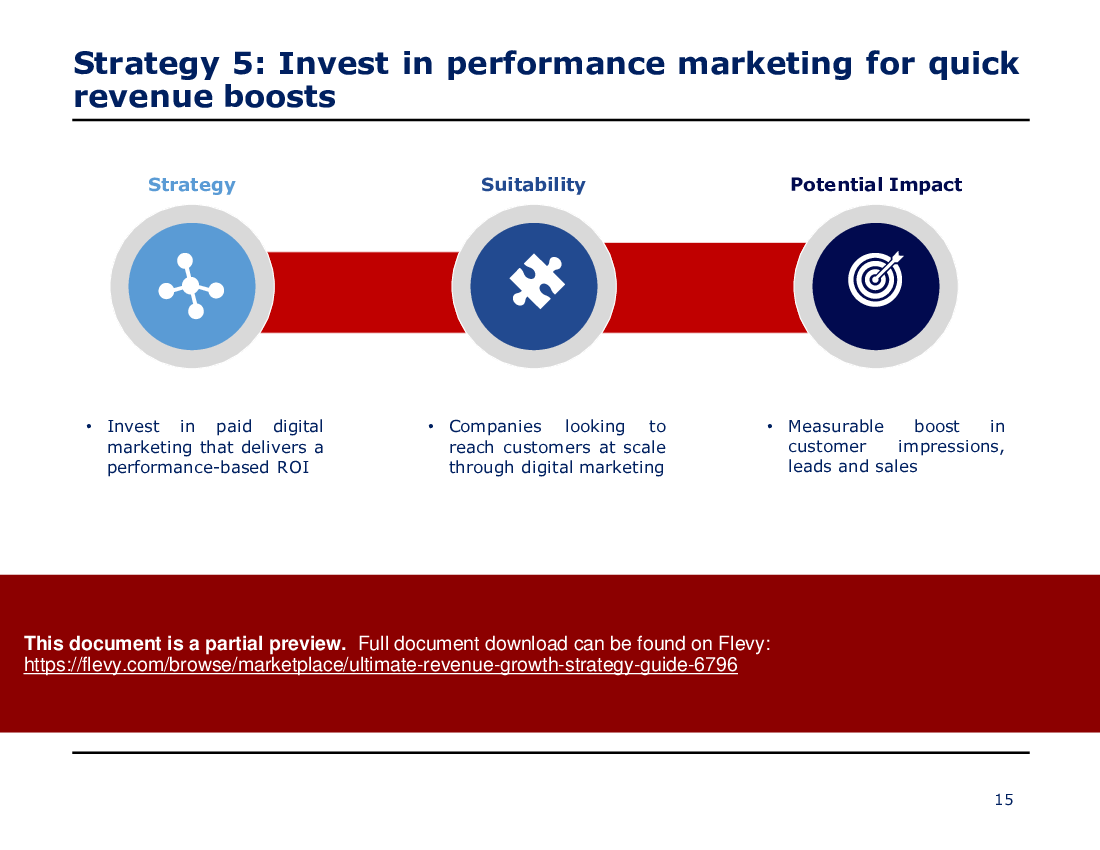
How can performance marketing boost revenue?
Investing in performance marketing allows companies to reach customers at scale, providing measurable boosts in impressions, leads, and sales.
What is account-based marketing?
Account-based marketing focuses on targeting a few key accounts with personalized campaigns tailored to their specific attributes and needs.
How can we implement a successful loyalty program?
Design a loyalty program that engages customers, encourages repeat purchases, and tracks metrics like retention rate and customer lifetime value.
What are the risks of discount pricing strategies?
While discount pricing can attract price-sensitive customers, overuse may condition customers to wait for discounts, harming long-term revenue.
How do we ensure successful product launches?
Conduct market research to identify customer needs, and ensure that new products align with the companyās strengths and capabilities.
Glossary
• Revenue Growth Strategy - A structured approach to increasing revenue through various initiatives.
• Sales Territory Planning - The process of allocating sales resources to optimize coverage and performance.
• Performance Marketing - Marketing strategies focused on measurable outcomes and ROI.
• Account-Based Marketing - A targeted approach to marketing that focuses on specific high-value accounts.
• Net Promoter Score (NPS) - A metric used to gauge customer loyalty and satisfaction.
• Customer Lifetime Value (CLV) - The total revenue expected from a customer over their relationship with a company.
• Upselling - Encouraging customers to purchase a higher-priced version of a product.
• Cross-Selling - Suggesting additional products to customers based on their original purchase.
• Loyalty Program - A structured marketing strategy designed to encourage repeat business.
• Pricing Strategy - The method used to price products to maximize revenue and market share.
• Product Development - The process of creating new products to meet market demands.
• Market Segmentation - The practice of dividing a target market into smaller, more defined categories.
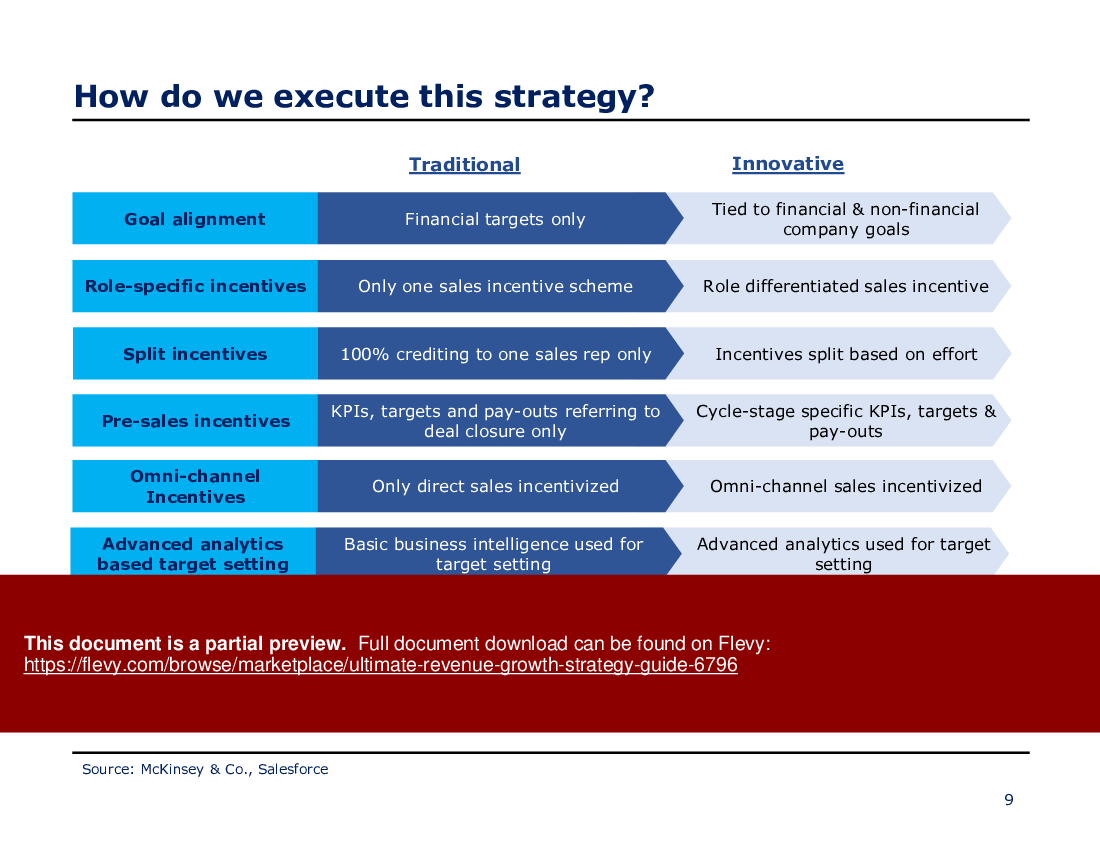
This PPT slide outlines a comparative analysis of traditional versus innovative sales and incentive strategies. Traditional methods focus on financial targets, while innovative strategies integrate both financial and non-financial goals, promoting a holistic performance view. In "Role-specific incentives," traditional approaches use a single incentive scheme, whereas innovative methods advocate for tailored incentives that align with individual roles. The "Split incentives" section contrasts traditional models, which credit 100% of sales to one representative, with innovative models that promote collaboration by splitting incentives based on effort. For "Pre-sales incentives," traditional models rely on basic KPIs, while innovative approaches incorporate cycle-stage specific KPIs for more effective sales strategies. "Omni-channel incentives" evolve from incentivizing only direct sales to recognizing the importance of multiple sales avenues. Lastly, "Advanced analytics based target setting" emphasizes the need for data-driven decision-making in modern sales strategies, focusing on key performance indicators like year-over-year sales growth and employee satisfaction.
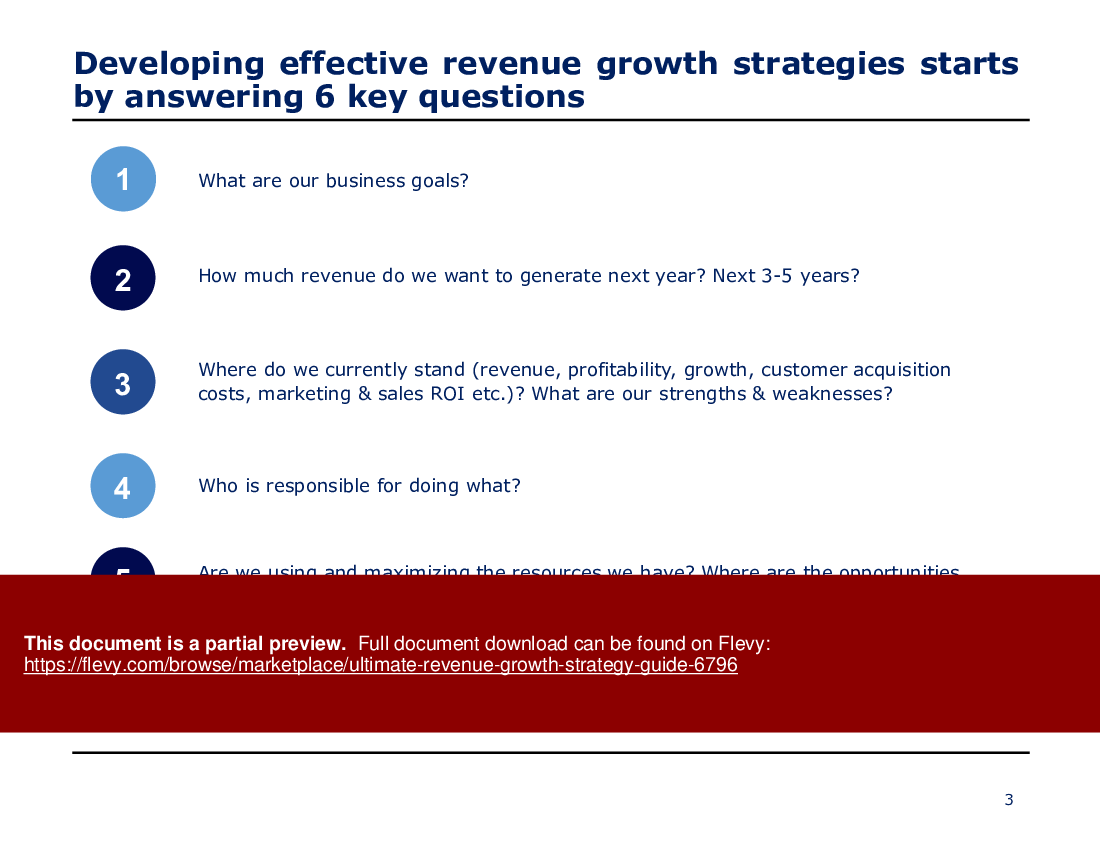
This PPT slide outlines a structured approach to formulating revenue growth strategies through 6 essential questions. The first question focuses on defining business goals, aligning revenue strategies with organizational aims. The second question emphasizes setting specific revenue targets for the upcoming year and the next 3 to 5 years, vital for strategic planning. The third question assesses the current state of the business using key metrics like revenue, profitability, and customer acquisition costs, encouraging a SWOT analysis to identify strengths and weaknesses. The fourth question addresses accountability by clarifying roles and responsibilities within the team. The fifth question reviews resource utilization to identify inefficiencies and optimize operations. Finally, the sixth question identifies necessary resources, including employees, systems, and funding, ensuring a comprehensive approach to revenue growth.
This PPT slide outlines a strategic framework for effective pricing strategy execution, starting with Value-Price Alignment to ensure product pricing reflects perceived value. Four key components support this strategy: Attractive Visual Identity for customer attention and brand recognition, Focused Brand Messaging for clear communication of the value proposition, Aura of Exclusivity to enhance desirability and justify premium pricing, and Avoiding Discounted Promotions to maintain price integrity. Metrics for measuring effectiveness include Price Premium, Average Revenue Per User, Total Revenue, and Price Elasticity, which quantifies the relationship between price changes and demand, offering insights into customer behavior and revenue impacts. This framework guides organizations in refining pricing strategies to enhance revenue growth while maintaining strong brand positioning.
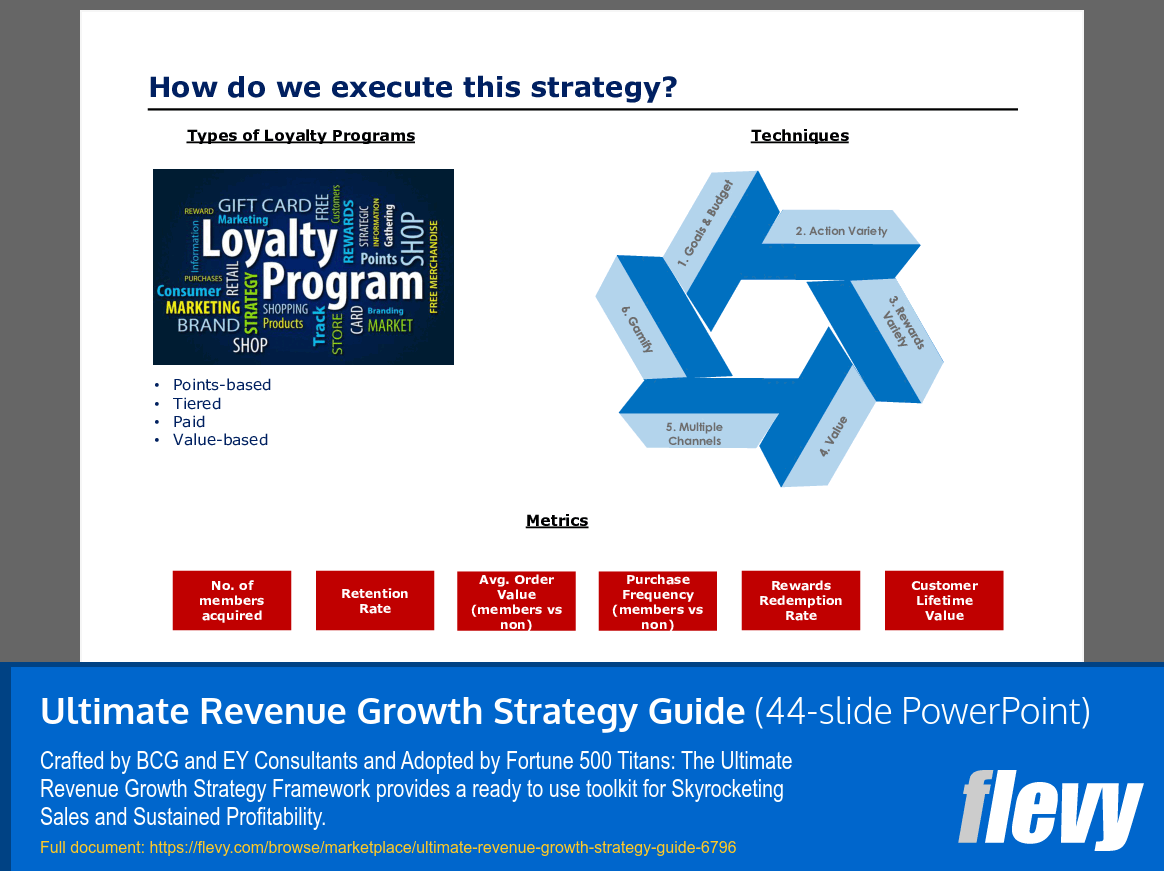
This PPT slide outlines a strategic framework for loyalty programs, detailing 4 types: points-based, tiered, paid, and value-based. Points-based programs reward purchases, tiered programs incentivize higher spending, paid programs require upfront investment for exclusive benefits, and value-based programs enhance customer experience. The hexagonal model presents 6 execution techniques: cost considerations, action variety, rewards variety, value proposition, multi-channel engagement, and customer segmentation. These ensure loyalty programs are financially viable and resonate with diverse customer segments. Essential performance metrics include member acquisition, retention rate, average order value, purchase frequency, rewards redemption rate, and customer lifetime value, enabling data-driven decision-making for program effectiveness.
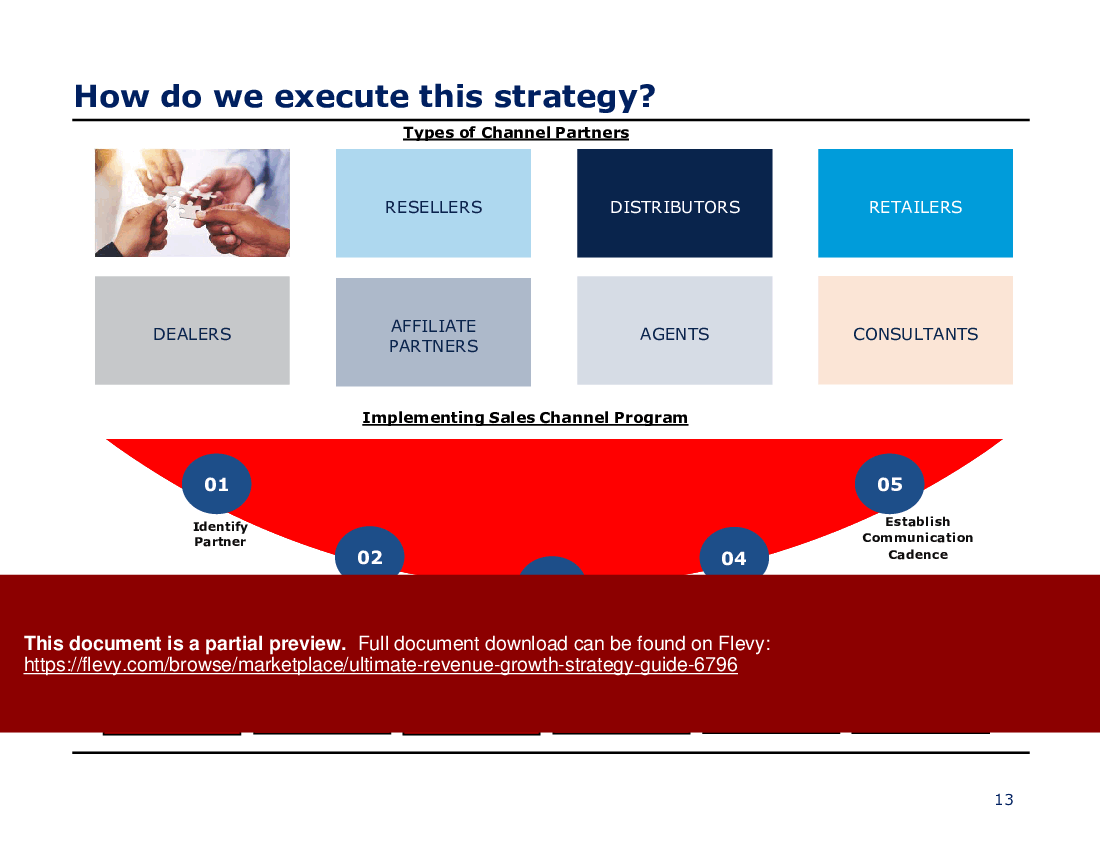
This PPT slide outlines a structured approach to executing a sales strategy through channel partners, categorized as Resellers, Distributors, Retailers, Dealers, Affiliate Partners, Agents, and Consultants. The five-step process for establishing a sales channel program includes: identifying suitable partners to align with product promotion, discovering partner capabilities for mutual benefit, establishing clear goals and an action plan, providing training to equip partners, and establishing a communication cadence for ongoing support. Key metrics for measuring success include the number of partners, average value of partner deals, partner sales win rate, average partner sales cycle, and partner attrition rate. Tracking these metrics enables continuous improvement and strategy optimization.
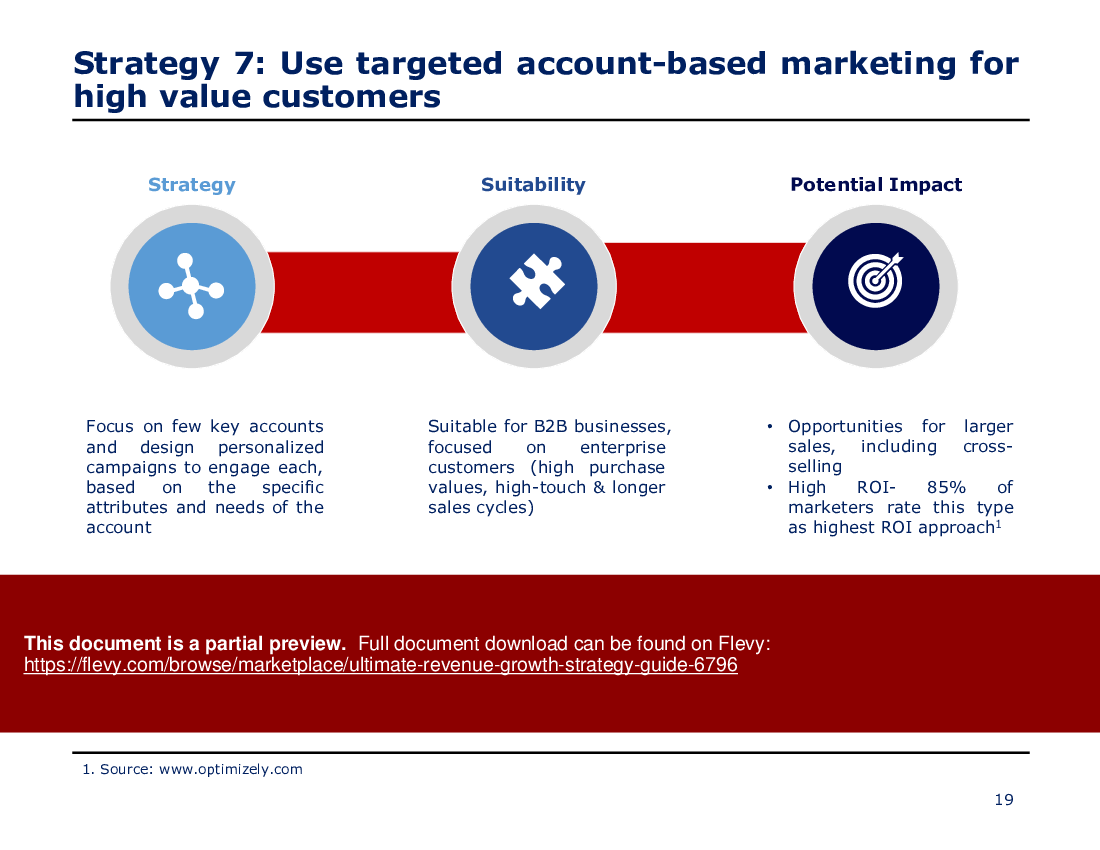
This PPT slide outlines a structured approach to executing a revenue growth strategy. It begins with defining the ideal customer profile, focusing on attributes such as location, industry, size, revenues, and pain points for effective market segmentation. Next, it suggests shortlisting potential customers based on intent and account potential, analyzing factors indicating engagement likelihood to prioritize high-return efforts. The third point emphasizes drafting detailed account plans that align sales and marketing efforts towards common objectives. Attracting contacts involves leveraging personalized inbound content, exclusive events, and targeted communications to foster engagement. Building relationships with key decision-makers is vital for influencing the sales process and improving conversion rates. Finally, tracking key metricsāinteraction frequency, average deal closure period, revenue from new target accounts, and sales win ratesāenables performance assessment and data-driven strategy adjustments.
This PPT slide outlines a structured approach to executing a strategy with 5 key components. "Know your Audience" emphasizes understanding the target demographic for effective messaging. "Choose your Core Values" highlights the alignment of organizational principles with customer expectations, shaping brand identity. "Create your Big Idea" suggests a compelling central concept to drive engagement and differentiate the brand. "Communicate your story" underscores the importance of narrative in brand strategy, forging emotional connections to enhance loyalty. Lastly, "Be Consistent" stresses maintaining uniformity across channels to build trust and reinforce brand identity. Metrics such as Brand Awareness, Brand Reputation, Brand Positioning, and Employee Engagement are included to measure strategy effectiveness.
This PPT slide presents a framework for revenue growth strategies organized around 5 key levers: Sales & Distribution, Marketing, Pricing, Product & Market Development, and Customer Development.
Sales & Distribution optimizes sales processes through territory planning, compensation structures, and partnerships to align sales teams with market opportunities.
Marketing focuses on performance marketing, growth hacking, account-based marketing, and brand positioning to enhance targeted outreach and brand awareness.
Pricing strategies include discounts, premium pricing, and bundling to attract diverse customer segments and maximize revenue potential, indicating flexibility to market conditions.
Product & Market Development emphasizes innovation and personalization through new product development and tailored offerings to meet evolving customer needs.
Customer Development enhances relationships via upselling, cross-selling, loyalty programs, and customization to deepen engagement and increase customer lifetime value.
This comprehensive approach integrates strategic elements for sustainable revenue growth.
This PPT slide outlines various discount strategies to enhance sales execution and optimize revenue generation. Quantity Discounts incentivize bulk purchases through tiered pricing or promotions like "buy one, get one free," increasing average transaction size and fostering customer loyalty. Time and Date Linked Discounts leverage urgency with limited-time offers tied to specific events, driving immediate sales. Loyalty Discounts reward frequent buyers, enhancing customer lifetime value. Loss Discounts attract customers by selling products at a loss to drive traffic, with the expectation of upselling higher-margin items. Location Discounts promote sales in specific geographic areas to manage stock levels. New User Discounts convert first-time buyers with incentives on initial purchases, expanding the customer base. Key performance indicators for these strategies include discount usage rate, revenue from discounted orders, average order value, and new customer acquisition.
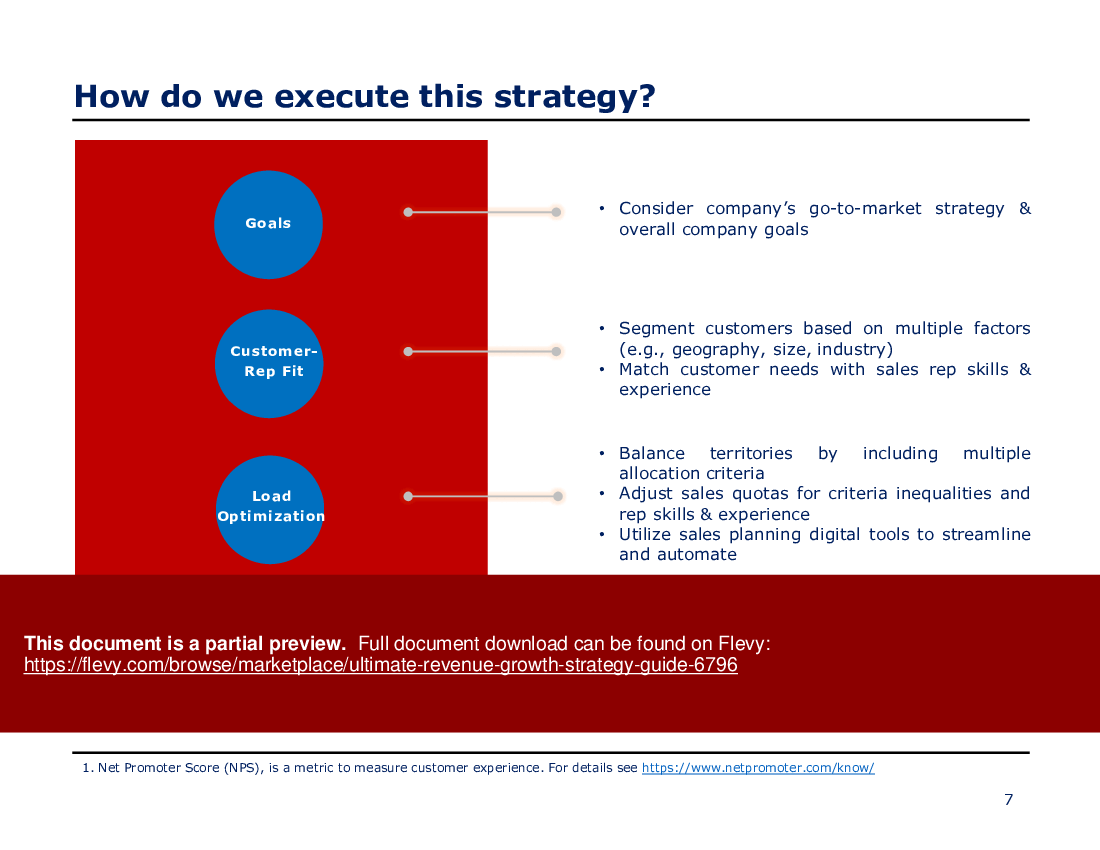
This PPT slide outlines a strategic approach to redesigning sales compensation plans, focusing on 3 key areas: Strategy, Suitability, and Potential Impact. The Strategy section emphasizes aligning compensation plans with company goals and sales roles to drive desired behaviors, while maintaining an industry-competitive base and innovative compensation models to attract top talent. The Suitability section targets organizations experiencing sales inefficiencies, indicating a tailored approach to compensation redesign. The Potential Impact section highlights that redesigned compensation plans can enhance performance by motivating sales staff and fostering collaboration through shared rewards, ultimately improving team dynamics and individual outcomes.
Crafted by BCG and EY Consultants and Adopted by Fortune 500 Titans: The Ultimate Revenue Growth Strategy Framework provides a ready to use toolkit for Skyrocketing Sales and Sustained Profitability.
At Trinity Consulting, we are a team of dedicated professionals who have shaped our skills at world-renowned consulting firms like BCG and EY. Our project experiences span across blue-chip multinationals such as JP Morgan, AbbVie, and FedEx, amassing real-world knowledge and actionable insights across different industries.
With a collective experience spanning several
... [read more] decades, we excel in crafting practical business frameworks drawn from real-life consulting projects. Our clientele ranges from Fortune 500 companies to fast growing startups.
We are passionate about developing and deploying methodologies that propel organizations and employees to premier performance levels. Our offerings span across strategy development & execution, process streamlining, organizational effectiveness, and financial planning.
At Trinity Consulting, we believe in actionable solutions and tangible results. Do reach out to us with any questions or comments. We look forward to supporting you in your journey towards superior performance and sustained growth!
The average daily rate of a McKinsey consultant is $6,625 (not including expenses). The average price of a Flevy document is $65.
Trusted by over 10,000+ Client Organizations
Since 2012, we have provided business templates to over 10,000 businesses and organizations of all sizes, from startups and small businesses to the Fortune 100, in over 130 countries.
Read Customer Testimonials
"I have used Flevy services for a number of years and have never, ever been disappointed. As a matter of fact, David and his team continue, time after time, to impress me with their willingness to assist and in the real sense of the word. I have concluded in fact
that it is not at all just a repository of documents/resources but, in the way that David and his team manage the firm, it is like dealing with consultants always ready to assist, advise and direct you to what you really need, and they always get it right.
I am an international hospitality accomplished senior executive who has worked and lived during the past 35 years in 23 countries in 5 continents and I can humbly say that I know what customer service is, trust me.
Aside from the great and professional service that Flevy's team provide, their wide variety of material is of utmost great quality, professionally put together and most current.
Well done Flevy, keep up the great work and I look forward to continue working with you in the future and to recommend you to a variety of colleagues around the world.
"
– Roberto Pelliccia, Senior Executive in International Hospitality
"My FlevyPro subscription provides me with the most popular frameworks and decks in demand in todayās market. They not only augment my existing consulting and coaching offerings and delivery, but also keep me abreast of the latest trends, inspire new products and service offerings for my practice, and educate me
in a fraction of the time and money of other solutions. I strongly recommend FlevyPro to any consultant serious about success.
"
– Bill Branson, Founder at Strategic Business Architects
"Flevy.com has proven to be an invaluable resource library to our Independent Management Consultancy, supporting and enabling us to better serve our enterprise clients.

The value derived from our [FlevyPro] subscription in terms of the business it has helped to gain far exceeds the investment made, making a subscription a no-brainer for any growing consultancy – or in-house strategy team."

– Dean Carlton, Chief Transformation Officer, Global Village Transformations Pty Ltd.
"One of the great discoveries that I have made for my business is the Flevy library of training materials.
As a Lean Transformation Expert, I am always making presentations to clients on a variety of topics: Training, Transformation, Total Productive Maintenance, Culture, Coaching, Tools, Leadership Behavior, etc. Flevy
It is well worth the money to purchase these presentations. Sure, I have the knowledge and information to make my point. It is another thing to create a presentation that captures what I want to say. Flevy has saved me countless hours of preparation time that is much better spent with implementation that will actually save money for my clients.
"
– Ed Kemmerling, Senior Lean Transformation Expert at PMG
"I like your product. I'm frequently designing PowerPoint presentations for my company and your product has given me so many great ideas on the use of charts, layouts, tools, and frameworks. I really think the templates are a valuable asset to the job."
– Roberto Fuentes Martinez, Senior Executive Director at Technology Transformation Advisory
"If you are looking for great resources to save time with your business presentations, Flevy is truly a value-added resource. Flevy has done all the work for you and we will continue to utilize Flevy as a source to extract up-to-date information and data for our virtual and onsite presentations!"
– Debbi Saffo, President at The NiKhar Group
"[Flevy] produces some great work that has been/continues to be of immense help not only to myself, but as I seek to provide professional services to my clients, it gives me a large "tool box" of resources that are critical to provide them with the quality of service and outcomes they are expecting."
– Royston Knowles, Executive with 50+ Years of Board Level Experience
"As a consultant requiring up to date and professional material that will be of value and use to my clients, I find Flevy a very reliable resource.
The variety and quality of material available through Flevy offers a very useful and commanding source for information. Using Flevy saves me time, enhances my expertise and ends up being a good decision."
Download our free compilation of 50+ Strategy & Transformation slides and templates. Frameworks include McKinsey 7-S, Balanced Scorecard, Disruptive Innovation, BCG Curve, and many more.