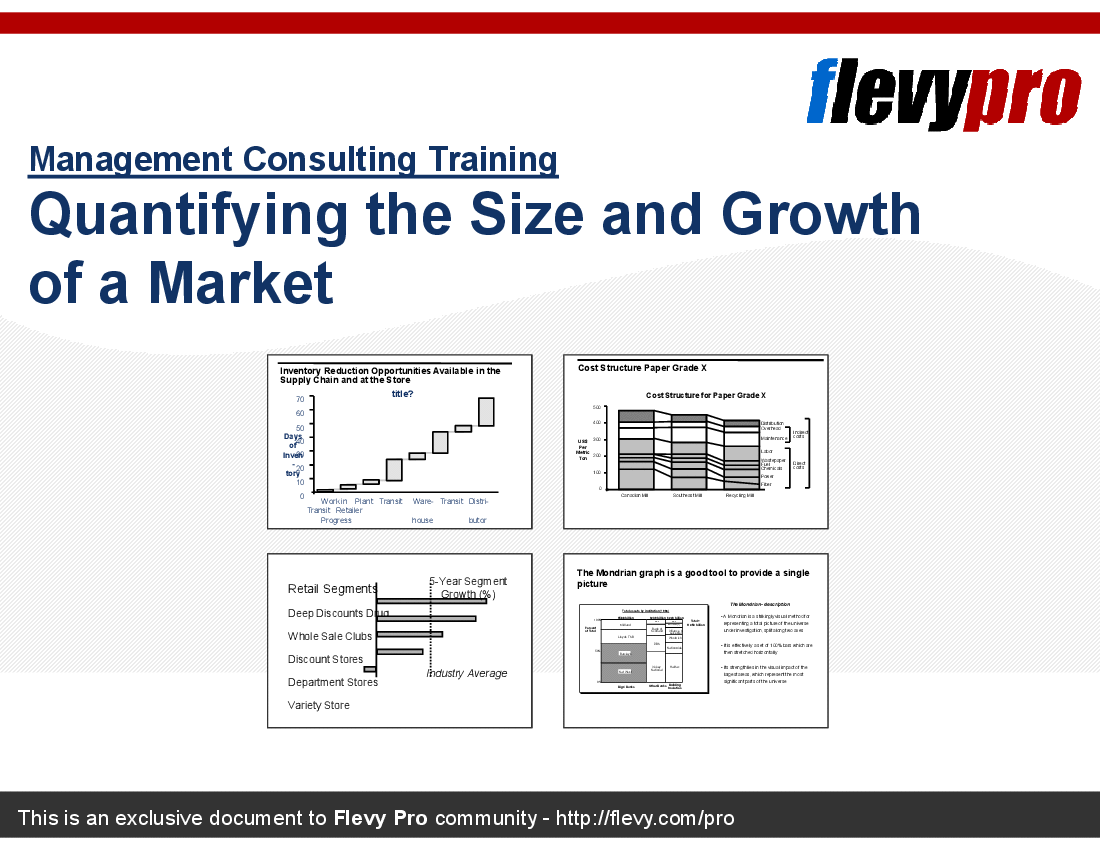
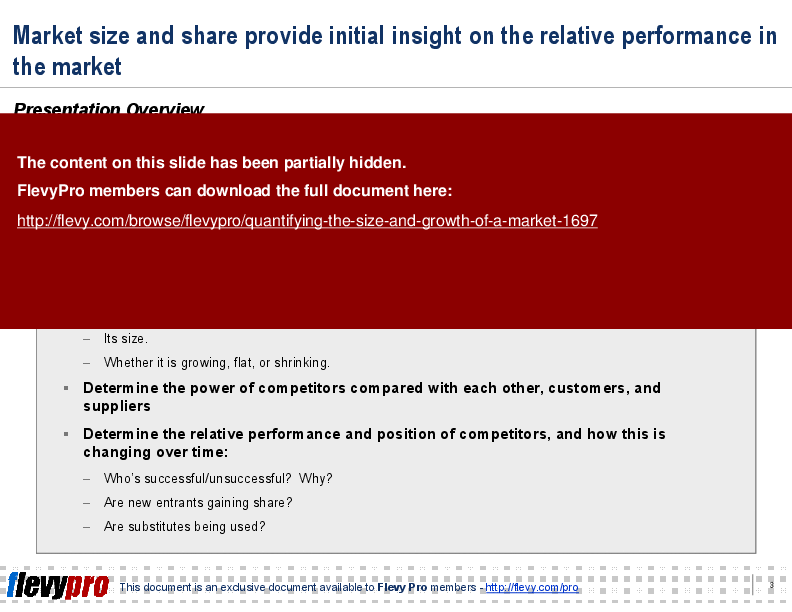

Quantifying the size, share, and growth of a market offers invaluable insight, but it is not a simple process—especially when data is not readily available. This document outlines various approaches to market sizing.
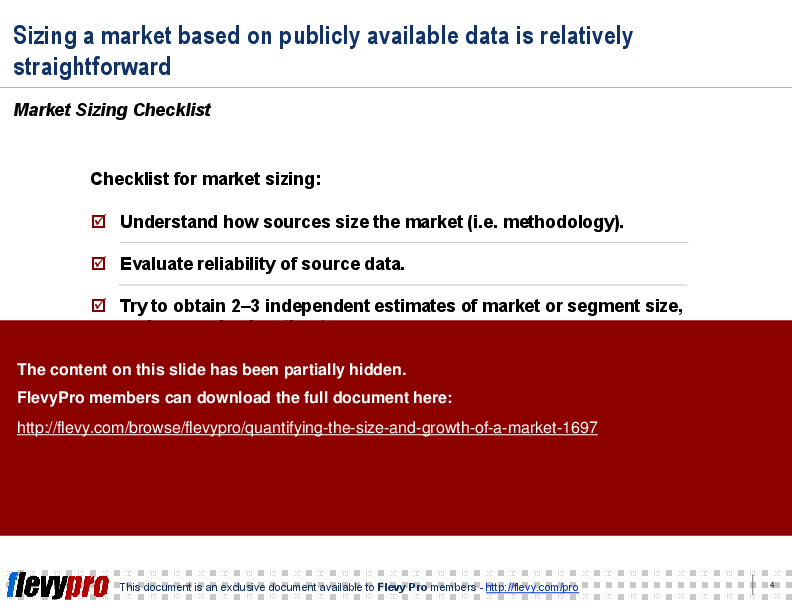
This comprehensive PPT provides a detailed checklist for market sizing, ensuring that you understand the methodologies used by various sources and evaluate the reliability of their data. It emphasizes the importance of obtaining multiple independent estimates to validate market or segment size. This approach mitigates risks associated with relying on a single data source, enhancing the accuracy of your market analysis.
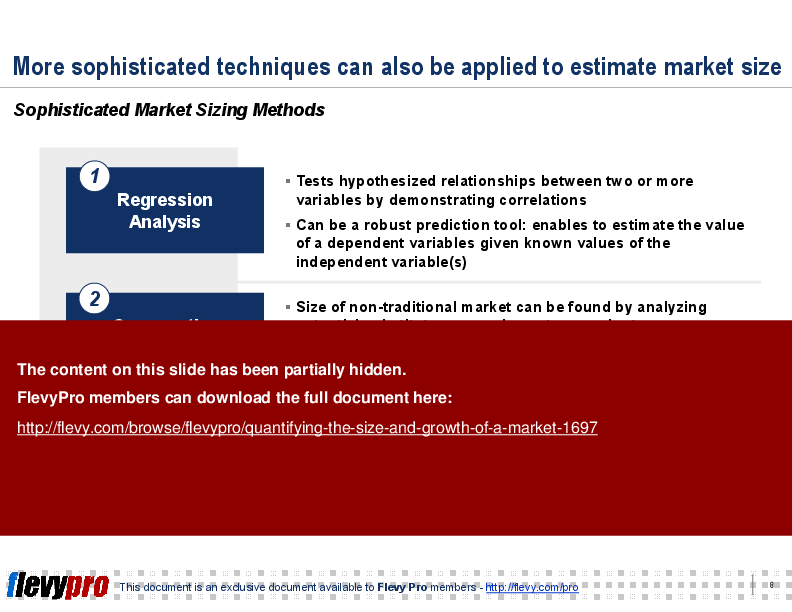
The document also delves into sophisticated market sizing methods, including regression analysis and correlation techniques. These methods enable you to test hypothesized relationships between variables, providing robust predictions for market size. By analyzing non-traditional markets and leveraging advanced statistical tools, you can uncover hidden opportunities and gain a competitive edge.
In addition to market sizing, the document covers essential growth rate calculations, including the Compound Annual Growth Rate (CAGR). Understanding the CAGR helps quantify and highlight trends, reducing the impact of period-to-period variability. This allows for a clearer view of underlying growth patterns, crucial for strategic planning and forecasting.
Got a question about this document? Email us at flevypro@flevy.com.
Executive Summary
The "Quantifying the Size and Growth of a Market" presentation equips business professionals with essential methodologies for assessing market size, share, and growth. This document provides actionable insights into market dynamics, enabling users to evaluate competitive positioning and identify growth opportunities. By employing various market sizing methods, participants will gain the ability to derive accurate estimates and understand market trends, which are crucial for strategic decision-making and investment planning.
Who This Is For and When to Use
• Market analysts and consultants tasked with evaluating industry landscapes
• Business development teams seeking to identify growth opportunities
• Strategic planners responsible for market entry or expansion strategies
• Financial analysts assessing investment viability in specific sectors
Best-fit moments to use this deck:
• During market analysis sessions to define competitive landscapes
• When preparing for strategic planning meetings to discuss growth opportunities
• In client presentations to illustrate market dynamics and potential
Learning Objectives
• Define market size and share using various methodologies
• Analyze growth rates and their implications for market attractiveness
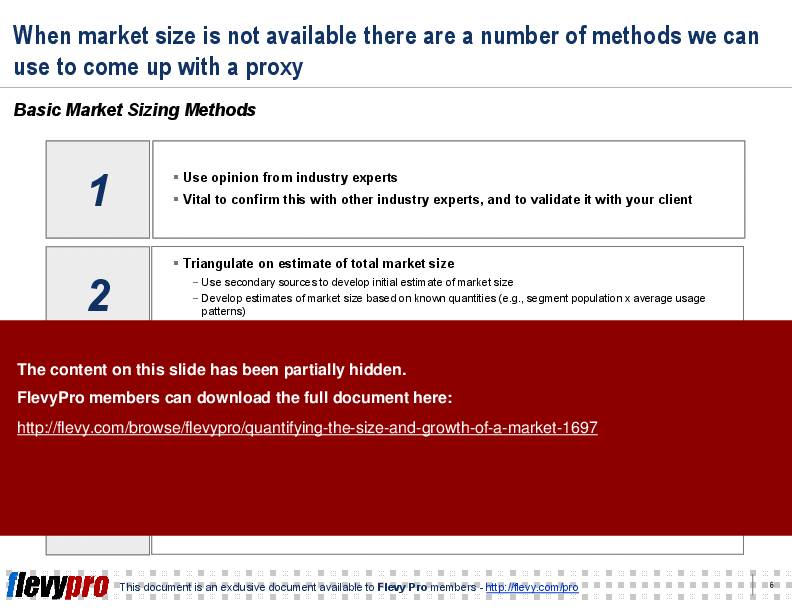
• Utilize expert opinions and secondary data for market estimation
• Implement tools and techniques for effective market analysis
• Validate market size estimates through triangulation and expert consultation
• Present market insights using visual tools like graphs and charts
Table of Contents
• Market Sizing Overview (page 3)
• Market Sizing Methods (page 6)
• Growth Rates (page 11)
• Tools & Tips (page 14)
Primary Topics Covered
• Market Sizing Overview - An introduction to the importance of quantifying market size and share for strategic insights.
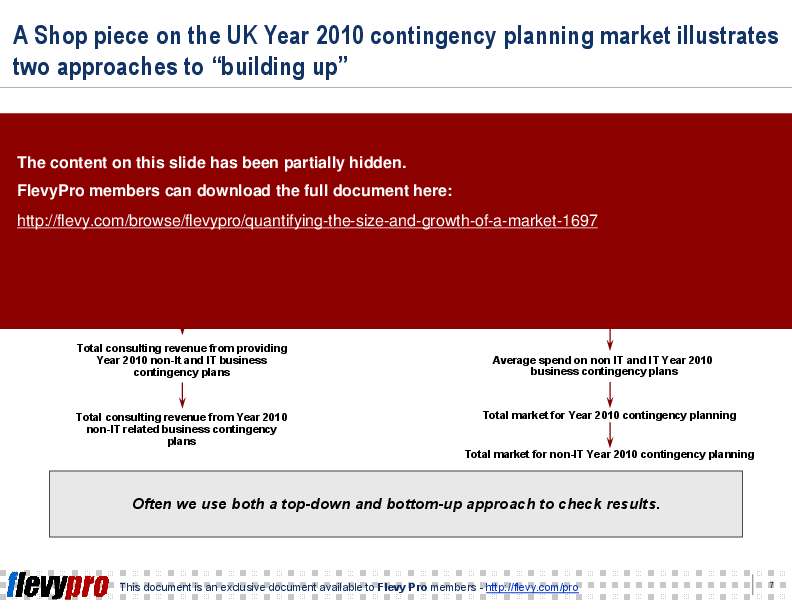
• Market Sizing Methods - A detailed exploration of various methodologies, including top-down and bottom-up approaches for accurate market estimation.
• Growth Rates - Discussion on how to calculate historical and projected growth rates, including the use of CAGR for trend analysis.
• Market Share Measures - Explanation of absolute and relative market share metrics to assess competitive positioning.
• Market Size Estimate Tips - Practical advice for validating market size estimates through expert consultation and sanity checks.
• Graphs and Charts - Overview of visual tools to effectively communicate market data and trends.
Deliverables, Templates, and Tools
• Market sizing checklist template for systematic analysis
• Growth rate calculation model for historical and projected data
• Visual representation tools for market data (graphs, charts)
• Expert consultation framework for validating market estimates
• Comparative analysis template for assessing competitor performance
Slide Highlights
• Overview of market sizing methods with visual examples
• Checklist for effective market sizing and estimation
• Graphical representation of market growth trends and forecasts
• Insights into market share calculations and their implications
• Tips for presenting market data effectively to stakeholders
Potential Workshop Agenda
Market Sizing Fundamentals (60 minutes)
• Introduction to market sizing concepts and methodologies
• Group discussion on the importance of accurate market estimates
• Hands-on activity: completing a market sizing checklist
Growth Rate Analysis (45 minutes)
• Overview of growth rate calculations and significance
• Case study: analyzing historical growth rates in a specific market
• Group exercise: projecting future growth rates based on assumptions
Visualizing Market Data (30 minutes)
• Introduction to effective visual tools for market data
• Workshop: creating graphs and charts to present market insights
• Feedback session on visual presentations
Customization Guidance
• Tailor the market sizing checklist to fit specific industry contexts
• Adjust growth rate projections based on recent market developments
• Incorporate company-specific data into visual representations for clarity
Secondary Topics Covered
• Importance of triangulating market estimates from multiple sources
• Techniques for validating market size through expert insights
• Considerations for external factors impacting market growth
• Best practices for presenting market insights to stakeholders
Topic FAQ
Document FAQ
These are questions addressed within this presentation.
What is market sizing?
Market sizing involves estimating the total potential sales or revenue of a market or segment, providing insight into its attractiveness and competitive landscape.
How do I calculate growth rates?
Growth rates can be calculated using historical data and projected assumptions, often expressed as CAGR to highlight trends over time.
What methods can I use for market sizing?
Common methods include top-down analysis, bottom-up estimation, and triangulation using multiple data sources for validation.
Why is market share important?
Market share indicates a company's competitiveness within its market, helping to assess its relative performance against competitors.
How can I validate my market size estimates?
Validation can be achieved by cross-referencing estimates with industry experts, comparing with historical data, and conducting sanity checks against market conditions.
What tools can help visualize market data?
Graphs, charts, and other visual aids can effectively communicate market insights, making complex data more accessible to stakeholders.
How often should I update my market estimates?
Market estimates should be updated regularly, especially in dynamic industries, to reflect changing conditions and new data.
What is the significance of CAGR?
CAGR provides a smoothed annual growth rate over a specified period, allowing for easier comparison of growth trends across different time frames.
Glossary
• Market Size - The total potential sales or revenue of a market or segment.
• Market Share - The percentage of total market sales attributed to a specific company or product.
• CAGR - Compound Annual Growth Rate; a measure of growth over multiple time periods.
• Top-Down Approach - Estimating market size by starting with a broad overview and narrowing down.
• Bottom-Up Approach - Estimating market size by starting with specific data points and aggregating them.
• Triangulation - Using multiple sources to validate market estimates for accuracy.
• Historical Growth Rate - The rate at which a market has grown in the past, typically measured annually.
• Projected Growth Rate - Estimated future growth based on historical data and market trends.
• Visual Tools - Graphs, charts, and other visual aids used to represent data clearly.
• Market Dynamics - The forces that impact the behavior and performance of a market.
• Competitive Positioning - The strategic stance of a company in relation to its competitors within the market.
• Validation - The process of confirming the accuracy of market estimates through expert consultation and data comparison.
Source: Best Practices in Market Analysis, Market Sizing PowerPoint Slides: Quantifying the Size and Growth of a Market PowerPoint (PPT) Presentation Slide Deck, LearnPPT Consulting
Did you need more documents?
Consider a FlevyPro subscription from $39/month. View plans here.
For $10.00 more, you can download this document plus 2 more FlevyPro documents. That's just $13 each.
This document is available as part of the following discounted bundle(s):
Save %!
Consulting Training - Industry & Market Analysis
This bundle contains 6 total documents. See all the documents to the right.

|
Download our FREE Strategy & Transformation Framework Templates
Download our free compilation of 50+ Strategy & Transformation slides and templates. Frameworks include McKinsey 7-S, Balanced Scorecard, Disruptive Innovation, BCG Curve, and many more. |