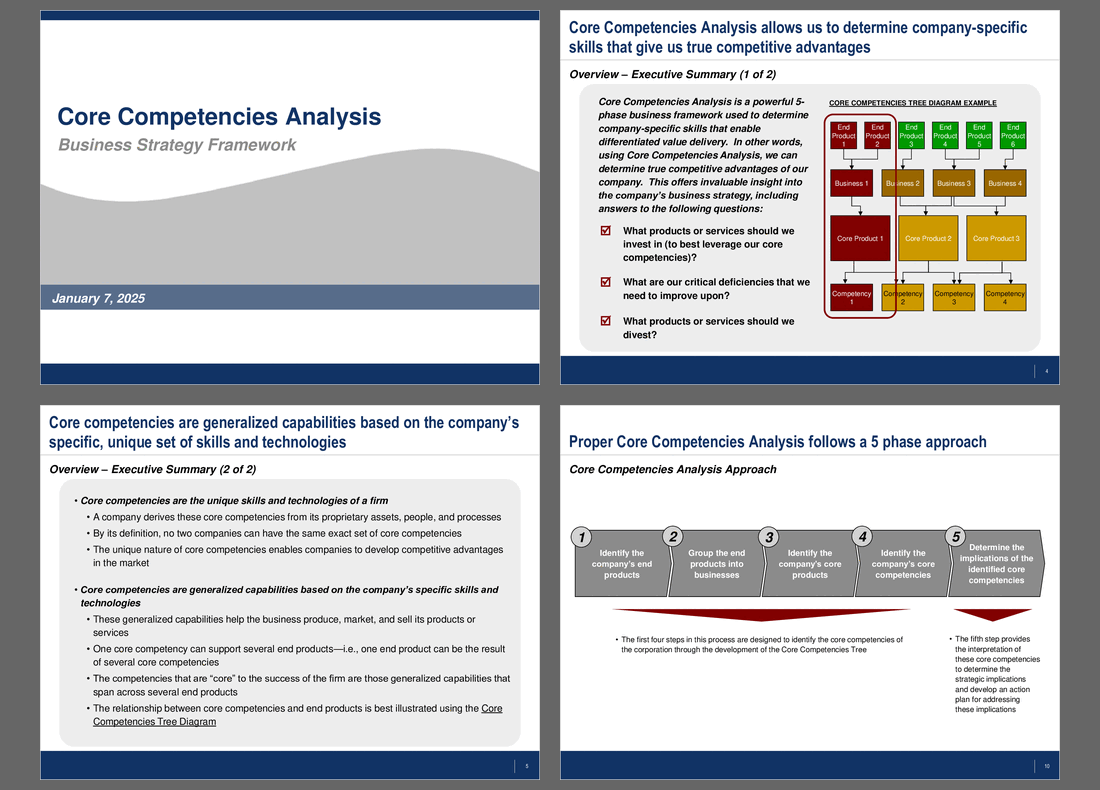
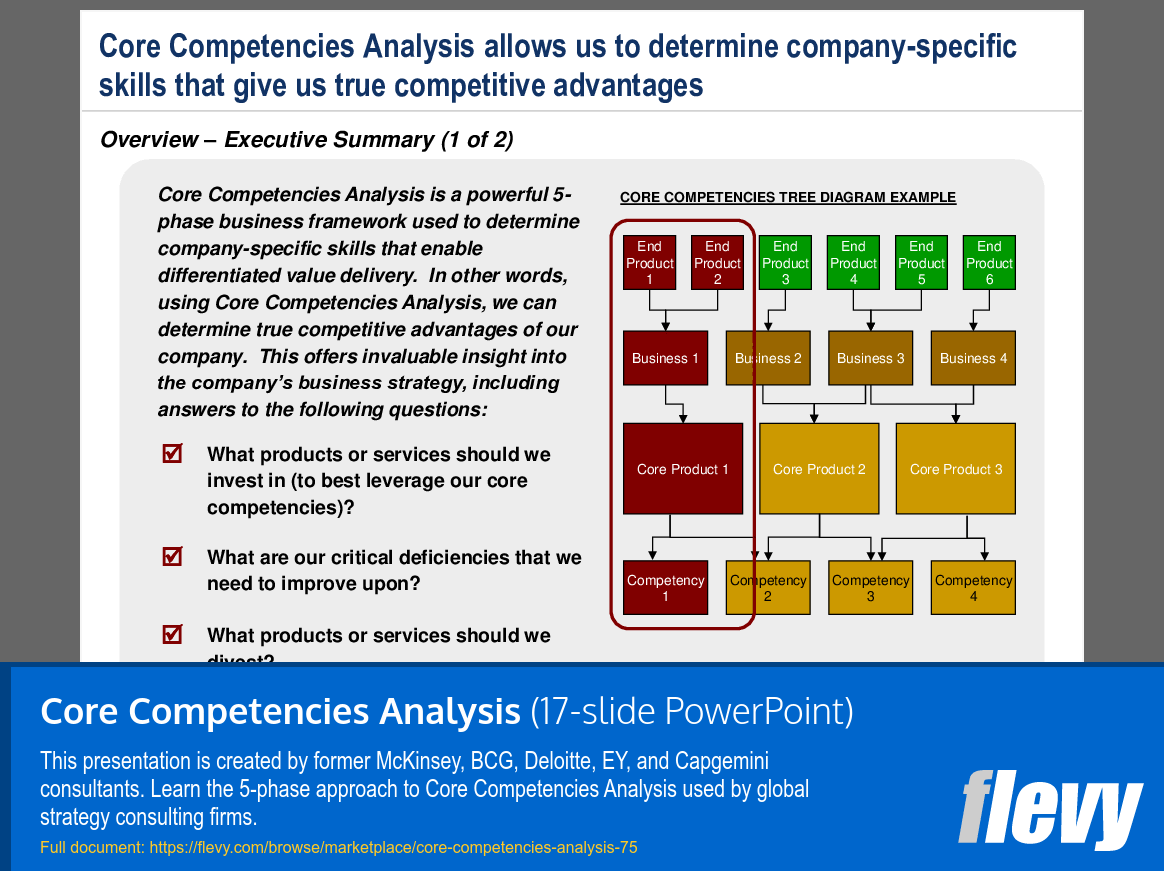
Core Competencies Analysis is a powerful 5-phase business framework used to determine company-specific skills that enable differentiated value delivery. In other words, using Core Competencies Analysis, we can determine true competitive advantages of our company.
This offers invaluable insight into the company's business strategy, including answers to the following questions:
• What products or services should we invest in (to best leverage our core competencies)?
• What are our critical deficiencies that we need to improve upon?
• What products or services should we divest?
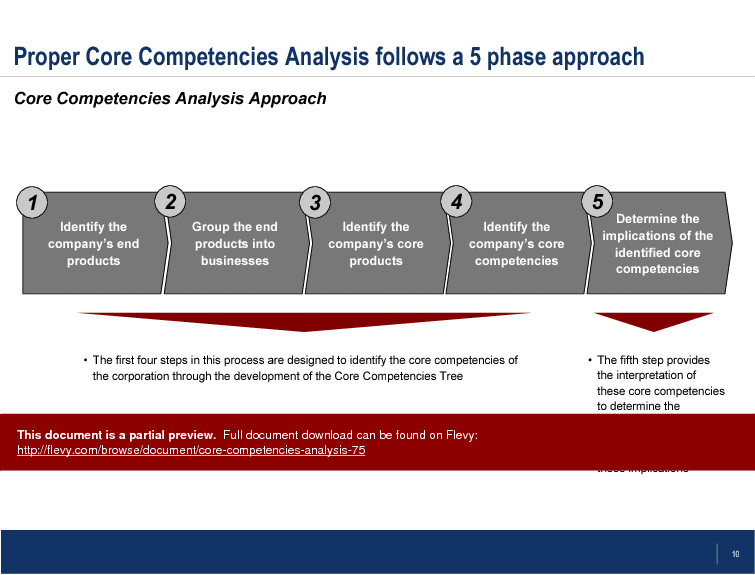
This document dives deep into the intricacies of identifying and leveraging core competencies to drive strategic business decisions. It begins by defining key terms such as "Core Product" and "Core Capability," ensuring a solid foundation for understanding the framework. The step-by-step approach guides you through identifying end products, grouping them into businesses, and pinpointing core products, ultimately leading to the identification of core competencies. This structured methodology ensures that no stone is left unturned in uncovering the true strengths of your organization.
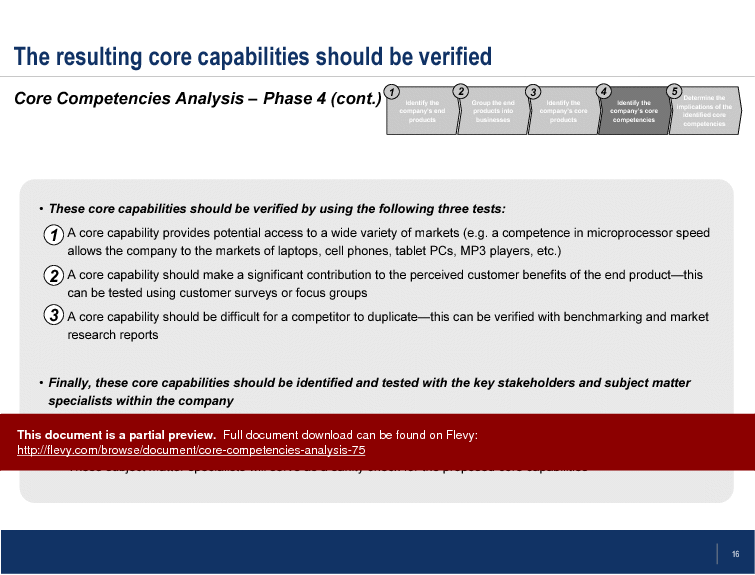
The analysis emphasizes the importance of verifying core capabilities through rigorous testing. It outlines three critical tests: market access potential, contribution to customer benefits, and difficulty of duplication by competitors. These tests ensure that the identified core capabilities are not only valuable, but also sustainable in the long run. The document also highlights the necessity of involving key stakeholders and subject matter experts in the verification process, ensuring that the insights gained are both accurate and actionable.
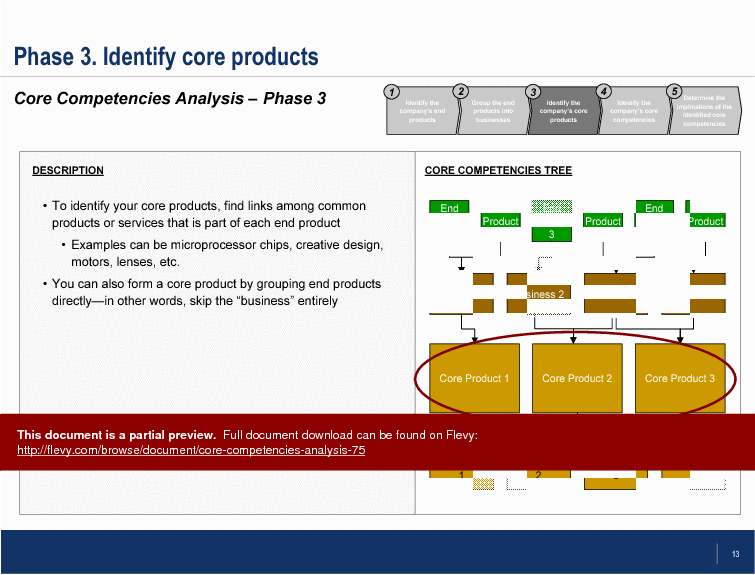
Phase 3 of the analysis focuses on identifying core products by finding common links among end products or services. This phase provides practical examples, such as microprocessor chips and creative design, to illustrate the process. By grouping end products directly, businesses can streamline their operations and focus on their most valuable offerings. This phase is crucial for understanding the tangible outputs that stem from core competencies, providing a clear roadmap for strategic investment.
The final phase of the analysis interprets the implications of the identified core competencies. This phase is designed to translate the insights gained into actionable business strategies. It helps in determining which products or services to invest in, which to improve, and which to divest. By understanding the broader implications of core competencies, businesses can make informed decisions that align with their long-term strategic goals. This comprehensive approach ensures that the core competencies analysis is not just an academic exercise, but a practical tool for driving business success.
Got a question about the product? Email us at support@flevy.com or ask the author directly by using the "Ask the Author a Question" form. If you cannot view the preview above this document description, go here to view the large preview instead.
Executive Summary
Core Competencies Analysis is a robust 5-phase business framework designed to identify company-specific skills that yield competitive advantages. This consulting-grade presentation, crafted by former McKinsey, BCG, Deloitte, EY, and Capgemini consultants, empowers organizations to discern their unique capabilities that enable differentiated value delivery. By employing this framework, executives can answer critical strategic questions: Which products or services should we invest in? What deficiencies must we address? Which offerings should we divest? This analysis provides invaluable insights into business strategy, ensuring informed decision-making.
Who This Is For and When to Use
• Corporate executives seeking to refine strategic direction
• Business unit leaders focused on leveraging core competencies
• Strategy consultants advising clients on competitive positioning
• Product managers evaluating investment opportunities and resource allocation
Best-fit moments to use this deck:
• During strategic planning sessions to align on core competencies
• When assessing portfolio performance and identifying gaps
• In workshops aimed at developing action plans for capability enhancement
Learning Objectives
• Define core competencies and their role in competitive advantage
• Identify and categorize end products and core products
• Analyze core capabilities using a Strengths-Weaknesses Matrix
• Determine strategic implications of identified core competencies
• Develop actionable plans based on core competency analysis
• Assess benefits and limitations of core competencies in business strategy
Table of Contents
• Overview (page 3)
• Executive Summary (page 4)
• Core Competencies Tree Diagram (page 6)
• Key Definitions (page 7)
• Benefits & Limitations (page 8)
• Approach (page 9)
• Phase 1 (page 11)
• Phase 2 (page 12)
• Phase 3 (page 13)
• Phase 4 (page 14)
• Phase 5 (page 17)
Primary Topics Covered
• Core Competencies Analysis - A structured approach to identifying unique skills that provide competitive advantages.
• Core Competencies Tree Diagram - A visual representation linking core competencies to end products, illustrating their interrelationships.
• Key Definitions - Essential terms that provide context for understanding core competencies and their implications.
• Strengths-Weaknesses Matrix - A tool for assessing core capabilities relative to competitors, aiding in strategic decision-making.
• Strategic Implications - Insights derived from identified core competencies that inform business strategy and resource allocation.
• Benefits and Limitations - A balanced view of the advantages and potential pitfalls of conducting core competencies analysis.
Deliverables, Templates, and Tools
• Core Competencies Tree Diagram template for visualizing relationships between competencies and products
• Strengths-Weaknesses Matrix template for evaluating core capabilities against competitors
• Action plan framework for addressing strategic implications of core competencies
• Portfolio assessment tool for reviewing and justifying business units
• Capability gap analysis template to identify areas for improvement
• Workshop facilitation guide for engaging stakeholders in core competencies discussions
Slide Highlights
• Overview of the Core Competencies Analysis framework detailing the 5-phase approach
• Core Competencies Tree Diagram illustrating the relationship between competencies and end products
• Strengths-Weaknesses Matrix example showcasing how to evaluate core capabilities
• Benefits and limitations slide providing a clear understanding of the framework's applicability
• Phase breakdown slides detailing specific actions and considerations for each step in the analysis
Potential Workshop Agenda
Core Competencies Identification Session (90 minutes)
• Discuss the importance of core competencies in strategic planning
• Facilitate group exercises to identify end products and core products
• Develop a preliminary Core Competencies Tree
Strategic Implications Discussion (60 minutes)
• Review identified core competencies and their market relevance
• Analyze the implications using the Strengths-Weaknesses Matrix
• Formulate strategic recommendations based on findings
Action Planning Workshop (90 minutes)
• Prioritize core competencies for investment or divestment
• Create actionable steps to address identified deficiencies
• Assign responsibilities for follow-up actions
Customization Guidance
• Tailor the Core Competencies Tree Diagram to reflect specific products and services relevant to your organization
• Adjust the Strengths-Weaknesses Matrix criteria based on industry benchmarks and competitive landscape
• Modify action plans to align with organizational goals and timelines
Secondary Topics Covered
• Differentiation strategies based on core competencies
• Market access implications of core capabilities
• Risk assessment related to core competency misalignment
• Organizational structure considerations for leveraging core competencies
• Case studies illustrating successful core competency applications
FAQ
What is the purpose of Core Competencies Analysis?
Core Competencies Analysis helps organizations identify unique skills that provide competitive advantages, guiding strategic decision-making.
How many phases are involved in the Core Competencies Analysis?
The analysis follows a structured 5-phase approach to identify and evaluate core competencies.
What is the Core Competencies Tree Diagram?
This diagram visually represents the relationship between core competencies, core products, and end products, facilitating a clearer understanding of their interconnections.
What is the Strengths-Weaknesses Matrix?
The matrix assesses core capabilities relative to competitors, helping organizations identify strengths and weaknesses in their competencies.
What are the limitations of Core Competencies Analysis?
Potential limitations include subjectivity in determining competencies and the time-intensive nature of the analysis for diversified corporations.
How can the findings from this analysis impact business strategy?
Identifying core competencies drives strategic hypotheses and informs decisions on investment, divestment, and capability improvement.
Who should participate in the Core Competencies Analysis workshops?
Key management personnel, stakeholders, and subject matter experts should be involved to ensure comprehensive insights and validation of findings.
How can I ensure the accuracy of identified core competencies?
Verification through stakeholder engagement, benchmarking, and market research is essential to confirm the relevance and uniqueness of core competencies.
Glossary
• Core Competency - A distinctive set of expertise that provides access to a wide variety of markets.
• Core Capability - A set of differentiating, hard-to-duplicate business processes that drive competitive advantages.
• Core Product - The tangible link between identified core competencies and end products.
• Strengths-Weaknesses Matrix - A tool for evaluating core capabilities against competitors.
• End Product - The final output delivered to the end consumer.
• Business - A categorization of end products based on commonalities.

• Critical Success Factors - Key elements necessary for achieving business objectives.
• Market Access - The ability to reach and serve customers in various markets.
• Competitive Advantage - A condition that allows a company to produce goods or services better or more cheaply than its rivals.
• Portfolio Assessment - A review of the company's current business units and their performance.
• Capability Gap Analysis - An evaluation of the difference between current capabilities and required capabilities.
• Strategic Hypotheses - Proposed strategies based on the analysis of core competencies and their implications.
• Investment Decision - A choice made regarding the allocation of resources to enhance or develop core competencies.
• Divestment Decision - A choice made to sell or discontinue a product or service that does not align with core competencies.
• Facilitation Tools - Techniques used to guide discussions and brainstorming sessions during workshops.
• Stakeholder Engagement - Involvement of key individuals or groups in the decision-making process.
• Benchmarking - Comparing business processes and performance metrics to industry bests and best practices from other companies.
• Market Research - The process of gathering, analyzing, and interpreting information about a market.
• Customer Surveys - Tools used to gather feedback from customers regarding their perceptions and experiences.
• Focus Groups - A qualitative research method used to gather insights from a selected group of individuals about their opinions and attitudes.
Source: Best Practices in Core Competencies, Competitive Advantage PowerPoint Slides: Core Competencies Analysis PowerPoint (PPT) Presentation Slide Deck, LearnPPT Consulting
|
Download our FREE Strategy & Transformation Framework Templates
Download our free compilation of 50+ Strategy & Transformation slides and templates. Frameworks include McKinsey 7-S, Balanced Scorecard, Disruptive Innovation, BCG Curve, and many more. |