
This framework is developed by a team of former McKinsey and Big 4 consultants. The presentation follows the headline-body-bumper slide format used by global consulting firms.
Editor Summary
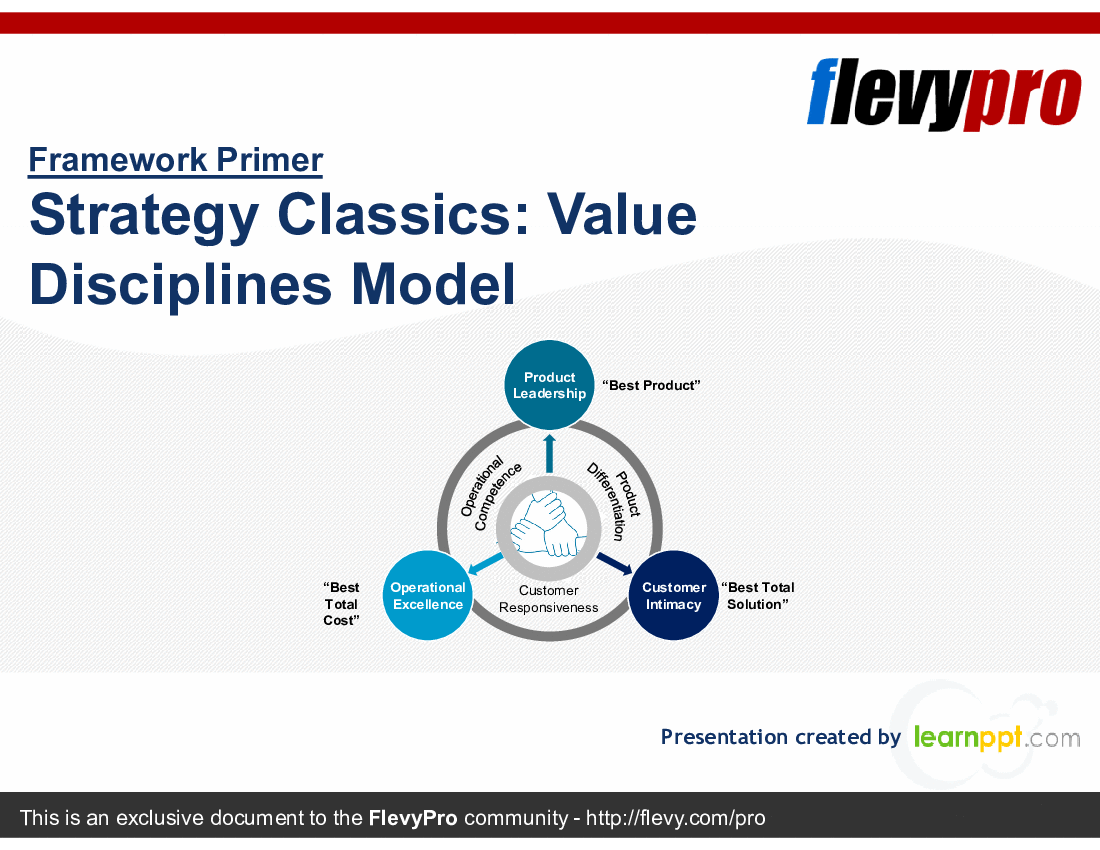
Strategy Classics: Value Disciplines Model is a 27-slide PowerPoint (PPTX) by LearnPPT Consulting explaining Treacy and Wiersema’s Value Disciplines framework and the 3 discipline choices: Operational Excellence, Product Leadership, and Customer Intimacy.
Read moreThe deck explains how a company’s operating model must be adapted to align with the chosen discipline and includes slide templates for presentation use. Sold as a digital download on Flevy, it is intended for strategy executives, management consultants, product and operations leaders deciding strategic focus.
Use this deck when an organization must choose a single strategic value proposition to pursue market leadership and align its operating model accordingly.
Strategy executives preparing a board recommendation on which Value Discipline to pursue, synthesizing market choice and operating model implications.
Product leaders designing an innovation pipeline and governance that supports Product Leadership rather than broader incremental improvements.
Operations leaders mapping process changes and cost structures to support Operational Excellence through streamlined processes.
Management consultants advising clients on competitive positioning and operating model alignment to support one disciplined value proposition.
The approach mirrors Treacy and Wiersema’s decision focus and explicitly aligns with Porter's Generic Strategies (low cost, differentiation, or niche market).
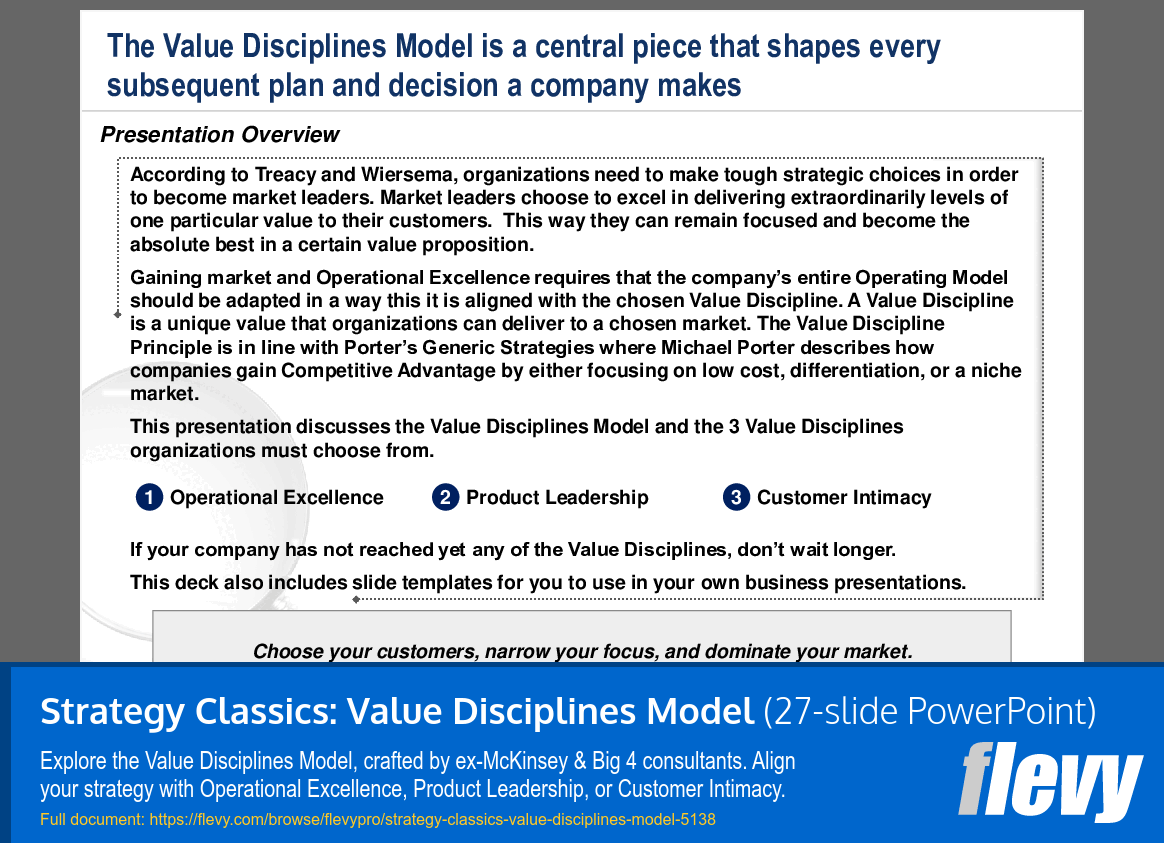
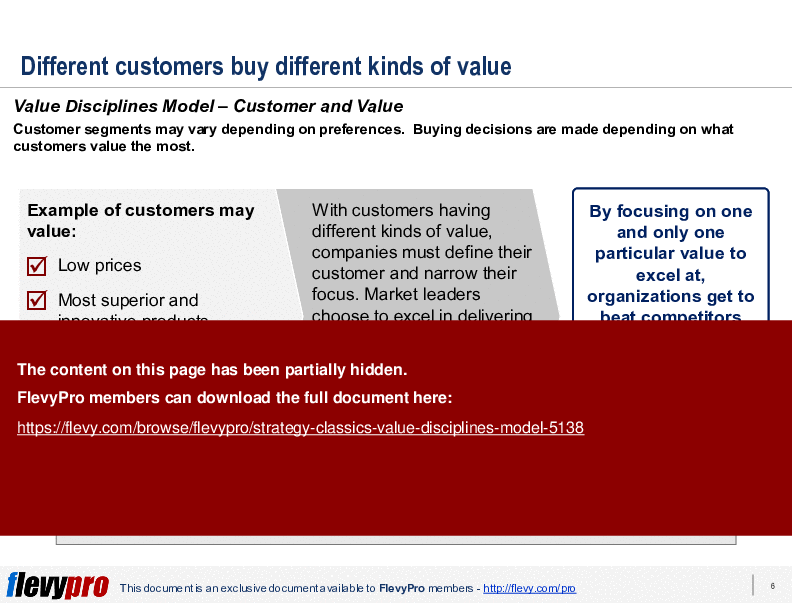
According to Treacy and Wiersema, organizations need to make tough strategic choices in order to become market leaders. Market leaders choose to excel in delivering extraordinarily levels of one particular value to their customers. This way they can remain focused and become the absolute best in a certain value proposition.
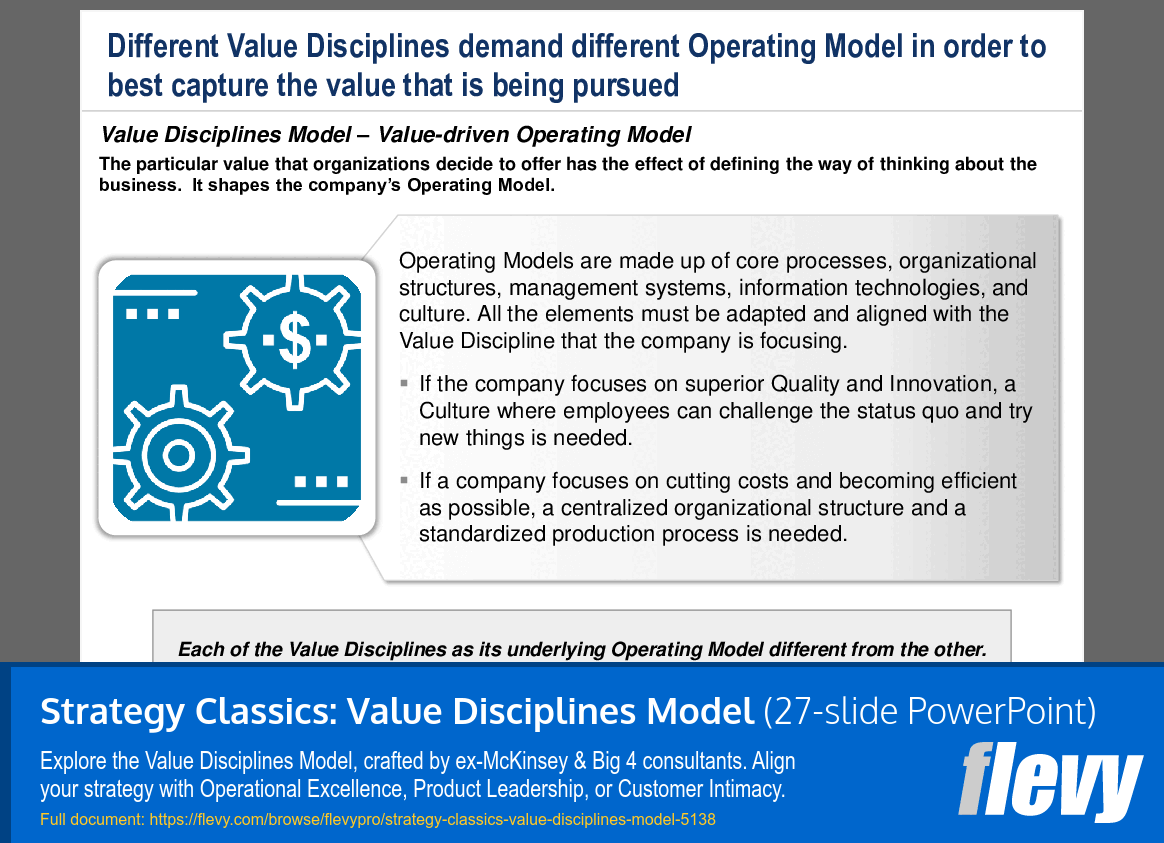
Gaining market and Operational Excellence requires that the company's entire Operating Model be adapted in a way this it is aligned with the chosen Value Discipline. A Value Discipline is a unique value that organizations can deliver to a chosen market. The Value Discipline Principle is in line with Porter's Generic Strategies, where Michael Porter describes how companies gain Competitive Advantage by either focusing on low cost, differentiation, or a niche market.
This presentation discusses the Value Disciplines Model and the 3 Value Disciplines organizations must choose from.
If your company has not reached yet any of the Value Disciplines, don't wait longer.
This deck also includes slide templates for you to use in your own business presentations.
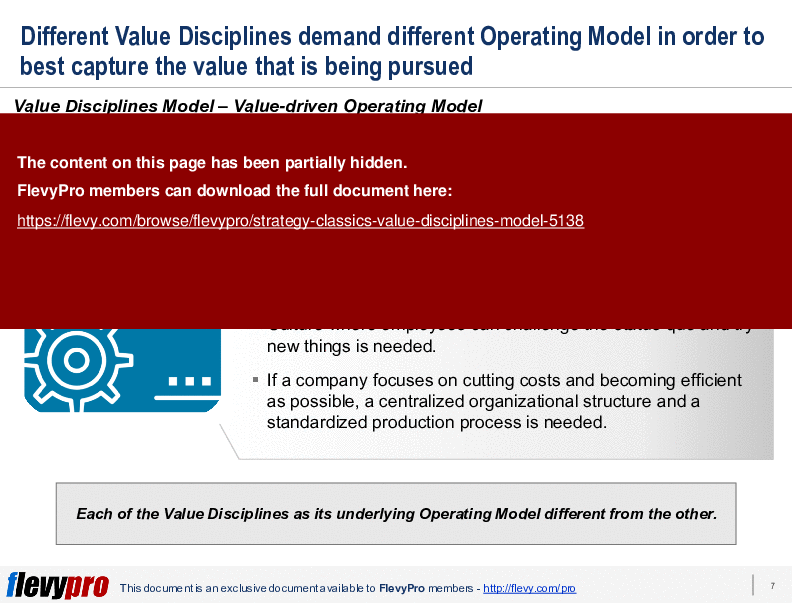
The Value Disciplines Model is a cornerstone for strategic decision-making, ensuring that every action aligns with the chosen discipline. This framework helps organizations identify the unique value they can deliver to their market, whether through Operational Excellence, Product Leadership, or Customer Intimacy. Each discipline demands a distinct operating model, from streamlined processes for cost efficiency to innovative cultures that drive product leadership.
Understanding and implementing the Value Disciplines Model can transform your strategic approach. It provides clarity on where to focus resources and how to structure your organization for maximum impact. This presentation not only explains the theoretical underpinnings, but also offers practical templates for immediate application. Equip your team with the insights needed to dominate your market by excelling in your chosen value discipline.
What are the 3 value disciplines and how do they differ?
The Value Disciplines Model identifies 3 ways organizations can deliver distinct customer value: Operational Excellence focuses on streamlined processes and cost efficiency; Product Leadership emphasizes continuous innovation and product superiority; Customer Intimacy prioritizes deep customer relationships and tailored solutions — Operational Excellence, Product Leadership, Customer Intimacy.
How should a company's operating model change when choosing a value discipline?
Choosing a Value Discipline requires adapting the operating model so structure, processes, metrics, and culture support the chosen focus: process standardization and cost controls for Operational Excellence, R&D and fast commercialization for Product Leadership, and customer-facing flexibility for Customer Intimacy — aligned to one of the 3 disciplines.
How does the Value Disciplines Model relate to Porter's Generic Strategies?
Treacy and Wiersema’s Value Disciplines principle is presented as consistent with Michael Porter’s Generic Strategies: companies gain advantage by focusing on low cost, differentiation, or a niche market. The Value Disciplines map to these choices as Operational Excellence, Product Leadership, or Customer Intimacy respectively — low cost, differentiation, niche market.
What are the practical implications of not choosing a value discipline?
Without a clear chosen discipline, organizations risk diffuse priorities and misaligned operating models; the model advises selecting one primary value to excel in and then adapting the entire operating model to that choice, namely focusing efforts on one of the 3 Value Disciplines.
What should I look for in a PowerPoint toolkit on Value Disciplines?
Seek a toolkit that explains the model’s theory, shows how operating models must adapt for each discipline, and provides ready-to-use presentation slides. Strategy Classics: Value Disciplines Model specifically includes explanatory slides and slide templates in a 27-slide PPTX by LearnPPT Consulting.
How quickly can I adapt Value Disciplines messaging for an executive presentation?
Time to adapt depends on existing analysis,, but using pre-built slide templates shortens preparation; the product overview notes it includes slide templates for immediate application, provided as a 27-slide PPTX for faster executive-ready messaging.
I need to decide between competing on price or on innovation—how can I use this framework?
Use the Value Disciplines Model to frame the choice: price/efficiency aligns with Operational Excellence while innovation aligns with Product Leadership. The framework then directs assessment of operating model changes and resource allocation between these 2 focuses — Operational Excellence or Product Leadership.
How can slide templates help me present operating model changes required by a chosen discipline?
Slide templates let you clearly show the gap between current and target operating models, outline specific process or capability changes, and present recommended actions to stakeholders; the product includes slide templates ready for this purpose in a 27-slide PPTX called Strategy Classics: Value Disciplines Model.
Product Leadership is a key value discipline focused on creativity, agility, and speed in delivering innovative products. The operating model features include:
1. Core Processes: Emphasizes invention, product development, and market exploitation, indicating that organizations must actively create and launch new products.
2. Organizational Structure: A loosely knit, adaptable structure fosters flexibility and responsiveness to entrepreneurial initiatives, avoiding rigid hierarchies that hinder innovation.
3. Management Systems: A results-driven approach rewards successful product launches, encouraging experimentation to drive innovation.
4. Culture: Promotes individual imagination and out-of-the-box thinking, essential for leading in product development.
Notable product leaders like Apple, Nike, and Microsoft exemplify these principles. Bureaucracy can stifle idea flow and slow commercialization, underscoring the need for organizations to enhance their product leadership capabilities.
The Customer Intimacy Operating Model enhances customer support by recognizing a hierarchy of customer needs beyond product requirements. It comprises 4 key components: Organization, Culture, Core Processes, and Information Technology, each essential for fostering customer loyalty. The Organization emphasizes entrepreneurial client teams and high skill levels to effectively meet customer needs. Culture is client-driven with a flexible mindset for customization, encapsulated in the phrase “Have it your way.” Core Processes focus on client acquisition, solution development, and adaptable work procedures to respond to changing demands. Information Technology integrates internal and external customer databases, creating knowledge bases that enhance service delivery. Management Systems emphasize revenue generation, client feedback, and lifetime value analysis to nurture long-term customer relationships and profitability.
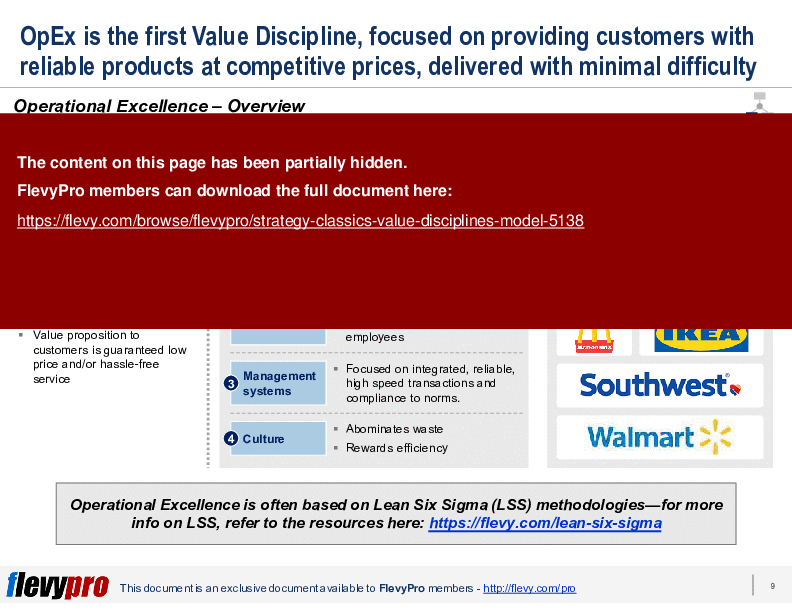
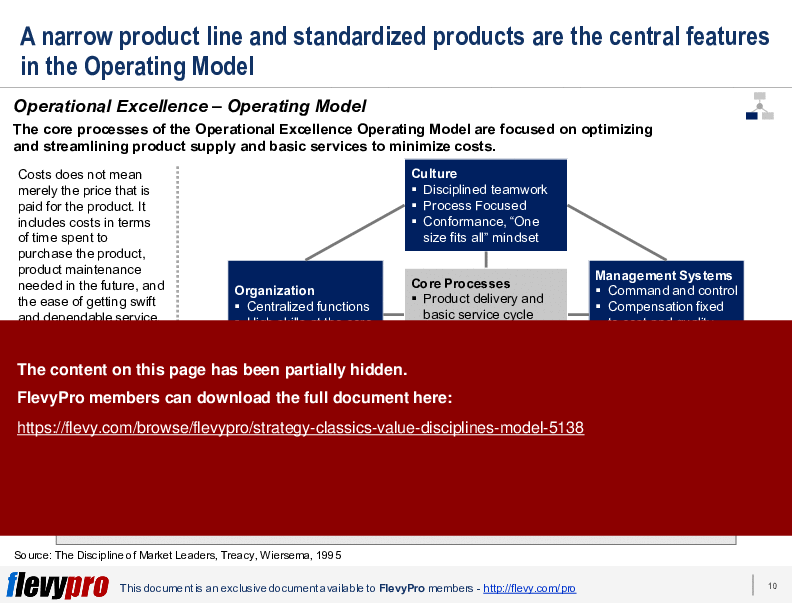
Operational Excellence is a primary value discipline that ensures unmatched delivery of quality, price, and ease of purchase, enhancing customer loyalty and market share. Key features include:
1. Core Processes: Optimizing end-to-end product supply and basic services to minimize costs and enhance customer experience.
2. Operations: Standardization and central planning streamline decision-making, empowering frontline employees while maintaining control.
3. Management Systems: Integration of high-speed transactions and compliance adherence ensures operational integrity.
4. Culture: Fostering a productive environment by eliminating waste and rewarding efficiency.
Exemplary companies like McDonald's, IKEA, Southwest Airlines, and Walmart illustrate successful application of Operational Excellence principles across industries, leading to significant operational improvements and customer satisfaction.
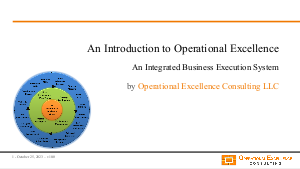
This PPT slide outlines 2 critical components of an Integrated Business Execution System: Process Excellence and High-Performance Work Teams. Process Excellence serves as the foundation for efficient value chains, essential for achieving operational excellence. Without a solid process framework, organizations may struggle to meet their goals. High-Performance Work Teams require the right attitude, mindset, and competencies, with a strong emphasis on empowerment, resources, and accountability, directly correlating team effectiveness with performance outcomes. A five-phase approach to operational excellence includes selecting projects, training personnel, implementing improvement plans, managing execution, and sustaining gains. Additionally, the supervisor's role is evolving from traditional management to dynamic leadership, fostering an environment where teams can thrive as coaches and facilitators.
This PPT slide outlines essential components for achieving operational excellence through an Integrated Business Execution System, which includes 4 foundational building blocks: Strategy Deployment, Performance Management, Process Excellence, and High Performance Work Teams.
Strategy Deployment translates strategic initiatives into measurable objectives, ensuring effective communication of the overarching strategy. Performance Management focuses on monitoring and assessing strategy effectiveness, enabling real-time adjustments to stay on course. Process Excellence emphasizes refining business processes to identify inefficiencies and implement best practices for enhanced productivity and quality. High Performance Work Teams cultivate a collaborative culture aligned with organizational goals, driving operational success.
These interconnected blocks form a cohesive framework that supports operational excellence, essential for organizations enhancing execution capabilities.
Source: Best Practices in Strategy Development, Customer-centric Organization, Product Strategy, Operational Excellence, Value Disciplines Model PowerPoint Slides: Strategy Classics: Value Disciplines Model PowerPoint (PPTX) Presentation Slide Deck, LearnPPT Consulting
This framework is developed by a team of former McKinsey and Big 4 consultants. The presentation follows the headline-body-bumper slide format used by global consulting firms.
For $10.00 more, you can download this document plus 2 more FlevyPro documents. That's just $13 each.
ABOUT FLEVYPRO
This document is part of the FlevyPro Library, a curated knowledge base of documents for our FlevyPro subscribers.
FlevyPro is a subscription service for on-demand business frameworks and analysis tools. FlevyPro subscribers receive access to an exclusive library of curated business documents—business framework primers, presentation templates, Lean Six Sigma tools, and more—among other exclusive benefits.
Since 2012, we have provided business templates to over 10,000 businesses and organizations of all sizes, from startups and small businesses to the Fortune 100, in over 130 countries.
"[Flevy] produces some great work that has been/continues to be of immense help not only to myself, but as I seek to provide professional services to my clients, it gives me a large "tool box" of resources that are critical to provide them with the quality of service and outcomes they are expecting."
– Royston Knowles, Executive with 50+ Years of Board Level Experience
"Flevy is our 'go to' resource for management material, at an affordable cost. The Flevy library is comprehensive and the content deep, and typically provides a great foundation for us to further develop and tailor our own service offer."
– Chris McCann, Founder at Resilient.World
"I have used Flevy services for a number of years and have never, ever been disappointed. As a matter of fact, David and his team continue, time after time, to impress me with their willingness to assist and in the real sense of the word. I have concluded in fact
that it is not at all just a repository of documents/resources but, in the way that David and his team manage the firm, it is like dealing with consultants always ready to assist, advise and direct you to what you really need, and they always get it right.
I am an international hospitality accomplished senior executive who has worked and lived during the past 35 years in 23 countries in 5 continents and I can humbly say that I know what customer service is, trust me.
Aside from the great and professional service that Flevy's team provide, their wide variety of material is of utmost great quality, professionally put together and most current.
Well done Flevy, keep up the great work and I look forward to continue working with you in the future and to recommend you to a variety of colleagues around the world.
"
– Roberto Pelliccia, Senior Executive in International Hospitality
"As a young consulting firm, requests for input from clients vary and it's sometimes impossible to provide expert solutions across a broad spectrum of requirements. That was before I discovered Flevy.com.
Through subscription to this invaluable site of a plethora of topics that are key and crucial to consulting, I
have been able to exceed expectations and deliver quality advice and solutions to my clients. The quality and expertise of the authors are exemplary and gives me great confidence to use as part of my service offerings.
I highly recommend this company for any consultant wanting to apply international best practice standards in their service offerings.
"
– Nishi Singh, Strategist and MD at NSP Consultants
"The wide selection of frameworks is very useful to me as an independent consultant. In fact, it rivals what I had at my disposal at Big 4 Consulting firms in terms of efficacy and organization."
– Julia T., Consulting Firm Owner (Former Manager at Deloitte and Capgemini)
"As a consulting firm, we had been creating subject matter training materials for our people and found the excellent materials on Flevy, which saved us 100's of hours of re-creating what already exists on the Flevy materials we purchased."
– Michael Evans, Managing Director at Newport LLC
"Flevy.com has proven to be an invaluable resource library to our Independent Management Consultancy, supporting and enabling us to better serve our enterprise clients.
The value derived from our [FlevyPro] subscription in terms of the business it has helped to gain far exceeds the investment made, making a subscription a no-brainer for any growing consultancy – or in-house strategy team."
– Dean Carlton, Chief Transformation Officer, Global Village Transformations Pty Ltd.
"Flevy is now a part of my business routine. I visit Flevy at least 3 times each month.
Flevy has become my preferred learning source, because what it provides is practical, current, and useful in this era where the business world is being rewritten.

many challenges and there is the need to make the right decisions in a short time, with so much scattered information, we are fortunate to have Flevy. Flevy investigates, selects, and puts at our disposal the best of the best to help us be successful in our work.
"
– Omar Hernán Montes Parra, CEO at Quantum SFE
Save with Bundles
This document is available as part of the following discounted bundle(s):
Download our free compilation of 50+ Strategy & Transformation slides and templates. Frameworks include McKinsey 7-S, Balanced Scorecard, Disruptive Innovation, BCG Curve, and many more.