
This presentation is created by ex-McKinsey, BCG, Deloitte, EY, & Capgemini consultants. It discusses emerging frameworks related to Customer-centric Design, e.g. Customer Journey, Human-centered Design, & Design-driven Culture.
Explore the Complete Guide to Customer-centric Design by ex-McKinsey, BCG, Deloitte, EY, & Capgemini consultants. Master CX, HCD, and service design frameworks. Customer-centric Design Guide is a 103-slide PPT PowerPoint presentation slide deck (PPT) available for immediate download upon purchase.
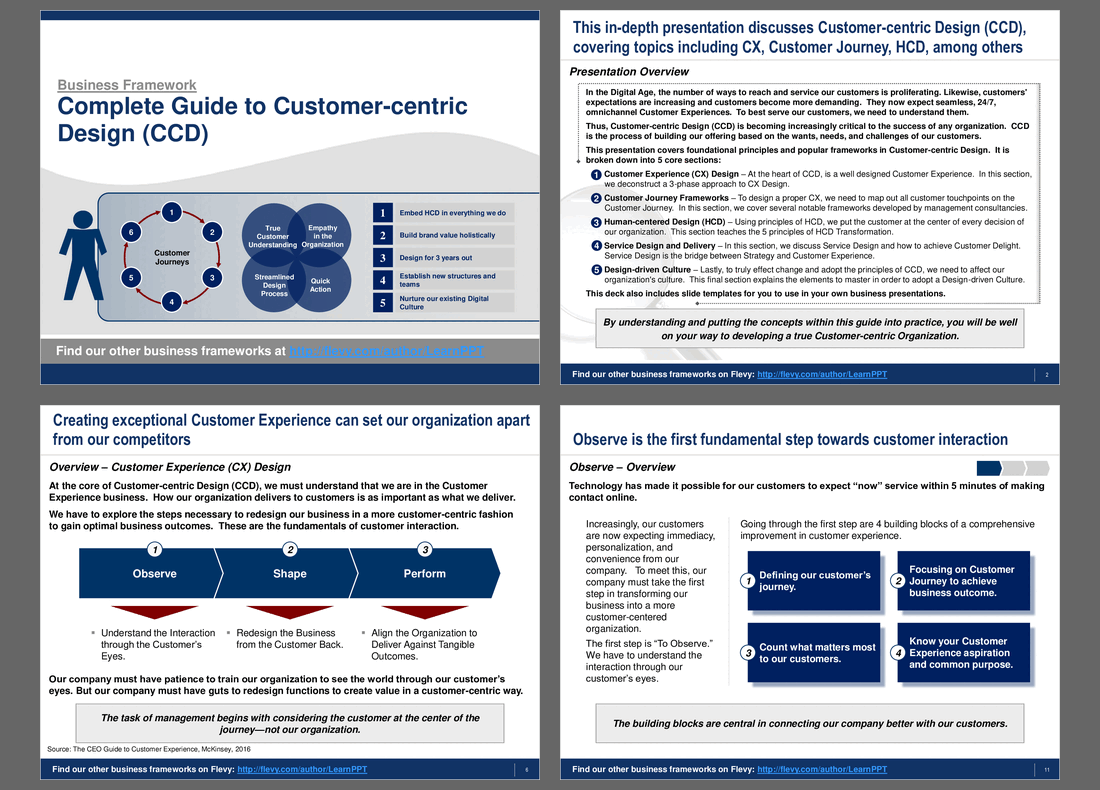
In the Digital Age, the number of ways to reach and service our customers is proliferating. Likewise, customers' expectations are increasing and customers become more demanding. They now expect seamless, 24/7, omnichannel Customer Experiences. To best serve our customers, we need to understand them.
Thus, Customer-centric Design (CCD) is becoming increasingly critical to the success of any organization. CCD is the process of building our offering based on the wants, needs, and challenges of our customers.
This presentation covers foundational principles and popular frameworks in Customer-centric Design. It is broken down into 5 core sections:
1. Customer Experience (CX) Design – At the heart of CCD, is a well designed Customer Experience. In this section, we deconstruct a 3-phase approach to CX Design.
2. Customer Journey Frameworks – To design a proper CX, we need to map out all customer touchpoints on the Customer Journey. In this section, we cover several notable frameworks developed by management consultancies.
3. Human-centered Design (HCD) – Using principles of HCD, we put the customer at the center of every decision of our organization. This section teaches the 5 principles of HCD Transformation.
4. Service Design and Delivery – In this section, we discuss Service Design and how to achieve Customer Delight. Service Design is the bridge between Strategy and Customer Experience.
5. Design-driven Culture – Lastly, to truly effect change and adopt the principles of CCD, we need to affect our organization's culture. This final section explains the elements to master in order to adopt a Design-driven Culture.
By understanding and putting the concepts within this guide into practice, you will be well on your way to developing a true Customer-centric Organization.
This deck also includes slide templates for you to use in your own business presentations.
This guide also delves into the latest trends in customer behavior and how to leverage them for competitive advantage. It includes practical insights on digitizing customer journeys and applying behavioral psychology to enhance customer interactions.
Got a question about the product? Email us at support@flevy.com or ask the author directly by using the "Ask the Author a Question" form. If you cannot view the preview above this document description, go here to view the large preview instead.
MARCUS OVERVIEW
This synopsis was written by Marcus [?] based on the analysis of the full 103-slide presentation.
Executive Summary
The Complete Guide to Customer-centric Design (CCD) is a meticulously crafted presentation that embodies the rigor and quality you would expect from McKinsey, Bain, or BCG-quality consulting materials (consulting-grade; not affiliated). This comprehensive guide equips organizations with the frameworks and methodologies necessary to cultivate a truly customer-centric culture. By mastering concepts such as Customer Experience (CX), Customer Journey mapping, Human-centered Design (HCD), and Service Design, executives will be empowered to enhance customer interactions and drive sustainable growth.
Who This Is For and When to Use
• Executives and leaders in customer experience and service design roles
• Product managers and development teams focused on user experience
• Marketing professionals aiming to align brand strategies with customer needs
• Change management teams implementing customer-centric initiatives
• Consultants advising organizations on customer experience transformations
Best-fit moments to use this deck:
• During strategic planning sessions focused on customer experience initiatives
• When launching new products or services that require customer journey mapping
• In workshops aimed at fostering a customer-centric culture within the organization
• For training sessions on Human-centered Design principles and practices
Learning Objectives
• Define the core principles of Customer-centric Design and its importance in today’s market
• Build a comprehensive Customer Journey map that aligns with business objectives
• Establish a Human-centered Design framework to enhance customer interactions
• Create actionable strategies for Service Design that delight customers
• Implement a Design-driven Culture that prioritizes customer empathy and understanding
• Utilize metrics and feedback to continuously improve customer experiences
Primary Topics Covered
• Customer Experience (CX) Design - This section outlines a structured approach to designing customer experiences that meet and exceed expectations.
• Customer Journey Mapping - Frameworks for visualizing the customer journey, identifying touchpoints, and enhancing overall customer satisfaction.
• Human-centered Design (HCD) - A methodology that places the customer at the center of the design process, fostering empathy and understanding.
• Service Design - Techniques for creating seamless service experiences that align with customer needs and organizational goals.
• Design-driven Culture - Elements necessary for fostering a culture that prioritizes customer-centric thinking across all organizational levels.
Deliverables, Templates, and Tools
• Customer Journey Mapping template for visualizing customer interactions
• HCD principles checklist for assessing organizational readiness
• Service Design framework to guide the development of customer experiences
• Metrics dashboard for tracking customer satisfaction and experience improvements
• Workshop agenda template for fostering a Design-driven Culture
Slide Highlights
• Overview of the Customer Experience (CX) Design process, emphasizing the importance of customer understanding
• Detailed breakdown of the Observe, Shape, and Perform phases in CX Design
• Visual representation of the Customer Decision Journey, illustrating key phases and touchpoints
• Framework for implementing Human-centered Design principles across the organization
• Key elements of Service Design that contribute to Customer Delight
Potential Workshop Agenda
Customer Experience Strategy Workshop (2 hours)
• Introductions and objectives
• Overview of Customer-centric Design principles
• Breakout session: Mapping the Customer Journey
• Group discussion: Identifying opportunities for improvement
Human-centered Design Training (1.5 hours)
• Introduction to HCD principles
• Interactive exercise: Empathy mapping
• Case study review: Successful HCD implementations
Service Design Sprint (3 hours)
• Overview of Service Design principles
• Hands-on activity: Designing a service experience
• Presentation of service design concepts and feedback
Customization Guidance
• Tailor the Customer Journey Mapping template to reflect specific customer segments and touchpoints relevant to your organization
• Adjust the HCD principles checklist to align with your organizational culture and operational capabilities
• Modify the workshop agendas to fit the unique needs and timelines of your teams
Secondary Topics Covered
• Competitive Advantage through Customer Experience
• The role of Digital Transformation in enhancing customer interactions
• Braided Design Model for cross-functional collaboration
• Minimum Viable Product (MVP) approach in service design
FAQ What is Customer-centric Design?
Customer-centric Design is a methodology that focuses on understanding and addressing the needs, wants, and challenges of customers throughout their journey with an organization.
How can I implement HCD in my organization?
Start by embedding HCD principles in all decision-making processes, ensuring that customer empathy is prioritized across all functions.
What are the key phases in Customer Experience Design?
The key phases are Observe, Shape, and Perform, each focusing on understanding customer needs, redesigning processes, and aligning the organization to deliver exceptional experiences.
How does Service Design contribute to Customer Delight?
Service Design ensures that customer interactions are seamless, efficient, and enjoyable, ultimately leading to higher customer satisfaction and loyalty.
What tools can help in mapping the Customer Journey?
Utilize templates and frameworks provided in this guide to visualize customer interactions and identify areas for improvement.
How can I measure the effectiveness of Customer-centric Design initiatives?
Implement metrics such as Customer Satisfaction (CSAT) scores, Net Promoter Scores (NPS), and feedback loops to continuously assess and refine customer experiences.
What is the significance of a Design-driven Culture?
A Design-driven Culture fosters empathy and prioritizes customer needs, leading to innovative solutions and enhanced customer loyalty.
How can I ensure my organization is ready for a Customer-centric transformation?
Conduct an assessment of current practices, gather employee feedback, and align leadership around the importance of customer-centricity in strategic planning.
Glossary
• Customer Experience (CX) - The overall perception a customer has of a brand based on their interactions.
• Customer Journey - The complete experience a customer has with a brand, from awareness to post-purchase.
• Human-centered Design (HCD) - A design approach that prioritizes the needs and experiences of users.
• Service Design - The planning and organization of a service to improve its quality and the interaction between service providers and customers.
• Design-driven Culture - An organizational culture that prioritizes design thinking and customer empathy in decision-making.
• Customer Satisfaction (CSAT) - A measure of how products or services meet customer expectations.
• Net Promoter Score (NPS) - A metric that gauges customer loyalty and likelihood to recommend a brand.
• Minimum Viable Product (MVP) - The simplest version of a product that can be released to gather feedback and iterate.
• Empathy Mapping - A tool used to understand customer feelings, thoughts, and behaviors.
• Touchpoint - Any interaction between a customer and a brand throughout the customer journey.
• Feedback Loop - A process where customer feedback is used to improve products or services continuously.
• Competitive Advantage - A condition that allows a company to perform better than its competitors.
• Digital Transformation - The integration of digital technology into all areas of a business, fundamentally changing how it operates and delivers value to customers.
This PPT slide highlights the importance of customer-centricity within the Human-Centered Design (HCD) framework. It emphasizes that all organizational functions—Strategy, Product Development, Operations, Marketing, Sales, and Customer Service—must realign to enhance the customer experience. A visual representation places the customer at the center, with arrows indicating two-way interactions, underscoring the necessity of understanding and responding to customer needs. The integration of Digital Transformation technologies is presented as a means to deepen empathy and create meaningful connections with customers, highlighting that technology should enhance customer engagement, not just efficiency. This approach fosters a holistic view of the customer journey, where insights across departments inform and improve practices.
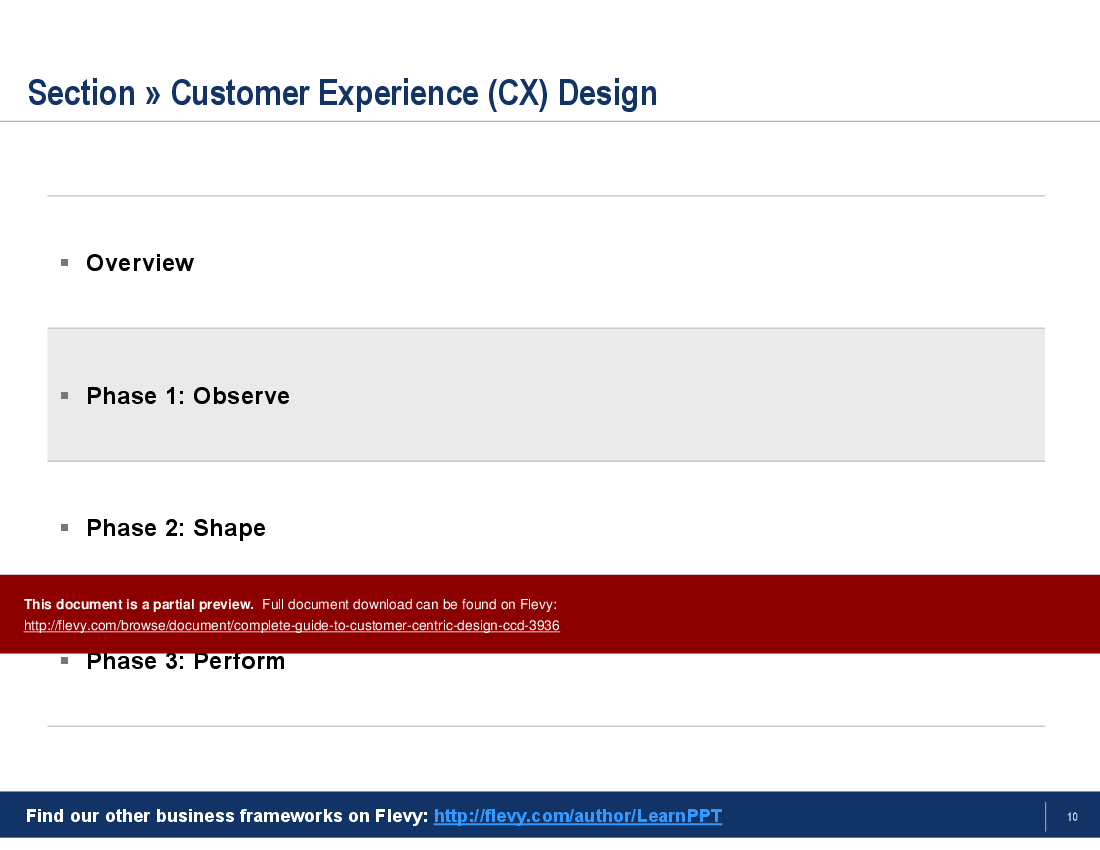
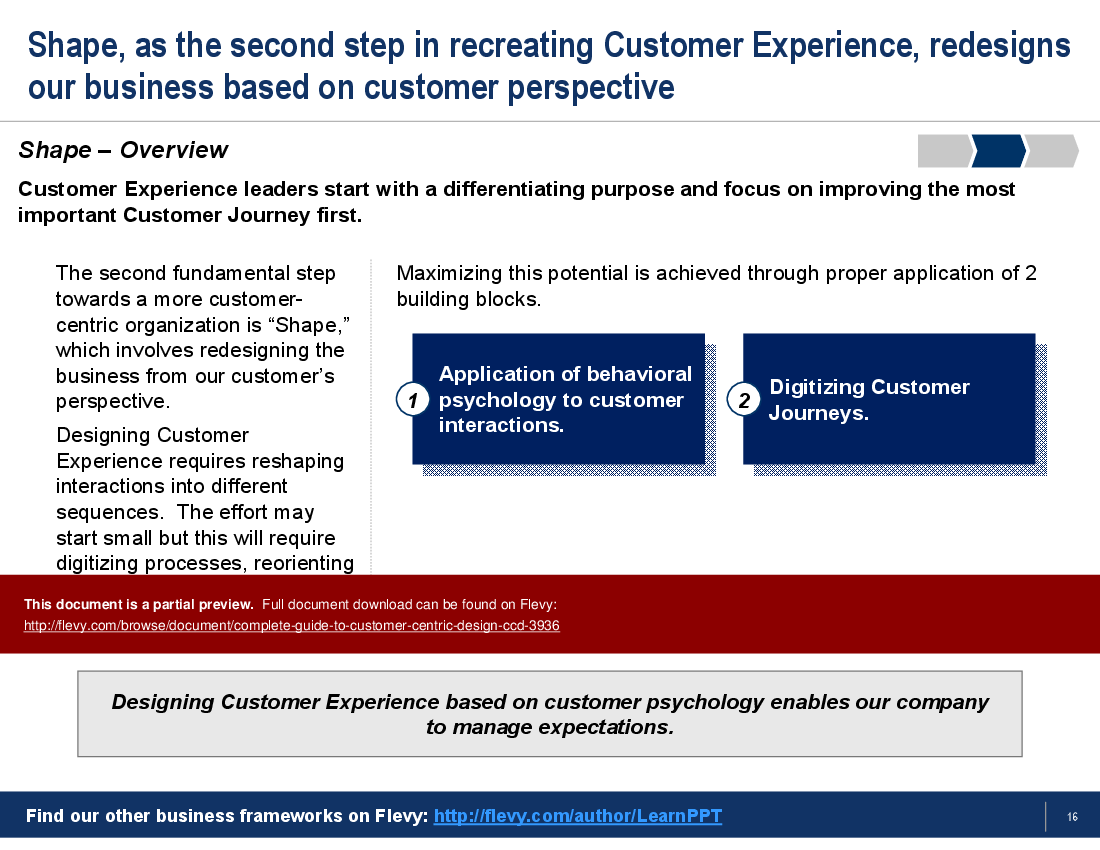
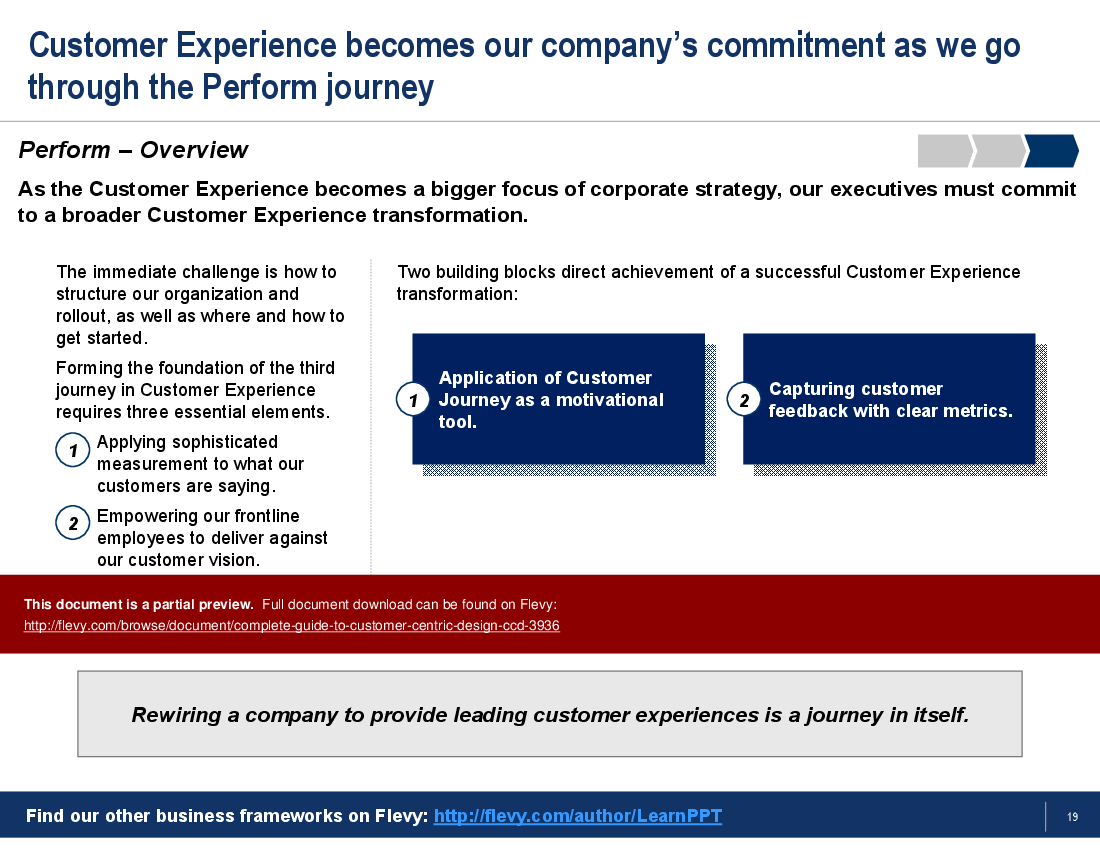
This PPT slide presents a framework for enhancing Customer Experience (CX) through Customer-centric Design (CCD), organized into 3 phases: Observe, Shape, and Perform.
In the "Observe" phase, the focus is on gaining insights into customer interactions to identify areas for improvement by understanding customer perceptions. The "Shape" phase involves redesigning the business model based on these insights to align processes and offerings with customer expectations.
The "Perform" phase ensures all organizational functions deliver a superior customer experience, requiring management to train employees in a customer-centric mindset and implement changes that add value. Management must prioritize the customer journey over internal structures to foster a culture that values customer experience, leading to improved business performance and customer satisfaction.
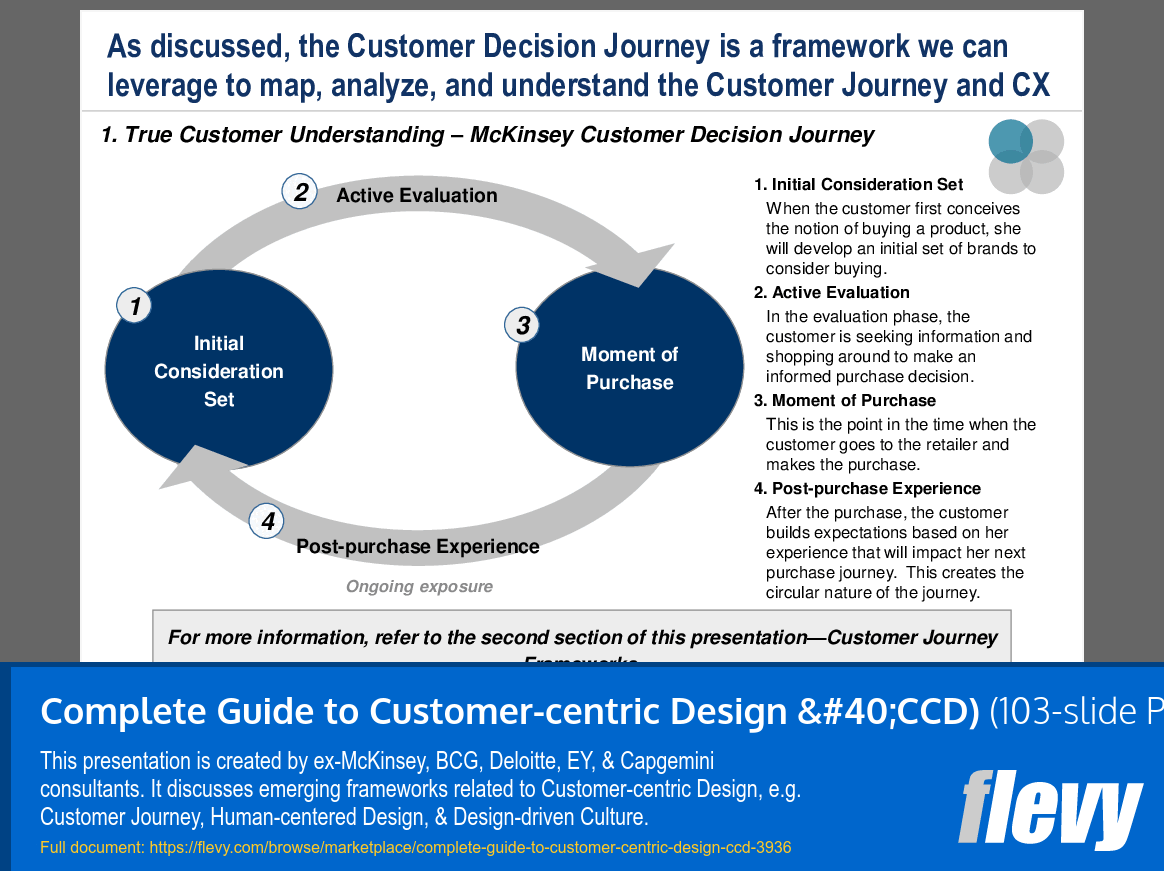
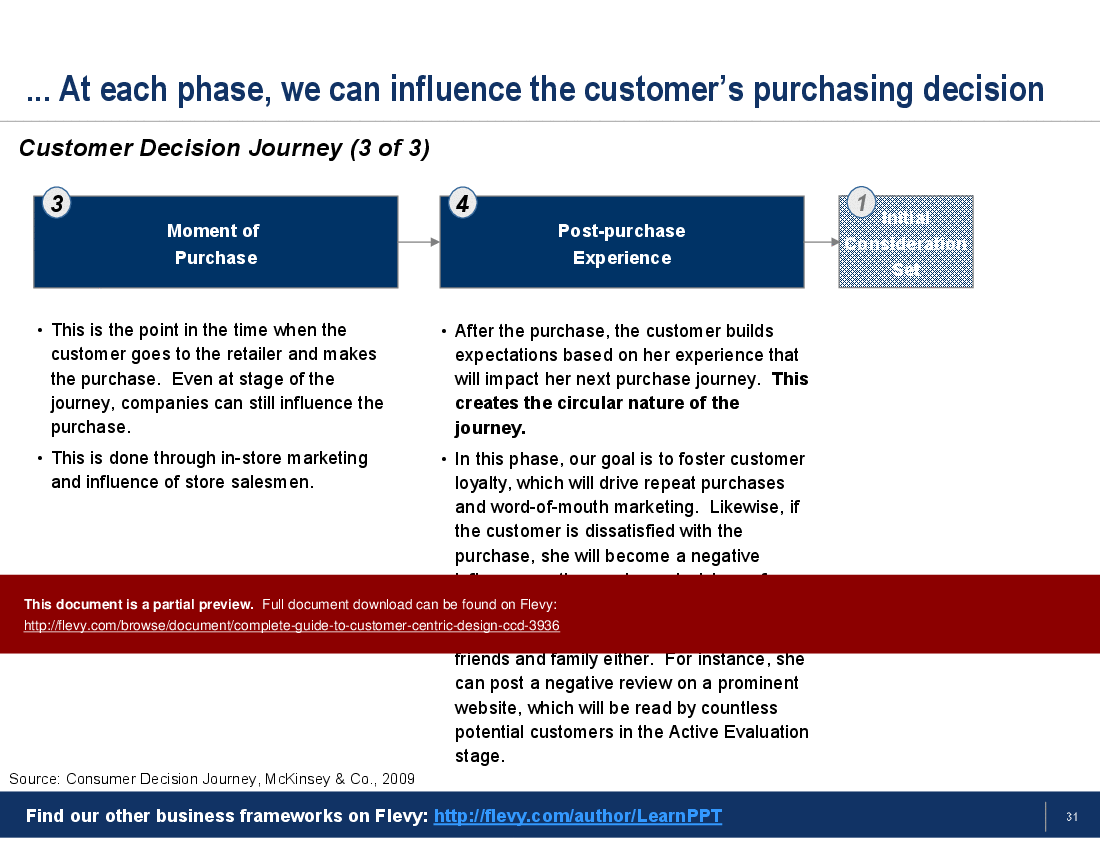
The McKinsey Customer Decision Journey framework outlines the stages of a customer's purchasing decision, depicted as a circular process emphasizing ongoing engagement. The first stage, "Initial Consideration Set," involves customers developing a preliminary list of brands they are open to considering, laying the foundation for evaluation. In the "Active Evaluation" phase, customers seek information and compare options, influencing their perception of value. The "Moment of Purchase" is when customers choose a retailer and complete the transaction, culminating the previous stages. The "Post-purchase Experience" stage reflects on customer experiences, impacting future purchasing behavior and fostering brand loyalty. This framework helps organizations map and analyze customer interactions to enhance customer experience and engagement strategies.
This PPT slide introduces the Customer Satisfaction Pyramid Model, illustrating the relationship between service levels, business outcomes, and recommendation rates. As the customer journey becomes more digitized, leveraging data and self-service tools enhances customer satisfaction (CSAT) scores. The pyramid structure outlines service levels, from foundational elements like speed and employee feedback to higher-level metrics such as customer experience and journey outcomes. Specific metrics indicate a positive correlation between service improvements and increased recommendation rates, with a 3% overall CSAT increase, a 10% rise in service CSAT, and a 17% increase in call center CSAT. Operational factors, including speed and first-call resolution, are crucial for maximizing customer experience and aligning operational efforts with customer satisfaction goals.
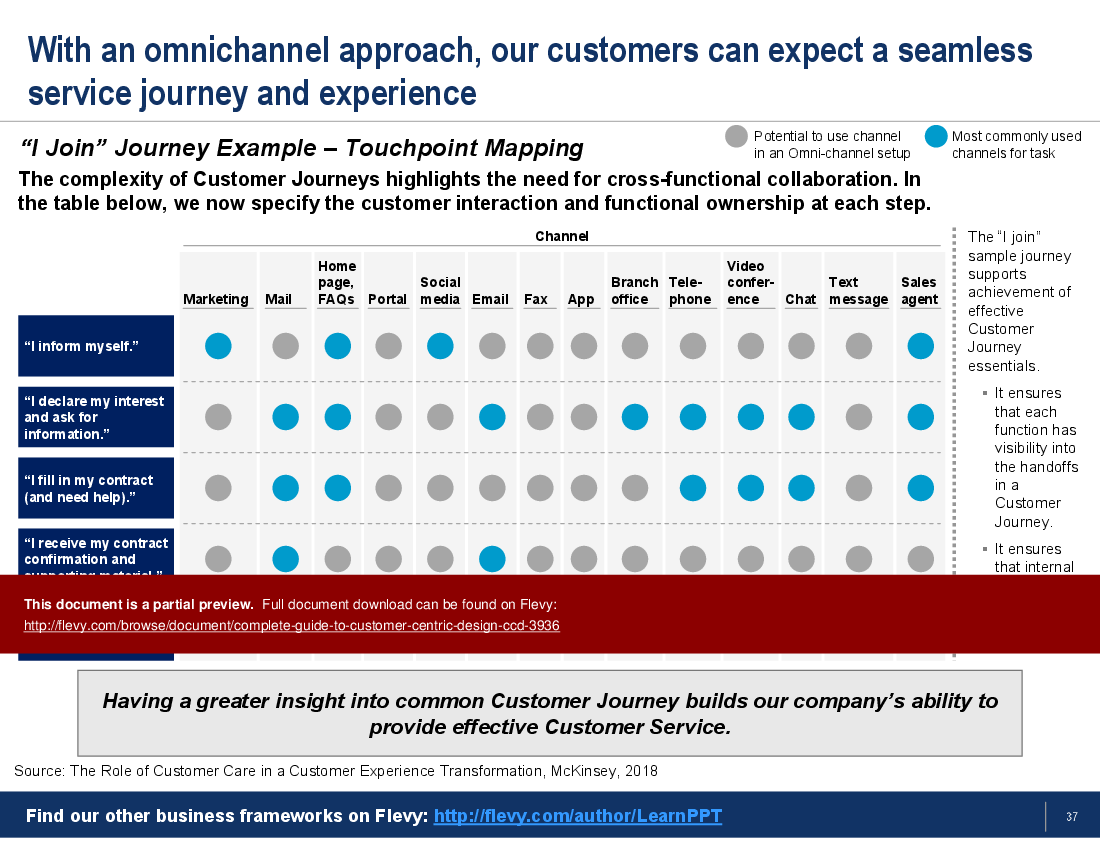
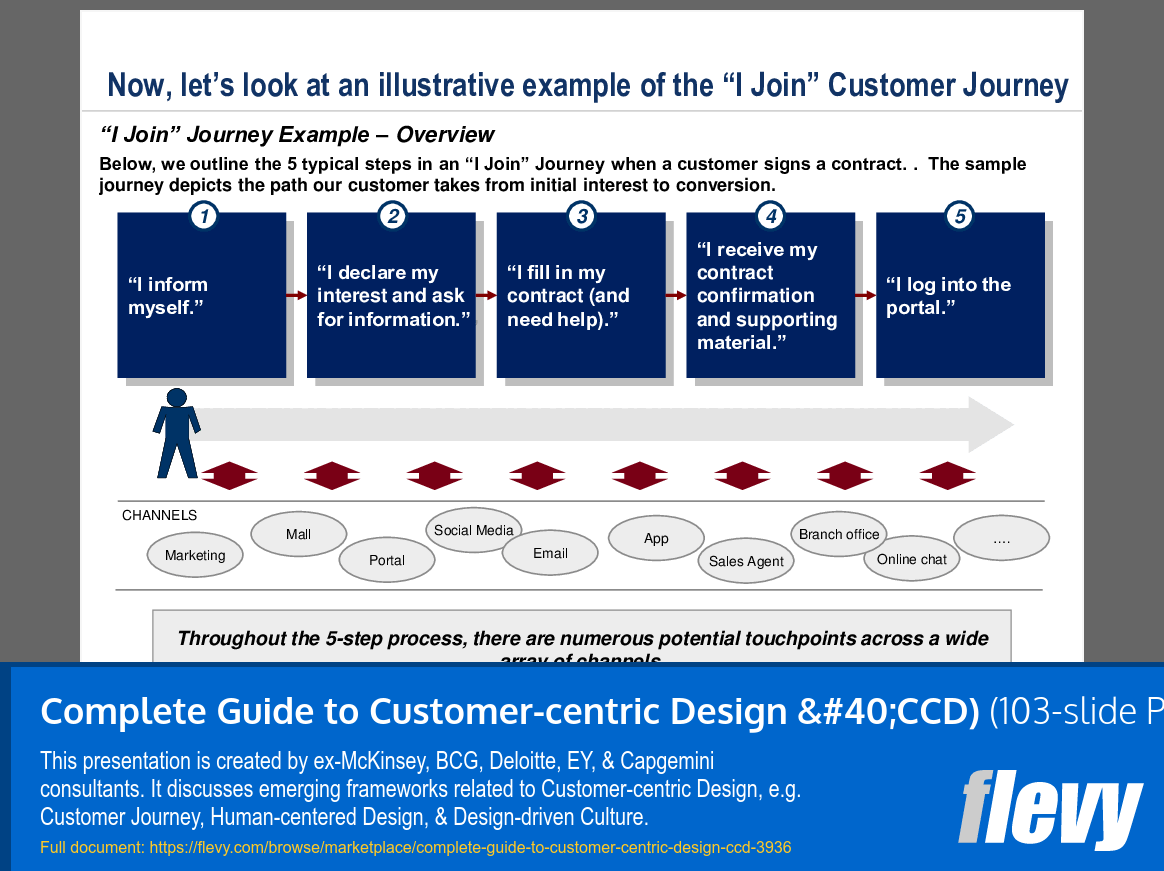
This PPT slide details the "I Join" customer journey, focusing on touchpoint mapping to enhance service experience. It outlines customer interactions across channels like marketing, social media, and email, with stages such as informing oneself and logging into a portal. Color coding indicates channel utilization potential, highlighting commonly used channels for each task. This structure necessitates cross-functional collaboration to ensure a cohesive customer experience. Key insights include the importance of visibility into handoffs between functions and aligning internal processes with customer interactions. Mapping touchpoints helps identify gaps and opportunities for improvement, leading to a more effective customer journey and enhanced service offerings.
This PPT slide presents a framework for a Customer Experience (CE) measurement system centered on customer journeys. The pyramid structure begins with a top-level CE metric linked to business outcomes, serving as a foundation for performance evaluation. The next layer assesses journey experience across various touchpoints, moving beyond mere interaction tracking to gain insights into overall performance. Regular, objective metrics act as indicators for effective journey building. Journey analytics and operational key performance indicators (KPIs) provide data-driven insights for identifying improvement areas and operational efficiencies. Employee feedback is essential for gauging customer experiences and enhancing operations. At the pyramid's base lies the organizational and cultural foundation, including change management capabilities and a customer-centric culture, reinforcing the interconnectedness of these elements in a robust CE measurement system.
Embedding Human-Centered Design (HCD) into business operations enhances emotional connections with customers. HCD focuses on understanding and empathizing with customer needs, habits, and pain points, shifting from traditional non-customer-centric areas to a user-oriented approach. A holistic application of HCD integrates it from strategy formulation to implementation, tapping into customer motivations for products and services that resonate emotionally. Engaging with customers in a shared community amplifies HCD principles, providing insights into perceptions, preferences, and frustrations. These insights inform organizational functions like customer service and marketing, creating a feedback loop essential for continuous improvement. A “test-and-learn” mindset fosters adaptability in meeting customer needs, positioning HCD as a foundational principle in business strategy to drive customer loyalty and satisfaction.
The "Four Wall Approach" is a structured design process emphasizing collaboration among cross-functional teams. The 4 walls are:
1. Customer Journey & Experience Wall: Focuses on understanding end-user perspectives through personas, journey mapping, and research insights to enhance customer engagement.
2. Operations & Process Wall: Highlights internal dynamics, detailing processes before and after implementation, identifying critical business decisions, and establishing key performance indicators for operational efficiency.
3. Technology Wall: Maps technical aspects, including architecture maps, data structures, and application flows, ensuring the technological framework supports the design strategy.
4. Team Planning Wall: Organizes project management elements such as the master plan, project timeline, and task statuses, maintaining alignment and accountability among team members.
This framework enhances project outcomes by addressing customer experience, operational efficiency, and technology integration simultaneously.
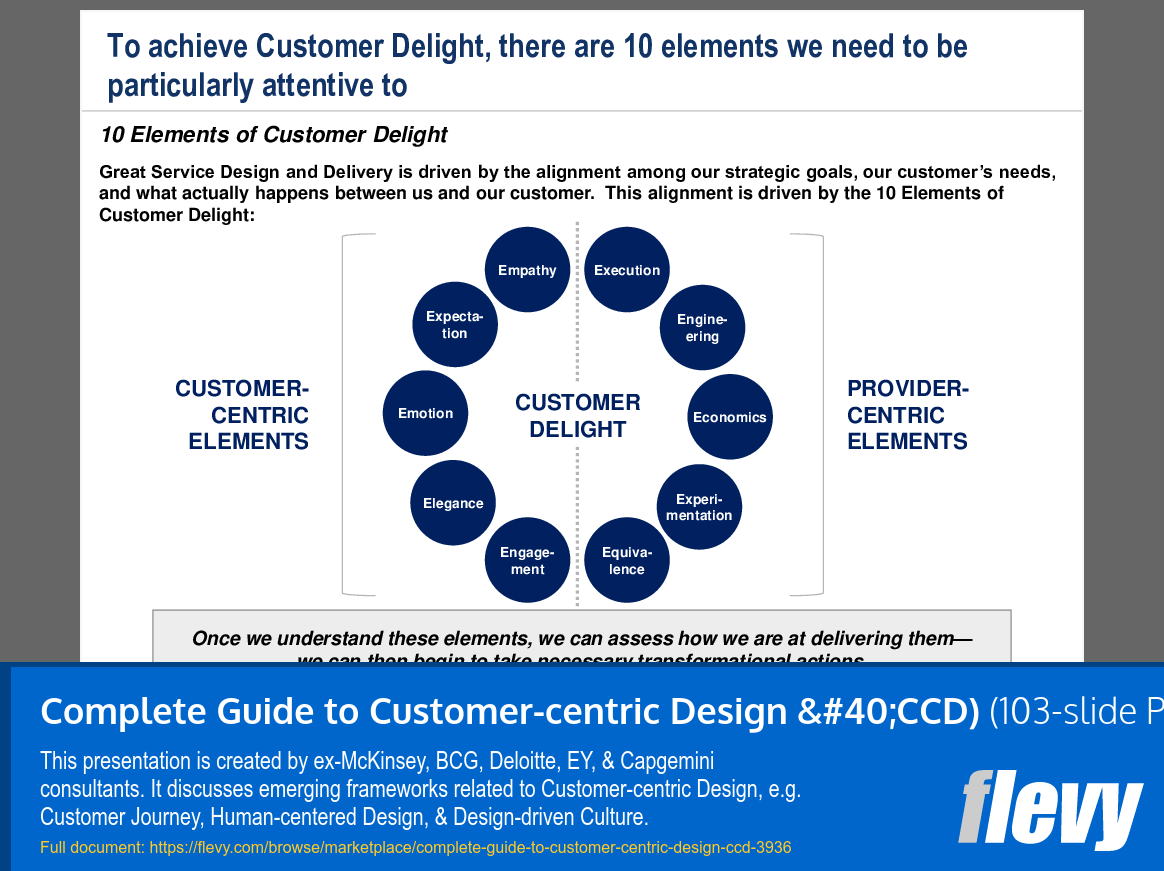
This PPT slide outlines the essential components for achieving "Customer Delight," structured into ten elements: 5 customer-centric and 5 provider-centric. The customer-centric elements include Empathy, Expectation, Emotion, Elegance, and Engagement, which enhance the customer experience. Empathy involves recognizing customer feelings, while Expectation focuses on meeting or exceeding customer anticipations. The provider-centric elements are Execution, Engineering, Economics, Experimentation, and Equivalence, emphasizing the operational aspects necessary for effective customer-centric strategy implementation. Execution pertains to service delivery, and Engineering relates to service design and functionality. Organizations must assess performance against these elements to identify improvement areas, aligning internal processes with customer expectations and driving better business outcomes.
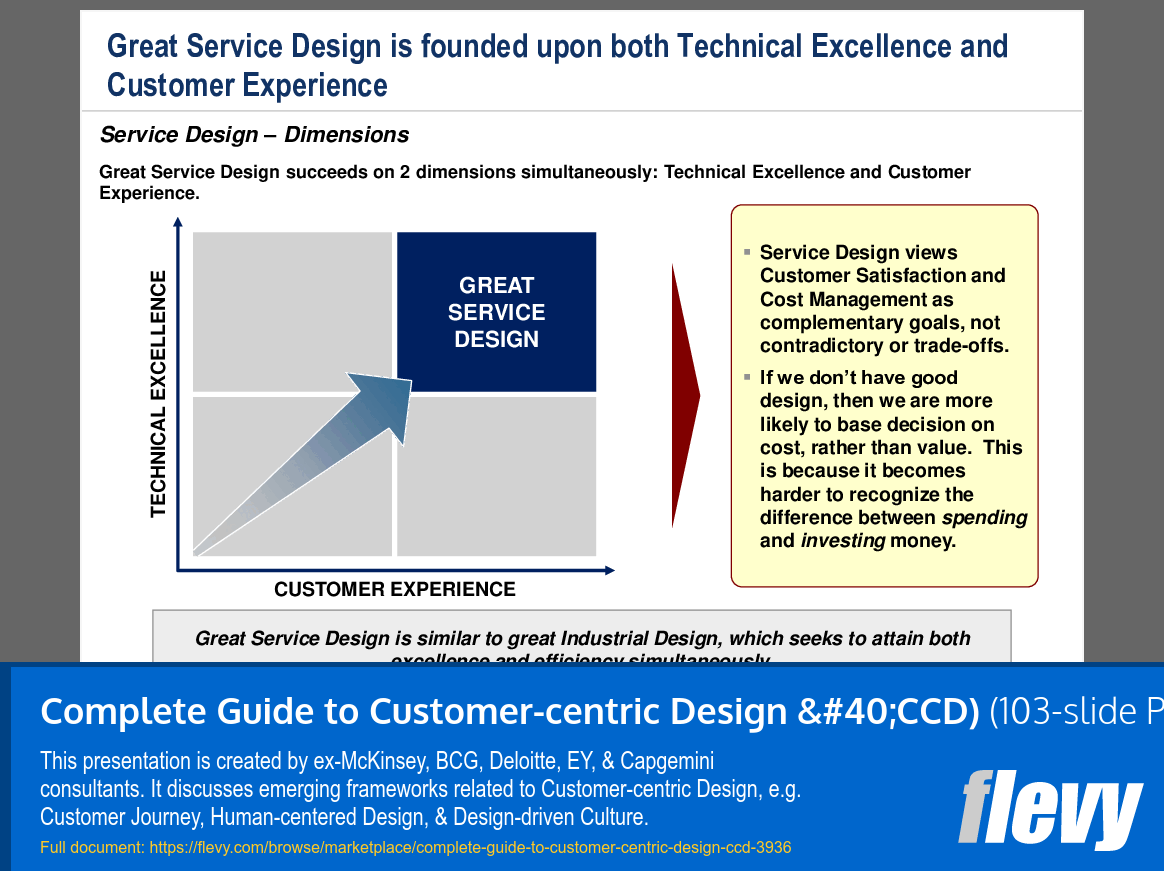
This PPT slide outlines the dual foundations of Great Service Design: Technical Excellence and Customer Experience, represented in a two-dimensional framework. The intersection of these dimensions highlights the necessity of achieving high standards in both areas for effective service design. Customer Satisfaction and Cost Management are complementary elements; neglecting good design can lead to cost-driven decisions that obscure the difference between spending and investing. Great Service Design parallels excellent Industrial Design, emphasizing the integration of technical capabilities with customer needs. Balancing technical prowess with a customer-centric approach is essential for informed decision-making, sustainable growth, and customer loyalty.
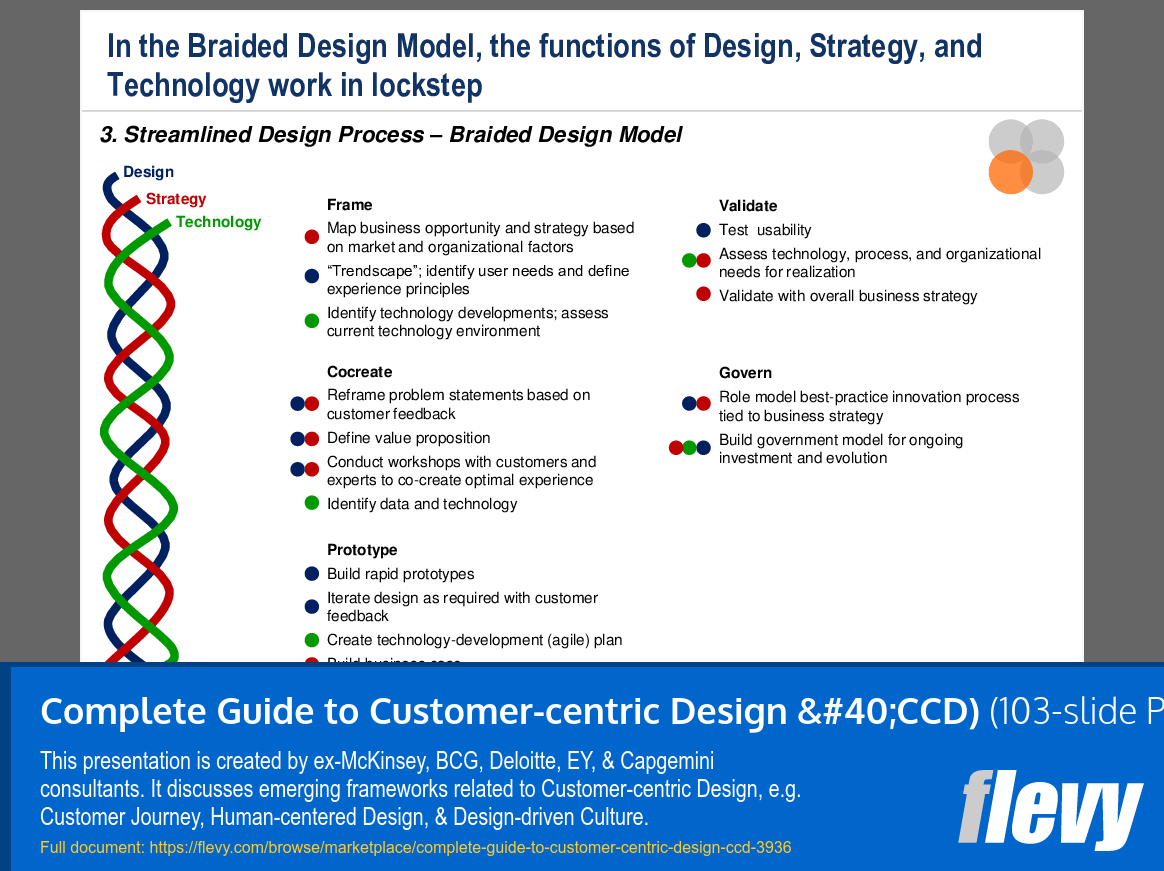
The "Streamlined Design Process" within the Braided Design Model integrates Design, Strategy, and Technology across 4 phases: Frame, Cocreate, Prototype, and Validate.
In the Frame phase, businesses map opportunities and strategies, identify user needs, and assess technology developments to align design with strategic goals. The Cocreate phase focuses on collaboration, reframing problem statements based on customer feedback, defining value propositions, and conducting workshops to co-create optimal experiences.
The Prototype phase emphasizes rapid iteration through quick prototype development and an agile technology-development plan. Finally, the Validate phase ensures designs meet usability standards and align with business strategy by assessing technology and organizational needs.
Governance is crucial, modeling best practices tied to business strategy and fostering innovation through ongoing investment and evolution.
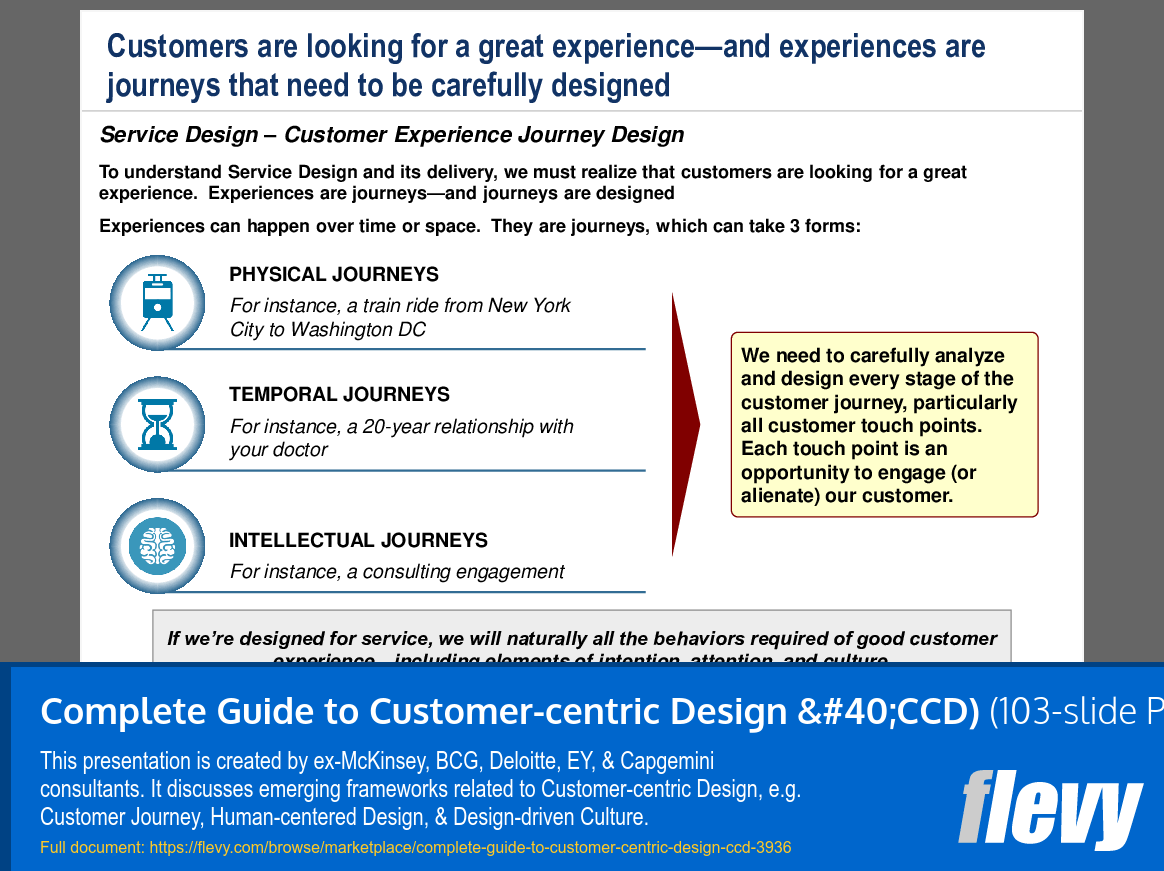
Customer experiences are categorized into 3 types: physical, temporal, and intellectual journeys. Physical journeys involve tangible experiences, such as traveling from New York City to Washington, D.C., focusing on spatial movement and interactions. Temporal journeys emphasize the duration of relationships, exemplified by a 20-year relationship with a doctor, highlighting the evolution of customer satisfaction over time. Intellectual journeys involve cognitive processes, such as consulting, stressing the importance of thoughtful interactions and delivering value through expertise. Each stage of the customer journey must be analyzed and designed, as every touchpoint can engage or alienate customers. A strategic approach to service design, incorporating intention, attention, and culture, is essential for enhancing customer satisfaction and fostering lasting relationships.
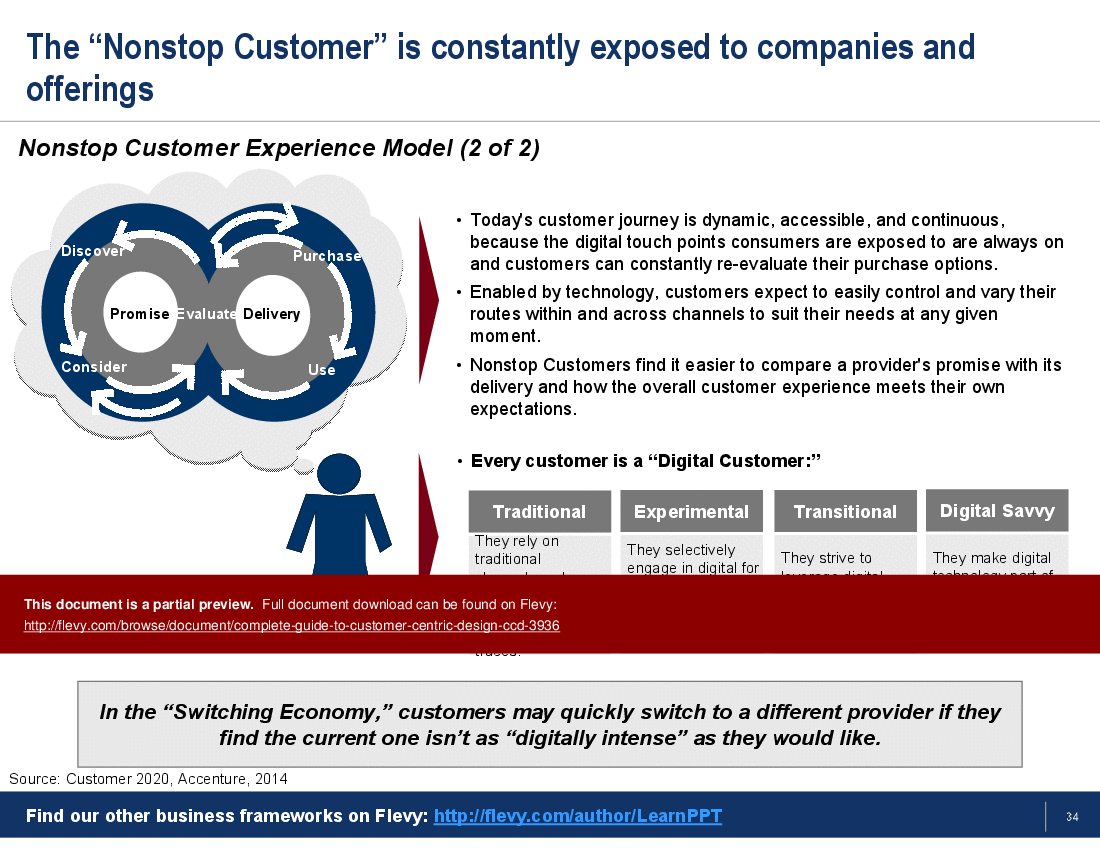
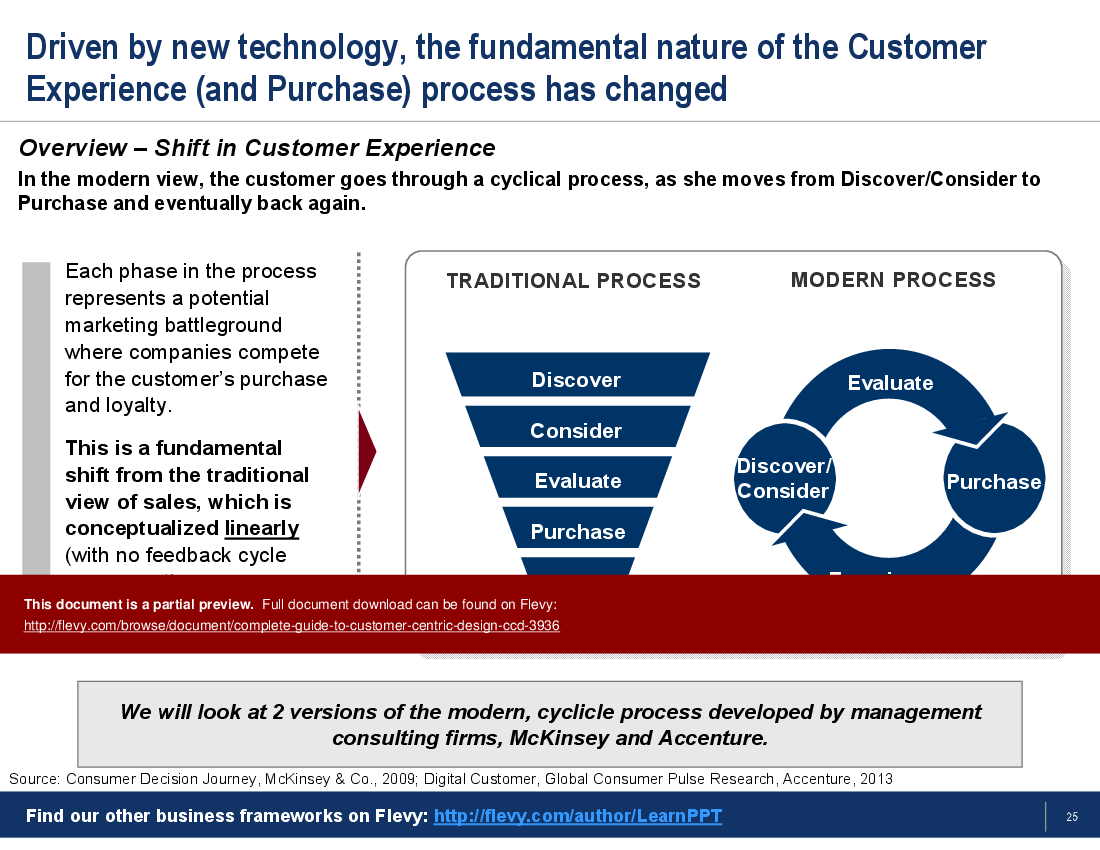
This PPT slide outlines the evolving customer experience and purchase process, highlighting the shift from a linear model to a cyclical modern customer journey. In the traditional model, customers progress through stages: Discover, Consider, Evaluate, Purchase, and Use, with no feedback loops. The modern approach features a dynamic cycle of continuous engagement in Discover/Consider, Evaluate, and Purchase stages, emphasizing the interactive relationship with brands. Each phase becomes a battleground for marketing efforts, necessitating businesses to adapt strategies for ongoing customer engagement rather than relying on a one-time sales funnel. The content suggests further exploration of 2 versions of the modern process, indicating the importance of understanding customer interactions for effective marketing strategies.
The "I Join" customer journey outlines 5 key steps in the contracting process. It begins with customers informing themselves about the service or product, followed by declaring interest and seeking further information, emphasizing early engagement. The third step involves filling out the contract with a request for assistance, highlighting the importance of support during this stage. The fourth step is receiving contract confirmation and supporting materials, which ensures clear communication and documentation. Finally, customers log into the portal for ongoing interaction and service management. Various channels for customer interaction include marketing, social media, and direct contact with sales agents, underscoring the need for seamless experiences across platforms to enhance customer satisfaction.
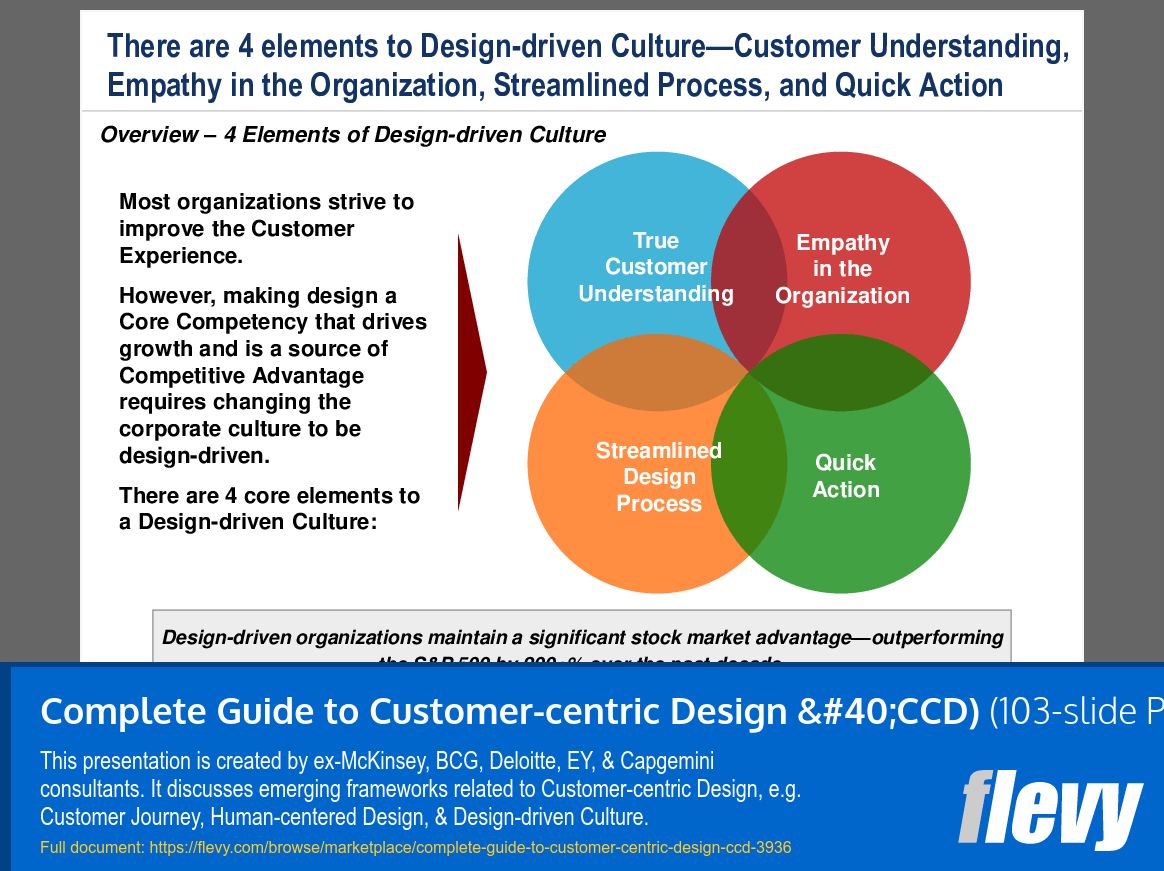
This PPT slide outlines 4 essential elements of a design-driven culture that enhances customer experience: True Customer Understanding, Empathy in the Organization, Streamlined Design Process, and Quick Action. True Customer Understanding emphasizes grasping customer needs and preferences to create resonant products and services. Empathy in the Organization focuses on cultivating a culture that values customer perspectives. Streamlined Design Process ensures efficient design methodologies that transform ideas into actionable solutions swiftly. Quick Action highlights the necessity for organizations to respond rapidly to insights and market changes, maintaining relevance and competitiveness. Adopting a design-driven culture can lead to significant financial benefits, allowing organizations to outperform peers in the stock market over time.
This PPT slide focuses on the significance of understanding customer journeys over individual touchpoints. Customers perceive companies through comprehensive experiences that encompass multiple interactions. High satisfaction ratings for specific touchpoints, like sales onboarding or support, can be misleading if the overall journey is lacking. The framework presented aligns employees around customer needs, promoting cohesive service delivery. Organizations should adopt a holistic view of customer experiences to ensure consistent value creation. Key metrics indicate that measuring the entire customer journey can enhance satisfaction by 56-117% and recommendation likelihood by 58-104%. This data highlights that customer journeys are more strongly linked to business outcomes than isolated touchpoints. A shift from touchpoints to comprehensive journeys can lead to improved customer experiences and business performance.
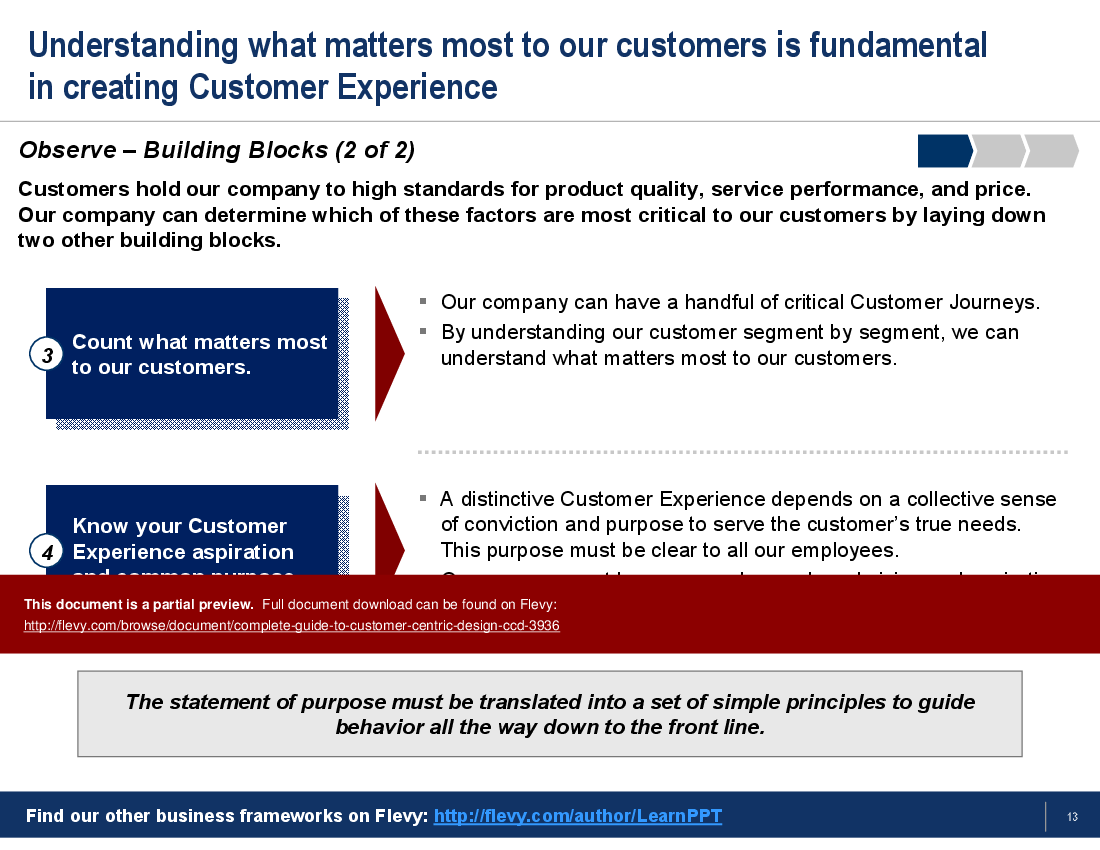
Observation is critical for enhancing customer interaction, driven by evolving customer expectations for immediacy, personalization, and convenience. Organizations must adopt a customer-centered approach, focusing on the concept of "To Observe," which emphasizes understanding customer interactions from their perspective.
Four foundational elements enhance customer experience:
1. "Defining our customer’s journey" involves mapping the customer experience to identify touchpoints and pain points.
2. "Focusing on Customer Journey to achieve business outcomes" ensures alignment of customer experiences with business objectives for tangible results.
3. "Count what matters most to our customers" prioritizes customer needs and preferences for tailored services.
4. "Know your Customer Experience aspiration and common purpose" encourages alignment of services with customer aspirations, fostering deeper connections.
This approach lays the groundwork for effective engagement strategies.
Source: Best Practices in Customer Experience PowerPoint Slides: Complete Guide to Customer-centric Design (CCD) PowerPoint (PPT) Presentation Slide Deck, LearnPPT Consulting
This presentation is created by ex-McKinsey, BCG, Deloitte, EY, & Capgemini consultants. It discusses emerging frameworks related to Customer-centric Design, e.g. Customer Journey, Human-centered Design, & Design-driven Culture.
We are a team of management consultants trained by top tier global consulting firms (including McKinsey, BCG, Deloitte, EY, Capgemini) with a collective experience of several decades. We specialize in business frameworks based on real-life consulting engagements.
We have served 100s of clients that range from Fortune 500 companies to tech startups to
... [read more] $1B+ private companies.
Utilize our consulting frameworks to apply structured thinking & analysis to address your business challenges, uncover strategic insights, and implement workable solutions. Our PowerPoint presentations follow traditional consulting slide design formats, starting with a clear slide headline. Easily customize and repurpose our slides for your own business presentations.
Beyond business frameworks & methodologies, we also offer PowerPoint templates and other business templates. Our templates are professionally designed and have been used in thousands of deliverables & work products across hundreds of clients.
The average daily rate of a McKinsey consultant is $6,625 (not including expenses). The average price of a Flevy document is $65.
Trusted by over 10,000+ Client Organizations
Since 2012, we have provided business templates to over 10,000 businesses and organizations of all sizes, from startups and small businesses to the Fortune 100, in over 130 countries.
"FlevyPro has been a brilliant resource for me, as an independent growth consultant, to access a vast knowledge bank of presentations to support my work with clients. In terms of RoI, the value I received from the very first presentation I downloaded paid for my subscription many times over! The
quality of the decks available allows me to punch way above my weight – it's like having the resources of a Big 4 consultancy at your fingertips at a microscopic fraction of the overhead.
"
– Roderick Cameron, Founding Partner at SGFE Ltd
"If you are looking for great resources to save time with your business presentations, Flevy is truly a value-added resource. Flevy has done all the work for you and we will continue to utilize Flevy as a source to extract up-to-date information and data for our virtual and onsite presentations!"
– Debbi Saffo, President at The NiKhar Group
"Flevy is now a part of my business routine. I visit Flevy at least 3 times each month.
Flevy has become my preferred learning source, because what it provides is practical, current, and useful in this era where the business world is being rewritten.
many challenges and there is the need to make the right decisions in a short time, with so much scattered information, we are fortunate to have Flevy. Flevy investigates, selects, and puts at our disposal the best of the best to help us be successful in our work.
"
– Omar Hernán Montes Parra, CEO at Quantum SFE
"As an Independent Management Consultant, I find Flevy to add great value as a source of best practices, templates and information on new trends. Flevy has matured and the quality and quantity of the library is excellent. Lastly the price charged is reasonable, creating a win-win value for
the customer, Flevy and the various authors. This is truly a service that benefits the consulting industry and associated clients. Thanks for providing this service.
"
– Jim Schoen, Principal at FRC Group
"My FlevyPro subscription provides me with the most popular frameworks and decks in demand in today’s market. They not only augment my existing consulting and coaching offerings and delivery, but also keep me abreast of the latest trends, inspire new products and service offerings for my practice, and educate me
in a fraction of the time and money of other solutions. I strongly recommend FlevyPro to any consultant serious about success.
"
– Bill Branson, Founder at Strategic Business Architects
"I have used FlevyPro for several business applications. It is a great complement to working with expensive consultants. The quality and effectiveness of the tools are of the highest standards."
– Moritz Bernhoerster, Global Sourcing Director at Fortune 500
"As a niche strategic consulting firm, Flevy and FlevyPro frameworks and documents are an on-going reference to help us structure our findings and recommendations to our clients as well as improve their clarity, strength, and visual power. For us, it is an invaluable resource to increase our impact and value."
– David Coloma, Consulting Area Manager at Cynertia Consulting
"One of the great discoveries that I have made for my business is the Flevy library of training materials.

As a Lean Transformation Expert, I am always making presentations to clients on a variety of topics: Training, Transformation, Total Productive Maintenance, Culture, Coaching, Tools, Leadership Behavior, etc. Flevy
It is well worth the money to purchase these presentations. Sure, I have the knowledge and information to make my point. It is another thing to create a presentation that captures what I want to say. Flevy has saved me countless hours of preparation time that is much better spent with implementation that will actually save money for my clients.
"
– Ed Kemmerling, Senior Lean Transformation Expert at PMG
Download our FREE Digital Transformation Templates
Download our free compilation of 50+ Digital Transformation slides and templates. DX concepts covered include Digital Leadership, Digital Maturity, Digital Value Chain, Customer Experience, Customer Journey, RPA, etc.
Download our FREE Digital Transformation Templates
Get Our FREE Product.
Download our free compilation of 50+ Digital Transformation slides and templates. DX concepts covered include Digital Leadership, Digital Maturity, Digital Value Chain, Customer Experience, Customer Journey, RPA, etc.