
It goes without saying that understanding the competitive landscape is crucial to succeeding in the market.
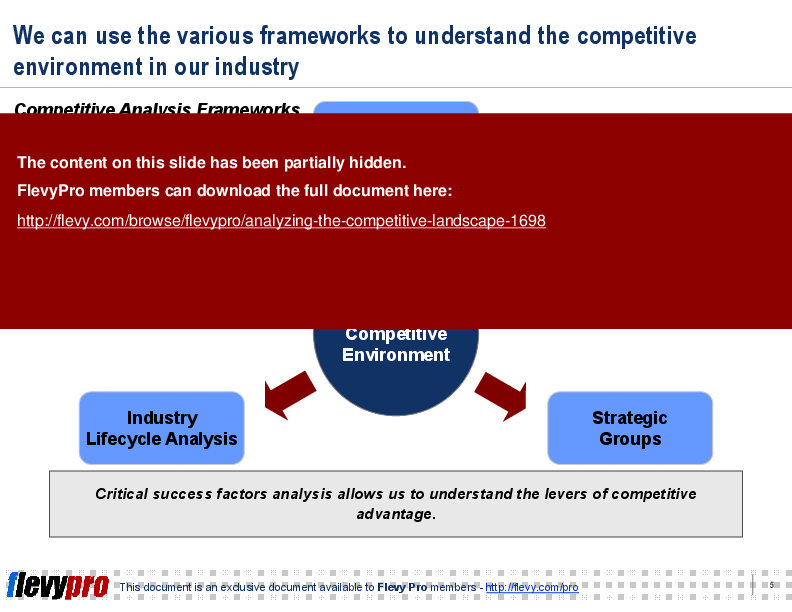
This presentation discusses several frameworks to understand and analyze the competitive environment—and ultimately develop a sustainable competitive advantage.
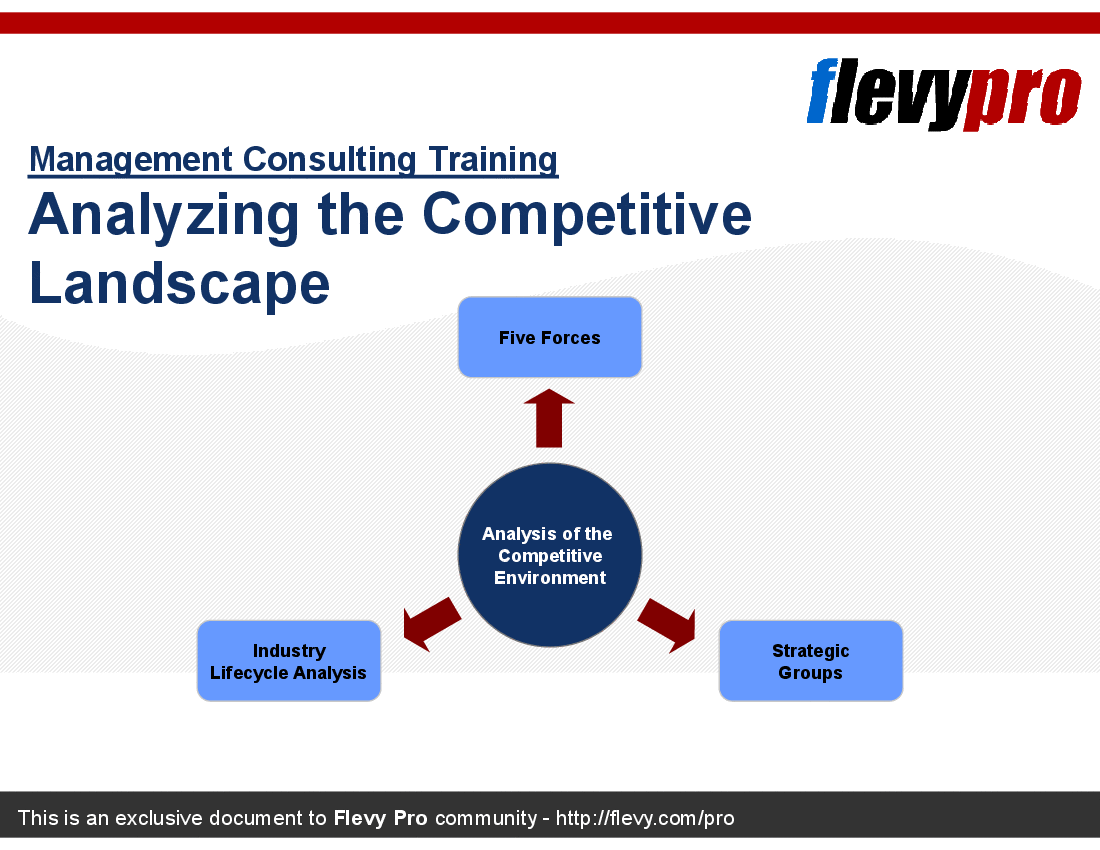
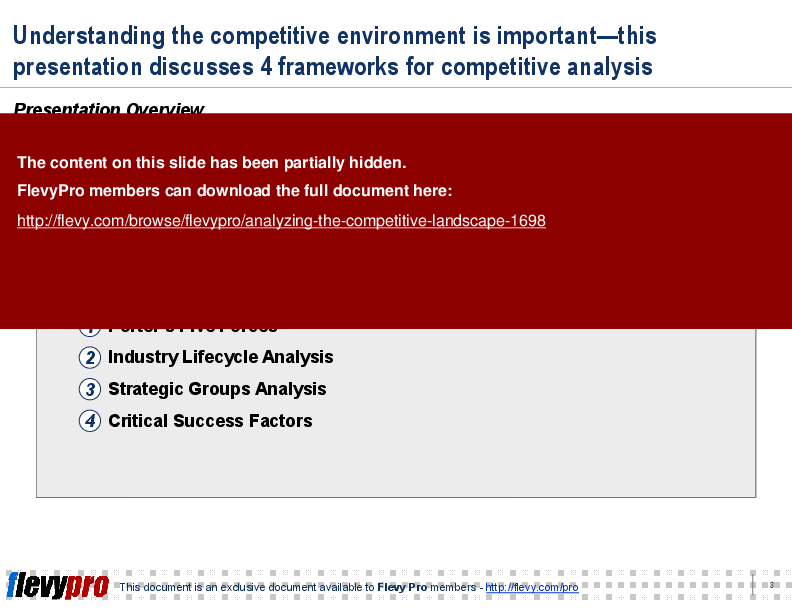
This presentation will explain the following 4 competitive analysis frameworks:
• Porter's Five Forces
• Industry Lifecycle Analysis
• Strategic Groups Analysis
• Critical Success Factors
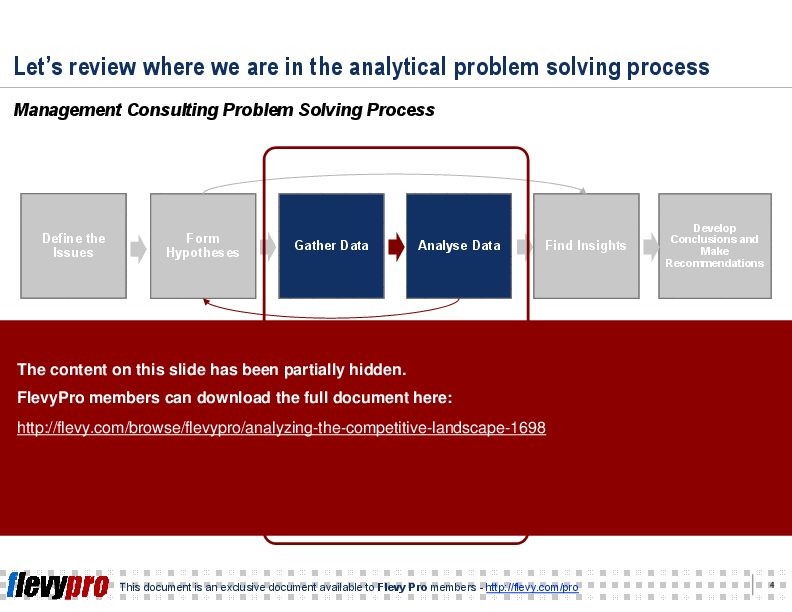
This PPT provides a comprehensive guide to analyzing the competitive landscape, offering practical insights into various frameworks. It delves into the Management Consulting Problem Solving Process, emphasizing the importance of gathering and analyzing data to derive actionable insights. The presentation outlines the steps to effectively apply these frameworks, ensuring a thorough understanding of market dynamics.
The presentation also highlights the significance of understanding industry lifecycle stages, from introduction to decline. It explains how each stage impacts competitive strategies and market positioning. By identifying the current stage of the lifecycle, executives can make informed decisions on strategic initiatives and resource allocation.
Critical Success Factors (CSFs) are another focal point of this document. The presentation discusses various techniques for identifying CSFs, including environmental analysis and industry structure analysis. It provides a detailed approach to conducting CSF analysis, helping executives pinpoint the key drivers of success in their industry. This document is an essential tool for any business leader looking to gain a competitive edge.
Got a question about this document? Email us at flevypro@flevy.com.
Executive Summary
The "Analyzing the Competitive Landscape" presentation equips corporate executives and consultants with essential frameworks for conducting competitive analysis. This document focuses on 4 key methodologies: Porter’s Five Forces, Industry Lifecycle Analysis, Strategic Groups Analysis, and Critical Success Factors. By utilizing these frameworks, users will gain insights into their market position, assess competitors effectively, and develop informed strategies to enhance their competitive advantage.
Who This Is For and When to Use
• Corporate strategists and business analysts focused on market positioning
• Management consultants advising clients on competitive strategy
• Product managers seeking to understand market dynamics
• Business development teams aiming to identify growth opportunities
Best-fit moments to use this deck:
• During strategic planning sessions to assess market conditions
• When preparing for competitive benchmarking exercises
• In workshops aimed at developing market entry strategies
• For ongoing market analysis and competitor tracking
Learning Objectives
• Define the competitive landscape using established frameworks
• Analyze market dynamics through Porter’s Five Forces
• Evaluate industry stages using Lifecycle Analysis
• Identify direct competitors through Strategic Groups Analysis
• Determine Critical Success Factors for competitive success
• Develop actionable insights for strategic decision-making
Table of Contents
• Competitive Analysis Overview (page 1)
• Porter’s Five Forces (page 10)
• Industry Lifecycle Analysis (page 16)
• Strategic Groups Analysis (page 21)
• Critical Success Factors (page 26)
Primary Topics Covered
• Competitive Analysis Overview - Introduction to the importance of understanding the competitive environment and the frameworks to be discussed.
• Porter’s Five Forces - A framework for analyzing the competitive forces within an industry that affect profitability and strategy.
• Industry Lifecycle Analysis - A model that outlines the stages of industry development and their implications for strategy.
• Strategic Groups Analysis - A method for identifying clusters of firms with similar strategies within an industry.
• Critical Success Factors - Key areas where performance is essential for competitive success in a market.
Deliverables, Templates, and Tools
• Framework templates for Porter’s Five Forces analysis
• Lifecycle analysis models for visualizing industry stages
• Strategic group mapping templates for competitor analysis
• Critical Success Factors assessment tools
• Example case studies for practical application of frameworks
Slide Highlights
• Overview of competitive analysis frameworks and their relevance
• Detailed breakdown of Porter’s Five Forces and their applications
• Visual representation of the industry lifecycle stages
• Strategic group mapping examples from various industries
• Insights on identifying and leveraging Critical Success Factors
Potential Workshop Agenda
Competitive Analysis Frameworks Overview (60 minutes)
• Discuss the importance of competitive analysis
• Introduce the 4 frameworks covered in the presentation
Porter’s Five Forces Deep Dive (90 minutes)
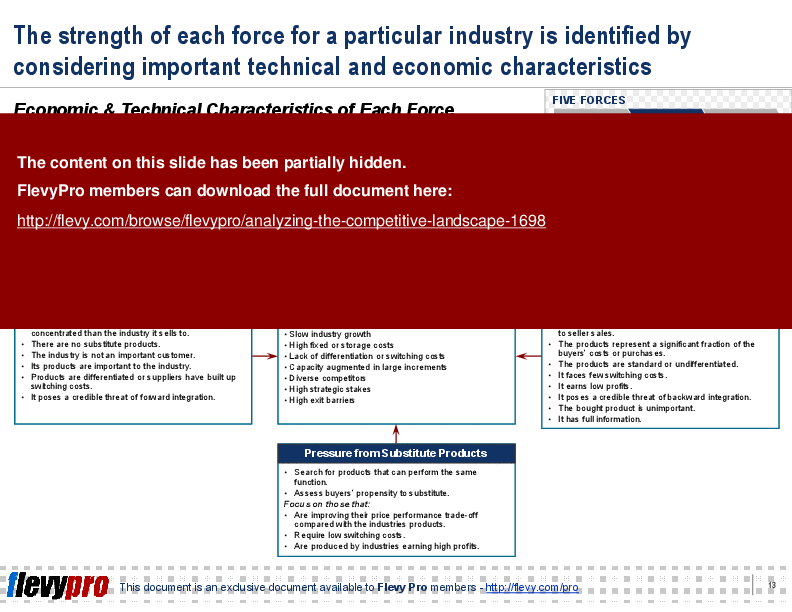
• Analyze each of the 5 forces in detail
• Group activity to assess a specific industry using the framework
Industry Lifecycle Analysis Session (60 minutes)
• Explore the stages of industry development
• Case study discussion on lifecycle impacts on strategy
Strategic Groups and Critical Success Factors (90 minutes)
• Identify strategic groups within a selected industry
• Workshop on determining Critical Success Factors for competitive advantage
Customization Guidance
• Tailor the frameworks to specific industries by incorporating relevant data and examples.
• Adjust the templates to reflect the unique competitive landscape of your organization.
• Incorporate company-specific metrics and terminology in the analysis sections.
Secondary Topics Covered
• Market concentration and its impact on competitive dynamics
• The role of technology and innovation in shaping industry structure
• The importance of customer preferences in strategic decision-making
• Evaluating the impact of regulatory changes on competitive strategies
Topic FAQ
Document FAQ
These are questions addressed within this presentation.
What are the key frameworks discussed in this presentation?
The presentation covers Porter’s Five Forces, Industry Lifecycle Analysis, Strategic Groups Analysis, and Critical Success Factors.
How can I apply these frameworks in my organization?
Utilize the frameworks to assess your competitive environment, identify strategic opportunities, and develop informed strategies tailored to your market.
What is the significance of Porter’s Five Forces?
This framework helps analyze the competitive pressures within an industry, guiding strategic decisions based on market dynamics.
How does Industry Lifecycle Analysis benefit strategic planning?
It provides insights into the current stage of an industry, helping organizations anticipate changes and adjust strategies accordingly.
What are Critical Success Factors?
These are the essential areas where a business must excel to achieve competitive success in its market.
How can Strategic Groups Analysis enhance competitive understanding?
By identifying clusters of firms with similar strategies, organizations can better understand their direct competitors and market positioning.
Can these frameworks be adapted for different industries?
Yes, the frameworks are versatile and can be customized to fit the specific characteristics and dynamics of various industries.
What types of deliverables can I expect from using this presentation?
You can expect templates, assessment tools, and case studies that facilitate the application of the discussed frameworks.
Glossary
• Porter’s Five Forces - A model for analyzing industry competition based on 5 key forces.
• Industry Lifecycle - A framework that outlines the stages of industry development.
• Strategic Groups - Clusters of firms within an industry that follow similar strategies.
• Critical Success Factors (CSFs) - Key areas essential for competitive success.
• Market Concentration - The degree to which a small number of firms dominate an industry.
• Competitive Dynamics - The ongoing actions and reactions among firms in a competitive environment.
• Customer Preferences - The tastes and preferences of consumers that influence market demand.
• Regulatory Changes - Modifications in laws and regulations that impact industry operations.
• Market Entry Strategies - Plans for entering new markets effectively.
• Competitive Advantage - The attributes that allow an organization to outperform its competitors.
• Strategic Planning - The process of defining an organization's strategy and making decisions on allocating resources.
• Market Positioning - The process of establishing a brand or product in the minds of consumers.
• SWOT Analysis - A strategic planning tool used to identify strengths, weaknesses, opportunities, and threats.
• Benchmarking - The process of comparing business processes and performance metrics to industry bests.
• Market Share - The portion of a market controlled by a particular company or product.
• Value Chain Analysis - A method for analyzing the activities within and around an organization to understand the sources of value.
• Business Strategy - A plan for how a business will compete in its market.
• Operational Efficiency - The ability to deliver products or services in the most cost-effective manner.
• Market Trends - Patterns or tendencies in the market that can influence business decisions.
• Competitive Landscape - The overall environment in which businesses compete, including competitors and market dynamics.
Source: Best Practices in Critical Success Factors, Competitive Analysis, Industry Lifecycle Analysis, Competitive Landscape, Strategic Groups Analysis PowerPoint Slides: Analyzing the Competitive Landscape PowerPoint (PPT) Presentation Slide Deck, LearnPPT Consulting
Did you need more documents?
Consider a FlevyPro subscription from $39/month. View plans here.
For $10.00 more, you can download this document plus 2 more FlevyPro documents. That's just $13 each.
This document is available as part of the following discounted bundle(s):
Save %!
Consulting Training - Industry & Market Analysis
This bundle contains 6 total documents. See all the documents to the right.

|
Download our FREE Strategy & Transformation Framework Templates
Download our free compilation of 50+ Strategy & Transformation slides and templates. Frameworks include McKinsey 7-S, Balanced Scorecard, Disruptive Innovation, BCG Curve, and many more. |