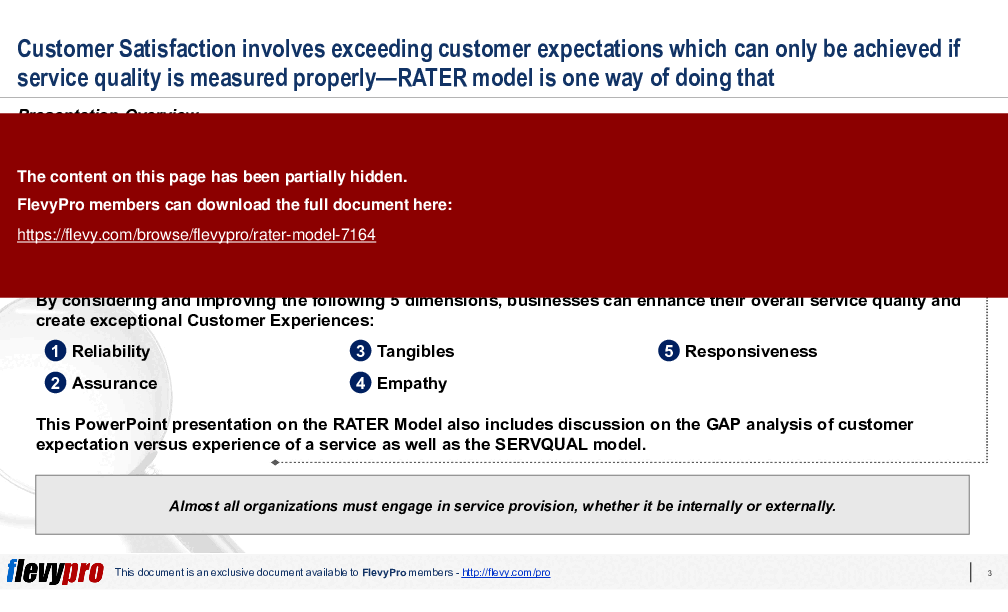

Measuring and improving service quality is crucial for enhancing Customer Satisfaction, Customer Loyalty, and overall business success. This involves collecting customer feedback, analyzing performance metrics, and implementing targeted strategies to enhance Customer Satisfaction and exceed their expectations. Almost all organizations must engage in service provision, whether it be internally or externally.
This PowerPoint presentation provides a detailed synopsis of the RATER model, which is a widely recognized framework used in the field of service quality measurement and evaluation. It helps organizations assess and improve the quality of their service offerings by focusing on 5 key dimensions.
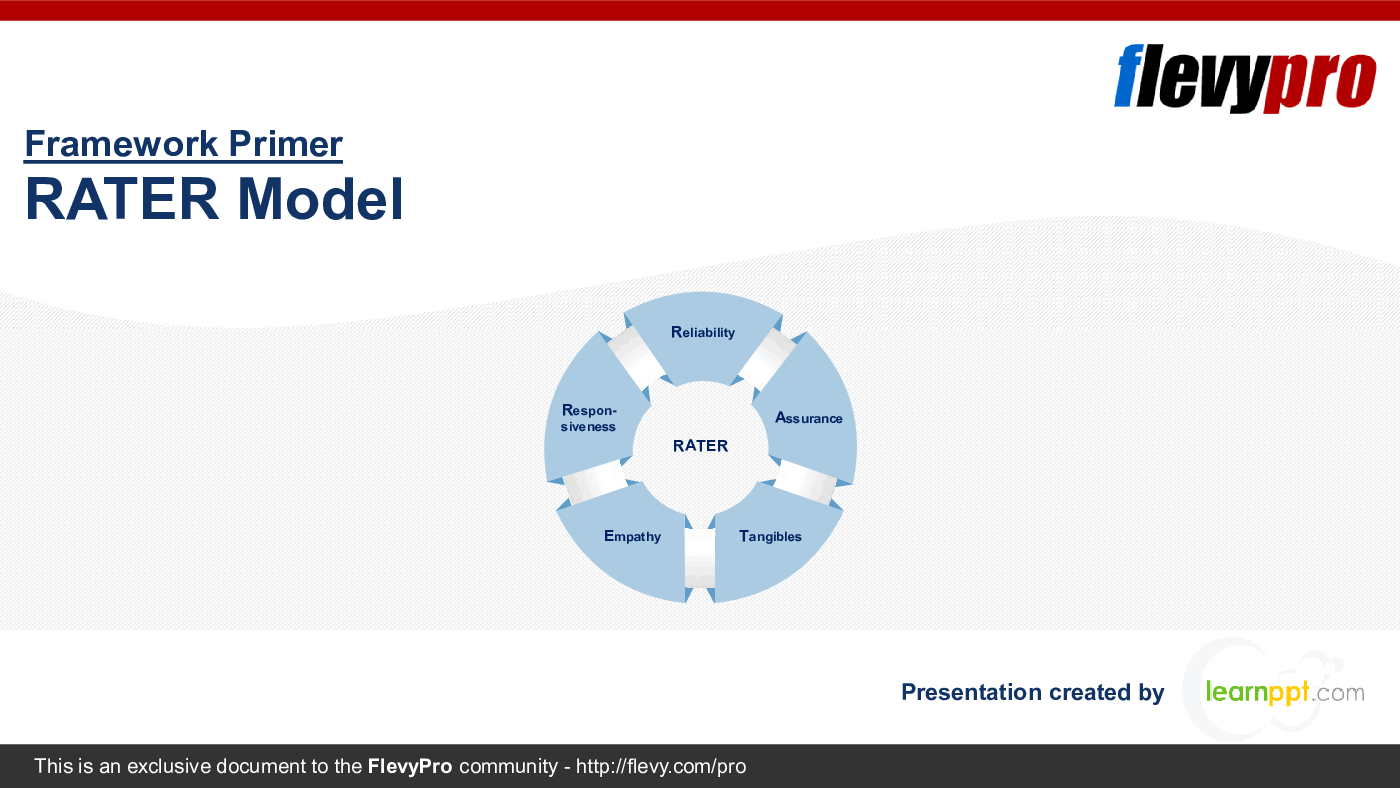
By considering and improving the following 5 dimensions, businesses can enhance their overall service quality and create exceptional Customer Experiences:
1. Reliability – Reliability pertains to the service provider's capability of delivering the service reliably, accurately, and punctually, as per promise.
2. Assurance – This dimension is composed of the knowledge, abilities, and trust-worthiness of staff; and their capacity to use this expertise to kindle trust and confidence in customers.
3. Tangibles – This relates to the material proof of the service that is being delivered. This may comprise offices, equipment, employees, and the communication and marketing materials that are being employed.
4. Empathy – Empathy is concerned with the ability of the staff to relate to the customer and understand their point of view vis-à-vis their needs. This process enables the staff to build a relationship with the customer.
5. Responsiveness – This is the staff's ability to deliver fast, first-rate service to their customers.
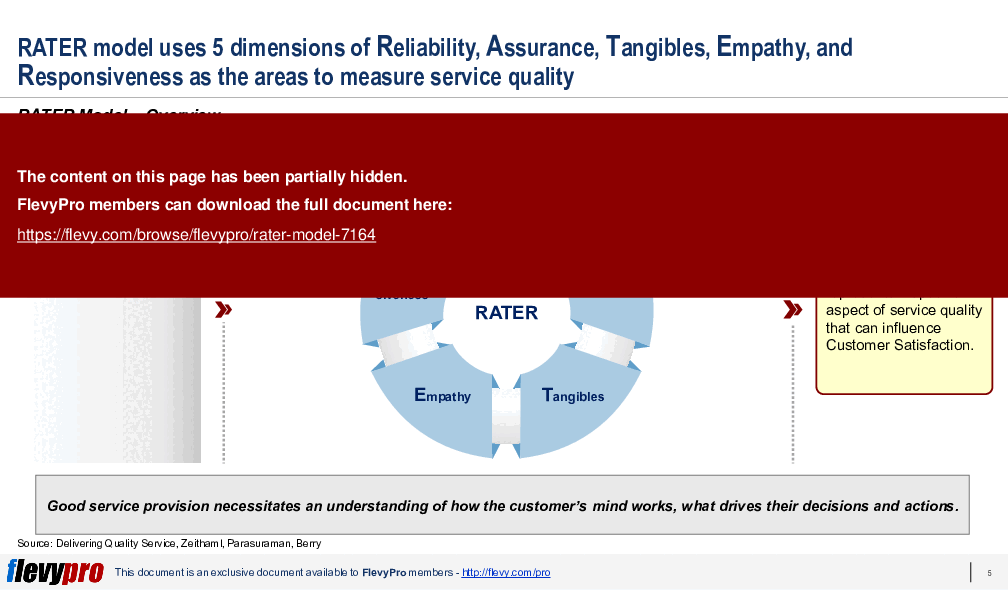
Each of these dimensions is discussed further within this presentation. Each dimension represents a specific aspect of service quality that can influence Customer Satisfaction.
This PowerPoint presentation on the RATER Model also includes discussion on the GAP analysis of customer expectation versus experience of a service, as well as the SERVQUAL model. It also includes slide templates for you to use in your own business presentations.
Got a question about this document? Email us at flevypro@flevy.com.
Executive Summary
The RATER Model presentation is designed to enhance service quality by evaluating customer experiences through 5 critical dimensions: Reliability, Assurance, Tangibles, Empathy, and Responsiveness. This framework enables organizations to assess their service offerings, identify gaps between customer expectations and experiences, and implement targeted strategies to improve customer satisfaction and loyalty. By leveraging the insights from this model, businesses can create exceptional customer experiences and drive overall success.
Who This Is For and When to Use
• Service quality managers and teams focused on enhancing customer satisfaction
• Business executives aiming to implement structured service quality assessments
• Consultants advising organizations on service improvement strategies
• Customer experience teams looking to align service delivery with customer expectations
Best-fit moments to use this deck:
• During strategic planning sessions to integrate service quality metrics
• When conducting customer feedback analysis to identify improvement areas
• In workshops aimed at training staff on customer service excellence
• For presentations to stakeholders on service quality initiatives
Learning Objectives
• Define the RATER Model and its significance in service quality assessment
• Build a comprehensive understanding of the 5 dimensions of service quality
• Establish methods for conducting a RATER Gap Analysis to identify service gaps
• Identify actionable strategies for improving customer satisfaction and loyalty
• Develop skills to analyze customer feedback effectively and implement improvements
• Create a structured approach for evaluating service quality across various touchpoints
Table of Contents
• Overview (page 3)
• RATER Model (page 5)
• Service Elements (page 11)
• RATER Gap Analysis (page 17)
• Slide Design Structure & Templates (page 21)
Primary Topics Covered
• RATER Model Overview - The RATER Model serves as a framework for assessing service quality through 5 dimensions that influence customer satisfaction.
• Service Elements - The model emphasizes key service elements: Reliability, Assurance, Tangibles, Empathy, and Responsiveness, each contributing to overall service quality.
• GAP Analysis - This process quantifies the difference between customer expectations and actual service experiences, guiding organizations in closing service gaps.
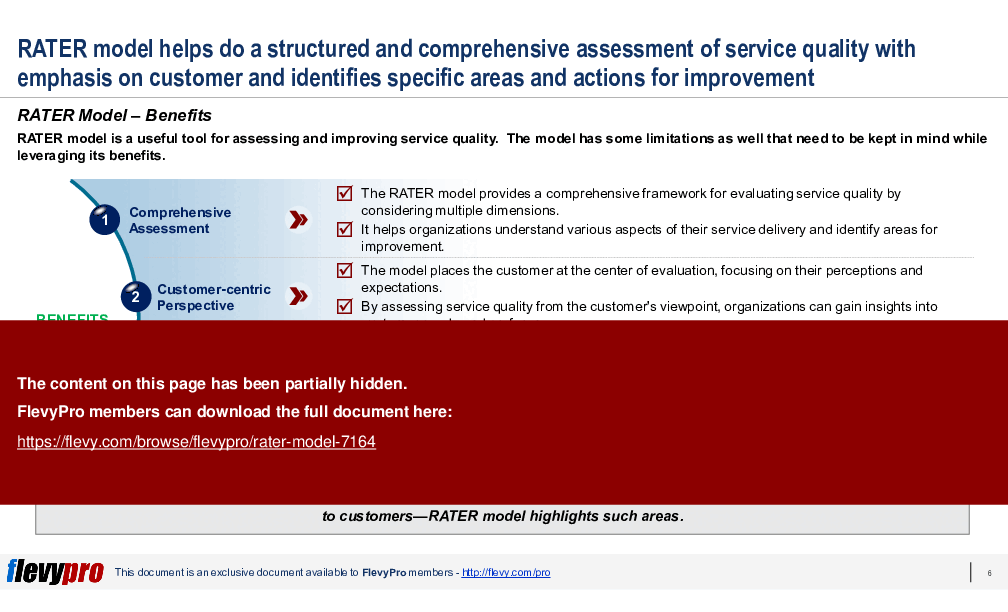
• Benefits of RATER Model - The model offers a structured approach to service evaluation, helping organizations identify areas for improvement and enhance customer experiences.
• Drawbacks of RATER Model - Awareness of the model's limitations, such as subjectivity and lack of context, is essential for effective implementation.
• Comparison with SERVQUAL - The RATER Model refines the earlier SERVQUAL framework by condensing ten dimensions into five, focusing on customer perceptions.
Deliverables, Templates, and Tools
• RATER Model framework template for assessing service quality
• GAP Analysis worksheet for identifying service gaps
• Customer feedback analysis template for structured insights
• Service quality evaluation checklist based on the RATER dimensions
• Presentation slides for training sessions on the RATER Model
• Action plan template for implementing service improvements
Slide Highlights
• Overview of the RATER Model with visual representation of its 5 dimensions
• Detailed breakdown of each service element, emphasizing its role in customer satisfaction
• GAP Analysis framework illustrating the process of identifying service gaps
• Comparison slide between RATER and SERVQUAL models highlighting key differences
• Benefits and drawbacks of the RATER Model presented in a clear, structured format
Potential Workshop Agenda
Introduction to RATER Model (30 minutes)
• Overview of the RATER Model and its importance
• Discussion on the 5 dimensions and their impact on service quality
GAP Analysis Workshop (60 minutes)
• Hands-on activity to conduct a GAP Analysis using real customer feedback
• Group discussion on findings and potential improvement areas
Action Planning Session (45 minutes)
• Develop actionable strategies based on GAP Analysis results
• Assign responsibilities and establish timelines for implementation
Customization Guidance
• Tailor the RATER Model framework to fit specific industry contexts and customer segments
• Adjust the GAP Analysis questions to reflect unique service offerings and customer expectations
• Update presentation templates with organization-specific branding and terminology
• Incorporate relevant case studies or examples to enhance engagement during workshops
Secondary Topics Covered
• Customer feedback collection methods and their effectiveness
• Strategies for enhancing customer engagement and loyalty
• Best practices for training staff on service quality principles
• Techniques for measuring service quality beyond the RATER Model
Topic FAQ
Document FAQ
These are questions addressed within this presentation.
What is the RATER Model?
The RATER Model is a framework used to assess service quality through 5 dimensions: Reliability, Assurance, Tangibles, Empathy, and Responsiveness.
How can the RATER Model improve customer satisfaction?
By evaluating each dimension, organizations can identify weaknesses in service delivery and implement targeted strategies to enhance customer experiences.
What is GAP Analysis in the context of the RATER Model?
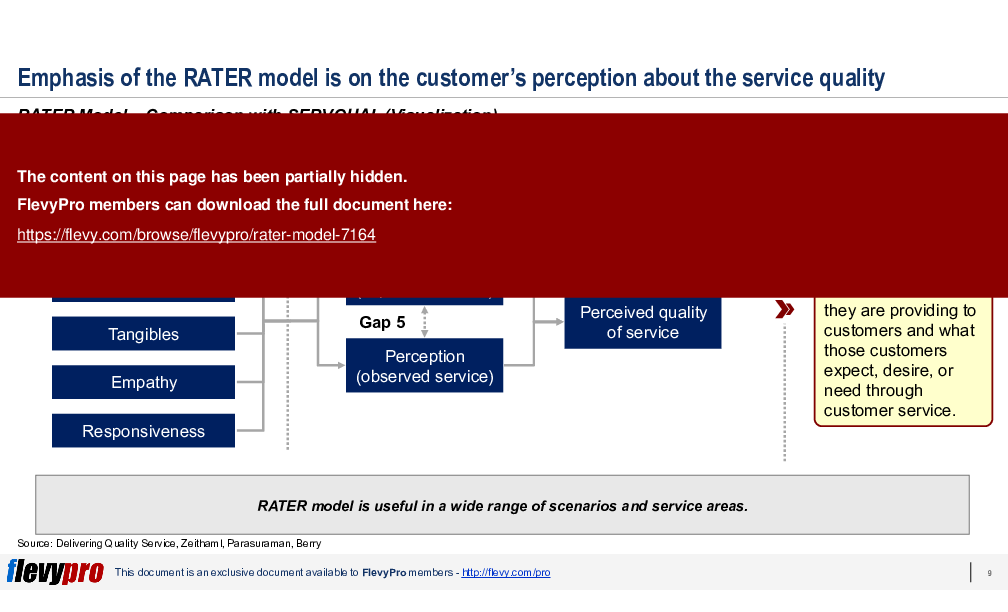
GAP Analysis quantifies the difference between customer expectations and actual service experiences, helping organizations identify areas for improvement.
What are the limitations of the RATER Model?
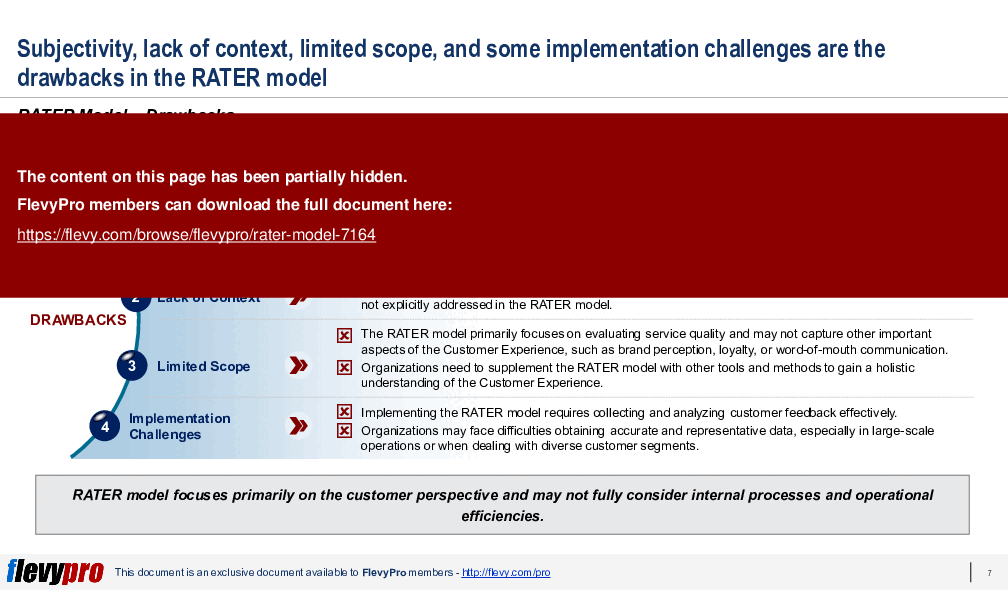
The model may be subjective, may lack context, and may not fully capture all aspects of customer experience, necessitating the use of additional tools.
How does the RATER Model compare to SERVQUAL?
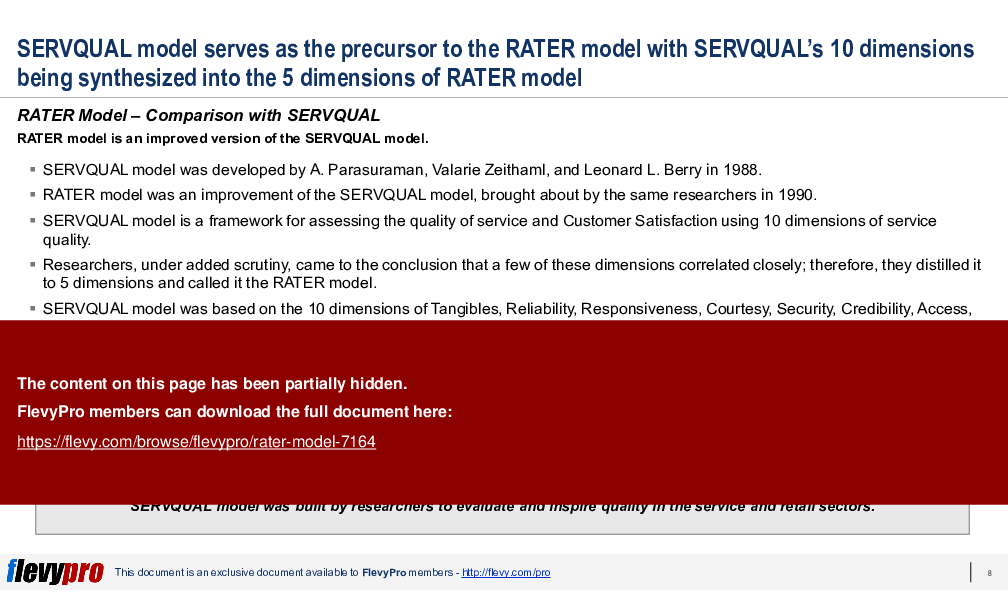
The RATER Model simplifies the SERVQUAL framework by condensing ten dimensions into five, focusing on key aspects of customer perception.
Who should use the RATER Model?
Service quality managers, business executives, consultants, and customer experience teams can all benefit from using the RATER Model to enhance service delivery.
Can the RATER Model be customized for different industries?
Yes, the framework can be tailored to fit specific industry contexts and customer segments, ensuring relevance and effectiveness.
What tools can support the implementation of the RATER Model?
Templates for the RATER Model, GAP Analysis worksheets, and customer feedback analysis tools can aid in effective implementation.
Glossary
• RATER Model - A framework for assessing service quality through 5 dimensions: Reliability, Assurance, Tangibles, Empathy, and Responsiveness.
• GAP Analysis - A method for identifying the difference between customer expectations and actual service experiences.
• Reliability - The ability to provide consistent and dependable service.
• Assurance - The knowledge and trustworthiness of staff that instills confidence in customers.
• Tangibles - The physical evidence of service quality, including facilities and materials.
• Empathy - The ability to understand and relate to customer needs and feelings.
• Responsiveness - The willingness to provide prompt service and address customer needs.
• SERVQUAL - An earlier framework for assessing service quality based on ten dimensions.
• Customer Satisfaction - The degree to which customer expectations are met or exceeded.
• Service Quality - The overall assessment of service delivery based on various dimensions.
• Customer Experience - The sum of all interactions a customer has with a service provider.
• Feedback Analysis - The process of evaluating customer feedback to identify areas for improvement.
• Action Plan - A structured approach to implementing improvements based on analysis results.
Source: Best Practices in Customer Experience, Customer Satisfaction, Service Design, Customer Service PowerPoint Slides: RATER Model PowerPoint (PPTX) Presentation Slide Deck, LearnPPT Consulting
Did you need more documents?
Consider a FlevyPro subscription from $39/month. View plans here.
For $10.00 more, you can download this document plus 2 more FlevyPro documents. That's just $13 each.
|
Download our FREE Digital Transformation Templates
Download our free compilation of 50+ Digital Transformation slides and templates. DX concepts covered include Digital Leadership, Digital Maturity, Digital Value Chain, Customer Experience, Customer Journey, RPA, etc. |