
Improving Employee Engagement is a priority in most Talent and HR Strategies. This presentation provides a 5-step approach to building a culture of Employee Engagement. This processed was developed by Aon Hewitt based on the Aon Hewitt Top Companies for Leaders study.
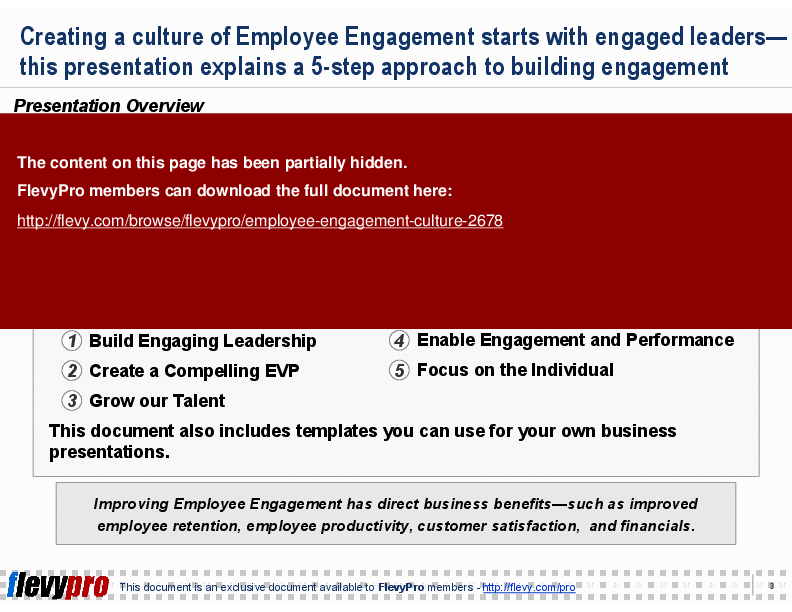
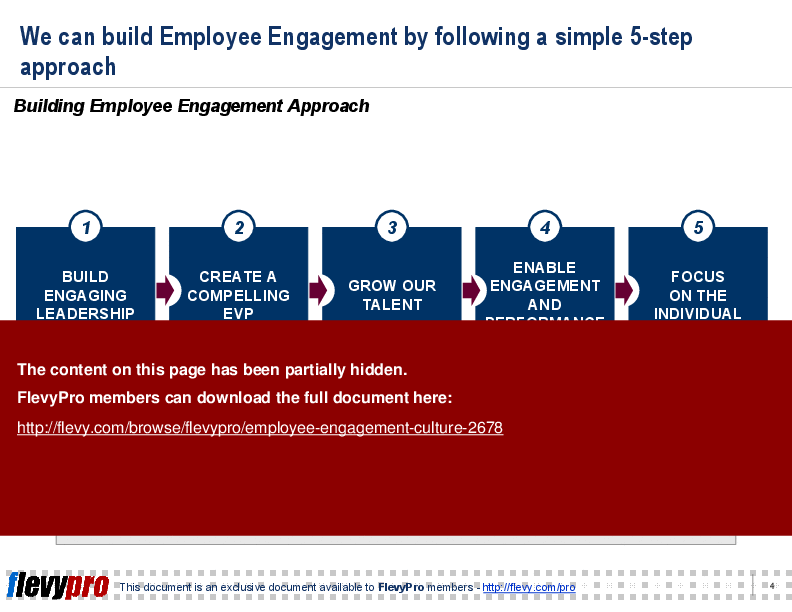
Best practices from the leading organizations have shown leaders lead the way to a culture of Employee Engagement. These leaders focus on building skills, empowering others, and driving individual accountability to take ownership of one's own engagement. Thus, engaging leadership is the first step in our model:
1. Build Engaging Leadership
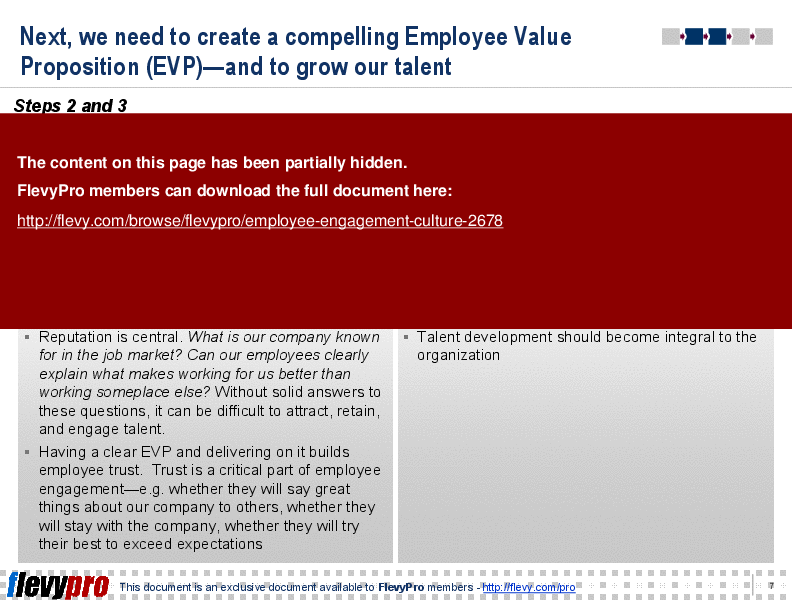
2. Create a Compelling Employee Value Proposition (EVP)
3. Grow our Talent
4. Enable Engagement and Performance
5. Focus on the Individual
This document also includes templates you can use for your own business presentations.
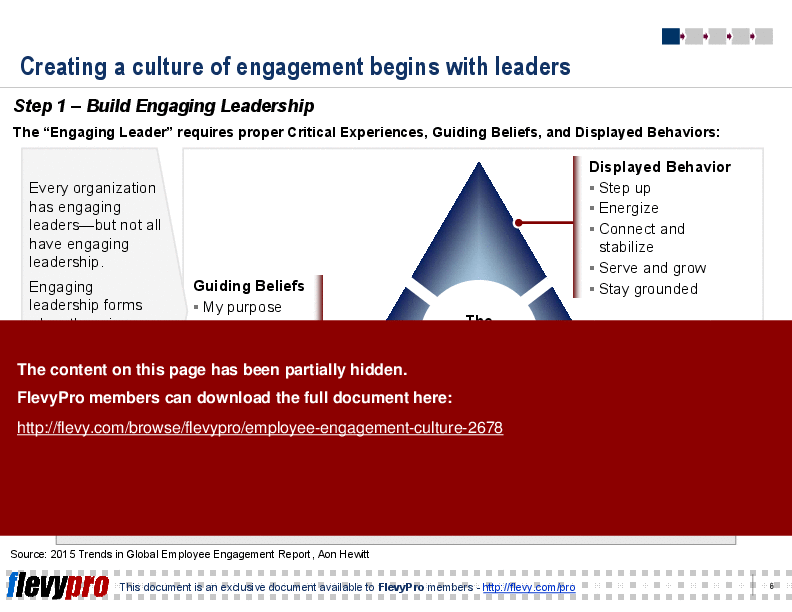
This presentation delves into the critical role of leadership in fostering an engaging culture. It outlines the essential experiences, beliefs, and behaviors that leaders must embody to drive engagement. The emphasis is on actionable steps leaders can take to energize and stabilize their teams, ensuring a robust engagement framework.
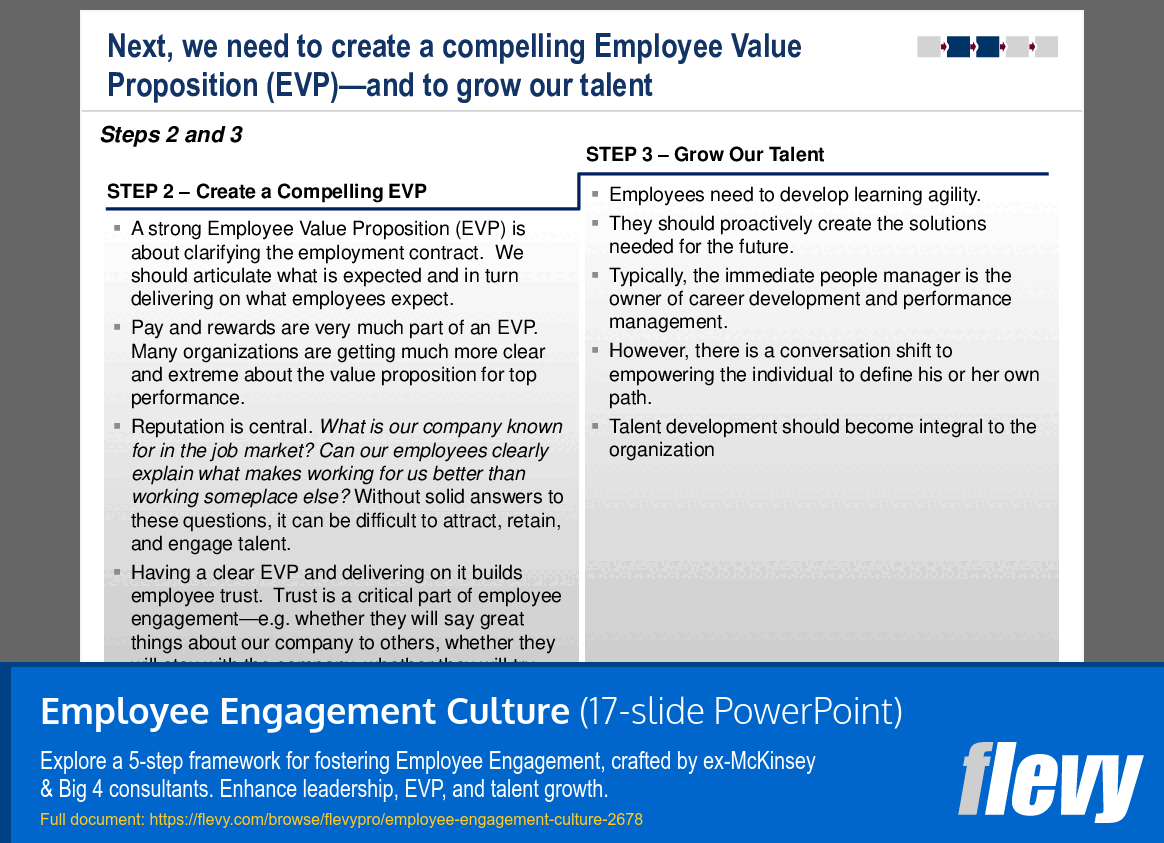
The PPT also highlights the importance of creating a compelling Employee Value Proposition (EVP) and growing talent. It addresses the need for organizations to clearly articulate their unique value to current and prospective employees. This clarity is crucial for attracting, retaining, and engaging top talent in a competitive market.
Additionally, the presentation stresses the necessity of enabling engagement and performance through adequate resources, processes, and programs. It provides insights into the current state of employee enablement and offers strategies to improve it. The focus on individual engagement underscores the importance of personalized approaches in driving overall organizational success.
Got a question about this document? Email us at flevypro@flevy.com.
Executive Summary
The "Employee Engagement Culture" presentation offers a structured framework designed to enhance employee engagement within organizations. Developed from Aon Hewitt's research, this presentation outlines a five-step approach that emphasizes the role of leadership in fostering a culture of engagement. By implementing these strategies, organizations can expect improved employee retention, productivity, customer satisfaction, and overall financial performance. This presentation serves as a practical guide for leaders aiming to cultivate an engaged workforce through actionable insights and templates.
Who This Is For and When to Use
• HR leaders focused on enhancing employee engagement strategies
• Organizational development professionals implementing cultural change
• Team leaders seeking to improve team dynamics and performance
• Executives aiming to align employee engagement with business objectives
Best-fit moments to use this deck:
• During strategic planning sessions to integrate employee engagement initiatives
• For training workshops aimed at developing leadership skills
• In meetings focused on talent management and retention strategies
Learning Objectives
• Define the concept of employee engagement and its importance to organizational success
• Build engaging leadership practices that inspire and motivate employees
• Create a compelling Employee Value Proposition (EVP) that aligns with employee expectations
• Grow talent through effective development and performance management strategies
• Enable engagement and performance through the right resources and processes
• Focus on individual engagement through tailored feedback and support
Table of Contents
• Overview (page 3)
• Building Employee Engagement Steps (page 4)
• Templates (page 11)
Primary Topics Covered
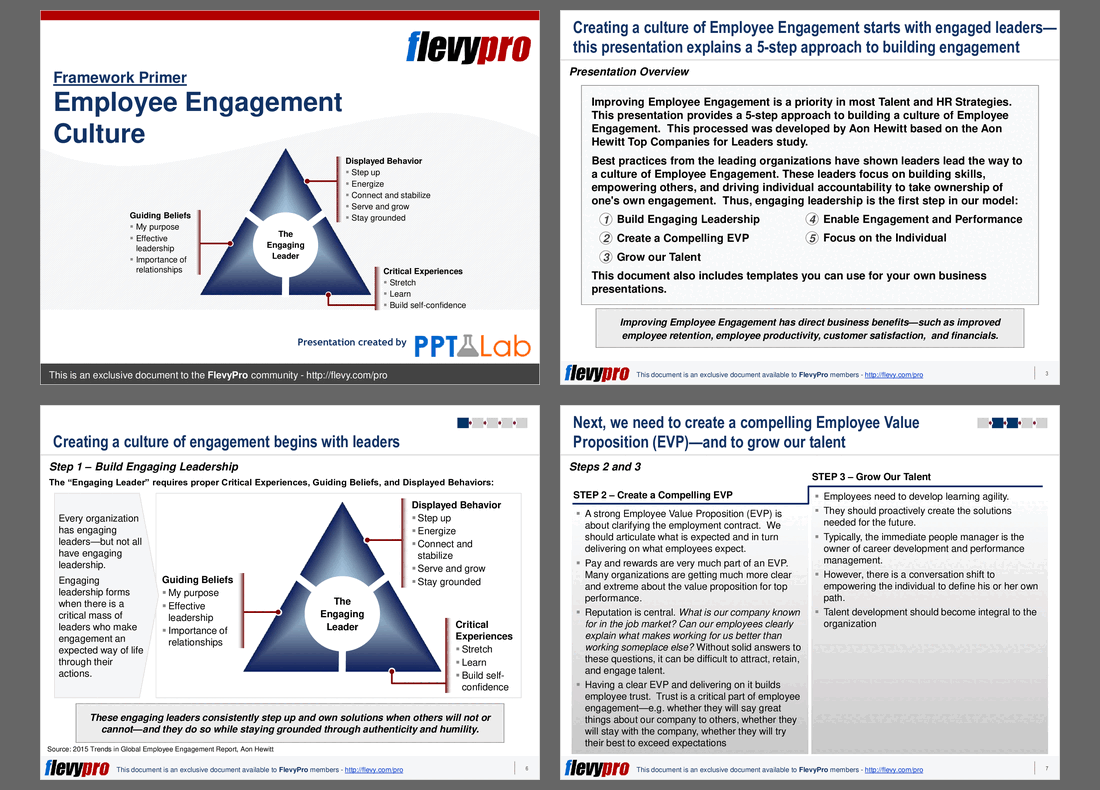
• Building Engaging Leadership - Leaders must embody behaviors that inspire engagement, such as stepping up and connecting with their teams.
• Creating a Compelling EVP - A clear EVP articulates what employees can expect from the organization and what is expected in return.
• Growing Our Talent - Empowering employees to take charge of their development fosters a culture of continuous learning.
• Enabling Engagement and Performance - Providing the right resources and processes is crucial for enabling employee engagement.
• Focusing on the Individual - Engagement strategies should be tailored to the individual level, emphasizing personal feedback and hiring practices.
Deliverables, Templates, and Tools
• Employee engagement survey templates for individual assessments
• Leadership development frameworks to cultivate engaging leaders
• EVP articulation guides to clarify organizational expectations
• Performance management templates to support talent growth
• Resource allocation models to enhance engagement initiatives
Slide Highlights
• Overview of the five-step approach to building employee engagement
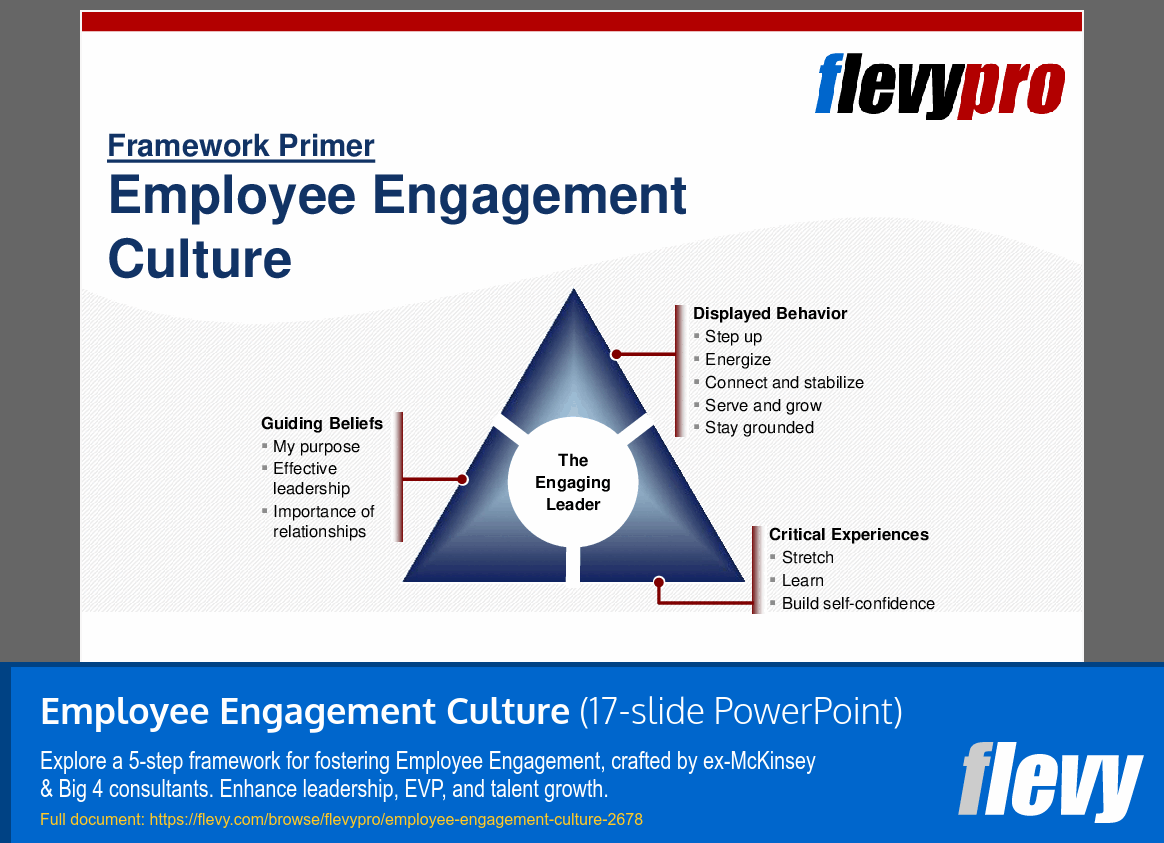
• Visual representation of the Engaging Leader model, including displayed behaviors and guiding beliefs
• Data-driven insights on the impact of enabling resources on employee engagement levels
• Case studies illustrating successful implementation of engagement strategies
Potential Workshop Agenda
Employee Engagement Strategy Session (90 minutes)
• Review the five-step approach to employee engagement
• Discuss current engagement levels and identify gaps
• Develop action plans for implementing engagement strategies
Leadership Development Workshop (60 minutes)
• Explore the characteristics of engaging leaders
• Role-play scenarios to practice engaging leadership behaviors
• Establish personal commitments to enhance leadership effectiveness
Customization Guidance
• Tailor the EVP to reflect your organization's unique value proposition
• Adjust leadership development practices to align with organizational culture
• Incorporate specific metrics for measuring engagement success based on industry standards
Secondary Topics Covered
• The role of organizational culture in employee engagement
• Strategies for measuring and tracking engagement levels
• Best practices for communicating engagement initiatives to employees
• The importance of feedback loops in sustaining engagement
Topic FAQ
Document FAQ
These are questions addressed within this presentation.
What is the primary goal of the Employee Engagement Culture presentation?
The goal is to provide a structured framework that helps organizations enhance employee engagement through effective leadership and actionable strategies.
How can this presentation be customized for different organizations?
Organizations can tailor the Employee Value Proposition and leadership development practices to align with their specific culture and values.
What are the expected outcomes of implementing these engagement strategies?
Expected outcomes include improved employee retention, increased productivity, higher customer satisfaction, and better financial performance.
How does engaging leadership impact employee engagement?
Engaging leadership fosters an environment where employees feel valued and motivated, leading to higher levels of engagement and commitment.
What resources are included in this presentation?
The presentation includes templates for surveys, leadership frameworks, and performance management tools to support engagement initiatives.
How often should employee engagement surveys be conducted?
Surveys should be conducted regularly, ideally at least annually, to assess engagement levels and identify areas for improvement.
What role does the Employee Value Proposition play in engagement?
A compelling EVP clarifies the expectations between the organization and its employees, building trust and enhancing engagement.
How can organizations measure the effectiveness of their engagement strategies?
Organizations can track engagement levels through surveys, performance metrics, and employee feedback to assess the impact of their strategies.
Glossary
• Employee Engagement - The emotional commitment an employee has to their organization.
• Employee Value Proposition (EVP) - The unique set of benefits and values an organization offers to its employees.
• Engaging Leadership - Leadership that inspires and motivates employees to take ownership of their engagement.
• Learning Agility - The ability to learn from experiences and apply that knowledge to new situations.
• Performance Management - The process of ensuring that employees meet organizational goals and objectives.
• Engagement Survey - A tool used to measure employee engagement levels and gather feedback.
• Organizational Culture - The shared values, beliefs, and practices that shape how work is done within an organization.
• Talent Development - The process of enhancing employees' skills and capabilities for future roles.
• Feedback Loop - A process of continuous feedback that informs and improves engagement strategies.
• Critical Experiences - Key experiences that shape an individual's development and engagement in the workplace.
• Guiding Beliefs - Core principles that influence leadership behavior and decision-making.
• Displayed Behavior - Observable actions that demonstrate leadership engagement and effectiveness.
Source: Best Practices in Corporate Culture, HR Strategy, Aon Hewitt, Talent Strategy, Employee Engagement PowerPoint Slides: Employee Engagement Culture PowerPoint (PPTX) Presentation Slide Deck, PPT Lab
Did you need more documents?
Consider a FlevyPro subscription from $39/month. View plans here.
For $10.00 more, you can download this document plus 2 more FlevyPro documents. That's just $13 each.
|
Download our FREE Organization, Change, & Culture, Templates
Download our free compilation of 50+ slides and templates on Organizational Design, Change Management, and Corporate Culture. Methodologies include ADKAR, Burke-Litwin Change Model, McKinsey 7-S, Competing Values Framework, etc. |