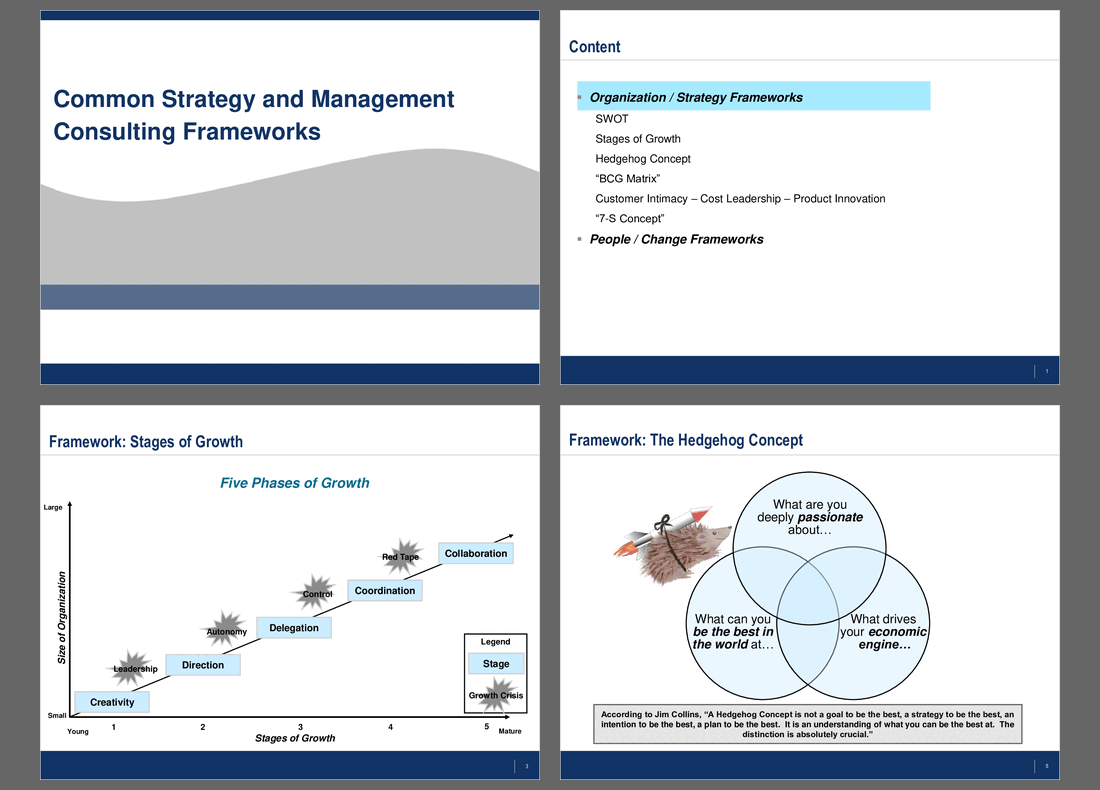

This is a collection of common Strategy and Management Consulting Frameworks. A Management Consulting Framework provides a structured approach to analyzing and solving a common business problem. It allows Management Consultants to address a client’s business issue in an organized, thorough, and efficient manner.
This PowerPoint presentation (PPT) organizes the consulting frameworks into 2 sections.
1. Strategy Frameworks:
• SWOT
• Stages of Growth
• Hedgehog Concept
• BCG Matrix
• Customer Intimacy – Cost Leadership – Product Innovation
• 7-S Concept
2. Change / People Frameworks:
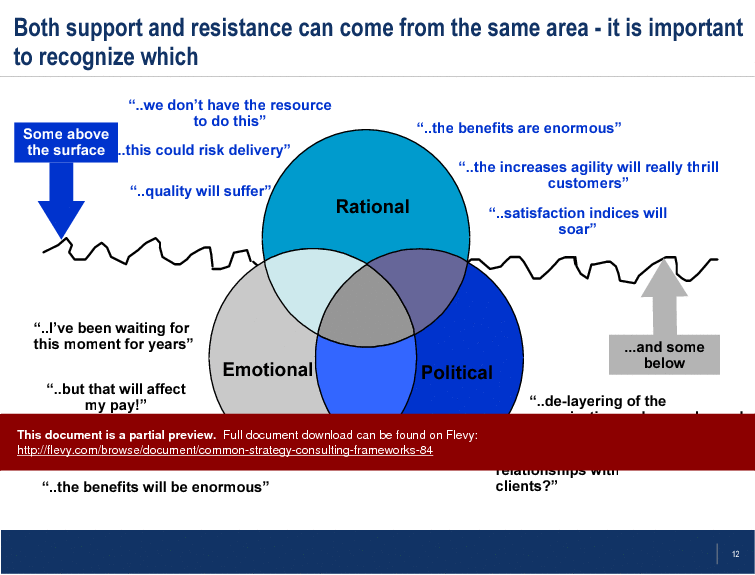
• Emotional-Political-Rational
• Team Building
• Ingredients of Change
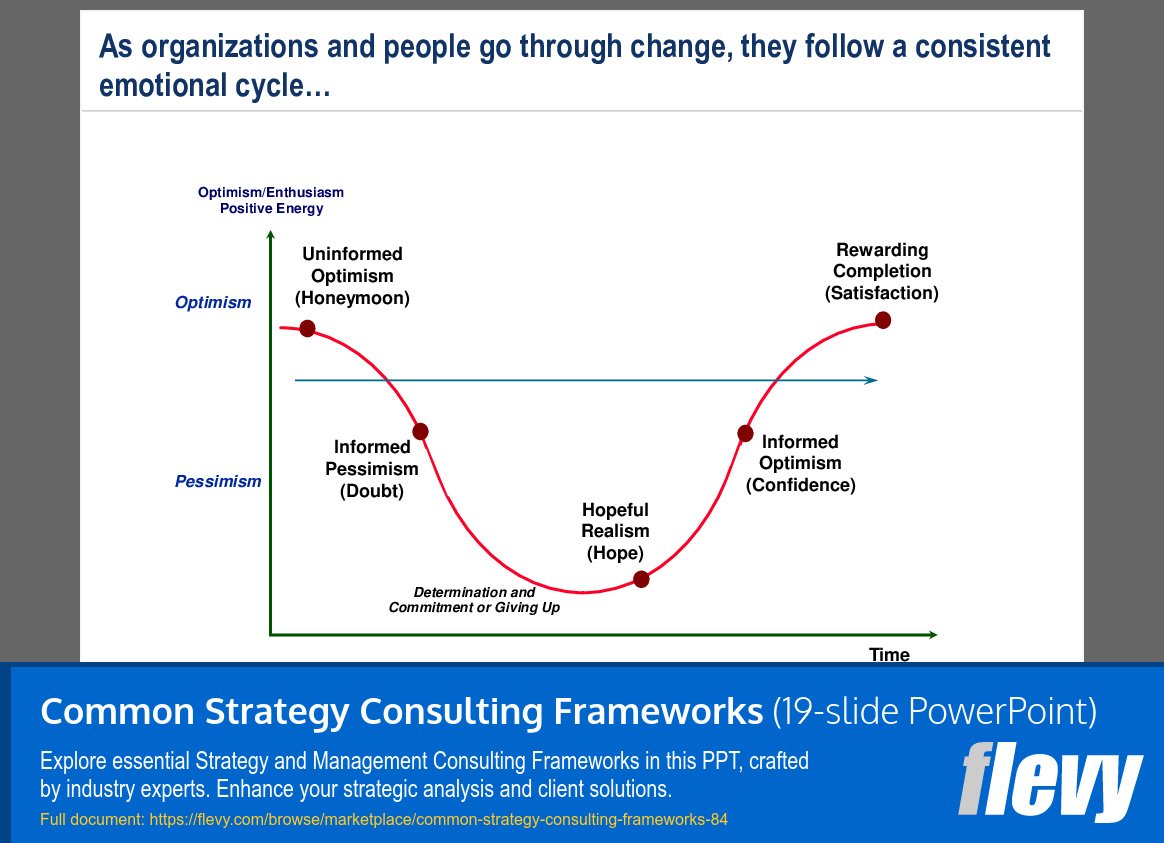
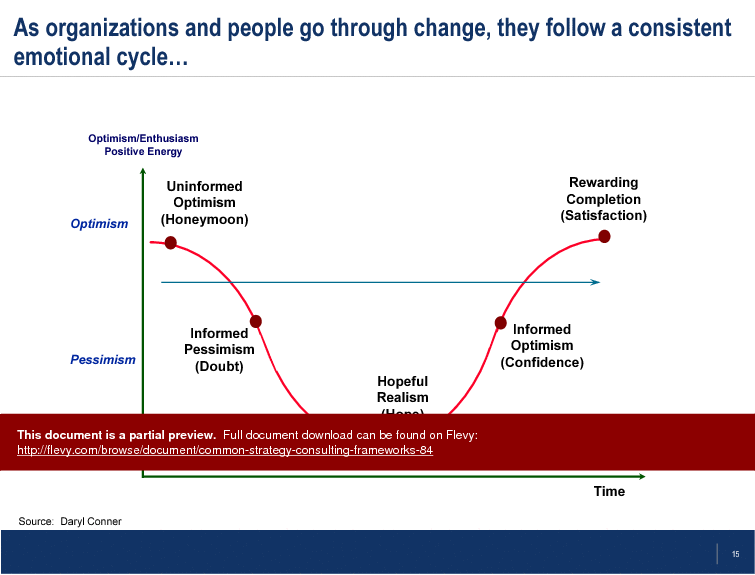
• Emotional Cycle of Change
• Level of Commitment
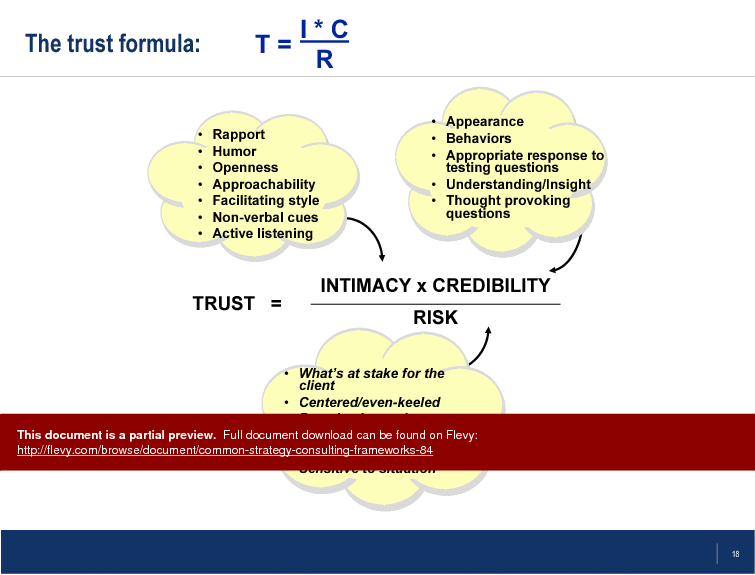
• Trust Formula
These consulting framework slides can be edited, customized, and included in your own consulting presentations in PPT.
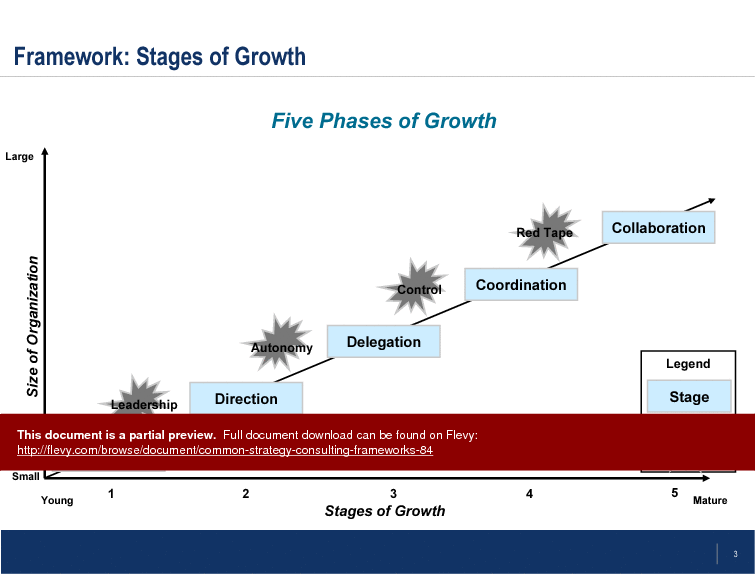
This document dives deep into the intricacies of organizational growth, providing a detailed breakdown of the Five Phases of Growth. Each phase, from Leadership to Collaboration, is meticulously illustrated to help you identify where your organization stands and what steps are necessary to progress. The visual representation of these stages offers a clear roadmap for scaling your business efficiently.
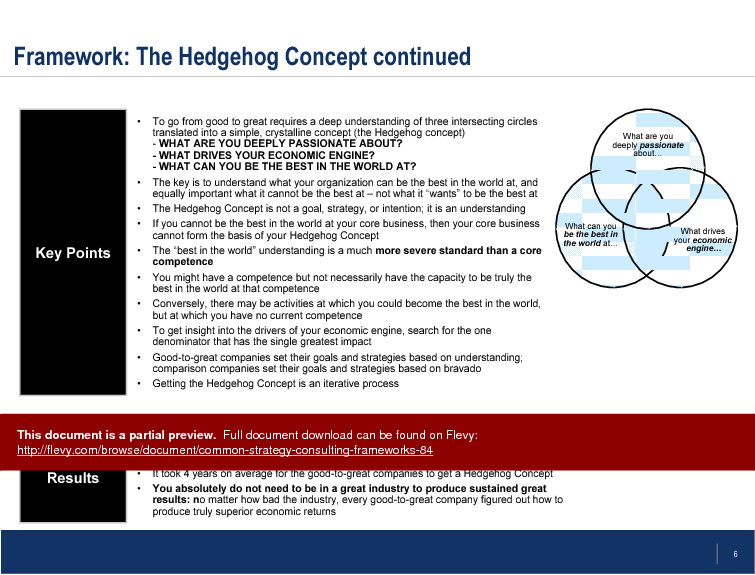
The Hedgehog Concept framework is another highlight, emphasizing the importance of understanding what your organization can be the best at, what drives your economic engine, and what you are deeply passionate about. This framework is not just theoretical, but is backed by practical insights and examples, making it easier for you to apply these principles to your own business strategy. The focus on iterative understanding ensures that your strategic goals are grounded in reality and aligned with your core competencies.
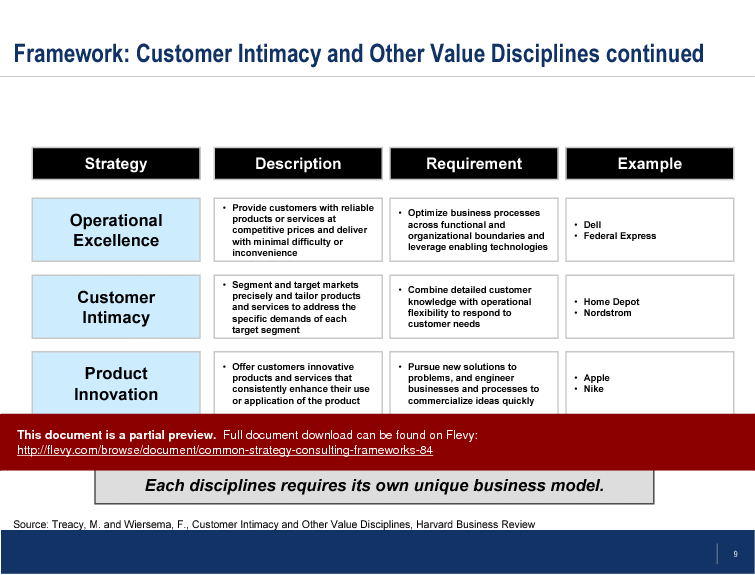
Customer Intimacy and Other Value Disciplines framework provides a comparative analysis of different strategic approaches. Whether your focus is on Operational Excellence, Customer Intimacy, or Product Innovation, this section lays out the requirements and examples of each strategy. This allows you to tailor your business model to meet specific market demands and operational capabilities, ensuring a competitive edge in your industry.
Got a question about the product? Email us at support@flevy.com or ask the author directly by using the "Ask the Author a Question" form. If you cannot view the preview above this document description, go here to view the large preview instead.
Executive Summary
This presentation titled "Common Strategy and Management Consulting Frameworks" provides a comprehensive overview of essential frameworks utilized in strategy and management consulting. It equips corporate executives and consultants with the tools necessary to enhance strategic analysis and client solutions. The frameworks covered include SWOT analysis, Stages of Growth, the Hedgehog Concept, the Growth Share Matrix, Customer Intimacy, and the 7-S Model. By leveraging these frameworks, users can effectively assess organizational strategies, manage change, and drive performance improvements.
Who This Is For and When to Use
• Corporate executives seeking to refine strategic planning processes
• Management consultants looking to enhance client engagement strategies
• Strategy teams responsible for developing and implementing organizational frameworks
• Change management leaders aiming to facilitate transitions within organizations
Best-fit moments to use this deck:
• During strategic planning sessions to evaluate organizational strengths and weaknesses
• When assessing growth opportunities and market positioning
• In workshops focused on team alignment and change management
• For training sessions aimed at enhancing consulting skills and methodologies
Learning Objectives
• Define the SWOT analysis framework and apply it to organizational assessments
• Identify the 5 stages of growth and their implications for management practices
• Articulate the Hedgehog Concept and its relevance to strategic focus
• Utilize the Growth Share Matrix for resource allocation decisions
• Explain the principles of Customer Intimacy and its impact on competitive advantage
• Analyze organizational effectiveness using the 7-S Model
Table of Contents
• Organization / Strategy Frameworks (page 1)
• SWOT Analysis (page 2)
• Stages of Growth (page 4)
• The Hedgehog Concept (page 6)
• Growth Share Matrix (page 7)
• Customer Intimacy and Other Value Disciplines (page 9)
• 7-S Model (page 10)
• People / Change Frameworks (page 12)
Primary Topics Covered
• SWOT Analysis - A framework for identifying organizational strengths, weaknesses, opportunities, and threats to inform strategic decision-making.
• Stages of Growth - A model outlining 5 phases of organizational development, each with distinct management focuses and structures.
• Hedgehog Concept - A strategic framework emphasizing the intersection of passion, economic drivers, and core competencies to define organizational focus.
• Growth Share Matrix - A tool for analyzing product lines or business units based on market share and growth potential to guide resource allocation.
• Customer Intimacy - A discipline focusing on delivering tailored solutions to meet specific customer needs while maintaining operational excellence.
• 7-S Model - A framework for assessing organizational effectiveness through the alignment of strategy, structure, systems, skills, style, staff, and shared values.
Deliverables, Templates, and Tools
• SWOT analysis template for strategic assessment
• Stages of Growth framework for evaluating organizational development
• Hedgehog Concept worksheet for defining strategic focus
• Growth Share Matrix for resource allocation analysis
• Customer Intimacy assessment tool for evaluating client engagement strategies
• 7-S Model checklist for organizational effectiveness evaluation
Slide Highlights
• Overview of the SWOT framework with illustrative examples
• Visual representation of the 5 stages of growth and their management implications
• Diagram of the Hedgehog Concept illustrating its 3 intersecting circles
• Growth Share Matrix chart for analyzing market positions of business units
• Customer Intimacy framework highlighting the importance of tailored solutions
• 7-S Model diagram showing the interconnections between organizational elements
Potential Workshop Agenda
Introduction to Strategy Frameworks (30 minutes)
• Overview of key frameworks and their applications
• Discussion on the importance of strategic alignment
SWOT Analysis Workshop (60 minutes)
• Group activity to conduct a SWOT analysis on a case study
• Presentation of findings and strategic recommendations
Growth Share Matrix Application (45 minutes)
• Interactive session on using the Growth Share Matrix for resource allocation
• Case study analysis and group discussion
Hedgehog Concept and Customer Intimacy (30 minutes)
• Exploration of the Hedgehog Concept and its relevance
• Discussion on implementing Customer Intimacy strategies
Customization Guidance
• Adapt the SWOT analysis template to reflect specific organizational contexts and industry nuances
• Modify the Stages of Growth framework to align with unique organizational structures and cultures
• Tailor the Hedgehog Concept worksheet to incorporate specific market dynamics and competitive landscapes
• Customize the Growth Share Matrix to reflect product lines or business units relevant to the organization
• Adjust the Customer Intimacy framework to align with specific customer segments and needs
Secondary Topics Covered
• Emotional and political dimensions of change management
• Team dynamics and stages of team development
• Essential ingredients for successful organizational change
• Levels of commitment and their impact on change initiatives
Topic FAQ
Document FAQ
These are questions addressed within this presentation.
What is the purpose of the SWOT analysis?
The SWOT analysis framework helps organizations identify their strengths, weaknesses, opportunities, and threats, providing a foundation for strategic planning.
How can the Stages of Growth framework be applied?
This framework can be used to assess an organization's current phase of development and inform management practices tailored to that stage.
What is the Hedgehog Concept?
The Hedgehog Concept emphasizes understanding what an organization can be the best at, what drives its economic engine, and what it is deeply passionate about.
How does the Growth Share Matrix assist in decision-making?
The Growth Share Matrix helps organizations analyze their product lines or business units based on market share and growth potential, guiding resource allocation.
What are the key elements of Customer Intimacy?
Customer Intimacy focuses on delivering tailored solutions that meet specific customer needs while ensuring operational excellence.
What does the 7-S Model assess?
The 7-S Model evaluates organizational effectiveness by analyzing the alignment of strategy, structure, systems, skills, style, staff, and shared values.
How can this presentation be customized for specific organizations?
Users can adapt templates and frameworks to reflect their unique organizational contexts, industry nuances, and specific strategic goals.
What are the emotional cycles during organizational change?
Organizations typically experience a cycle of optimism, doubt, realism, and ultimately satisfaction as they navigate change initiatives.
What is the trust formula in consulting?
The trust formula emphasizes the relationship between intimacy and credibility, moderated by risk, to build trust with clients.
Glossary
• SWOT Analysis - A framework for assessing strengths, weaknesses, opportunities, and threats.
• Stages of Growth - A model outlining phases of organizational development.
• Hedgehog Concept - A strategic framework for defining organizational focus.
• Growth Share Matrix - A tool for analyzing product lines based on market share and growth.
• Customer Intimacy - A discipline focused on tailored solutions for customer needs.
• 7-S Model - A framework for assessing organizational effectiveness through alignment of key elements.
• Emotional Cycle of Change - The phases organizations experience during change initiatives.
• Trust Formula - A model for building trust based on intimacy, credibility, and risk.
• Change Management - The process of managing organizational change effectively.
• Team Dynamics - The interactions and behaviors of team members during development.
• Organizational Effectiveness - The degree to which an organization achieves its goals.
• Strategic Planning - The process of defining an organization's direction and making decisions on resource allocation.
Source: Best Practices in Change Management, SWOT, BCG Growth-Share Matrix, Bain PowerPoint PowerPoint Slides: Common Strategy Consulting Frameworks PowerPoint (PPT) Presentation Slide Deck, kgoldin
|
Download our FREE Organization, Change, & Culture, Templates
Download our free compilation of 50+ slides and templates on Organizational Design, Change Management, and Corporate Culture. Methodologies include ADKAR, Burke-Litwin Change Model, McKinsey 7-S, Competing Values Framework, etc. |