
Develop a Customer Experience Strategy that makes a real difference in the market
Attract and retain customers quickly and easily
Align your business around the customer
CUSTOMER EXPERIENCE PPT DESCRIPTION
Editor Summary
A 56-slide PowerPoint template and guide by CustCore Consulting for developing a customer experience (CX) strategy, centered on a one-page Customer Experience Strategy Canvas.
Read moreIncludes a customer journey mapping tool, engagement plan template, retention strategies, metrics dashboard, workshop facilitation guide, and training materials. Targeted at Customer Experience Managers, Marketing, Sales, Product leaders, and executives for strategy development, workshops, and training. Sold as a digital download on Flevy.
Use this template when an organization needs to define or update how customers are engaged across channels — for example during CX strategy design, cross-functional alignment workshops, or training on customer-centric practices.
Customer Experience Managers mapping "moments that matter" and creating journey maps to prioritize interventions.
Marketing teams aligning campaign touchpoints to identified customer needs and segments.
Sales leaders redesigning the sales model to improve engagement and post-sale experience.
Product managers validating product features against customer expectations through research findings.
The combination of a one-page strategy canvas, journey mapping, and workshop facilitation follows standard consulting practice of using visual frameworks, structured workshops, and KPI alignment to implement strategy.
Customer Experience is fast becoming the key business battleground in many markets.
In order to be successful it is critical that all business create a Customer Experience Strategy, an all encompassing view of how they will deliver superb experiences to their customers. Having such a strategy will increase customer satisfaction and loyalty, grow word of mouth referrals and significantly contribute to your bottom line.
This document introduces an easy to use 1-page template for capturing a customer experience strategy and provides a comprehensive guide to completing the template.
You will be taken through the steps involved in
• Understanding your customers
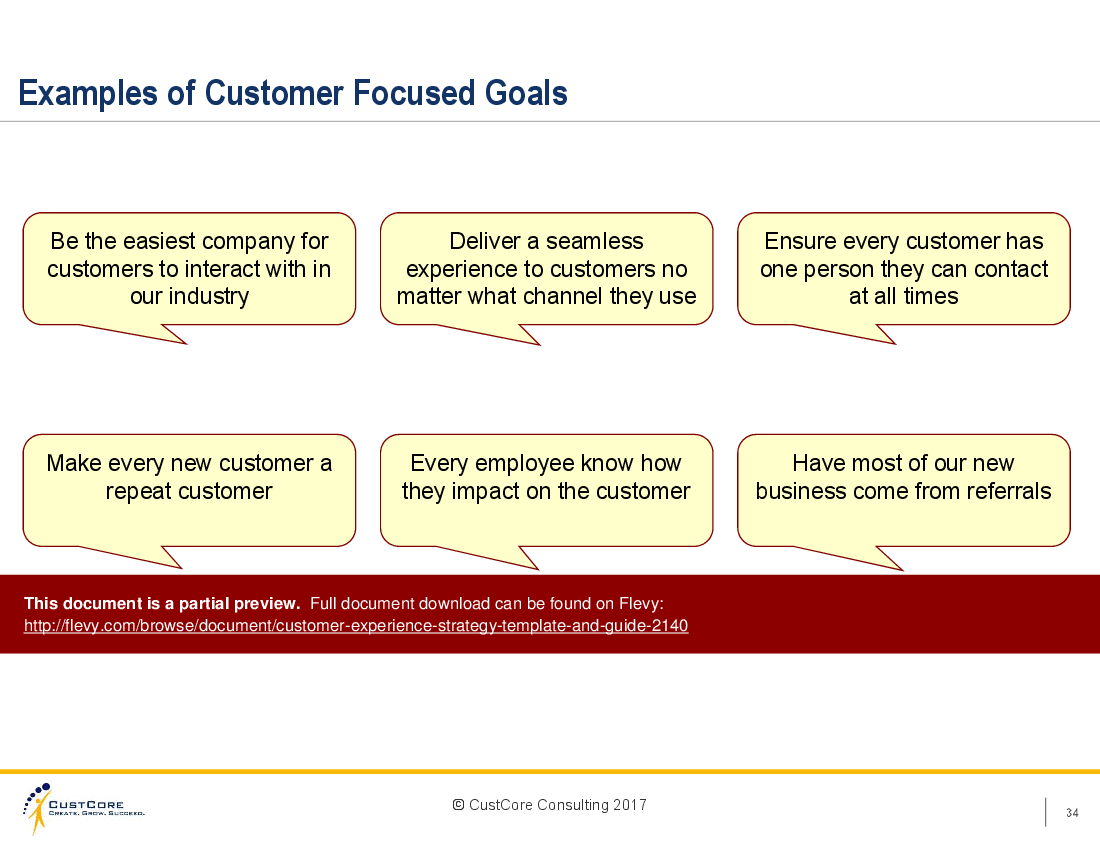
• Defining customer focussed business goals
• Creating a culture that focusses on the customer
• Defining customer focussed business metrics
• Identifies service and sales models that place the customer first
• Create retention and engagement plans to keep customers hooked
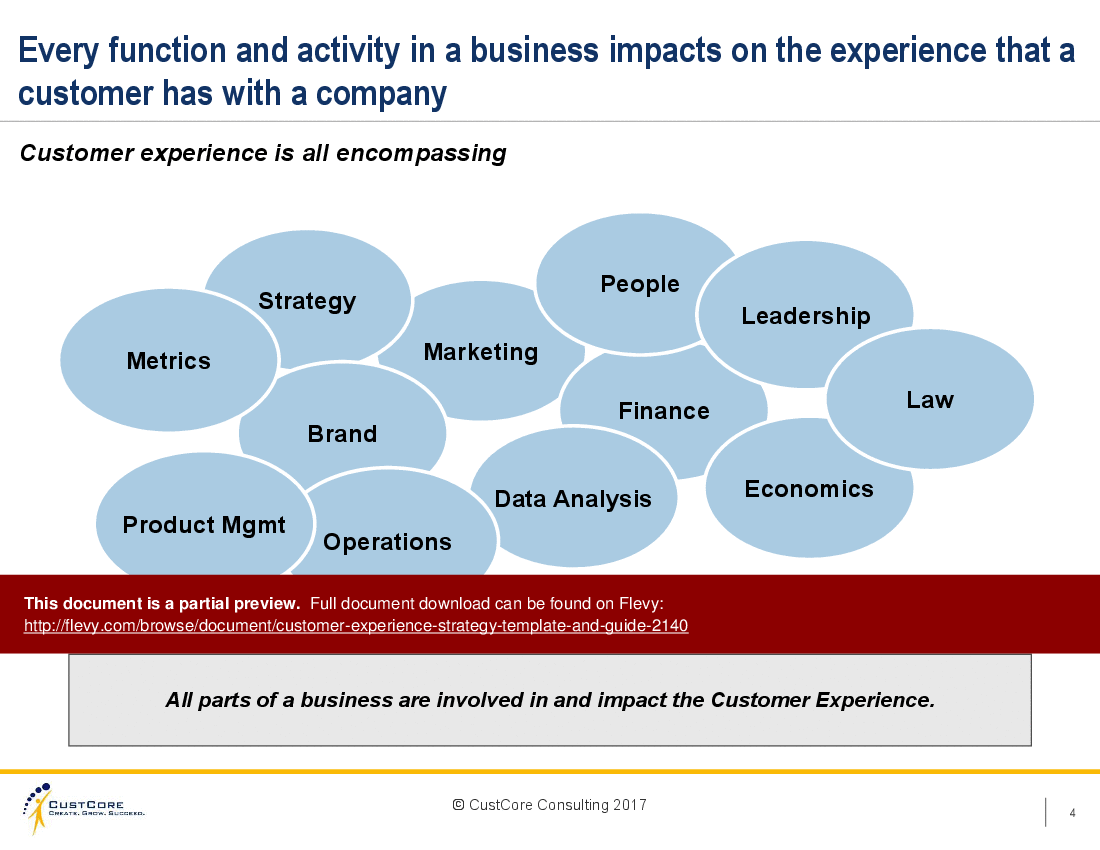
The Customer Experience Strategy Canvas is a powerful tool that helps you map out every touchpoint and interaction your customers have with your business. It ensures that all departments, from marketing to finance, are aligned in delivering a seamless customer experience. This holistic approach guarantees that no aspect of the customer journey is overlooked, providing a comprehensive framework for understanding and improving customer interactions.
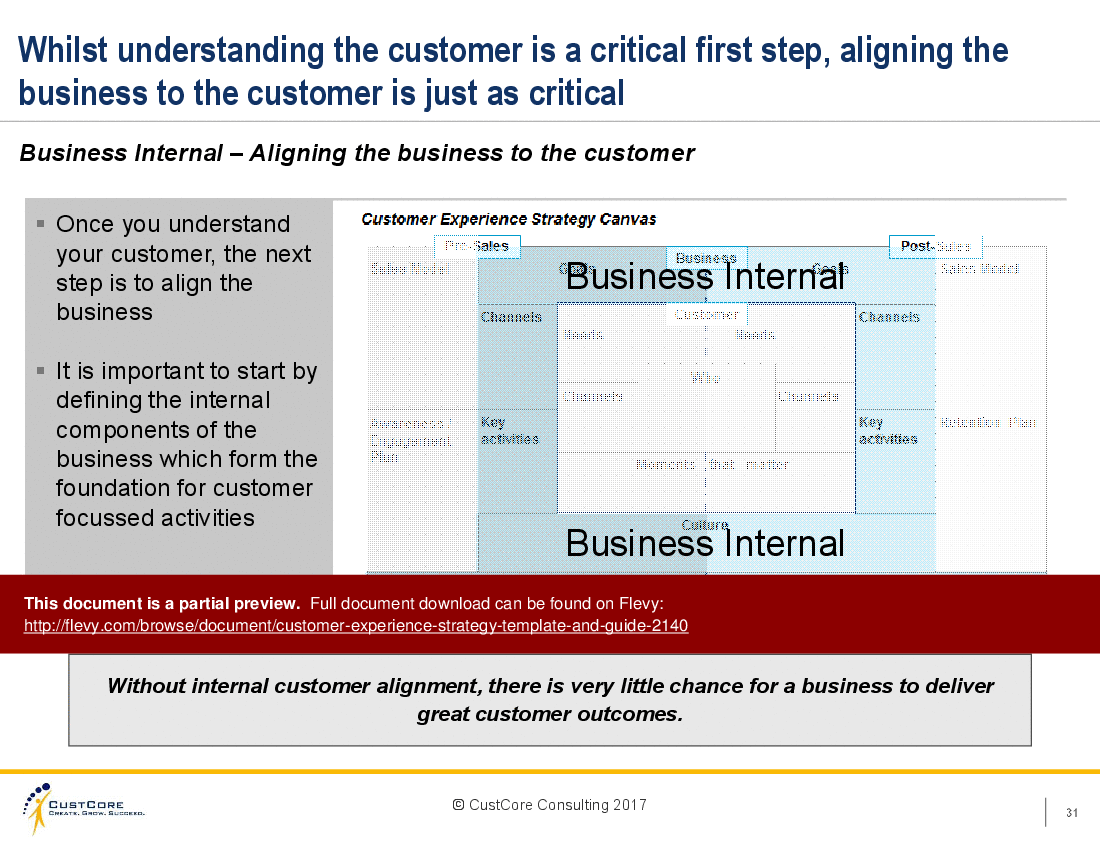
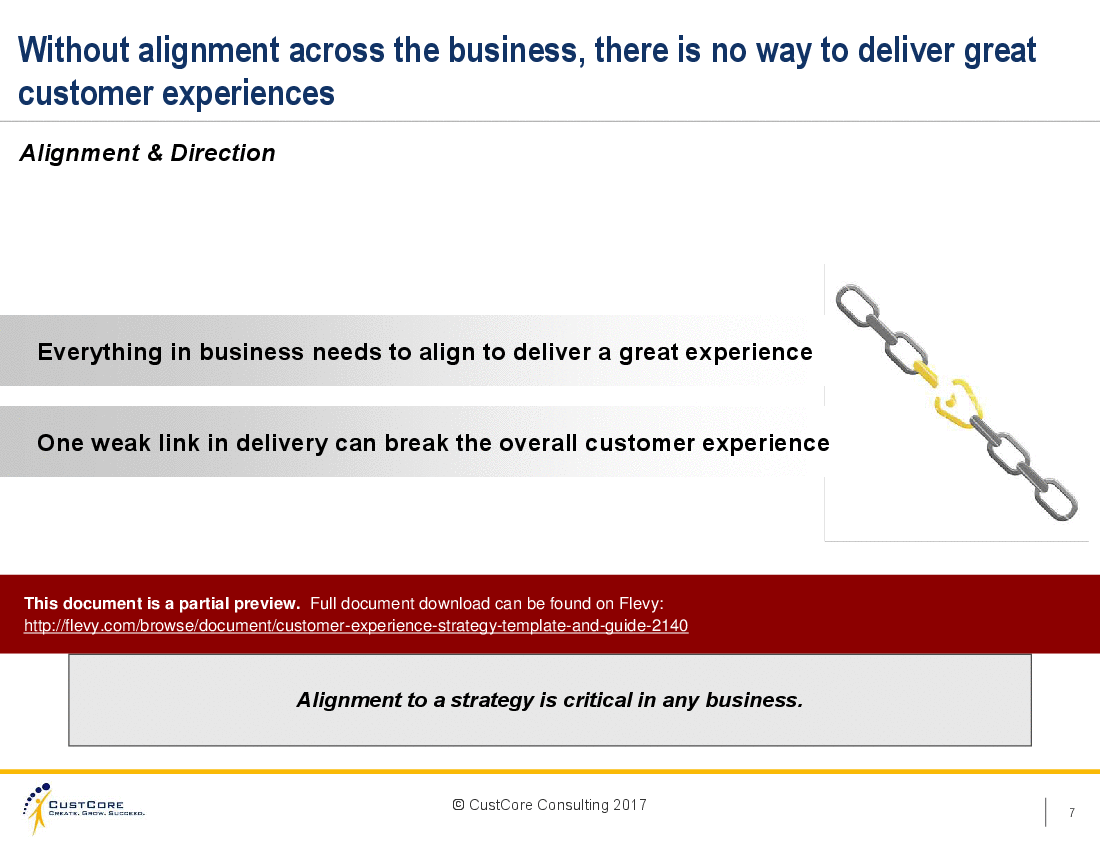
Alignment across the business is crucial. One weak link can disrupt the entire customer experience. The guide emphasizes the importance of internal alignment and provides actionable steps to ensure every team member understands their role in enhancing customer satisfaction. By following this strategy, you can create a cohesive and customer-centric culture that drives loyalty and business growth.
Got a question about the product? Email us at support@flevy.com or ask the author directly by using the "Ask the Author a Question" form. If you cannot view the preview above this document description, go here to view the large preview instead.
MARCUS OVERVIEW
This synopsis was written by Marcus [?] based on the analysis of the full 56-slide presentation.
Executive Summary
The Customer Experience Strategy - Template and Guide provides a structured approach for organizations to develop a comprehensive customer experience (CX) strategy. This template enables businesses to align their operations with customer needs, enhancing engagement and satisfaction throughout the customer journey. By utilizing this guide, executives can effectively map out customer interactions, identify key moments that matter, and establish metrics for success. The framework emphasizes the importance of a customer-centric culture and the integration of both pre-sales and post-sales activities to create a seamless experience.
Who This Is For and When to Use
• Customer Experience Managers focused on enhancing customer satisfaction and loyalty
• Marketing Teams aiming to align campaigns with customer needs and behaviors
• Sales Leaders looking to improve the sales model and customer engagement strategies
• Product Managers responsible for ensuring product offerings meet customer expectations
• Business Executives seeking to drive organizational alignment around customer-centric goals
Best-fit moments to use this deck:
• During the development of a new customer experience strategy
• When assessing and updating existing customer engagement practices
• In workshops aimed at aligning cross-functional teams around customer needs
• For training sessions focused on customer-centric culture and practices
Learning Objectives
• Define the components of a customer experience strategy and its significance
• Identify customer needs and preferences through various research methods
• Develop a customer engagement plan that aligns with business goals
• Establish metrics to measure customer experience effectiveness
• Create a customer journey map to visualize key interactions and moments that matter
• Foster a customer-centric culture within the organization
Table of Contents
• Introduction to Customer Experience Strategy (page 3)
• Importance of Customer Experience (page 5)
• Customer Experience Strategy Canvas Overview (page 9)
• Understanding Customers: Needs and Preferences (page 17)
• Moments that Matter in Customer Experience (page 25)
• Customer Engagement Plan (page 50)
• Customer Retention Strategies (page 48)
• Metrics for Measuring Customer Experience (page 39)
• Deployment of Customer Experience Strategy (page 54)
Primary Topics Covered
• Customer Experience Definition - Customer experience encompasses all interactions a customer has with a company, influencing their perception and loyalty.
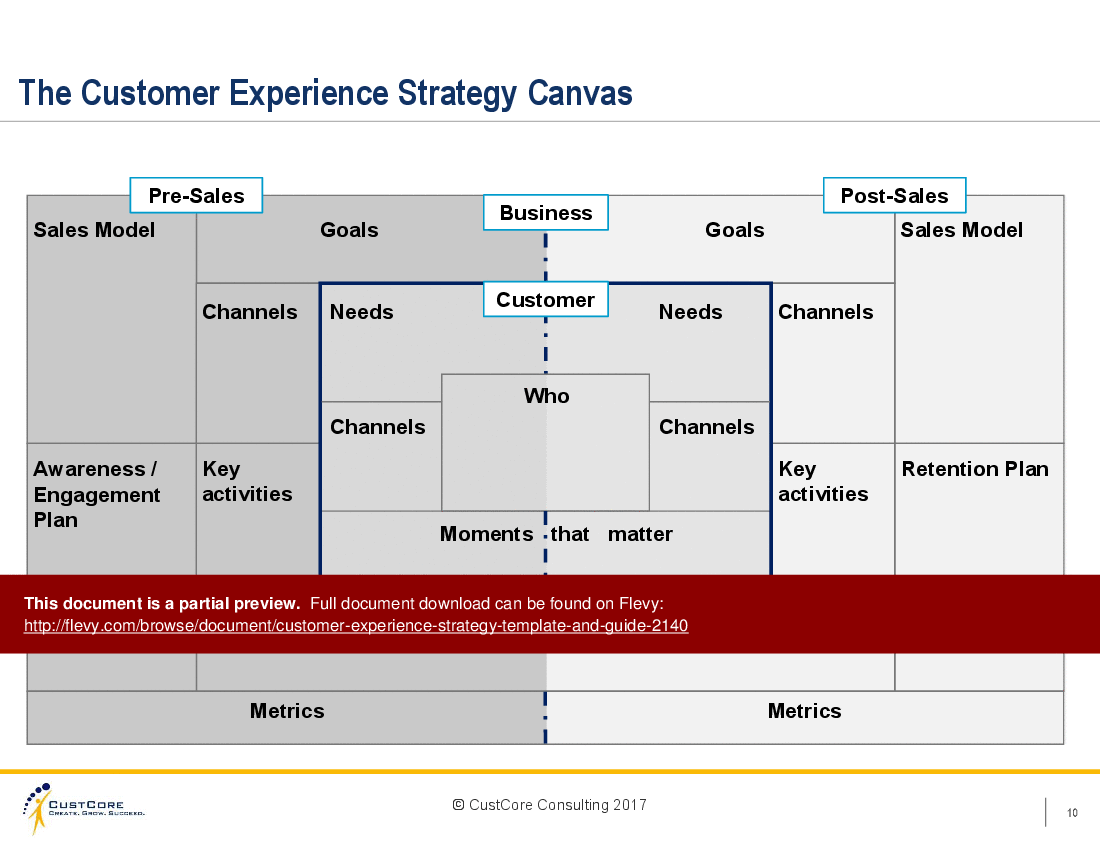
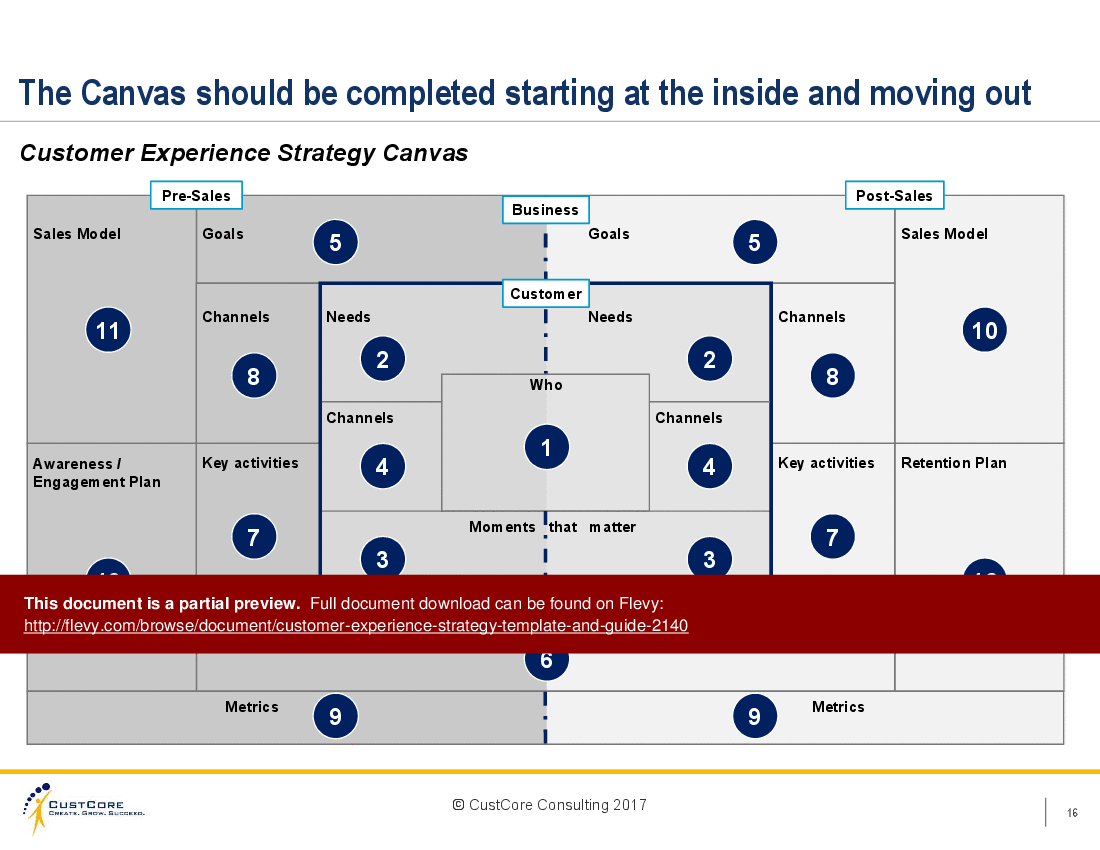
• Customer Experience Strategy Canvas - A one-page template that captures essential elements of a customer experience strategy, facilitating clarity and focus.
• Understanding Customer Needs - Identifying customer demographics, needs, and preferences is crucial for tailoring experiences that resonate.
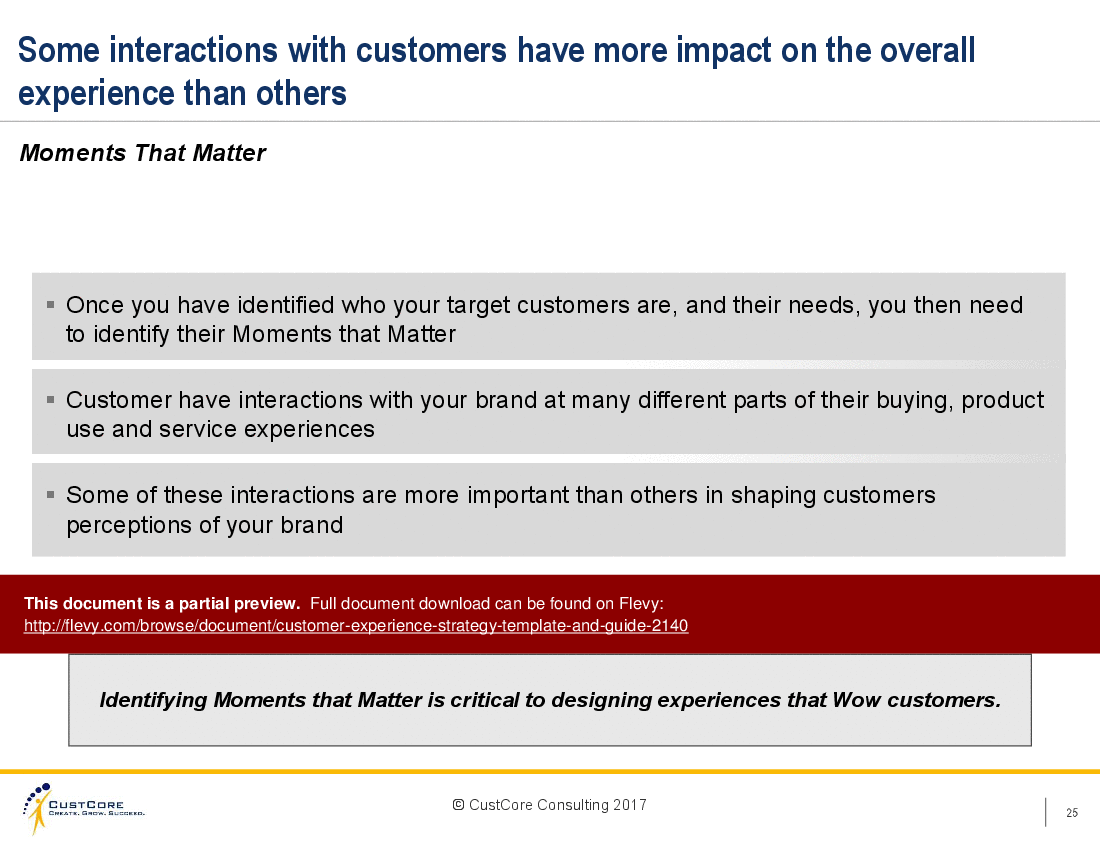
• Moments that Matter - Key interactions that significantly impact customer perceptions and overall experience must be prioritized.
• Customer Engagement Strategies - Effective methods to attract and retain customers through innovative engagement practices.
• Metrics for Success - Establishing clear metrics to measure customer satisfaction and experience improvements.
Deliverables, Templates, and Tools
• Customer Experience Strategy Canvas template for visualizing customer interactions
• Customer journey mapping tool to identify key touchpoints and emotions
• Engagement plan template outlining strategies for customer attraction and retention
• Metrics dashboard for tracking customer experience performance
• Workshop facilitation guide for aligning teams around customer-centric goals
• Training materials for fostering a customer-focused culture
Slide Highlights
• Overview of the Customer Experience Strategy Canvas, illustrating its components
• Key insights on understanding customer needs and preferences
• Examples of moments that matter in the customer journey
• Strategies for effective customer engagement and retention
• Metrics that link directly to business goals for measuring success
Potential Workshop Agenda
Customer Experience Strategy Development Session (90 minutes)
• Introduce the Customer Experience Strategy Canvas and its components
• Identify customer segments and their specific needs
• Map out key moments that matter in the customer journey
Customer Engagement Planning Workshop (60 minutes)
• Discuss current engagement strategies and their effectiveness
• Brainstorm innovative approaches to enhance customer attraction
• Develop an action plan for implementing new engagement initiatives
Metrics and Measurement Session (45 minutes)
• Review existing metrics and their alignment with business goals
• Identify gaps in measurement and establish new KPIs
• Create a dashboard for ongoing tracking of customer experience metrics
Customization Guidance
• Tailor the Customer Experience Strategy Canvas to reflect specific customer segments and their unique needs
• Adjust engagement strategies based on current market trends and customer feedback
• Define metrics that align with organizational goals and customer expectations
• Incorporate internal culture elements that support customer-centric practices
Secondary Topics Covered
• The role of corporate culture in delivering exceptional customer experiences
• Techniques for gathering customer feedback and insights
• The importance of aligning business operations with customer needs
• Strategies for managing customer relationships during critical interactions
Topic FAQ
What are the core components of a customer experience strategy?
A customer experience strategy typically covers understanding customer needs and segments, defining business goals tied to customer outcomes, mapping moments that matter, designing engagement and retention plans, aligning culture and operations, and setting metrics to measure success, often captured on a one-page Customer Experience Strategy Canvas.
How do I identify "moments that matter" in a customer journey?
Identify moments that matter by mapping the end-to-end customer journey, noting touchpoints, customer emotions, and business outcomes; prioritize interactions that strongly influence perception or loyalty. Tools and examples for this approach are included in the customer journey mapping tool of Flevy's Customer Experience Strategy - Template and Guide.
Which metrics should I track to measure CX effectiveness?
Track both lead and lag indicators tied to business goals, combining behavioral and perception metrics. Common measures referenced include Net Promoter Score (NPS) and Customer Effort Score (CES), and these should be aggregated into a metrics dashboard aligned with your objectives and KPIs.
What should I look for in a CX strategy template when purchasing one?
Look for a template that provides a strategy canvas, journey-mapping tool, engagement and retention plan templates, metrics/dashboard capability, and workshop facilitation materials to drive alignment and deployment; Flevy's Customer Experience Strategy - Template and Guide bundles these deliverables into a 56-slide PowerPoint.
What factors determine the practical value of a CX template for a small team?
Practical value depends on included operational tools (journey map, engagement plan, metrics dashboard), guidance for workshops and deployment, and customization tips for segments and culture. Templates that include facilitation guides and training materials support small teams in implementation, such as the workshop facilitation guide and training materials.
I need to align marketing, sales, and product teams around CX — what framework should I use?
Use a one-page CX Strategy Canvas to surface shared goals, then run cross-functional workshops to map customer journeys and moments that matter, define engagement plans, and set common KPIs. Flevy's approach combines a Customer Experience Strategy Canvas with workshop agendas to enable this alignment.
How should I build a customer engagement and retention plan?
Start by understanding customer needs via research (surveys, analytics), map key touchpoints and emotions, define targeted engagement tactics for prioritized segments, and specify retention actions tied to metrics. Use an engagement plan template and retention strategy tools to document tactics and measurement.
What does a CX workshop agenda typically include and how long does it take?
Typical session formats include introducing the CX Strategy Canvas, identifying customer segments and needs, mapping moments that matter, reviewing current engagement tactics, and setting next steps. Sample agendas provided include a 90-minute CX Strategy Development Session, 60-minute engagement planning, and a 45-minute metrics session.
Document FAQ
These are questions addressed within this presentation.
What is the Customer Experience Strategy Canvas?
The Customer Experience Strategy Canvas is a one-page template designed to help businesses capture and visualize all aspects of their customer experience strategy.
How can I identify customer needs effectively?
Utilize direct methods such as surveys and focus groups, as well as indirect methods like data analytics to gain insights into customer preferences and behaviors.
What are "moments that matter"?
Moments that matter are key interactions in the customer journey that significantly influence their perceptions and overall experience with your brand.
How can I measure customer experience?
Establish metrics that include both lead and lag indicators, linking them directly to your business goals to track performance effectively.
What role does company culture play in customer experience?
A customer-centric culture aligns all employees around delivering exceptional customer experiences, enhancing engagement and loyalty.
How do I implement a customer engagement plan?
Develop a comprehensive plan that outlines strategies for attracting and retaining customers, utilizing both traditional and innovative methods.
What is the importance of customer retention?
Retaining existing customers is often more cost-effective than acquiring new ones, making it critical for long-term business success.
How should I deploy my customer experience strategy?
Ensure thorough communication and support during deployment, involving all levels of the organization to foster alignment and commitment.
Glossary
• Customer Experience (CX) - The overall perception a customer has of a brand based on their interactions.
• Customer Journey - The complete experience a customer has with a brand, from awareness to post-purchase.
• Engagement Plan - A strategy outlining how to attract and retain customers through various channels.
• Metrics - Measurements used to evaluate the effectiveness of customer experience initiatives.
• Moments that Matter - Key interactions that significantly impact customer perceptions.
• Customer-Centric Culture - An organizational culture focused on meeting customer needs and enhancing their experiences.
• Retention Plan - Strategies aimed at keeping existing customers engaged and satisfied.
• Customer Journey Map - A visual representation of the customer journey, highlighting key touchpoints and emotions.
• KPI (Key Performance Indicator) - A measurable value that demonstrates how effectively a company is achieving key business objectives.
• Feedback Loop - A process for collecting and analyzing customer feedback to improve products and services.
• Customer Segmentation - The practice of dividing a customer base into distinct groups based on shared characteristics.
• Value Proposition - A statement that explains how a product or service meets customer needs and offers value.
• Touchpoint - Any interaction between a customer and a brand during the customer journey.
• Customer Insights - Information gathered about customer preferences, behaviors, and needs.
• Sales Model - The approach a company uses to sell its products or services to customers.
• Service Model - The framework through which a company provides support and service to its customers.
• Cross-Channel Engagement - Interactions that occur across multiple channels, enhancing customer experience.
• Net Promoter Score (NPS) - A metric used to gauge customer loyalty and satisfaction based on their likelihood to recommend a brand.
• Customer Effort Score (CES) - A metric that measures how much effort a customer has to exert to get their issues resolved.
This PPT slide outlines essential principles for customer retention, focusing on 5 key areas: "Stay Relevant," "Make them feel valued," "Add value," "Follow up," and "Support them." "Stay Relevant" emphasizes continuous engagement and adapting to evolving customer needs to maintain visibility in a competitive market. "Make them feel valued" highlights the importance of personalization through tailored communication. "Add value" encourages organizations to provide additional benefits that enhance customer experience, such as complementary services. "Follow up" stresses regular check-ins to gauge satisfaction and address concerns, fostering trust. Lastly, "Support them" underscores the necessity of timely assistance to boost customer satisfaction and retention. Implementing these strategies can significantly enhance customer loyalty and long-term success.
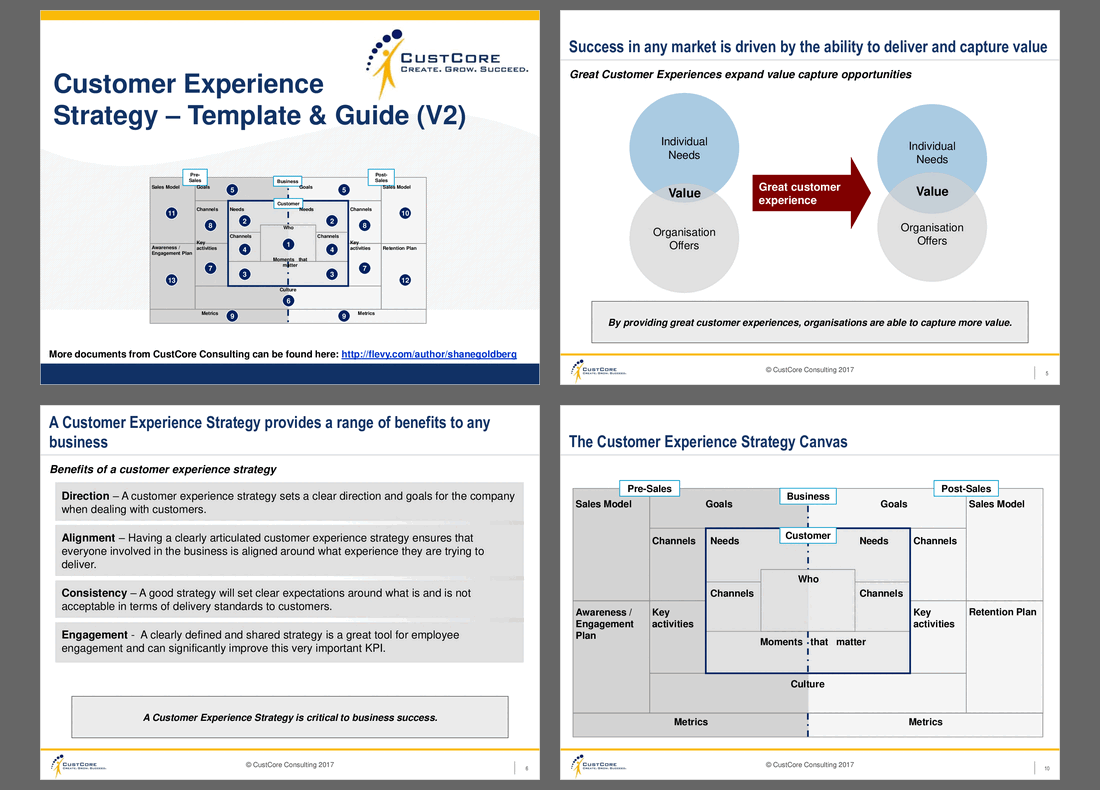
The Customer Experience Strategy Canvas for Furnco is structured into 3 sections: Pre-Sales, Business, and Post-Sales. The Pre-Sales section focuses on channels like online platforms, social media, and retail stores to engage potential customers, emphasizing goals such as helping customers find reputable retailers and comparing models based on quality and pricing. The Business section identifies target demographics, specifically households seeking quality furniture, and their needs, including easy delivery and layout assistance. Communication channels include email and live chat. Post-Sales emphasizes retention and customer satisfaction, highlighting effective communication regarding delivery and returns. Key activities include product delivery and customer interactions, supported by a retention plan. Metrics like Customer Effort Score (CES) and Net Promoter Score (NPS) measure success, providing insights into customer satisfaction and engagement, ultimately driving loyalty.
Implementing a customer experience strategy enhances business interactions with customers. Direction provides a clear path and objectives for engaging customers, ensuring team members understand their roles in delivering customer satisfaction. Alignment fosters a unified approach across the organization regarding the desired customer experience, leading to improved service delivery. Consistency establishes clear standards for service delivery, setting customer expectations and enhancing overall satisfaction. Engagement is boosted when employees understand the strategy and their roles, increasing motivation and commitment to delivering exceptional customer experiences, positively impacting employee satisfaction and retention.
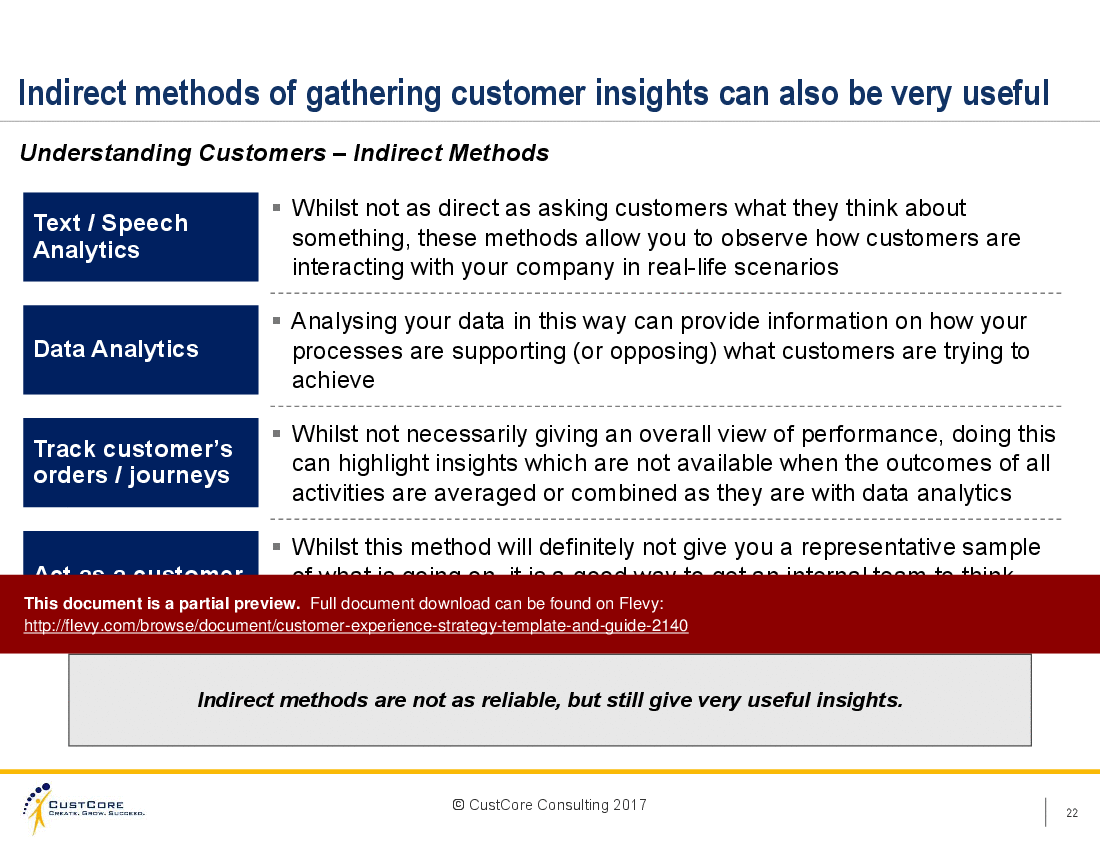
This PPT slide outlines indirect methods for gathering customer insights, including Text/Speech Analytics, Data Analytics, tracking customer orders or journeys, and "Acting as a Customer." Text/Speech Analytics analyzes customer interactions to reveal engagement and sentiments without direct inquiries. Data Analytics examines internal processes against customer objectives, uncovering discrepancies that provide actionable insights. Tracking customer journeys identifies specific patterns and behaviors that may be obscured in aggregated data, offering a nuanced understanding of experiences. "Acting as a Customer" involves internal teams immersing themselves in the customer experience, fostering empathy and critical thinking about customer needs. While these methods may lack the reliability of direct feedback, they complement traditional mechanisms and enhance understanding of customer behavior.
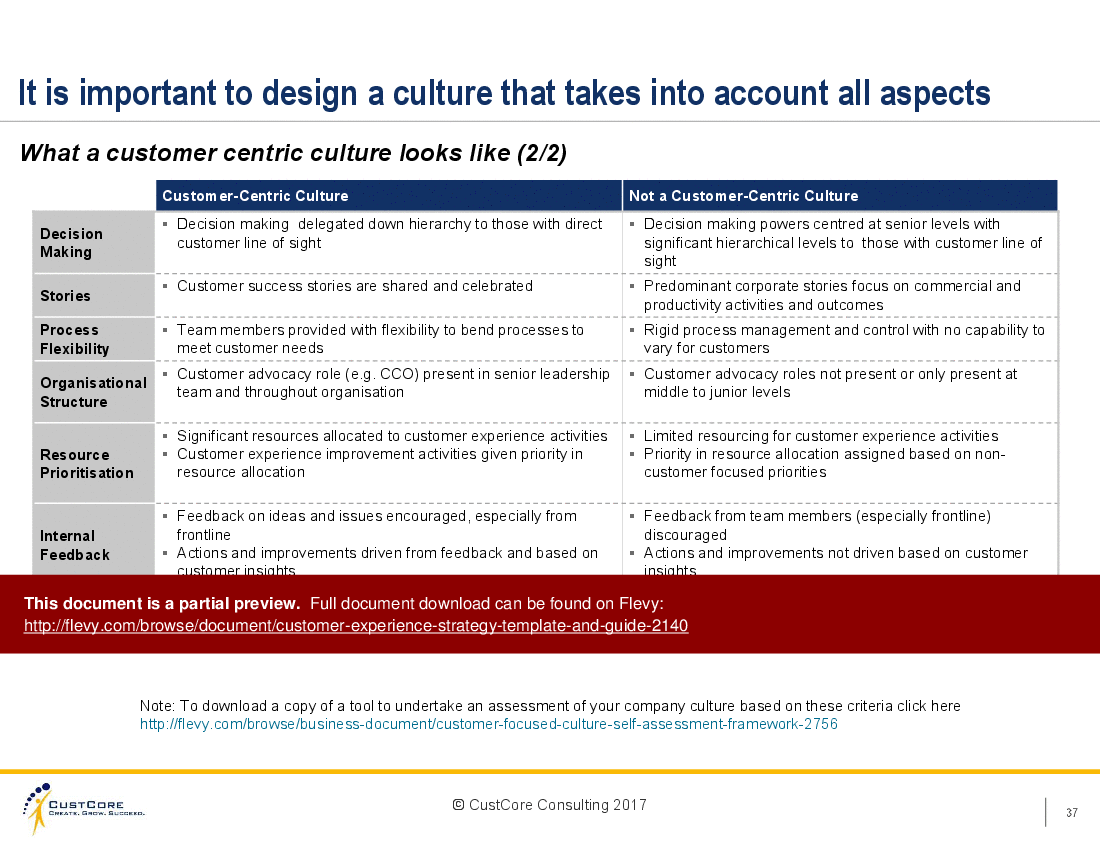
This PPT slide highlights the critical connection between corporate culture, employee engagement, and customer satisfaction. A strong corporate culture enhances employee engagement, leading to improved client service and better overall customer experiences, which fosters increased customer loyalty. Defining customer-focused components within corporate culture is essential for sustainable customer experience strategies. Without a clear cultural framework prioritizing the customer, organizations may struggle to maintain high service levels and satisfaction. A customer-centric culture aligns all business functions toward delivering superior customer outcomes, positioning it as a strategic necessity for thriving in competitive markets.
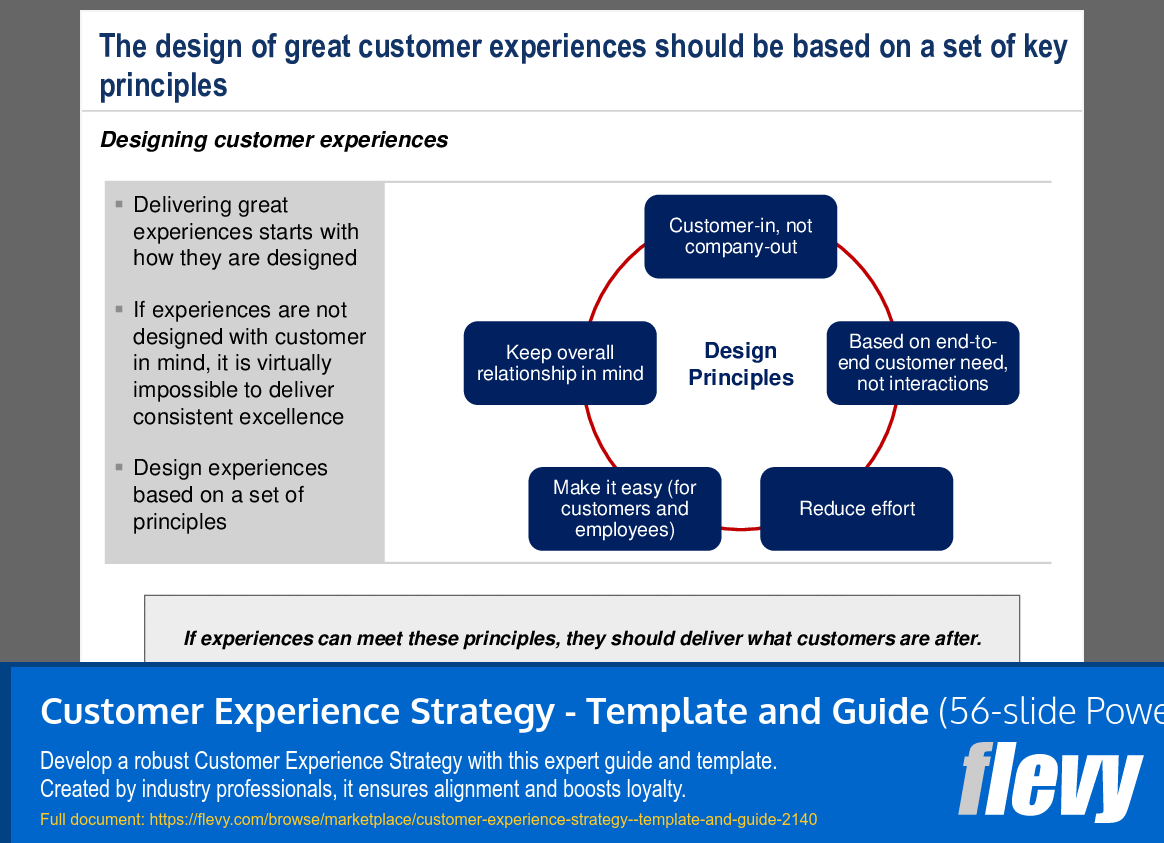
This PPT slide outlines essential principles for designing effective customer experiences, emphasizing intentional design and a customer-centric approach. Key principles include a "Customer-in, not company-out" mindset, prioritizing customer needs over internal agendas. The principle "Keep overall relationship in mind" focuses on fostering long-term customer relationships rather than individual transactions. "Make it easy (for customers and employees)" highlights the importance of simplifying processes to enhance satisfaction and efficiency. The principle "Reduce effort" advocates for minimizing friction in customer interactions. Lastly, "Based on end-to-end customer need, not interactions" suggests addressing the entire customer journey rather than isolated touchpoints. Adhering to these principles helps organizations meet customer expectations effectively.
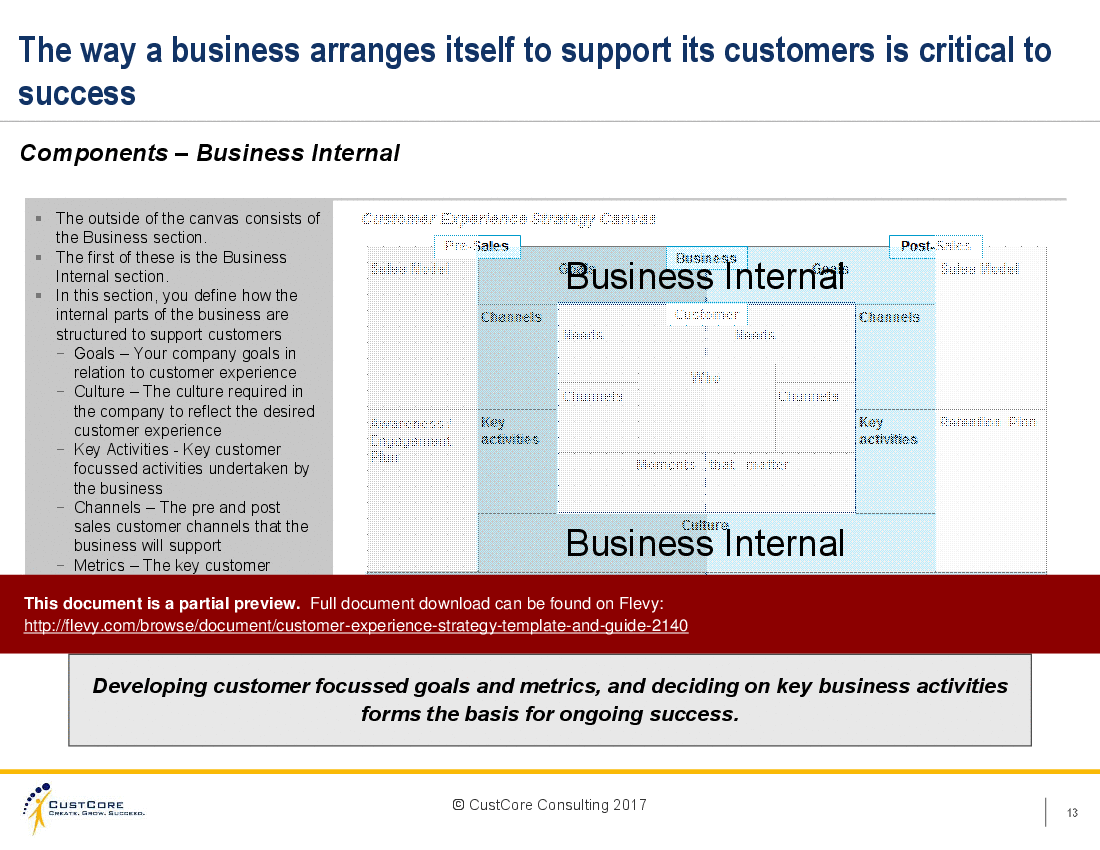
This PPT slide outlines a framework for customer engagement, focusing on the "Business External" components of the Customer Experience Strategy Canvas. Key elements include the "Sales Model," which governs product or service sales to align with customer expectations, and the "Service Model," detailing how to serve customers to maintain satisfaction and loyalty. The "Awareness / Engagement Plan" describes strategies for increasing customer awareness and engagement, essential for attracting and retaining customers. The "Retention Plan" focuses on enhancing customer experience for long-term loyalty. This structured approach enables businesses to assess and improve customer engagement practices, emphasizing that a well-defined external strategy encompasses the entire customer journey from awareness to post-sale retention.
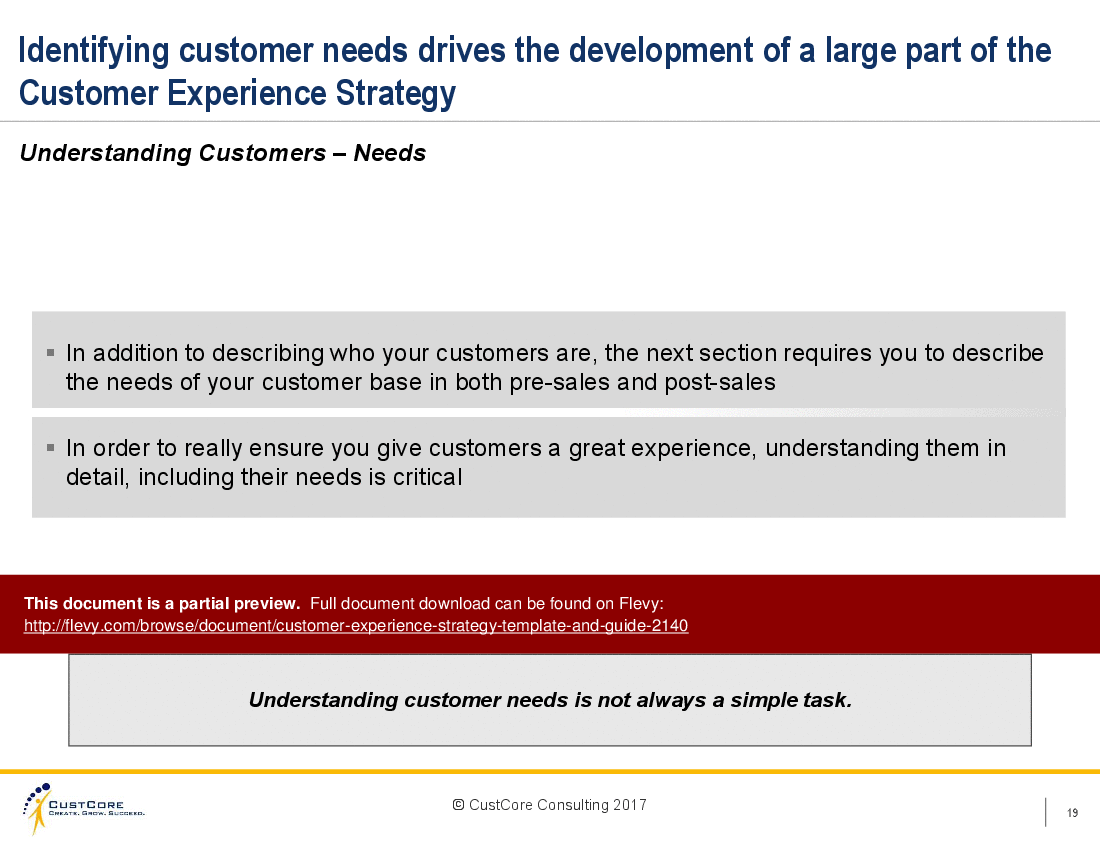
This PPT slide explores the complexity of understanding customer needs, distinguishing between stated needs and underlying motivations. Customers often articulate superficial requirements, but struggle to identify deeper needs. The method of continually asking "why" uncovers these motivations. For example, a customer's stated need for new lounge furniture reveals a concern about its old appearance, which further uncovers a desire to avoid appearing financially constrained. This illustrates how simple requests can mask deeper emotional or social considerations. Businesses should focus on these underlying drivers to enhance engagement and align offerings with customer expectations, fostering stronger relationships and improving customer satisfaction.
This PPT slide outlines 13 components that differentiate a customer-centric culture from a non-customer-centric one. In the "Vision & Goals" section, customer-centric organizations incorporate customer language and align business success with customer outcomes, while non-customer-centric cultures neglect this alignment. The "Values" segment shows that customer-centric firms prioritize customer feedback in value creation, contrasting with internal-driven value in non-customer-centric organizations. "KPIs & Rewards" reveal that customer-centric firms focus on customer success metrics, whereas non-customer-centric ones prioritize internal productivity. Customer-centric companies display artifacts reflecting customer preferences, while non-customer-centric firms showcase internal-focused items. Lastly, "Leadership Behaviours" indicates that leaders in customer-centric cultures celebrate customer success, unlike those in non-customer-centric firms who focus on productivity and financial outcomes.
This PPT slide highlights the critical role of customer experience in value creation and organizational success. It features a framework connecting "Individual Needs" and "Organization Offers," with value at the center. The intersection of these elements illustrates how effectively meeting customer needs enhances value. "Great customer experience" acts as a catalyst for aligning offerings with individual needs, leading to increased value capture. Organizations that excel in delivering exceptional customer experiences are better positioned for sustainable growth and profitability. This underscores the strategic importance of investing in customer experience strategies to drive business outcomes.
Source: Best Practices in Customer Experience PowerPoint Slides: Customer Experience Strategy - Template and Guide PowerPoint (PPTX) Presentation Slide Deck, CustCore Consulting
CustCore Consulting is a boutique consultancy firm which helps businesses unlock hidden growth through a focus on significantly improving end-to-end customer and employee experience.
Whilst each project is different, our clients can typically expect results which show
• Vastly Increased customer satisfaction and advocacy
• Growth in new sales and customer
... [read more] retention
• Significant improvements to the bottom line
• Increased productivity and streamlined operations
Since 2012, we have provided business templates to over 10,000 businesses and organizations of all sizes, from startups and small businesses to the Fortune 100, in over 130 countries.
Read Customer Testimonials
"As an Independent Management Consultant, I find Flevy to add great value as a source of best practices, templates and information on new trends. Flevy has matured and the quality and quantity of the library is excellent. Lastly the price charged is reasonable, creating a win-win value for
the customer, Flevy and the various authors. This is truly a service that benefits the consulting industry and associated clients. Thanks for providing this service.
"
– Jim Schoen, Principal at FRC Group
"As a niche strategic consulting firm, Flevy and FlevyPro frameworks and documents are an on-going reference to help us structure our findings and recommendations to our clients as well as improve their clarity, strength, and visual power. For us, it is an invaluable resource to increase our impact and value."
– David Coloma, Consulting Area Manager at Cynertia Consulting
"Flevy.com has proven to be an invaluable resource library to our Independent Management Consultancy, supporting and enabling us to better serve our enterprise clients.
The value derived from our [FlevyPro] subscription in terms of the business it has helped to gain far exceeds the investment made, making a subscription a no-brainer for any growing consultancy – or in-house strategy team."
– Dean Carlton, Chief Transformation Officer, Global Village Transformations Pty Ltd.
"I have used FlevyPro for several business applications. It is a great complement to working with expensive consultants. The quality and effectiveness of the tools are of the highest standards."
– Moritz Bernhoerster, Global Sourcing Director at Fortune 500
"Flevy is now a part of my business routine. I visit Flevy at least 3 times each month.
Flevy has become my preferred learning source, because what it provides is practical, current, and useful in this era where the business world is being rewritten.
many challenges and there is the need to make the right decisions in a short time, with so much scattered information, we are fortunate to have Flevy. Flevy investigates, selects, and puts at our disposal the best of the best to help us be successful in our work.
"
– Omar Hernán Montes Parra, CEO at Quantum SFE
"As a small business owner, the resource material available from FlevyPro has proven to be invaluable. The ability to search for material on demand based our project events and client requirements was great for me and proved very beneficial to my clients. Importantly, being able to easily edit and tailor
the material for specific purposes helped us to make presentations, knowledge sharing, and toolkit development, which formed part of the overall program collateral. While FlevyPro contains resource material that any consultancy, project or delivery firm must have, it is an essential part of a small firm or independent consultant's toolbox.
"
– Michael Duff, Managing Director at Change Strategy (UK)
"The wide selection of frameworks is very useful to me as an independent consultant. In fact, it rivals what I had at my disposal at Big 4 Consulting firms in terms of efficacy and organization."
– Julia T., Consulting Firm Owner (Former Manager at Deloitte and Capgemini)
"If you are looking for great resources to save time with your business presentations, Flevy is truly a value-added resource. Flevy has done all the work for you and we will continue to utilize Flevy as a source to extract up-to-date information and data for our virtual and onsite presentations!"

– Debbi Saffo, President at The NiKhar Group
Save with Bundles
This document is available as part of the following discounted bundle(s):
Download our FREE Digital Transformation Templates
Download our free compilation of 50+ Digital Transformation slides and templates. DX concepts covered include Digital Leadership, Digital Maturity, Digital Value Chain, Customer Experience, Customer Journey, RPA, etc.