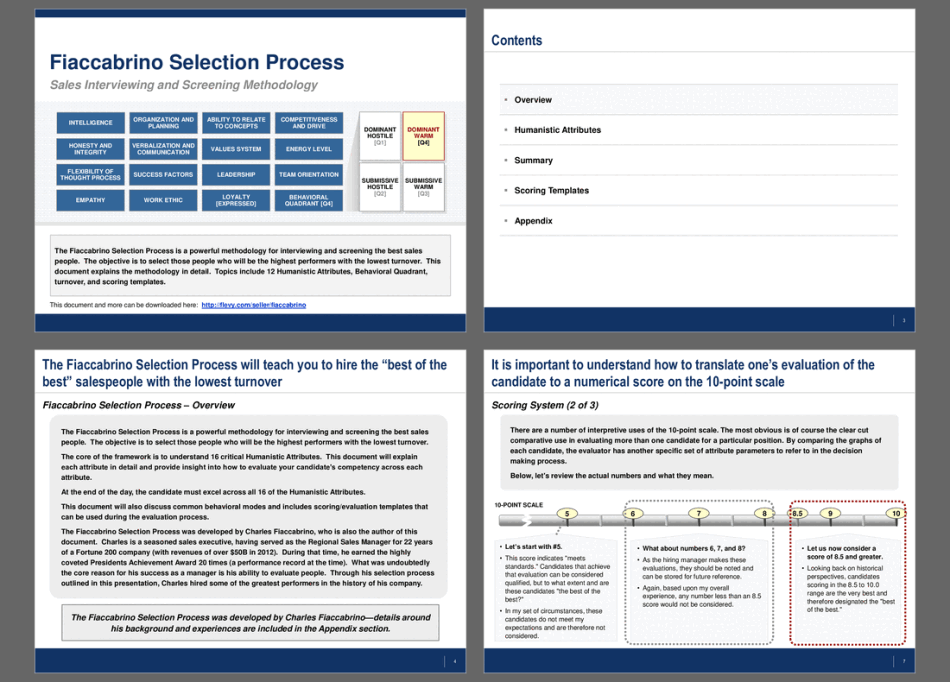
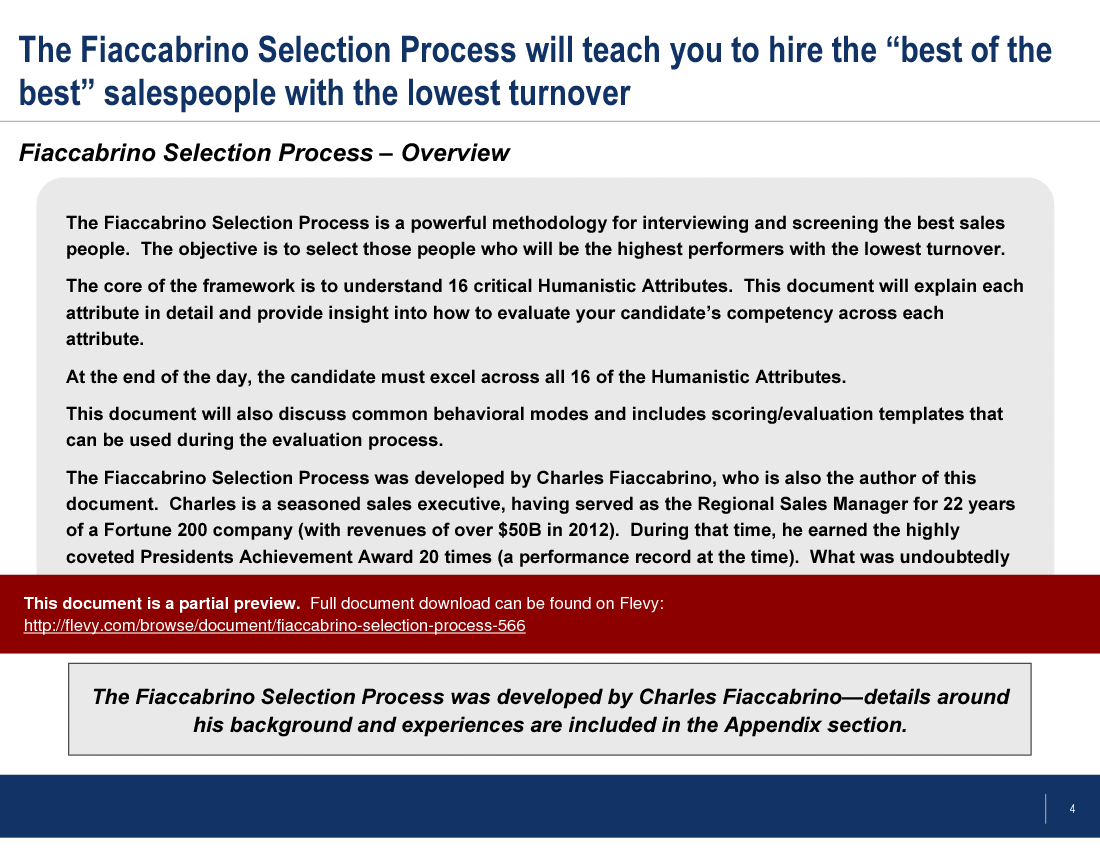

The Fiaccabrino Selection Process is a powerful methodology for interviewing and screening the best people for your organization. The objective is to select those people who will be the highest performers with the lowest turnover.
(Whereas the methodology was originally developed for a sales organization, it can easily be modified and tweaked for other functions. In fact, it has been used for positions from Marketers to Research Scientists to Pharmacists.)

In most sales organizations, your top 20% sales performers generate 80% of the revenues. The question is, why are the other 80% hired? What would happen if sales managers hired sales people who were more like the top 20% and less like the bottom 80%? The result is your sales would significantly multiply and your sales turnover will also drop. This framework teaches you how to identify the top 20% sales performers—the best of the best.
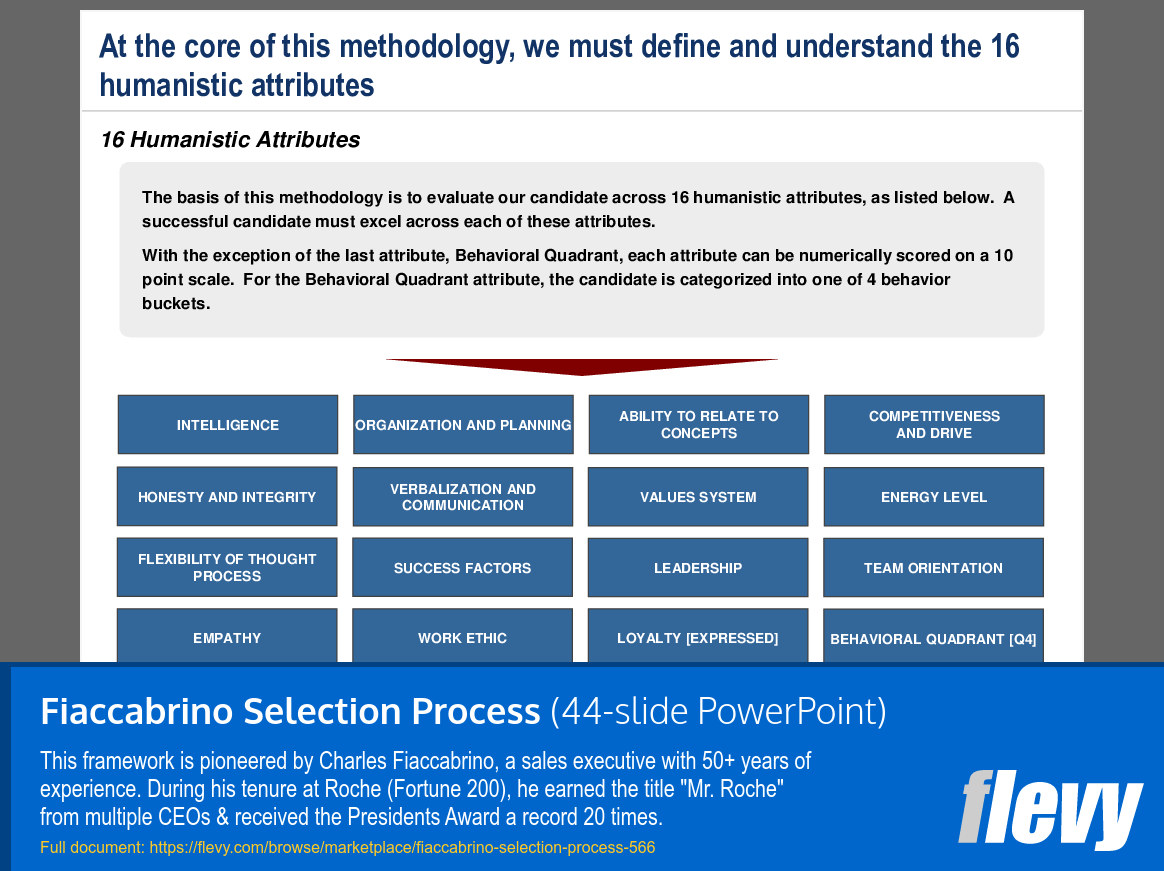
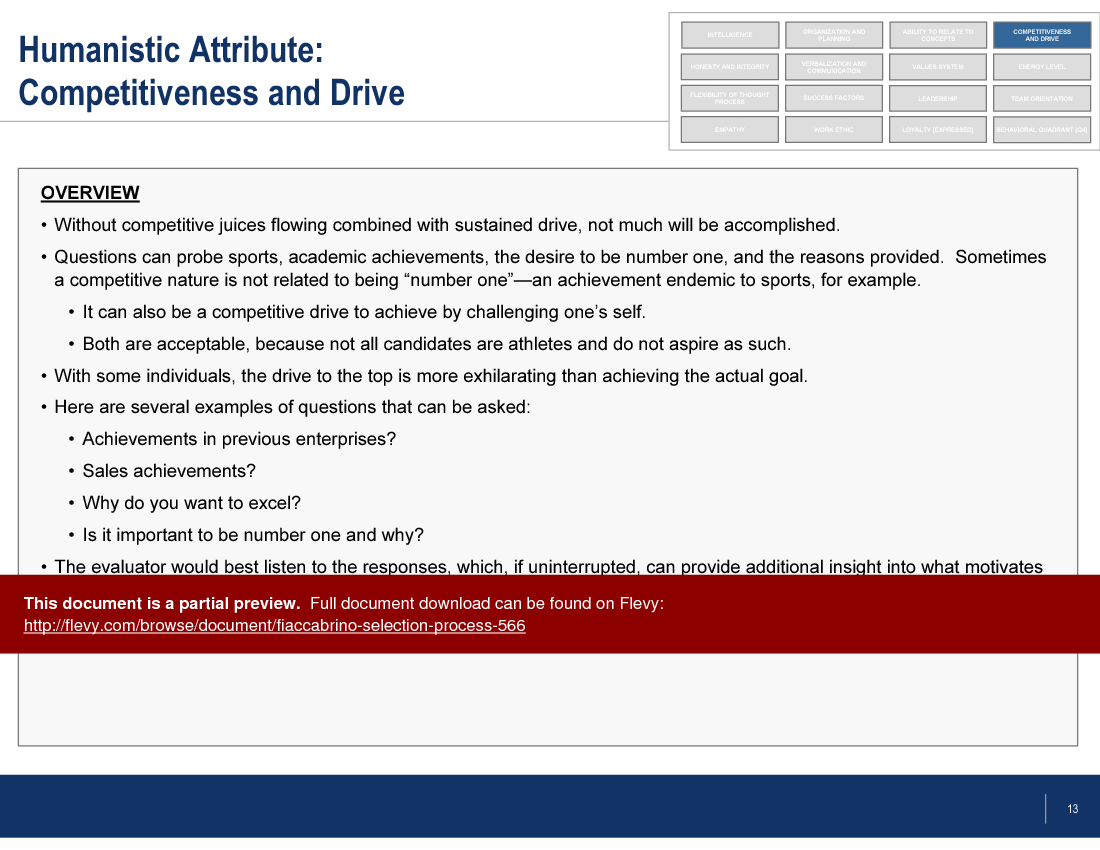
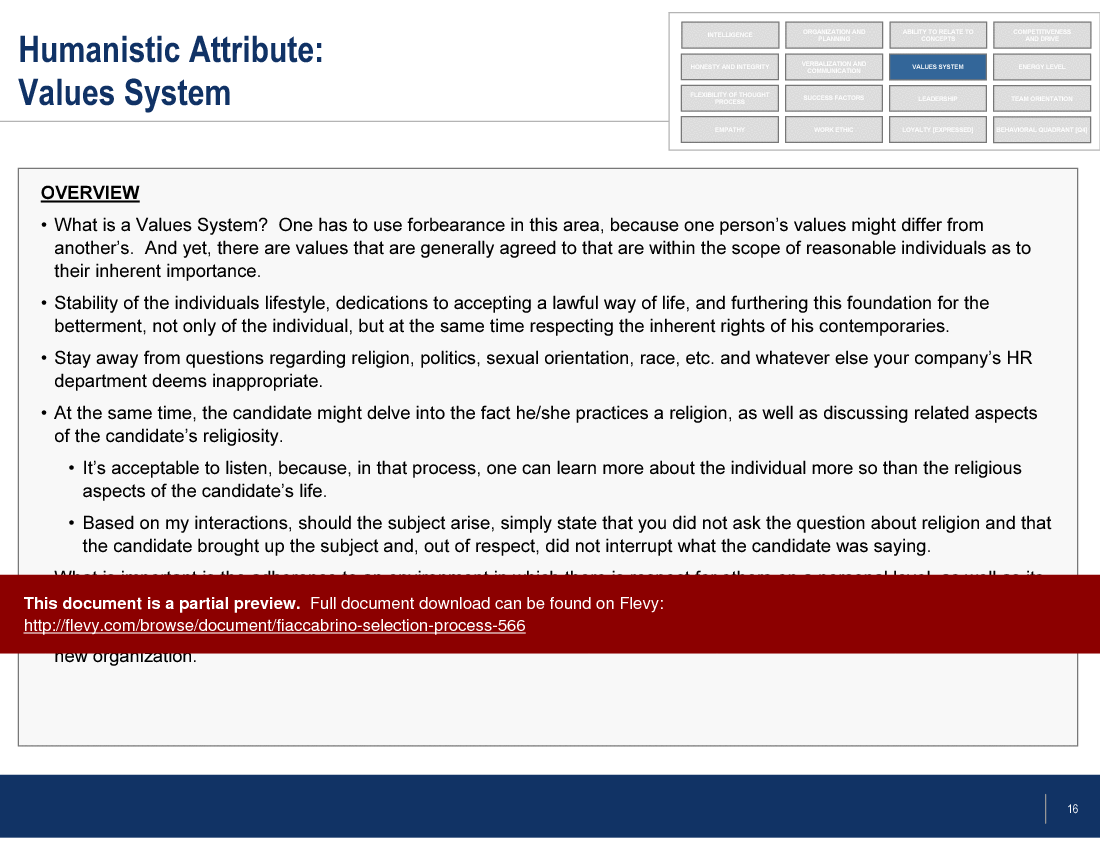
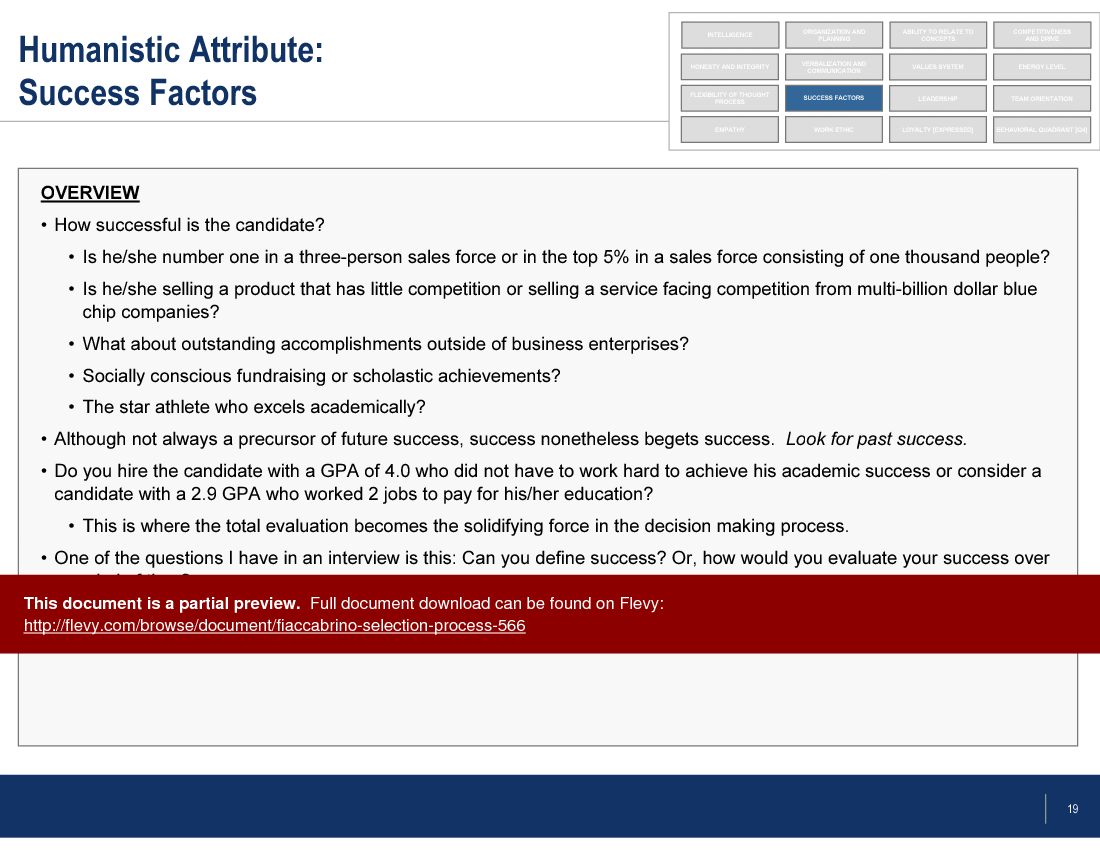
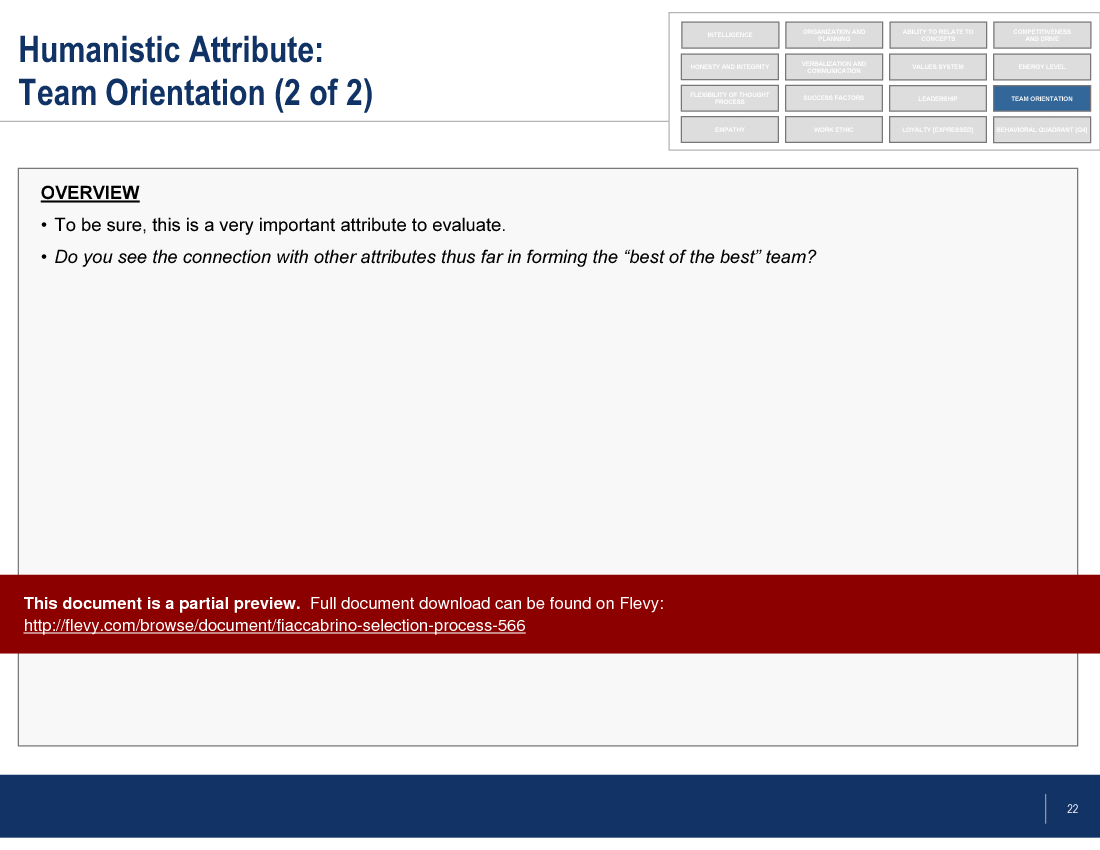
The core of the framework is to understand 16 critical Humanistic Attributes. This document will explain each attribute in detail and provide insight into how to evaluate your candidate's competency across each attribute.
At the end of the day, the candidate must excel across all 16 of the Humanistic Attributes. This document will also discuss common behavioral modes and includes scoring/evaluation templates that can be used during the evaluation process.
The Fiaccabrino Selection Process was developed by Charles Fiaccabrino, who is also the author of this document. Charles is a seasoned sales executive, having served as the Regional Sales Manager for 22 years of a Fortune 200 company (with revenues of over $50B in 2012). During that time, he earned the highly coveted Presidents Achievement Award 20 times (a performance record at the time). Charles was known within the company as "Mr. Roche."
What was undoubtedly the core reason for his success as a manager is his ability to evaluate people. Through his selection process outlined in this presentation, Charles hired some of the greatest performers in the history of his company.
Here are some testimonials from former executives of Roche (original letters embedded in the document):
"... you have earned the respect, the admiration and the affection of dozens, probably hundreds, of Roche people whose lives you have touched as friend, counselor, mentor, leader." – Irwin Lerner, former CEO
"All of your colleagues at Roche Diagnostics, who refer to you as 'Mr. Roche,' are quite proud of your accomplishments ... I understand you were also responsible for hiring and coaching over 100 Roche employees who have and will continue to follow in your footsteps." – Patrick Zenner, former CEO
"In all these years, almost 30 to be exact, I'm positive no one person cared as much or worked as hard to make Roche Diagnostics great!" – Tom Mac Mahon, former GM
• * * * *
After retiring from Roche at 65, Charles has consulted for a company to help them identify qualified sales candidates. Using the Fiaccabrino Selection Process, Charles helped reduce the turnover at the company from 35-40% to 2%.
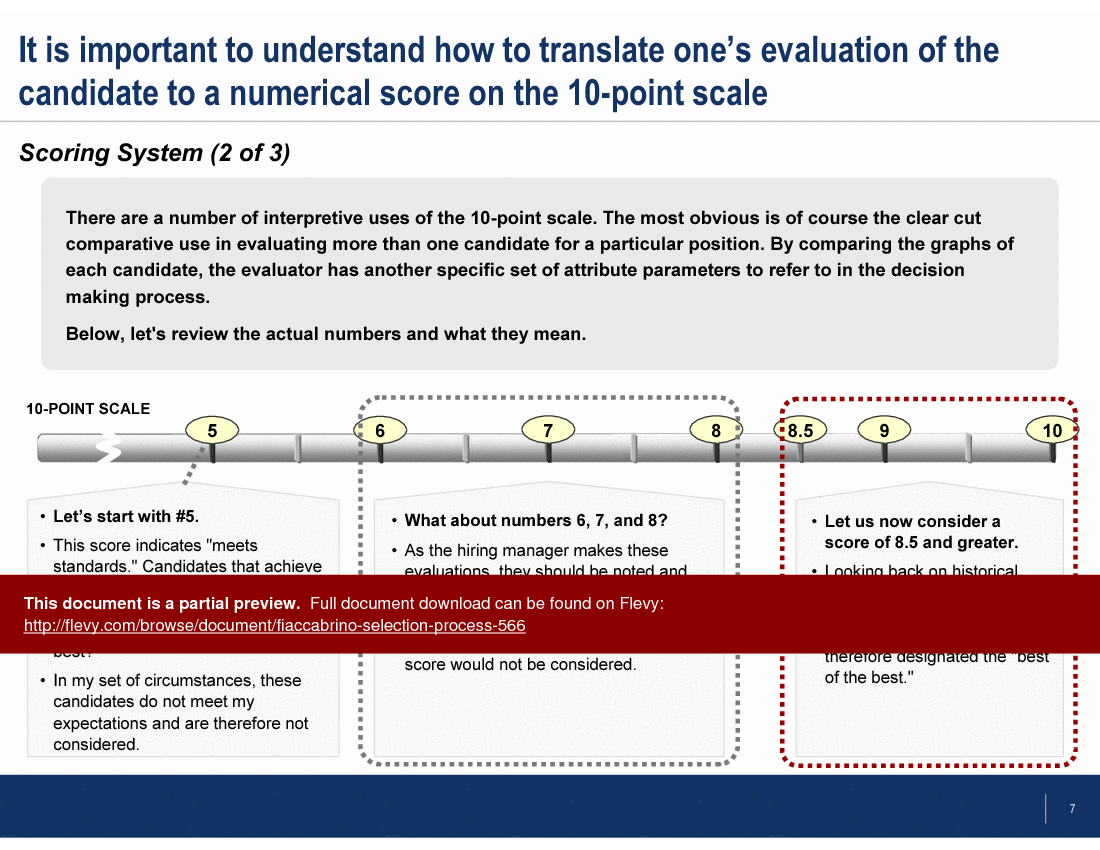
The document includes a detailed scoring system to objectively evaluate candidates on a 10-point scale. It also provides comprehensive overviews and probing questions for each of the 16 Humanistic Attributes to ensure thorough candidate assessment.
Got a question about the product? Email us at support@flevy.com or ask the author directly by using the "Ask the Author a Question" form. If you cannot view the preview above this document description, go here to view the large preview instead.
Executive Summary
The Fiaccabrino Selection Process is a robust methodology designed for interviewing and screening top-tier sales professionals. Developed by Charles Fiaccabrino, a seasoned sales executive with over 50 years of experience, this framework focuses on identifying candidates who exhibit the highest performance potential while minimizing turnover. The process emphasizes the evaluation of 16 Humanistic Attributes, ensuring that selected individuals not only meet, but exceed performance standards. By employing scoring templates and behavioral assessments, organizations can enhance their hiring practices and build a more effective sales team.
Who This Is For and When to Use
• Sales executives seeking to refine their hiring processes
• Human Resources professionals involved in recruitment and talent management
• Team leaders aiming to enhance team performance and cohesion
• Organizational leaders focused on reducing turnover rates
Best-fit moments to use this deck:
• During the recruitment phase to establish a structured interview process
• When developing training programs for new hires based on identified attributes
• In performance reviews to align employee capabilities with organizational goals
Learning Objectives
• Define the 16 Humanistic Attributes essential for top sales performance
• Build a comprehensive scoring system to evaluate candidates effectively
• Establish a clear understanding of the Behavioral Quadrant and its implications for hiring
• Implement the Fiaccabrino Selection Process in real-world hiring scenarios
• Analyze candidate responses to identify potential for high performance
• Create a culture of continuous improvement in hiring practices
Table of Contents
• Overview (page 3)
• Humanistic Attributes (page 9)
• Summary (page 32)
• Scoring Templates (page 37)
• Appendix (page 40)
Primary Topics Covered
• Overview of the Fiaccabrino Selection Process - This section introduces the methodology and its objectives, emphasizing the importance of selecting high-performing salespeople.
• Humanistic Attributes - Detailed descriptions of the 16 attributes that candidates must excel in, including intelligence, empathy, and work ethic.
• Behavioral Quadrant - An exploration of the 4 behavioral types and their relevance to sales success, particularly the Dominant Warm (Q4) category.
• Scoring System - A framework for evaluating candidates on a 10-point scale, ensuring only the best candidates are selected.
• Turnover Discussion - Insights into managing turnover through effective hiring practices and the importance of cultural fit.
• Implementation Guidance - Practical advice on how to apply the selection process in organizational settings.
Deliverables, Templates, and Tools
• Scoring templates for evaluating candidates based on the 16 Humanistic Attributes
• Behavioral Quadrant assessment tools to categorize candidates
• Interview question guides tailored to assess each attribute
• Performance tracking sheets for new hires to monitor progress
• Training program outlines based on identified candidate needs
Slide Highlights
• Overview slide detailing the Fiaccabrino Selection Process and its objectives
• Humanistic Attributes slide listing and defining each attribute critical for sales success
• Scoring System slide illustrating the 10-point scale for candidate evaluation
• Behavioral Quadrant slide explaining the significance of the Q4 category
• Summary slide emphasizing the importance of minimizing turnover through effective hiring
Potential Workshop Agenda
Introduction to the Fiaccabrino Selection Process (60 minutes)
• Overview of the methodology and its benefits
• Discussion on the importance of Humanistic Attributes
Candidate Evaluation Techniques (90 minutes)
• Hands-on practice with scoring templates
• Role-playing exercises to assess candidate responses
Behavioral Quadrant Analysis (60 minutes)
• Deep dive into the 4 behavioral types
• Group discussions on identifying Q4 candidates
Customization Guidance
• Tailor interview questions to reflect specific organizational values and culture
• Adjust scoring templates to align with internal performance metrics
• Incorporate feedback mechanisms for continuous improvement in the selection process
Secondary Topics Covered
• The impact of turnover on organizational performance
• Strategies for developing a culture of high performance
• The role of leadership in implementing the selection process
• Best practices for onboarding new hires based on identified attributes
Topic FAQ
Document FAQ
These are questions addressed within this presentation.
What are the 16 Humanistic Attributes?
The 16 Humanistic Attributes include intelligence, organization and planning, empathy, and work ethic, among others, which are essential for identifying top sales talent.
How is the scoring system structured?
Candidates are evaluated on a 10-point scale across the first 15 attributes, requiring a minimum score of 8.5 to be considered for selection.
What is the Behavioral Quadrant?
The Behavioral Quadrant categorizes candidates into 4 types based on their interpersonal behaviors, with a focus on identifying those who exhibit Dominant Warm (Q4) traits.
How can this process reduce turnover?
By selecting candidates who align with the organization's values and demonstrate high potential, companies can foster a more stable and engaged workforce.
Can the templates be customized?
Yes, templates can be tailored to fit specific organizational needs and performance metrics.
What role does leadership play in this process?
Leadership is crucial in guiding the implementation of the selection process and ensuring that new hires are effectively integrated into the team.
How can I assess a candidate's empathy?
Interview questions should focus on scenarios that require the candidate to demonstrate understanding and consideration of others' perspectives.
Is training provided for new hires?
Yes, the process includes recommendations for training programs that align with the identified Humanistic Attributes.
Glossary
• Humanistic Attributes - Key characteristics evaluated in candidates to determine sales potential.
• Behavioral Quadrant - Framework categorizing candidates based on their interpersonal behaviors.
• Scoring System - Methodology for quantifying candidate evaluations on a 10-point scale.
• Dominant Warm (Q4) - The ideal behavioral type for sales success, characterized by warmth and assertiveness.
• Turnover - The rate at which employees leave an organization, impacting overall performance.
• Empathy - The ability to understand and share the feelings of others, crucial for building customer relationships.
• Work Ethic - The commitment to hard work and responsibility in achieving goals.
• Team Orientation - The ability to work collaboratively within a team environment.
• Leadership - The ability to guide and inspire others towards achieving common goals.
• Scoring Template - A tool used to evaluate candidates based on defined attributes.
• Interview Questions - Probing inquiries designed to assess candidate attributes and behaviors.
• Onboarding - The process of integrating new hires into the organization and its culture.
• Sales Performance - The effectiveness of a salesperson in achieving sales targets and objectives.
• Cultural Fit - The alignment between a candidate's values and the organization's culture.
• Training Program - Structured learning designed to enhance the skills and knowledge of new hires.
• Candidate Evaluation - The process of assessing a candidate's suitability for a position.
• Mentorship - Guidance provided to new hires to support their development and integration.
• Performance Metrics - Standards used to measure employee performance and effectiveness.
• Recruitment - The process of attracting and selecting candidates for employment.
• Sales Strategy - The plan for achieving sales targets and maximizing revenue.
• Organizational Strength - The overall capability and effectiveness of an organization in achieving its goals.
Source: Best Practices in Sales, Human Resources, Hiring, Interviewing PowerPoint Slides: Fiaccabrino Selection Process PowerPoint (PPT) Presentation Slide Deck, Charles Fiaccabrino
|
Download our FREE Strategy & Transformation Framework Templates
Download our free compilation of 50+ Strategy & Transformation slides and templates. Frameworks include McKinsey 7-S, Balanced Scorecard, Disruptive Innovation, BCG Curve, and many more. |