
Organizational Design and Capability Analysis   31-slide PPT PowerPoint presentation slide deck (PPT)
$29.00

Organizational Design and Capability Analysis (31-slide PPT PowerPoint presentation slide deck (PPT)) Preview Image
Log in to unlock full preview.
Organizational Design and Capability Analysis (31-slide PPT PowerPoint presentation slide deck (PPT)) Preview Image
Arrow   Click main image to view in full screen.

Organizational Design and Capability Analysis (PowerPoint PPT Slide Deck)

PowerPoint (PPT) 31 Slides FlevyPro Document

Top 100 Best Practice $29.00
FlevyPro price: FREE (included in subscription)
This framework is developed by a team of former McKinsey and Big 4 consultants. The presentation follows the headline-body-bumper slide format used by global consulting firms.
Add to Cart


Immediate download
Free lifetime updates

ORGANIZATIONAL DESIGN PPT DESCRIPTION

Editor Summary 31-slide PowerPoint presentation "Organizational Design and Capability Analysis" by LearnPPT Consulting provides a ten-step organizational design approach with emphasis on the first 3 steps: Vision and Business Architecture, Clarifying Design Criteria, and Defining Capabilities and Competencies. Read more

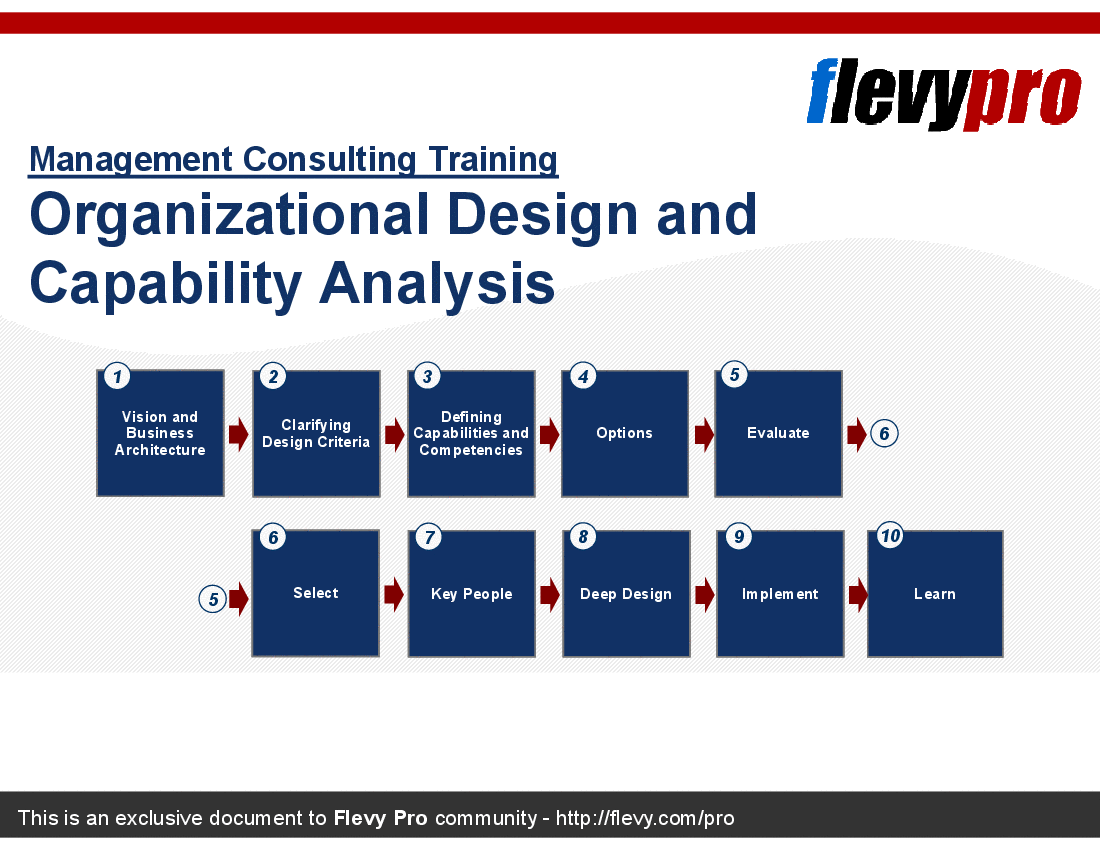
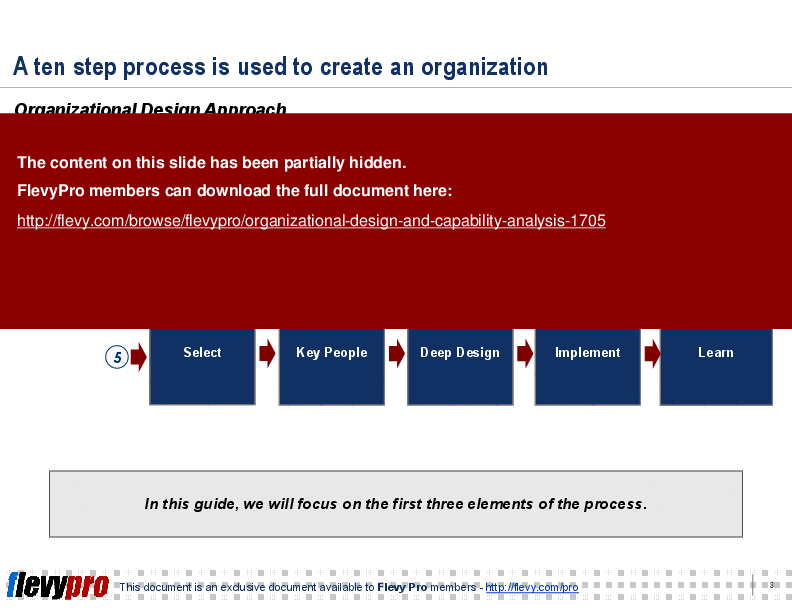
Organizational Design involves the creation of roles, processes, and structures to ensure that the organization's goals can be realized. Organizational Design span across various levels of the organization. This framework focuses on the following 3 initial steps of the full 10-step Organizational Design process:

Step 1. Vision and Business Architecture

Step 2. Clarifying Design Criteria

Step 3. Defining Capabilities and Competencies

This presentation also discusses Capability Analysis. Capability Analysis is a source of strategic insight into an organization, as it provides a vital insight to the organization's ability to follow or implement a potential strategic option.

This PPT delves into the intricate process of organizational design, breaking it down into a comprehensive ten-step approach. It emphasizes the importance of selecting key personnel and deep design elements to ensure a robust organizational structure. The guide zeroes in on the initial three steps, providing a solid foundation for further development.

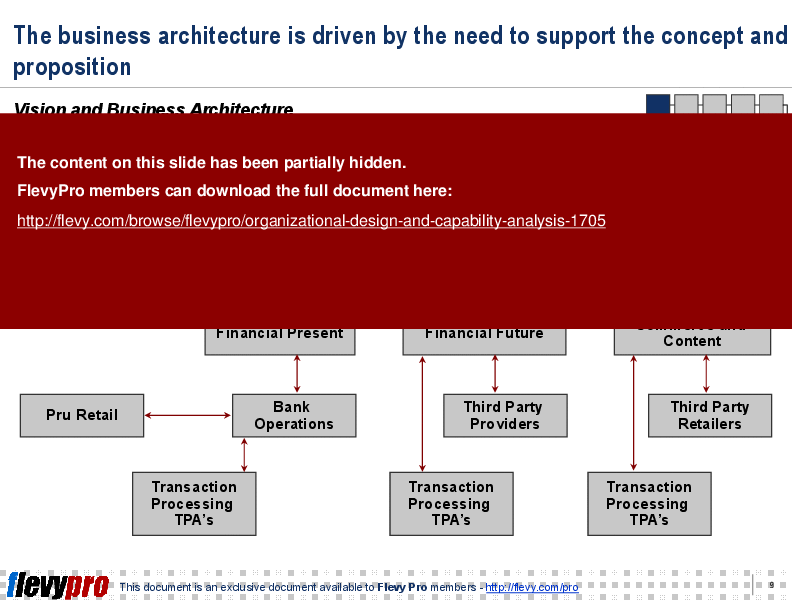
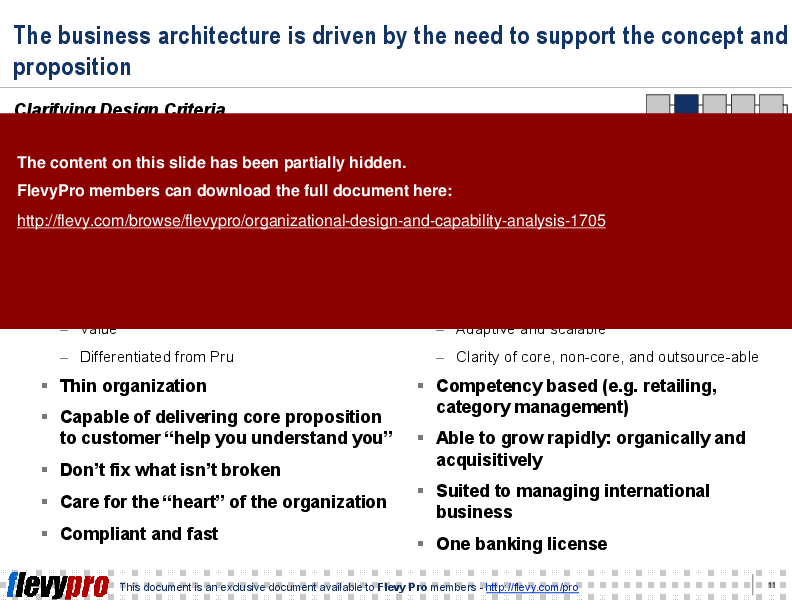
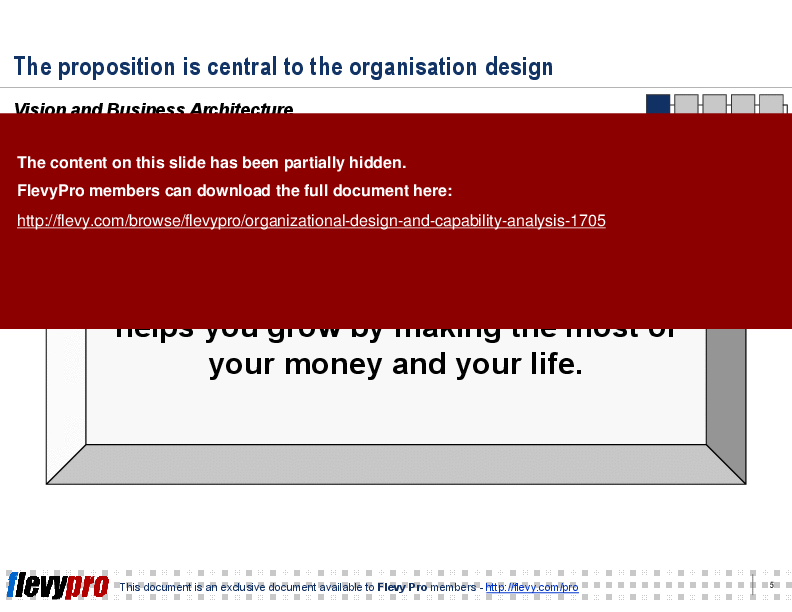
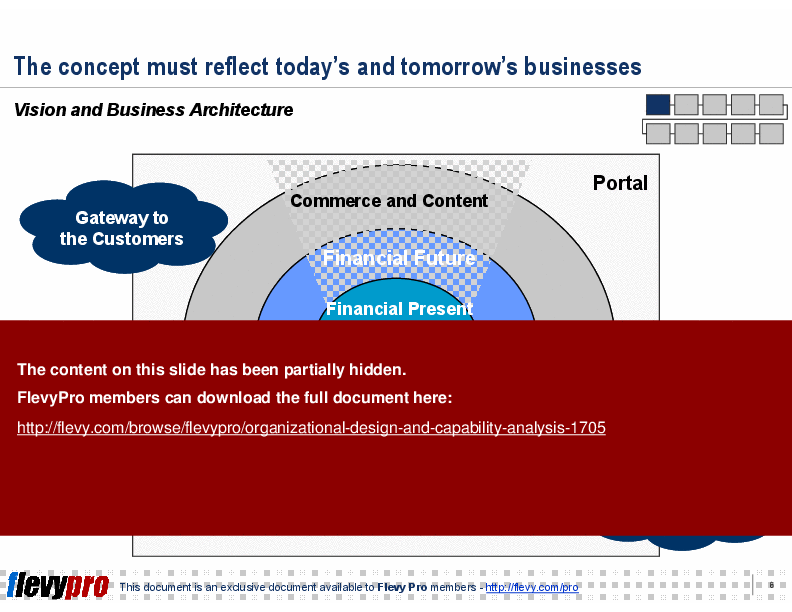
The presentation highlights the critical role of vision and business architecture in shaping an organization's design. It underscores the necessity of aligning the business concept with both current and future market demands. By understanding what each business line requires, the architecture supports the overarching proposition, ensuring coherence and strategic alignment.

Capability analysis is presented as a pivotal tool for strategic insight. The document outlines a detailed process for conducting capability assessments, including competitor comparison and internal input validation. This analysis helps identify strengths and weaknesses, offering a clear picture of the organization's strategic positioning and potential areas for improvement.

Got a question about this document? Email us at flevypro@flevy.com.

MARCUS OVERVIEW

This synopsis was written by Marcus [?] based on the analysis of the full 31-slide presentation.


Executive Summary
This presentation on Organizational Design and Capability Analysis provides a structured approach to enhancing organizational effectiveness through a ten-step process. Focusing on the first 3 steps—Vision and Business Architecture, Clarifying Design Criteria, and Defining Capabilities and Competencies—this deck equips corporate executives and consultants with the tools to assess and refine organizational structures. By mastering these initial steps, users can effectively align their strategic objectives with operational capabilities, ensuring that the organization is positioned to meet current and future challenges.

Who This Is For and When to Use
•  Corporate executives responsible for strategic planning and organizational effectiveness
•  Change management leaders overseeing organizational transformation initiatives
•  Consultants engaged in advising clients on organizational design and capability enhancement
•  HR leaders tasked with aligning workforce competencies with business objectives

Best-fit moments to use this deck:
•  During strategic planning sessions to align vision with operational capabilities
•  When initiating organizational redesign or transformation projects
•  In workshops focused on developing competencies and capabilities within teams

Learning Objectives
•  Define the organizational vision and business architecture to guide strategic alignment
•  Clarify design criteria that balance organizational effectiveness and efficiency
•  Identify and define key capabilities and competencies necessary for operational success
•  Develop a framework for assessing organizational structures against strategic objectives
•  Create a roadmap for implementing changes in organizational design
•  Establish metrics for evaluating the effectiveness of organizational capabilities

Table of Contents
•  Overview (page 2)
•  Step 1. Vision and Business Architecture (page 5)
•  Step 2. Clarifying Design Criteria (page 11)
•  Step 3. Defining Capabilities and Competencies (page 14)
•  Capability Analysis (page 25)

Primary Topics Covered
•  Vision and Business Architecture - Establishes the foundational proposition that guides the organization’s strategic direction and operational framework.
•  Clarifying Design Criteria - Outlines essential criteria such as balance, transparency, and separation to guide organizational structure decisions.
•  Defining Capabilities and Competencies - Focuses on identifying the necessary skills and competencies at organizational, process, and individual levels to support strategic objectives.
•  Competency Pools - Discusses the categorization of competencies required to support key processes within the organization.
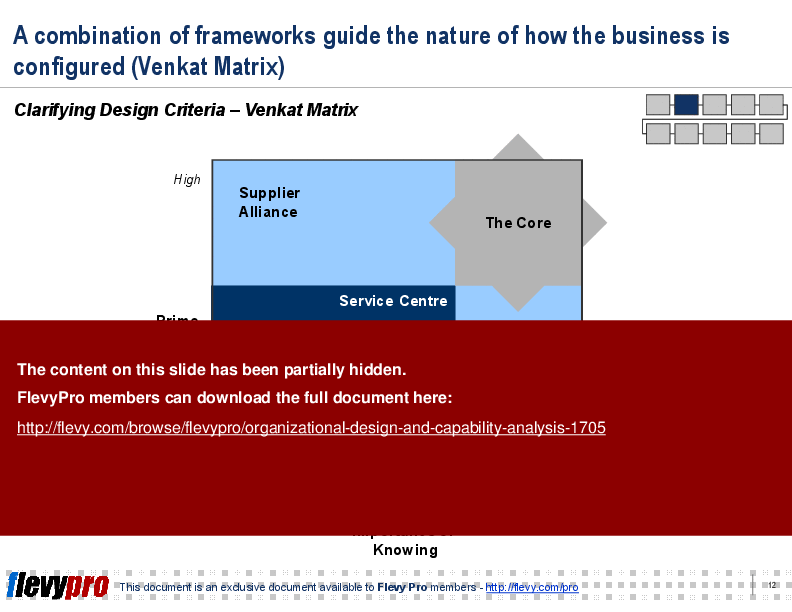
•  Venkat Matrix - A framework for assessing the strategic importance and relative position of organizational capabilities compared to competitors.
•  Core Competencies - Highlights the firm-specific skills that enable differentiated value delivery and competitive advantage.

Deliverables, Templates, and Tools
•  Vision and Business Architecture framework template for strategic alignment
•  Design criteria checklist to evaluate organizational structures
•  Competency mapping tool to identify and categorize essential skills
•  Venkat Matrix template for assessing capabilities against strategic objectives
•  Capability analysis framework for evaluating organizational strengths and weaknesses
•  Workshop agenda template for facilitating discussions on organizational design

Slide Highlights
•  Overview of the ten-step organizational design process, emphasizing the first 3 steps
•  Visual representation of the Venkat Matrix for assessing strategic importance and competitive positioning
•  Detailed breakdown of design criteria, including balance, transparency, and separation
•  Framework for defining capabilities and competencies at various organizational levels
•  Illustrative output of strengths and weaknesses analysis based on survey results

Potential Workshop Agenda
Vision and Business Architecture Session (90 minutes)
•  Discuss the organizational vision and its alignment with strategic objectives
•  Develop a draft of the business architecture framework
•  Identify key stakeholders and their roles in the vision

Design Criteria Workshop (60 minutes)
•  Review and refine the design criteria checklist
•  Engage participants in identifying balance and transparency measures
•  Establish a consensus on the separation of core and non-core functions

Capabilities and Competencies Session (90 minutes)
•  Define key capabilities required for operational success
•  Map competencies to specific roles and processes within the organization
•  Create an action plan for competency development and assessment

Customization Guidance
•  Tailor the vision and business architecture framework to reflect specific organizational goals and market conditions
•  Adjust design criteria to align with unique operational challenges and industry standards
•  Modify competency definitions to suit the specific roles and functions within the organization

Secondary Topics Covered
•  Importance of aligning organizational structure with strategic objectives
•  Role of leadership in driving organizational design initiatives
•  Techniques for assessing organizational readiness for change
•  Best practices for engaging stakeholders in the design process
•  Methods for measuring the impact of design changes on organizational performance

Topic FAQ

What are the typical steps in an organizational design process?

Many organizational design approaches follow a multi-step sequence; this deck references a 10-step process and focuses on the initial 3 stages: Step 1 Vision and Business Architecture, Step 2 Clarifying Design Criteria, and Step 3 Defining Capabilities and Competencies — the first 3 steps.

How do you conduct a capability analysis to inform strategy?

Capability analysis combines internal assessment and external comparison to identify strengths, weaknesses, and gaps that affect strategic options. The process typically uses stakeholder input and competitor comparison to validate findings and prioritize capabilities using a capability analysis framework and competitor comparison.

What is the Venkat Matrix and how is it applied in capability assessment?

The Venkat Matrix is a framework for assessing the strategic importance and relative competitive position of organizational capabilities. It helps identify which capabilities warrant investment or protection by plotting importance versus competitive position using the Venkat Matrix.

What should I look for in an organizational design toolkit for a mid-size company?

Prioritize reusable templates for vision and business architecture, a design criteria checklist for structure decisions, competency mapping tools, a capability analysis framework, and workshop agendas to engage stakeholders; these elements are included in Flevy's Organizational Design and Capability Analysis as core deliverables.

How should I evaluate the cost versus value of buying org design templates?

Compare templates on adaptability to your context, expected time savings, and ability to support workshops and diagnostics. Value increases if they include practical outputs like competency mapping tools and a Venkat Matrix template that you can reuse across projects, such as the competency mapping tool.

I need to redesign a business unit after a merger — what framework aligns structure with strategy?

Begin with Vision and Business Architecture to define the proposition, apply Clarifying Design Criteria (balance, transparency, separation) to guide structure choices, then define Capabilities and Competencies and run capability analysis to surface gaps; start with the clarifying design criteria.

How do I map competencies to roles and processes in practice?

Identify key processes, list required skills at organizational, process, and individual levels, then group skills into competency pools and map them to specific roles and processes. Use a competency mapping tool or competency pools to document and prioritize required skills.

How can workshops accelerate organizational design, and what should agendas include?

Workshops engage stakeholders early, generate alignment, and surface practical design inputs. Sample agendas include a 90-minute Vision and Business Architecture session, a 60-minute Design Criteria workshop, and a 90-minute Capabilities and Competencies session to produce draft artifacts and stakeholder agreement.

Document FAQ
These are questions addressed within this presentation.

What is the purpose of the Venkat Matrix?
The Venkat Matrix helps organizations assess the strategic importance and relative position of their capabilities, identifying areas for improvement and competitive differentiation.

How can I apply the design criteria in my organization?
Utilize the design criteria checklist to evaluate your current organizational structure and identify areas for enhancement, ensuring alignment with strategic objectives.

What are core competencies, and why are they important?
Core competencies are firm-specific skills that enable organizations to deliver differentiated value. They are crucial for maintaining competitive advantage and driving business success.

How do I define capabilities and competencies for my team?
Begin by identifying the key processes within your organization, then map the necessary skills and competencies required at the organizational, process, and individual levels.

What is the significance of capability analysis?
Capability analysis provides insights into an organization’s ability to implement strategic options, helping prioritize key capabilities and identify gaps that need to be addressed.

How can I ensure stakeholder engagement in the design process?
Involve key stakeholders early in the process through workshops and discussions, ensuring their input is considered in the development of the organizational design.

What metrics should I use to evaluate organizational capabilities?
Establish metrics that align with strategic objectives, such as performance indicators, customer satisfaction scores, and operational efficiency measures.

How often should I revisit the organizational design?
Regularly review the organizational design to ensure it remains aligned with evolving strategic objectives, market conditions, and operational needs.

Glossary
•  Organizational Design - The process of aligning an organization’s structure with its strategy and objectives.
•  Capabilities - The abilities and skills that an organization possesses to achieve its goals.
•  Competencies - The specific skills and knowledge required to perform tasks effectively.
•  Venkat Matrix - A framework for assessing the strategic importance and competitive positioning of organizational capabilities.
•  Core Competencies - Unique strengths that provide competitive advantages in the marketplace.
•  Design Criteria - Standards used to evaluate and guide organizational structure decisions.
•  Capability Analysis - An assessment of an organization’s ability to implement strategic options and fill capability gaps.
•  Stakeholder Engagement - The process of involving individuals or groups who have an interest in the organization’s success.
•  Performance Indicators - Metrics used to measure the effectiveness and efficiency of an organization’s operations.
•  Operational Efficiency - The ability to deliver products or services in the most cost-effective manner without compromising quality.
•  Strategic Alignment - The process of aligning organizational activities with its strategic objectives.
•  Business Architecture - The structure and framework that defines how an organization operates and delivers value.
•  Change Management - The approach to transitioning individuals, teams, and organizations to a desired future state.
•  Process Mapping - A visual representation of the steps involved in a business process.
•  Stakeholder - Any individual or group that has an interest in the organization’s performance and outcomes.
•  Organizational Effectiveness - The degree to which an organization achieves its goals and objectives.
•  Market Conditions - The economic factors that influence the supply and demand for goods and services.
•  Strategic Objectives - Specific, measurable goals that an organization aims to achieve in alignment with its mission.
•  Workforce Competencies - The skills and abilities that employees must possess to perform their jobs effectively.
•  Customer Satisfaction - A measure of how products and services meet or exceed customer expectations.
•  Operational Structure - The arrangement of roles, responsibilities, and processes within an organization.

ORGANIZATIONAL DESIGN PPT SLIDES

Organizational Decision-Making Structure Overview

Framework for Defining Organizational Competencies

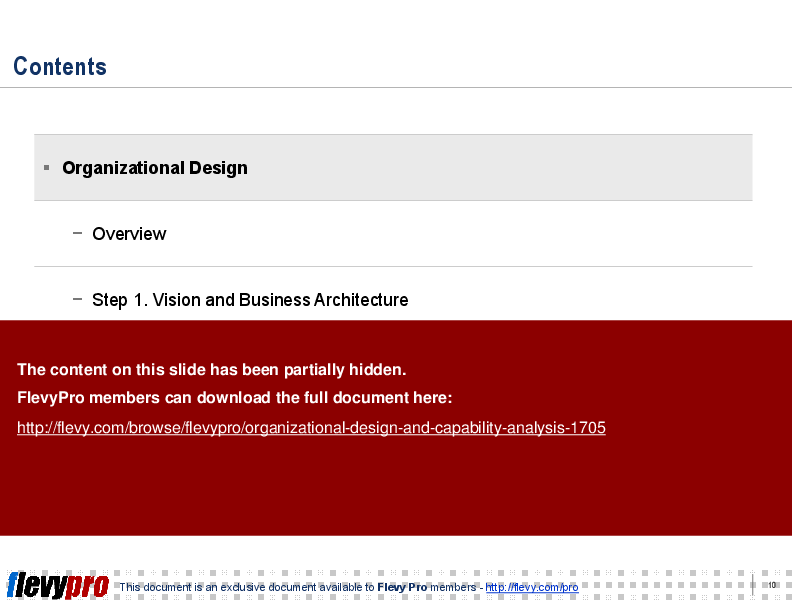
Structured Ten-Step Organizational Design Framework

Key Processes for Business Proposition Delivery

Framework for Defining Competency Pools in Key Processes

Source: Best Practices in Organizational Design, Capability Analysis, Core Competences PowerPoint Slides: Organizational Design and Capability Analysis PowerPoint (PPT) Presentation Slide Deck, LearnPPT Consulting


$29.00
FlevyPro price: FREE (included in subscription)
This framework is developed by a team of former McKinsey and Big 4 consultants. The presentation follows the headline-body-bumper slide format used by global consulting firms.
Add to Cart
  

Did you need more documents?

Consider a FlevyPro subscription from $39/month. View plans here.

For $10.00 more, you can download this document plus 2 more FlevyPro documents. That's just $13 each.

ABOUT FLEVYPRO

This document is part of the FlevyPro Library, a curated knowledge base of documents for our FlevyPro subscribers.

FlevyPro is a subscription service for on-demand business frameworks and analysis tools. FlevyPro subscribers receive access to an exclusive library of curated business documents—business framework primers, presentation templates, Lean Six Sigma tools, and more—among other exclusive benefits.

Click here to learn more about FlevyPro and its benefits.

Did you know?
The average daily rate of a McKinsey consultant is $6,625 (not including expenses). The average price of a Flevy document is $65.
Bundle and save! You can save up to % with bundles!

View bundle(s)


Trusted by over 10,000+ Client Organizations
Since 2012, we have provided business templates to over 10,000 businesses and organizations of all sizes, from startups and small businesses to the Fortune 100, in over 130 countries.
AT&T GE Cisco Intel IBM Coke Dell Toyota HP Nike Samsung Microsoft Astrazeneca JP Morgan KPMG Walgreens Walmart 3M Kaiser Oracle SAP Google E&Y Volvo Bosch Merck Fedex Shell Amgen Eli Lilly Roche AIG Abbott Amazon PwC T-Mobile Broadcom Bayer Pearson Titleist ConEd Pfizer NTT Data Schwab


Read Customer Testimonials

 
"Flevy is now a part of my business routine. I visit Flevy at least 3 times each month.

Flevy has become my preferred learning source, because what it provides is practical, current, and useful in this era where the business world is being rewritten.

In today's environment where there are so "

– Omar Hernán Montes Parra, CEO at Quantum SFE
 
"FlevyPro has been a brilliant resource for me, as an independent growth consultant, to access a vast knowledge bank of presentations to support my work with clients. In terms of RoI, the value I received from the very first presentation I downloaded paid for my subscription many times over! The "

– Roderick Cameron, Founding Partner at SGFE Ltd
 
"Last Sunday morning, I was diligently working on an important presentation for a client and found myself in need of additional content and suitable templates for various types of graphics. Flevy.com proved to be a treasure trove for both content and design at a reasonable price, considering the time I "

– M. E., Chief Commercial Officer, International Logistics Service Provider
 
"Flevy.com has proven to be an invaluable resource library to our Independent Management Consultancy, supporting and enabling us to better serve our enterprise clients.

The value derived from our [FlevyPro] subscription in terms of the business it has helped to gain far exceeds the investment made, making a subscription a no-brainer for any growing consultancy – or in-house strategy team."

– Dean Carlton, Chief Transformation Officer, Global Village Transformations Pty Ltd.
 
"The wide selection of frameworks is very useful to me as an independent consultant. In fact, it rivals what I had at my disposal at Big 4 Consulting firms in terms of efficacy and organization."

– Julia T., Consulting Firm Owner (Former Manager at Deloitte and Capgemini)
 
"As a young consulting firm, requests for input from clients vary and it's sometimes impossible to provide expert solutions across a broad spectrum of requirements. That was before I discovered Flevy.com.

Through subscription to this invaluable site of a plethora of topics that are key and crucial to consulting, I "

– Nishi Singh, Strategist and MD at NSP Consultants
 
"If you are looking for great resources to save time with your business presentations, Flevy is truly a value-added resource. Flevy has done all the work for you and we will continue to utilize Flevy as a source to extract up-to-date information and data for our virtual and onsite presentations!"

– Debbi Saffo, President at The NiKhar Group
 
"As an Independent Management Consultant, I find Flevy to add great value as a source of best practices, templates and information on new trends. Flevy has matured and the quality and quantity of the library is excellent. Lastly the price charged is reasonable, creating a win-win value for "

– Jim Schoen, Principal at FRC Group


Save with Bundles

This document is available as part of the following discounted bundle(s):

Save %!
Consulting Training - Company Analysis

This bundle contains 6 total documents. See all the documents to the right.

$79.00


Add Bundle & Save


Customers Also Bought These Documents


Customers Also Like These Documents

Explore Templates on Related Management Topics


Your Recently Viewed Documents
Download our FREE Organization, Change, & Culture, Templates

Download our free compilation of 50+ slides and templates on Organizational Design, Change Management, and Corporate Culture. Methodologies include ADKAR, Burke-Litwin Change Model, McKinsey 7-S, Competing Values Framework, etc.