Editor's Note: Take a look at our featured best practice, Omni-channel Retail Strategy (44-slide PowerPoint presentation). The e-commerce market continues to grow exponentially. More consumers are opting for the convenience of online shopping. This trend has been accelerated by COVID-19.
The future of e-commerce is Omni-channel Retailing. A single channel is no longer enough. The challenge is to find a seamless [read more]
* * * *
Retail runs on more systems than almost any other industry — POS, ecommerce, OMS, WMS, ERP, marketplaces, 3PLs, and a growing layer of AI agents on top of all of it. When those systems don’t talk to each other in real time, the result isn’t abstract: it’s stockouts, overselling, missed SLAs, and a shopper who checked “in stock” online and drove to an empty shelf.
Initially, this was the gap that Integration Platform as a Service (iPaaS) was built to address. But as enterprise ecosystems became more complex and workflows more dynamic, simple integration was no longer enough. Organizations now need systems that can not only connect applications but also coordinate data, decisions, and AI-driven actions across the business. This is where AI orchestration platforms come in. In this blog, we’ll explore why AI orchestration has become essential for retail and supply chain operations, the key use cases driving adoption, and the platforms worth evaluating in 2026.
Why Retail Needs Orchestration
Retail and supply chain operations are unusually unforgiving of disconnected systems, for a few structural reasons:
Channels multiply faster than integrations can keep up. Every new marketplace, 3PL, POS system, or regional storefront is another endpoint that has to sync inventory, orders, and fulfillment status in real time — and doing that with custom point-to-point integrations doesn’t scale. Orchestration replaces custom connections with one governed layer every channel plugs into.
Peak season has zero tolerance for downtime. An integration failure during Black Friday or a flash sale doesn’t just cause a data mismatch — it means missed orders, overselling, and frustrated customers at the exact moment volume (and scrutiny) is highest. Orchestration gives you one place to monitor and fail over, instead of debugging a dozen brittle point-to-point links under pressure.
Fulfillment has gotten more complex, not less. Between BOPIS, ship-from-store, buy-online-return-in-store, and distributed order routing across warehouses, stores, and dropship suppliers, the “shortest path to the customer” now depends on constantly changing, real-time data — not static rules set once a quarter. Orchestration routes orders off live inventory and capacity signals, not a nightly batch job.
Partner onboarding is a growth bottleneck. Launching on a new marketplace or bringing on a new supplier or 3PL can take months when it requires custom EDI or API development for every connection. Orchestration turns that into connecting to a pre-built, reusable layer instead of scoping a new integration from scratch each time.
AI agents need governed access to retail systems. As retailers introduce AI for demand forecasting, dynamic pricing, and customer service, those agents need safe, real-time, permissioned access to OMS, WMS, and inventory data — not just a data warehouse to read from once a day. Orchestration is what makes that access possible without opening every backend system directly to an agent.
An orchestration platform sits above these systems as a single, real-time data and workflow layer, so a sale on the sales floor updates the ecommerce site within seconds, and a bulk B2B order updates the warehouse queue before the confirmation email even lands.
Common Use Cases
AI orchestration can help retailers and supply chain organizations connect systems, automate workflows, and drive intelligent outcomes. Below are some common use cases. To see how AI orchestration is transforming other industries, explore more use cases.
Order Management (OMS) Every order moves through ecommerce, POS, ERP, and fulfillment automatically under orchestration. This same layer powers distributed order management (DOM), splitting and routing orders across warehouses, distribution centers, stores, and dropship suppliers by live cost, speed, and stock levels instead of one rule applied to every order.
Warehouse Management (WMS) A pick, a pack, a shipment scanned – under orchestration, each one lands in ERP, OMS, and transportation systems within seconds, not hours. What happens on the warehouse floor stops being invisible to the rest of the business.
Marketplace Onboarding A new marketplace, retailer network, or 3PL used to mean months of custom integration work. Orchestration collapses that into days, using pre-built connectors and self-service portals that already speak EDI, API, AS2, and SFTP.
Inventory Visibility Stockouts and overselling are the two costliest mistakes a retailer can make and orchestration is built to catch both before they happen, not explain them afterward. It pulls inventory data from every warehouse, store, and channel into one continuously accurate view.
BOPIS Reserve it online, and orchestration takes it from there, updating in-store inventory instantly, kicking off the right staff workflow, and keeping the shopper posted until the item’s in their hands.
Last-Mile Fulfilment Be it delays, failed drop-offs or returns, orchestration handles the exceptions as automatically as the routine deliveries, coordinating order, inventory, and carrier systems in real time instead of leaving them for someone to chase down manually.
Here Is the List of 7 AI Orchestration Platforms and What they Are Best For
Aekyam
Aekyam, a product of Acuver, is an AI orchestration platform built on an iPaaS foundation, with industry accelerators specifically for retail, supply chain, and manufacturing. Rather than treating retail as one vertical among many, it’s built around the systems retail actually runs on — OMS, WMS, and ERP — with prebuilt connectors that cut implementation from months to weeks. Its dynamic orchestration adapts workflows as data moves, its autonomous recovery self-corrects failures without manual intervention, and its no-code self-service portal lets supply chain and operations teams build and adjust workflows without waiting on IT. In one deployment, textile manufacturer Glen Raven stabilized order processing and mapped its full ecosystem within two weeks of go-live. Watch the team from Glen Raven talk about how Aekyam helped.
Best for: Retailers and supply chain organizations that want orchestration purpose-built around their core systems, not adapted from a generic platform.
IBM
IBM brings deep supply chain domain expertise to its integration story, particularly through Sterling Inventory Visibility and its broader Supply Chain Intelligence Suite. These solutions process real-time supply and demand activity to provide accurate, unified inventory visibility across selling channels — directly addressing overselling and stockout risk during peak demand. IBM also applies AI to correlate EDI and transaction data across disparate systems, helping retailers cut disruption-mitigation time from days to hours. Its watsonx Orchestrate platform extends this into agent governance, giving retailers a way to coordinate AI agents across forecasting, replenishment, and customer service.
Best for: Large retailers and manufacturers that want supply chain visibility and inventory intelligence combined with enterprise-grade AI agent governance.
MuleSoft
MuleSoft’s API-led approach is widely used to unify ERP, POS, and ecommerce data for real-time inventory visibility, using out-of-the-box connectors for systems like SAP. Its retail and consumer goods solutions specifically target inventory visibility across stores and warehouses, end-to-end order visibility, and automated returns handling. On the AI side, MuleSoft’s Agent Fabric extends this connectivity to AI agents, letting retailers govern how agents built on Agentforce or other platforms access supply chain and order data.
Best for: Large, complex retail enterprises — particularly Salesforce-centric organizations — that need API-led connectivity across ERP, CRM, and supply chain systems.
Boomi
Boomi’s retail solution set is built directly around the use cases retailers care about most: connecting ecommerce, POS, ERP, and fulfillment systems for unified, real-time visibility; automating order fulfillment including BOPIS and ship-from-store; and keeping inventory accurate across warehouses, stores, and online channels with automated replenishment. It also targets EDI and non-EDI partner onboarding through self-service portals, and supports faster integration of new brands or acquisitions — a common need for retailers expanding their portfolio.
Best for: Omnichannel retailers that want a single platform covering fulfillment automation, inventory accuracy, and partner onboarding together.
Celigo
Celigo focuses on SaaS-to-SaaS integration and operational automation for the retail and ecommerce stack, with particular strength connecting platforms like NetSuite, Shopify, and Salesforce. It’s frequently the pick for mid-market retailers that need agile commerce infrastructure — supporting hybrid fulfillment models like BOPIS and ship-from-store, along with newer commerce patterns (social commerce, BNPL) that increasingly require systems to sync in real time.
Best for: Mid-market retailers and ecommerce brands that want fast onboarding and strong SaaS connector coverage over deep custom development.
Workato
Workato is commonly used by retail teams to orchestrate workflows across sales, marketing, finance, and supply chain systems from a single platform. Its Workato EDI capability (powered by Orderful) handles core EDI transaction types — including purchase orders, advance ship notices, and invoices — while its broader agentic AI capabilities extend into automating supplier onboarding and order-to-cash workflows.
Best for: Enterprises that want retail and supply chain integration combined with broader cross-functional workflow automation.
Frends
Frends brings its low-code, EU-first orchestration approach to retail and supply chain use cases where data sovereignty and regulatory compliance are as important as connectivity — a growing consideration for European retailers under GDPR, NIS2, and similar frameworks. Its hybrid and on-premises deployment options let retailers keep sensitive inventory, order, and customer data under direct control while still orchestrating AI-driven workflows across ERP, WMS, and ecommerce systems.
Best for: European or regulated retailers that need supply chain orchestration with strict data-sovereignty and compliance requirements.
Positioning: Why Aekyam Is Different
Unlike general-purpose orchestration platforms, Aekyam is purpose-built for retail and supply chain ecosystems. Most of the platforms above started as horizontal integration tools and have since layered retail-specific features, connectors, or solution pages on top of a broader product. Aekyam took the opposite path — its accelerators, connectors, and orchestration logic were built around the operational reality of order management, warehouse management, and supply chain execution from the outset, which is why retail and supply chain teams are often able to go live in weeks rather than months.
For organizations whose core complexity lives in retail and supply chain — not in horizontal, industry-agnostic automation — that difference in starting point tends to show up directly in time-to-value.
Looking for an AI Orchestration platform purpose-built for retail and supply chain? Connect with our team for an expert solution.
Disclaimer: The information presented is based on publicly available sources as of the publication date. Features and capabilities may change over time. Readers are encouraged to verify details directly with each vendor.
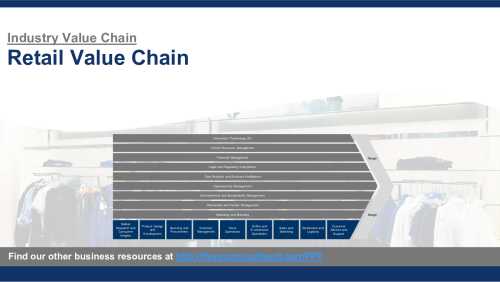
An Industry Value Chain is a visual representation of the series of steps an organization in a specific industry takes to deliver a product or service to the market. It captures the main business functions and processes that are involved in delivering the end product or service, illustrating how [read more]
Do You Want to Implement Business Best Practices?
You can download in-depth presentations on Retail Strategy and 100s of management topics from the FlevyPro Library. FlevyPro is trusted and utilized by 1000s of management consultants and corporate executives.
For even more best practices available on Flevy, have a look at our top 100 lists:
These best practices are of the same as those leveraged by top-tier management consulting firms, like McKinsey, BCG, Bain, and Accenture. Improve the growth and efficiency of your organization by utilizing these best practice frameworks, templates, and tools. Most were developed by seasoned executives and consultants with over 20+ years of experience.
Readers of This Article Are Interested in These Resources
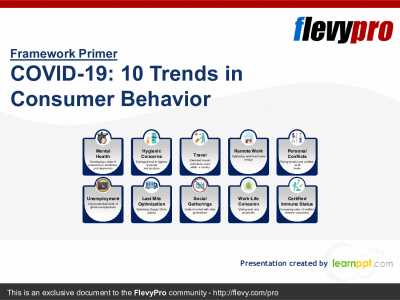
COVID-19 has taken the world by a storm. Financial markets, manufacturing, services, and tourism have been hit hard. In fact, it has also changed the way we work, communicate, interact, and shop more than any other disruption in the decade.
As a result, there have been key changes in Consumer [read more]
This presentation discusses profit recovery for retailers. Profit recovery includes improving shrink along the entire enterprise and supply chain--e.g. inventory loss, damages, shipping errors, credit/debit card loss, coupon abuse, other store discounting, etc.
This document delves into the [read more]
This is a sales presentation example for Consumer Driven Replenishment (CDR) project work. CDR is an analytical approach to supply chain integration between a consumer goods supplier and its customers.
This document provides a comprehensive overview of the Consumer-Driven Replenishment (CDR) [read more]
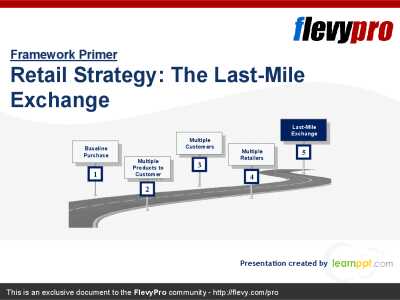
Keeping up with the growing volume of e-commerce will require delivery companies to disrupt their long-standing business model. All this growth can bring some peril.
Retailers and transportation companies are now faced with challenges in this fast-changing marketplace. With the boom in [read more]