Consumer Driven Replenishment   13-slide PPT PowerPoint presentation slide deck (PPT)
$30.00

Consumer Driven Replenishment (13-slide PPT PowerPoint presentation slide deck (PPT)) Preview Image
Flevy is the marketplace for business best practices.
Consumer Driven Replenishment (13-slide PPT PowerPoint presentation slide deck (PPT)) Preview Image
Arrow   Click main image to view in full screen.

Consumer Driven Replenishment (PowerPoint PPT Slide Deck)

PowerPoint (PPT) 13 Slides

$30.00

Add to Cart


Immediate download
Free lifetime updates

RETAIL STRATEGY PPT DESCRIPTION

Editor Summary Consumer Driven Replenishment is a 13-slide PowerPoint presentation (PPT) that outlines a CDR strategic framework for supplier–retailer supply chain integration. Read more

This is a sales presentation example for Consumer Driven Replenishment (CDR) project work. CDR is an analytical approach to supply chain integration between a consumer goods supplier and its customers.

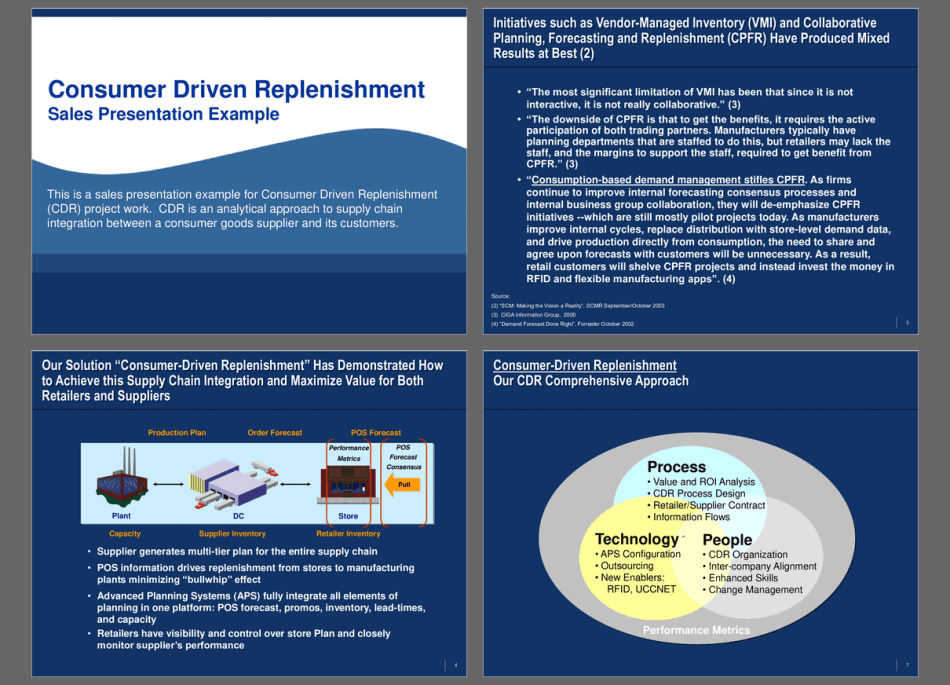
This document provides a comprehensive overview of the Consumer-Driven Replenishment (CDR) methodology, showcasing its proven ability to optimize supply chain integration. The presentation details how suppliers can generate multi-tier plans that encompass the entire supply chain, leveraging POS information to drive replenishment from stores back to manufacturing. This approach ensures that retailers maintain visibility and control over store plans, enabling close monitoring of supplier performance.

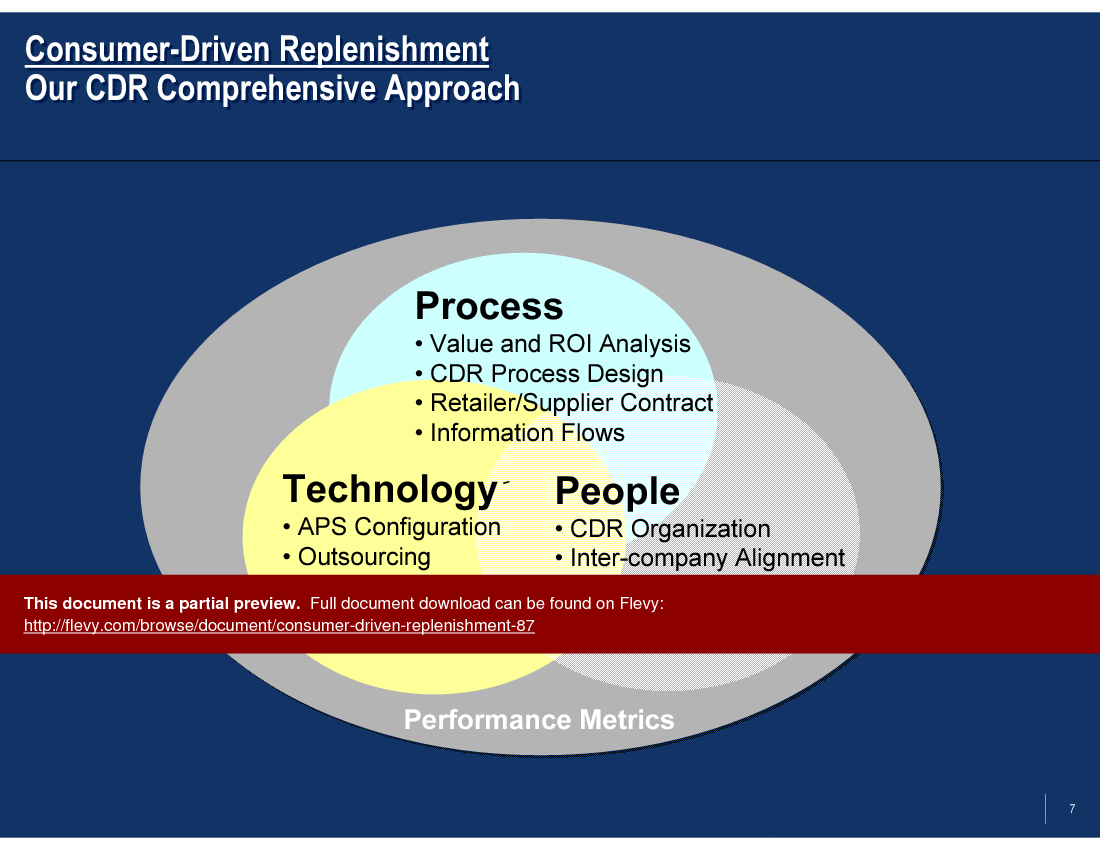
The CDR approach is broken down into three critical components: Process, Technology, and People. Each component is meticulously analyzed to highlight its role in achieving seamless integration. The process involves value and ROI analysis, CDR process design, and the establishment of robust retailer/supplier contracts. Technology focuses on APS configuration and outsourcing, while the people aspect emphasizes CDR organization and inter-company alignment. This holistic approach ensures that all facets of the supply chain are aligned and optimized for maximum efficiency.

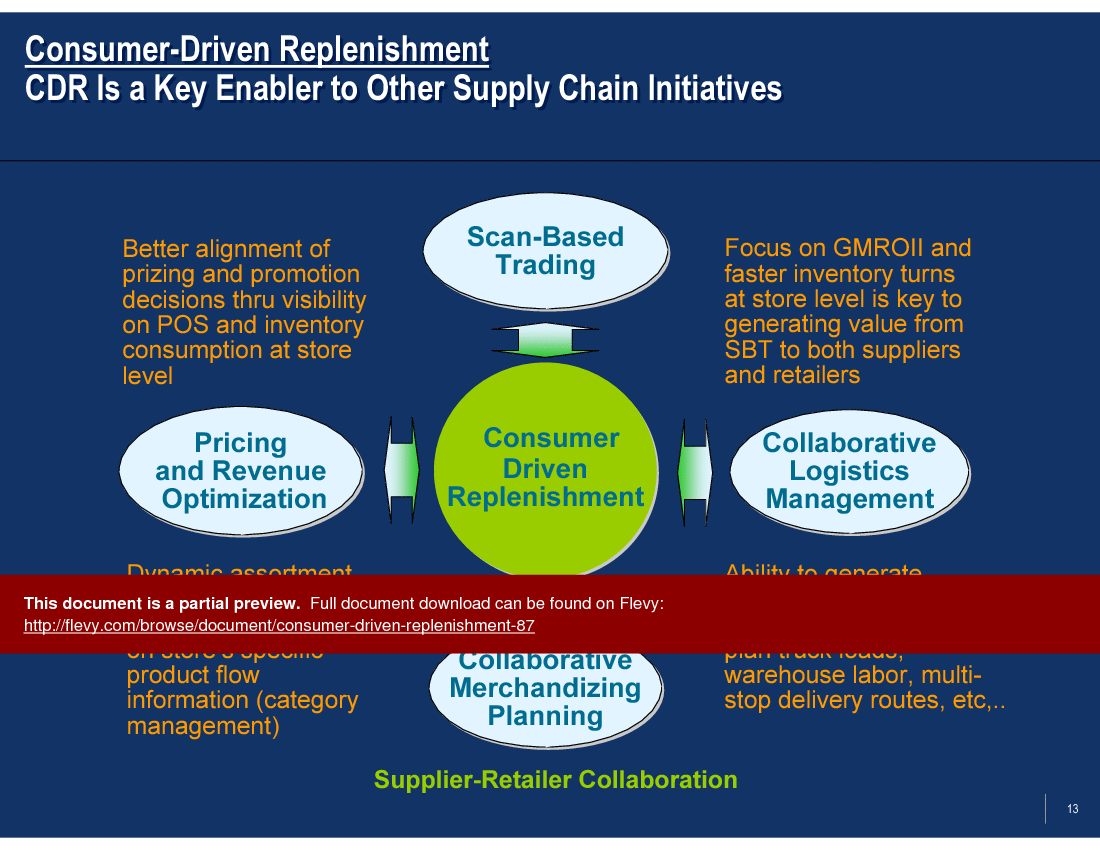
The presentation also underscores the strategic importance of CDR as a key enabler for other supply chain initiatives. By aligning pricing and promotion decisions with real-time POS and inventory data, businesses can drive revenue optimization and collaborative logistics management. This alignment facilitates better decision-making and enhances the overall efficiency of the supply chain, making CDR an indispensable tool for modern supply chain management.

Got a question about the product? Email us at support@flevy.com or ask the author directly by using the "Ask the Author a Question" form. If you cannot view the preview above this document description, go here to view the large preview instead.

MARCUS OVERVIEW

This synopsis was written by Marcus [?] based on the analysis of the full 13-slide presentation.


Executive Summary
The Consumer Driven Replenishment (CDR) presentation provides a strategic framework for enhancing supply chain integration between consumer goods suppliers and retailers. This analytical approach addresses prevalent challenges in inventory management and demand forecasting. By leveraging advanced planning systems and collaborative methodologies, the CDR model aims to optimize inventory levels, improve service rates, and reduce costs. Executives and integration leaders will gain insights into effective collaboration techniques that drive operational efficiency and enhance overall supply chain performance.

Who This Is For and When to Use
•  Supply Chain Executives seeking to improve inventory management and forecasting accuracy
•  Retail Operations Managers focused on enhancing in-stock service levels
•  Business Analysts tasked with evaluating supply chain integration strategies
•  Consultants specializing in supply chain optimization and collaboration

Best-fit moments to use this deck:
•  During strategic planning sessions for supply chain enhancements
•  When assessing current inventory management practices and identifying gaps
•  In workshops aimed at improving retailer-supplier collaboration

Learning Objectives
•  Define Consumer Driven Replenishment and its role in supply chain integration
•  Analyze the limitations of traditional inventory management approaches
•  Build a collaborative framework for effective demand forecasting
•  Establish performance metrics to evaluate supply chain efficiency
•  Identify key technology enablers that support CDR implementation
•  Develop actionable strategies for improving retailer-supplier relationships

Table of Contents
•  Introduction to Consumer Driven Replenishment (page 1)
•  Challenges in Supply Chain Integration (page 2)
•  Limitations of Traditional Approaches (page 3)
•  CDR Integration Flow (page 6)
•  Comprehensive CDR Approach (page 7)
•  Quantifiable Benefits of CDR (page 11)
•  Case Study: The Scotts Company (page 9)
•  Conclusion and Next Steps (page 12)

Primary Topics Covered
•  Supply Chain Integration Challenges - Discusses the difficulties retailers and suppliers face in achieving effective supply chain integration, including data overload and poor visibility.
•  Limitations of Traditional Inventory Management - Examines the shortcomings of Vendor Managed Inventory (VMI) and Collaborative Planning, Forecasting, and Replenishment (CPFR) approaches.
•  Consumer Driven Replenishment Framework - Outlines the CDR model, emphasizing collaboration and real-time data sharing for improved replenishment processes.
•  Technology Enablers - Identifies key technologies such as Advanced Planning Systems (APS) and RFID that facilitate CDR implementation.
•  Performance Metrics - Establishes metrics for measuring the success of CDR initiatives, focusing on inventory turnover and fill rates.
•  Case Study Insights - Highlights the successful application of CDR at The Scotts Company, showcasing tangible benefits achieved through enhanced collaboration.

Deliverables, Templates, and Tools
•  CDR process design template for integrating supplier and retailer operations
•  Performance metrics dashboard for tracking supply chain efficiency
•  Inventory management framework to optimize stock levels
•  Collaboration guidelines for effective retailer-supplier partnerships
•  Case study analysis template for evaluating CDR implementation outcomes
•  Technology assessment checklist for identifying necessary tools and systems

Slide Highlights
•  Overview of the CDR model emphasizing its advantages over traditional methods
•  Visual representation of the typical CDR integration flow, illustrating collaboration points
•  Key performance metrics that demonstrate the effectiveness of CDR
•  Case study results from The Scotts Company showcasing quantifiable benefits
•  Graphical comparison of traditional inventory management vs. CDR effectiveness

Potential Workshop Agenda
Introduction to CDR (30 minutes)
•  Overview of Consumer Driven Replenishment
•  Discussion on the importance of supply chain integration

Challenges and Limitations (60 minutes)
•  Identify current challenges in inventory management
•  Explore the limitations of traditional approaches

CDR Implementation Strategies (90 minutes)
•  Develop a collaborative framework for demand forecasting
•  Establish performance metrics for tracking success

Customization Guidance
•  Tailor the CDR framework to fit specific retailer-supplier relationships
•  Adjust performance metrics based on industry standards and organizational goals
•  Incorporate company-specific case studies to enhance relevance

Secondary Topics Covered
•  The role of technology in supply chain optimization
•  Strategies for improving communication between suppliers and retailers
•  Best practices for managing inventory in a dynamic market environment
•  The impact of consumer behavior on supply chain decisions

Topic FAQ

What is Consumer Driven Replenishment and how does it differ from traditional approaches like VMI or CPFR?

Consumer Driven Replenishment is an analytical, POS-driven approach that aligns supplier and retailer replenishment by sharing near‑real‑time sales data and creating multi‑tier plans from stores back to manufacturing. Unlike VMI and CPFR, CDR emphasizes real‑time POS visibility and cross‑company process design across 3 components: Process, Technology, and People.

Which technologies are essential for implementing a CDR program?

CDR implementation commonly requires point‑of‑sale data integration, Advanced Planning Systems (APS) for demand and supply planning, and item/location visibility tools such as RFID. The presentation specifically identifies APS configuration and RFID as technology enablers for CDR implementation.

How should success be measured for a CDR initiative?

Success metrics focus on operational and commercial indicators that CDR influences, including inventory turnover, fill rates, forecast accuracy, and profitability measures tied to inventory. The deck highlights inventory turnover and fill rates as primary performance metrics to evaluate CDR outcomes.

What integration challenges does CDR aim to solve between retailers and suppliers?

CDR addresses common issues such as data overload, poor visibility into store‑level demand and supply disruptions, and misaligned replenishment processes. The methodology targets improved data sharing, supplier performance monitoring, and retailer control over store plans to mitigate these challenges.

How should I evaluate a CDR template package before buying one?

Assess whether the package includes practical artifacts you’ll need: a CDR process design template, a performance metrics dashboard, an inventory management framework, collaboration guidelines, a case study analysis template, and a technology assessment checklist; verify presence of the CDR process design template and performance metrics dashboard.

What roles and team capabilities are required to run a CDR implementation?

Effective CDR implementations typically need process owners for value/ROI analysis, APS or planning system specialists for technology configuration, and cross‑company alignment roles to manage retailer‑supplier contracts and operating rhythms. The presentation emphasizes CDR organization and inter‑company alignment.

I need to reduce retail stockouts quickly — what CDR steps should I prioritize?

Prioritize integrating POS data into planning, establishing collaborative forecasting with key suppliers, defining performance metrics (e.g., fill rates), and configuring APS to support real‑time replenishment decisions. The presentation links POS‑driven replenishment directly to improved fill rates.

Are there real examples of CDR delivering measurable benefits?

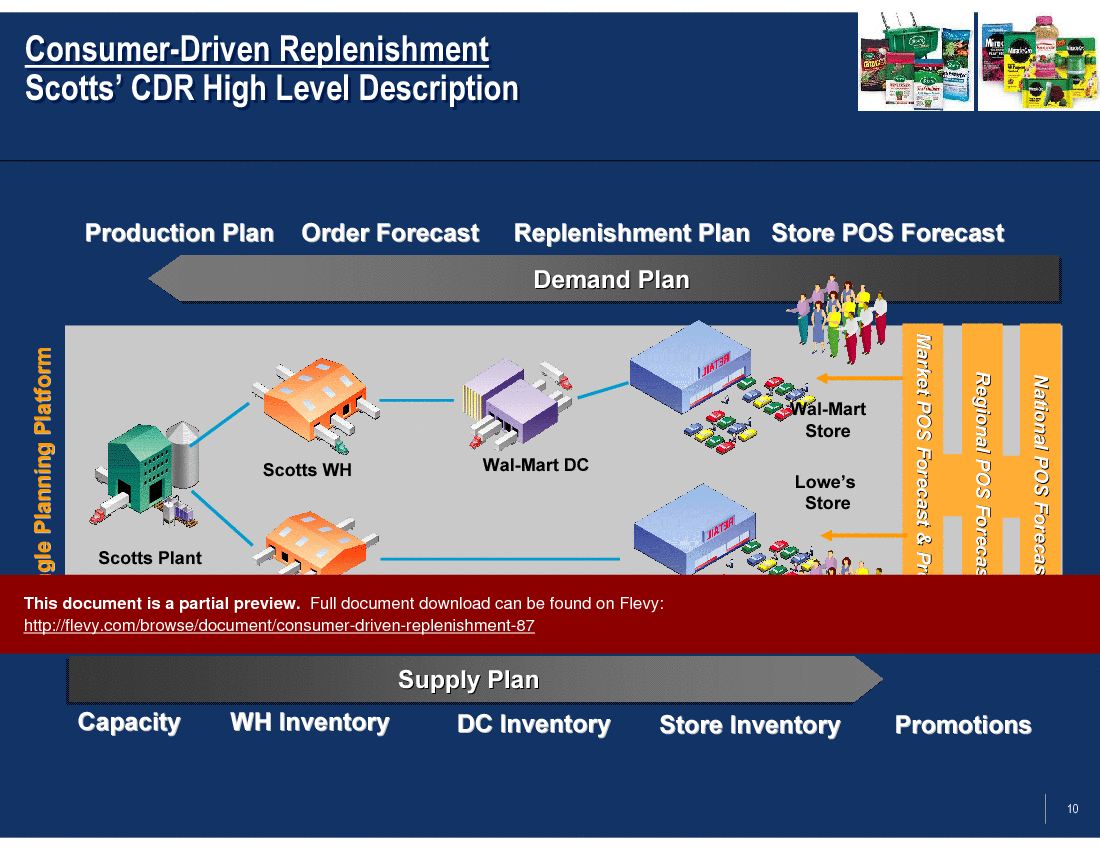
The presentation includes a case study of The Scotts Company that illustrates quantifiable benefits from enhanced retailer‑supplier collaboration and CDR practices, providing a template for analyzing implementation outcomes in similar contexts.

Document FAQ
These are questions addressed within this presentation.

What is Consumer Driven Replenishment?
Consumer Driven Replenishment is an analytical approach that enhances supply chain integration between suppliers and retailers by leveraging real-time data for inventory management and demand forecasting.

How does CDR improve supply chain efficiency?
CDR improves efficiency by enabling better collaboration between retailers and suppliers, reducing inventory levels, and enhancing service rates through accurate demand forecasting.

What are the key benefits of implementing CDR?
Key benefits include reduced inventory costs, improved fill rates, enhanced collaboration, and increased responsiveness to market changes.

What technologies support CDR implementation?
Technologies such as Advanced Planning Systems (APS) and RFID are crucial for facilitating real-time data sharing and improving inventory management processes.

How can performance metrics be established for CDR?
Performance metrics can be established by focusing on key indicators such as inventory turnover, fill rates, and forecast accuracy to evaluate the success of CDR initiatives.

What challenges do retailers face in supply chain integration?
Retailers often face challenges such as data overload, lack of visibility into supply disruptions, and ineffective inventory management practices.

How does CDR address the limitations of traditional inventory management?
CDR addresses these limitations by fostering collaboration, enabling real-time data sharing, and focusing on demand-driven replenishment strategies.

What role does collaboration play in CDR?
Collaboration is essential in CDR as it ensures that both retailers and suppliers work together to align inventory levels with actual consumer demand, enhancing overall supply chain performance.

Glossary
•  Consumer Driven Replenishment - An analytical approach to supply chain integration that focuses on real-time data sharing between suppliers and retailers.
•  Vendor Managed Inventory (VMI) - A traditional inventory management approach where suppliers manage inventory levels at the retailer's location.
•  Collaborative Planning, Forecasting, and Replenishment (CPFR) - A supply chain initiative that requires active participation from both trading partners to improve forecasting accuracy.
•  Advanced Planning Systems (APS) - Software tools that integrate various elements of supply chain planning, including demand forecasting and inventory management.
•  RFID - Radio Frequency Identification technology used to track inventory and improve visibility in the supply chain.
•  Performance Metrics - Quantifiable measures used to evaluate the success of supply chain initiatives.
•  Inventory Turnover - A measure of how often inventory is sold and replaced over a period.
•  Fill Rate - The percentage of customer demand that is met without stockouts.
•  Supply Chain Integration - The process of aligning and coordinating supply chain activities among various stakeholders.
•  Data Overload - A situation where the volume of data exceeds the ability to process and analyze it effectively.
•  Demand Forecasting - The process of estimating future customer demand based on historical data and market analysis.
•  Collaboration - The act of working together to achieve a common goal, particularly in supply chain management.
•  Market Demand - The total quantity of a product that consumers are willing and able to purchase at a given price.
•  Supply Disruptions - Interruptions in the supply chain that affect the availability of products.
•  Operational Efficiency - The ability to deliver products and services in the most cost-effective manner without compromising quality.
•  Consumer Behavior - The study of how individuals make decisions to spend their resources on consumption-related items.
•  Dynamic Assortment Planning - Adjusting product offerings based on real-time sales data and consumer preferences.
•  Collaborative Logistics Management - Coordinating logistics activities among supply chain partners to optimize transportation and distribution.
•  Scan-Based Trading - A retail practice where suppliers are paid based on the actual sales of their products rather than on the shipment of goods.
•  Gross Margin Return on Inventory Investment (GMROII) - A metric that measures the profitability of inventory relative to its cost.
•  Category Management - A retail and purchasing concept where products are grouped and managed as strategic business units.

Source: Best Practices in Retail Strategy PowerPoint Slides: Consumer Driven Replenishment PowerPoint (PPT) Presentation Slide Deck, alex


$30.00

Add to Cart
  

ABOUT THE AUTHOR

Author: alex
Additional documents from author: 3

Ask the Author a Question

You must be logged in to contact the author.

Click here to log in Click here register

Did you know?
The average daily rate of a McKinsey consultant is $6,625 (not including expenses). The average price of a Flevy document is $65.


Trusted by over 10,000+ Client Organizations
Since 2012, we have provided business templates to over 10,000 businesses and organizations of all sizes, from startups and small businesses to the Fortune 100, in over 130 countries.
AT&T GE Cisco Intel IBM Coke Dell Toyota HP Nike Samsung Microsoft Astrazeneca JP Morgan KPMG Walgreens Walmart 3M Kaiser Oracle SAP Google E&Y Volvo Bosch Merck Fedex Shell Amgen Eli Lilly Roche AIG Abbott Amazon PwC T-Mobile Broadcom Bayer Pearson Titleist ConEd Pfizer NTT Data Schwab


Read Customer Testimonials

 
"My FlevyPro subscription provides me with the most popular frameworks and decks in demand in today’s market. They not only augment my existing consulting and coaching offerings and delivery, but also keep me abreast of the latest trends, inspire new products and service offerings for my practice, and educate me "

– Bill Branson, Founder at Strategic Business Architects
 
"As a niche strategic consulting firm, Flevy and FlevyPro frameworks and documents are an on-going reference to help us structure our findings and recommendations to our clients as well as improve their clarity, strength, and visual power. For us, it is an invaluable resource to increase our impact and value."

– David Coloma, Consulting Area Manager at Cynertia Consulting
 
"As a young consulting firm, requests for input from clients vary and it's sometimes impossible to provide expert solutions across a broad spectrum of requirements. That was before I discovered Flevy.com.

Through subscription to this invaluable site of a plethora of topics that are key and crucial to consulting, I "

– Nishi Singh, Strategist and MD at NSP Consultants
 
"I like your product. I'm frequently designing PowerPoint presentations for my company and your product has given me so many great ideas on the use of charts, layouts, tools, and frameworks. I really think the templates are a valuable asset to the job."

– Roberto Fuentes Martinez, Senior Executive Director at Technology Transformation Advisory
 
"[Flevy] produces some great work that has been/continues to be of immense help not only to myself, but as I seek to provide professional services to my clients, it gives me a large "tool box" of resources that are critical to provide them with the quality of service and outcomes they are expecting."

– Royston Knowles, Executive with 50+ Years of Board Level Experience
 
"As a consultant requiring up to date and professional material that will be of value and use to my clients, I find Flevy a very reliable resource.

The variety and quality of material available through Flevy offers a very useful and commanding source for information. Using Flevy saves me time, enhances my expertise and ends up being a good decision."

– Dennis Gershowitz, Principal at DG Associates
 
"I have used FlevyPro for several business applications. It is a great complement to working with expensive consultants. The quality and effectiveness of the tools are of the highest standards."

– Moritz Bernhoerster, Global Sourcing Director at Fortune 500
 
"One of the great discoveries that I have made for my business is the Flevy library of training materials.

As a Lean Transformation Expert, I am always making presentations to clients on a variety of topics: Training, Transformation, Total Productive Maintenance, Culture, Coaching, Tools, Leadership Behavior, etc. Flevy "

– Ed Kemmerling, Senior Lean Transformation Expert at PMG


Customers Also Bought These Documents


Customers Also Like These Documents

Explore Templates on Related Management Topics


Your Recently Viewed Documents
Download our FREE Strategy & Transformation Framework Templates

Download our free compilation of 50+ Strategy & Transformation slides and templates. Frameworks include McKinsey 7-S Strategy Model, Balanced Scorecard, Disruptive Innovation, BCG Experience Curve, and many more.










