
This presentation is created by former McKinsey, BCG, Deloitte, EY, and Capgemini consultants. It teaches a practical consulting framework actively used by tier-1 consulting firms.
Understand the critical focus areas in developing an Omni-channel Retail Strategy.
Identify the KPIs for Omni-channel Retail Strategy, as well as corresponding industry benchmarks (for leading, average, and entry level organizations).
Identify appropriate next steps.
RETAIL STRATEGY PPT DESCRIPTION
Editor Summary
The Omni-channel Retail Strategy is a 44-slide PowerPoint presentation that delivers a consulting-grade framework for omni-channel e-commerce, created by former McKinsey, BCG, Deloitte, EY, and Capgemini consultants.
Read moreIncludes 5 templated tools: omni-channel marketing strategy template, mobile payment solution assessment framework, supply chain management checklist, performance benchmarking tool, and customer feedback analysis template. Target users include e-commerce executives, marketing leaders, supply chain managers, and business consultants. Used for strategic planning, capability assessment, and team training; sold as a digital download on Flevy.
Use this deck when a business needs to unify customer experience and operations across channels due to growing online demand, COVID-19-driven shifts, or plans to improve conversion and fulfillment. Typical users include:
E-commerce executives mapping customer journeys to prioritize channel investments and improve conversion rates.
Marketing leaders building personalized multi-channel campaigns and allocating marketing spend across channels.
Supply chain managers redesigning fulfillment flows, improving inventory visibility, and reducing fulfillment costs.
Consultants running client workshops to diagnose gaps and produce an implementation action plan.
The emphasis on integrated diagnostics across marketing, payments, and supply chain plus KPI benchmarking reflects consulting practice used at McKinsey and BCG.
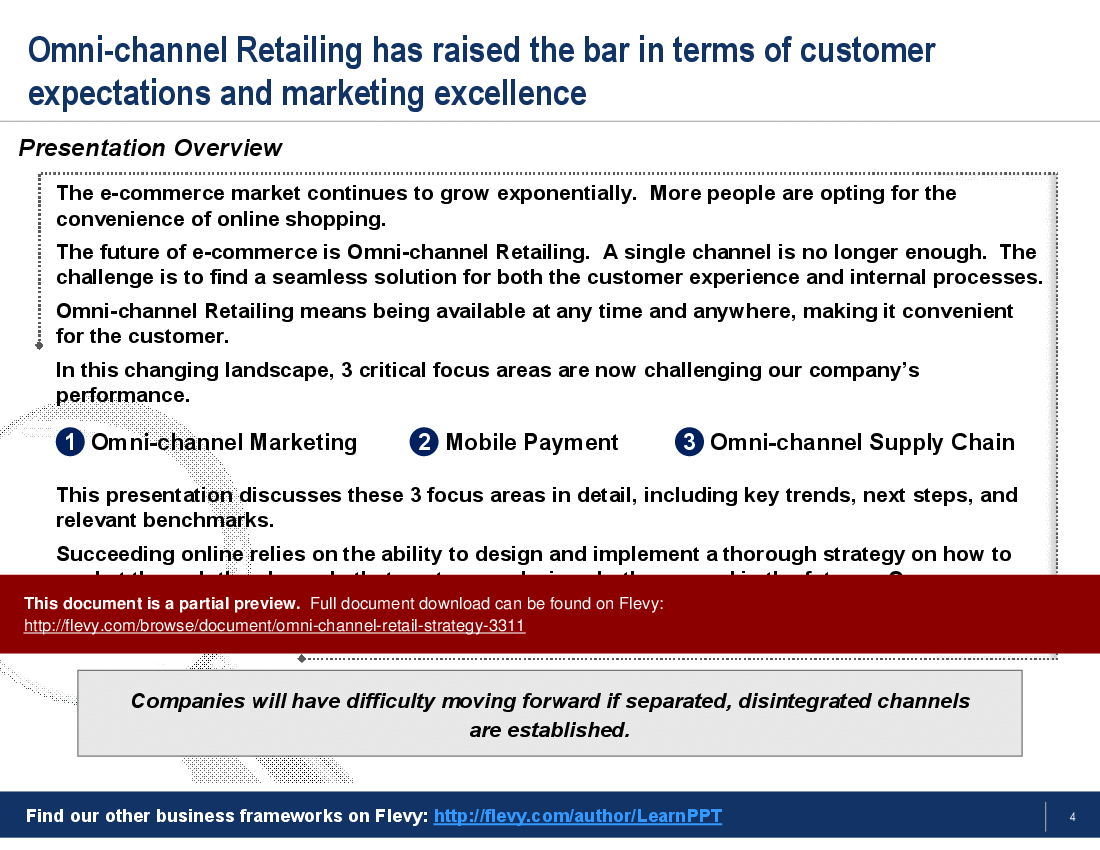
The e-commerce market continues to grow exponentially. More consumers are opting for the convenience of online shopping. This trend has been accelerated by COVID-19.
The future of e-commerce is Omni-channel Retailing. A single channel is no longer enough. The challenge is to find a seamless solution for both the Customer Experience and internal processes.
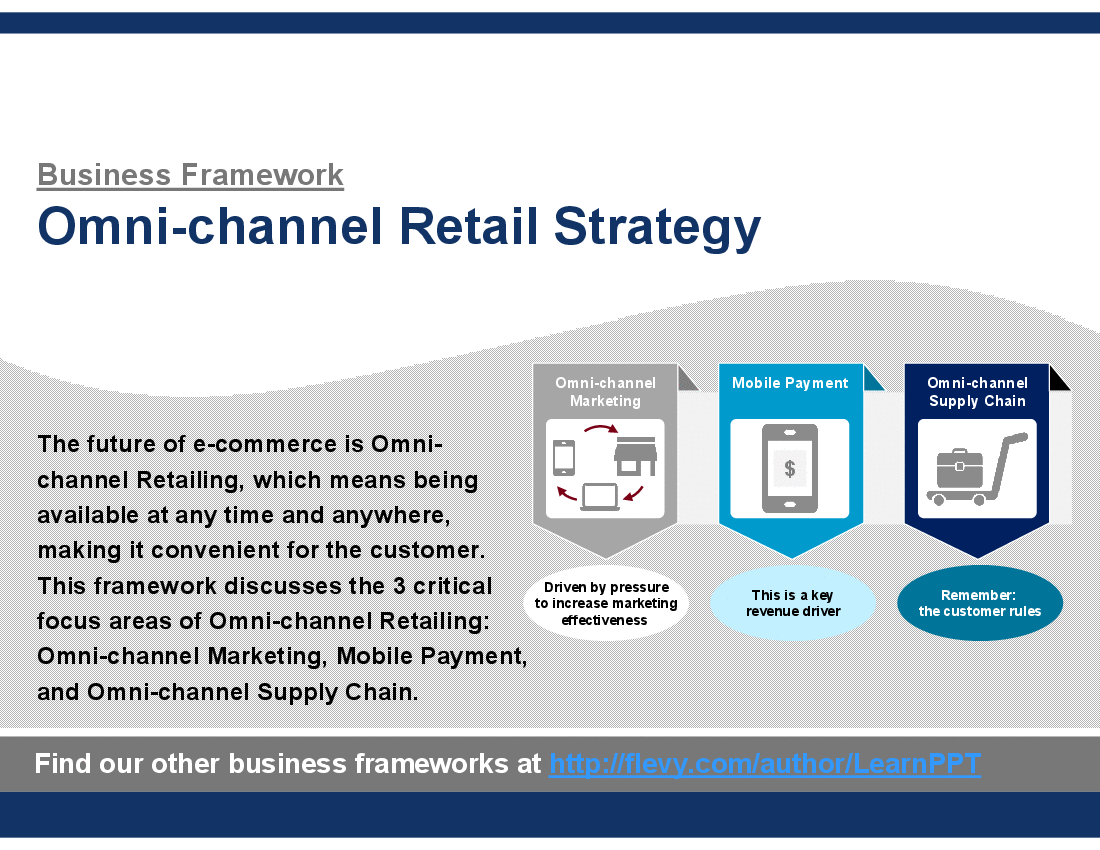
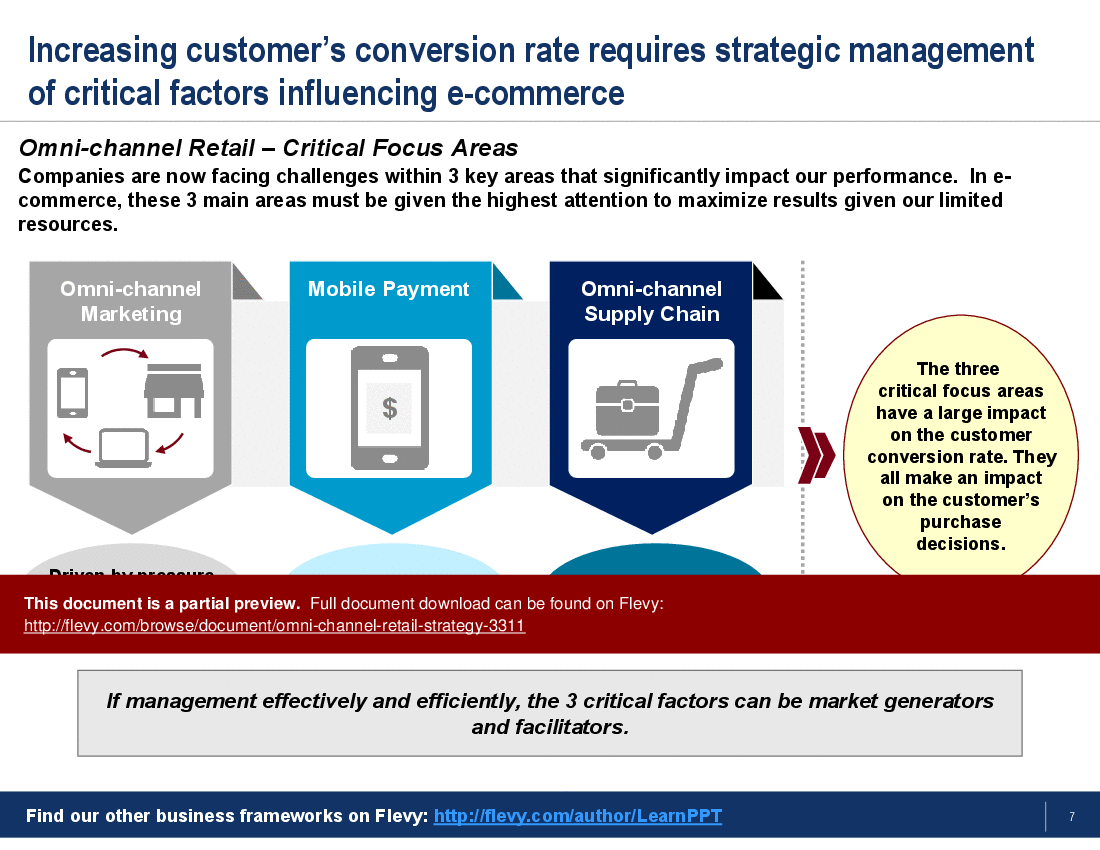
Omni-channel Retailing means being available at any time and anywhere, making it convenient for the customer. We must develop a Channel Sales Strategy that incorporates all relevant channels and integrates the Customer experience across these various sales and retail marketing channels. In this changing landscape, 3 critical focus areas are now challenging our company's performance:
1. Omni-channel Marketing – Consumers demand a more personalized shopping experience, making retail marketing offers based on consumers’ shopping behavior important. It is a challenge to know which channels to use to get the highest conversion rate and sales performance.
2. Mobile Payment – The availability of convenient, mobile payment solutions decides the consumer’s purchasing decision. Customers want quick, safe, and simple payments. Our company must develop our own in-house payment solutions to control costs and to increase influence on customer’s decisions.
3. Omni-channel Supply Chain – Customers demand better service levels, high availability of the product, and faster delivery. New Fulfillment and Supply Chain Strategies have emerged as our companies respond to the changing marketplace by developing alternative solutions.
This Omni-channel Retail Strategy PPT discusses these 3 focus areas in detail (with at least 5 slides per area), including key trends, next steps, and relevant benchmarks.
Succeeding online relies on the ability to design and implement a thorough strategy on how to market through the channels that customers desire—both now and in the future. Our company needs to invest significant time in planning before executing. It is critical to do it right.
This Retail Strategy PPT also includes slide templates for you to use in your own business presentations. These PPT templates depict the concepts of the Evolution of Retail, Omni-channel Retail Focus Areas, Online Marketing Focus Areas, Mobile Payment Trends, 5 Delivery & Return Strategies, and Order Management System (OMS).
The PPT also provides a comprehensive overview of key trends in mobile payments and their impact on consumer behavior. It includes practical templates for implementing effective delivery and return strategies to enhance operational efficiency.

Got a question about the product? Email us at support@flevy.com or ask the author directly by using the "Ask the Author a Question" form. If you cannot view the preview above this document description, go here to view the large preview instead.
MARCUS OVERVIEW
This synopsis was written by Marcus [?] based on the analysis of the full 44-slide presentation.
Executive Summary
The Omni-channel Retail Strategy presentation provides a robust framework for navigating the future of e-commerce, emphasizing the necessity of being accessible anytime and anywhere for customers. Crafted by former consultants from top-tier firms such as McKinsey, BCG, and Deloitte, this consulting-grade resource outlines critical strategies for enhancing customer experiences through integrated marketing, mobile payment solutions, and supply chain management. Buyers will gain actionable insights to effectively implement an omni-channel approach, ensuring alignment with evolving consumer expectations and optimizing operational efficiencies.
Who This Is For and When to Use
• E-commerce executives seeking to enhance customer engagement and conversion rates
• Marketing leaders focused on integrating multi-channel strategies
• Supply chain managers looking to streamline operations for omni-channel fulfillment
• Business consultants advising clients on e-commerce strategies
Best-fit moments to use this deck:
• During strategic planning sessions for e-commerce initiatives
• When assessing current marketing and supply chain capabilities
• For training teams on omni-channel best practices and implementation
Learning Objectives
• Define the principles of omni-channel retailing and its importance in modern e-commerce
• Build a comprehensive omni-channel marketing strategy tailored to customer behaviors
• Establish effective mobile payment solutions that enhance customer convenience
• Design an integrated supply chain that supports seamless customer experiences
• Identify key performance indicators (KPIs) for measuring omni-channel success
• Develop actionable plans for optimizing marketing spend across channels
Primary Topics Covered
• Omni-channel Marketing - Strategies for delivering personalized marketing experiences across various channels to meet customer expectations.
• Mobile Payment - Insights into the importance of offering diverse, secure, and user-friendly payment options to facilitate customer transactions.
• Omni-channel Supply Chain - Framework for integrating supply chain operations to ensure timely and efficient delivery of products across multiple channels.
Deliverables, Templates, and Tools
• Omni-channel marketing strategy template for defining customer engagement approaches
• Mobile payment solution assessment framework to evaluate current capabilities
• Supply chain management checklist for optimizing fulfillment processes
• Performance benchmarking tool for measuring omni-channel effectiveness
• Customer feedback analysis template to align services with consumer expectations
Slide Highlights
• Overview of the evolution of retail and the shift towards omni-channel strategies
• Key trends in mobile payment solutions and their impact on consumer behavior
• Delivery and return strategies tailored to meet customer demands
• Insights into the critical focus areas of omni-channel marketing, mobile payment, and supply chain management
Potential Workshop Agenda
Omni-channel Strategy Development Session (90 minutes)
• Discuss the importance of omni-channel retailing and its impact on customer experience
• Identify current gaps in omni-channel marketing and supply chain strategies
• Develop a preliminary action plan for implementing omni-channel initiatives
Mobile Payment Solutions Workshop (60 minutes)
• Explore the latest trends in mobile payment technologies
• Evaluate existing payment options and identify areas for improvement
• Create a roadmap for enhancing payment processing capabilities
Customization Guidance
• Tailor marketing strategies to reflect specific customer demographics and behaviors
• Adjust payment solution offerings based on customer preferences and industry trends
• Modify supply chain logistics to align with operational capabilities and market demands
Secondary Topics Covered
• The role of social media in omni-channel marketing
• Best practices for managing customer data across channels
• Strategies for enhancing customer service in an omni-channel environment
• The importance of real-time inventory visibility in supply chain management
Topic FAQ
What are the core components of an omni-channel retail strategy?
Core components are delivering personalized omni-channel marketing, offering convenient and secure mobile payment options, and integrating supply chain operations to support seamless shopping and fulfillment. These 3 focus areas—omni-channel marketing, mobile payment, and integrated supply chain—are central to the approach.
How should I measure the effectiveness of an omni-channel approach?
Effectiveness is measured using KPIs tied to customer experience and operations, such as website conversion rates, customer satisfaction scores, and fulfillment costs. The presentation highlights using a performance benchmarking tool and specific KPIs like conversion rates, customer satisfaction scores, and fulfillment costs.
What role do mobile payment solutions play in e-commerce strategy?
Mobile payments influence purchasing decisions by enabling quick, secure, and simple transactions; they can affect conversion and customer convenience. Companies may evaluate existing options and develop in-house solutions to control costs, using a mobile payment solution assessment framework.
What is an Order Management System and why is it important for omni-channel retail?
An Order Management System (OMS) facilitates processing and tracking orders across sales channels, providing real-time visibility and coordination that supports accurate fulfillment and returns management. Improved order flow and visibility are achieved through implementing an OMS.
What should I look for when purchasing an omni-channel strategy toolkit?
Look for practical templates and diagnostic tools that support marketing strategy, payment assessment, supply chain optimization, KPI benchmarking, and workshop agendas so teams can assess gaps and plan next steps—specifically an omni-channel marketing strategy template, mobile payment assessment framework, and supply chain checklist.
Are slide templates and assessment frameworks helpful for a mid-market e-commerce team?
Templates can shorten planning time and standardize diagnostics for strategy, payments, and fulfillment; they support workshops and action-plan development. For example, Flevy's Omni-channel Retail Strategy includes templates for omni-channel marketing, mobile payment assessments, and supply chain checklists.
I need to reduce fulfillment costs after a spike in online orders—where should I start?
Begin by assessing current fulfillment processes, improving inventory visibility, and evaluating delivery and return strategies; implement or optimize an OMS to coordinate channels. Use tools such as a supply chain management checklist and delivery & return strategies to guide changes.
How can I train marketing and operations teams on omni-channel best practices?
Run focused workshops that explain omni-channel principles, identify gaps, and develop action plans; combine a 90-minute strategy session to align marketing and supply chain and a 60-minute mobile payment workshop for payments capability. Start with a 90-minute Omni-channel Strategy Development Session.
Document FAQ
These are questions addressed within this presentation.
What is omni-channel retailing?
Omni-channel retailing refers to a seamless shopping experience that integrates various channels, allowing customers to interact with a brand anytime and anywhere.
Why is mobile payment important for e-commerce?
Mobile payment solutions enhance customer convenience, enabling quick and secure transactions, which can significantly influence purchasing decisions.
How can I measure the effectiveness of my omni-channel strategy?
Utilize key performance indicators (KPIs) such as conversion rates, customer satisfaction scores, and fulfillment costs to evaluate the success of your omni-channel initiatives.
What are the critical focus areas for omni-channel retailing?
The 3 critical focus areas are omni-channel marketing, mobile payment solutions, and an integrated supply chain.
How can I optimize my supply chain for omni-channel fulfillment?
Implement a robust order management system (OMS) to ensure real-time visibility and coordination across all channels, enhancing operational efficiency.
What templates are included in this presentation?
The presentation includes templates for omni-channel marketing strategies, mobile payment assessments, and supply chain management checklists.
How can customer feedback improve my omni-channel strategy?
Customer feedback provides insights into preferences and expectations, allowing businesses to tailor their offerings and improve service delivery.
What challenges do companies face in implementing omni-channel strategies?
Common challenges include integrating disparate systems, managing inventory across channels, and ensuring consistent customer experiences.
Glossary
• Omni-channel Retailing - A retail strategy that provides customers with a seamless shopping experience across multiple channels.
• Mobile Payment - A payment method that allows consumers to make transactions using mobile devices.
• Supply Chain Management (SCM) - The management of the flow of goods and services from raw materials to the final customer.
• Order Management System (OMS) - A system that facilitates the processing and tracking of orders across various sales channels.

• Key Performance Indicators (KPIs) - Quantifiable measures used to evaluate the success of an organization in meeting objectives.
• Customer Experience - The overall perception and interaction a customer has with a brand throughout their buying journey.
• Delivery Strategies - Approaches used to fulfill customer orders, including options like drop-shipping and same-day delivery.
• Return Management - The process of handling product returns from customers, including policies and logistics.
• Search Engine Marketing (SEM) - A digital marketing strategy focused on increasing visibility in search engine results through paid advertising and optimization.
• Customer Feedback - Information provided by customers regarding their experiences and satisfaction with products or services.
• Fulfillment Cost - The total cost associated with processing and delivering an order to the customer.
• Inventory Visibility - The ability to track and manage inventory levels in real-time across all sales channels.
• Personalization - Tailoring marketing messages and product offerings to individual customer preferences and behaviors.
• E-commerce - The buying and selling of goods and services over the internet.
• Conversion Rate - The percentage of visitors to a website who complete a desired action, such as making a purchase.
• Customer Satisfaction - A measure of how products and services meet or exceed customer expectations.
• Logistics - The detailed coordination of complex operations involving people, facilities, and supplies.
• Market Trends - Patterns and tendencies observed in consumer behavior and preferences within a specific market.
• Brand Awareness - The extent to which consumers recognize and are familiar with a brand.
• Customer Retention - The ability of a company to retain its customers over a specified period.
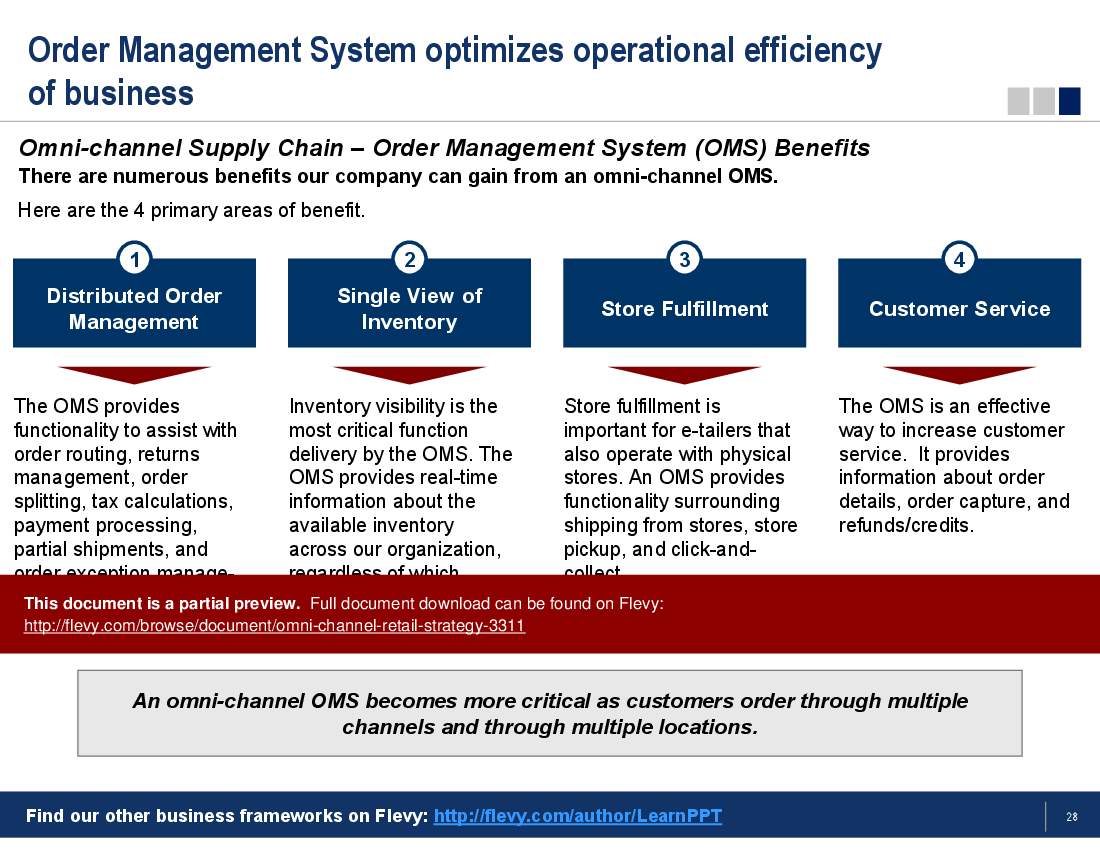
This PPT slide outlines the critical role of an Order Management System (OMS) within an omni-channel supply chain framework. A robust OMS facilitates seamless interactions between customer touchpoints, including call centers, websites, mobile apps, physical stores, and catalogs. The OMS integrates these channels to ensure smooth order processing. Delivery options illustrated include eCommerce delivery centers, kiosks, pop-up stores, and traditional brick-and-mortar locations, highlighting the OMS's role in managing inventory and delivery logistics. The OMS also provides real-time insights into inventory levels, delivery options, and customer data, which are essential for operational efficiency and customer satisfaction. An up-to-date OMS is vital for offering comprehensive delivery options and enhancing omni-channel capabilities.
This PPT slide outlines the evolution of retail driven by e-commerce growth. It highlights the transition from traditional bricks-and-mortar operations to the emergence of e-tailers, emphasizing the necessity for retailers to establish an online presence. The shift to multi-channel operations reflects the need for integration of online and offline strategies, as many customers shop across channels. The concept of omni-channel retailing is introduced, where products and services are accessible anytime, anywhere, ensuring cohesive operation across channels. Companies are reassessing the role of physical stores, whether temporary or permanent, to adapt to the digital-first marketplace and meet evolving customer demands.
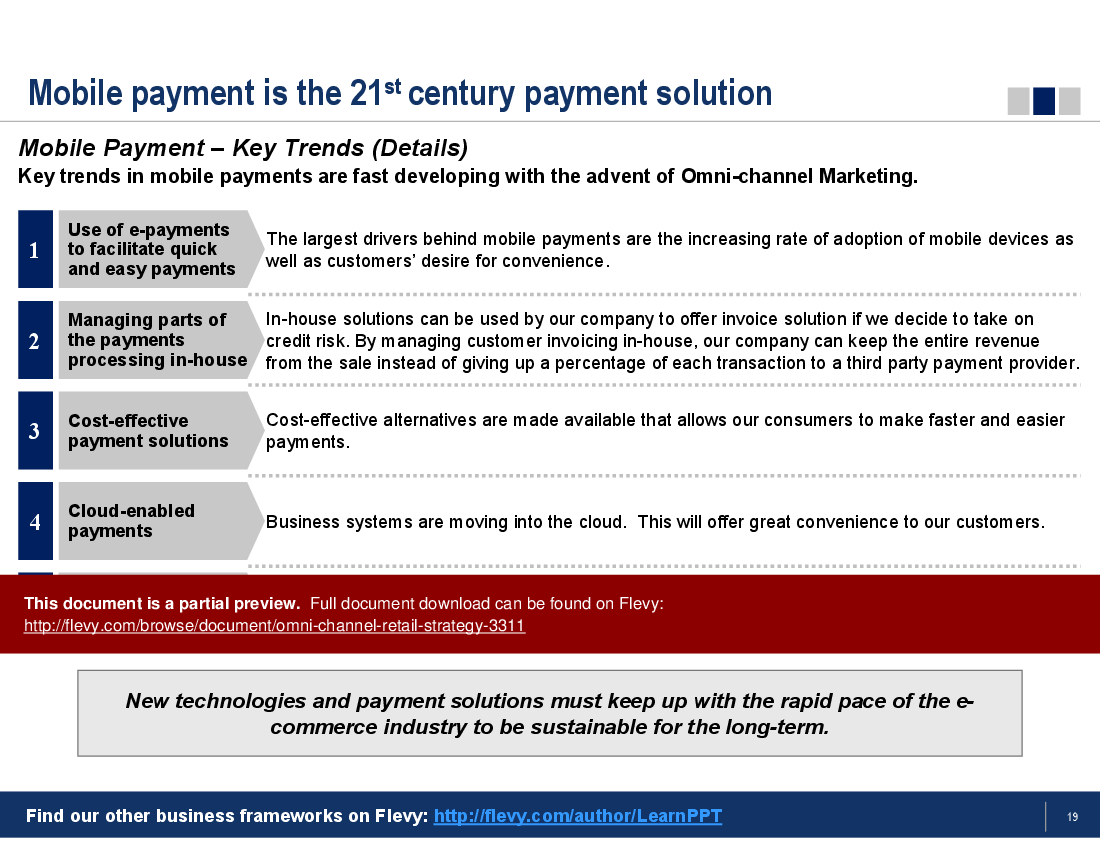
This PPT slide outlines significant trends in mobile payments, focusing on 5 key areas for omni-channel customers. The first trend is the increasing use of e-payments, which streamline transactions and enhance convenience. The second trend involves companies managing payment processing in-house for greater control and reduced costs. The third trend highlights cost-effective payment solutions that meet customer needs. The fourth trend is the rise of cloud-enabled payments, facilitating scalability and flexibility. Lastly, secured payment solutions reflect the growing importance of security in transactions. Key opportunities for optimizing payment portfolios include negotiating credit terms, implementing multiple payment solutions for customer flexibility, and evaluating in-house invoicing profitability.
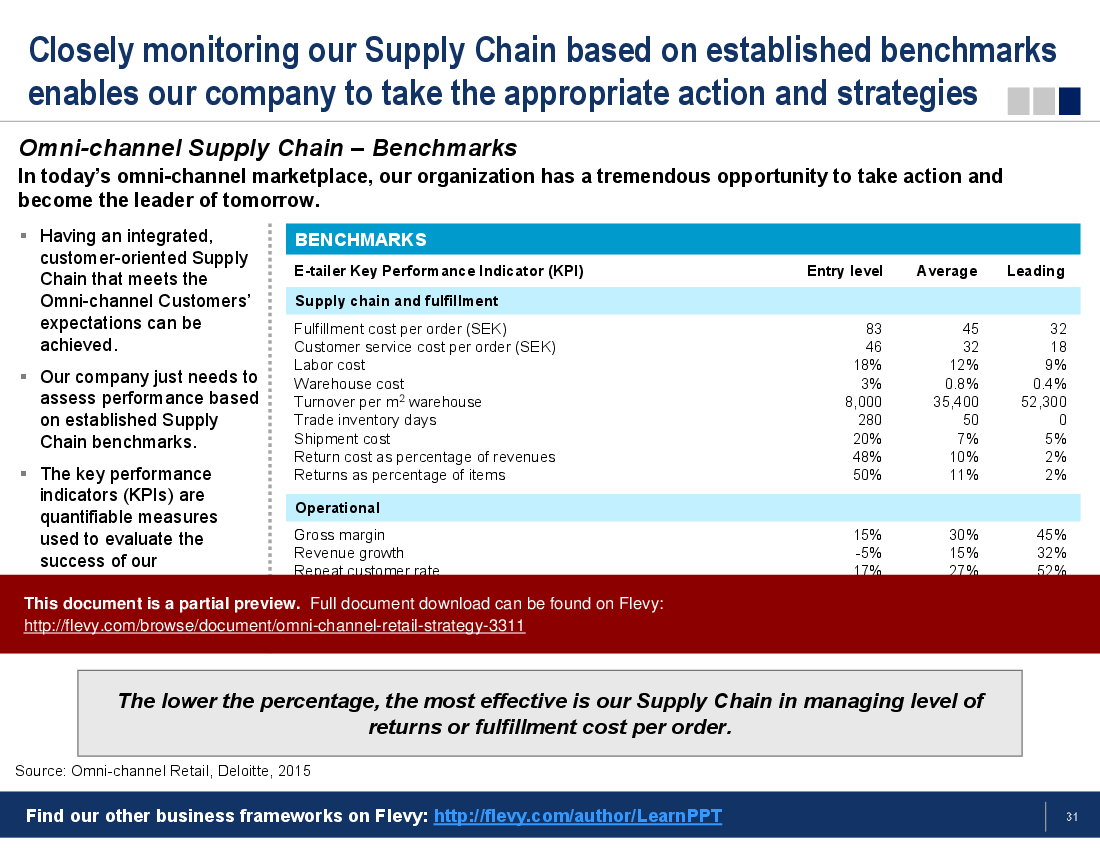
This PPT slide analyzes benchmarks for an omni-channel supply chain, focusing on key performance indicators (KPIs) to enhance operational effectiveness. Critical metrics include fulfillment cost per order, customer service cost per order, labor cost, and warehouse cost, categorized into entry level, average, and leading. The leading fulfillment cost per order is significantly lower than average and entry levels, indicating improvement opportunities. Operational metrics such as gross margin, revenue growth, repeat customer rate, and average order value provide insights into business health and customer retention. The substantial difference in average order value for repeat customers between entry and leading levels suggests that prioritizing customer retention can yield financial benefits. Lower percentages in these metrics correlate with greater effectiveness in managing returns or fulfillment costs, guiding decision-makers in optimizing supply chain strategies.
Strategic management in e-commerce focuses on 3 critical areas: omni-channel marketing, mobile payment, and omni-channel supply chain. Omni-channel marketing enhances marketing effectiveness through integrated approaches across various platforms, leading to improved customer engagement and conversion rates. Mobile payment serves as a key revenue driver, emphasizing the need for seamless and secure transactions to capture sales from mobile shoppers. The omni-channel supply chain is essential for aligning operations with customer preferences, enhancing satisfaction and loyalty. Effectively managing these areas can transform them into market generators, driving growth and improving overall e-commerce performance.
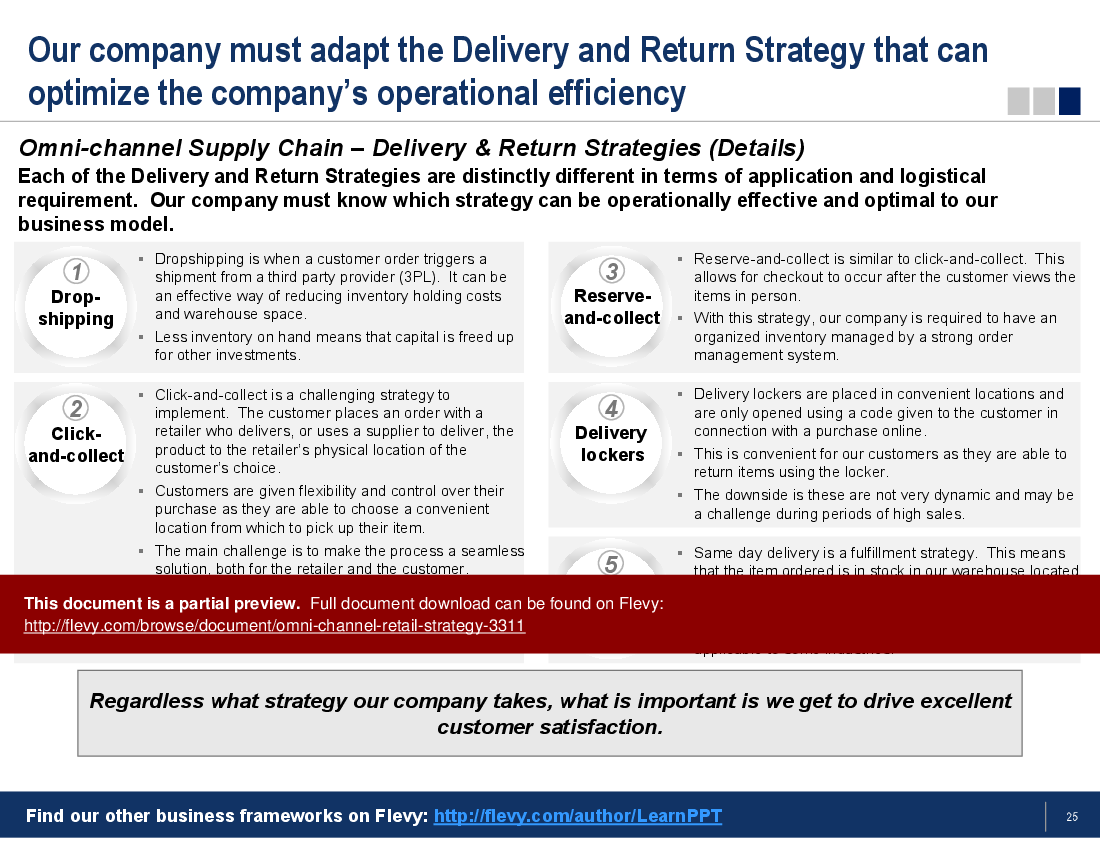
This PPT slide presents a framework for delivery and return strategies within an omni-channel supply chain. It highlights the pivotal role of customer expectations in determining delivery options. Five core strategies are identified: Drop-shipping, Click-and-collect, Reserve-and-collect, Delivery lockers, and Same-day delivery, all centered around customer-centricity. Each strategy is interconnected, emphasizing the need for a comprehensive approach to effective supply chain management. While each option has its merits, there is no universal solution, necessitating a tailored logistics approach that aligns with specific customer needs and market conditions. Understanding customer preferences is essential for optimizing delivery and return strategies in supply chain operations.
This PPT slide outlines the progression of mobile payment solutions through 4 maturity levels: Entry Level, Developing, Performing, and Leading. At the Entry Level, organizations lack a defined payment processing strategy, offering only one payment type, which limits sales growth. The Developing stage introduces basic functionality, focusing on cost and customer options, with organizations beginning to track costs and negotiate. In the Performing stage, advanced functionalities are implemented, tailoring payment solutions to customer needs and establishing Key Performance Indicators (KPIs) for effective contract management. The Leading stage optimizes payment solutions, supports various payment types, and emphasizes order cost transparency. Organizations must build their payment capabilities to achieve advanced functionalities, driving sales and enhancing their mobile payment strategy.
This PPT slide outlines the evolving e-commerce landscape, highlighting the necessity of Omni-channel Retailing. Traditional single-channel approaches fail to meet modern customer expectations, as consumer behavior shifts towards online shopping. Key focus areas for enhancing company performance include Omni-channel Marketing, Mobile Payment, and Omni-channel Supply Chain, all essential for a seamless customer experience. Success in e-commerce relies on designing a comprehensive strategy that aligns with customer preferences across multiple channels. Companies must invest in planning and execution to integrate these channels effectively; failure to do so may lead to struggles with disjointed operations. This overview serves as a resource for organizations aiming to adapt to the changing retail environment and improve their e-commerce strategies.
Search Engine Marketing (SEM) is increasingly vital, as customers view search engines as the primary source for online purchases, outpacing comparison sites and personal recommendations. Data shows a significant rise in Search Engine Advertising (SEA) spending, from approximately $8,897 in 2011 to $22,500 in 2017, indicating a shift towards paid search strategies. In contrast, Search Engine Optimization (SEO) spending, while growing, comprises only about 10.5% of total SEA and SEO expenditures, highlighting a preference for immediate visibility through paid search. Marketing should be treated as an investment, with budget allocations focused on channels that enhance brand recognition and drive sales, crucial for optimizing marketing spend and effectively reaching target audiences.
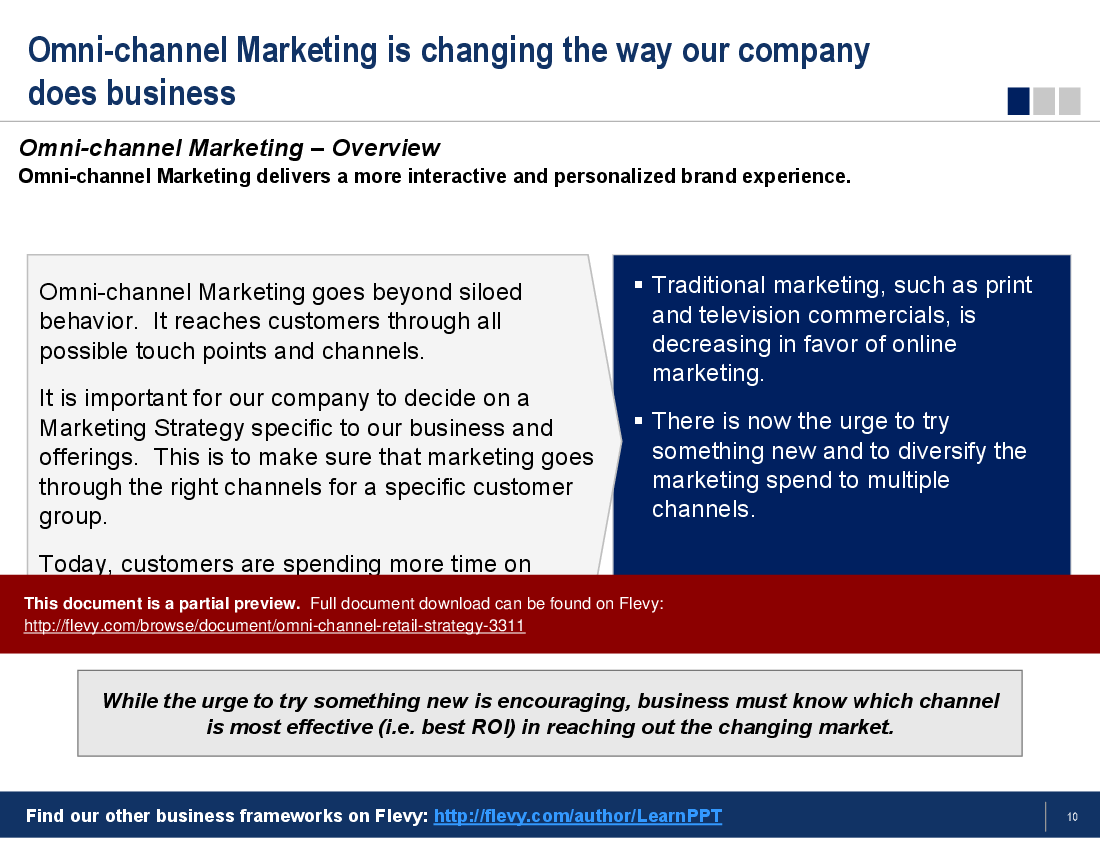
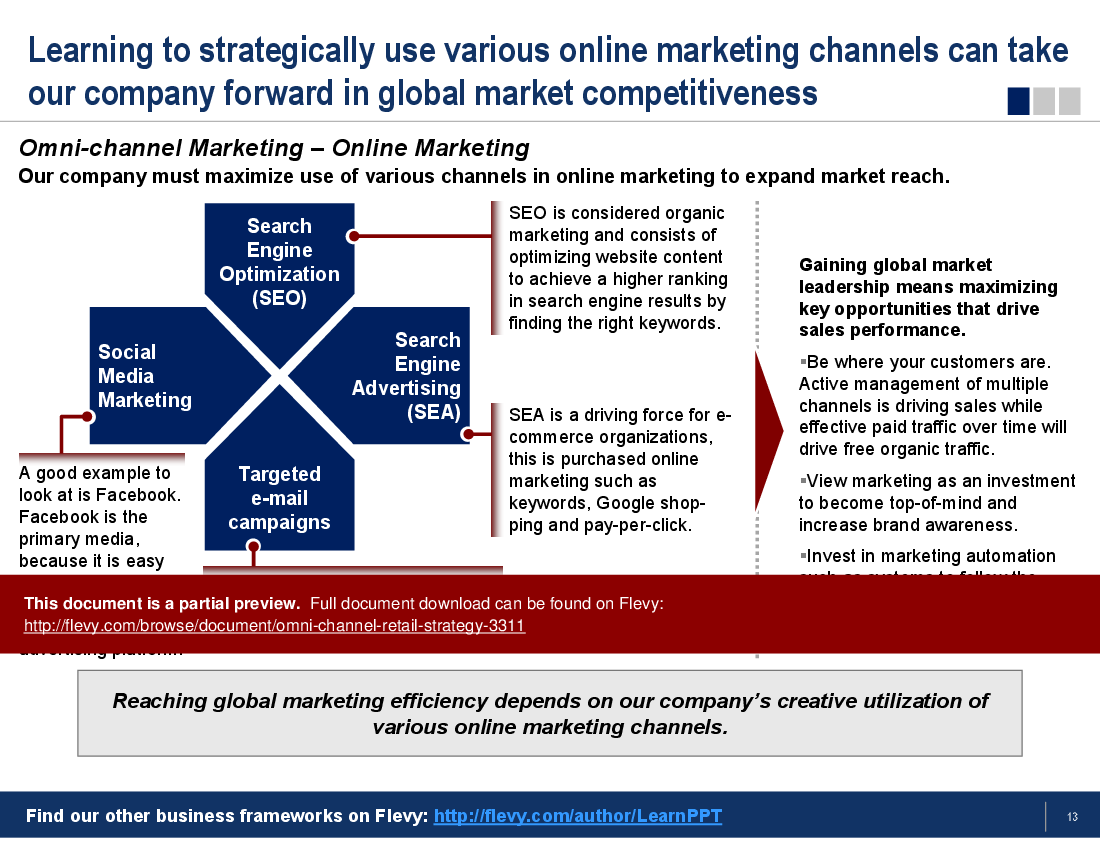
This PPT slide presents a framework for enhancing global market presence through an omni-channel marketing approach. Key components include Search Engine Optimization (SEO), Search Engine Advertising (SEA), Social Media Marketing, and Targeted Email Campaigns. SEO focuses on organic marketing to improve search engine rankings via effective keyword usage, while SEA employs paid tactics like Google shopping and pay-per-click advertising for immediate visibility. Social Media Marketing targets specific customer groups, with Facebook highlighted for its robust advertising platform. Targeted Email Campaigns offer a cost-effective method for engaging customers through personalization and high return on investment. The strategy emphasizes being present where customers engage, viewing marketing as an investment in brand awareness, and utilizing marketing automation to track customer behavior, integrating multiple channels to drive sales performance and enhance marketing efficiency.
This presentation is created by former McKinsey, BCG, Deloitte, EY, and Capgemini consultants. It teaches a practical consulting framework actively used by tier-1 consulting firms.
We are a team of management consultants trained by top tier global consulting firms (including McKinsey, BCG, Deloitte, EY, Capgemini) with a collective experience of several decades. We specialize in business frameworks based on real-life consulting engagements.
We have served 100s of clients that range from Fortune 500 companies to tech startups to
... [read more] $1B+ private companies.
Utilize our consulting frameworks to apply structured thinking & analysis to address your business challenges, uncover strategic insights, and implement workable solutions. Our PowerPoint presentations follow traditional consulting slide design formats, starting with a clear slide headline. Easily customize and repurpose our slides for your own business presentations.
Beyond business frameworks & methodologies, we also offer PowerPoint templates and other business templates. Our templates are professionally designed and have been used in thousands of deliverables & work products across hundreds of clients.
The average daily rate of a McKinsey consultant is $6,625 (not including expenses). The average price of a Flevy document is $65.
Trusted by over 10,000+ Client Organizations
Since 2012, we have provided business templates to over 10,000 businesses and organizations of all sizes, from startups and small businesses to the Fortune 100, in over 130 countries.
"I am extremely grateful for the proactiveness and eagerness to help and I would gladly recommend the Flevy team if you are looking for data and toolkits to help you work through business solutions."
– Trevor Booth, Partner, Fast Forward Consulting
"Flevy is our 'go to' resource for management material, at an affordable cost. The Flevy library is comprehensive and the content deep, and typically provides a great foundation for us to further develop and tailor our own service offer."
– Chris McCann, Founder at Resilient.World
"The wide selection of frameworks is very useful to me as an independent consultant. In fact, it rivals what I had at my disposal at Big 4 Consulting firms in terms of efficacy and organization."
– Julia T., Consulting Firm Owner (Former Manager at Deloitte and Capgemini)
"FlevyPro has been a brilliant resource for me, as an independent growth consultant, to access a vast knowledge bank of presentations to support my work with clients. In terms of RoI, the value I received from the very first presentation I downloaded paid for my subscription many times over! The
quality of the decks available allows me to punch way above my weight – it's like having the resources of a Big 4 consultancy at your fingertips at a microscopic fraction of the overhead.
"
– Roderick Cameron, Founding Partner at SGFE Ltd
"As a consulting firm, we had been creating subject matter training materials for our people and found the excellent materials on Flevy, which saved us 100's of hours of re-creating what already exists on the Flevy materials we purchased."
– Michael Evans, Managing Director at Newport LLC
"As a niche strategic consulting firm, Flevy and FlevyPro frameworks and documents are an on-going reference to help us structure our findings and recommendations to our clients as well as improve their clarity, strength, and visual power. For us, it is an invaluable resource to increase our impact and value."
– David Coloma, Consulting Area Manager at Cynertia Consulting
"If you are looking for great resources to save time with your business presentations, Flevy is truly a value-added resource. Flevy has done all the work for you and we will continue to utilize Flevy as a source to extract up-to-date information and data for our virtual and onsite presentations!"
– Debbi Saffo, President at The NiKhar Group
"I have used FlevyPro for several business applications. It is a great complement to working with expensive consultants. The quality and effectiveness of the tools are of the highest standards."
– Moritz Bernhoerster, Global Sourcing Director at Fortune 500
Download our free compilation of 50+ Strategy & Transformation slides and templates. Frameworks include McKinsey 7-S, Balanced Scorecard, Disruptive Innovation, BCG Curve, and many more.