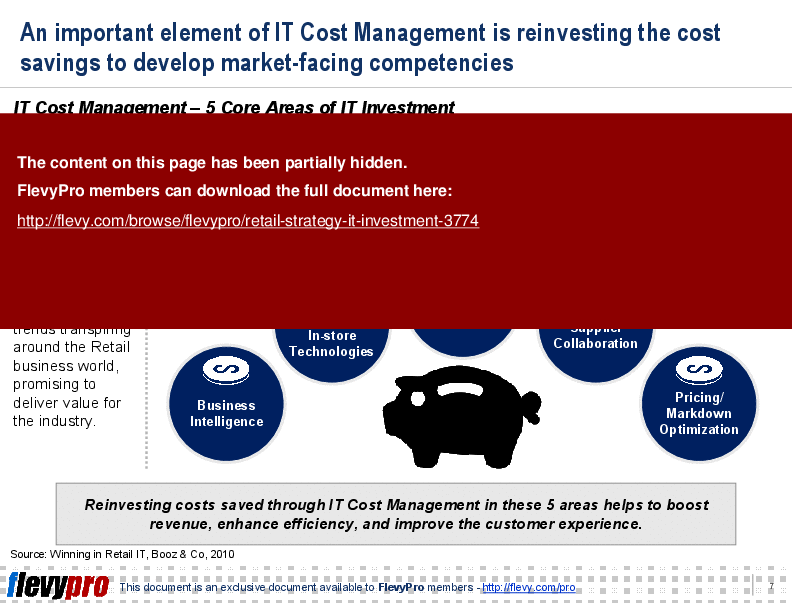

Organizations need to develop critical capabilities to stay ahead of the competition. A proven method to achieve this objective is to reinvest the savings achieved through IT Cost Management into building capabilities critical for the future. In order to decide the areas of IT investment, Retailers need to adopt a market-focused approach, where they need to distinguish the trends transpiring across industries that have the potential to deliver value for the business.
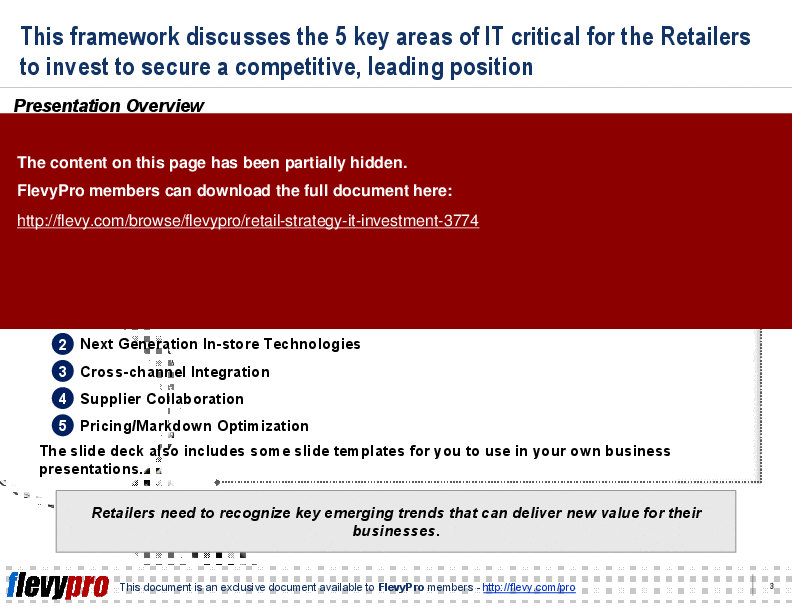
Retailers need to recognize key emerging trends that can deliver new value for their businesses. This presentation breaks down 5 key trends that are transforming the Retail industry. Three of these trends focus on the customer while the other 2 aim at perfecting the implementation capabilities.
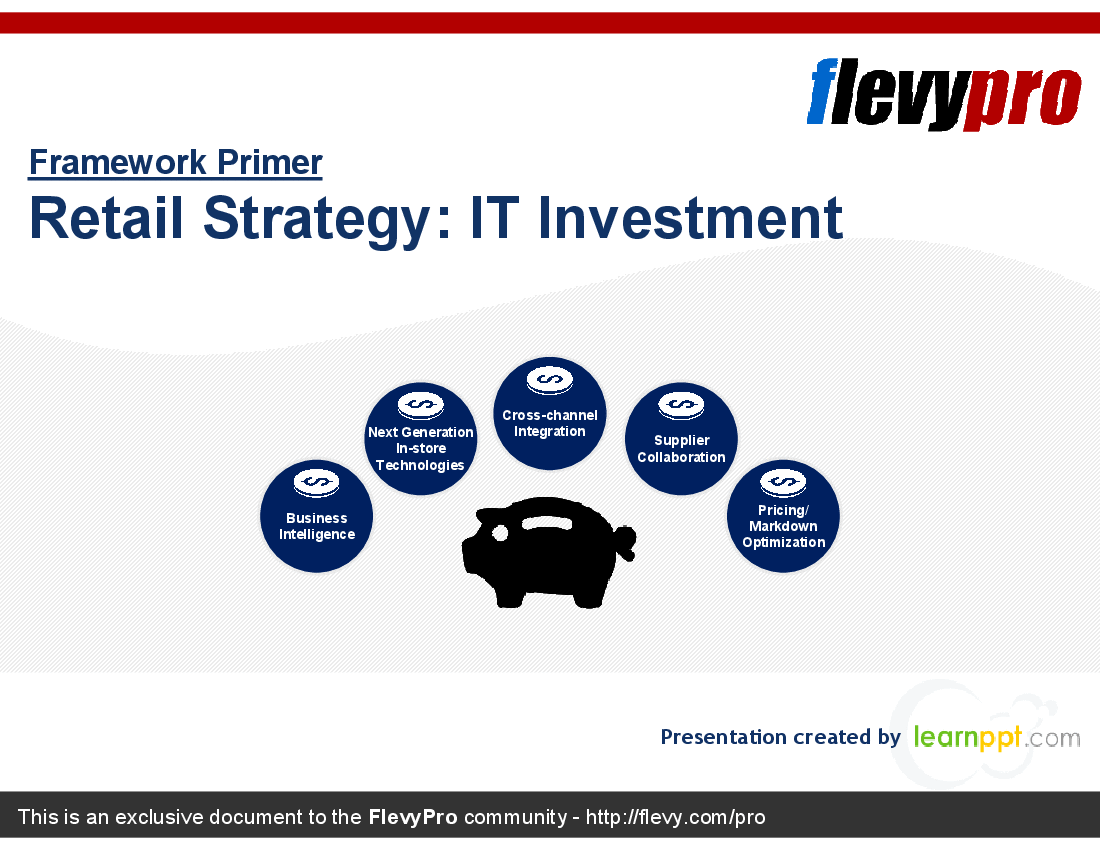
These are the areas where market leaders in the Retail sector are concentrating on in terms of making targeted investments:
1. Business Intelligence
2. Next Generation In-store Technologies
3. Cross-channel Integration
4. Supplier Collaboration
5. Pricing/Markdown Optimization
The slide deck also includes some slide templates for you to use in your own business presentations.
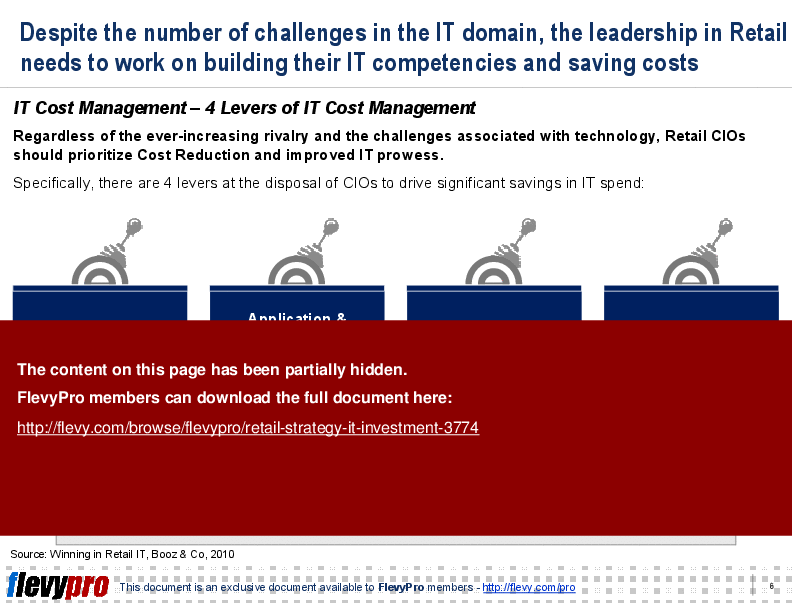
This presentation delves into the 4 levers of IT Cost Management, providing actionable insights for Retail CIOs to drive significant savings. It emphasizes the importance of prioritizing cost reduction and improving IT capabilities amidst increasing competition and technological challenges. The framework is designed to help Retail leaders navigate the complexities of IT investments and optimize their budgets effectively.
The PPT also includes comprehensive templates for the 5 core areas of IT investment, making it a practical tool for strategic planning. These templates cover Business Intelligence, Next Generation In-store Technologies, Cross-channel Integration, Supplier Collaboration, and Pricing/Markdown Optimization. Retailers can leverage these templates to streamline their IT investment strategies and enhance their market position.
Got a question about this document? Email us at flevypro@flevy.com.
Executive Summary
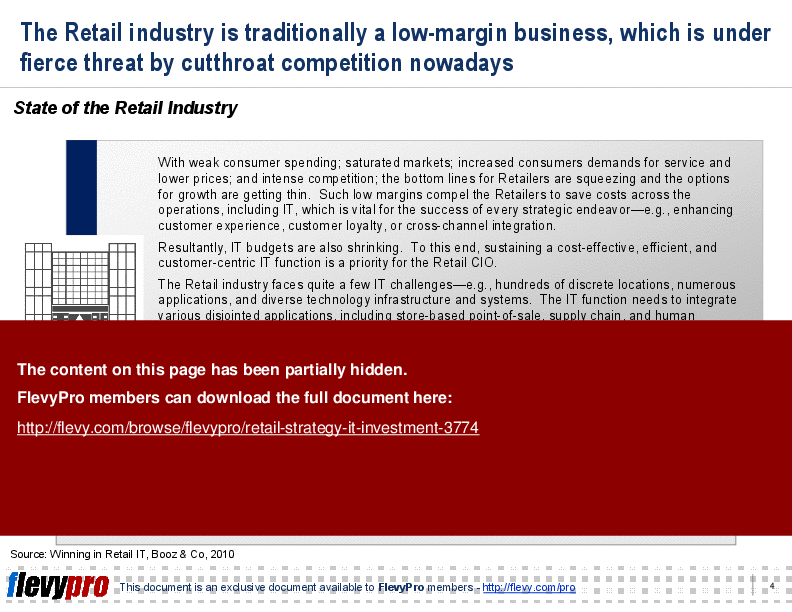
The "Retail Strategy: IT Investment" presentation provides a strategic framework for retailers to optimize their IT investments amidst a challenging low-margin environment. Developed by former consultants from McKinsey and the Big 4, this presentation outlines 5 critical areas of IT investment that can enhance operational efficiency and customer experience. By focusing on Business Intelligence, Next Generation In-store Technologies, Cross-channel Integration, Supplier Collaboration, and Pricing/Markdown Optimization, retailers can leverage technology to drive growth and maintain competitiveness.
Who This Is For and When to Use
• Retail executives seeking to enhance IT investment strategies
• IT leaders responsible for implementing technology solutions in retail
• Business analysts focused on optimizing operational efficiencies
• Consultants advising retail clients on IT strategy and implementation
Best-fit moments to use this deck:
• During strategic planning sessions for IT budget allocation
• When assessing current IT capabilities and identifying gaps
• In workshops aimed at improving customer experience through technology
• For presentations to stakeholders on IT investment priorities
Learning Objectives
• Identify key trends in retail IT investment and their implications
• Analyze the role of Business Intelligence in enhancing customer insights
• Develop strategies for integrating cross-channel customer experiences
• Evaluate the impact of Next Generation In-store Technologies on sales
• Formulate plans for effective Supplier Collaboration to streamline operations
• Optimize pricing strategies through advanced analytics and markdown techniques
Table of Contents
• Overview (page 3)
• IT Cost Management (page 6)
• Areas of IT Investment (page 7)
• Templates (page 15)
Primary Topics Covered
• IT Cost Management - Strategies for reducing IT costs while enhancing capabilities through 4 levers: Strategic Sourcing, Application & Infrastructure Simplification, Demand Management, and Lean IT Organization.
• Business Intelligence - Utilizing advanced data analytics to understand customer behavior and inform strategic planning.
• Next Generation In-store Technologies - Implementing modern POS systems to improve transaction efficiency and customer satisfaction.
• Cross-channel Integration - Creating a seamless customer experience across all platforms, including online and in-store interactions.
• Supplier Collaboration - Enhancing supply chain efficiency through improved communication and information sharing with suppliers.
• Pricing/Markdown Optimization - Leveraging analytics to optimize pricing strategies and maximize profitability.
Deliverables, Templates, and Tools
• IT Cost Management framework template for strategic planning
• Business Intelligence implementation roadmap
• Next Generation In-store Technologies assessment tool
• Cross-channel integration checklist for operational alignment
• Supplier Collaboration framework for enhanced communication
• Pricing/Markdown Optimization model for profitability analysis
Slide Highlights
• Overview of the Retail IT landscape and key challenges
• Detailed breakdown of the 4 levers of IT Cost Management
• Visual representation of the 5 core areas of IT investment
• Case studies illustrating successful implementation of IT strategies
• Templates for practical application in retail settings
Potential Workshop Agenda
IT Investment Strategy Session (90 minutes)
• Review current IT capabilities and identify gaps
• Discuss key trends in retail IT investment
• Brainstorm potential areas for targeted investment
Business Intelligence Deep Dive (60 minutes)
• Explore advanced analytics tools and techniques
• Develop strategies for integrating customer insights into operations
• Identify key performance indicators for success
Cross-channel Integration Workshop (90 minutes)
• Assess current customer experience across channels
• Design a roadmap for seamless integration
• Assign responsibilities for implementation
Customization Guidance
• Tailor the IT Cost Management framework to align with specific organizational goals
• Adjust the Business Intelligence roadmap to reflect unique customer data sources
• Modify the Cross-channel Integration checklist to fit existing operational processes
• Update the Supplier Collaboration framework to include relevant partners and stakeholders
Secondary Topics Covered
• Challenges in the retail IT landscape
• Best practices for effective IT governance
• Trends in customer behavior impacting IT investment
• Innovations in retail technology and their implications
Topic FAQ
Document FAQ
These are questions addressed within this presentation.
What are the key areas of IT investment for retailers?
The key areas include Business Intelligence, Next Generation In-store Technologies, Cross-channel Integration, Supplier Collaboration, and Pricing/Markdown Optimization.
How can retailers optimize their IT costs?
Retailers can optimize costs through strategic sourcing, simplifying applications and infrastructure, managing demand effectively, and establishing a lean IT organization.
What role does Business Intelligence play in retail?
Business Intelligence helps retailers analyze customer data to make informed decisions about product offerings, pricing, and marketing strategies.
What are Next Generation In-store Technologies?
These technologies include advanced POS systems that enhance transaction efficiency and improve customer experience at the point of sale.
How does Cross-channel Integration benefit retailers?
Cross-channel Integration provides a consistent customer experience across all platforms, enabling seamless transitions between online and in-store interactions.
What is Supplier Collaboration?
Supplier Collaboration involves sharing information between retailers and suppliers to enhance supply chain efficiency and streamline operations.
How can pricing strategies be optimized?
Retailers can use sophisticated analytics to evaluate pricing actions and maximize profitability through effective markdown strategies.
What templates are included in the presentation?
The presentation includes templates for IT Cost Management, Business Intelligence implementation, and various investment areas for practical application.
Glossary
• Business Intelligence - Capabilities and tools used to analyze data for strategic planning.
• Next Generation In-store Technologies - Advanced POS systems that improve transaction efficiency.
• Cross-channel Integration - Seamless customer experience across multiple platforms.
• Supplier Collaboration - Information sharing between suppliers and retailers to enhance supply chain efficiency.
• Pricing/Markdown Optimization - Strategies to maximize profitability through effective pricing.
• IT Cost Management - Strategies to reduce IT expenses while enhancing capabilities.
• Strategic Sourcing - Leveraging best practices to optimize procurement processes.
• Application & Infrastructure Simplification - Streamlining IT systems to reduce complexity and costs.
• Demand Management - Focusing IT spending on high-value projects.
• Lean IT Organization - Creating a cost-effective IT structure that delivers value.
• Analytics - The systematic computational analysis of data.
• Customer Experience - The overall perception of a customer’s interaction with a brand.
• Supply Chain - The network between a company and its suppliers to produce and distribute a specific product.
• Operational Efficiency - The ability to deliver products or services in the most cost-effective manner.
• Market-Focused Approach - A strategy that prioritizes the needs and trends of the market.
• Retail Trends - Current patterns and shifts in consumer behavior and technology in the retail sector.
• Cost Savings - Reductions in expenses that can be reinvested into the business.
• Customer Loyalty - The tendency of customers to continue buying from a specific retailer.
• ERP Systems - Enterprise Resource Planning systems that manage and integrate core business processes.
• Data Security - Protecting digital information from unauthorized access or corruption.
• Consumer Behavior - The study of individuals and groups in selecting, purchasing, and using goods and services.
Source: Best Practices in IT Strategy, Retail Industry, Retail Strategy PowerPoint Slides: Retail Strategy: IT Investment PowerPoint (PPT) Presentation Slide Deck, LearnPPT Consulting
Did you need more documents?
Consider a FlevyPro subscription from $39/month. View plans here.
For $10.00 more, you can download this document plus 2 more FlevyPro documents. That's just $13 each.
|
Download our FREE Strategy & Transformation Framework Templates
Download our free compilation of 50+ Strategy & Transformation slides and templates. Frameworks include McKinsey 7-S, Balanced Scorecard, Disruptive Innovation, BCG Curve, and many more. |