Editor's Note: Take a look at our featured best practice, Business Process Outsourcing (BPO) Sales Deck (20-slide PowerPoint presentation). This document includes a set of slides on Business Process Outsourcing (BPO), often called BPO or just Outsourcing. BPO is typically the primary revenue stream for full service consulting firms (e.g. Accenture, Deloitte, IBM). These slides were originally developed to be included in sales decks [read more]
* * * *
An engineering company can be profitable one quarter and struggle with staffing costs the next, even when its project delivery remains strong. The problem is often the uneven distribution of work. A major contract may require additional engineers for several months, but hiring permanent staff for that temporary demand creates expenses that continue after the project ends.
Engineering outsourcing offers a different financial model. Firms can obtain additional technical capacity without committing to the full cost of permanent recruitment. Yet the cheapest external engineer is rarely the best economic choice. Poorly coordinated work generates revisions that quickly consume the expected savings.
Insights from J.O.T., an engineering outsourcing company, helped inform this examination of outsourcing economics and technical delivery. The central question for business leaders is how to reduce engineering expenditure while maintaining the standards that protect client relationships. When approached strategically, outsourcing can improve project profitability and allow firms to compete for contracts they previously lacked the capacity to deliver.
Reduce Fixed Costs without Losing Engineering Capacity
Permanent engineering employees represent a continuing financial commitment. Their compensation remains part of the operating budget during quieter periods, even when billable work declines. Firms also incur recruitment expenses when expanding a team, and new hires need time to become familiar with established procedures. These costs can make rapid expansion financially uncomfortable.
Outsourcing allows companies to match some of their engineering expenditure more closely to confirmed project demand. A construction consultancy may require additional electrical design capacity for a large commercial development. Engaging a freelance electrical engineer for a defined assignment can be more economical than recruiting someone whose workload may disappear after project completion. The arrangement is especially attractive when the firm already has the internal expertise needed to supervise the work.
However, outsourcing does not automatically reduce payroll expenses. If existing engineers remain employed, their time must be redirected toward productive work for the company to realize the full financial benefit. Management should therefore examine how external capacity affects overall utilization. The greatest savings occur when outsourcing prevents unnecessary permanent hiring or lets internal specialists complete more valuable assignments.
Access Specialized Expertise without Building an Entire Department
Some engineering projects require expertise that a company uses only occasionally. Maintaining permanent specialists for every possible assignment is expensive, particularly when demand for those services is unpredictable. Outsourcing lets firms obtain the required capabilities without building an entire internal department.
Consider a mechanical engineering business that occasionally needs advanced finite element analysis. Recruiting an experienced specialist and maintaining additional software licenses may be difficult to justify for a handful of annual projects. An external engineer with established expertise can complete the required analysis under the firm’s technical supervision. The company gains access to a capability without carrying its full annual operating cost.
Specialist outsourcing can also improve quality when the external professional has deeper experience with the particular engineering problem. However, credentials alone are insufficient. Firms need to examine comparable completed work and confirm that the specialist can apply the required technical standards. A provider with relevant experience may command a higher hourly rate, but fewer corrections can make that expertise more economical over the full project.
Prevent Rework before It Erases the Savings
Engineering errors become increasingly expensive as projects advance. A drawing discrepancy discovered during an internal review may require a few hours of correction. The same error identified after equipment fabrication begins can cause a much larger financial loss. Outsourcing arrangements must therefore protect quality early in the design process rather than relying entirely on final inspection.
The initial assignment should define what an acceptable deliverable looks like. An external engineering team needs access to approved technical information and clear instructions about unresolved design decisions. Reviewing a representative sample before authorizing the remaining work can expose misunderstandings while the cost of correction is still manageable. This approach is particularly effective for projects involving large volumes of similar drawings.
Internal engineering accountability remains essential. Where professional licensure is required, the engineer in charge must maintain the necessary supervision and control over the work. Outsourcing does not transfer that obligation to an unlicensed external contributor. Clear review responsibilities protect both the technical result and the company’s contractual commitments.
Turn Lower Engineering Costs into a Competitive Advantage
Reducing project delivery costs creates opportunities beyond immediate expense savings. A firm with a more flexible cost structure may be able to pursue contracts that would otherwise require a risky expansion of permanent staff. It can allocate additional engineering resources to a confirmed project without assuming that the same workload will continue indefinitely.
This flexibility also influences pricing decisions. A company that can deliver an engineering package at a lower total cost has more room to offer a competitive quotation while preserving its target margin. Management should resist the temptation to pass every saving directly to customers, however. Improved margins can provide financial capacity for future projects and reduce the pressure to accept unprofitable work during slower periods.
Speed can become another advantage. When an established outsourcing partner already knows the firm’s technical standards, it may be able to provide additional production capacity faster than a permanent recruitment process would allow. That can help the company respond to a new contract opportunity without disrupting existing commitments. The benefit depends on the external team’s actual availability and its ability to deliver acceptable work, not simply its willingness to accept another assignment.
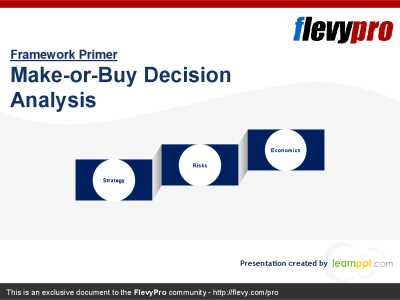
As organizations are being put under increasing pressure to cut expenses and improve return on assets, the dilemma of whether to keep key functions in-house or outsource them has taken center stage.
Manufacturing units are being identified with Make-or-Buy Decisions as third-party suppliers in [read more]
Do You Want to Implement Business Best Practices?
You can download in-depth presentations on Business Process Outsourcing and 100s of management topics from the FlevyPro Library. FlevyPro is trusted and utilized by 1000s of management consultants and corporate executives.
For even more best practices available on Flevy, have a look at our top 100 lists:
These best practices are of the same as those leveraged by top-tier management consulting firms, like McKinsey, BCG, Bain, and Accenture. Improve the growth and efficiency of your organization by utilizing these best practice frameworks, templates, and tools. Most were developed by seasoned executives and consultants with over 20+ years of experience.
Readers of This Article Are Interested in These Resources
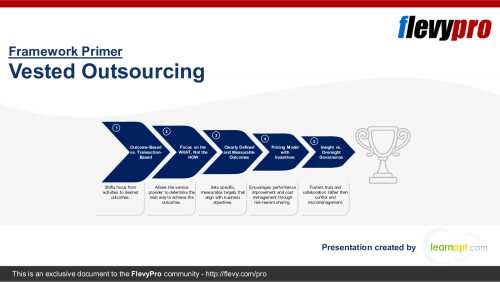
In today's complex global economy, where organizations are constantly seeking innovative ways to optimize efficiency and align with strategic goals, traditional outsourcing models often fall short in creating sustainable partnerships that drive mutual success. This challenge has led organizations [read more]
A Kanban Board is a Lean & Agile Project Management tool used to implement Kanban to manage work at a personal or organizational level.
Kanban Boards visually depict work at various stages of a process using cards to represent work items and columns to represent each stage of the process. Cards [read more]
The Recruitment Process Outsourcing (RPO) Implementation Toolkit includes a set of best-practice templates, step-by-step workplans, and maturity diagnostics for any RPO related project. Please note the above partial preview is ONLY of the Self Assessment Excel Dashboard, referenced in steps 1 [read more]
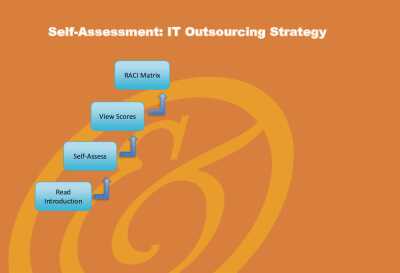
The IT Outsourcing Strategy Implementation Toolkit includes a set of best practice templates, step-by-step workplans, and maturity diagnostics for any IT Outsourcing related project. Please note the above partial preview is ONLY of the Self Assessment Excel Dashboard, referenced in steps 1 and 2 [read more]
 An engineering company can be profitable one quarter and struggle with staffing costs the next, even when its project delivery remains strong. The problem is often the uneven distribution of work. A major contract may require additional engineers for several months, but hiring permanent staff for that temporary demand creates expenses that continue after the project ends.