
This framework is created by former McKinsey, BCG, Deloitte, EY, and Capgemini consultants and provides actionable insights for Retail Industry Value Chain Analysis.
Provides a framework for examining the Retail Industry.
Identifies 20 important insights and considerations for Retail Value Chain Analysis.
Provides a detailed breakdown of the impact of Digital Transformation across the Retail Value Chain.
VALUE CHAIN ANALYSIS PPT DESCRIPTION
This product (Retail Value Chain) is a 36-slide PPT PowerPoint presentation slide deck (PPTX), which you can download immediately upon purchase.
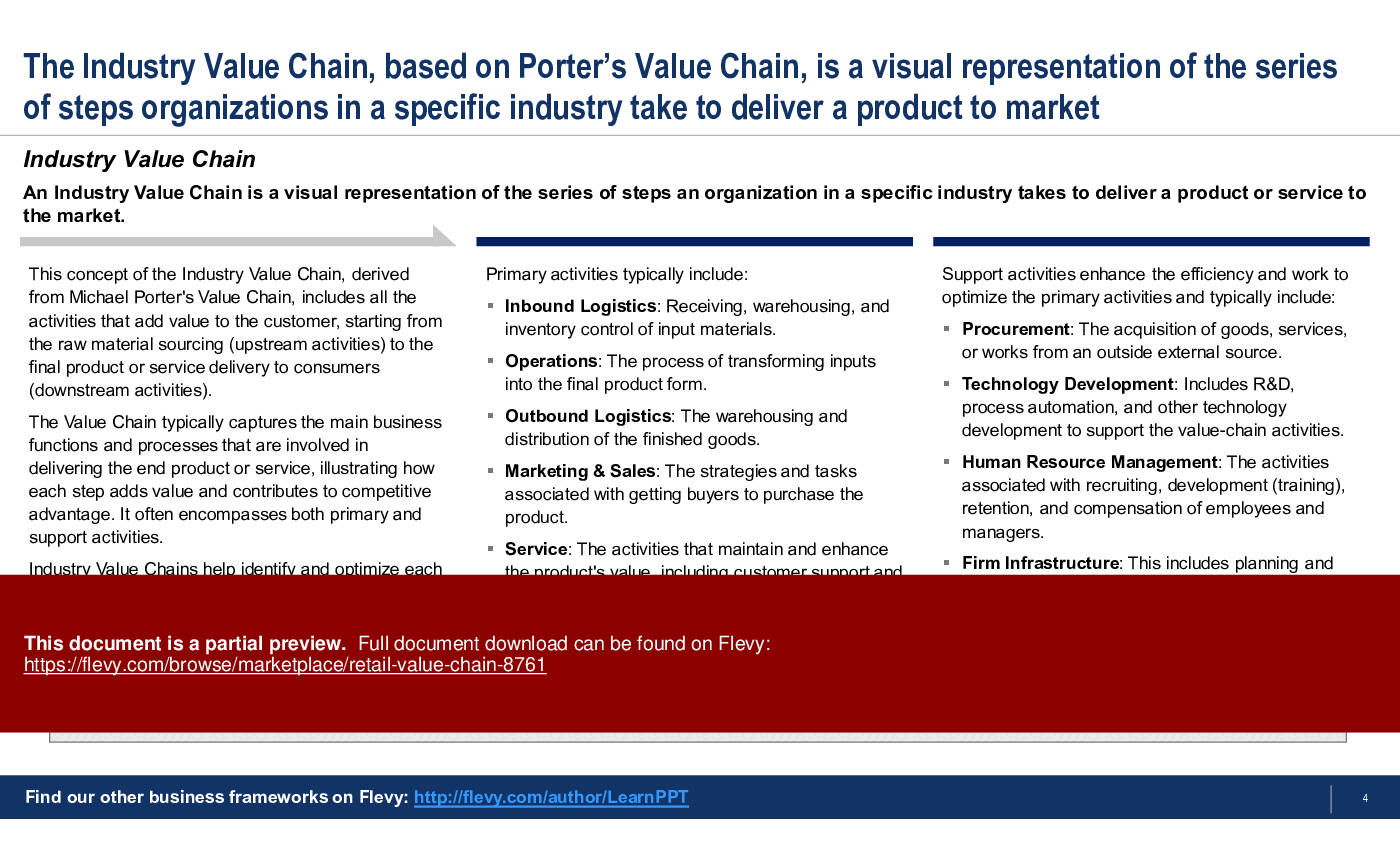
An Industry Value Chain is a visual representation of the series of steps an organization in a specific industry takes to deliver a product or service to the market. It captures the main business functions and processes that are involved in delivering the end product or service, illustrating how each step adds value and contributes to a Competitive Advantage. It often encompasses both primary and support activities.
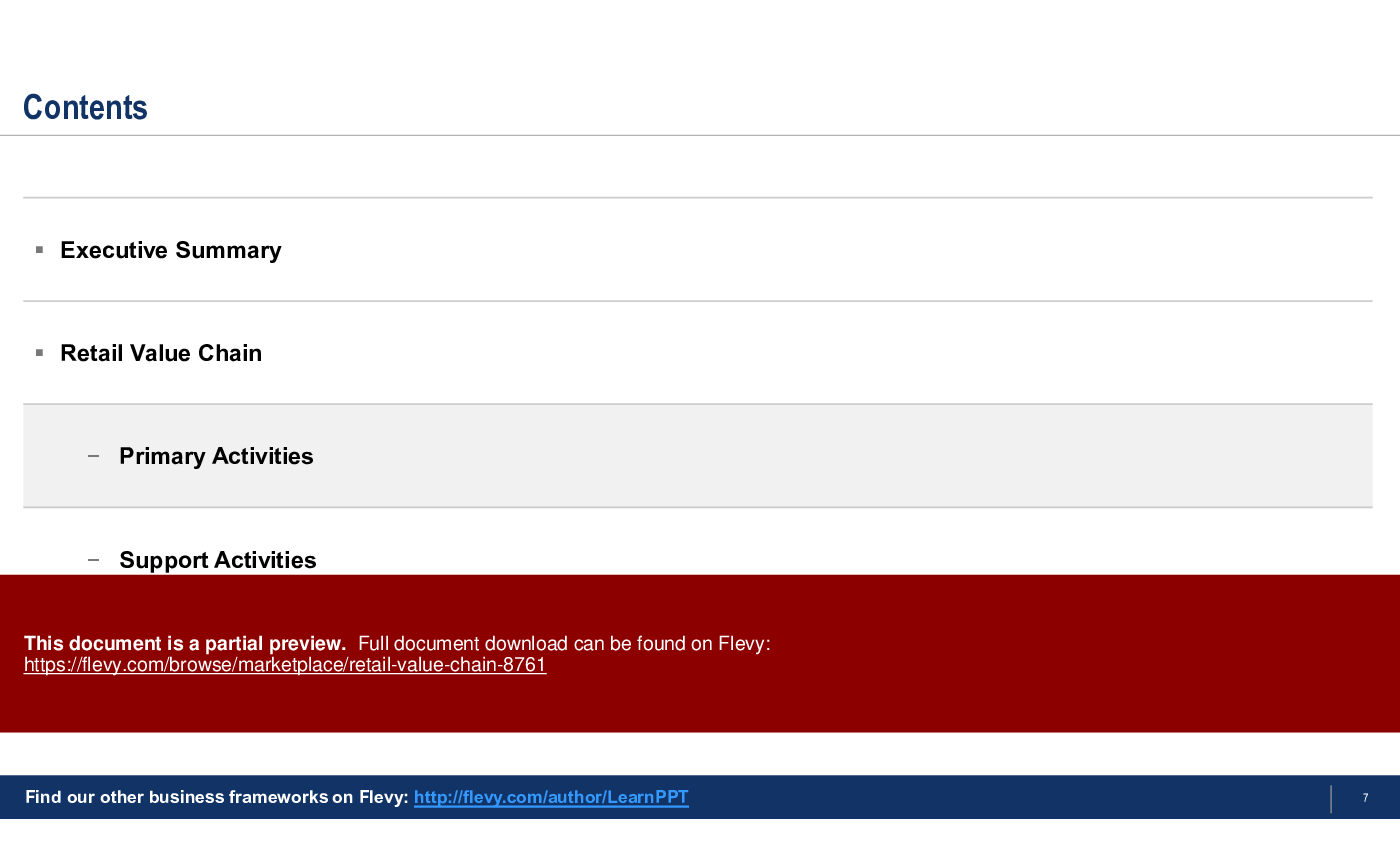
This PowerPoint presentation captures the Retail Industry Value Chain, which includes the following primary and support activities for Retail:
Primary Activities
1. Market Research and Consumer Insights
2. Product Design and Development
3. Sourcing and Procurement
4. Inventory Management
5. Store Operations
6. Online and E-commerce Operations
7. Sales and Marketing
8. Distribution and Logistics
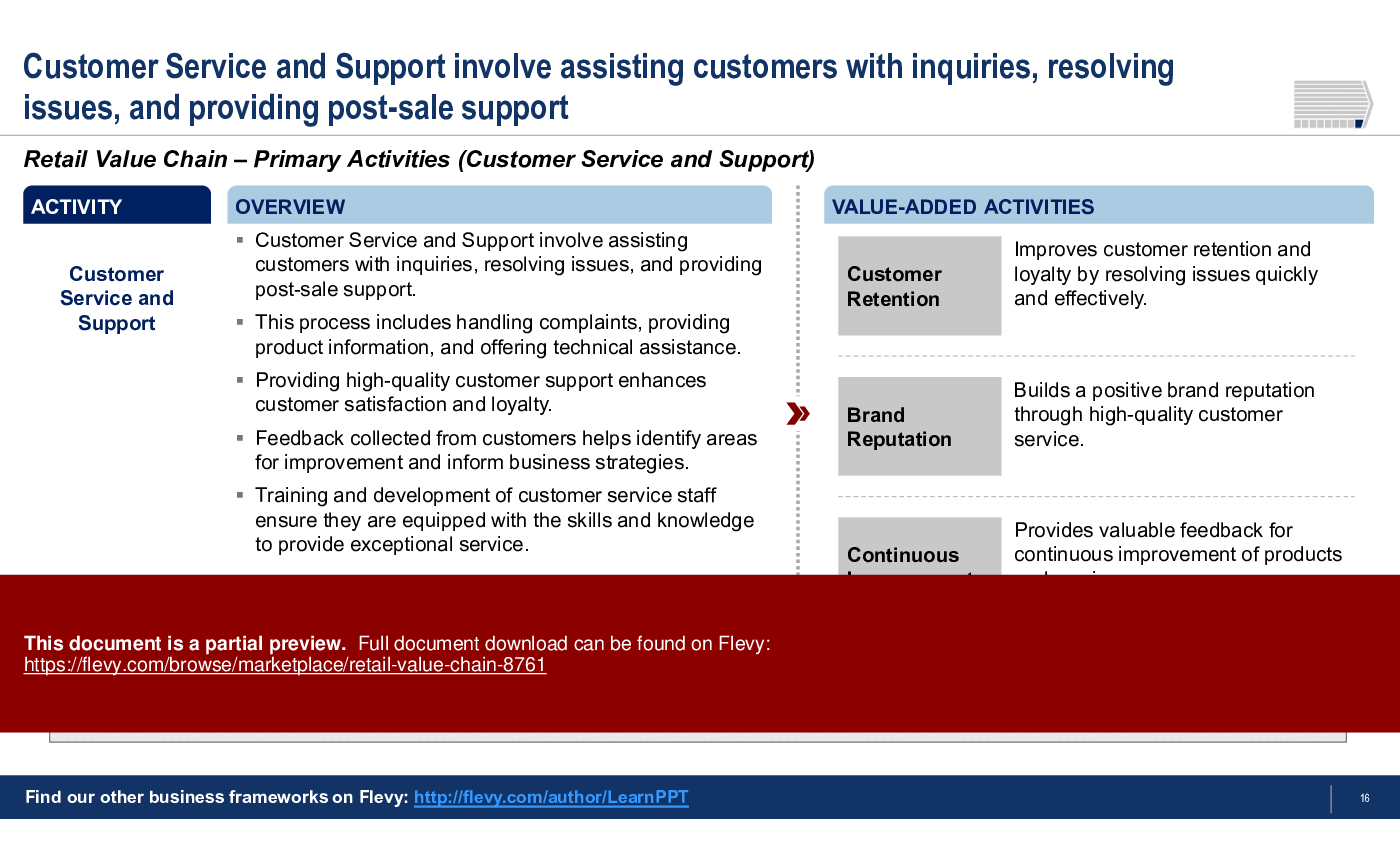
9. Customer Service and Support
Support Activities
1. Information Technology (IT)
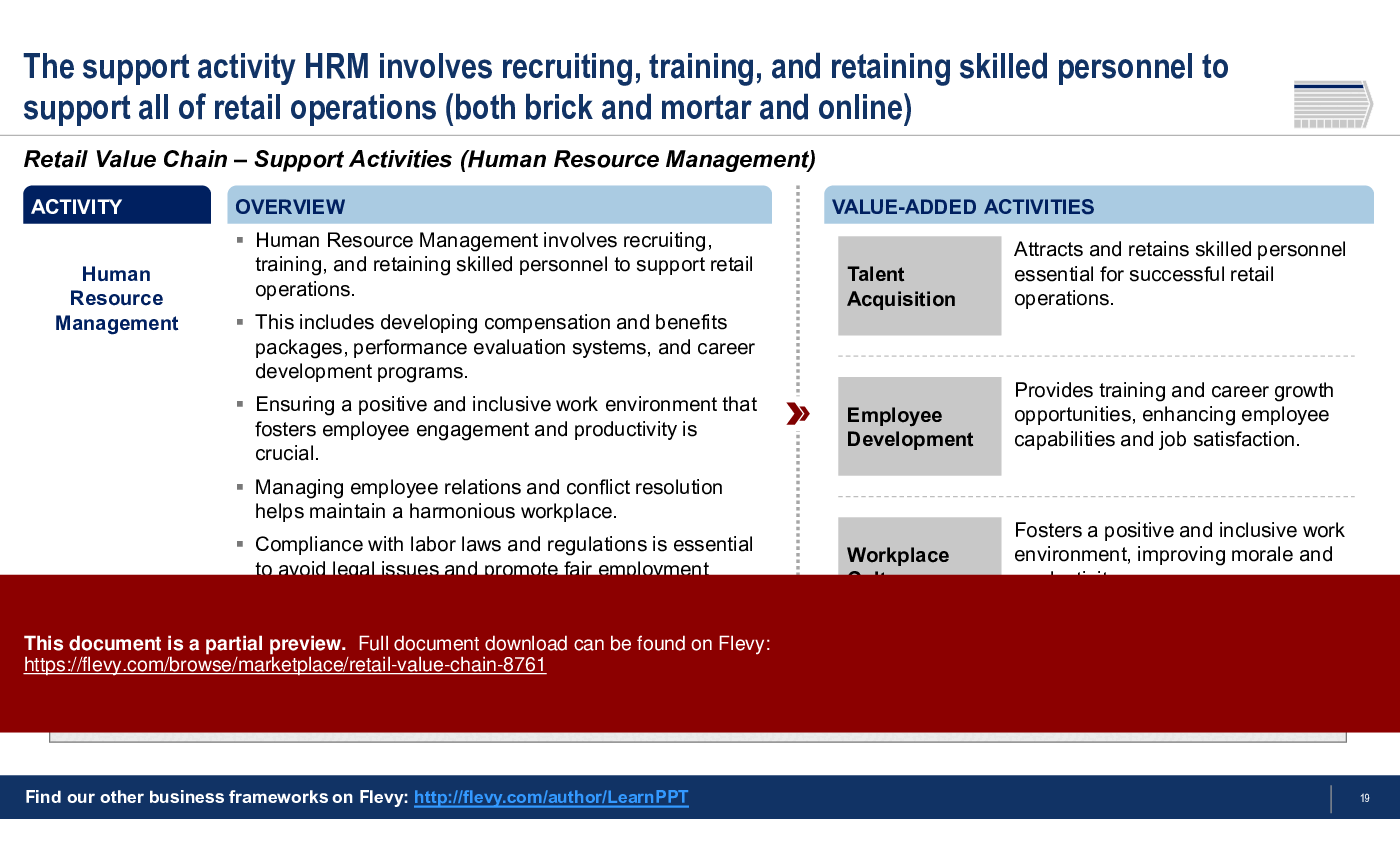
2. Human Resource Management
3. Financial Management
4. Legal and Regulatory Compliance
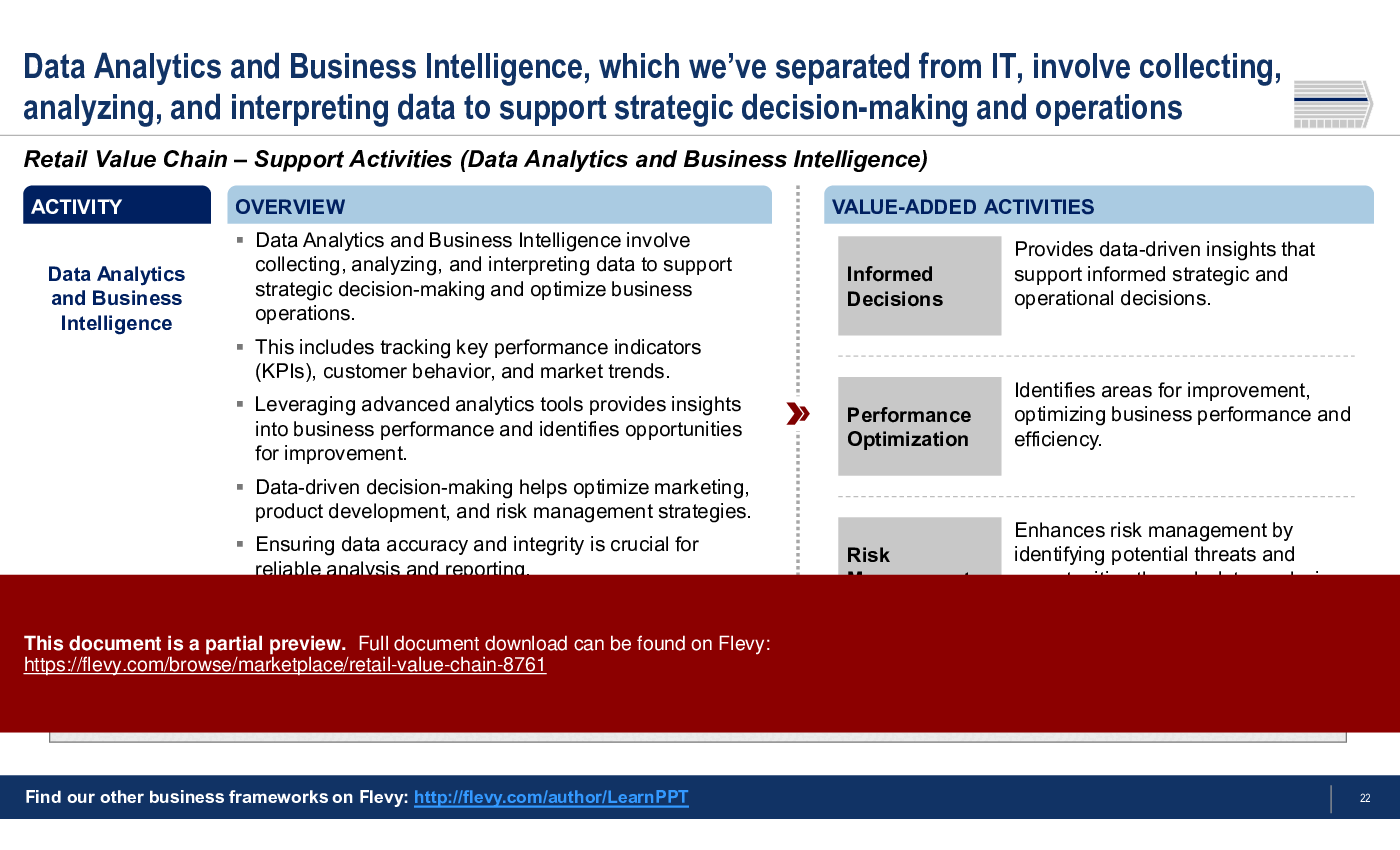
5. Data Analytics and Business Intelligence
6. Cybersecurity Management
7. Environmental and Sustainability Management
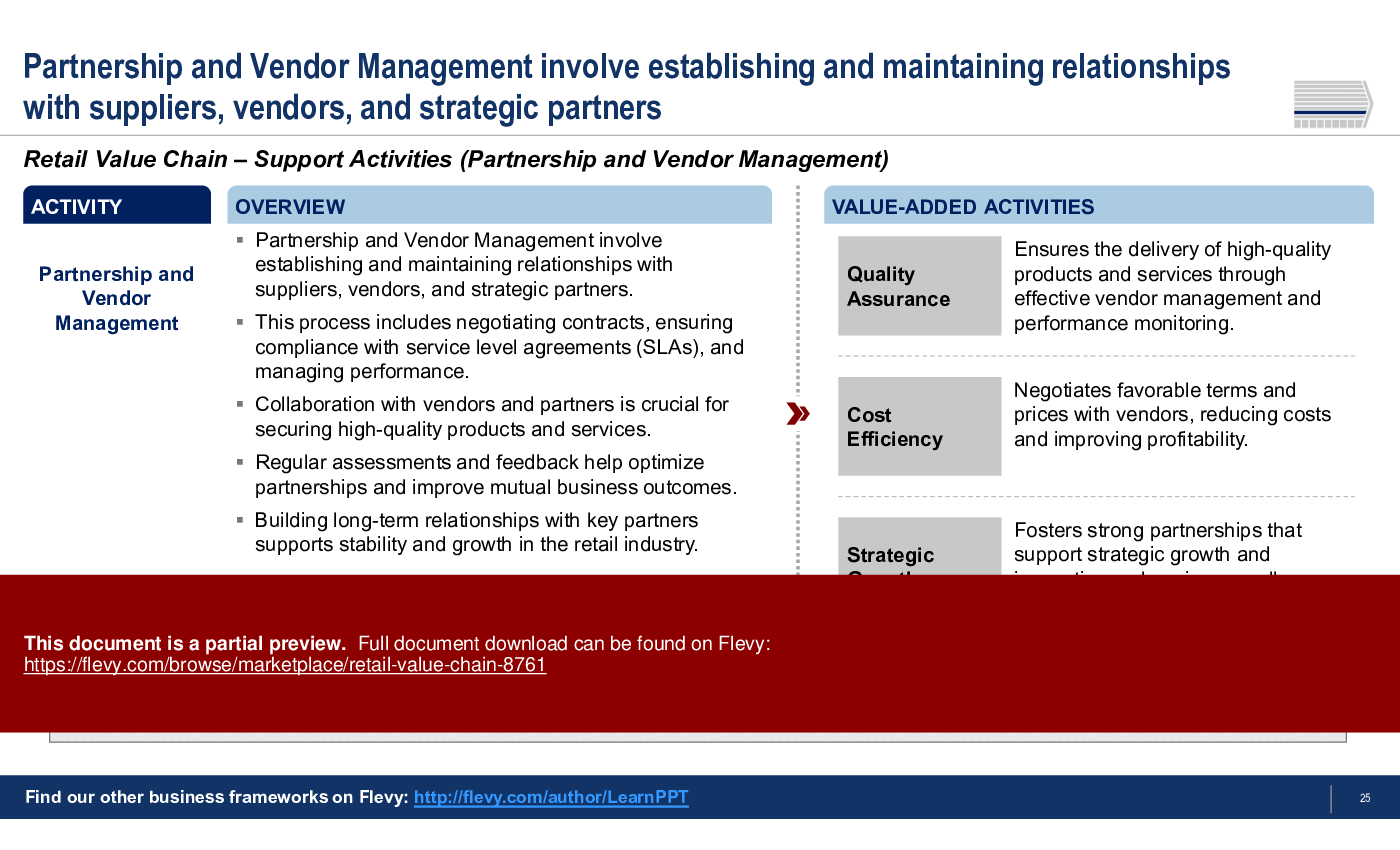
8. Partnership and Vendor Management
9. Marketing and Branding
The Retail Value Chain integrates market research, product development, procurement, and sales strategies to deliver a seamless shopping experience for consumers. This PowerPoint presentation dives deeper into each of these activities, highlighting key elements.
Effective inventory management and logistics ensure product availability and timely delivery, enhancing customer satisfaction and operational efficiency. Strong vendor partnerships and efficient procurement processes are critical for maintaining product quality and cost control. Leveraging customer insights and data analytics enables retailers to tailor offerings and marketing strategies to evolving consumer preferences. Integrating online and offline operations optimizes sales channels and expands market reach, driving growth and competitiveness.
This PPT presentation also discusses Retail Value Chain Analysis, highlighting a multitude of key considerations and potential insights to pay attention to. Value Chain Analysis provides a comprehensive understanding of how each stage contributes to overall efficiency, cost management, and customer satisfaction, enabling more informed strategic decisions. We further discuss the significant impact of Digital Transformation and various specific emergent technologies on the Retail Industry.
This presentation equips executives with actionable insights into optimizing each segment of the Retail Value Chain. By understanding the interplay of primary and support activities, leaders can drive operational excellence and enhance customer engagement across all channels.
Got a question about the product? Email us at support@flevy.com or ask the author directly by using the "Ask the Author a Question" form. If you cannot view the preview above this document description, go here to view the large preview instead.
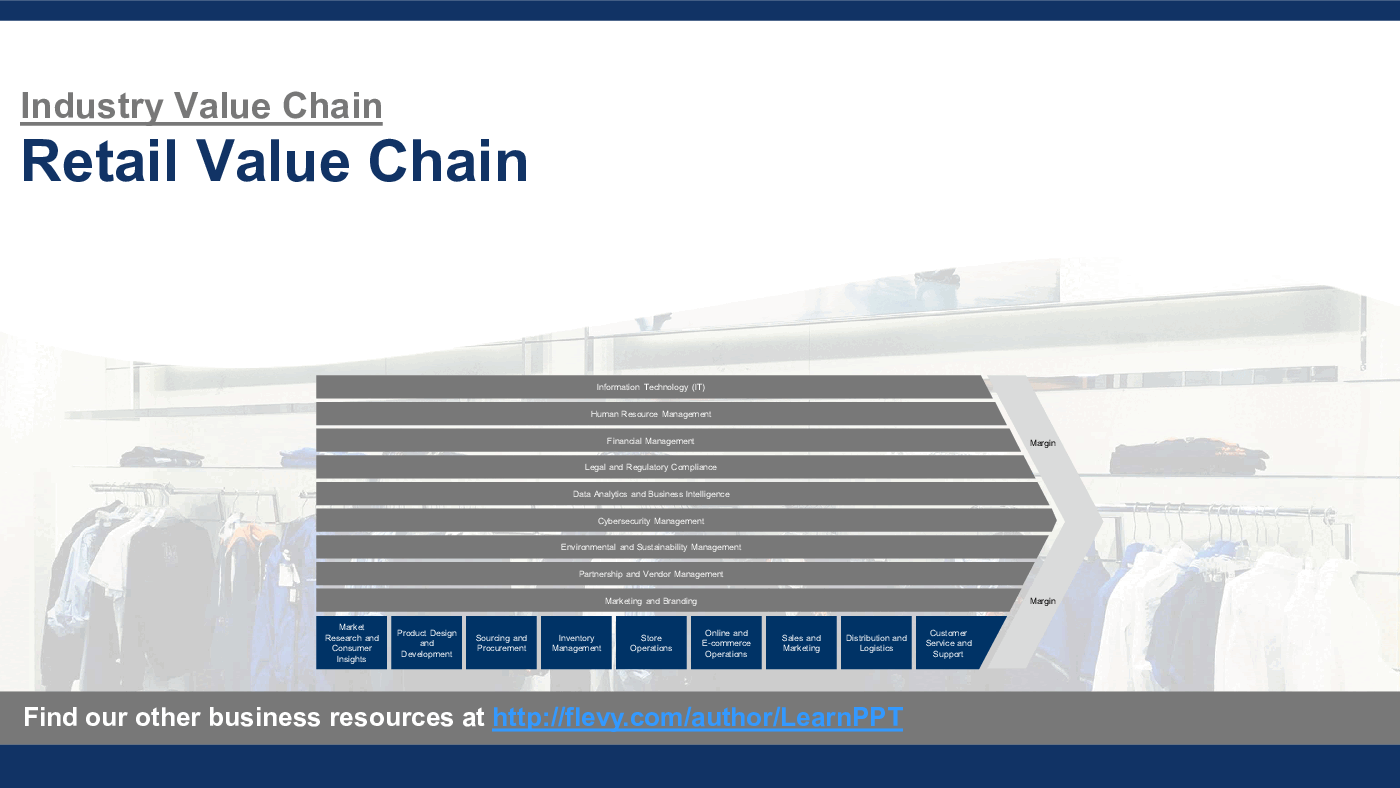
This PPT slide presents a comprehensive overview of the Retail Value Chain, delineating nine primary activities and nine support activities essential for operational success in the retail sector. Each activity is highlighted as critical, emphasizing that excellence in these areas can significantly impact an organization's performance in a competitive environment.

The primary activities include Market Research and Consumer Insights, Product Design and Development, Sourcing and Procurement, Inventory Management, Store Operations, Online and E-commerce Operations, Sales and Marketing, Distribution and Logistics, and Customer Service and Support. These activities are fundamental in creating a seamless shopping experience, integrating various functions from product development to customer engagement.
The support activities encompass Information Technology, Human Resource Management, Financial Management, Legal and Regulatory Compliance, Data Analytics and Business Intelligence, Cybersecurity Management, Environmental and Sustainability Management, Partnership and Vendor Management, and Marketing and Branding. These functions provide the necessary backbone to support the primary activities, ensuring that the organization operates efficiently and effectively.
Key takeaways from the slide include the importance of integrating online and offline operations to optimize sales channels and expand market reach. It highlights that effective inventory management and logistics are vital for ensuring product availability, which directly enhances customer satisfaction. Additionally, the slide underscores the necessity of strong vendor partnerships and efficient procurement processes to maintain product quality and control costs. Lastly, leveraging customer insights through data analytics is crucial for tailoring offerings and adapting marketing strategies to meet evolving consumer preferences. This holistic approach positions retailers to drive growth and maintain competitiveness.
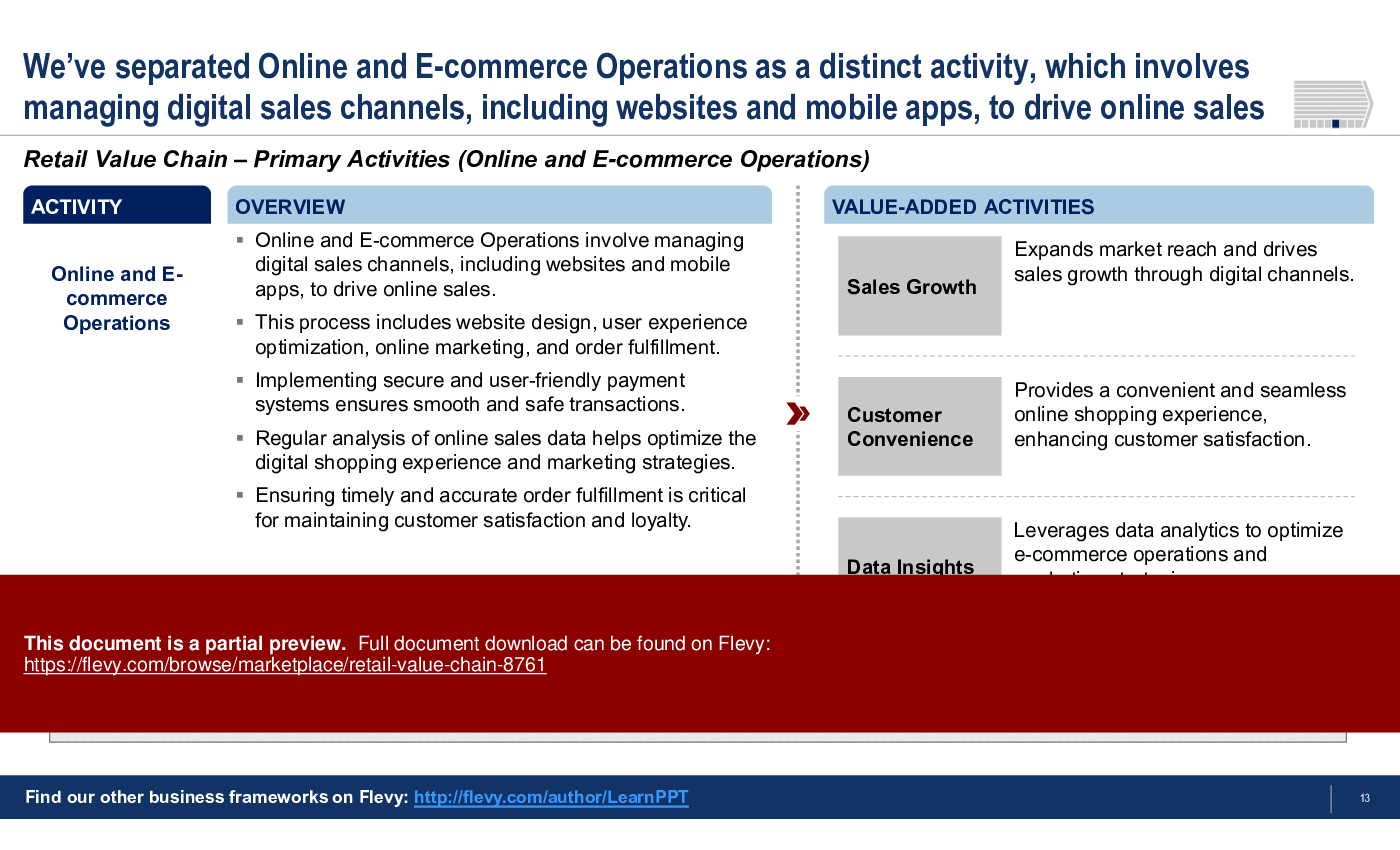
This PPT slide outlines the distinct role of Online and E-commerce Operations within the retail value chain, emphasizing their importance in managing digital sales channels such as websites and mobile applications. It highlights several key components of this operational area, including website design, user experience optimization, online marketing, and order fulfillment. Each of these elements plays a crucial role in driving online sales and enhancing the overall shopping experience.
The slide stresses the necessity of implementing secure and user-friendly payment systems to facilitate smooth transactions. This aspect is critical, as it directly impacts customer trust and satisfaction. Regular analysis of online sales data is also mentioned as a vital practice, enabling businesses to refine their digital shopping experience and adjust marketing strategies based on consumer behavior.
Three value-added activities are identified: Sales Growth, Customer Convenience, and Data Insights. Sales Growth focuses on expanding market reach through digital channels, which is essential for increasing revenue. Customer Convenience highlights the need for a seamless online shopping experience, which is increasingly important in retaining customers and fostering loyalty. Lastly, Data Insights emphasizes the role of data analytics in optimizing e-commerce operations, allowing businesses to make informed decisions that enhance their marketing efforts.

Overall, the slide presents a comprehensive view of how Online and E-commerce Operations can be leveraged to improve sales performance and customer engagement. It serves as a strategic reminder of the interconnectedness of these activities and their collective impact on business success in the digital marketplace.
This PPT slide outlines the critical role of store operations within the retail value chain, emphasizing the management of daily activities to ensure efficiency and effectiveness. It begins with a clear definition of store operations, which encompasses various tasks such as staffing, merchandising, customer service, and maintaining the overall aesthetics of the store environment. This holistic approach is essential for creating a seamless shopping experience.
The text highlights that effective store operations hinge on well-trained staff capable of delivering excellent customer service and managing sales transactions efficiently. This suggests that investment in employee training is not just beneficial, but necessary for operational success. Compliance with safety, health, and legal regulations is also underscored, indicating that adherence to these standards is non-negotiable for maintaining operational integrity.
The slide further identifies continuous improvement initiatives as a key focus area. These initiatives aim to enhance both the shopping experience and operational efficiency, suggesting a proactive stance towards adapting to changing consumer expectations and market conditions.
In the value-added activities section, 3 main areas are discussed: customer experience, operational efficiency, and revenue generation. Each of these areas is linked to specific outcomes. For instance, enhancing customer experience is tied to increased satisfaction and repeat business, while operational efficiency is associated with cost reduction and improved service quality. Revenue generation is framed as a direct result of effective merchandising and customer service strategies.
Overall, the slide presents a comprehensive view of how meticulous management of store operations can drive sales, elevate customer satisfaction, and foster long-term loyalty. This insight is crucial for any retail executive looking to optimize their operational framework.
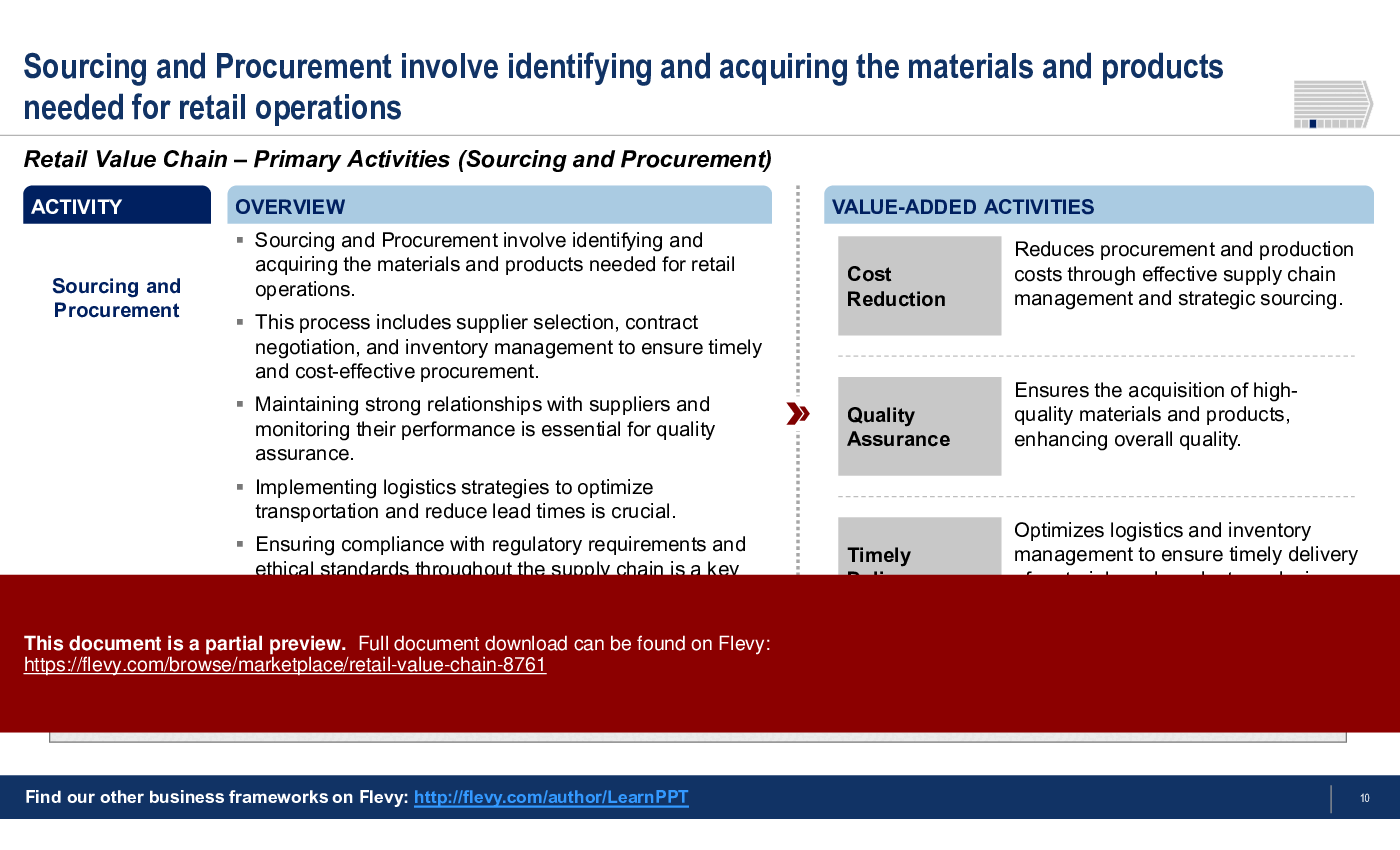
Sourcing and Procurement are critical functions within the retail value chain, focusing on the identification and acquisition of necessary materials and products. This PPT slide outlines the primary activities involved in these processes, emphasizing the importance of supplier selection, contract negotiation, and inventory management. Effective procurement ensures that materials are obtained in a timely manner while maintaining cost efficiency.
Building strong relationships with suppliers is highlighted as essential for quality assurance. Monitoring supplier performance is necessary to uphold standards and ensure that the products meet the required specifications. The slide also points out the significance of implementing logistics strategies to optimize transportation and reduce lead times, which can directly impact operational efficiency.
Compliance with regulatory requirements and ethical standards throughout the supply chain is another key consideration. This aspect not only mitigates risks, but also enhances the reputation of the retail operation. The value-added activities section details specific benefits derived from effective sourcing and procurement practices. Cost reduction is achieved through strategic sourcing and efficient supply chain management, while quality assurance focuses on acquiring high-quality materials that enhance overall product quality.
Timely delivery is emphasized as a crucial factor, with optimized logistics and inventory management playing a pivotal role in preventing stockouts and minimizing excess inventory. The overall message is clear: effective supplier relationships and strategic sourcing are vital for reducing costs and ensuring high-quality products, which ultimately supports customer satisfaction and operational success.
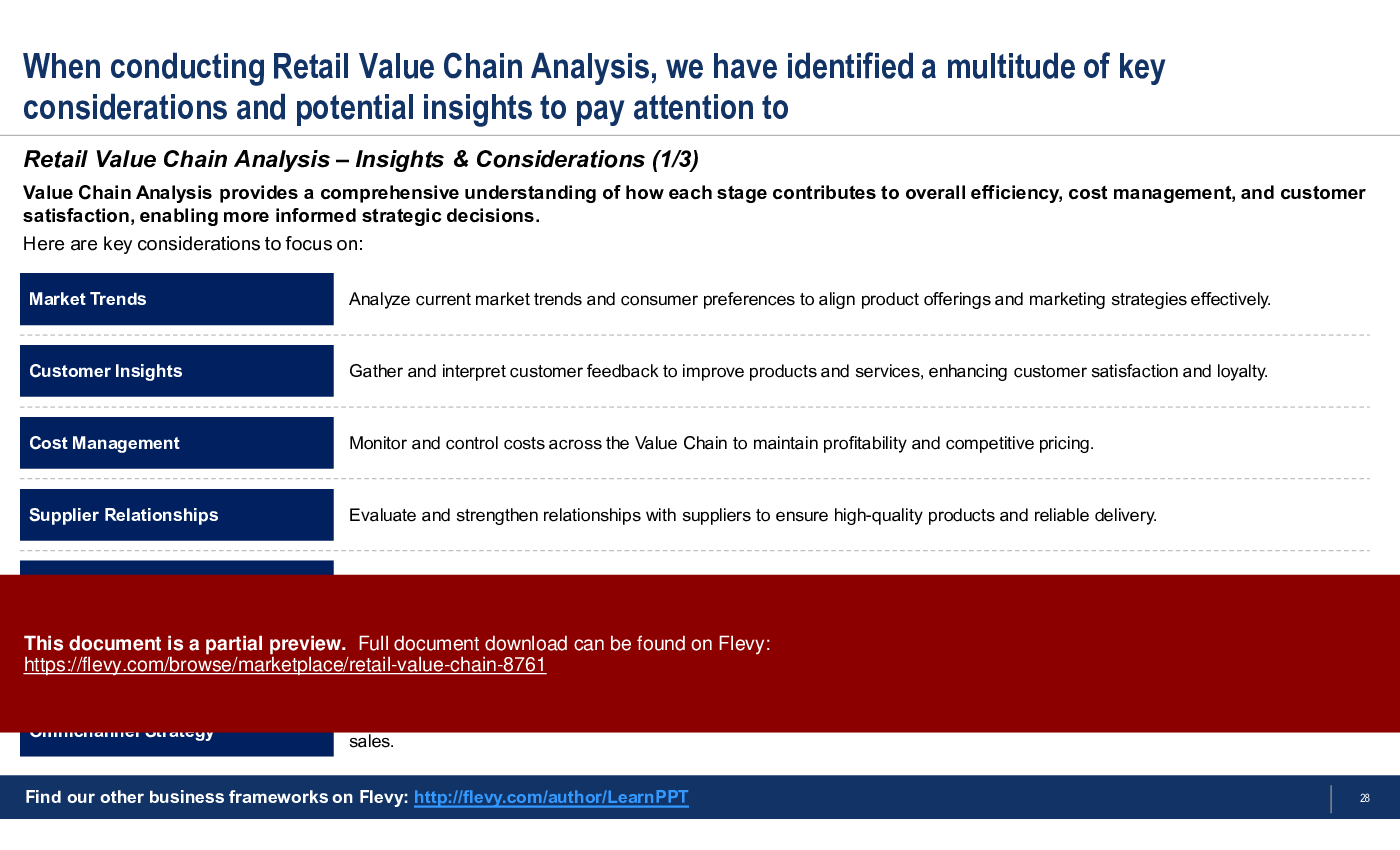
This PPT slide presents a structured overview of key considerations for conducting a Retail Value Chain Analysis. It emphasizes the importance of understanding how various components contribute to overall operational efficiency, cost management, and customer satisfaction. Each section highlights a specific area of focus, providing actionable insights for decision-makers.
Market Trends is the first area of focus. It stresses the need to analyze current market dynamics and consumer preferences, which is crucial for aligning product offerings and marketing strategies. This understanding can lead to more effective engagement with target audiences.
Customer Insights follow, underscoring the necessity of gathering and interpreting customer feedback. This process is vital for improving products and services, ultimately enhancing customer satisfaction and loyalty. It suggests that a deep understanding of customer needs can drive innovation and service excellence.
Cost Management is another critical consideration. The slide advises monitoring and controlling costs throughout the value chain to maintain profitability and ensure competitive pricing. This aspect is essential for sustaining financial health in a challenging retail environment.
Supplier Relationships are highlighted next. Evaluating and strengthening these relationships is important for ensuring high-quality products and reliable delivery. Strong supplier partnerships can mitigate risks and enhance product offerings.
Inventory Optimization is also addressed. Implementing efficient inventory management practices can help reduce holding costs while preventing stockouts and overstocks. This balance is key to maintaining operational efficiency.
Lastly, Technology Integration is mentioned. Leveraging advanced technologies like AI, IoT, and data analytics can enhance operational efficiency and support informed decision-making. The integration of these technologies is increasingly becoming a necessity in the retail sector to stay competitive.
This PPT slide focuses on the critical role of Inventory Management within the Retail Value Chain. It outlines how effective inventory oversight is essential for maintaining adequate stock levels while minimizing associated costs. The overview section emphasizes key components of inventory management, including demand forecasting, inventory tracking, and replenishment planning. These elements are vital for aligning supply with customer demand, thereby preventing issues such as overstocking or stockouts.
The slide highlights the importance of implementing inventory management systems that allow for real-time tracking of stock levels. This capability is crucial for identifying discrepancies and ensuring accuracy through regular audits and assessments. Such practices not only streamline operations, but also support sales strategies, ultimately enhancing product availability.
The right-hand side of the slide details value-added activities stemming from effective inventory management. It identifies 3 primary benefits: efficiency, customer satisfaction, and cost management. Enhancing operational efficiency is achieved by optimizing inventory levels and reducing holding costs. This directly contributes to ensuring product availability, which is linked to improved customer satisfaction and loyalty. Furthermore, effective inventory management minimizes costs related to overstocking, stockouts, and inventory obsolescence.
Overall, this slide serves as a comprehensive overview of how inventory management functions as a backbone of retail operations. It underscores the need for robust systems and practices to drive efficiency and customer satisfaction, making it a valuable consideration for executives looking to enhance their inventory strategies.
This PPT slide presents an overview of how various digital transformation technologies can enhance different aspects of the retail value chain. It emphasizes the integration of these technologies to achieve operational efficiency and improve customer experience.
The first section focuses on "Enhanced Customer Experience," highlighting the role of AI-powered personalization. By utilizing AI algorithms, retailers can analyze customer data to offer tailored product recommendations. This not only boosts customer satisfaction, but also drives sales, indicating a direct correlation between technology use and customer engagement.
Next, "Optimized Inventory Management" is addressed through the use of IoT sensors. These sensors enable real-time tracking and management of inventory, which helps mitigate issues like stockouts and overstock situations. This technology is crucial for maintaining optimal inventory levels, thereby reducing costs and improving service levels.
The slide also discusses "Streamlined Supply Chain and Logistics," where blockchain technology is introduced. Implementing blockchain can enhance transparency and traceability within the supply chain, fostering trust and reducing instances of fraud. This is increasingly important in today's market where consumers demand accountability from brands.
Lastly, the section on "Predictive Analytics" emphasizes its utility in accurately forecasting demand. By leveraging predictive analytics, businesses can optimize inventory levels and minimize holding costs, which is essential for maintaining profitability.
Overall, the slide effectively outlines how these technologies can be strategically applied across the retail value chain, providing actionable insights for decision-makers looking to enhance their operations and customer interactions.
MARCUS OVERVIEW
This synopsis was written by Marcus [?] based on the analysis of the full 36-slide presentation.
Executive Summary
The Retail Value Chain presentation provides a comprehensive framework for analyzing the retail industry, detailing both primary and support activities essential for delivering products and services to consumers. Developed by former consultants from top-tier firms, this consulting-grade (McKinsey, Bain, or BCG-quality; not affiliated) resource equips executives and consultants with actionable insights to enhance operational efficiency and customer satisfaction. This deck enables users to identify key activities that contribute to competitive advantage, optimize processes, and leverage data analytics for informed decision-making.
Who This Is For and When to Use
• Retail executives seeking to improve operational efficiency and customer engagement
• Consultants specializing in retail strategy and operations
• Supply chain managers focused on logistics and inventory optimization
• Marketing teams aiming to enhance brand visibility and customer loyalty
Best-fit moments to use this deck:
• During strategic planning sessions to align operational activities with market demands
• When conducting workshops on improving customer experience and satisfaction
• For training sessions on retail value chain optimization and analytics
Learning Objectives
• Define the components of the Retail Value Chain and their interdependencies
• Analyze market trends and consumer insights to inform product development
• Optimize sourcing, procurement, and inventory management processes
• Implement effective sales and marketing strategies to enhance brand loyalty
• Leverage data analytics for improved decision-making and operational efficiency
• Assess the impact of digital transformation on retail operations
Table of Contents
• Executive Summary (page 1)
• Retail Value Chain (page 2)
• Primary Activities (page 3)
• Support Activities (page 4)
• Retail Value Chain Analysis (page 5)
Primary Topics Covered
• Market Research and Consumer Insights - Gathering and analyzing data to understand market trends and consumer preferences, driving targeted product offerings.
• Product Design and Development - Creating and refining products to meet market demands, ensuring compliance with quality standards.
• Sourcing and Procurement - Identifying and acquiring materials needed for retail operations, optimizing supplier relationships.
• Inventory Management - Overseeing stock levels to balance supply and demand, minimizing costs associated with overstocking.
• Store Operations - Managing day-to-day activities to ensure efficient functioning and enhance customer experience.
• Online and E-commerce Operations - Driving sales through digital channels, ensuring seamless online shopping experiences.
• Sales and Marketing - Promoting products and services to attract and retain customers, maximizing revenue growth.
• Distribution and Logistics - Managing the movement of goods to ensure timely delivery and customer satisfaction.
• Customer Service and Support - Providing assistance and post-sale support to enhance customer loyalty.
Deliverables, Templates, and Tools
• Market research templates for gathering consumer insights
• Product development frameworks for aligning offerings with customer needs
• Procurement checklists for optimizing supplier management
• Inventory management systems for real-time tracking
• Sales and marketing campaign templates for effective outreach
• Customer service protocols for enhancing support quality
Slide Highlights
• Overview of the Retail Value Chain illustrating primary and support activities
• Detailed breakdown of Market Research and Consumer Insights with value-added activities
• Framework for Product Design and Development emphasizing innovation and quality assurance
• Insights into Inventory Management practices for operational efficiency
• Strategies for effective Store Operations and enhancing customer experience
Potential Workshop Agenda
Retail Value Chain Overview Session (60 minutes)
• Introduce the Retail Value Chain framework and its significance
• Discuss primary and support activities in detail
• Identify key areas for improvement in current operations
Market Insights and Consumer Preferences Workshop (90 minutes)
• Analyze market trends and consumer feedback
• Develop actionable strategies for product offerings
• Collaborate on integrating insights into business strategies
Customization Guidance
• Tailor market research templates to reflect specific consumer demographics and preferences
• Adjust product development frameworks to align with organizational goals and brand standards
• Modify procurement processes to include preferred supplier criteria and compliance measures
• Adapt inventory management systems to fit operational workflows and technology capabilities
Secondary Topics Covered
• Digital transformation technologies impacting retail operations
• Sustainability practices in sourcing and procurement
• The role of data analytics in enhancing operational decision-making
• Legal and regulatory compliance considerations in retail
FAQ What is the Retail Value Chain?
The Retail Value Chain is a framework that outlines the series of steps organizations take to deliver products and services, highlighting how each step adds value and contributes to competitive advantage.
How can this presentation help improve customer satisfaction?
By analyzing each component of the Retail Value Chain, organizations can identify inefficiencies and optimize processes, leading to enhanced customer experiences and loyalty.
What are the primary activities in the Retail Value Chain?
Primary activities include Market Research and Consumer Insights, Product Design and Development, Sourcing and Procurement, Inventory Management, Store Operations, Online and E-commerce Operations, Sales and Marketing, Distribution and Logistics, and Customer Service and Support.
How does data analytics play a role in the Retail Value Chain?
Data analytics provides insights into consumer behavior, market trends, and operational performance, enabling informed decision-making and strategic planning.
What are the key benefits of effective inventory management?
Effective inventory management ensures product availability, reduces holding costs, and enhances customer satisfaction by minimizing stockouts and overstock situations.
How can organizations leverage technology in the Retail Value Chain?
Organizations can integrate advanced technologies such as AI, IoT, and data analytics to enhance operational efficiency, improve customer experiences, and drive innovation.
What considerations should be made for legal and regulatory compliance?
Organizations must ensure adherence to consumer protection laws, data privacy regulations, and industry standards to mitigate legal risks and maintain operational integrity.
How can this framework be customized for specific retail operations?
Customization can involve adapting templates, frameworks, and processes to align with organizational goals, market conditions, and customer preferences.
Glossary
• Retail Value Chain - A framework outlining the steps organizations take to deliver products and services to consumers.
• Market Research - The process of gathering and analyzing data on consumer preferences and market trends.
• Product Development - The creation and refinement of products to meet market demands.
• Sourcing and Procurement - The acquisition of materials and products needed for operations.
• Inventory Management - The oversight of stock levels to balance supply and demand.
• Store Operations - The management of day-to-day activities within retail locations.
• E-commerce Operations - The management of online sales channels and digital marketing strategies.
• Sales and Marketing - The promotion of products and services to attract and retain customers.
• Distribution and Logistics - The management of goods movement from suppliers to consumers.
• Customer Service - The support provided to customers before, during, and after a purchase.
• Data Analytics - The analysis of data to inform strategic decision-making and optimize operations.
• Legal Compliance - Adherence to laws and regulations governing retail operations.
• Sustainability - Practices aimed at minimizing environmental impact and promoting ethical sourcing.
• Digital Transformation - The integration of digital technologies to enhance business processes and customer experiences.
Source: Best Practices in Value Chain Analysis, Retail Strategy PowerPoint Slides: Retail Value Chain PowerPoint (PPTX) Presentation Slide Deck, LearnPPT Consulting
This framework is created by former McKinsey, BCG, Deloitte, EY, and Capgemini consultants and provides actionable insights for Retail Industry Value Chain Analysis.
We are a team of management consultants trained by top tier global consulting firms (including McKinsey, BCG, Deloitte, EY, Capgemini) with a collective experience of several decades. We specialize in business frameworks based on real-life consulting engagements.
We have served 100s of clients that range from Fortune 500 companies to tech startups to
... [read more] $1B+ private companies.
Utilize our consulting frameworks to apply structured thinking & analysis to address your business challenges, uncover strategic insights, and implement workable solutions. Our PowerPoint presentations follow traditional consulting slide design formats, starting with a clear slide headline. Easily customize and repurpose our slides for your own business presentations.
Beyond business frameworks & methodologies, we also offer PowerPoint templates and other business templates. Our templates are professionally designed and have been used in thousands of deliverables & work products across hundreds of clients.
The average daily rate of a McKinsey consultant is $6,625 (not including expenses). The average price of a Flevy document is $65.
Trusted by over 10,000+ Client Organizations
Since 2012, we have provided best practices to over 10,000 businesses and organizations of all sizes, from startups and small businesses to the Fortune 100, in over 130 countries.
Read Customer Testimonials
"I have found Flevy to be an amazing resource and library of useful presentations for lean sigma, change management and so many other topics. This has reduced the time I need to spend on preparing for my performance consultation. The library is easily accessible and updates are regularly provided. A wealth of great information."
– Cynthia Howard RN, PhD, Executive Coach at Ei Leadership
"I have used FlevyPro for several business applications. It is a great complement to working with expensive consultants. The quality and effectiveness of the tools are of the highest standards."
– Moritz Bernhoerster, Global Sourcing Director at Fortune 500
"FlevyPro has been a brilliant resource for me, as an independent growth consultant, to access a vast knowledge bank of presentations to support my work with clients. In terms of RoI, the value I received from the very first presentation I downloaded paid for my subscription many times over! The
quality of the decks available allows me to punch way above my weight – it's like having the resources of a Big 4 consultancy at your fingertips at a microscopic fraction of the overhead.
"
– Roderick Cameron, Founding Partner at SGFE Ltd
"The wide selection of frameworks is very useful to me as an independent consultant. In fact, it rivals what I had at my disposal at Big 4 Consulting firms in terms of efficacy and organization."
– Julia T., Consulting Firm Owner (Former Manager at Deloitte and Capgemini)
"As a consultant requiring up to date and professional material that will be of value and use to my clients, I find Flevy a very reliable resource.
The variety and quality of material available through Flevy offers a very useful and commanding source for information. Using Flevy saves me time, enhances my expertise and ends up being a good decision."
– Dennis Gershowitz, Principal at DG Associates
"As a niche strategic consulting firm, Flevy and FlevyPro frameworks and documents are an on-going reference to help us structure our findings and recommendations to our clients as well as improve their clarity, strength, and visual power. For us, it is an invaluable resource to increase our impact and value."
– David Coloma, Consulting Area Manager at Cynertia Consulting
"My FlevyPro subscription provides me with the most popular frameworks and decks in demand in today’s market. They not only augment my existing consulting and coaching offerings and delivery, but also keep me abreast of the latest trends, inspire new products and service offerings for my practice, and educate me
in a fraction of the time and money of other solutions. I strongly recommend FlevyPro to any consultant serious about success.
"
– Bill Branson, Founder at Strategic Business Architects
"Flevy is our 'go to' resource for management material, at an affordable cost. The Flevy library is comprehensive and the content deep, and typically provides a great foundation for us to further develop and tailor our own service offer."
Download our free compilation of 50+ Strategy & Transformation slides and templates. Frameworks include McKinsey 7-S, Balanced Scorecard, Disruptive Innovation, BCG Curve, and many more.