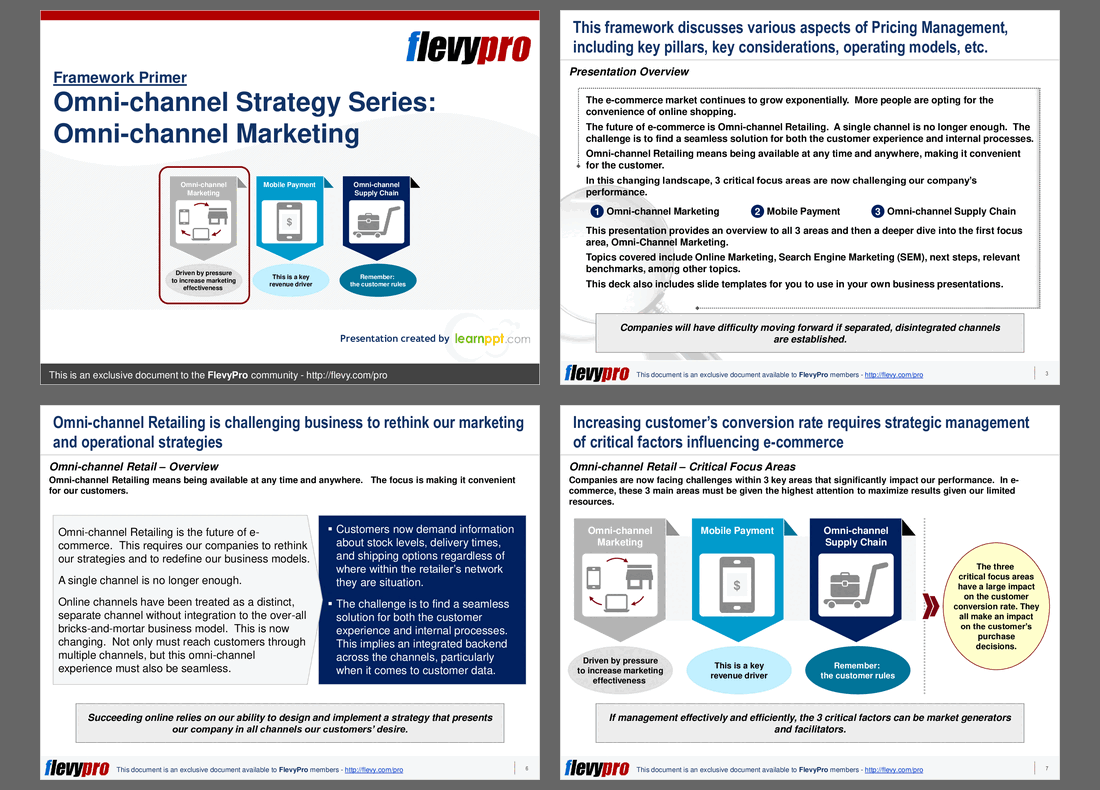
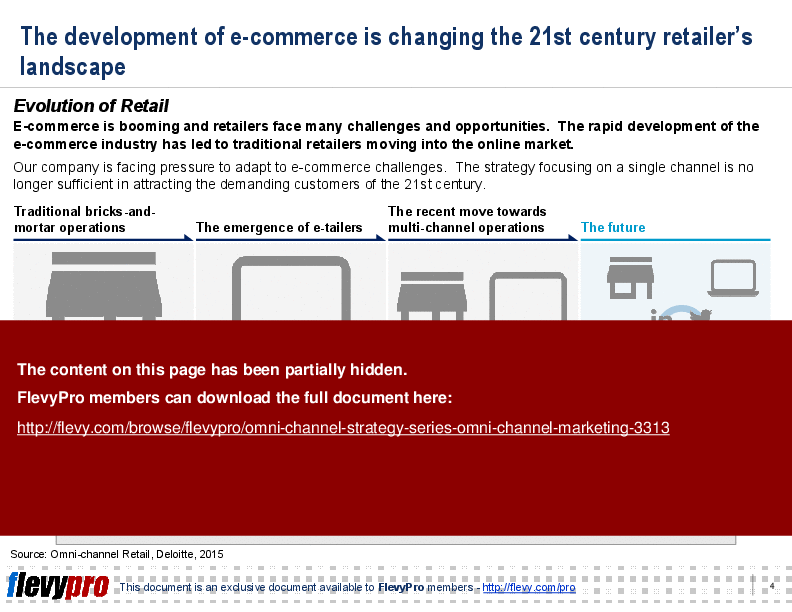

The e-commerce market continues to grow exponentially. More people are opting for the convenience of online shopping.
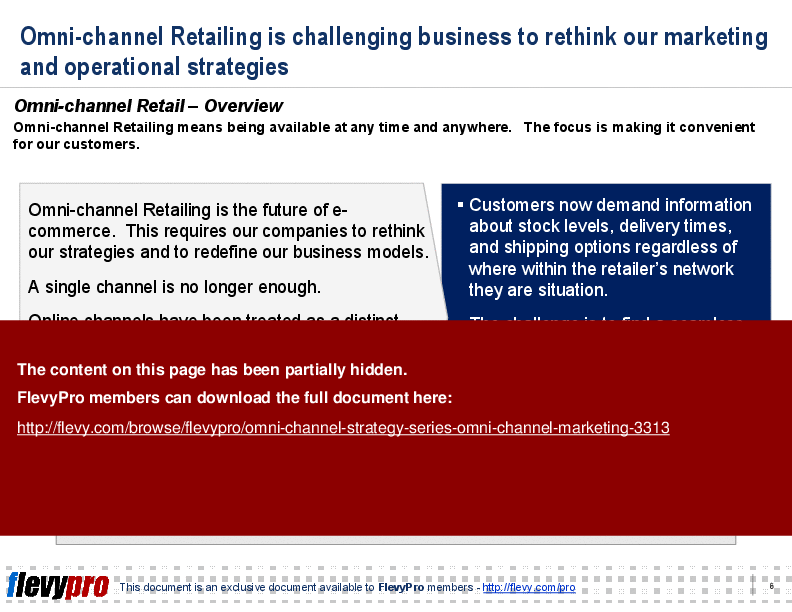
The future of e-commerce is Omni-channel Retailing. A single channel is no longer enough. The challenge is to find a seamless solution for both the customer experience and internal processes.
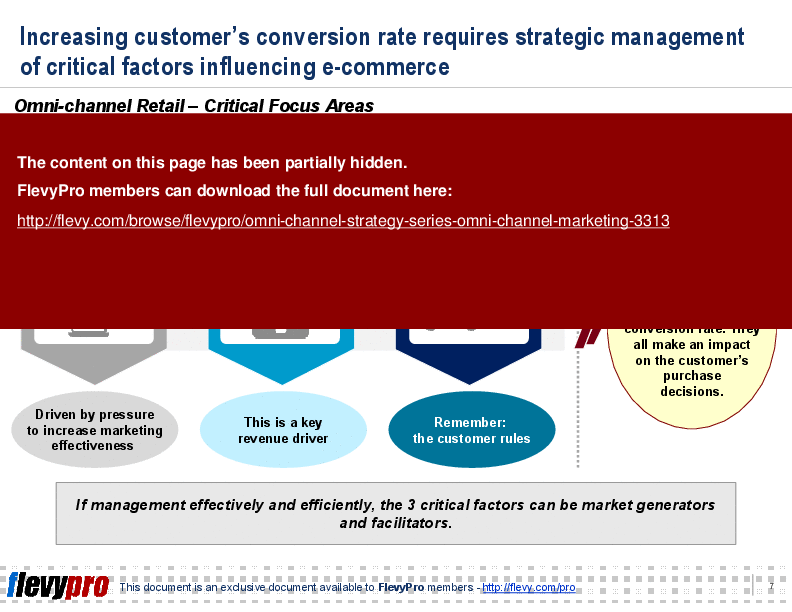
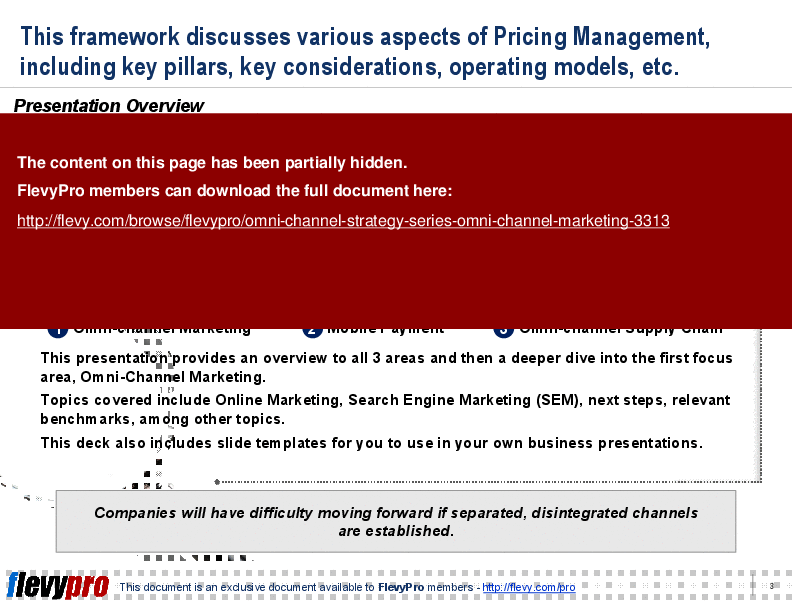
Omni-channel Retailing means being available at any time and anywhere, making it convenient for the customer. In this changing landscape, 3 critical focus areas are now challenging our company's performance:
1. Omni-channel Marketing
2. Mobile Payment
3. Omni-channel Supply Chain
This presentation provides an overview to all 3 areas and then a deeper dive into the first focus area, Omni-Channel Marketing. Topics covered include Online Marketing, Search Engine Marketing (SEM), next steps, relevant benchmarks, among other topics.
This presentation has been adapted from the broader framework, Omni-channel Retail Strategy, which covers all 3 focus areas.
This deck also includes slide templates for you to use in your own business presentations.
This PPT delves into the evolution of retail, highlighting the shift from traditional bricks-and-mortar operations to the current multi-channel and future omni-channel strategies. It emphasizes the importance of adapting to the rapid growth of e-commerce and the necessity for businesses to rethink their strategies to stay competitive in the 21st century. The presentation outlines the critical focus areas, such as mobile payment solutions and supply chain integration, which are essential for a seamless customer experience.
The deck also provides actionable insights into measuring channel effectiveness and the role of search engine marketing in driving customer conversion. It includes benchmarks and templates to help you evaluate and enhance your marketing efficiency. This comprehensive guide is designed to equip your organization with the tools needed to navigate the complexities of omni-channel retailing and to optimize your marketing efforts for maximum impact.
Got a question about this document? Email us at flevypro@flevy.com.
Executive Summary
The "Omni-channel Strategy Series: Omni-channel Marketing" presentation provides a comprehensive framework for understanding and implementing effective omni-channel marketing strategies. It highlights the critical shift from single-channel approaches to a seamless integration of multiple channels, ensuring that businesses can meet the evolving demands of customers. This presentation equips corporate executives and marketing leaders with actionable insights into omni-channel retailing, mobile payment solutions, and supply chain integration, ultimately driving customer engagement and revenue growth.
Who This Is For and When to Use
• Marketing Executives focused on enhancing customer engagement through integrated strategies
• E-commerce Managers looking to optimize online and offline customer experiences
• Business Development Teams aiming to expand market reach through multi-channel strategies
• Consultants advising clients on omni-channel retailing and marketing effectiveness
Best-fit moments to use this deck:
• During strategic planning sessions to align marketing initiatives with customer expectations
• In workshops aimed at developing omni-channel marketing strategies
• For training sessions focused on integrating mobile payment solutions into marketing efforts
Learning Objectives
• Define omni-channel marketing and its significance in today's retail landscape
• Identify the key components of an effective omni-channel strategy
• Analyze customer behavior across multiple channels to enhance marketing effectiveness
• Develop actionable plans for integrating mobile payment solutions into marketing strategies
• Measure and evaluate the success of omni-channel marketing initiatives
Table of Contents
• Overview (page 3)
• Omni-channel Retail (page 6)
• Omni-channel Marketing (page 10)
• Templates (page 16)
Primary Topics Covered
• Omni-channel Retail - The future of retail requires businesses to be available anytime and anywhere, integrating both online and offline channels for a seamless customer experience.
• Omni-channel Marketing - This approach transcends siloed marketing efforts, reaching customers through various touchpoints and channels to deliver personalized experiences.
• Mobile Payment - The integration of mobile payment solutions is crucial for influencing consumer purchasing decisions and enhancing convenience.
• Customer Behavior Analysis - Understanding customer preferences and behaviors across channels is essential for optimizing marketing strategies.
• Search Engine Marketing (SEM) - Emphasizes the importance of search engine marketing as a primary channel for driving customer engagement and sales.
• Marketing Benchmarks - Utilizing established benchmarks to evaluate marketing effectiveness and guide strategic decisions.
Deliverables, Templates, and Tools
• Omni-channel marketing strategy template for aligning marketing efforts across channels
• Customer behavior analysis framework to assess preferences and optimize engagement
• Mobile payment integration plan template to streamline payment processes
• Search engine marketing budget allocation guide for effective resource management
• Marketing benchmarks dashboard for tracking performance against industry standards
Slide Highlights
• Overview of omni-channel retailing and its impact on customer engagement
• Key statistics on the growth of search engine marketing and its importance
• Visual representation of customer behavior across various marketing channels
• Framework for developing a comprehensive mobile payment strategy
• Benchmarking metrics to assess marketing effectiveness
Potential Workshop Agenda
Omni-channel Strategy Development (90 minutes)
• Discuss the importance of omni-channel marketing
• Identify key customer touchpoints and channels
• Develop a draft omni-channel marketing strategy
Mobile Payment Integration Session (60 minutes)
• Explore current trends in mobile payment solutions
• Identify integration challenges and opportunities
• Create an action plan for implementing mobile payment strategies
Customization Guidance
• Tailor the marketing strategy template to reflect specific business goals and customer demographics
• Adjust the mobile payment integration plan to align with existing technology and systems
• Incorporate company-specific benchmarks into the marketing dashboard for relevant performance tracking
Secondary Topics Covered
• The evolution of retail and the shift towards omni-channel operations
• Challenges faced by traditional retailers in adapting to e-commerce
• The role of social media in omni-channel marketing strategies
• Customer expectations regarding service levels and product availability
Topic FAQ
Document FAQ
These are questions addressed within this presentation.
What is omni-channel marketing?
Omni-channel marketing is an integrated approach that ensures customers have a seamless experience across all channels, whether online or offline.
Why is mobile payment integration important?
Mobile payment solutions enhance customer convenience and can significantly influence purchasing decisions, making them a key component of omni-channel strategies.
How can we measure the effectiveness of our omni-channel marketing efforts?
Utilize established marketing benchmarks and performance metrics to evaluate the success of your omni-channel initiatives and make data-driven adjustments.
What are the key components of an effective omni-channel strategy?
An effective omni-channel strategy includes understanding customer behavior, integrating multiple channels, and leveraging technology for seamless interactions.
How does search engine marketing fit into omni-channel marketing?
Search engine marketing is crucial for driving traffic and engagement across channels, making it a primary focus in omni-channel strategies.
What challenges do companies face in transitioning to omni-channel retailing?
Companies often struggle with integrating systems, aligning marketing efforts, and understanding customer preferences across multiple channels.
What role does customer data play in omni-channel marketing?
Customer data is essential for personalizing marketing efforts, optimizing engagement strategies, and measuring the effectiveness of campaigns.
How can we ensure a seamless customer experience across channels?
Implement integrated systems that allow for consistent messaging and customer interactions, regardless of the channel used.
Glossary
• Omni-channel Marketing - An integrated approach to marketing that provides a seamless customer experience across multiple channels.
• Mobile Payment - A technology that allows customers to make payments using their mobile devices.
• Search Engine Marketing (SEM) - A form of online marketing that involves promoting websites by increasing their visibility in search engine results.
• Customer Behavior Analysis - The study of consumer preferences and actions to inform marketing strategies.
• Marketing Benchmarks - Standards or points of reference used to measure the effectiveness of marketing efforts.
• E-commerce - The buying and selling of goods or services using the internet.
• Conversion Rate - The percentage of visitors to a website that completes a desired action, such as making a purchase.
• Customer Touchpoints - Any interaction between a customer and a business throughout the customer journey.
• Brand Awareness - The extent to which consumers are familiar with a brand and its products or services.
• Performance Metrics - Measurements used to evaluate the success of marketing strategies and initiatives.
• Integrated Systems - Technology solutions that connect various business functions to provide a unified experience.
• Personalization - Tailoring marketing messages and experiences to individual customer preferences.
• Multi-channel Retailing - The practice of selling products through multiple channels, including physical stores, online platforms, and mobile apps.
• Customer Engagement - The interaction between a brand and its customers, aimed at building relationships and loyalty.
• Marketing Automation - Technology that automates marketing tasks and workflows to improve efficiency and effectiveness.
• ROI (Return on Investment) - A measure used to evaluate the efficiency of an investment, calculated by dividing net profit by the cost of the investment.
• Lead Generation - The process of attracting and converting prospects into potential customers.
• Customer Journey - The complete experience a customer has with a brand, from awareness to purchase and beyond.
• Brand Recognition - The ability of consumers to identify a brand by its attributes, such as logo, packaging, or advertising.
• Digital Marketing - Marketing efforts that use the internet and electronic devices to reach consumers.
• Target Audience - A specific group of consumers identified as the intended recipients of a marketing message.
Source: Best Practices in Omnichannel Marketing, Retail Strategy PowerPoint Slides: Omni-channel Strategy Series: Omni-channel Marketing PowerPoint (PPT) Presentation Slide Deck, LearnPPT Consulting
Did you need more documents?
Consider a FlevyPro subscription from $39/month. View plans here.
For $10.00 more, you can download this document plus 2 more FlevyPro documents. That's just $13 each.
This document is available as part of the following discounted bundle(s):
Save %!
Omni-channel Strategy - Full Series
This bundle contains 3 total documents. See all the documents to the right.

|
Download our FREE Strategy & Transformation Framework Templates
Download our free compilation of 50+ Strategy & Transformation slides and templates. Frameworks include McKinsey 7-S, Balanced Scorecard, Disruptive Innovation, BCG Curve, and many more. |