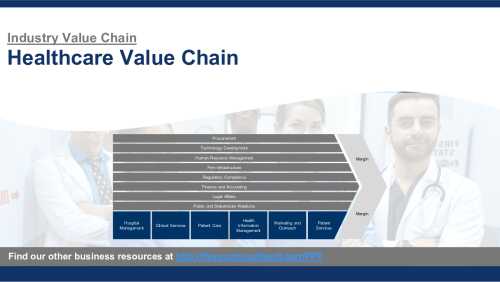
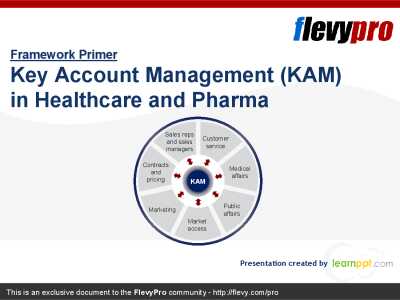
Editor's Note: Take a look at our featured best practice, Healthcare Business Capability Model (1-page PDF document). A business capability model for a Healthcare company. To be used as a core document for Enterprise Architects and EA work. Also very valuable to Business Architects and Business Architecture projects/programmes.
The Healthcare Business Capability Model provides a comprehensive framework for [read more]
* * * *
A hospital app differs from most healthcare apps. It has to serve patients booking an appointment, a nurse pulling up a chart mid-shift, and an administrator tracking bed availability, often within the same platform, while handling protected health information at every step.
This is what makes hospital app development different from a single-purpose doctor appointment app. Development teams are not building for one type of user; they are building for three or four user types at once, connecting to systems the hospital already runs, including EHR, billing, and lab systems, and doing so in a way that withstands a HIPAA audit. Incorrect planning can result in an app that staff do not use, or, worse, one that puts patient data at risk.
The sections below cover what building a hospital healthcare app actually involves, from cost and timeline to the features it needs and the workflow that delivers it.
Hospital Healthcare App Development Costs and Timelines
The cost and timeline of a hospital healthcare app depend primarily on two factors: the number of user roles the app supports and the number of hospital systems it must integrate with.
Basic app (MVP): $60,000–$120,000, 3–5 months. Patient-facing only, no EHR integration.
Mid-range app: $120,000–$250,000, 5–9 months. Adds staff-facing features, one EHR integration, admin dashboard.
Enterprise platform: $250,000–$500,000+, 9–15+ months. Patients, staff, and admin all covered, multiple system integrations, phased rollout.
Budget separately for HIPAA compliance work ($10,000–$30,000) and annual maintenance (15–25% of build cost). Integrations, not features, are the biggest lever on both price and timeline.
Key Features of a Hospital Healthcare App
A hospital app usually has to work for three different groups under one roof: patients, clinical staff, and hospital administrators. Each group needs different capabilities, and the feature set has to cover all three without the interfaces overlapping.
For Patients
Appointment booking and rescheduling, synced with the hospital’s actual scheduling system rather than a separate calendar.
Secure messaging with the care team, reducing phone calls to the front desk for routine questions.
Access to lab results, visit summaries, and discharge instructions, pulled directly from the EHR.
Bill pay and insurance verification, so patients can view and settle what they owe without a phone call.
Prescription refill requests, tied to the hospital’s e-prescribing system.
Push notifications for appointment reminders, available test results, and upcoming bills.
Way finding or a hospital map, for campuses with multiple buildings and a parking garage.
Telehealth or video visit support, for follow-ups that do not require an in-person visit.
For Doctors and Clinical Staff
Real-time access to patient charts from any device.
Secure messaging between departments, reducing delays on time-sensitive questions.
Voice-to-text or templated notes, to reduce charting time.
Alerts for critical lab results or changes in a patient’s condition.
A shared view of bed status and patient flow across the unit.
For Hospital Administrators
A dashboard for bed availability, staff schedules, and patient flow across departments.
Reporting tools for compliance, billing, and operational metrics.
Role-based access control, so each role sees only the screens relevant to it.
Staff scheduling and shift management, synced with the hospital’s existing HR system.
Security, Compliance, and Integration
The features above depend on the data beneath them being secured. Every hospital app needs encryption in transit and at rest, audit logs that track who accessed what and when, multi-factor authentication, and a signed BAA with every vendor that touches PHI. It also needs to connect to the systems the hospital already runs: the EHR through HL7 or FHIR, the billing platform, and often a lab information system. An app that cannot integrate with existing systems is an app staff eventually stops using.
Hospital Healthcare App Development Process
There is no single workflow that fits every hospital. A community clinic building a patient portal is a different project than a hospital network connecting a new app to five separate EHR instances. However, most successful builds follow a similar sequence, with compliance built in from the start rather than added before launch.
We put this question to industry experts, including IT Craft, one of the leaders in developing applications for hospitals and SaaS platforms for the healthcare industry. Here are their recommendations:
“The biggest mistake we see is treating compliance and system integration as something to sort out later,” says the team at IT Craft. “Before you write a line of code, map every system the app has to talk to, the EHR, the billing platform, the lab system, and lock down your BAAs and security architecture during discovery. Skip that step and it’s almost always the reason a hospital app project blows past its budget and its timeline.”
With that in mind, the workflow usually breaks down into seven steps:
Discovery and requirements gathering (3–6 weeks). Define who the app serves, patients, staff, administrators, or all three, and which systems it needs to connect to. This phase also maps the compliance scope: what PHI the app touches and what that means for the architecture.
Compliance and architecture planning. Confirm BAAs with every vendor involved. Decide how the app will integrate with the EHR (HL7 or FHIR), plan the security architecture, and run a risk assessment before development starts.
UX/UI design. Design separate flows for each user type. A patient booking an appointment and a nurse pulling up a chart need distinct interfaces, even within the same platform.
Development. Built in agile sprints, typically 4 to 12+ months depending on scope. This phase brings together EHR integration, role-based access, and the core features, and is usually the longest phase by far.
Testing. This step covers functional QA as well as security testing, a HIPAA-specific compliance review, and ideally a third-party penetration test before launch. It is the step most often rushed when a project runs late.
Deployment and launch. Rolled out in phases where possible, starting with one department or one hospital location rather than launching hospital-wide on day one.
Maintenance and ongoing support. Compliance requirements change, EHR systems get updated, and staff feedback surfaces issues the original build missed. Budget for this as an ongoing cost rather than a one-time expense.
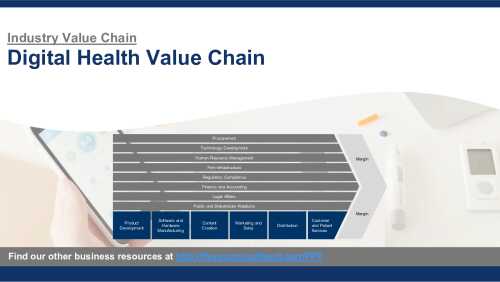
An Industry Value Chain is a visual representation of the series of steps an organization in a specific industry takes to deliver a product or service to the market. It captures the main business functions and processes that are involved in delivering the end product or service, illustrating how [read more]
Do You Want to Implement Business Best Practices?
You can download in-depth presentations on Healthcare and 100s of management topics from the FlevyPro Library. FlevyPro is trusted and utilized by 1000s of management consultants and corporate executives.
For even more best practices available on Flevy, have a look at our top 100 lists:
These best practices are of the same as those leveraged by top-tier management consulting firms, like McKinsey, BCG, Bain, and Accenture. Improve the growth and efficiency of your organization by utilizing these best practice frameworks, templates, and tools. Most were developed by seasoned executives and consultants with over 20+ years of experience.
Readers of This Article Are Interested in These Resources
This document presents analyses, frameworks, information, and templates that related to the Healthcare market and various sub-markets: Federal IT Healthcare, Healthcare Analytics, Cloud Healthcare, Healthcare Consulting. These slides can be utilized to develop a go-to-market strategy for a [read more]
Healthcare organizations today face increasing demands to improve patient care, reduce costs, and eliminate inefficiencies. Lean Healthcare applies proven Lean principles from the Toyota Production System (TPS) to the healthcare sector, enabling hospitals and clinics to streamline workflows, [read more]
Shrinking profits and market pressure to deliver greater value has necessitated the entire Healthcare landscape to transform. Some entities are more sophisticated than others, but the overall sector is building experience and new capabilities to improve economic performance and patient outcomes. [read more]
An Industry Value Chain is a visual representation of the series of steps an organization in a specific industry takes to deliver a product or service to the market. It captures the main business functions and processes that are involved in delivering the end product or service, illustrating how [read more]
 A hospital app differs from most healthcare apps. It has to serve patients booking an appointment, a nurse pulling up a chart mid-shift, and an administrator tracking bed availability, often within the same platform, while handling protected health information at every step.