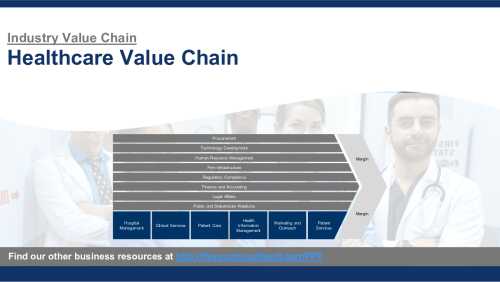
Editor's Note: Take a look at our featured best practice, Healthcare Business Capability Model (1-page PDF document). A business capability model for a Healthcare company. To be used as a core document for Enterprise Architects and EA work. Also very valuable to Business Architects and Business Architecture projects/programmes.
The Healthcare Business Capability Model provides a comprehensive framework for [read more]
* * * *
Most medtech companies don’t lose investor interest because their science is weak. They lose it because their presentations can’t translate complex clinical data into a story a non-specialist can follow. The best presentation design agencies understand that gap, and closing it requires more than good visuals. After reviewing dozens of agencies across healthcare and life sciences, this guide covers five options that actually know how to balance scientific accuracy with audience engagement, from investor roadshows to FDA advisory decks.
The Shortlist Methodology
Each option was assessed using publicly available information pulled from review platforms, directories, case studies, and official websites. Only agencies with a demonstrated track record in medtech or adjacent regulated industries made the cut.
→ See the full research breakdown
Whitepage Studio – Best for investor pitch decks and sales presentations for medtech companies
Storydoc – Best for interactive business presentations and personalized sales documents
Superside – Best for enterprise creative services at scale
Slidebean – Best for startup pitch deck creation and financial modeling
Designity – Best for enterprise design and marketing services
The Stakes Behind Choosing Presentation Design Agencies For MedTech Companies
Picking the wrong presentation partner in medtech doesn’t just result in an ugly slide deck. It can mean a failed funding round, a confused physician audience, or a regulatory submission that buries its own data under design noise.
The real challenge is that medtech content is dense by nature. Clinical trial results, device mechanism data, and safety profiles need to be accurate first, then compelling.
Agencies without domain knowledge tend to pick one or the other. They either produce scientifically accurate slides that nobody wants to sit through, or visually polished decks that oversimplify the science.
The right agency closes that gap, and the payoff is fewer revision cycles, stronger pitch success rates, and audiences who actually walk away understanding what the product does and why it matters.
5 Presentation Design Agencies For MedTech Companies Compared
Note: All data in this table is sourced from review platforms and the official websites of the listed companies.
Company Name
Years Operating
Team Size
Headquartered In
Whitepage Studio
12+ years
1-10
Boston, MA
Storydoc
Since 2019
11-50
Tel Aviv, Israel
Superside
Since 2015
750
Wilmington, DE
Slidebean
Since 2014
20
New York, NY
Designity
Since 2015
154
New York, NY
1. Whitepage Studio – Best for Investor Pitch Decks and High-Stakes Medical Presentations
Which Solutions Can Whitepage Studio Provide?
Whitepage Studio covers investor pitch decks, sales presentations, financial modeling, go-to-market strategy decks, and industry analysis. Their work spans healthcare, technology, finance, and education, with particular depth in presentations where the numbers and the narrative both need to hold up under scrutiny. Teams that work with https://www.whitepage.studio/ get direct CEO involvement on every project, not a junior designer running templates. Over 10,000 completed projects and a 75% client return rate back up what the positioning promises.
Why Pick Whitepage Studio for Presentation Design Agencies For MedTech Companies?
Medtech investor decks carry real financial stakes, and Whitpage Studio’s track record of supporting clients through $1.7B+ in acquisition outcomes signals they know how to build presentations that perform when it counts. Their refusal to rely on generic AI templates means every deck is shaped around the specific clinical or commercial story that needs to land.
What the Reviews Show:
A 9.8/10 satisfaction rating combined with a 75% return rate is the kind of number that’s hard to fake. Clients keep coming back because the work doesn’t feel recycled, and the strategic input they get goes well beyond design alone.
2. Storydoc – Best for Interactive Presentations and Stakeholder Engagement Tracking
Which Solutions Can Storydoc Provide?
Storydoc is an AI-native platform built for interactive business documents, pitch decks, proposals, and reports. Its real differentiator is an engagement analytics layer that tracks opens, scroll depth, clicks, and time spent per slide. That kind of data is genuinely useful when a medtech team needs to know whether a hospital administrator actually read the clinical evidence section or skipped straight to pricing. CRM integrations and e-signature support make it a practical fit for sales and stakeholder communication workflows.
Why Pick Storydoc for Presentation Design Agencies For MedTech Companies?
Medtech sales cycles are long and involve multiple people, so knowing exactly how each person engages with a deck changes how you follow up. Storydoc’s analytics-first approach gives commercial teams that visibility without adding extra tools to the stack (which is always a win).
What the Reviews Show:
Storydoc holds a 4.7 out of 5 on G2 and 4.3 out of 5 on Trustpilot. Users point to the interactive format and analytics as the features that actually change how they present, not just how their slides look.
3. Superside – Best for Enterprise Creative Services at Scale
Which Solutions Can Superside Provide?
Superside runs a Creative-as-a-Service model covering more than 20 service types, including presentation design, brand strategy, motion design, video production, ad creative, and copywriting. With 750 team members across 72 countries and clients like Google, Meta, and Amazon, they’re built for volume. Their AI-assisted workflows reportedly cut costs to about one-third of traditional agency rates, and the average time from contract start to first project submission sits at 7.6 days (which is fast for creative work at this scale).
Why Pick Superside for Presentation Design Agencies For MedTech Companies?
Large medtech organizations that need consistent, on-brand creative output across multiple presentation types and audiences will find Superside’s subscription model more manageable than juggling multiple vendors. Their reported 94% three-year return on investment reflects the kind of long-term value that matters to procurement teams, not just marketing leads.
What the Reviews Show:
Clients at this scale tend to stay because the delivery speed and cost structure hold up over time, not just on the first project. Superside’s enterprise client roster is a reasonable indicator that the model works.
4. Slidebean – Best for Startup Pitch Deck Creation and Financial Modeling
Which Solutions Can Slidebean Provide?
Slidebean combines automated pitch deck creation with financial modeling tools and professional design services. With more than 500,000 users and $400M raised by its client base through venture capital, the platform clearly knows how to frame an early-stage story for investors. Features include heat-map analytics that show where investors actually spend time in a deck, collaboration tools, and the option to bring in Slidebean’s design team when the automated output needs a human pass.
Why Pick Slidebean for Presentation Design Agencies For MedTech Companies?
Early-stage medtech companies raising their first institutional rounds need more than good design. They need a presentation that addresses investor questions about the regulatory pathway, clinical evidence, and market size before those questions get asked. Slidebean’s combination of financial modeling and investor analytics helps founders build that kind of proactive narrative rather than reacting in the room.
What the Reviews Show:
The $400M in funding that clients raised through the platform is the number that consistently comes up in community conversations. Users treat Slidebean as a functional fundraising tool rather than just a design platform, which says something about how it actually gets used.
5. Designity – Best for Design and Marketing for Healthcare Enterprises
Which Solutions Can Designity Provide?
Designity offers access to more than 100 design and marketing services through a Creative-as-a-Service model, including branding, presentation design, digital ads, social media content, website design, video production, and copywriting. Each client is assigned a dedicated Creative Director who manages strategy and team coordination. The platform serves 850+ teams across retail, healthcare, and finance, with clients including Pfizer and Oracle. Pricing runs on a month-to-month basis, and the platform claims savings of up to 70% compared to traditional agency rates (not cheap by startup standards, but reasonable for enterprise).
Why Pick Designity for Presentation Design Agencies For MedTech Companies?
Medtech marketing teams managing multiple presentation formats for different audiences, including clinicians, investors, and internal boards, benefit from having one coordinated creative operation rather than sourcing multiple freelancers. Designity’s Creative Director model keeps strategy consistent across projects, which cuts the rework that typically happens when design and messaging drift apart over time.
What the Reviews Show:
Clients in healthcare-adjacent industries point to the Creative Director model as the element that makes the platform feel less like a marketplace and more like an actual agency relationship. The managed process, by most accounts, matters as much as the design quality itself.
Evaluation Criteria and Research Approach
Building this shortlist started with a broad sweep rather than a narrow search. The goal was to surface agencies and platforms that show up consistently across the places medtech professionals actually look: industry directories, design-focused review platforms, professional community discussions, and case study libraries from organizations in healthcare and life sciences.
Sources of Data Identification
A longlist was built by pulling data from multiple independent sources, including design agency directories, G2 and Trustpilot review databases, LinkedIn company pages, and the agencies’ own published case studies. The emphasis was on finding sources that reflected client experience rather than self-reported marketing copy.
Candidates Filtered and Ranked
Once the longlist was assembled, each candidate was filtered against a set of practical criteria. Options without verifiable client histories, those with review patterns that looked inconsistent or sparse, and platforms with no clear evidence of medtech or healthcare work were removed. The remaining candidates were ranked by the strength and consistency of their track records rather than by company size or name recognition alone.
Claims Examined and Confirmed
Every major claim made by each agency, including team size, founding year, client outcomes, and satisfaction ratings, was cross-checked against what appeared on independent review platforms and in publicly available case study materials. Where a company’s self-description diverged noticeably from what clients described in reviews, that gap was noted and weighed in the final assessment.
The Authority Layer
Beyond client ratings, signals of genuine authority were factored into the evaluation. These included mentions in industry publications, appearances in curated agency roundups outside of the agency’s own content, original research or data the agency had published, and any awards or recognition from design or healthcare-adjacent organizations. An agency that only talks about itself is different from one that other credible sources reference.
Presentation Design Agencies For MedTech Companies Case Files
Each shortlisted agency was checked for dedicated service pages covering medtech or healthcare presentations, verified reviews from clients in regulated industries, and case studies that showed measurable outcomes rather than just visual portfolios. Agencies that could demonstrate familiarity with clinical data presentation, investor roadshow formats, or FDA-adjacent communication materials were weighted more heavily in the final selection.
Finding the Right Presentation Design Agencies For MedTech Companies for Your Needs
Choosing the right agency comes down to matching their actual strengths to your specific presentation context. A startup raising a Series A needs something different from an established device company preparing for a physician congress. Here’s what to check before committing.
Industry/Domain Experience: Look for agencies that have worked with clinical data, regulated content, or healthcare audiences before. General design experience doesn’t automatically transfer to a room full of physicians or FDA reviewers.
Features and Service Offerings: Confirm whether the agency covers the full scope you need, including financial modeling, interactive formats, or multi-audience versions of the same deck.
Pricing Structure: Some agencies run subscription or retainer models; others price per project. Match the structure to your volume and timeline, not just your budget.
Results Measurement: Ask how they track whether a presentation worked. Engagement analytics, revision cycle counts, and post-pitch feedback loops all indicate whether the agency thinks beyond delivery.
Industry Knowledge and Compliance: Any agency handling medtech content needs to understand the difference between what can be claimed and what needs qualification. Regulatory and scientific accuracy in presentation content isn’t optional; it’s the baseline.
Final Words
The right presentation design agency for a medtech company isn’t the one with the biggest portfolio. It’s the one that understands why the science matters and how to make a room full of investors or clinicians care about it too. Whitepage Studio, Storydoc, Superside, Slidebean, and Designity each bring a different kind of strength to that challenge. As medtech funding rounds get more competitive and clinical communication becomes more visual, the gap between a good deck and a great one will only widen.
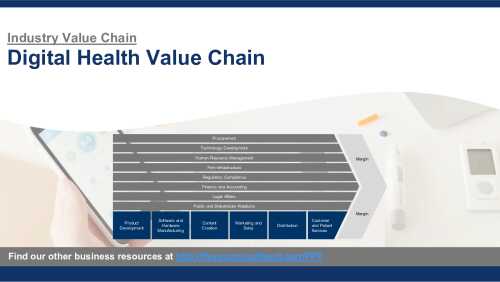
An Industry Value Chain is a visual representation of the series of steps an organization in a specific industry takes to deliver a product or service to the market. It captures the main business functions and processes that are involved in delivering the end product or service, illustrating how [read more]
Do You Want to Implement Business Best Practices?
You can download in-depth presentations on Healthcare and 100s of management topics from the FlevyPro Library. FlevyPro is trusted and utilized by 1000s of management consultants and corporate executives.
For even more best practices available on Flevy, have a look at our top 100 lists:
These best practices are of the same as those leveraged by top-tier management consulting firms, like McKinsey, BCG, Bain, and Accenture. Improve the growth and efficiency of your organization by utilizing these best practice frameworks, templates, and tools. Most were developed by seasoned executives and consultants with over 20+ years of experience.
Readers of This Article Are Interested in These Resources
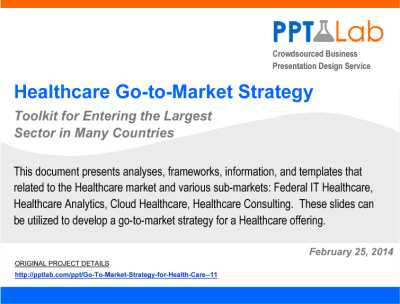
This document presents analyses, frameworks, information, and templates that related to the Healthcare market and various sub-markets: Federal IT Healthcare, Healthcare Analytics, Cloud Healthcare, Healthcare Consulting. These slides can be utilized to develop a go-to-market strategy for a [read more]
Healthcare organizations today face increasing demands to improve patient care, reduce costs, and eliminate inefficiencies. Lean Healthcare applies proven Lean principles from the Toyota Production System (TPS) to the healthcare sector, enabling hospitals and clinics to streamline workflows, [read more]
Shrinking profits and market pressure to deliver greater value has necessitated the entire Healthcare landscape to transform. Some entities are more sophisticated than others, but the overall sector is building experience and new capabilities to improve economic performance and patient outcomes. [read more]
An Industry Value Chain is a visual representation of the series of steps an organization in a specific industry takes to deliver a product or service to the market. It captures the main business functions and processes that are involved in delivering the end product or service, illustrating how [read more]
 Most medtech companies don’t lose investor interest because their science is weak. They lose it because their presentations can’t translate complex clinical data into a story a non-specialist can follow. The best presentation design agencies understand that gap, and closing it requires more than good visuals. After reviewing dozens of agencies across healthcare and life sciences, this guide covers five options that actually know how to balance scientific accuracy with audience engagement, from investor roadshows to FDA advisory decks.