Editor's Note: Take a look at our featured best practice, Digital Transformation Strategy (145-slide PowerPoint presentation). Digital Transformation is being embraced by organizations across most industries, as the role of technology shifts from being a business enabler to a business driver. This has only been accelerated by the COVID-19 global pandemic. Thus, to remain competitive and outcompete in today's fast paced, [read more]
* * * *
Here’s a number that still catches most business leaders off guard: WhatsApp is heading toward 3.5 billion monthly active users by the end of 2026, up from 3.3 billion in January, according to Infobip. Yet the vast majority of brands still treat the platform like a digital megaphone—blasting one‑way promos and hoping for a click. They’re leaving a colossal amount of revenue and loyalty on the table.
Why? Because the real magic of WhatsApp isn’t broadcast. It’s dialogue. Consider the engagement gap: messages on WhatsApp see a 98% open rate versus email’s 20–21%, and click‑through rates of 45–60% compared to 2–5% for email.
Moreover, 175 million people message a business account daily, and the opportunity is screaming at us, but most operations are stuck in one‑way mode.
This article lays out a progressive framework of five operational models—Broadcast, Transactional, Support, Sales‑Assist, and Autonomous AI Agent—each with distinct KPI benchmarks, team requirements, and tooling.
Implementation maturity (setup effort, team readiness, data cleanliness)
The framework maps each model to a distinct stage of the customer journey—awareness, transaction, service, growth, and loyalty—informed by modern customer journey mapping practice.
1. Broadcast – One‑Way Promotional Messaging
This is the default for most brands. Template‑based outbound blasts use rich media (images, video), basic segmentation, and manual or scheduled pushes. It’s the “spray and pray” of WhatsApp marketing—and it works well enough to keep teams stuck there.
The numbers are compelling. A Chatarmin study across 30+ e‑commerce brands found broadcast return on WhatsApp spend (ROWAS) clustering at 15–40×, open rates of 60–80%, click rates of 5–12%, and conversion rates of 3–7%.
Meanwhile, Infobip reports that 54% of consumers prefer marketing messages via WhatsApp over email or SMS. On the surface, broadcast looks like a win.
But it’s the starting point, not the destination. There’s zero dialogue capability, high opt‑out risk, and no personalization beyond a name or segment. Conversion ceilings are low relative to conversational models. The broadcast megaphone reaches far, but it doesn’t listen—and that’s a strategic liability.
Pros and Cons
Pros: Massive reach, strong open rates, easy to implement, proven ROWAS.
Event‑triggered WhatsApp messages—order confirmations, shipping updates, appointment reminders, abandoned‑cart recovery—are driven by CRM data and require no human agent. They’re the hygiene layer of customer communication, and they’re remarkably effective.
The same Chatarmin study shows intent‑driven automations delivering 30–100×+ ROWAS and 8–15%+ conversion for flows like abandoned checkout. These messages build operational trust, reduce “where‑is‑my‑order” queries, and deflect inbound volume. But here’s the catch: transactional messages remain one‑way. And this model alone can’t deliver that.
Transactional automation is hygiene, not engagement. It stops the bleeding but doesn’t create a competitive advantage. The moment a customer replies with a question, the model breaks—unless you’ve got the next model ready.
Pros and Cons
Pros: High ROWAS, low cost, no human agent needed, reduces support volume.
Cons: No dialogue, can’t handle exceptions, becomes a dead end for customer queries.
3. Support – Human & Hybrid Customer Service
This is where true dialogue begins. A shared multi‑agent inbox, intelligent routing, chatbots for triage, and CRM integration define the model. Human agents handle complex issues; bots deflect repetitive ones. The conversation is now two‑way, but it’s still reactive.
Efficiency gains are stark. Timelines.ai reports that businesses using the WhatsApp Business API have seen a 225% improvement in service performance alongside a 50% drop in waiting times.
Benchmarks from EzContact suggest a First Response Time under 5 minutes, CSAT above 90%, and a Resolution Rate above 85% as excellent. Real‑world proof: Raiffeisenbank integrated WhatsApp and achieved a 10× cost reduction and 19‑point NPS growth.
But staffing matters. In high‑volume e‑commerce, each agent handles conversations per day. Maintaining consistency during peak loads is a challenge, and the model is still reactive—you’re waiting for the customer to reach out. That’s fine for service, but it leaves revenue on the table.
Now we flip the script. Instead of waiting for customers to ask, brands proactively initiate personalized, human-led (or AI-augmented) selling conversations. Agents share product recommendations, recover carts, cross-sell, and offer consultative guidance based on conversation history and CRM data. WhatsApp becomes a revenue channel.
The data backs this up. Research cited by Wapikit reminds us that consumers made a purchase after chatting on WhatsApp. The trade-off is scaling. Cost per contact is higher than automated models, quality hinges on agent training, and coverage is limited to business hours. But for brands that crack this code, WhatsApp becomes a conversation-driven growth engine.
Pros and Cons
Pros: High conversion and repeat rates, personalized selling, builds long-term loyalty.
Cons: Higher cost per contact, difficult to scale, quality depends on agent skill, limited to business hours.
5. Autonomous AI Agent – AI-Driven Dialogue at Scale
This is the logical endpoint of the maturity ladder. Fully autonomous AI agents handle complex support, sales, booking, and qualification conversations in multiple languages, 24/7, with sub-second responses.
No-code AI agent builders let you spin up multiple specialized agents that integrate with CRMs like HubSpot or Salesforce, e-commerce platforms like Shopify, and automation tools like Zapier. The technology is here, and it’s racing ahead.
The momentum is undeniable. Infobip found that 91% of all conversational AI interactions on its platform took place on WhatsApp in 2025. Studies also show that 80% of support teams will lean on generative AI to boost efficiency and make customers happier by the end of this year.
Within this space, platforms like Wati offer transparent WhatsApp API pricing with pay-as-you-go plans, no cancellation fees, and AI-agent capabilities starting at accessible price points.
Cons: Requires clean data and strong integrations, can feel impersonal without careful tone design, human oversight still needed for edge cases.
Caveats & Counterpoints
Before you tear down your broadcast infrastructure, a few reality checks. Broadcast still has a place for top-of-funnel bursts; the goal is to augment it with dialogue, not kill it.
Not every business is AI-ready—data silos, lack of CRM integration, and weak content governance can derail autonomous agents. The shift is also regional.
Over-automation is a genuine risk. Fully autonomous interactions can feel cold if empathy isn’t baked in, and regulated verticals require careful hand-offs to human agents.
Prioritize WhatsApp API partners with ISO 27001 certification and GDPR alignment to ensure data residency and privacy.
Conclusion
The five models form a clear maturity ladder: Broadcast → Transactional → Support → Sales-Assist → Autonomous AI Agent.
Each step unlocks compounding CX and revenue outcomes, moving from a one-way megaphone to always-on, AI-driven dialogue. The question is not whether your business will eventually climb this ladder—it’s how fast.
Benchmark your current operation honestly. Identify the next investment, whether it’s team structure, integration depth, or AI readiness. Profitable, ongoing conversations on WhatsApp can turn a messaging app into a revenue engine, but only if you deliberately evolve beyond the broadcast megaphone.
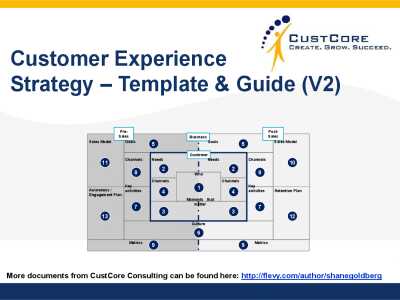
Customer Experience is fast becoming the key business battleground in many markets.
In order to be successful it is critical that all business create a Customer Experience Strategy, an all encompassing view of how they will deliver superb experiences to their customers. Having such a strategy [read more]
Do You Want to Implement Business Best Practices?
You can download in-depth presentations on Customer Experience and 100s of management topics from the FlevyPro Library. FlevyPro is trusted and utilized by 1000s of management consultants and corporate executives.
For even more best practices available on Flevy, have a look at our top 100 lists:
These best practices are of the same as those leveraged by top-tier management consulting firms, like McKinsey, BCG, Bain, and Accenture. Improve the growth and efficiency of your organization by utilizing these best practice frameworks, templates, and tools. Most were developed by seasoned executives and consultants with over 20+ years of experience.
Readers of This Article Are Interested in These Resources
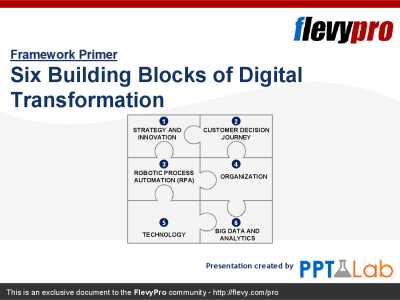
Digital Transformation touches practically every function in the entire organization. This thus requires an unprecedented amount of coordination among people, process, and technologies throughout the organization, leading to a difficult Transformation program.
The Six Building Blocks of [read more]
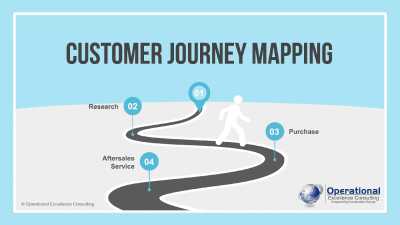
Customer Journey Mapping is the process of creating a graphical representation of the steps and stages a customer goes through to experience a product, service, an online experience, or any combination. It may focus on a particular part of the process or the end-to-end experience.
The journey [read more]
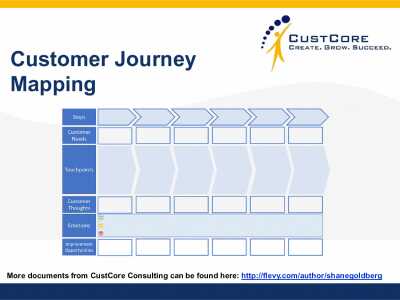
This Guide will take you through step-by-step detailed instructions to help you create a Customer Journey Map - a visual representation of the experience that customers have with your organisation, product or service.
The step-by-step guide includes a comprehensive outline and templates for use [read more]
Understanding customers, their desires and requirements, is absolutely essential for organizations to deliver excellent Customer Experiences (CX) today. Organizations are realizing the importance of great Customer Experience--for many, it's a source of Competitive Advantage. In fact, more and [read more]
 Here’s a number that still catches most business leaders off guard: WhatsApp is heading toward 3.5 billion monthly active users by the end of 2026, up from 3.3 billion in January, according to Infobip. Yet the vast majority of brands still treat the platform like a digital megaphone—blasting one‑way promos and hoping for a click. They’re leaving a colossal amount of revenue and loyalty on the table.