
Strategic Pricing Management is the process of integrating all perspectives and information necessary to consistently arrive at optimal pricing decisions.
As our company grows, our list of products and services increase in size and complexity. Greater challenge calls for a Pricing Management that can boost our company's profitability.
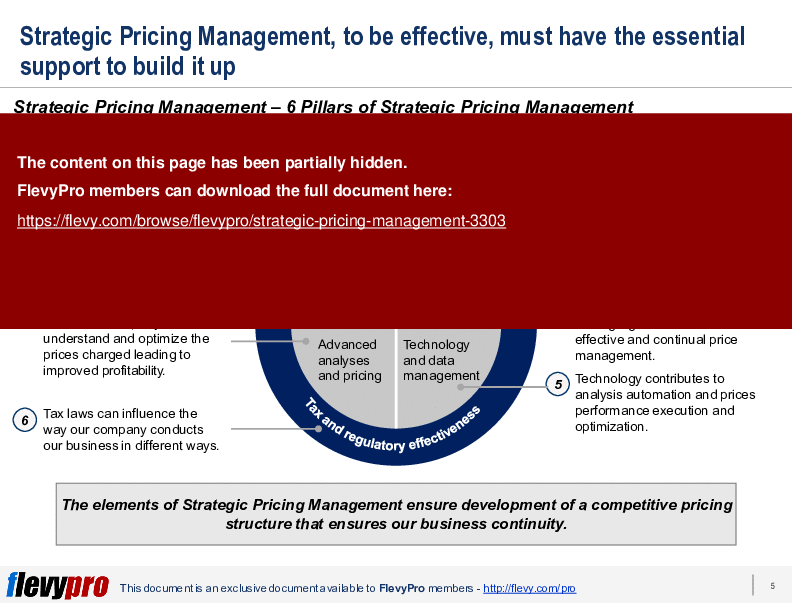
This presentation introduces the 6 key pillars of Strategic Pricing Management can provide our company the basic framework in achieving sustainable growth.
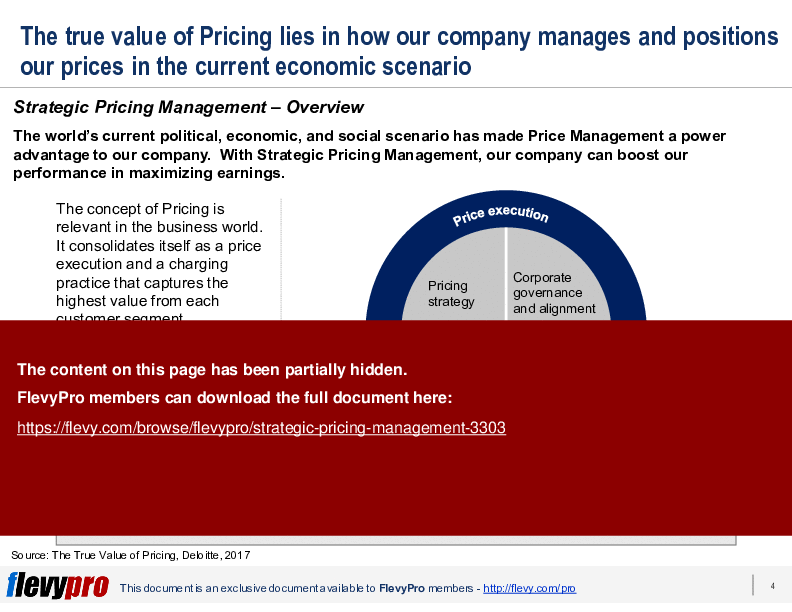
1. Pricing Strategy
2. Price Execution
3. Advanced Analyses and Pricing
4. Corporate Governance and Alignment
5. Technology and Data Management
6. Tax and Regulatory Effectiveness
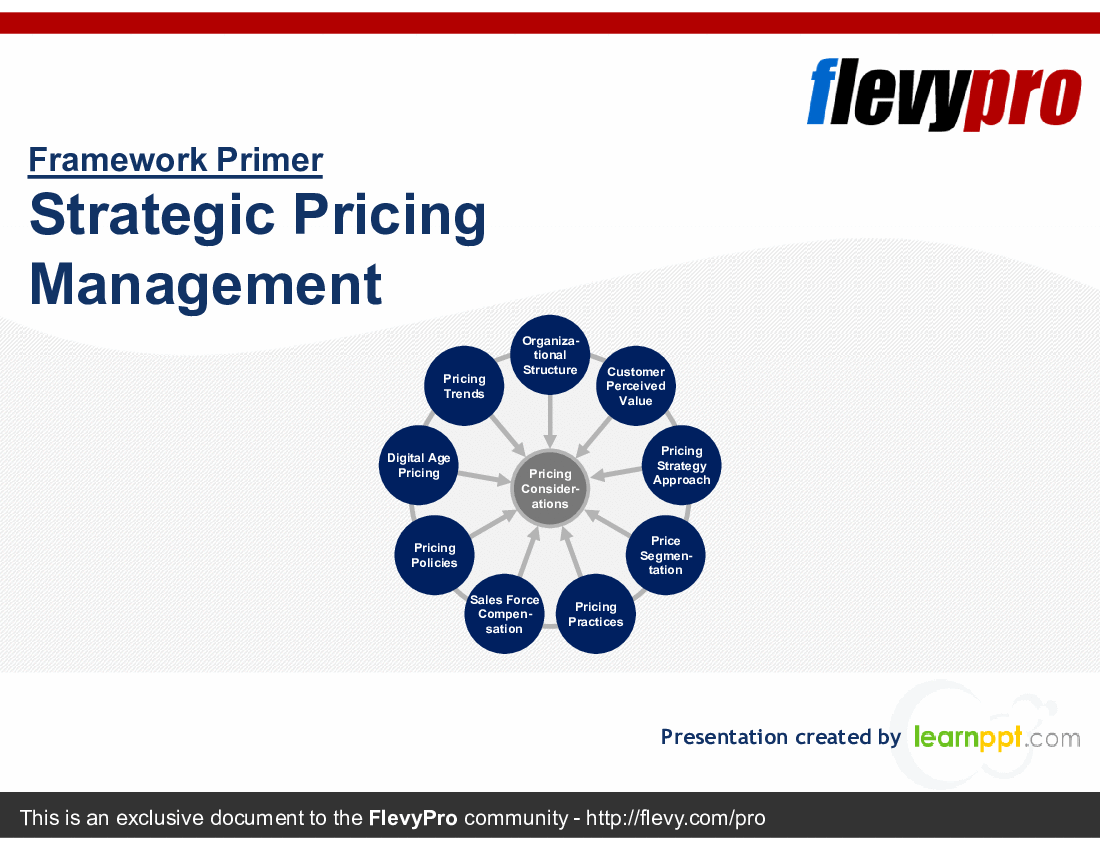
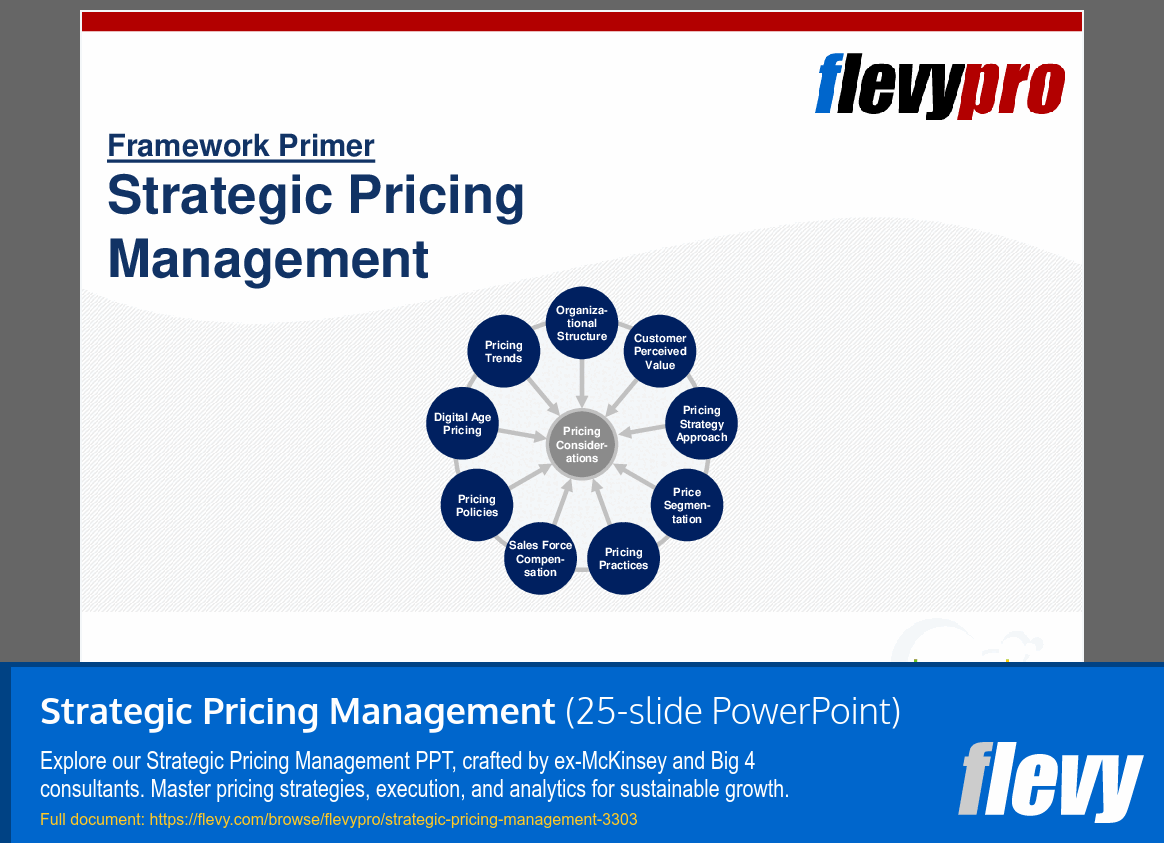
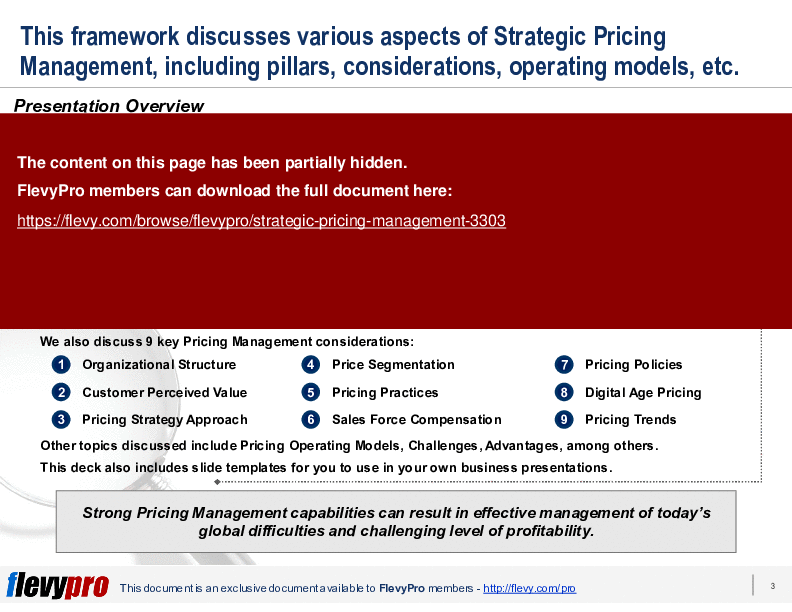
We also discuss 9 key Strategic Pricing Management considerations:
1. Organizational Structure
2. Customer Perceived Value
3. Pricing Strategy Approach
4. Price Segmentation
5. Pricing Practices
6. Sales Force Compensation
7. Pricing Policies
8. Digital Age Pricing
9. Pricing Trends
Other topics discussed include Pricing Operating Models, Challenges, Advantages, among others.
This deck also includes slide templates for you to use in your own business presentations.
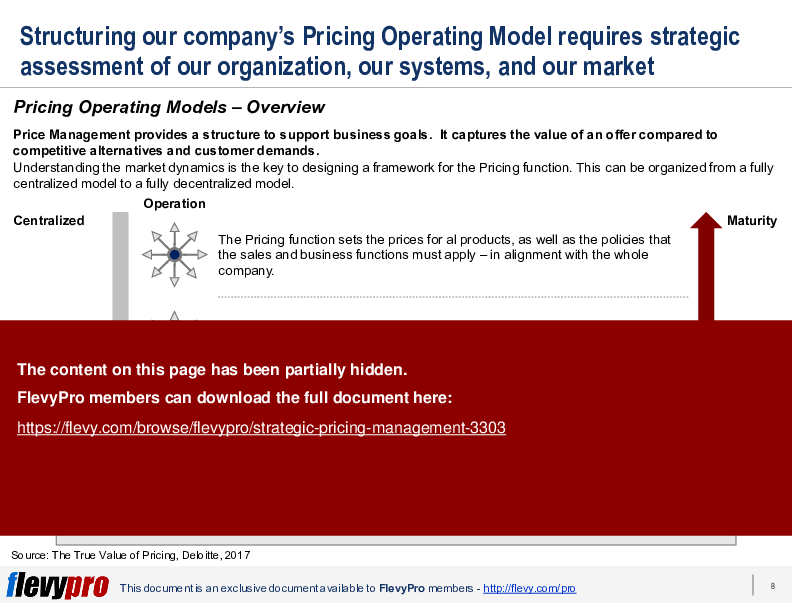
The framework detailed in this presentation delves into the intricacies of Pricing Operating Models, providing a comprehensive overview and strategic assessment of various organizational structures. It emphasizes the importance of aligning pricing functions with overall business goals, capturing the value of offers, and understanding market dynamics. The PPT outlines the implications of centralized versus decentralized models, helping you determine the best fit for your organization.
Key considerations include the impact of technology on pricing strategies, the role of big data in capturing customer value, and the necessity of continuous adaptation to pricing trends. This presentation is designed to equip your organization with the tools and insights needed to navigate the complexities of pricing in today's competitive landscape. Templates included in the deck facilitate the practical application of these concepts, ensuring that your pricing strategies are both effective and sustainable.
Got a question about this document? Email us at flevypro@flevy.com.
Executive Summary
The Strategic Pricing Management PPT is a comprehensive framework designed to empower organizations in optimizing their pricing strategies. Developed by seasoned consultants, this presentation outlines the critical components of effective pricing management, including the 6 key pillars essential for sustainable growth. Users will gain insights into pricing strategies, execution methods, and advanced analytical techniques that enhance profitability. This resource is ideal for corporate executives and consultants aiming to refine their pricing approaches in a competitive landscape.
Who This Is For and When to Use
• Pricing Managers seeking to enhance pricing strategies and execution.
• Business Executives focused on improving profitability through effective pricing.
• Consultants advising organizations on pricing frameworks and strategies.
• Sales Teams aiming to align pricing with customer perceived value.
• Financial Analysts involved in pricing analytics and strategy formulation.
Best-fit moments to use this deck:
• During strategic planning sessions to align pricing with business objectives.
• When launching new products or services to establish competitive pricing.
• In workshops focused on improving pricing practices and policies.
Learning Objectives
• Define the 6 key pillars of Strategic Pricing Management.
• Build effective pricing strategies that align with organizational goals.
• Establish a robust pricing execution framework to enhance profitability.
• Analyze customer perceived value to inform pricing decisions.
• Implement advanced analytical techniques for pricing optimization.
• Develop governance structures that support pricing management.
Table of Contents
• Overview (page 3)
• Pricing Operating Models (page 8)
• Pricing Management Considerations (page 11)
• Templates (page 18)
Primary Topics Covered
• Pricing Strategy - A comprehensive approach to developing pricing strategies that reflect the company's value proposition and market positioning.
• Price Execution - Guidelines for implementing pricing strategies effectively to ensure consistency and clarity in pricing actions.
• Advanced Analyses and Pricing - Techniques for conducting in-depth pricing analyses to optimize pricing decisions and enhance profitability.
• Corporate Governance and Alignment - Frameworks for integrating pricing governance with corporate strategy to ensure alignment across functions.
• Technology and Data Management - The role of technology in automating pricing processes and enhancing data-driven decision-making.
• Tax and Regulatory Effectiveness - Considerations for navigating tax implications and regulatory requirements in pricing strategies.
Deliverables, Templates, and Tools
• Pricing strategy development template for creating tailored pricing approaches.
• Price execution framework to ensure consistent implementation of pricing strategies.
• Advanced pricing analysis tools for evaluating pricing effectiveness and profitability.
• Governance structure templates for aligning pricing management with corporate objectives.
• Data management guidelines for leveraging technology in pricing decisions.
• Tax and regulatory compliance checklist for pricing strategies.
Slide Highlights
• Overview of the 6 key pillars of Strategic Pricing Management.
• Visual representation of pricing operating models and their implications.
• Key considerations for effective pricing management and competitive strategy.
• Templates for pricing strategy and execution frameworks.
• Insights into pricing trends and their impact on business performance.
Potential Workshop Agenda
Pricing Strategy Development Session (90 minutes)
• Discuss the 6 key pillars of Strategic Pricing Management.
• Develop tailored pricing strategies based on organizational goals.
• Create an action plan for implementing pricing strategies.
Advanced Pricing Analysis Workshop (60 minutes)
• Explore advanced analytical techniques for pricing optimization.
• Review case studies on successful pricing strategies.
• Identify key metrics for tracking pricing effectiveness.
Customization Guidance
• Tailor the pricing strategy templates to reflect specific market conditions and customer segments.
• Adjust the governance structure to align with organizational hierarchy and decision-making processes.
• Incorporate relevant data management practices to enhance pricing analytics.
Secondary Topics Covered
• Pricing trends and their implications for business strategy.
• Customer segmentation strategies for effective pricing.
• Sales force compensation models linked to pricing performance.
• Digital age pricing practices and their impact on customer engagement.
Topic FAQ
Document FAQ
These are questions addressed within this presentation.
What are the 6 key pillars of Strategic Pricing Management?
The 6 pillars include Pricing Strategy, Price Execution, Advanced Analyses and Pricing, Corporate Governance and Alignment, Technology and Data Management, and Tax and Regulatory Effectiveness.
How can this presentation help improve pricing strategies?
This presentation provides a structured framework for developing and implementing effective pricing strategies that align with business objectives and enhance profitability.
What types of templates are included in the deck?
The deck includes templates for pricing strategy development, execution frameworks, advanced pricing analysis tools, and governance structures.
Who can benefit from using this presentation?
Corporate executives, pricing managers, consultants, and sales teams can all leverage this presentation to enhance their pricing strategies and practices.
How does technology impact pricing management?
Technology plays a crucial role in automating pricing processes, enhancing data analysis capabilities, and enabling more responsive pricing strategies.
What are the main challenges in pricing management?
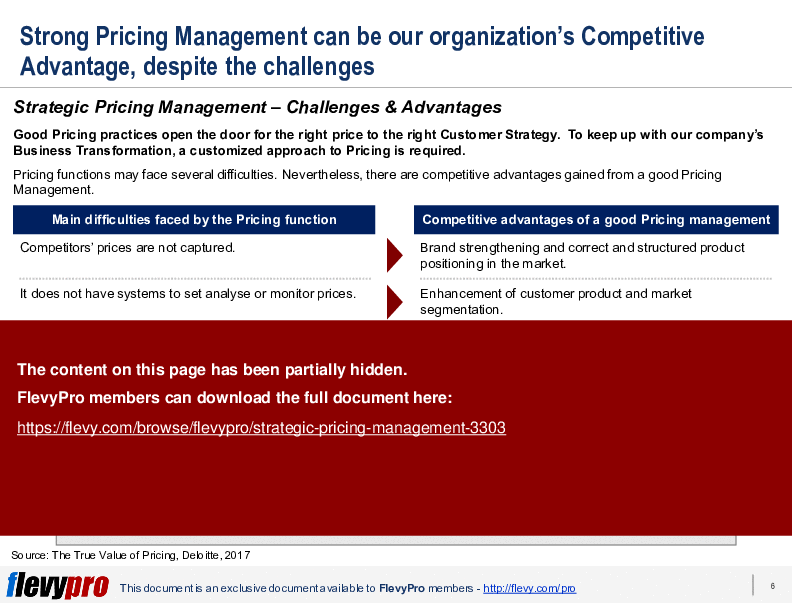
Challenges include capturing competitor pricing, lack of standardized processes, and difficulties in customer segmentation.
How can I customize the templates provided in the deck?
Templates can be tailored by incorporating specific market data, organizational structures, and strategic goals relevant to your business.
What is the importance of customer perceived value in pricing?
Understanding customer perceived value is essential for setting prices that reflect the benefits customers expect, thereby enhancing willingness to pay.
How often should pricing strategies be reviewed?
Pricing strategies should be reviewed regularly, especially in response to market changes, competitive dynamics, and shifts in customer behavior.
What role does governance play in pricing management?
Effective governance ensures that pricing decisions are aligned with corporate strategy and that there is accountability in pricing execution.
Glossary
• Pricing Strategy - A plan for setting prices based on market conditions and customer perceptions.
• Price Execution - The implementation of pricing strategies in the market.
• Advanced Analyses - Techniques for evaluating pricing effectiveness and profitability.
• Corporate Governance - The framework for decision-making and accountability in pricing management.
• Technology Management - The use of technology to enhance pricing processes and data analysis.
• Customer Perceived Value - The value customers assign to a product or service based on their expectations.
• Tax Effectiveness - The impact of tax regulations on pricing strategies.
• Regulatory Compliance - Adhering to laws and regulations affecting pricing practices.
• Segmentation - The process of dividing customers into distinct groups for targeted pricing strategies.
• Sales Force Compensation - The structure of incentives for sales teams based on pricing performance.
• Digital Pricing - Pricing strategies that leverage technology and data analytics.
• Pricing Trends - Current developments and shifts in pricing practices within the market.
• Governance Structure - The organizational framework for overseeing pricing decisions.
• Data Management - The practices for handling and analyzing data to inform pricing strategies.
• Market Dynamics - The forces that influence pricing strategies, including competition and customer behavior.
• Profitability Analysis - The evaluation of pricing strategies in terms of their contribution to profit margins.
• Competitive Advantage - The edge gained by implementing effective pricing strategies.
• Pricing Policies - The guidelines that govern pricing decisions within an organization.
• Value Proposition - The unique value offered to customers through pricing and product features.
• Execution Framework - The structured approach for implementing pricing strategies effectively.
• Customer Segmentation - The categorization of customers based on shared characteristics for targeted pricing.
• Market Positioning - The strategy for establishing a brand's presence in the market relative to competitors.
Source: Best Practices in Pricing Strategy PowerPoint Slides: Strategic Pricing Management PowerPoint (PPTX) Presentation Slide Deck, LearnPPT Consulting
Did you need more documents?
Consider a FlevyPro subscription from $39/month. View plans here.
For $10.00 more, you can download this document plus 2 more FlevyPro documents. That's just $13 each.
|
Download our FREE Strategy & Transformation Framework Templates
Download our free compilation of 50+ Strategy & Transformation slides and templates. Frameworks include McKinsey 7-S, Balanced Scorecard, Disruptive Innovation, BCG Curve, and many more. |