
Pricing products and services is one of the most complex and overlooked elements of a strategy. This document provides a guide and framework to help build better understanding of different strategies and tactics available.
Areas covered include:
Why is pricing important?
Pricing Strategy Development Framework
Scoping and Quick wins
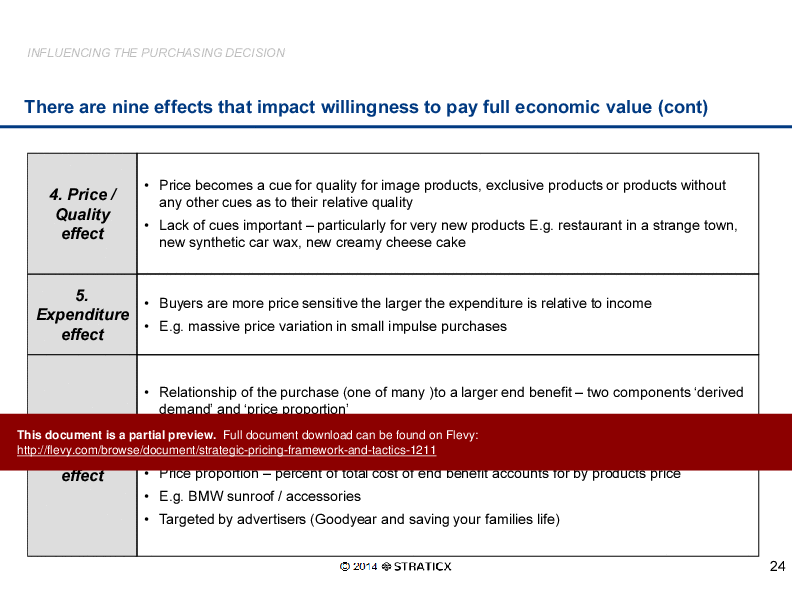
Influencing the Purchase Decision
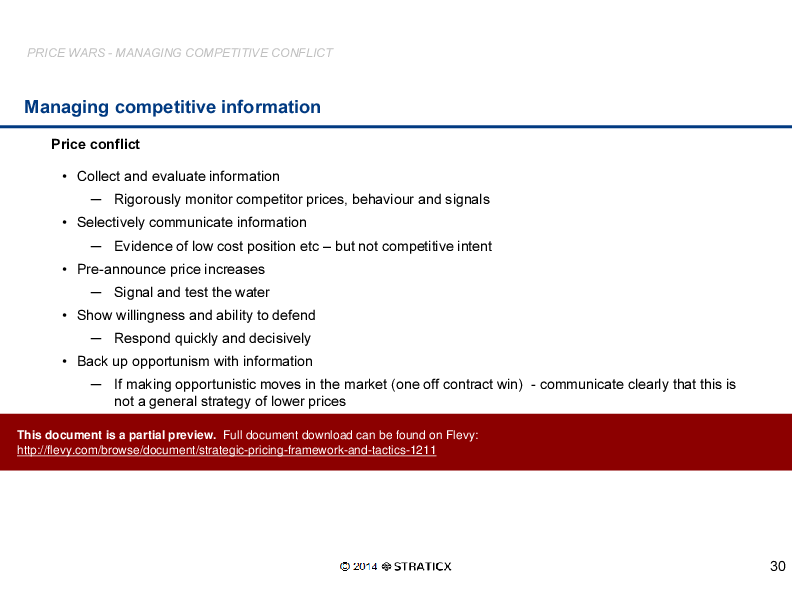
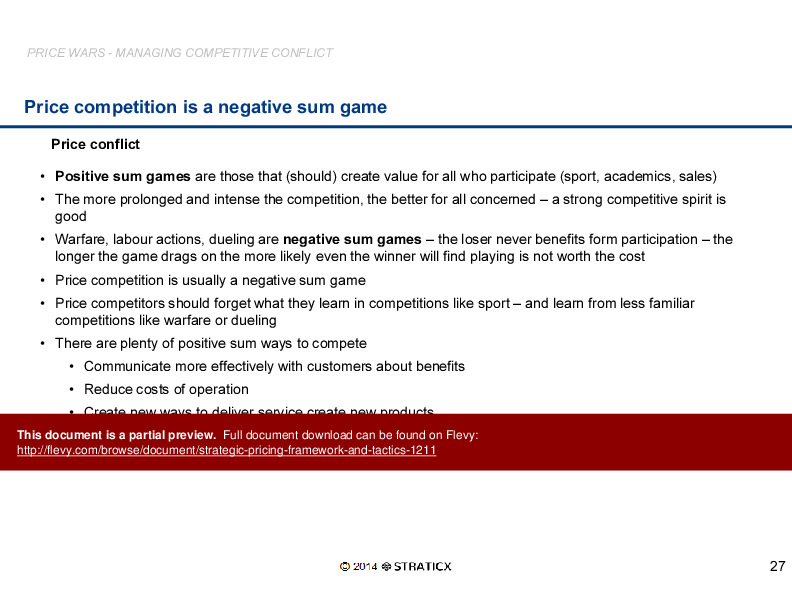
Price Wars – Managing Competitive Conflict
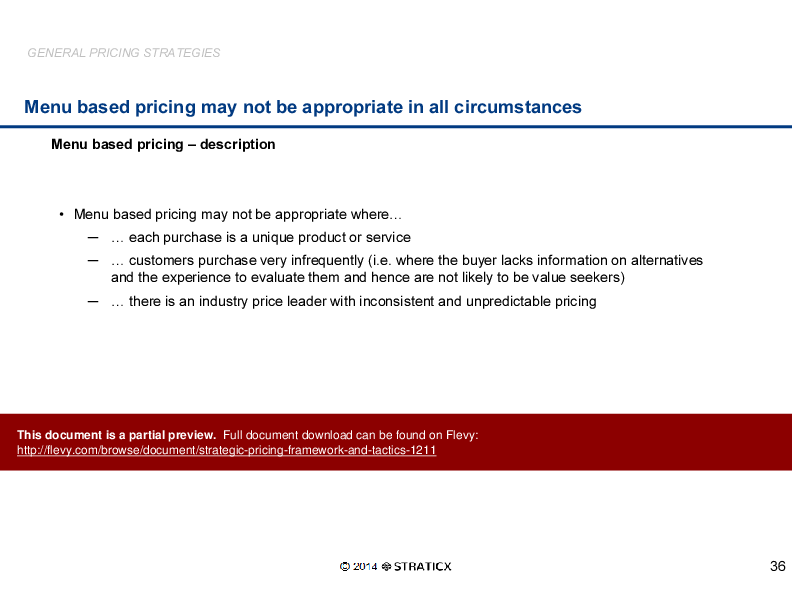
General Pricing Strategies
Bundling
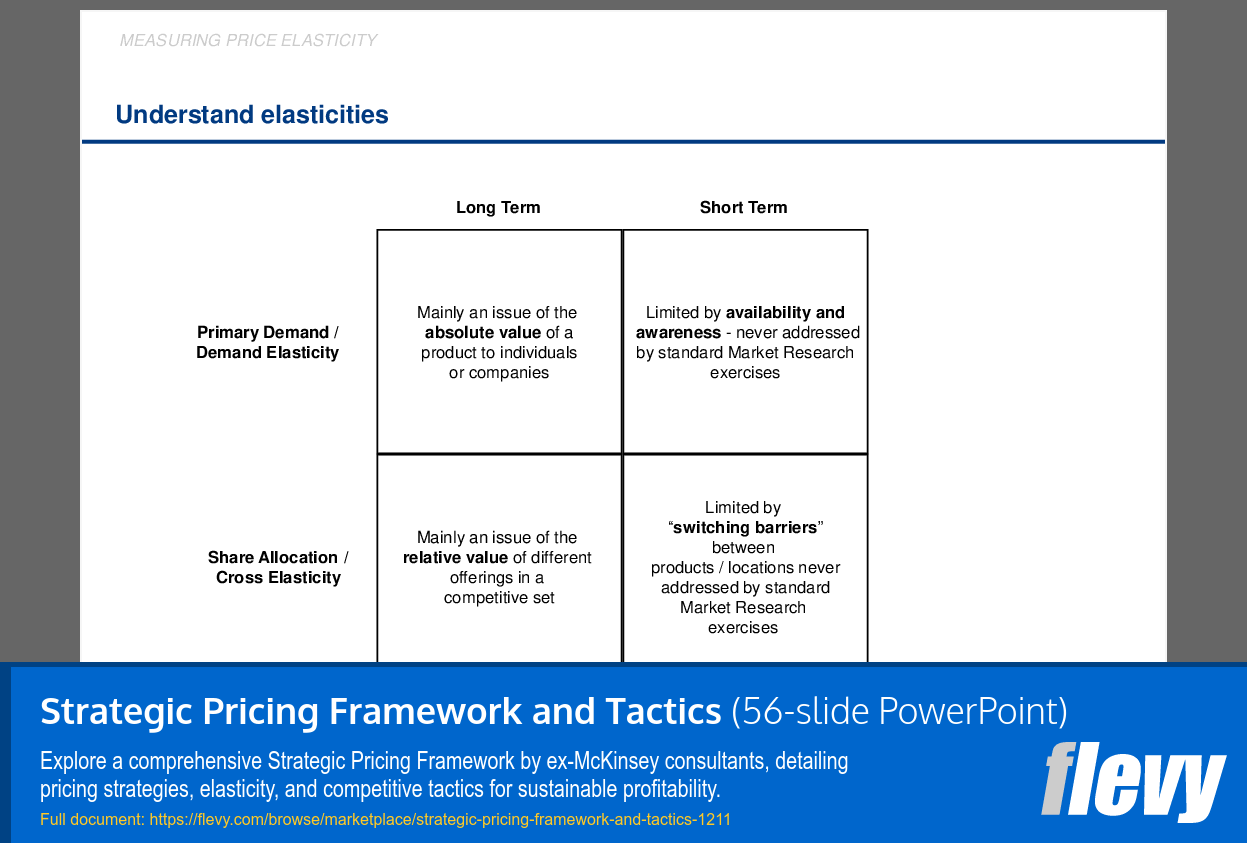
Measuring Price Elasticity
This document is suitable for consultants and those in corporate roles and is designed to give some fundamental pricing knowledge to build on.
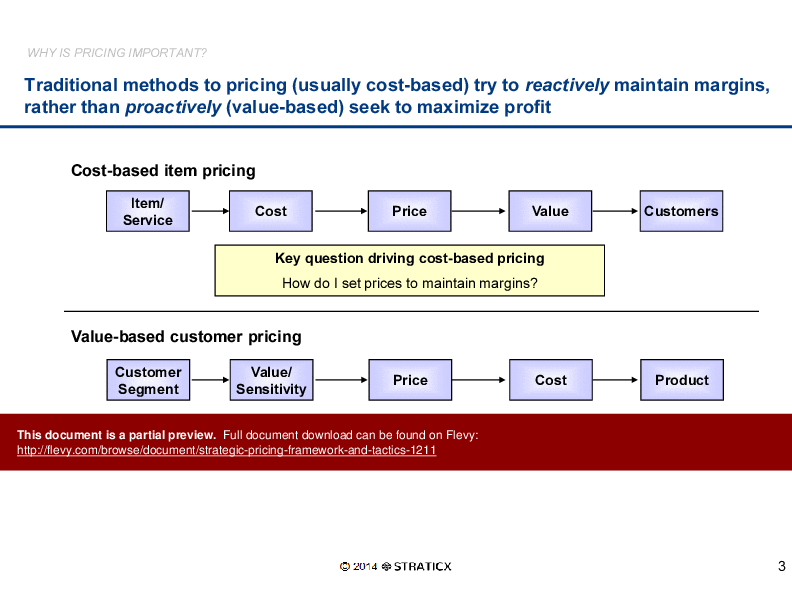
This comprehensive PPT delves into the intricacies of pricing strategies, emphasizing the shift from traditional cost-based pricing to value-based customer pricing. It highlights the critical question of maintaining margins while maximizing profit through proactive pricing approaches. The framework provided is designed to guide executives through the complexities of developing and implementing effective pricing strategies, ensuring a robust foundation for decision-making.
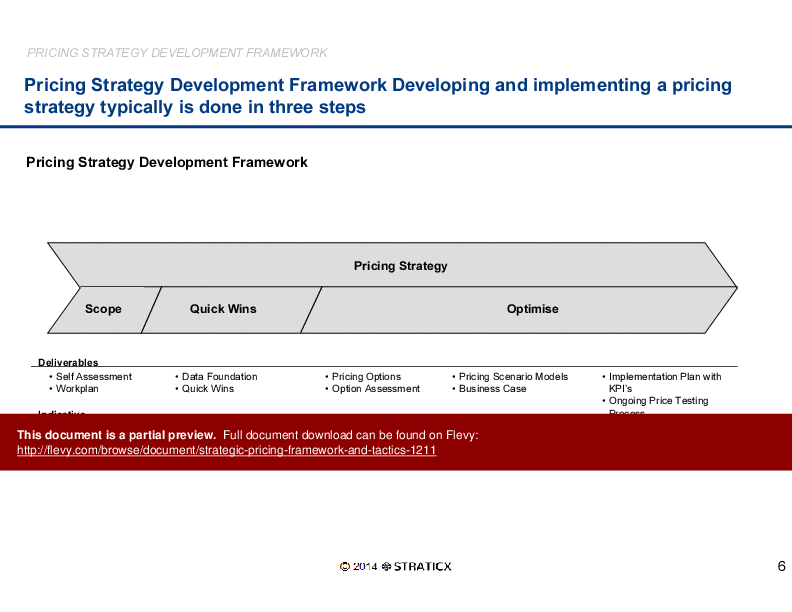
The document also explores the Pricing Strategy Development Framework, breaking it down into three essential steps: Scope, Quick Wins, and Optimize. Each step is meticulously detailed, offering deliverables such as self-assessment, data foundation, pricing options, scenario models, and implementation plans. This structured approach ensures that organizations can systematically address pricing challenges and capitalize on quick wins for immediate impact.
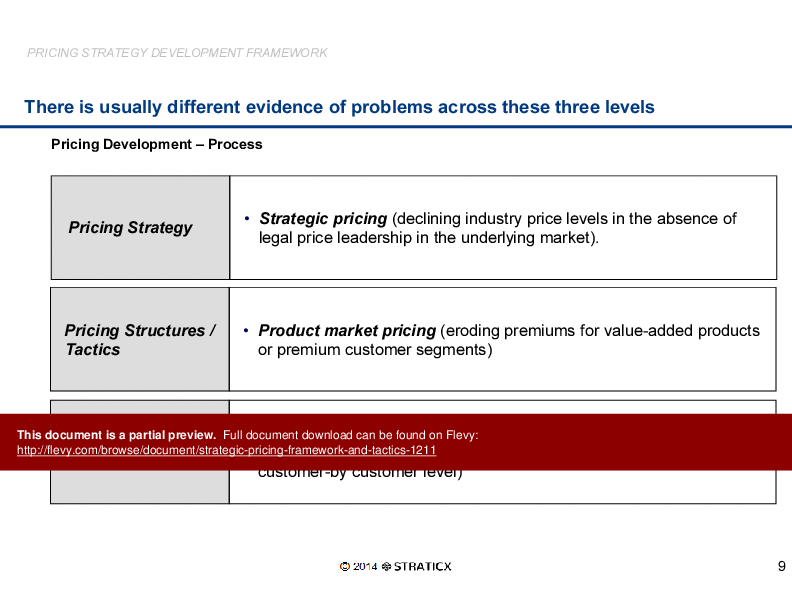
In addition, the document addresses common pricing issues in business markets, such as the erosion of premiums for value-added products and the impact of poorly controlled pricing processes. It provides actionable insights into managing competitive information, pre-announcing price increases, and leveraging strategic pricing to maintain industry leadership. This resource is indispensable for consultants and corporate professionals aiming to refine their pricing tactics and drive sustainable profitability.
Got a question about the product? Email us at support@flevy.com or ask the author directly by using the "Ask the Author a Question" form. If you cannot view the preview above this document description, go here to view the large preview instead.
Executive Summary
The Strategic Pricing Framework and Tactics presentation, crafted by ex-McKinsey consultants, offers a structured approach to pricing strategy development, emphasizing the importance of pricing in driving profitability. This consulting-grade resource equips corporate executives and consultants with actionable insights to optimize pricing strategies, assess market conditions, and influence customer purchasing decisions. Users will learn to navigate competitive pricing landscapes, manage price wars, and implement effective bundling strategies, ultimately enhancing their organization’s financial performance.
Who This Is For and When to Use
• Pricing strategy teams responsible for developing and implementing pricing frameworks
• Marketing executives seeking to influence customer purchasing behavior
• Finance leaders focused on profit optimization through pricing strategies
• Business development teams aiming to assess competitive pricing dynamics
Best-fit moments to use this deck:
• During the development of a new pricing strategy or framework
• When assessing current pricing practices and identifying quick wins
• In preparation for competitive pricing analysis and market positioning
Learning Objectives
• Define the critical role of pricing in business profitability
• Develop a structured pricing strategy using the Pricing Strategy Development Framework
• Identify quick wins for immediate pricing improvements
• Analyze customer behavior to influence purchasing decisions effectively
• Manage competitive pricing conflicts and avoid detrimental price wars
• Implement bundling strategies to enhance perceived value and sales
Table of Contents
• Why Is Pricing Important? (page 2)
• Pricing Strategy Development Framework (page 6)
• Scoping and Quick Wins (page 10)
• Influencing the Purchase Decision (page 20)
• Price Wars - Managing Competitive Conflict (page 26)
• General Pricing Strategies (page 32)
• Bundling (page 44)
• Measuring Price Elasticity (page 47)
Primary Topics Covered
• Importance of Pricing - Pricing is essential for maximizing profitability and requires a data-driven approach rather than subjective judgment.
• Pricing Strategy Development Framework - A three-step framework encompassing scope, quick wins, and optimization to develop effective pricing strategies.
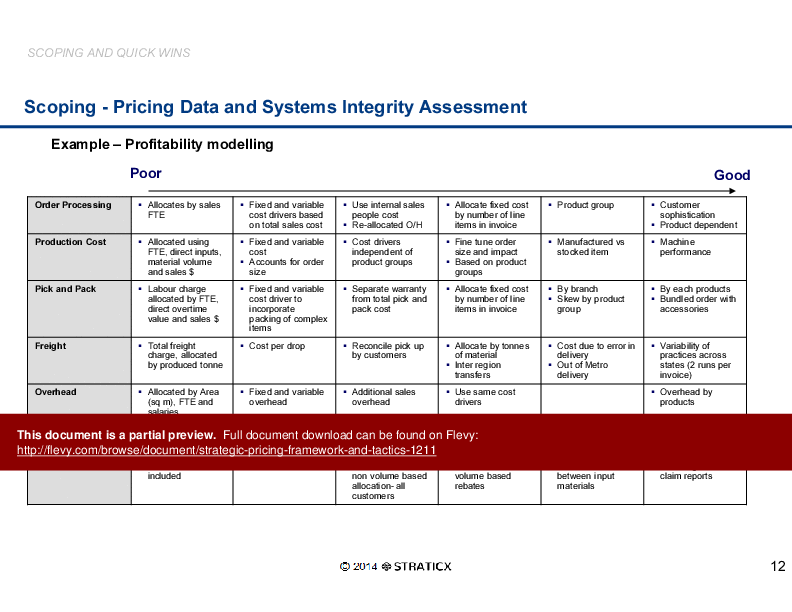
• Scoping and Quick Wins - Techniques for assessing pricing capabilities and identifying immediate improvements to enhance profitability.
• Influencing Purchase Decisions - Understanding customer behavior and the economic value of products to optimize pricing strategies.
• Managing Competitive Conflict - Strategies to navigate price wars and maintain profitability without engaging in detrimental price competition.
• General Pricing Strategies - Overview of various pricing strategies, including menu-based pricing and value proposition pricing.
• Bundling - Techniques for price bundling to enhance customer value and drive sales.
• Measuring Price Elasticity - Methods for assessing price sensitivity and optimizing pricing based on elasticity data.
Deliverables, Templates, and Tools
• Pricing Strategy Development Framework template for structured pricing strategy creation
• Quick Wins assessment tool for identifying immediate pricing improvements
• Customer behavior analysis framework to influence purchasing decisions
• Competitive pricing conflict management guidelines
• Bundling strategy template for implementing effective product/service packages
• Price elasticity measurement tools for ongoing pricing optimization
Slide Highlights
• Slide detailing the Pricing Strategy Development Framework, outlining the 3 key steps: Scope, Quick Wins, and Optimize.
• Visual representation of the importance of pricing, contrasting common pricing myths with pricing realities.
• Framework for managing competitive pricing conflicts, including response strategies to competitor price attacks.
• Overview of bundling definitions and when to implement bundling strategies effectively.
• Elasticity testing methodologies to assess price sensitivity and optimize pricing strategies based on customer behavior.
Potential Workshop Agenda
Pricing Strategy Overview (60 minutes)
• Discuss the importance of pricing and its impact on profitability
• Review the Pricing Strategy Development Framework and its application
Quick Wins Identification Session (90 minutes)
• Analyze current pricing practices and identify immediate improvement opportunities
• Develop a list of actionable quick wins for pricing optimization
Competitive Pricing Conflict Management (60 minutes)
• Explore strategies for managing price wars and competitive conflicts
• Discuss case studies and real-world examples of effective pricing strategies
Customization Guidance
• Tailor the Pricing Strategy Development Framework to align with specific organizational goals and market conditions.
• Adjust quick win strategies based on current pricing practices and customer feedback.
• Modify bundling strategies to fit product/service offerings and customer preferences.
Secondary Topics Covered
• Pricing capability assessment frameworks
• Customer segmentation for pricing strategies
• Techniques for measuring and analyzing customer price sensitivity
• Impact of pricing on overall business strategy and profitability
• Best practices for maintaining pricing discipline in business-to-business markets
FAQ
Why is pricing important?
Pricing is crucial for maximizing profitability and requires a precise, data-driven approach to effectively influence customer behavior and market positioning.
What is the Pricing Strategy Development Framework?
The framework consists of 3 steps: scoping, identifying quick wins, and optimizing pricing strategies to enhance profitability and market competitiveness.
How can I identify quick wins in pricing?
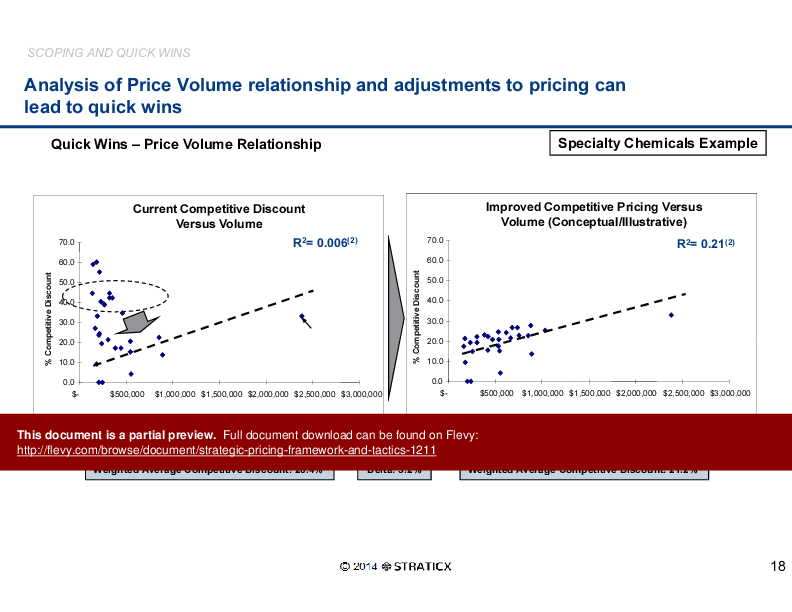
Quick wins can be identified through a pricing capability assessment, focusing on immediate improvements that align pricing with cost structures and customer value perceptions.
What are the key elements of influencing purchase decisions?
Key elements include understanding customer behavior, identifying reference prices, and effectively communicating the economic value of products.
How should I respond to competitive pricing attacks?
Responses should be strategic, focusing on maintaining profitability while assessing the cost of potential price cuts against the risk of losing market share.
What is bundling, and when should it be used?
Bundling involves offering multiple products or services together at a discounted price, enhancing perceived value and increasing sales, particularly for new product introductions.
How do I measure price elasticity?
Price elasticity can be measured through various testing methodologies, including champion/challenger tests and iterative test cell analysis, to assess customer sensitivity to price changes.
What are the common pitfalls in pricing strategies?
Common pitfalls include lack of pricing discipline, poorly defined discounting criteria, and failure to assess customer price sensitivity adequately.
Glossary
• Price Elasticity - A measure of how sensitive customer demand is to price changes.
• Bundling - The practice of selling multiple products or services together at a discounted price.
• Quick Wins - Immediate improvements in pricing strategies that can enhance profitability.
• Competitive Pricing Conflict - Situations where companies engage in price wars, often leading to reduced profitability.
• Menu-Based Pricing - A pricing strategy that offers fixed prices for flexible product/service options.
• Value Proposition - The unique value a product or service offers to customers compared to alternatives.
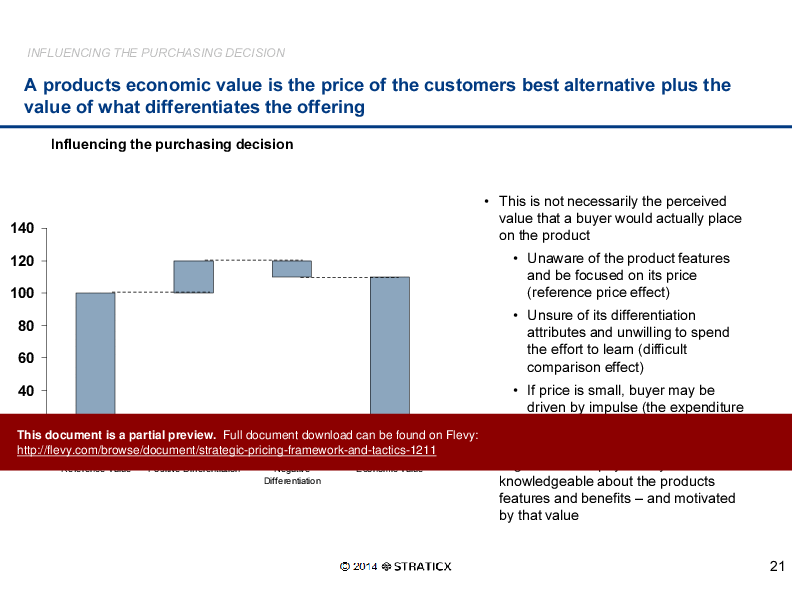
• Economic Value - The maximum price a customer is willing to pay based on the perceived benefits of a product.
• Scoping - The process of assessing current pricing capabilities and identifying areas for improvement.
• Customer Segmentation - Dividing customers into groups based on shared characteristics to tailor pricing strategies.
• Profitability Modeling - Analyzing costs and revenues to determine pricing strategies that maximize profit.
• Reference Price - The price customers expect to pay based on their perceptions of value and alternatives.
• Price Wars - Competitive situations where companies lower prices to gain market share, often harming profitability.
• Discounting - Reducing prices to attract customers, which can lead to pricing discipline issues if not managed properly.
• Incentive Structures - The frameworks that guide how discounts and pricing decisions are made within an organization.
• Market Research - The process of gathering information about customer preferences and behaviors to inform pricing strategies.
• Cost-Based Pricing - A pricing strategy that sets prices based on the costs of production plus a markup.
• Value-Based Pricing - A pricing strategy that sets prices based on the perceived value to the customer rather than costs.
• Competitive Analysis - The assessment of competitor pricing strategies to inform one's own pricing decisions.
• Customer Profitability - The analysis of how profitable individual customers or segments are to the business.
• Sales Volume - The total quantity of products sold, which can be influenced by pricing strategies.
• Profit Margin - The difference between the cost of goods sold and the selling price, expressed as a percentage of sales.
Source: Best Practices in Pricing Strategy PowerPoint Slides: Strategic Pricing Framework and Tactics PowerPoint (PPTX) Presentation Slide Deck, STRATICX
This document is available as part of the following discounted bundle(s):
Save %!
Complete Kit
This bundle contains 13 total documents. See all the documents to the right.
|
Download our FREE Strategy & Transformation Framework Templates
Download our free compilation of 50+ Strategy & Transformation slides and templates. Frameworks include McKinsey 7-S, Balanced Scorecard, Disruptive Innovation, BCG Curve, and many more. |