
This product (Strategy Analytics Templates) is a 97-slide PPT PowerPoint presentation slide deck (PPT), which you can download immediately upon purchase.
This deck is a collection of best-in-class strategy analytic templates.
The templates have been categorized into the following topics: Supply side, Demand side, Customer, Operation, Supply chain, Strategy, Financial analysis/modeling.
The deck uses analysis templates in the financial services industry for illustration purpose but the slides can be adapted to fit various industries. The slides provide both quantitative and qualitative information including many useful frameworks, tools, checklists, models, diagrams and charts.
It is an ideal reference document for management consultants, business/financial analysts, corporate managers, and MBA students.
See also "Corporate Strategy Design Consulting Report"
/browse/marketplace/corporate-strategy-design-consulting-report-778
See also "Strategy Articulation Workbook"
/browse/marketplace/strategy-articulation-workbook-774
See also "Pricing Strategy Workshop"
/browse/marketplace/pricing-strategy-workshop-764
See also "Pricing Strategy Implementation Toolkit"
/browse/marketplace/pricing-strategy-implementation-toolkit-726
See also "Post Acquisition Integration Strategy (Post Merger Integration – PMI)"
/browse/marketplace/post-acquisition-integration-strategy-post-merger-integration-pmi-659
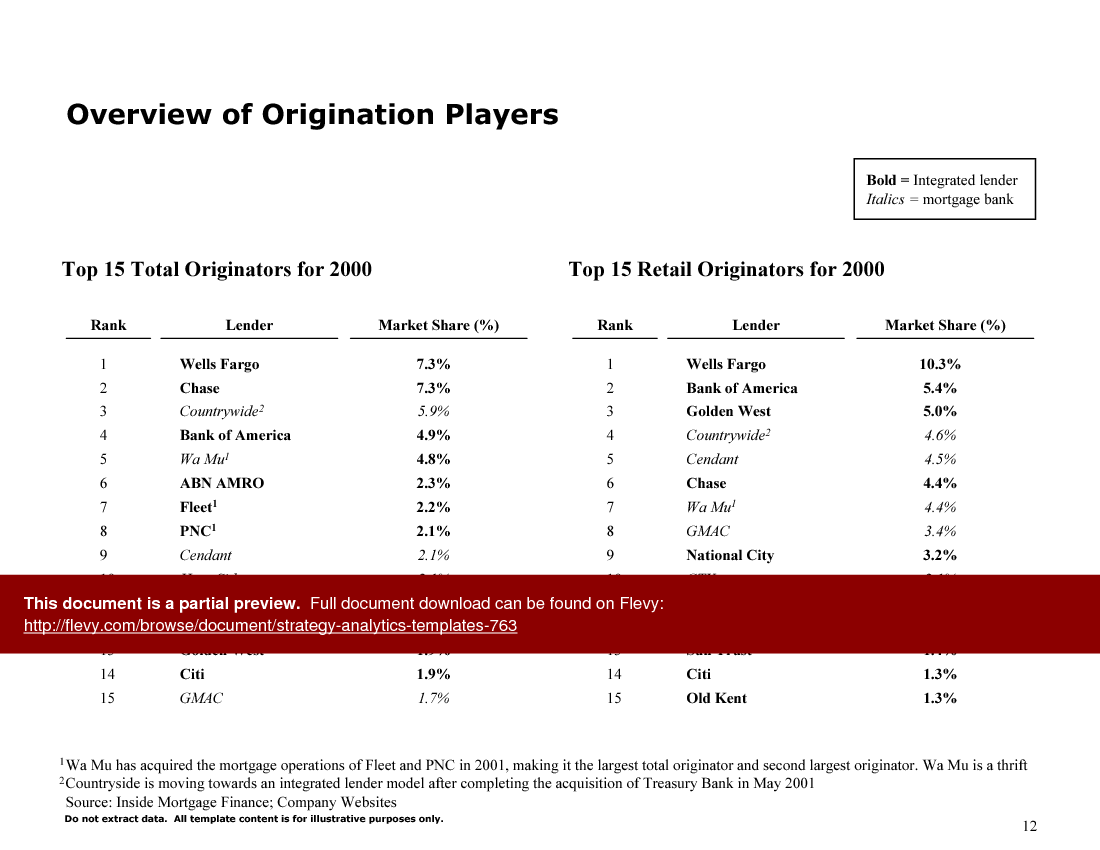
The document also delves into the intricacies of the mortgage industry, providing a detailed analysis of market trends, key players, and financial metrics. It includes comprehensive data on mortgage debt, origination players, and servicing players, which can be pivotal for strategic decision-making in the financial sector. The templates are designed to offer a robust framework for analyzing market share, revenue streams, and growth patterns, making them highly valuable for financial analysts and corporate strategists.
Moreover, the deck covers a wide array of topics such as industry structure, emerging technologies, and operational benchmarks. It provides a granular view of various financial ratios, cost structures, and valuation metrics, enabling users to perform in-depth financial modeling and competitive analysis. This resource is essential for anyone looking to gain a competitive edge through meticulous market analysis and strategic planning.
Got a question about the product? Email us at support@flevy.com or ask the author directly by using the "Ask the Author a Question" form. If you cannot view the preview above this document description, go here to view the large preview instead.
MARCUS OVERVIEW
This synopsis was written by Marcus [?] based on the analysis of the full 97-slide presentation.
Executive Summary
The Strategy Analytics Templates document provides a robust library of financial analysis templates tailored for the Financial Services Industry (FSI). This collection is designed to meet the high standards of consulting-grade presentations, akin to McKinsey, Bain, or BCG-quality frameworks (not affiliated). Users will gain the ability to conduct comprehensive market analyses, financial modeling, and strategic evaluations, enhancing their decision-making processes. The templates are structured to facilitate the development of insightful analyses, enabling consultants, analysts, and MBA students to deliver impactful presentations.
Who This Is For and When to Use
• Financial analysts and consultants focusing on the FSI sector
• MBA students studying financial analysis and strategy
• Strategy teams conducting market entry assessments
• Business development professionals evaluating growth opportunities
Best-fit moments to use this deck:
• During strategic planning sessions to assess market conditions
• For preparing financial models and sensitivity analyses
• When conducting competitive benchmarking and industry evaluations
• In workshops aimed at enhancing analytical capabilities within teams
Learning Objectives
• Define key financial metrics and their relevance in the FSI context
• Build comprehensive financial models using provided templates
• Establish a structured approach to market analysis and competitive positioning
• Analyze customer demographics and buying behaviors effectively
• Develop insights from financial benchmarking and trend analyses
• Create impactful presentations based on data-driven insights
Table of Contents
• Overview of Template Library Development Process (page 1)
• Definitions of Analysis and Template Terms (page 2)
• Structure of Analysis (page 3)
• Template Index (page 4)
• Market Specific Analyses (page 5)
• Client Specific Analyses (page 6)
• Demand Side Analyses (page 7)
• Operations and Financial Analyses (page 8)
• Mergers & Acquisitions Analysis (page 9)
• Case Studies (page 10)
Primary Topics Covered
• Template Development Process - A structured approach to creating a library of templates through solicitation, assembly, development, and review phases.
• Market Specific Analyses - Templates focused on evaluating industry structure, competitive positioning, and market trends within the FSI.
• Client Specific Analyses - Tailored templates for assessing client operations, capabilities, and financial performance.
• Demand Side Analyses - Tools for analyzing customer demographics, buying behavior, and market segmentation.
• Financial Benchmarking - Templates for comparing financial metrics across industry participants to identify best practices.
• Mergers & Acquisitions - Frameworks for analyzing M&A activity, including deal value and consolidation potential.
Deliverables, Templates, and Tools
• Market analysis template for evaluating industry structure and trends
• Financial modeling template for projecting financial performance
• Customer demographics analysis template for understanding market segments
• Competitive benchmarking template for comparing financial ratios
• M&A activity analysis template for assessing consolidation opportunities
• Case study templates for documenting successful implementation efforts
Slide Highlights
• Overview of Template Library Development Process slide detailing the iterative approach
• Market Specific Analyses slide showcasing key metrics and trends
• Financial Benchmarking slide illustrating comparative financial ratios across firms
• Mergers & Acquisitions slide highlighting recent deal statistics and market consolidation
• Case Studies slide summarizing successful implementations and lessons learned
Potential Workshop Agenda
Template Development Overview (60 minutes)
• Discuss the template library development process and objectives
• Review key analysis definitions and terms
• Explore the structure of analyses and templates
Market Analysis Workshop (90 minutes)
• Conduct a market analysis using the provided templates
• Analyze customer demographics and buying behavior
• Present findings and insights
Financial Modeling Session (120 minutes)
• Build financial models using the templates
• Discuss sensitivity analysis and its implications
• Present results and recommendations
Customization Guidance
• Tailor template content to reflect specific industry metrics and benchmarks
• Adjust financial models to incorporate unique client data and assumptions
• Modify customer demographics templates to align with target market profiles
• Adapt case study formats to document specific client experiences and outcomes
Secondary Topics Covered
• Technology and innovations in the FSI sector
• Trends in customer buying behavior and market dynamics
• Strategies for competitive positioning and market entry
• Operational efficiencies and cost reduction techniques
• Regulatory impacts on financial services
FAQ What types of analyses can I conduct with these templates?
The templates support a wide range of analyses, including market assessments, financial modeling, customer demographics, and competitive benchmarking.
Are these templates customizable for specific client needs?
Yes, the templates are designed to be tailored to reflect specific industry metrics, client data, and unique analytical requirements.
How can I ensure the analyses are up-to-date?
Regularly review and update the templates based on the latest market trends, financial data, and regulatory changes to maintain relevance.
Can these templates be used for presentations?
Absolutely, the templates are structured for easy integration into presentations, allowing for clear and impactful communication of insights.
Is there support available for using these templates?
Yes, users can access guidance and best practices for utilizing the templates effectively through accompanying documentation.
What industries are these templates applicable to?
While primarily focused on the Financial Services Industry, many templates can be adapted for use in related sectors such as insurance and banking.
How often will new templates be added?
The template library will continue to evolve, with new templates added based on user feedback and emerging analytical needs.
What is the expected outcome from using these templates?
Users can expect to enhance their analytical capabilities, produce high-quality financial analyses, and deliver compelling presentations that drive decision-making.
Glossary
• FSI - Financial Services Industry
• M&A - Mergers and Acquisitions
• CAGR - Compound Annual Growth Rate
• ROI - Return on Investment
• PE Ratio - Price-to-Earnings Ratio
• KPI - Key Performance Indicator
• SLA - Service Level Agreement
• TSA - Transition Services Agreement
• NPV - Net Present Value
• IRR - Internal Rate of Return
• GL - General Ledger
• ERP - Enterprise Resource Planning
• SOX - Sarbanes-Oxley Act
• GSE - Government-Sponsored Enterprise
• KYC - Know Your Customer
• AML - Anti-Money Laundering
• B2B - Business to Business
• B2C - Business to Consumer
• CRM - Customer Relationship Management
• P&L - Profit and Loss Statement
• AUM - Assets Under Management
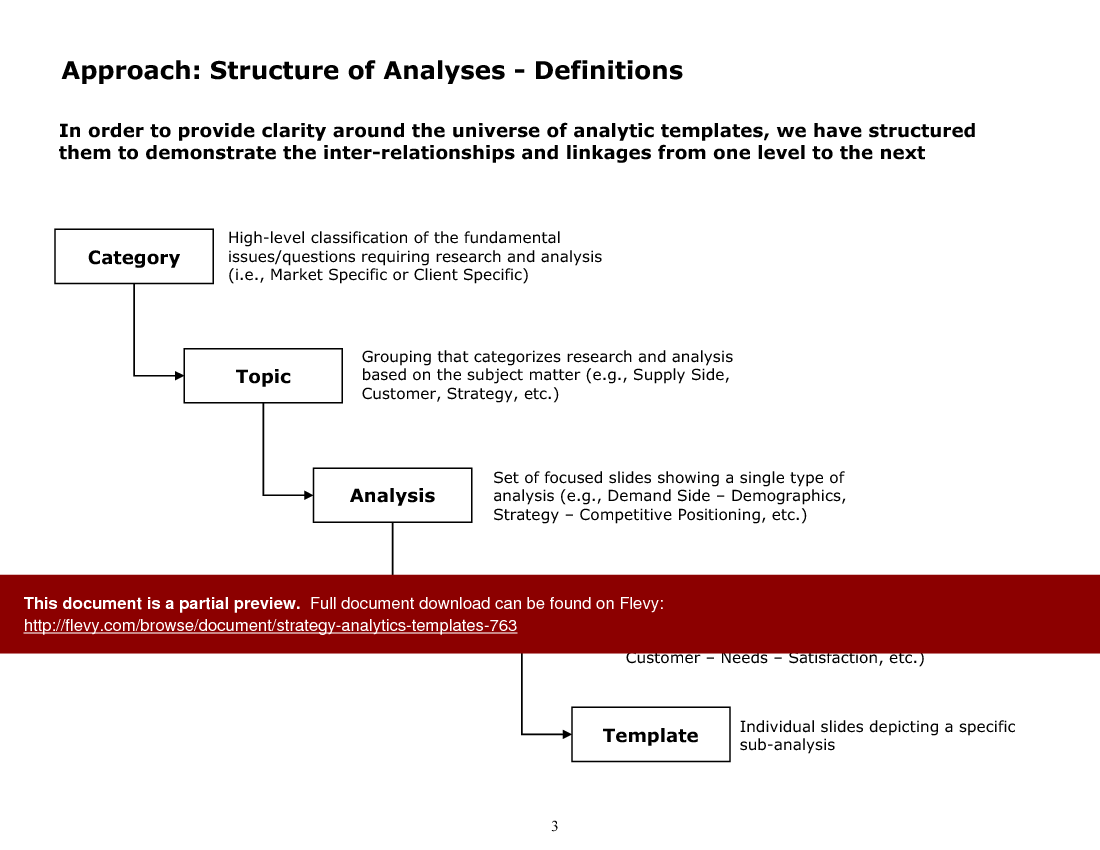
This slide outlines a structured approach to categorizing analytic templates, emphasizing clarity in the "Category," which classifies fundamental research issues related to specific markets or clients. The "Topic" organizes research by subject matter, enabling focused discussions on supply side, customer insights, or strategic considerations. The "Analysis" section provides detailed slides illustrating specific analyses, such as demographic insights or competitive positioning, essential for understanding market dynamics. The "Sub-Analysis" refines insights by introducing criteria like customer needs or satisfaction levels, allowing for a granular understanding of data. Finally, the "Individual Slide" level presents actionable insights derived from previous analyses, ensuring relevance and applicability in decision-making.
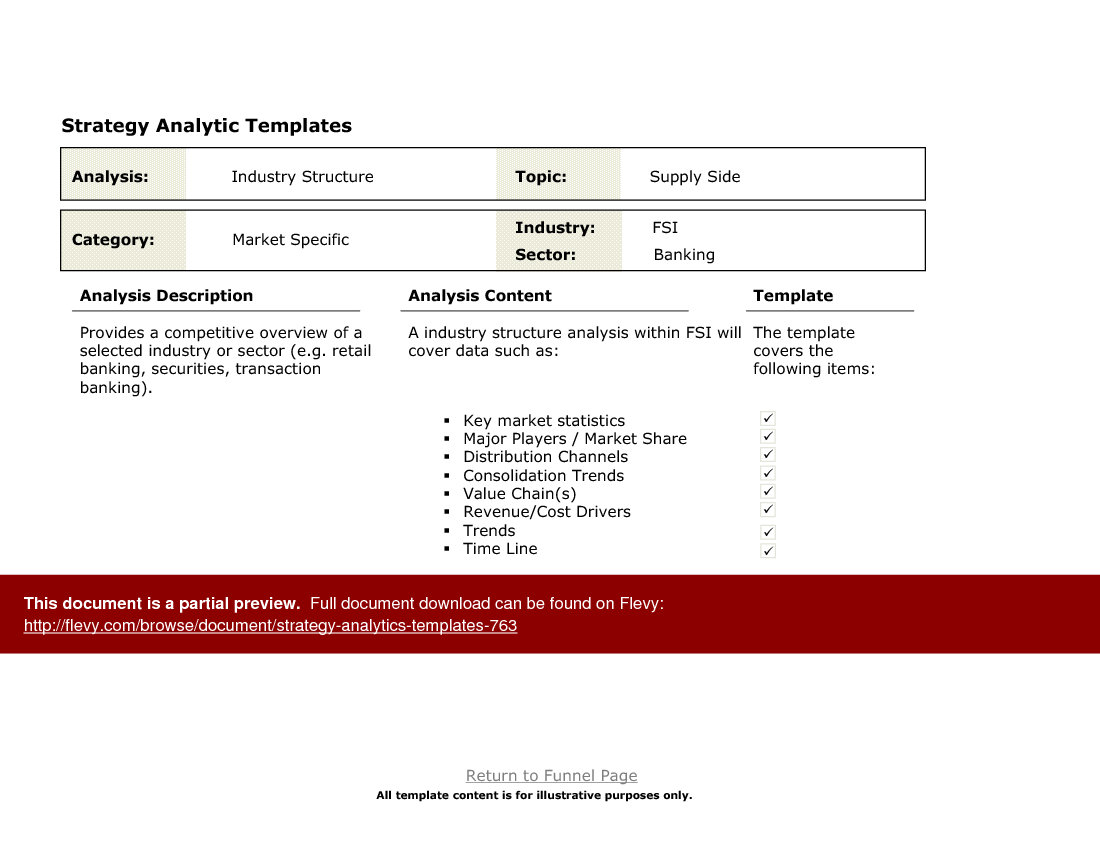
This slide outlines a structured analytical framework for strategic decision-making, divided into Market Specific and Client Specific sections. The Market Specific category includes Supply Side analyses like Industry Structure, Market Sizing, and Competitive Overview, alongside Demand Side insights focusing on macro-market conditions, demographics, and customer behavior. The Client Specific section covers operational areas such as Customer Segmentation, Operations assessments, Supply Chain procurement strategies, and Competitive Positioning. Financial Analysis/Modeling addresses financial impacts and sensitivity analyses. This comprehensive approach enables informed decision-making and effective strategic planning for organizations.

This slide analyzes the securitization market by product type for 2000, categorizing market share into Fannie Mae (12%), Freddie Mac (32.1%), Ginnie Mae (30.47%), Private Conduit (10.6%), and Unsecuritized (29.8%). A bar chart visually compares the percentage contributions of each segment to the total securitization volume, depicted in billions of dollars. The data highlights varying reliance on securitization products, essential for stakeholders assessing risk and opportunity. This analysis reflects the market's structure and trends, informing strategic decisions for investors and institutions navigating the complexities of the securitization landscape.

The evolution of the securities industry from the 1930s to the early 2000s is divided into 3 eras: "Defining the Rules," "Changing the Rules," and "Changing the Game."
In the first era (1930s-1950s), modern securities practices were formalized with the emergence of regulatory bodies to protect investors and the establishment of investment advisors. Key milestones include the founding of the NYSE in 1792 and the first mutual fund in 1924.
The second era (1960s-1980s) saw institutional investors dominate and commission structures consolidate. The rise of electronic trading and access to global markets marked significant shifts, with key events like the establishment of NASDAQ in 1971 and the Chicago Board Options Exchange in 1973.
The final era (mid-1990s onward) reflects rapid change driven by market volatility and scandals, prompting regulatory reforms and new trading mechanisms. Key events include the Enron scandal in 2001 and evolving regulations in hedge funds and mutual funds, highlighting the industry's ongoing adaptation to external pressures and technological advancements.
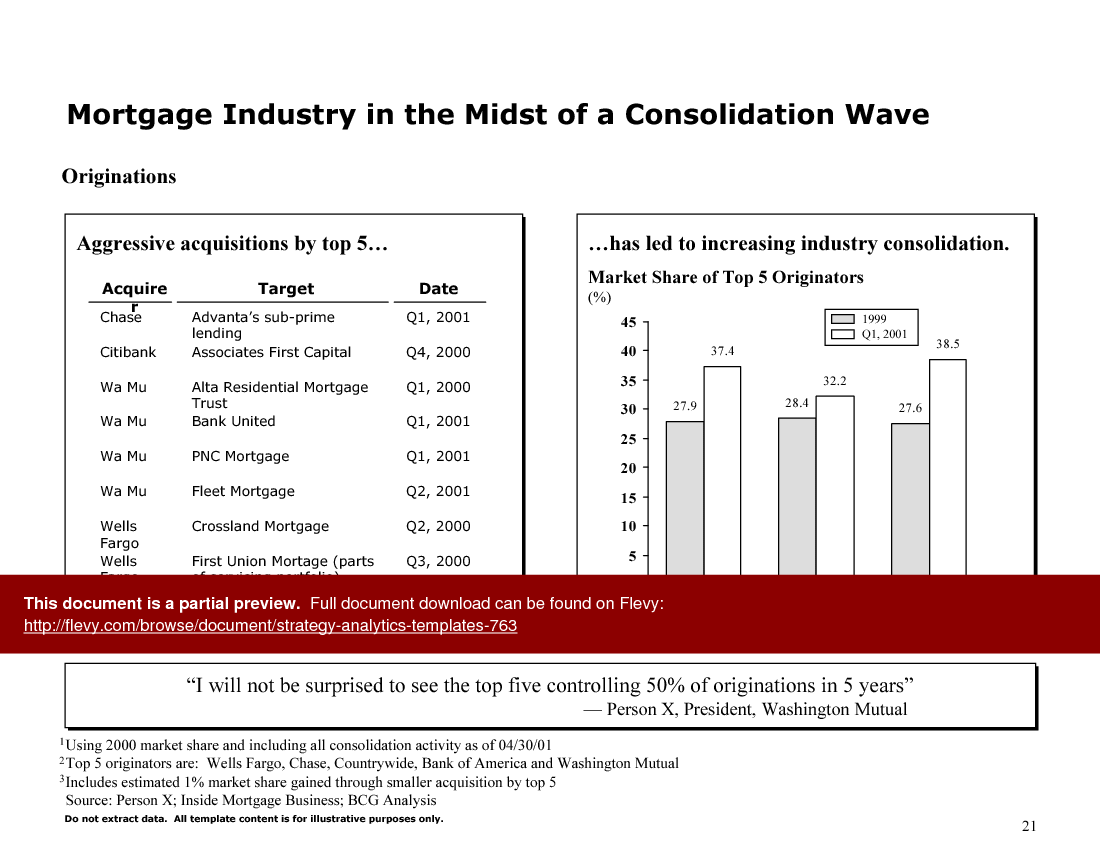
This slide presents a comparative analysis of the U.S. Property & Casualty (P&C) and Life & Health (L&H) insurance markets, highlighting consolidation potential. The P&C market, valued at $362 billion, has a fragmented market share with the largest company holding only 9.4%, indicating opportunities for smaller insurers to consolidate for competitive positioning and operational efficiencies. In contrast, the L&H market, valued at $456 billion, shows a concentration trend with the top player holding 18.6%, suggesting a shift towards greater consolidation. As equity values stabilize, the likelihood of consolidation in both sectors increases, impacting strategic decisions on mergers, acquisitions, and partnerships in the insurance market.
This slide outlines key players in the mortgage market, structured in a flowchart format. Borrowers are identified as consumers, initiating the mortgage process. The "Origination" section highlights the interaction between borrowers and lenders, including wholesale originators and correspondent banks. The "Servicing" segment emphasizes the ongoing relationship between borrowers and lenders, involving sub-servicers and financial managers, indicating a broader financial oversight role. In "Securitization," government-sponsored enterprises (GSEs) like Fannie Mae, Ginnie Mae, and Freddie Mac transform individual loans into securities for investors, critical for liquidity. The "Investors" section lists institutional investors such as mutual funds, life insurance companies, pension funds, and hedge funds, showcasing diverse capital sources in the mortgage market.
The mortgage industry consists of 3 main categories: Mortgage Brokers, Correspondents, and Integrated Players/Full Service. Mortgage Brokers connect borrowers with lenders without financing loans, primarily serving retail customers, with an estimated origination volume of $630 billion and a 60% market share. Correspondents acquire, process, and fund loans, performing all broker functions while also underwriting and warehousing loans, with origination volumes between $50 to $160 billion and a 5-15% market share. Integrated Players, including major banks like Countrywide and Wells Fargo, handle all correspondent functions and deliver loans to the secondary market, with origination volumes of $260 to $370 billion and a 25-35% market share. Understanding these distinctions informs strategic decisions in the mortgage landscape.
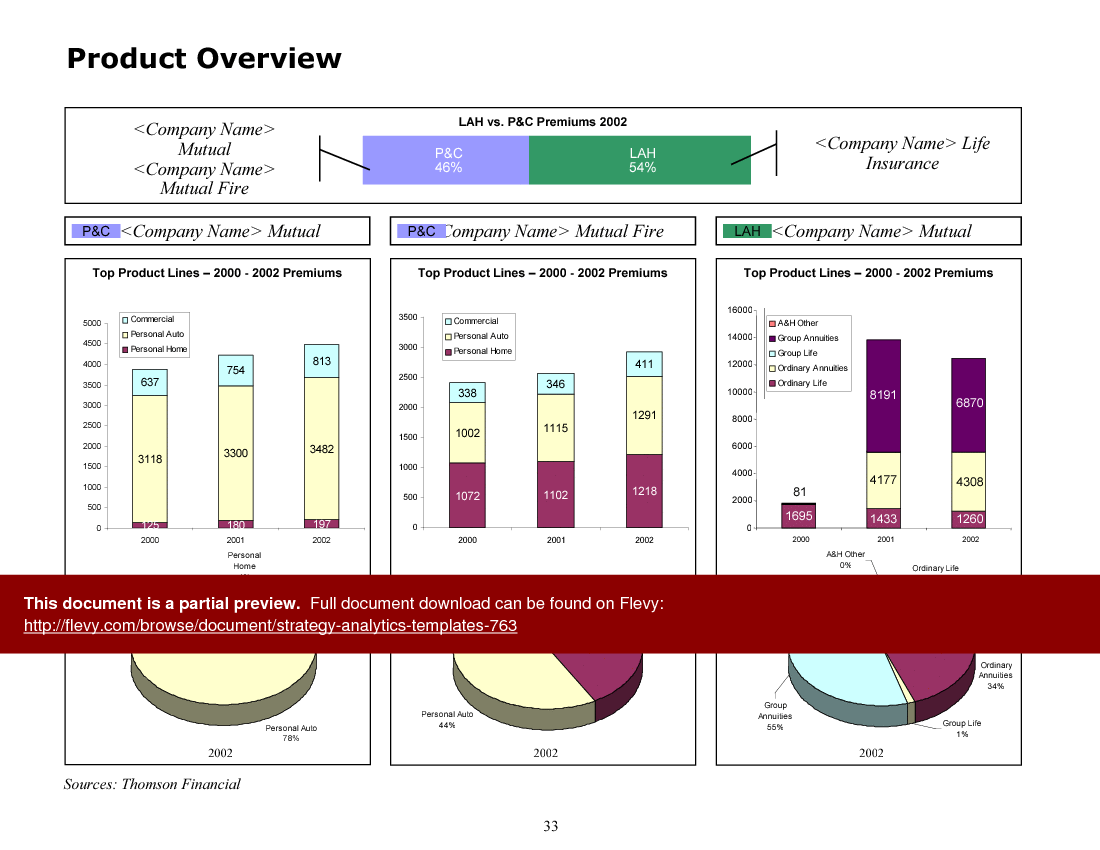
This slide provides an overview of product lines for 2 mutual insurance companies, focusing on premium data from 2000 to 2002. The offerings are categorized into Property & Casualty (P&C) and Life and Annuities (LAH). The first company's P&C products show a steady increase in premiums, with Personal Auto and Personal Home as key contributors, particularly Personal Home, which experienced notable growth. The second company's P&C offerings also demonstrate premium growth, especially in the Commercial segment. The LAH analysis reveals Ordinary Life as the dominant segment, with significant premiums reported. The distribution of premiums across product lines is illustrated through bar and pie charts, highlighting market positions and trends.
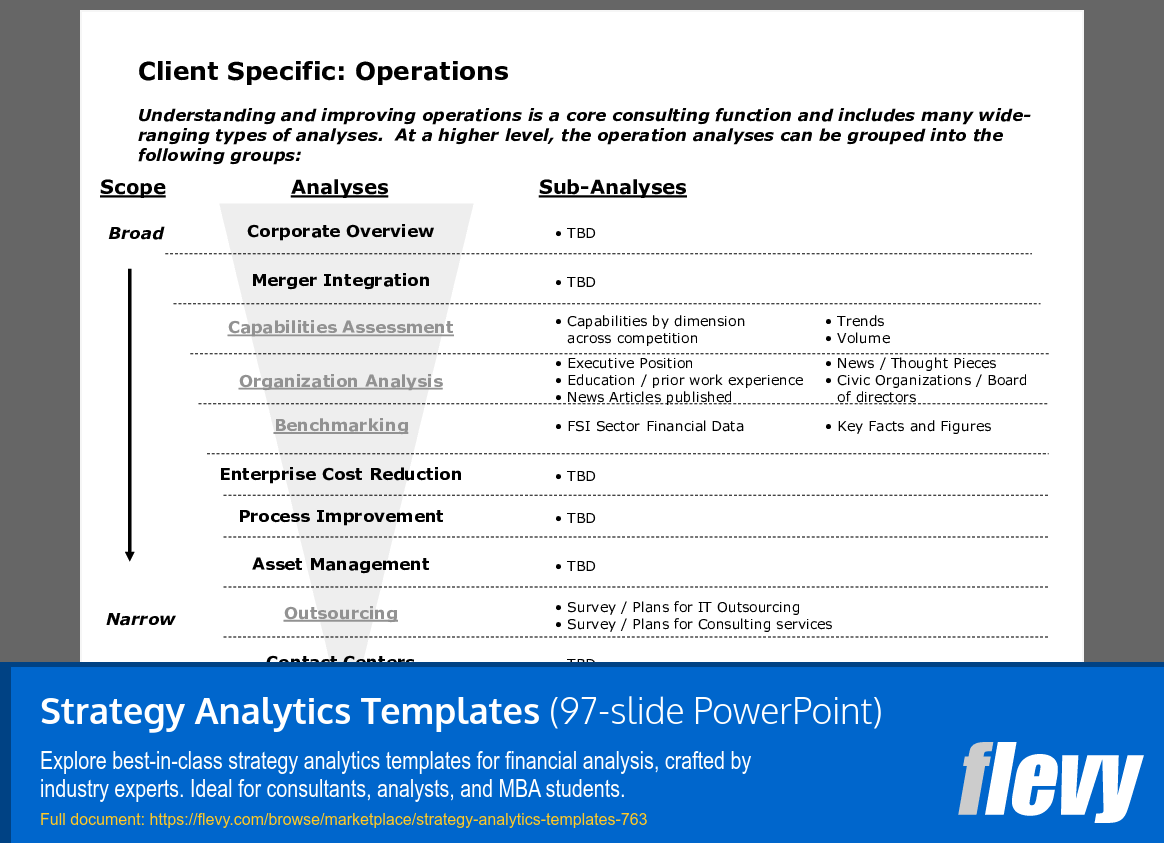
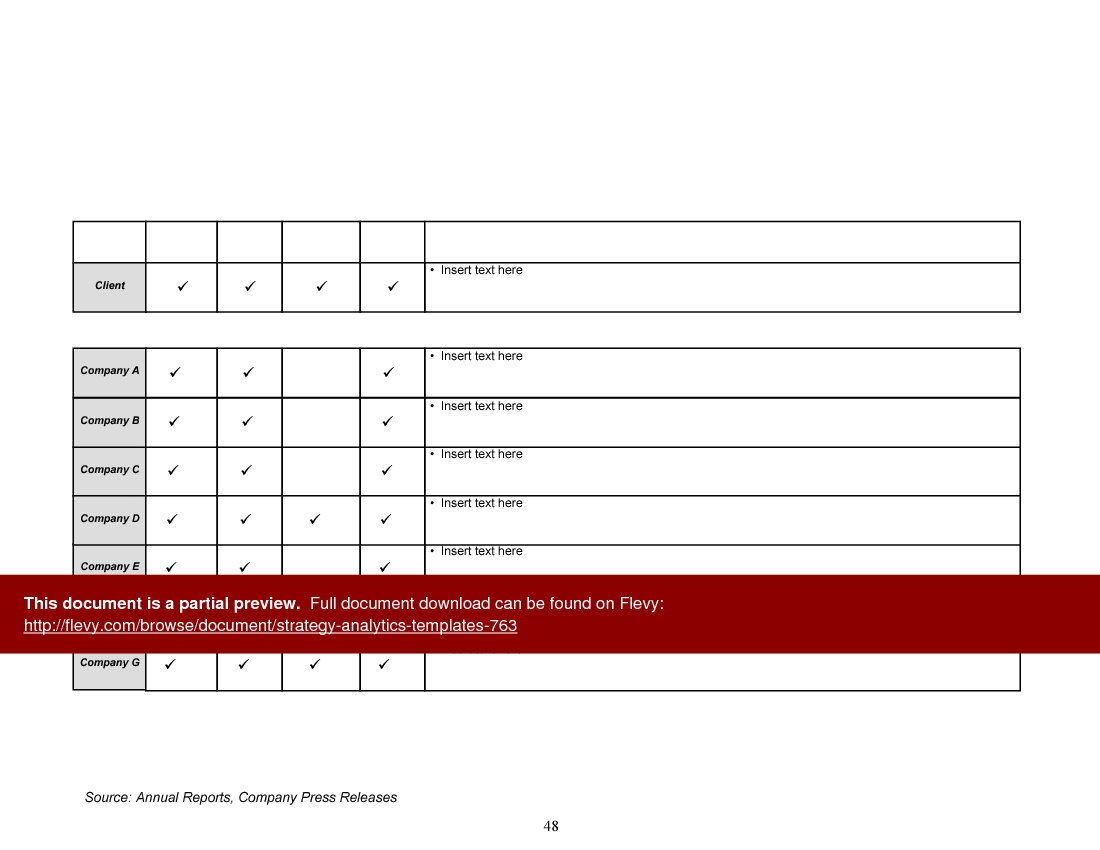
This slide outlines a framework for operational analysis in consulting, categorizing analyses into 2 dimensions: scope and type. The "Broad" scope includes key analyses such as "Corporate Overview," which assesses organizational health, "Merger Integration" for post-acquisition operations, "Capabilities Assessment" evaluating competitive dimensions and operational trends, and "Organization Analysis" focusing on executive positioning and educational backgrounds. The "Narrow" scope features specialized analyses like "Enterprise Cost Reduction," "Process Improvement," "Asset Management," and "Outsourcing," emphasizing tactical approaches to enhance operational efficiency. Each analysis includes sub-analyses for greater detail, such as IT outsourcing surveys. This structured approach aids organizations in identifying improvement areas and driving operational excellence.
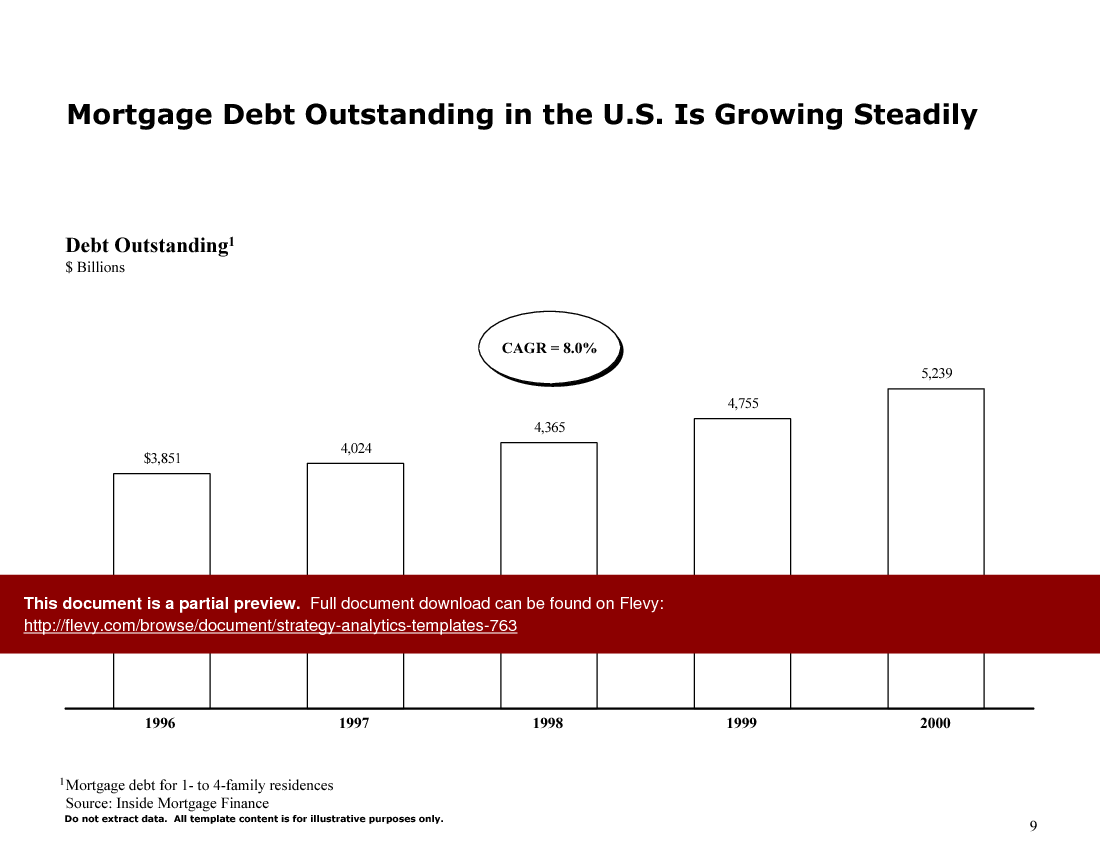
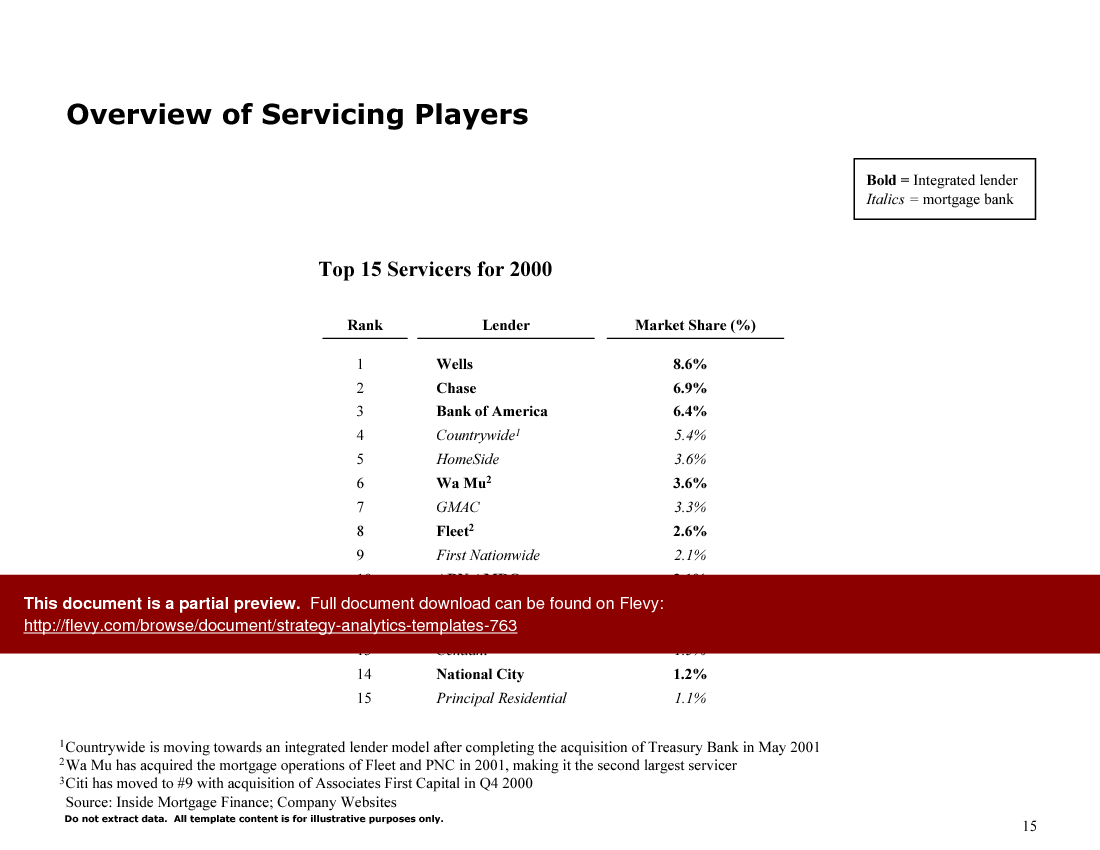
The slide provides an overview of the mortgage servicing industry's consolidation from 1996 to 2000, highlighting a compound annual growth rate (CAGR) of 8.0% for the total servicing market. By 2000, the top 5 servicers dominated 23.6% of the market, indicating a trend towards fewer, larger players. The right side lists the top 15 servicers in 2000 by market share, with Wells at 8.6%, followed by Chase and Bank of America. This ranking reveals a clear market hierarchy, with integrated lenders potentially gaining a strategic edge in servicing capabilities. Understanding these trends is essential for navigating partnerships and investments in the mortgage sector.
This slide analyzes Bank of America's (B of A) price-to-earnings (P/E) ratio relative to competitors, highlighting 3 key issues affecting growth potential and target price. First, the "Ability to grow core businesses" section notes market saturation in consumer and commercial banking, which accounts for 68% of B of A's earnings, raising concerns about organic growth post-Fleet merger due to regulatory constraints on acquisitions. Next, the "International Operations" section addresses B of A's reduced exposure to emerging markets and the need to redefine its international strategy, with skepticism about pursuing opportunities in England, France, or Germany. Lastly, the "Expense Management" section points to challenges in the Global Corporate Investment Banking (GCIB) unit, where inconsistent financial management could impact profitability, emphasizing the need for effective leadership and strategic expense management.
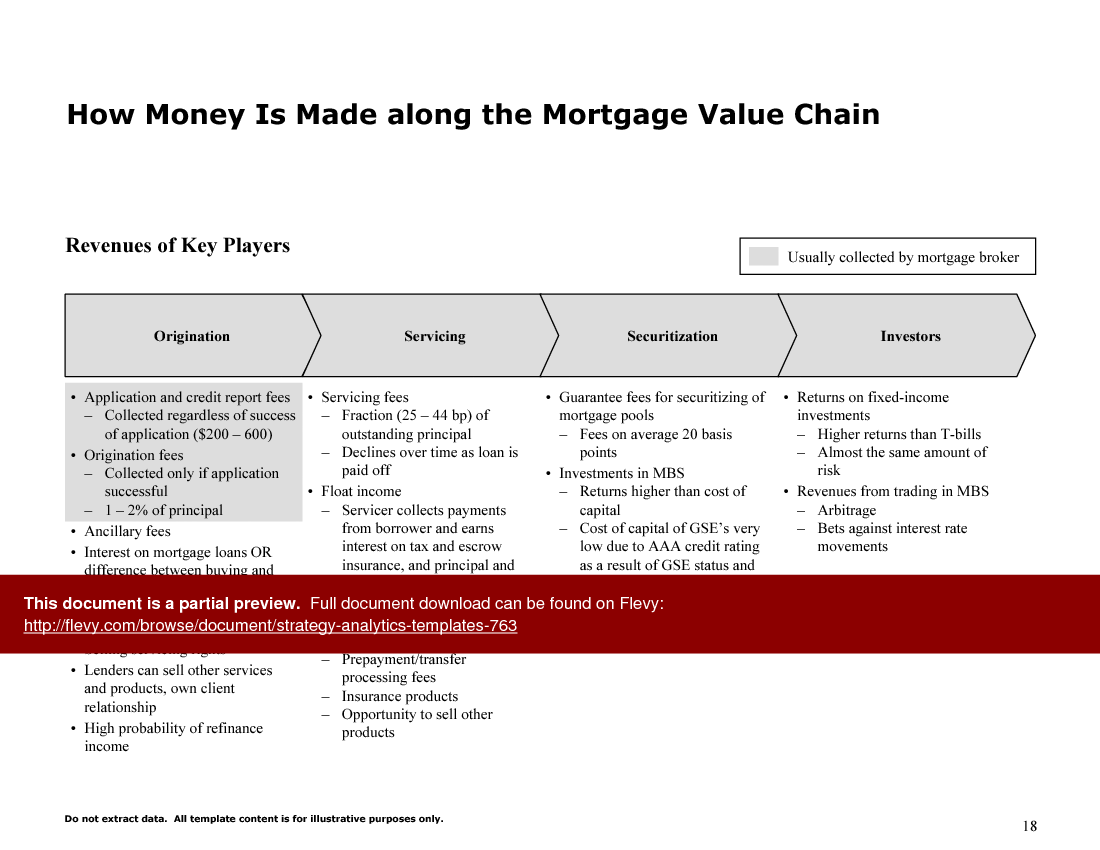
This slide outlines key profit drivers and risks in the loan process, categorized into Origination, Funding, Servicing, and Sale to Secondary Market/Securitization. In Origination, profit drivers include the number of loans, loan close rate, marketing efficiency, and customer quality, highlighting the need for effective marketing and customer service. The Funding section emphasizes the importance of loan volume and close rate for funding efficiency, with a focus on leveraging commissions to maximize basis points. Servicing efficiency and cross-sell retention are crucial for additional revenue. The Sale to Secondary Market/Securitization addresses the spread on sales and securitization fees, vital for liquidity and profitability. Key risks include cyclical origination levels and pipeline risks, underscoring the financial sector's volatility and the necessity for robust risk management strategies.
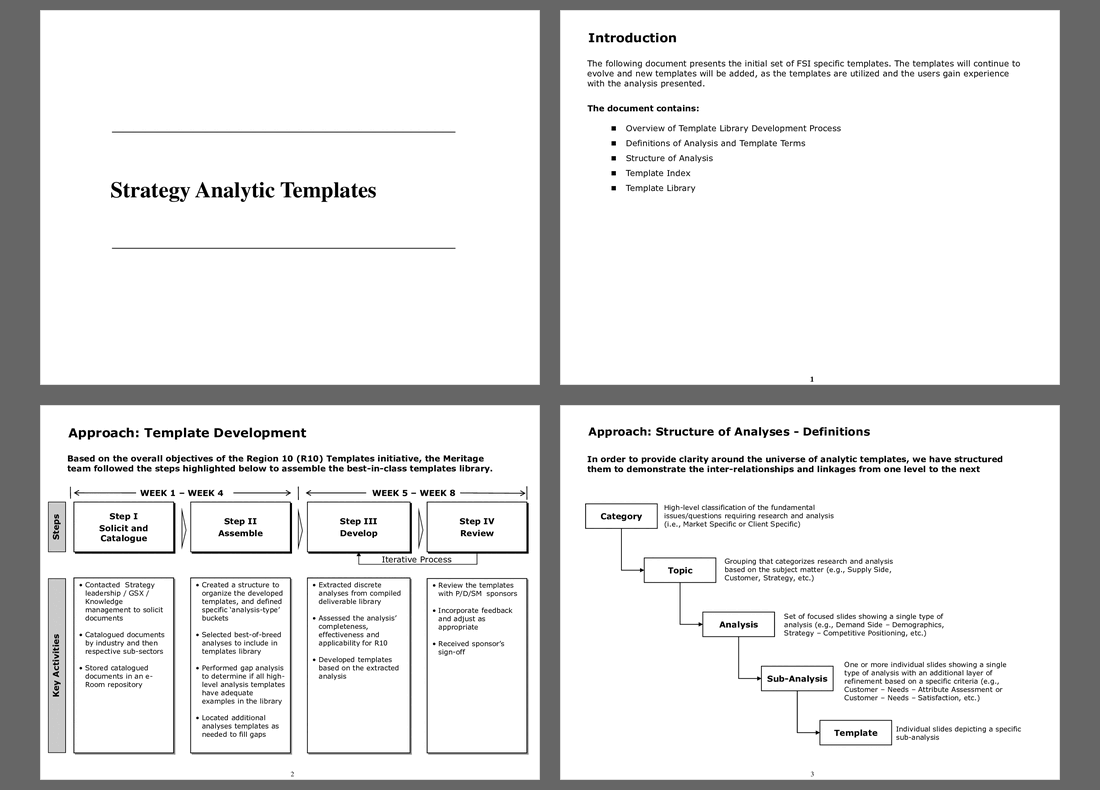
The R10 Templates initiative outlines a structured approach to developing a library of best-in-class templates through 4 key steps over eight weeks.
Step I, "Solicit and Catalogue," involves engaging strategy leadership and knowledge management to gather and catalog existing documents by industry and sub-sector in an accessible e-room repository.
Step II, "Assemble," focuses on organizing templates into a structured framework by analysis type, selecting best examples, and conducting a gap analysis to ensure comprehensive representation of high-level analysis templates.
Step III, "Develop," entails extracting discrete analyses from deliverables, assessing their effectiveness against R10 objectives, and developing new templates to align with identified needs.
Step IV, "Review," includes a thorough examination of templates with project sponsors, incorporating feedback and adjustments, culminating in sponsor sign-off to ensure quality standards are met.
The average daily rate of a McKinsey consultant is $6,625 (not including expenses). The average price of a Flevy document is $65.
Trusted by over 10,000+ Client Organizations
Since 2012, we have provided best practices to over 10,000 businesses and organizations of all sizes, from startups and small businesses to the Fortune 100, in over 130 countries.
"As an Independent Management Consultant, I find Flevy to add great value as a source of best practices, templates and information on new trends. Flevy has matured and the quality and quantity of the library is excellent. Lastly the price charged is reasonable, creating a win-win value for
the customer, Flevy and the various authors. This is truly a service that benefits the consulting industry and associated clients. Thanks for providing this service.
"
– Jim Schoen, Principal at FRC Group
"FlevyPro has been a brilliant resource for me, as an independent growth consultant, to access a vast knowledge bank of presentations to support my work with clients. In terms of RoI, the value I received from the very first presentation I downloaded paid for my subscription many times over! The
quality of the decks available allows me to punch way above my weight – it's like having the resources of a Big 4 consultancy at your fingertips at a microscopic fraction of the overhead.
"
– Roderick Cameron, Founding Partner at SGFE Ltd
"As a niche strategic consulting firm, Flevy and FlevyPro frameworks and documents are an on-going reference to help us structure our findings and recommendations to our clients as well as improve their clarity, strength, and visual power. For us, it is an invaluable resource to increase our impact and value."
– David Coloma, Consulting Area Manager at Cynertia Consulting
"My FlevyPro subscription provides me with the most popular frameworks and decks in demand in today’s market. They not only augment my existing consulting and coaching offerings and delivery, but also keep me abreast of the latest trends, inspire new products and service offerings for my practice, and educate me
in a fraction of the time and money of other solutions. I strongly recommend FlevyPro to any consultant serious about success.
"
– Bill Branson, Founder at Strategic Business Architects
"Last Sunday morning, I was diligently working on an important presentation for a client and found myself in need of additional content and suitable templates for various types of graphics. Flevy.com proved to be a treasure trove for both content and design at a reasonable price, considering the time I
saved. I encountered a download issue during the ordering process. However, a quick email to Flevy's support team, even on a Sunday (!!!), resulted in assistance within less than an hour, allowing me to download the content I needed. Fantastic job, Flevy! I give 5 stars for both content/price and customer service. Thank you!
"
– M. E., Chief Commercial Officer, International Logistics Service Provider
"As a consultant requiring up to date and professional material that will be of value and use to my clients, I find Flevy a very reliable resource.
The variety and quality of material available through Flevy offers a very useful and commanding source for information. Using Flevy saves me time, enhances my expertise and ends up being a good decision."
– Dennis Gershowitz, Principal at DG Associates
"One of the great discoveries that I have made for my business is the Flevy library of training materials.
As a Lean Transformation Expert, I am always making presentations to clients on a variety of topics: Training, Transformation, Total Productive Maintenance, Culture, Coaching, Tools, Leadership Behavior, etc. Flevy
It is well worth the money to purchase these presentations. Sure, I have the knowledge and information to make my point. It is another thing to create a presentation that captures what I want to say. Flevy has saved me countless hours of preparation time that is much better spent with implementation that will actually save money for my clients.
"
– Ed Kemmerling, Senior Lean Transformation Expert at PMG
"FlevyPro provides business frameworks from many of the global giants in management consulting that allow you to provide best in class solutions for your clients."
– David Harris, Managing Director at Futures Strategy
Download our free compilation of 50+ Strategy & Transformation slides and templates. Frameworks include McKinsey 7-S, Balanced Scorecard, Disruptive Innovation, BCG Curve, and many more.