Editor's Note: Take a look at our featured best practice, Omni-channel Retail Strategy (44-slide PowerPoint presentation). The e-commerce market continues to grow exponentially. More consumers are opting for the convenience of online shopping. This trend has been accelerated by COVID-19.
The future of e-commerce is Omni-channel Retailing. A single channel is no longer enough. The challenge is to find a seamless [read more]
* * * *
The beauty industry has never been more competitive online. New skincare, fragrance, and cosmetics brands launch constantly, and customers can compare dozens of options in seconds. For a growing beauty brand, a strong product is no longer enough. Sales depend on being available in the right places and being visible where shoppers are already looking.
Two strategies have become especially powerful for brands that want to scale: wholesale distribution and Amazon advertising. Used together, they help a brand reach more buyers, build credibility, and grow revenue without relying on a single sales channel.
The Challenge of Growing a Beauty Brand Online
Beauty products are personal purchases. Shoppers care about ingredients, scent, reviews, and brand reputation. They also tend to buy from familiar places, whether that is a favorite boutique, a salon, or a marketplace like Amazon.
For many brands, the biggest hurdle is not making the product but getting it in front of enough of the right customers. Selling only through your own website limits your reach to people who already know your name. To grow, brands need to show up in stores, salons, and marketplaces where buyers are actively shopping.
Why Wholesale Distribution Still Matters
Wholesale distribution puts your products into the hands of retailers, beauty professionals, and smaller businesses that sell directly to customers. It remains one of the most reliable ways to expand reach without building every sales relationship yourself.
How Wholesale Helps Beauty Brands Scale
Wider reach. A distributor already has relationships with many retailers and resellers, so your products can appear in more places faster.
Steady volume. Wholesale orders tend to be larger and more predictable than individual online sales.
Credibility. When a brand is stocked by trusted retailers, shoppers are more likely to try it.
Less operational strain. Distributors handle much of the logistics, which frees up time for product development and marketing.
Specialist distributors make this easier for both brands and retailers. For example, Radiance B2B is a UK fragrance wholesaler that supplies beauty and perfume products to retailers, wholesalers, small businesses, and beauty professionals. It offers trade pricing, low minimum order quantities, and both UK and international delivery. For a smaller retailer or reseller, low minimums make it possible to stock recognized brands without committing to huge orders up front.
Choosing the Right Wholesale Partner
When evaluating a distributor, beauty brands and retailers should consider:
Product range and brand fit. Does the distributor carry products that match your positioning?
Minimum order quantities. Lower minimums are friendlier for smaller businesses testing new lines.
Delivery coverage. Domestic and international shipping options affect how far you can grow.
Support and expertise. Some distributors offer product training and market insight, which can help resellers sell more effectively.
How Amazon Advertising Drives Beauty Sales
While wholesale expands your physical and retail reach, Amazon has become one of the most important places for beauty brands to sell online. Shoppers often go straight to Amazon to compare products, read reviews, and buy quickly.
The challenge is visibility. Popular beauty categories are crowded, and even excellent products can get buried. That is where Amazon advertising comes in.
The Main Amazon Ad Types
Sponsored Products appear in search results and on product pages, helping individual items show up when shoppers search for related terms.
Sponsored Brands feature your logo, a headline, and several products, which helps build brand recognition.
Sponsored Display reaches shoppers based on their browsing and shopping behavior, both on and off Amazon.
Why Expert Management Matters
Amazon advertising can quickly become expensive if it is not managed well. Bids, keywords, and budgets need constant attention, and success depends on profit, not just ad clicks. Many brands work with a specialized agency to handle it. Firms that rank among the best Amazon PPC agency options, such as IG PPC, manage campaigns across Sponsored Products, Sponsored Brands, Sponsored Display, and Amazon DSP, and focus on metrics like total advertising cost of sales and overall profitability.
For a beauty brand, an experienced manager can help find the searches that convert, cut wasted spend, and scale what works during key seasons like the holidays.
Combining Wholesale and Amazon for Stronger Growth
Wholesale and Amazon advertising work best as a team. Each one strengthens the other.
Brand awareness from retail supports Amazon sales. Shoppers who see a product in a store or salon often look it up online later.
Amazon reviews build retail confidence. Strong reviews and sales history make retailers and distributors more willing to stock a brand.
Diversified revenue lowers risk. If one channel slows, the other keeps sales moving.
Better data. Amazon advertising reveals which products, scents, or claims resonate most, which can guide wholesale and product decisions.
A brand that relies on only one channel leaves growth on the table. A brand that combines both builds a stronger, more resilient business.
Practical Steps for Beauty Brands
Define your best-selling products. Focus distribution and advertising on the products with the strongest demand and margins.
Find the right distribution partner. Look for a distributor that fits your category, minimums, and target markets.
Optimize your Amazon listings first. Strong images, clear descriptions, and honest claims make every ad dollar work harder.
Start advertising with a clear budget. Test, measure, and scale the campaigns that bring profitable sales.
Keep your brand consistent. Packaging, messaging, and imagery should match across retail, wholesale, and Amazon.
Review results regularly. Use sales and ad data to adjust both channels over time.
Conclusion
Growing a beauty brand online takes more than a great product. Wholesale distribution helps brands reach more retailers and customers with less strain, while Amazon advertising puts products in front of shoppers at the moment they are ready to buy. Brands that work with the right partners, like a specialized fragrance wholesaler for distribution and an experienced agency for Amazon advertising, give themselves the best chance to stand out and scale in a crowded market.
Frequently Asked Questions
Is wholesale distribution still worth it for beauty brands? Yes. Wholesale helps brands reach more retailers, salons, and resellers quickly, often with larger and more predictable orders than direct online sales alone.
What should I look for in a beauty or fragrance wholesaler? Look at product range, minimum order quantities, delivery coverage, pricing, and whether the distributor offers support like product training.
Why is Amazon advertising important for beauty products? Beauty categories on Amazon are crowded, and advertising helps products appear in front of shoppers who are actively searching and ready to buy.
Should I manage Amazon ads myself or hire an agency? Smaller brands can start on their own, but an experienced agency can usually improve profitability, cut wasted spend, and scale campaigns faster.
Can wholesale and Amazon work together? Yes. Retail exposure builds brand awareness that drives Amazon searches, and strong Amazon reviews make retailers more willing to stock the brand.
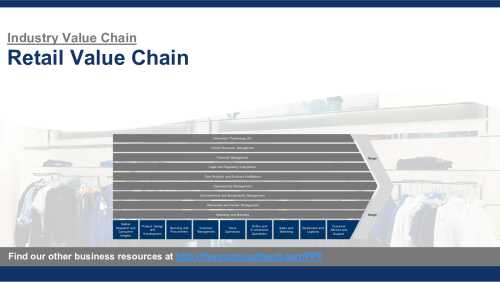
An Industry Value Chain is a visual representation of the series of steps an organization in a specific industry takes to deliver a product or service to the market. It captures the main business functions and processes that are involved in delivering the end product or service, illustrating how [read more]
Do You Want to Implement Business Best Practices?
You can download in-depth presentations on Retail Strategy and 100s of management topics from the FlevyPro Library. FlevyPro is trusted and utilized by 1000s of management consultants and corporate executives.
For even more best practices available on Flevy, have a look at our top 100 lists:
These best practices are of the same as those leveraged by top-tier management consulting firms, like McKinsey, BCG, Bain, and Accenture. Improve the growth and efficiency of your organization by utilizing these best practice frameworks, templates, and tools. Most were developed by seasoned executives and consultants with over 20+ years of experience.
Readers of This Article Are Interested in These Resources
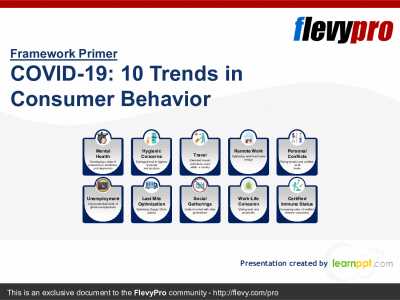
COVID-19 has taken the world by a storm. Financial markets, manufacturing, services, and tourism have been hit hard. In fact, it has also changed the way we work, communicate, interact, and shop more than any other disruption in the decade.
As a result, there have been key changes in Consumer [read more]
This presentation discusses profit recovery for retailers. Profit recovery includes improving shrink along the entire enterprise and supply chain--e.g. inventory loss, damages, shipping errors, credit/debit card loss, coupon abuse, other store discounting, etc.
This document delves into the [read more]
This is a sales presentation example for Consumer Driven Replenishment (CDR) project work. CDR is an analytical approach to supply chain integration between a consumer goods supplier and its customers.
This document provides a comprehensive overview of the Consumer-Driven Replenishment (CDR) [read more]
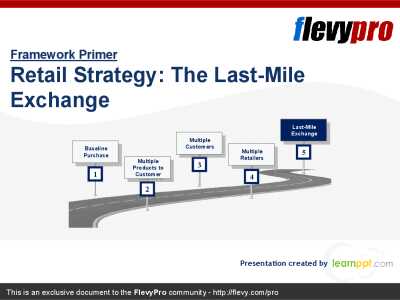
Keeping up with the growing volume of e-commerce will require delivery companies to disrupt their long-standing business model. All this growth can bring some peril.
Retailers and transportation companies are now faced with challenges in this fast-changing marketplace. With the boom in [read more]
 The beauty industry has never been more competitive online. New skincare, fragrance, and cosmetics brands launch constantly, and customers can compare dozens of options in seconds. For a growing beauty brand, a strong product is no longer enough. Sales depend on being available in the right places and being visible where shoppers are already looking.