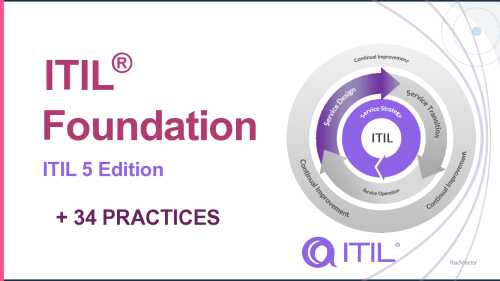
Editor's Note: Take a look at our featured best practice, Training Materials for ITIL 4 Foundation Training (292-slide PowerPoint presentation). This is an UNOFFICIAL Course Materials for ITIL4 Foundation Training with exercises and sample exam questions.
This document is built on ITIL4 Foundation ppt concepts, we have designed this document as training material for the ITIL4 Foundation trainers, with a 360-slide ITIL 4 powerpoint [read more]
* * * *
Picture this: an engineer resigns on Friday, but her company-owned MacBook still sits on her kitchen table a month later. Gartner says enterprises recover only about 50 percent of laptops, draining budgets and widening security gaps .
Lost devices stall audits, expose sensitive data, and force IT to chase couriers while your hybrid workforce stretches across six continents. A new class of lifecycle platforms fixes the problem: they procure hardware, pre-configure it, ship globally, retrieve it on exit, and certify every wipe.
We benchmarked the leaders on retrieval success, logistics speed, integration depth, and real customer outcomes. Below are the five best options for 2027.
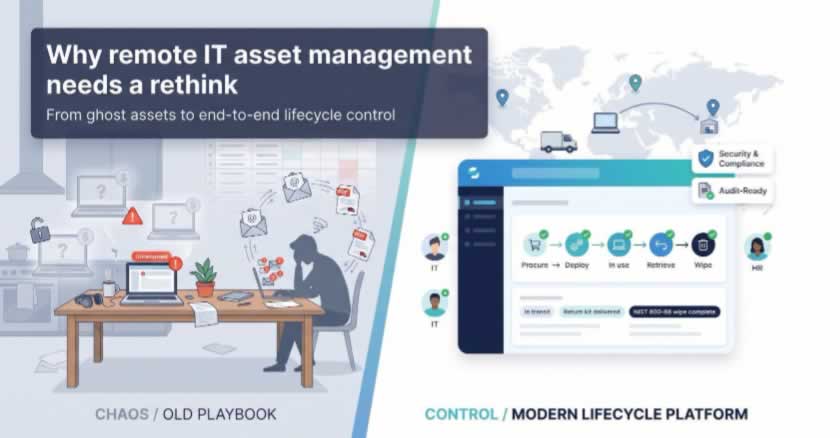
Why Remote IT Asset Management Needs a Rethink
Remote work changed the game, but most IT playbooks stayed in the 2010s. When devices live on kitchen counters instead of office lockers, visibility disappears fast. According to Innovapptive, ghost assets—hardware you still pay for but can’t physically locate—now swallow 15 to 30 percent of a typical fixed-asset register.
Every missing laptop stings twice: you lose the capital and you carry the risk that sensitive data walks out the virtual door. Offboarding amplifies the pain. HR triggers the exit, yet IT spends days emailing shipping labels, hoping the ex-employee finds a box and a free afternoon.
Data from Allwhere’s laptop-return service shows that mailing a recyclable, padded kit pre-labeled for shipping and tracked end to end lifts first-attempt retrieval to 91 percent—roughly 80 percent above the 50 percent industry norm. Most U.S. returns close in under a week, shrinking the breach window and ending the email-label back-and-forth that drains IT hours.
Onboarding is no easier. New hires wait while customs holds their gear, or procurement scrambles for a regional supplier that adds 40 percent to the price. Support tickets pile up because the only spare devices sit in a warehouse half a world away.
Security teams feel the tension most. An offline Mac can’t receive an MDM wipe, compliance deadlines keep ticking, and regulators cite “poor asset governance” first when breaches make headlines.
The takeaway is clear: traditional inventory software and ad-hoc courier accounts can’t keep pace with a workforce that logs in from Bali on Monday and Lisbon on Tuesday. Teams need platforms built for end-to-end logistics, automated hand-offs, and real-time chain-of-custody tracking. Next, we show how we measured exactly that.
How We Picked the Winners
We didn’t throw darts at a vendor list. We built a scorecard that mirrors the headaches your team faces every day.
We weighted seven factors. Retrieval performance led at 25 percent. If a provider can’t pull a laptop out of an ex-employee’s apartment, dashboards are irrelevant. We benchmarked each platform’s published or audited return rate against the industry’s 50 percent baseline.
Lifecycle automation and global logistics carried 20 percent each. We wanted products that manage procurement, deployment, refresh, and retirement while covering at least 75 countries with documented customs support.
Integration strength held 15 percent. HRIS, MDM, and ITSM connectors turn asset ops into background tasks, so we tallied pre-built APIs and live case studies.
Cost and value counted for 10 percent. Flat-rate or pay-as-you-go models were fine as long as fees matched the savings from recovered gear and reclaimed IT hours.
Security credentials and user sentiment rounded out the final 10 percent. SOC 2, ISO 27001, and round-the-clock help desks often broke ties.
Each vendor earned a score out of 100. We then cross-checked results with recent reviews and customer interviews. The five that cleared 66 points made our definitive lineup.
At-a-Glance Comparison
Before we get into the full reviews, here’s a side-by-side look at the frontrunners. Use the table below to compare coverage, reliability, and pricing in seconds.
Vendor-reported or third-party benchmark; independent 2027 audit pending.
Keep this summary close as you read the detailed breakdowns. It helps you match each platform to your must-haves without juggling multiple tabs.
1. Allwhere – best for “hands-off” device logistics
Allwhere treats hardware moves like background noise: you set the policy, the platform handles the heavy lifting, and its dashboard already shows which devices are deployed, in transit, or resting in an Allwhere depot so ops never lose track. When HR marks an employee’s last day, a prepaid return kit lands on the doorstep. A courier arrives, and the dashboard records each hand-off in real time. No chasing labels, no weekend FedEx runs.
That rhythm shows in the results. Allwhere posts a 96 percent on-time delivery rate and a 91 percent on-time retrieval rate, nearly double the industry’s 50 percent baseline cited earlier.
Coverage is truly global. With in-house operations on four continents, Allwhere ships or collects gear in more than 50 countries, handling customs so you never study tariff codes. IT simply watches status updates roll in: “label created,” “box collected,” “NIST 800-88 wipe complete.”
Integrations keep the workflow invisible. Connect BambooHR and Jamf, and a single offboarding event locks the device, books the pickup, and closes the HR task. Admins stay focused on bigger priorities instead of shipping manifests.
Pricing is pay-per-use, ideal when hiring waves rise and fall. You pay only when a device moves, so quiet months stay light on budget.
Potential drawbacks? Allwhere is newer than some rivals, so analytics and deep warranty tracking are still evolving. And while 50-plus countries cover most footprints, ultra-global firms should confirm edge locations before signing.
If you need reliable hardware logistics without building a freight department, Allwhere delivers in every sense.
2. Deel IT – best for HR-integrated device workflows
Deel already runs global hiring for thousands of companies. With Deel IT, the same platform that signs contracts and runs payroll also manages laptop logistics. Each HR action you take, such as a new contract, promotion, or termination, automatically triggers the matching hardware task.
Picture adding a marketer in Tokyo. While HR finalizes the contract, Deel IT orders the approved MacBook, enrolls it in your MDM, and books a regional courier. When that marketer later changes teams, access rights, app licenses, and even a monitor upgrade ride on the same role-change event, so no one juggles extra tickets.
Coverage reaches 130 countries, built on the infrastructure Deel gained through its 2024 Hofy acquisition. Devices ship from local depots, so new hires usually start day one with gear in hand instead of waiting on an international parcel. Returns stay just as simple: the employee clicks a link, chooses a pickup slot, and a courier collects the laptop, closing the HR offboarding checklist in the background.
Because Deel IT lives inside the HRIS, reporting is unified. Finance sees hardware costs beside payroll, compliance tracks chain-of-custody logs next to contracts, and IT views real-time device status without flipping dashboards. You get one source of truth for people and their tech.
Pricing follows a per-device or per-employee monthly fee, straightforward if you already budget head-based costs in Deel. Teams with rapid growth or frequent contractor churn like the predictability; low-turnover firms may save more with pay-per-shipment services.
Possible downsides? If you do not use Deel for HR, adding a second people system just for devices can feel heavier than a standalone IT tool. And while Deel IT covers the full laptop lifecycle, it offers less depth in hardware analytics or spare-stock workflows than platforms built solely for IT ops.
For companies that work in Deel every day and want equipment to follow the same automated path, Deel IT feels like ticking one box instead of launching a new project.
3. Workwize – best for large, multinational fleets
If your device count runs into the thousands and spans every time zone, Workwize is built for you. The platform works like a global command center: one dashboard to ship, swap, repair, recycle, and report on every asset in motion.
Zero-touch automation drives its appeal. Upload a CSV of 200 new hires across 12 countries, choose a standard kit per role, and hit schedule. Workwize coordinates regional warehouses, MDM enrollments, and courier bookings without a follow-up email. A developer in São Paulo and a designer in Berlin both unbox their gear within a week, already enrolled in Intune or Jamf.
Returns follow the same script. The departing employee books a pickup slot, the box arrives, and IT tracks a live breadcrumb trail until the device reaches a depot for NIST-grade wiping. In 2026 benchmark testing, Workwize scored 9 out of 10 on retrieval reliability, placing it among the top performers.
Sustainability sets Workwize apart. The platform bakes certified recycling and resale into its lifecycle engine. Retire a three-year-old Dell, and you see whether it will be refurbished for redeployment or shredded with full material recovery certificates, helping ESG teams meet e-waste targets without extra tooling.
Integrations run deep: Okta for identity, Jira Service Management for tickets, ServiceNow CMDB sync, plus direct APIs for custom workflows. ITSM rules can open a ticket automatically if a shipment misses its SLA, so support never loses track of delayed hardware.
Cost follows a SaaS subscription tiered by active devices. Enterprises enjoy predictability, though smaller orgs may find it pricier than pay-as-you-go models when movement is light. Implementation takes planning; mapping existing stock and linking multiple HRIS feeds can stretch a few weeks.
Bottom line: when scale and process consistency matter more than raw speed, Workwize gives global IT teams the tools to manage every laptop, monitor, and docking station like clockwork, no matter how many people log in from “somewhere on the map” each morning.
4. Firstbase – best for predictable, flat-rate service
Firstbase removes financial guesswork from device ops. You pay one monthly fee per employee, and almost every hardware action (procurement, swap, retrieval, repair) sits inside that envelope. Your finance team likes the simplicity; IT likes stepping off the logistics treadmill.
Speed leads the stats. Stocked hubs in North America and Europe let Firstbase meet a 48-hour ship service level for in-stock gear, so new hires log in with a ready machine instead of waiting while a laptop crawls through customs.
Recovery performance is even stronger. Firstbase reports a 97 percent laptop return rate, closing the loop from offboarding trigger to warehouse arrival in under 30 days. Devices come back wiped, inspected, and either redeployed or resold for credit, trimming both e-waste and replacement budgets.
A virtual IT closet powers just-in-time inventory. You hold spare laptops in Firstbase’s warehouse and see them in real time. When a machine fails in the field, a replacement ships at once, and the broken unit returns for repair or recycling. Clients often cut idle stock by 30 percent after rollout.
Integrations cover the staples: Workday, Okta, Jamf, and Slack alerts that ping managers when shipments land or return kits scan.
Price is the trade-off. Flat fees shine when your workforce churns or grows quickly, but if turnover is low and refresh cycles run long, you may pay more than with event-based models like Allwhere. Global reach also relies on two primary hubs; deliveries to APAC or Africa can stretch beyond the 48-hour promise, though they still beat DIY courier work.
For teams that value cost certainty as much as operational relief, Firstbase offers a set-it-and-forget-it model that brings both stability and solid lifecycle outcomes.
5. GroWrk – best for security-centric scale-ups
GroWrk’s promise is simple: onboard or offboard anyone, anywhere, without opening an IT ticket. The platform connects more than 40 integrations (Rippling for HR, Okta for identity, Jamf for MDM) so every device event follows a policy, not a person.
Security comes first. Devices ship encrypted, pre-enrolled, and locked to corporate ownership right out of the box. Offboarding runs the same steps in reverse: accounts disable, remote lock fires, and the courier pickup schedules itself. Compliance teams appreciate the paper trail because each hop carries a chain-of-custody time-stamp and a NIST-grade wipe certificate when gear reaches a depot.
Global reach matches larger incumbents. GroWrk moves hardware across 150 countries through regional partners while keeping service-level control internally. That matters when you are scaling fast; one fintech grew from 60 to 400 employees in five regions and still maintained a sub-7-day average delivery without adding IT headcount.
Analytics dig deeper than surface charts. The dashboard flags warranty expirations, unused peripherals, and high-risk geos where retrieval lag creeps past policy. Those insights drive proactive refresh campaigns, holding downtime low and budgets tight.
Pricing is custom, usually tiered by active devices. Smaller teams can begin with pay-per-movement, then switch to a managed tier once volume justifies it. Implementation needs upfront work, such as mapping security baselines and connecting multiple SaaS tools, but the payoff is a lifecycle engine that enforces governance while removing manual chores.
If you balance strict compliance with rapid growth, GroWrk provides the automation strength and security guardrails to keep every laptop, and the data on it, exactly where it should be.
Emerging Solutions to Watch
The market keeps moving. Two newer entrants merit a quick look because they target narrow pain points with focus and speed.
Convoy turns hardware into an operating expense. Instead of buying laptops, you subscribe to a device-as-a-service bundle. One monthly fee covers procurement, zero-touch setup, replacements, and an automatic refresh every two years. Finance teams like the predictable cash flow, and employees work on modern gear. The trade-off is ownership: when you cancel, the laptops return to Convoy, so companies with strict capitalization rules should review the details.
Raal specializes in logistics. Open its portal, enter an address, and Raal ships or retrieves hardware in more than 150 countries. Customs forms, insurance, and courier coordination stay behind the curtain. If you already track assets in ServiceNow or Snipe-IT but dread the shipping grind, Raal fills that gap without forcing a platform migration. Remember, it will not inventory devices or trigger MDM actions; it is purely a logistics concierge.
Neither service cracked our top five because they lack full lifecycle breadth for now, yet both move the category forward. Keep them on your radar if your main challenge is shifting CapEx to OpEx (Convoy) or clearing shipping busywork from your queue (Raal).
This document is based on ITIL v3 and provides a template for a detailed Service Catalogue. A Service Catalogue is one of the three elements of an IT Service Providers, Service Portfolio.
The Service Portfolio is the complete set of services that are management by a service provider and is [read more]
Do You Want to Implement Business Best Practices?
You can download in-depth presentations on ITIL and 100s of management topics from the FlevyPro Library. FlevyPro is trusted and utilized by 1000s of management consultants and corporate executives.
For even more best practices available on Flevy, have a look at our top 100 lists:
These best practices are of the same as those leveraged by top-tier management consulting firms, like McKinsey, BCG, Bain, and Accenture. Improve the growth and efficiency of your organization by utilizing these best practice frameworks, templates, and tools. Most were developed by seasoned executives and consultants with over 20+ years of experience.
Readers of This Article Are Interested in These Resources
Incident Management Process is essential Process in Service Support.
Document describes the process in detail including very detailed description of Process flow steps. Other than that, document contains Incident Management key definitions, process roles, CSFs, KPIs, Risks and [read more]
Change Management Process is essential Process in Service Transition. Process is contained in ITSM best practices.
Document describes the process in detail including Process flow, key definitions, process roles, CSFs, KPIs, Risks and Challenges.
This comprehensive PPT on Change Management [read more]
ITIL® Foundation Version 5 -- Presentation Overview
What Is ITIL?
ITIL -- the IT Infrastructure Library -- has evolved from IT infrastructure guidance into the world's most comprehensive framework for digital product and service management. Version 5, published by PeopleCert in February [read more]
This document establishes an Incident Management (IM) process according to ITSM best practice and ISO 20000. (Word document including Visio diagram of the process)
This document introduces the Incident Management process Framework; the workflow, roles and responsibilities, RACI Matrix, [read more]