
Change Management - Process Guide (ITSM, ISO 20000)   54-page Word document
$45.00

Change Management - Process Guide (ITSM, ISO 20000) (54-page Word document) Preview Image
Log in to unlock full preview.
Change Management - Process Guide (ITSM, ISO 20000) (54-page Word document) Preview Image
Arrow   Click main image to view in full screen.

Change Management - Process Guide (ITSM, ISO 20000) (Word DOCX)

Word (DOCX) 54 Pages

#1 in ITIL $45.00

Add to Cart


Immediate download
Fully editable Word
Free lifetime updates

BENEFITS OF THIS WORD DOCUMENT

  1. ITIL Change Management- Complete process guide
  2. ITIL v3 & ISO 20000 Compliant
  3. Facilitates Change Management Process Implementation

CHANGE MANAGEMENT WORD DESCRIPTION

Editor Summary 54-page DOCX Change Management - Process Guide (ITSM, ISO 20000) by ITSM Consulting is a procedural handbook for managing IT service changes, detailing process flows, roles, policies, and templates. Read more

IT Change Management – Process Guide (ITSM best practice, ISO 20000 compliant)

This document establishes an Change Management (ChM) process according to IT best practice and ISO 20000. ( 50 pages Word document including Visio diagram of the process)

Content:
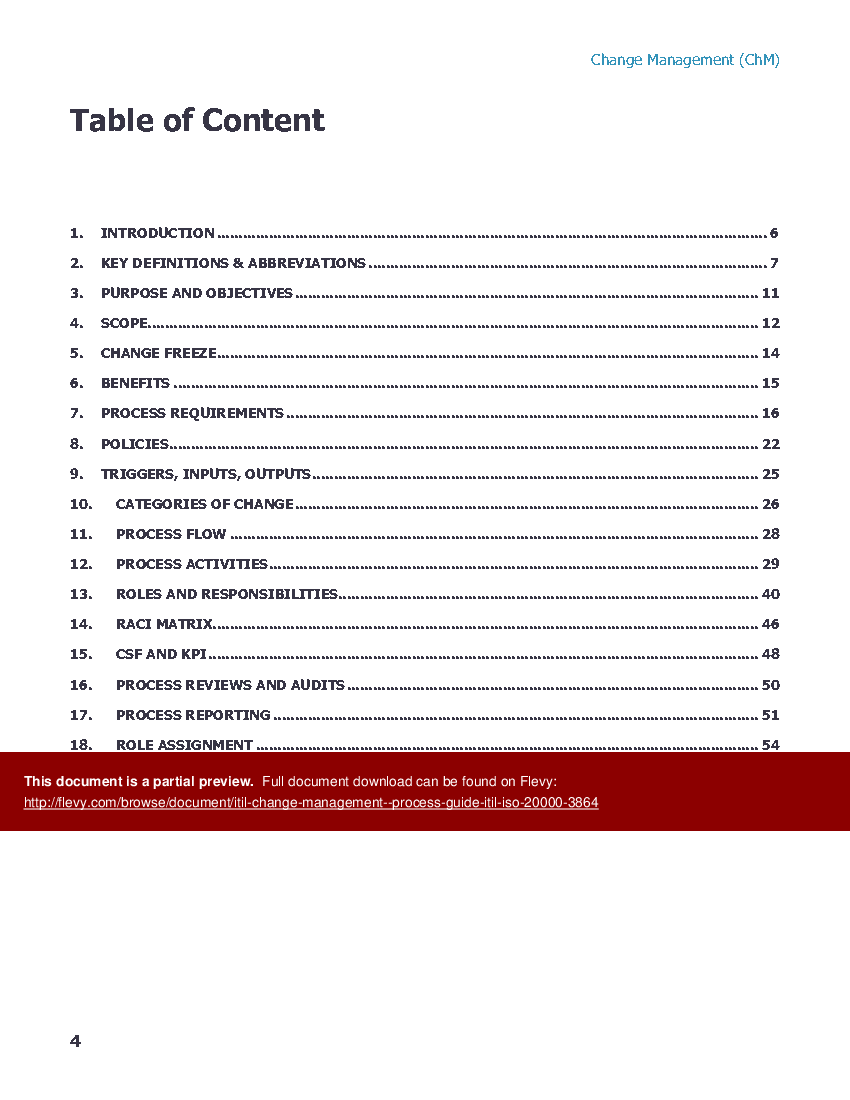
1. INTRODUCTION 5
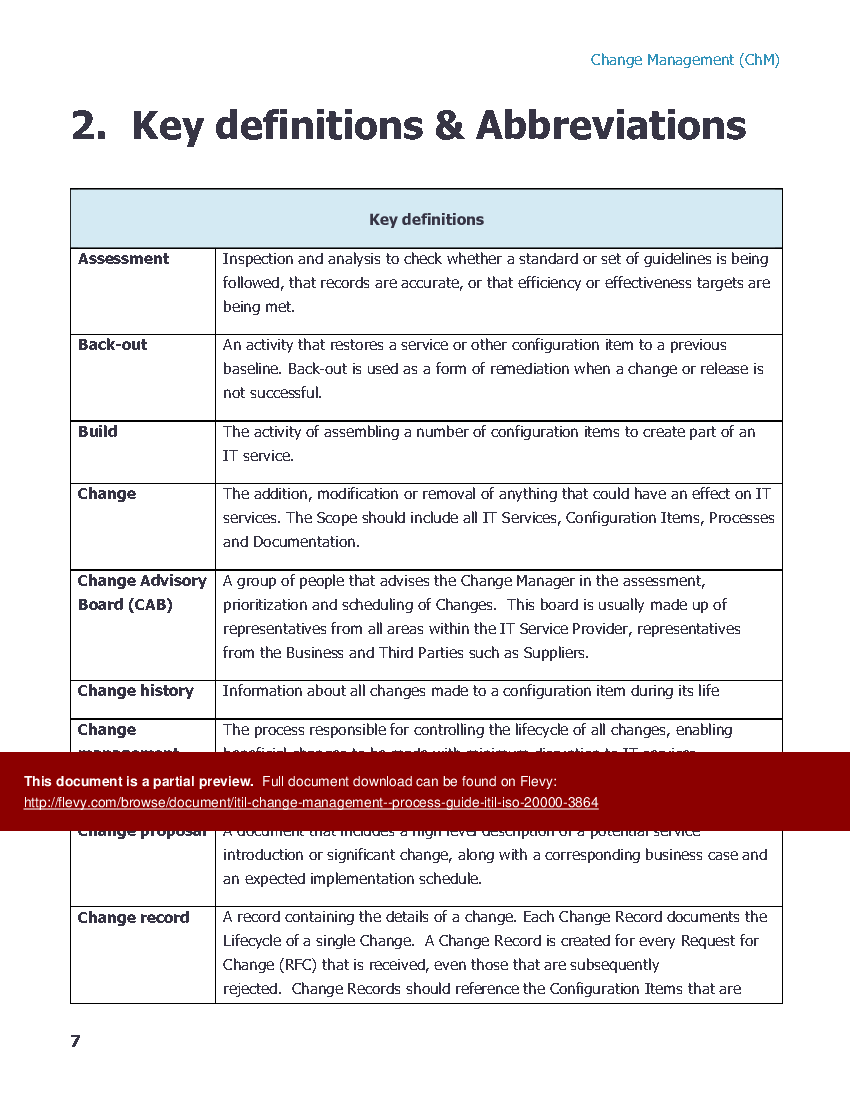
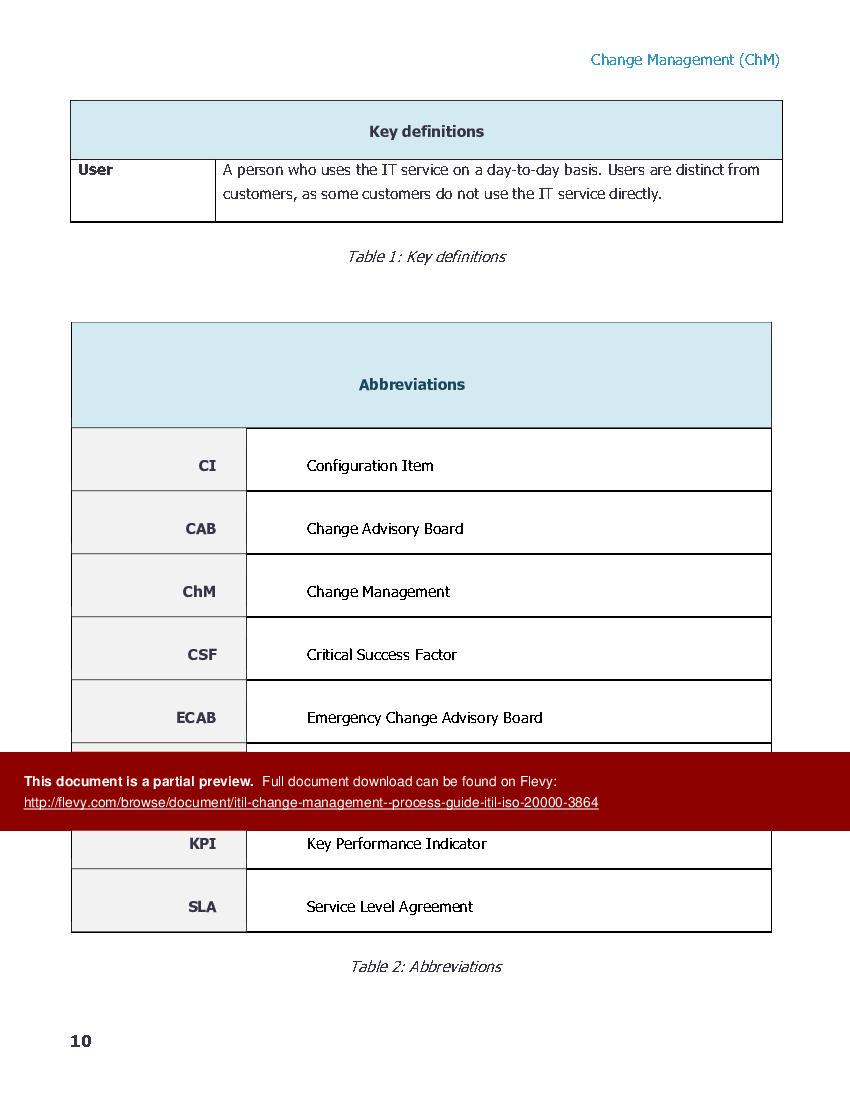
2. KEY DEFINITIONS & ABBREVIATIONS 6
3. PURPOSE AND OBJECTIVES 10
4. SCOPE 11
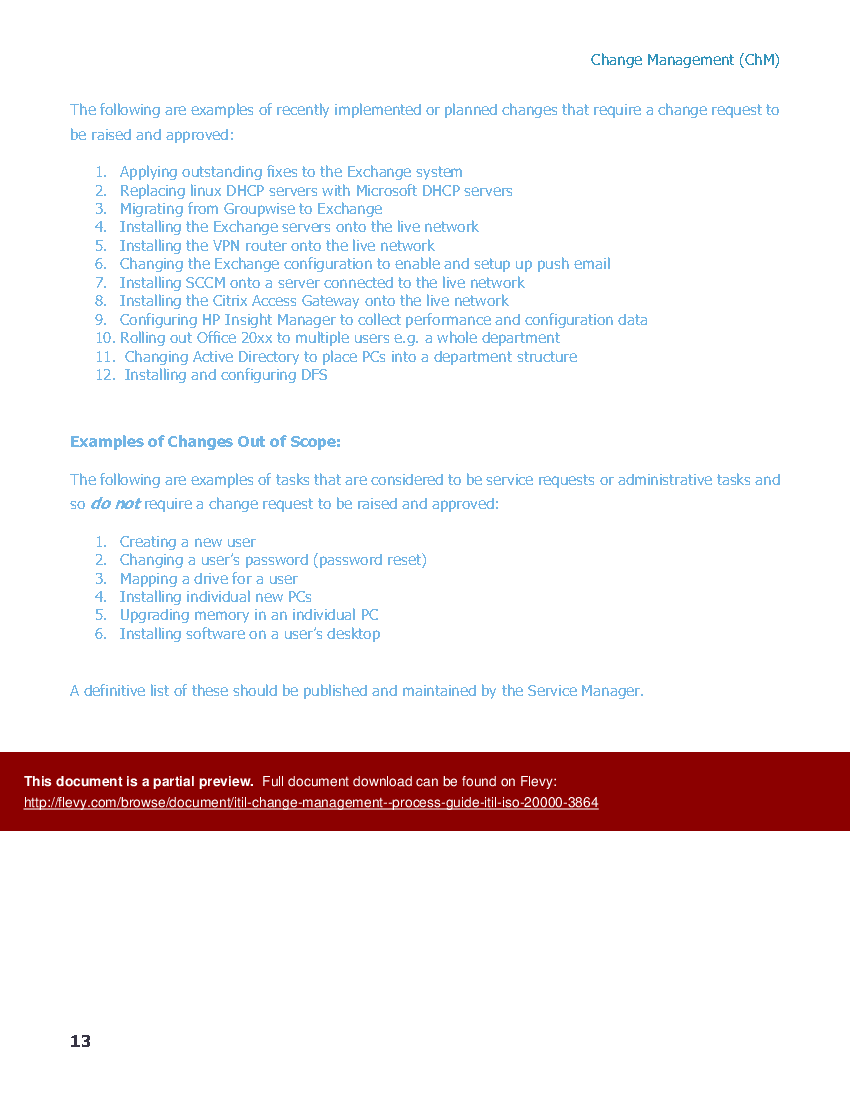
5. CHANGE FREEZE 13
6. BENEFITS 14
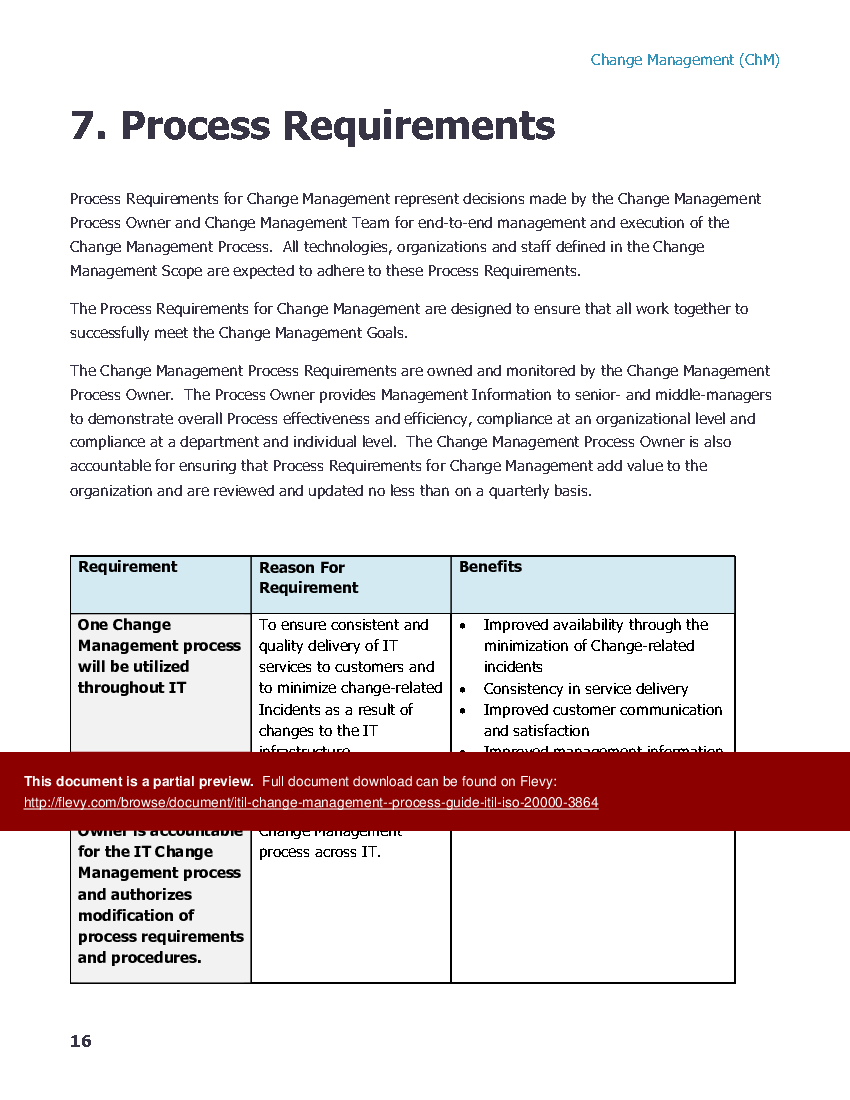
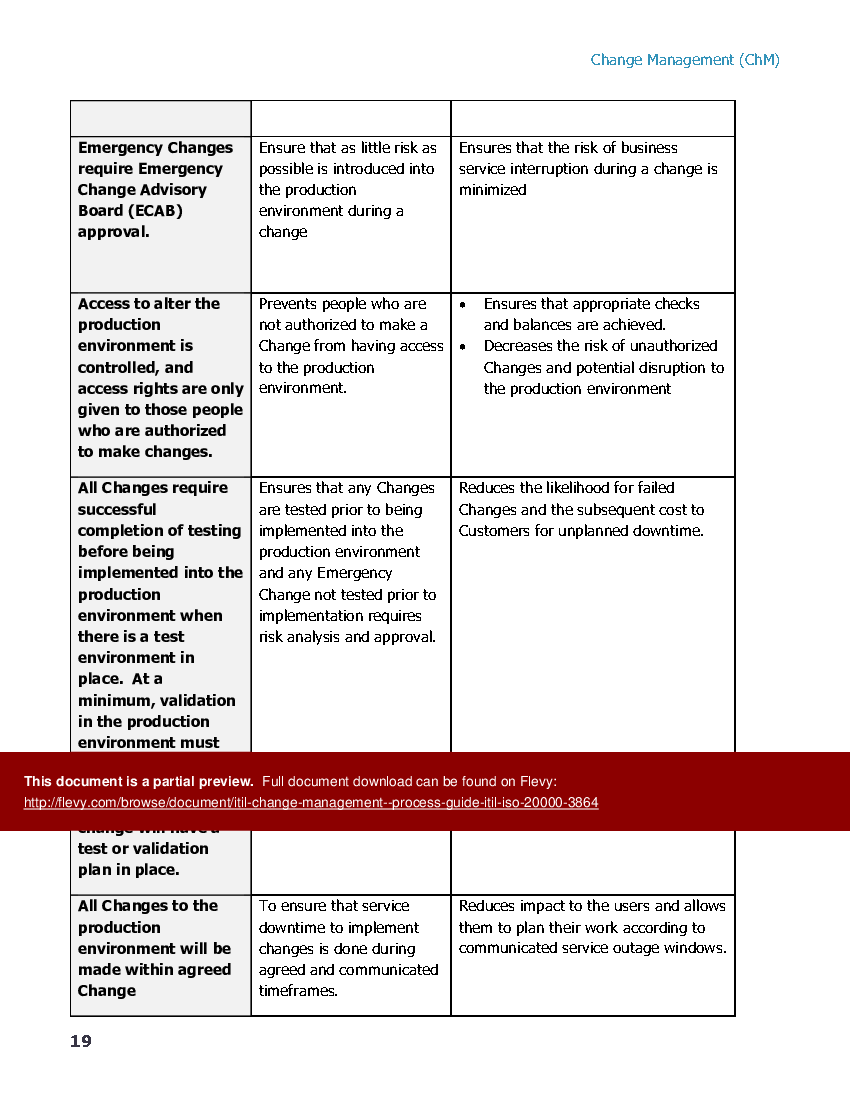
7. PROCESS REQUIREMENTS 15
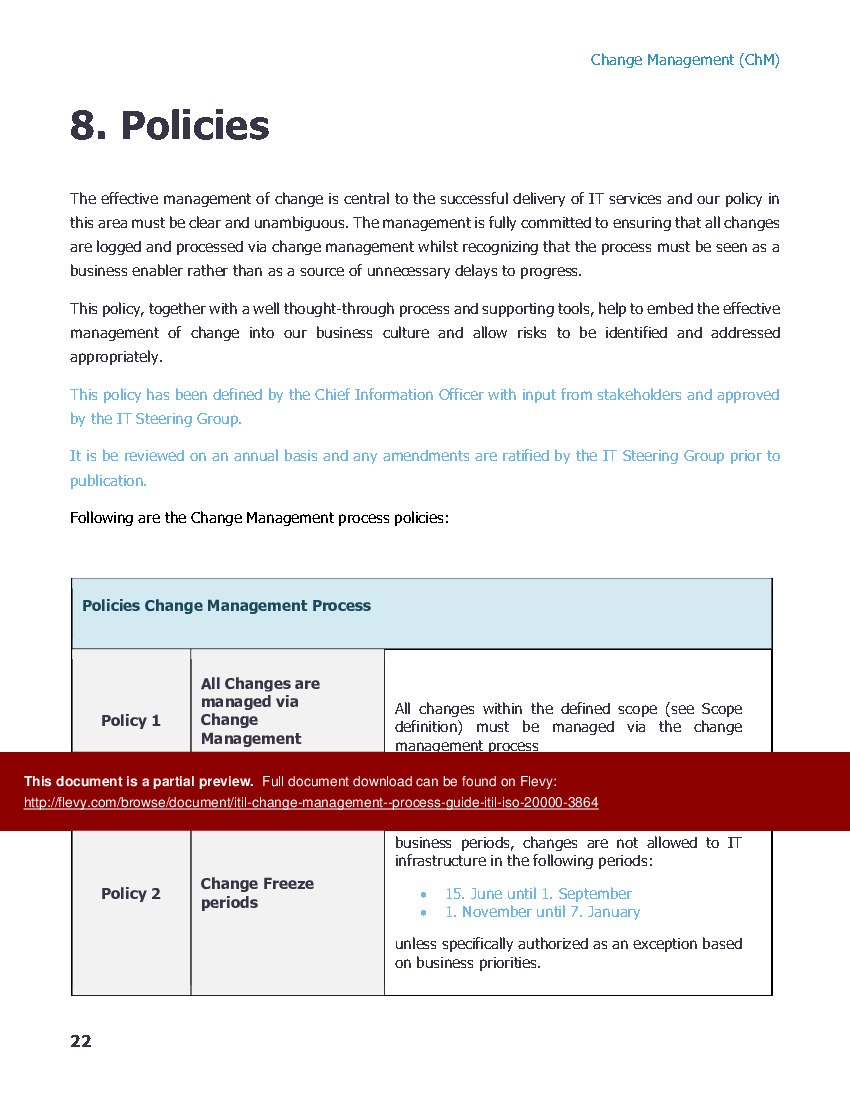
8. POLICIES 21
9. TRIGGERS, INPUTS, OUTPUTS 24
10. CATEGORIES OF CHANGE 25
11. PROCESS FLOW 27
12. PROCESS ACTIVITIES 28
13. ROLES AND RESPONSIBILITIES 39
14. RACI MATRIX 45
15. CSF AND KPI 47
16. PROCESS REVIEWS AND AUDITS 49
17. PROCESS REPORTING 50

This document establishes an Change Management (ChM) process according to IT best practice and ISO 20000. ( 50 pages Word document including Visio diagram of the process)

This comprehensive guide includes detailed process flows, step-by-step activities, and a robust RACI matrix to ensure clear accountability. It also covers critical success factors and key performance indicators, providing a framework for continuous improvement. The Word document is designed to align with both ITIL and ISO 20000 standards, making it an essential resource for organizations aiming to enhance their change management capabilities. Whether you're dealing with emergency changes or standard modifications, this guide offers the structured approach needed to manage changes effectively and efficiently.

Got a question about the product? Email us at support@flevy.com or ask the author directly by using the "Ask the Author a Question" form. If you cannot view the preview above this document description, go here to view the large preview instead.

MARCUS OVERVIEW

This synopsis was written by Marcus [?] based on the analysis of the full 54-slide presentation.


Executive Summary
The Change Management Process Guide (ChM) provides a comprehensive framework for managing changes within IT services, ensuring that beneficial changes are implemented with minimal disruption. This guide outlines the lifecycle of changes, detailing workflows, roles, and policies necessary for effective change management. By adopting this process, organizations can enhance service delivery, reduce risks associated with changes, and align IT services with business needs. The document serves as a living resource, requiring regular review and updates to maintain its relevance and effectiveness.

Who This Is For and When to Use
•  IT Service Managers overseeing change initiatives
•  Change Management Process Owners responsible for governance
•  Change Advisory Board (CAB) members involved in decision-making
•  IT teams implementing changes across various environments
•  Business stakeholders requiring alignment with IT services

Best-fit moments to use this deck:
•  During the planning phase of IT service changes
•  When assessing the impact of proposed changes on business processes
•  In preparation for critical business periods requiring change freezes
•  For training sessions on change management best practices

Learning Objectives
•  Define the Change Management process and its significance in IT service delivery
•  Establish a clear workflow for submitting and processing Requests for Change (RFCs)
•  Identify roles and responsibilities within the Change Management framework
•  Categorize changes based on urgency, risk, and impact
•  Implement standardized procedures for emergency and major changes
•  Evaluate the effectiveness of changes through post-implementation reviews

Table of Contents
•  Introduction (page 6)
•  Key Definitions & Abbreviations (page 7)
•  Purpose and Objectives (page 11)
•  Scope (page 12)
•  Change Freeze (page 14)
•  Benefits (page 15)
•  Process Requirements (page 16)
•  Policies (page 22)
•  Triggers, Inputs, Outputs (page 25)
•  Categories of Change (page 26)
•  Process Flow (page 28)
•  Process Activities (page 29)
•  Roles and Responsibilities (page 40)
•  RACI Matrix (page 46)
•  CSF and KPI (page 48)
•  Process Reviews and Audits (page 50)
•  Process Reporting (page 51)
•  Role Assignment (page 54)

Primary Topics Covered
•  Change Management Process - This process ensures that all changes are managed effectively, minimizing disruptions and aligning IT services with business needs.
•  Request for Change (RFC) - A formal proposal for a change that must be submitted and assessed before implementation.
•  Change Advisory Board (CAB) - A group that advises on the assessment, prioritization, and scheduling of changes.
•  Emergency Change Procedures - Specific guidelines for handling urgent changes that must be implemented immediately.
•  Post-Implementation Review (PIR) - A review conducted after a change to assess its success and identify lessons learned.
•  Roles and Responsibilities - Defined roles within the Change Management process, including the Change Manager and Change Authority.

Deliverables, Templates, and Tools
•  Change Request Form template for submitting RFCs
•  Change Record template for documenting changes
•  Standard Change Model for repeatable, low-risk changes
•  Emergency Change Procedure documentation
•  Post-Implementation Review report template
•  RACI Matrix for clarifying roles and responsibilities

Slide Highlights
•  Overview of the Change Management Process Flow
•  Key Definitions and Abbreviations for clarity
•  Categories of Change with detailed descriptions
•  RACI Matrix illustrating roles in the process
•  Benefits of implementing a structured Change Management process

Potential Workshop Agenda
Change Management Overview Session (60 minutes)
•  Introduce the Change Management framework and its importance
•  Discuss roles and responsibilities within the process
•  Review key definitions and terminology

RFC Submission and Assessment Workshop (90 minutes)
•  Walk through the RFC submission process and requirements
•  Practice categorizing changes based on urgency and impact
•  Review case studies of successful and unsuccessful changes

Post-Implementation Review Session (60 minutes)
•  Discuss the importance of PIRs in continuous improvement
•  Analyze examples of PIR reports and lessons learned
•  Develop action plans for future changes based on review outcomes

Customization Guidance
•  Adjust the Change Management process to fit specific organizational needs and structures
•  Tailor the RFC submission form to include relevant fields for your environment
•  Define specific criteria for categorizing changes based on your business context
•  Update the RACI Matrix to reflect actual roles within your organization

Secondary Topics Covered
•  Change Freeze periods and their implications
•  Risk assessment methodologies for changes
•  Communication strategies for stakeholders during change processes
•  Continuous Service Improvement initiatives related to change management
•  Integration of Change Management with other IT service management processes

Topic FAQ

What are the main stages of an IT change management process?

Typical stages include submitting a Request for Change (RFC), assessing and prioritizing the RFC (often with Change Advisory Board input), scheduling and approving the change, implementing the change in the live environment, and conducting a Post-Implementation Review (PIR) to evaluate outcomes and lessons learned, culminating in documented change records and PIRs.

How should organizations categorize changes for handling and approval?

Organizations classify changes by risk, impact, and urgency into categories such as Standard (pre-authorized, low risk), Normal (full assessment and approval), Emergency (immediate action), and Major (project-managed with significant implications), with criteria defined in policies and the change categorization guidance.

What is a Request for Change (RFC) and what information does it require?

An RFC is a formal proposal describing a proposed change, its benefits, risks, impacted services, and implementation plan. It should provide sufficient detail for assessment, scheduling, and approval and map to the organization’s RFC submission requirements and the Change Request Form template.

When should emergency change procedures be used and what follows implementation?

Emergency change procedures apply when a critical issue requires immediate implementation to restore or protect services; such changes follow a documented emergency workflow, are recorded in change records, and are subject to a Post-Implementation Review to assess effectiveness and lessons learned as per the Emergency Change Procedure documentation.

What should I look for when selecting an IT change management template or process guide?

Choose a template that includes clear process flows, roles and responsibilities, a RACI matrix, CSFs and KPIs, RFC and Change Record templates, emergency change procedures, and guidance on reviews and audits. Alignment with ITIL and ISO 20000 and inclusion of tools like a RACI Matrix and RFC template are key attributes.

How much customization is typically required to adopt a standard change management process?

Expect to adapt the RFC submission fields, categories and criteria for change classification, the RACI Matrix to reflect actual roles, and any communication or freeze policies to your organizational context. The guide’s Customization Guidance recommends tailoring the Change Request Form and RACI Matrix to local structures.

I must plan a release during an upcoming change freeze; what should I consider?

Review the organization’s Change Freeze policies to determine allowed windows and exemptions, assess whether the release qualifies as an emergency change, secure required CAB approvals or documented authorizations, update relevant Change Records, and communicate stakeholder impacts according to the Change Freeze guidance.

How often should the change management process be reviewed and audited?

The process should undergo regular reviews to remain effective and aligned with goals; the guide recommends formal process reviews and audits at least quarterly, supported by monitoring CSFs and KPIs and documented process review outcomes during audits.

Document FAQ
These are questions addressed within this presentation.

What is the purpose of the Change Management process?
The Change Management process aims to control the lifecycle of all changes, enabling beneficial changes to be made with minimal disruption to IT services.

What types of changes are covered under this process?
The process covers Standard, Normal, Emergency, and Major changes, each with specific procedures and requirements.

How are changes prioritized?
Changes are prioritized based on their impact to the business and the urgency for implementation, ensuring that critical changes are addressed promptly.

What is a Request for Change (RFC)?
An RFC is a formal proposal for requesting a change, detailing the proposed change, its benefits, and any associated risks.

What happens during a Post-Implementation Review (PIR)?
A PIR assesses the success of a change, evaluates whether it met its objectives, and identifies any lessons learned for future changes.

How often should the Change Management process be reviewed?
The process should be reviewed at least quarterly to ensure it remains effective and aligned with organizational goals.

What is the role of the Change Advisory Board (CAB)?
The CAB advises on the assessment, prioritization, and scheduling of changes, ensuring that all changes are evaluated appropriately.

What are the benefits of implementing Change Management?
Benefits include improved service delivery, reduced risks associated with changes, better alignment of IT services with business needs, and enhanced communication among stakeholders.

Glossary
•  Change Management - The process responsible for controlling the lifecycle of all changes.
•  Request for Change (RFC) - A formal proposal for requesting a change.
•  Change Advisory Board (CAB) - A group that advises on change assessment and prioritization.
•  Emergency Change - A change that must be implemented immediately to resolve a critical issue.
•  Post-Implementation Review (PIR) - A review conducted after a change to assess its effectiveness.
•  Configuration Item (CI) - Any component that needs to be managed to deliver an IT service.
•  Service Level Agreement (SLA) - An agreement between an IT service provider and a customer.
•  Key Performance Indicator (KPI) - A metric used to evaluate the success of a process.
•  Critical Success Factor (CSF) - A key area that must be managed effectively to achieve success.
•  Standard Change - A low-risk change that follows a pre-defined workflow.
•  Normal Change - A change that follows the complete change management process.
•  Major Change - A change that has significant implications and is managed as a project.
•  Change Freeze - A period during which changes are not allowed to minimize risk.
•  Impact - The effect of a change on business processes.
•  Risk - The potential for loss or disruption resulting from a change.
•  User - A person who uses the IT service on a day-to-day basis.
•  Incident - An unplanned interruption to an IT service.
•  Problem - The cause of one or more incidents.
•  Deployment - The process of moving new or changed IT services into the live environment.

Source: Best Practices in Change Management, ITIL, ISO 20K, ITSM Word: Change Management - Process Guide (ITSM, ISO 20000) Word (DOCX) Document, ITSM Consulting


$45.00

Add to Cart
  

ABOUT THE AUTHOR

Additional documents from author: 44

Ask the Author a Question

You must be logged in to contact the author.

Click here to log in Click here register

Did you know?
The average daily rate of a McKinsey consultant is $6,625 (not including expenses). The average price of a Flevy document is $65.


Trusted by over 10,000+ Client Organizations
Since 2012, we have provided business templates to over 10,000 businesses and organizations of all sizes, from startups and small businesses to the Fortune 100, in over 130 countries.
AT&T GE Cisco Intel IBM Coke Dell Toyota HP Nike Samsung Microsoft Astrazeneca JP Morgan KPMG Walgreens Walmart 3M Kaiser Oracle SAP Google E&Y Volvo Bosch Merck Fedex Shell Amgen Eli Lilly Roche AIG Abbott Amazon PwC T-Mobile Broadcom Bayer Pearson Titleist ConEd Pfizer NTT Data Schwab


Read Customer Testimonials

 
"As a consultant requiring up to date and professional material that will be of value and use to my clients, I find Flevy a very reliable resource.

The variety and quality of material available through Flevy offers a very useful and commanding source for information. Using Flevy saves me time, enhances my expertise and ends up being a good decision."

– Dennis Gershowitz, Principal at DG Associates
 
"My FlevyPro subscription provides me with the most popular frameworks and decks in demand in today’s market. They not only augment my existing consulting and coaching offerings and delivery, but also keep me abreast of the latest trends, inspire new products and service offerings for my practice, and educate me "

– Bill Branson, Founder at Strategic Business Architects
 
"I have used Flevy services for a number of years and have never, ever been disappointed. As a matter of fact, David and his team continue, time after time, to impress me with their willingness to assist and in the real sense of the word. I have concluded in fact "

– Roberto Pelliccia, Senior Executive in International Hospitality
 
"The wide selection of frameworks is very useful to me as an independent consultant. In fact, it rivals what I had at my disposal at Big 4 Consulting firms in terms of efficacy and organization."

– Julia T., Consulting Firm Owner (Former Manager at Deloitte and Capgemini)
 
"As a niche strategic consulting firm, Flevy and FlevyPro frameworks and documents are an on-going reference to help us structure our findings and recommendations to our clients as well as improve their clarity, strength, and visual power. For us, it is an invaluable resource to increase our impact and value."

– David Coloma, Consulting Area Manager at Cynertia Consulting
 
"I am extremely grateful for the proactiveness and eagerness to help and I would gladly recommend the Flevy team if you are looking for data and toolkits to help you work through business solutions."

– Trevor Booth, Partner, Fast Forward Consulting
 
"FlevyPro provides business frameworks from many of the global giants in management consulting that allow you to provide best in class solutions for your clients."

– David Harris, Managing Director at Futures Strategy
 
"I have used FlevyPro for several business applications. It is a great complement to working with expensive consultants. The quality and effectiveness of the tools are of the highest standards."

– Moritz Bernhoerster, Global Sourcing Director at Fortune 500


Customers Also Bought These Documents


Customers Also Like These Documents

Explore Templates on Related Management Topics


Your Recently Viewed Documents
Download our FREE Organization, Change, & Culture, Templates

Download our free compilation of 50+ slides and templates on Organizational Design, Change Management, and Corporate Culture. Methodologies include ADKAR, Burke-Litwin Change Model, McKinsey 7-S, Competing Values Framework, etc.










