
 Click main image to view in full screen. Unlock all 16 preview images:
ITIL Foundation - ITIL 5 Edition – PowerPoint PPTX Template
PowerPoint (PPTX) 405 Slides


ITIL PPT TEMPLATE DESCRIPTION
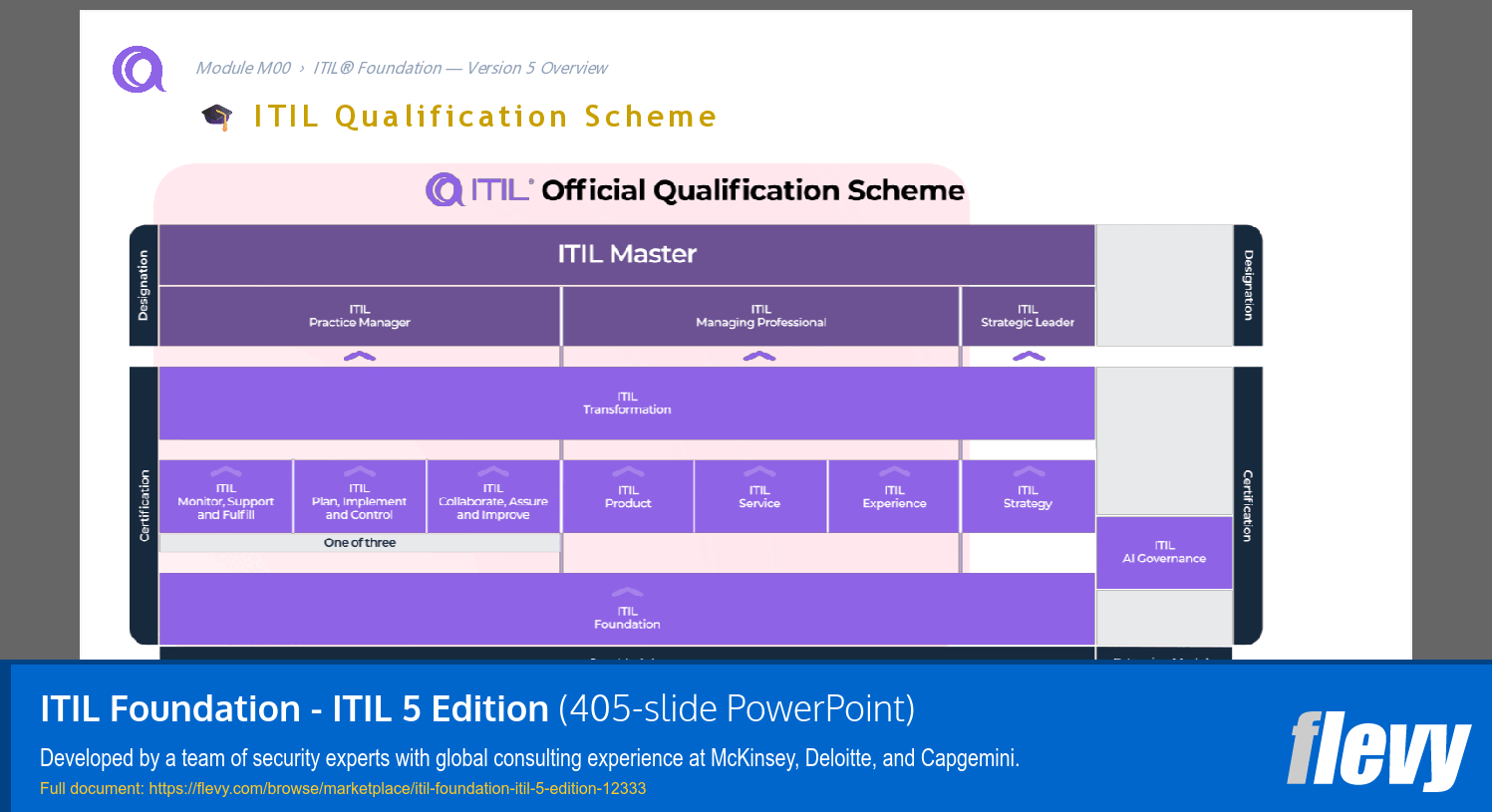
ITIL® Foundation Version 5 – Presentation Overview
What Is ITIL?
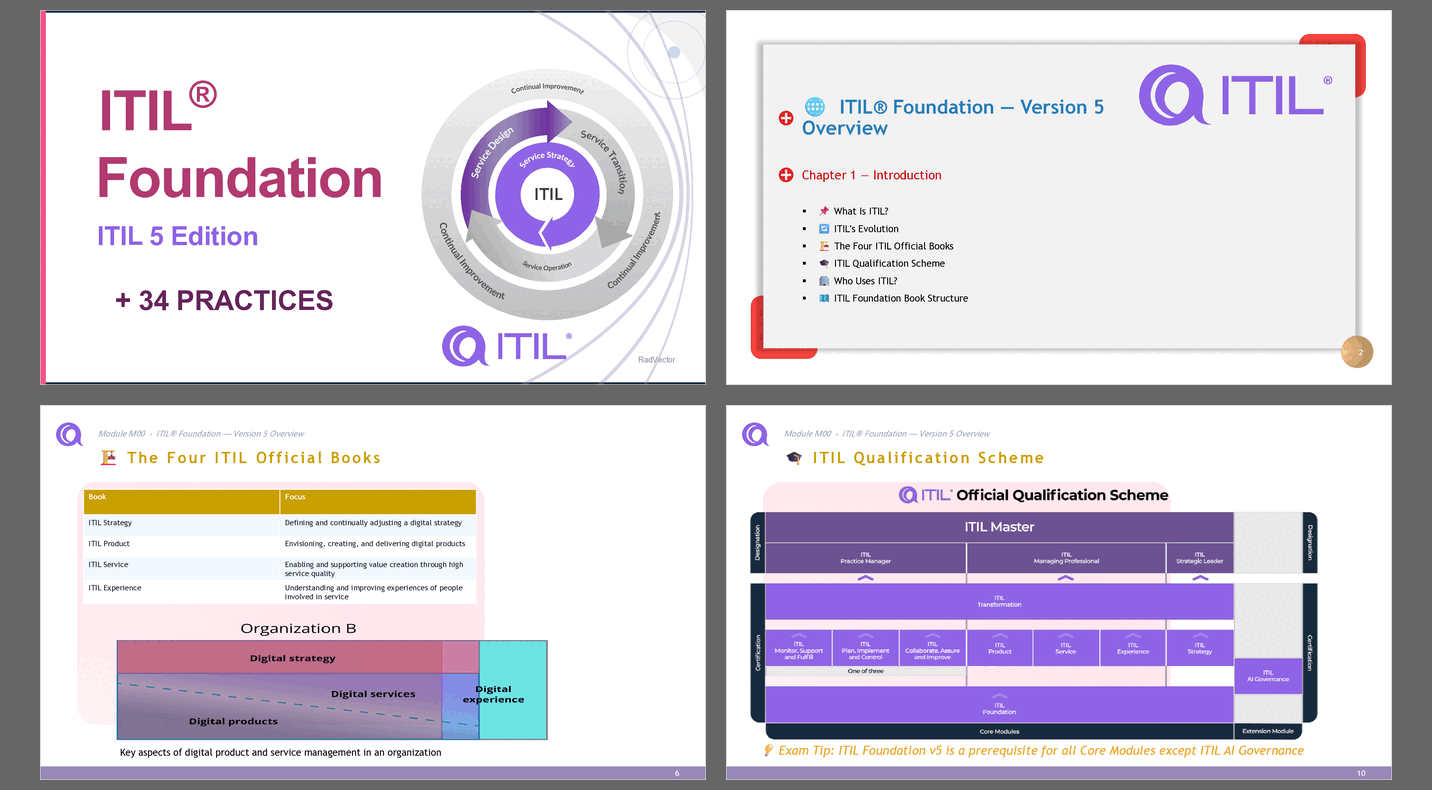
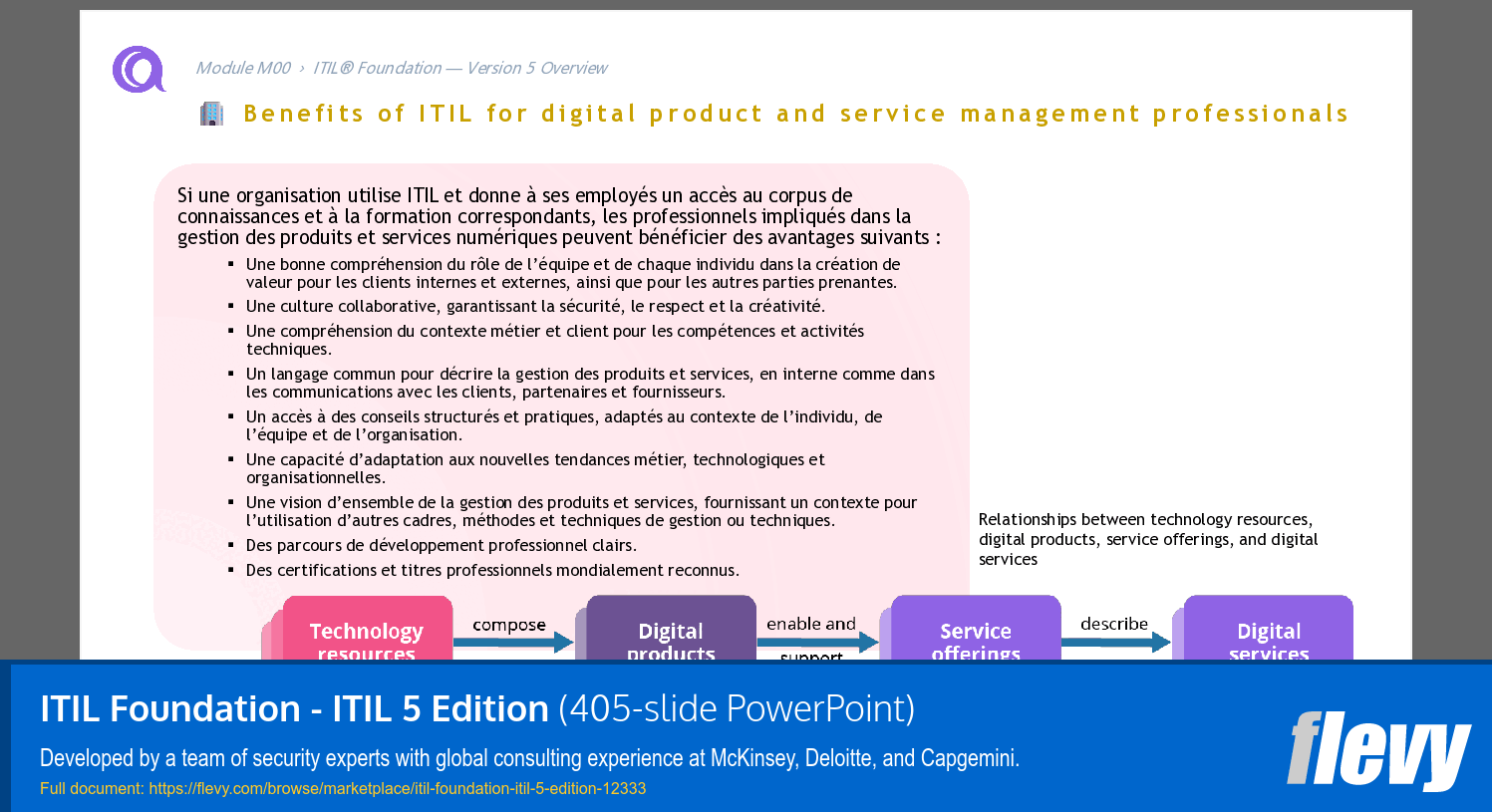
ITIL – the IT Infrastructure Library – has evolved from IT infrastructure guidance into the world's most comprehensive framework for digital product and service management. Version 5, published by PeopleCert in February 2025, is built for the modern era: it is complexity-native, AI-native, and relentlessly value-driven. Where earlier versions focused on efficiency and standardisation, ITIL v5 embraces collaboration, adaptability, and resilience – managing not just isolated technology services but entire digital product and service ecosystems.
The Four Dimensions of Service Management
ITIL insists on a holistic view. Every product, service, and practice must be considered across four dimensions to prevent dangerous organisational silos:
1. Organisations and People – culture, leadership, psychological safety, and professional skills such as creativity, critical thinking, and emotional intelligence.
2. Value Streams and Processes – how work actually flows through the organisation across four complexity contexts: ordered, complex, chaotic, and confused.
3. Information and Technology – workflow systems, analytics, AI/ML platforms, and cloud infrastructure.
4. Partners and Suppliers – the external relationships required to deliver end-to-end value.
All four dimensions operate within external PESTLE factors (Political, Economic, Social, Technological, Legal, Environmental) that no single organisation controls directly.
Key Concepts: Value, Utility, and Warranty
A service enables consumers to achieve outcomes by removing costs and managing risks on their behalf. But every service also imposes new costs and risks – value is only created when the positive outcomes outweigh them. Two essential dimensions determine service fitness:
• Utility – what the service does *(fit for purpose)*
• Warranty – how reliably the service performs *(fit for use)*
Stakeholder roles – provider, customer, user, sponsor – can be played by different individuals, or by the same person simultaneously.
The Digital Product and Service Lifecycle
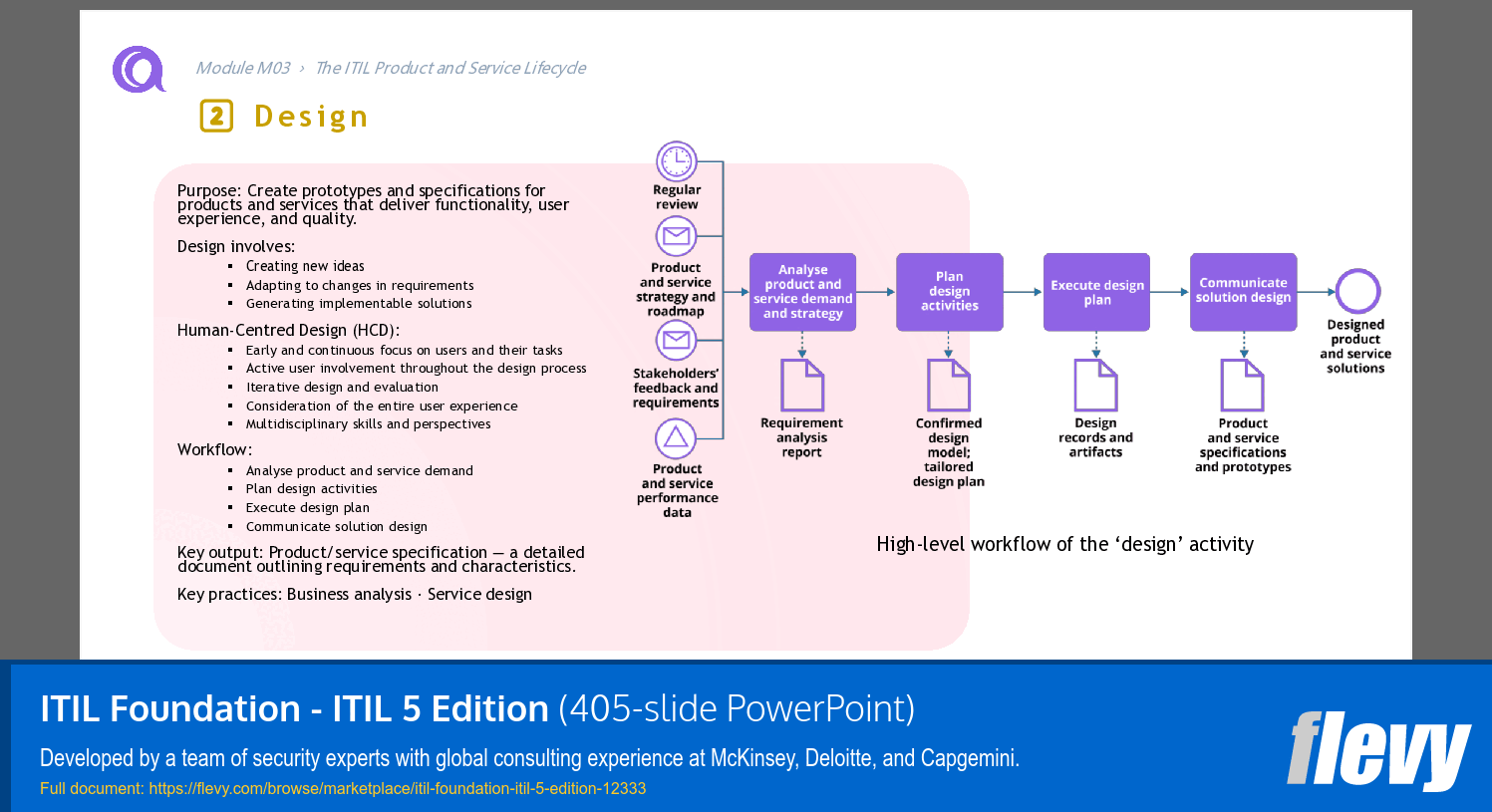
ITIL v5 defines eight lifecycle activities: Discover → Design → Acquire → Build → Transition → Operate → Deliver → Support. These are not linear sequential steps – they form configurable *value chain patterns* shaped by each organisation's operating model and context. Discover is a continual activity, not a one-off exercise. Design applies Human-Centred Design to keep users at the centre throughout. Support closes the loop by restoring and continuously improving value delivery.
The ITIL Value System
The ITIL Value System has five components: Guiding Principles, Governance, Value Chain, Management Practices, and Continual Improvement. Together they transform opportunity and demand into stakeholder value.
The Seven Guiding Principles apply in every circumstance – *Focus on Value · Start Where You Are · Progress Iteratively with Feedback · Collaborate and Promote Visibility · Think and Work Holistically · Keep It Simple and Practical · Optimise and Automate*. They are interdependent; apply all of them simultaneously, never selectively.
Governance directs, assesses, and ensures accountability across four organisational patterns: Directive, Guided, Federated, and Autonomous.
The 34 Practices and Value Streams
ITIL v5 includes 34 management practices – 22 Product & Service Management and 12 General Management. Core practices to master include:
• Incident Management – restore normal service as quickly as possible; root cause investigation belongs to Problem Management, not here.
• Problem Management – identify and eliminate root causes reactively and proactively; maintain the Known Error Database (KEDB).
• Availability Management – ensure services meet agreed availability targets through both reactive restoration and proactive risk elimination.
• Service Desk – the Single Point of Contact for all users, leveraging shift-left strategy and AI virtual agents to maximise First-Contact Resolution.
Value streams represent the actual flows of work that deliver value – distinct from processes, which describe how work *should* be done ideally. A key insight: optimising any single practice improves every value stream that includes it.
Exam Readiness
The ITIL Foundation v5 exam is 40 questions, 65% pass mark, 60 minutes. Critical reminders: incidents are symptoms, problems are root causes; the CAB advises but the Change Authority approves; and Continual Improvement is a culture embedded in every practice – not a department or a single team.
*Sources: ITIL Foundation Version 5 Official Book and Global Best Practice Guide – PeopleCert, February 2025.*
Got a question about the product? Email us at support@flevy.com or ask the author directly by using the "Ask the Author a Question" form. If you cannot view the preview above this document description, go here to view the large preview instead.
Source: Best Practices in ITIL PowerPoint Slides: ITIL Foundation - ITIL 5 Edition PowerPoint (PPTX) Presentation Slide Deck, RadVector Consulting




























