
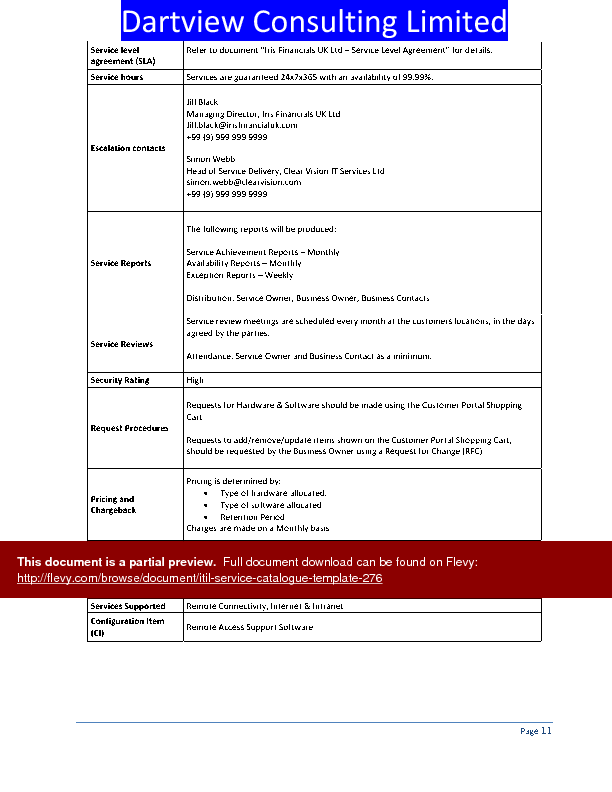
This document is based on ITIL v3 and provides a template for a detailed Service Catalogue. A Service Catalogue is one of the three elements of an IT Service Providers, Service Portfolio.
The Service Portfolio is the complete set of services that are management by a service provider and is compromised of three elements:The Service Pipeline (those services still in the development stage). The Service Catalogue (those services currently available for use), and Retired Services (those services that no longer receive demand from customers, and therefore have been 'retired').
This ITIL Service Catalogue Template is meticulously designed to streamline your service management processes. It includes a comprehensive Table of Contents, ensuring easy navigation through various sections. The document is structured to provide clear definitions of terms, facilitating a common understanding among stakeholders. This template is an essential tool for any IT service provider aiming to enhance service delivery and customer satisfaction.
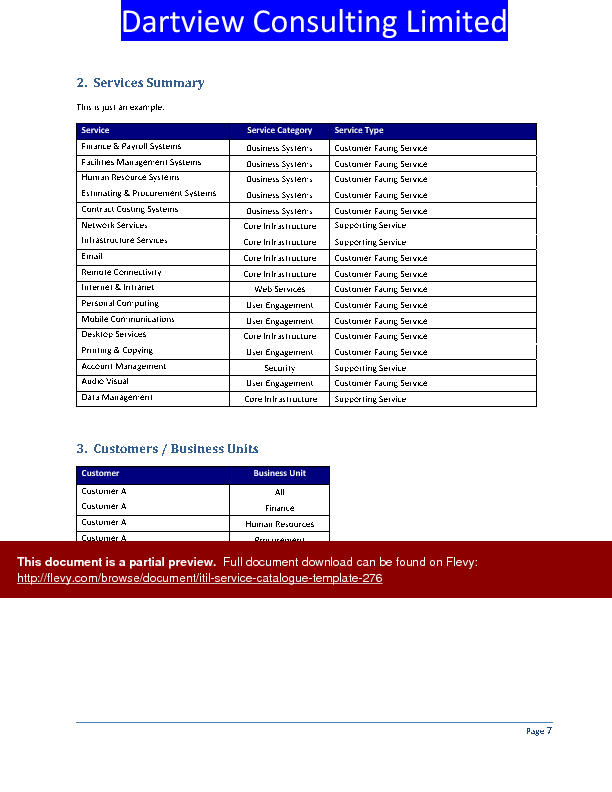
The Services Summary section allows you to categorize and detail each service, ensuring that all offerings are clearly defined and easily accessible. This feature is crucial for maintaining an organized and efficient service portfolio, enabling quick identification and retrieval of service information. The template also includes a section for listing customers and business units, fostering better alignment between IT services and business needs.
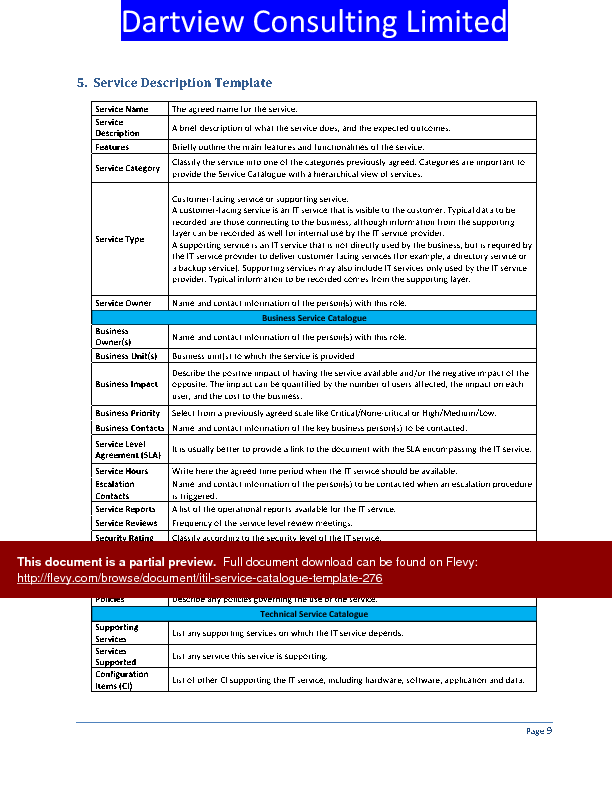
The Service Description Template is divided into Business Service Catalogue and Technical Service Catalogue, providing a dual approach to service documentation. This bifurcation ensures that both business and technical aspects of each service are thoroughly covered, promoting a holistic view of service management. This template is a valuable asset for any organization looking to implement ITIL best practices and achieve operational excellence.
Got a question about the product? Email us at support@flevy.com or ask the author directly by using the "Ask the Author a Question" form. If you cannot view the preview above this document description, go here to view the large preview instead.
Executive Summary
The ITIL Service Catalogue Template (DOCX) is an essential tool for organizations aiming to enhance their IT service management capabilities. This template provides a structured framework for documenting all live IT services, ensuring that both service providers and customers have a clear understanding of available services. By utilizing this template, organizations can effectively categorize services, define relationships between services and business units, and establish a comprehensive service description for each offering. This document serves as a foundational element in building a robust service catalogue that aligns with ITIL best practices.
Who This Is For and When to Use
• IT Service Managers responsible for overseeing service delivery and management.
• Business Analysts involved in defining service requirements and customer needs.
• IT Governance and Compliance teams ensuring adherence to ITIL standards.
• Project Managers coordinating IT service implementations and enhancements.
Best-fit moments to use this deck:
• When establishing a new service catalogue for an organization.
• During ITIL training sessions to illustrate service catalogue best practices.
• For audits or assessments of existing service management frameworks.
Learning Objectives
• Define the purpose and importance of a service catalogue in IT service management.
• Build a comprehensive service catalogue using the provided template.
• Establish clear service descriptions that communicate value to customers.
• Categorize services effectively to enhance visibility and accessibility.
• Identify relationships between services and business units for improved service alignment.
• Implement governance practices to maintain the service catalogue over time.
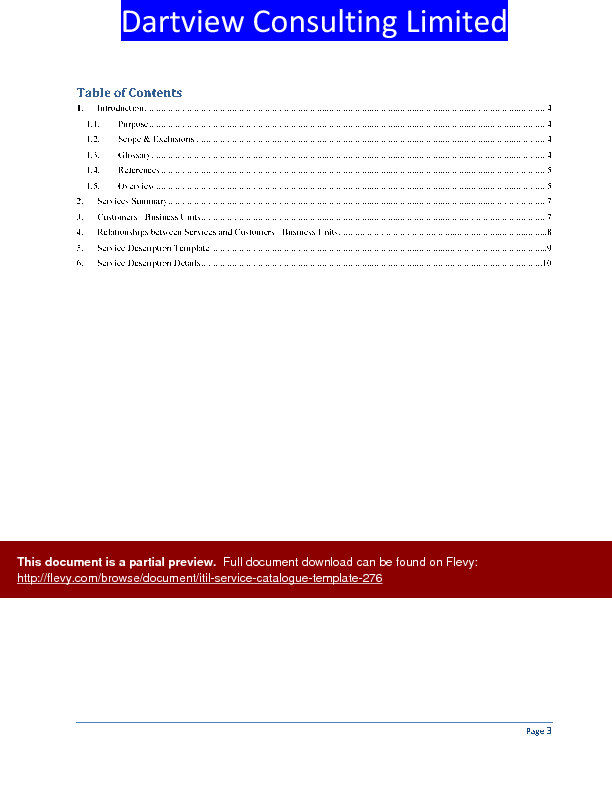
Table of Contents
• Introduction (page 4)
• Services Summary (page 7)
• Customers / Business Units (page 7)
• Relationships between Services and Customers / Business Units (page 8)
• Service Description Template (page 9)
• Service Description Details (page 10)
Primary Topics Covered
• Service Catalogue Overview - A structured document that contains information about all live IT services, providing visibility to customers and business units.
• Service Summary - A categorized list of services, detailing service types and categories to clarify offerings.
• Customer and Business Unit Identification - Documentation of the specific customers or business units that utilize each service.
• Service Relationships - Visual representation of how services interact with customers and supporting services.
• Service Description Template - A standardized format for detailing service features, ownership, and impact.
• Service Description Details - Comprehensive information on individual services, including features, business impact, and escalation procedures.
Deliverables, Templates, and Tools
• Service Description Template for consistent documentation of IT services.
• Services Summary Table for categorizing and summarizing service offerings.
• Relationship Mapping Tool for visualizing connections between services and business units.
• Governance Framework for maintaining and updating the service catalogue.
Slide Highlights
• Introduction slide outlining the importance of a service catalogue in ITIL.
• Services Summary slide displaying a categorized list of services.
• Relationship Mapping slide illustrating connections between services and business units.
• Service Description Template slide detailing key components for service documentation.
Potential Workshop Agenda
Service Catalogue Development Session (90 minutes)
• Discuss the purpose and components of a service catalogue.
• Collaborate on categorizing current services and identifying gaps.
• Draft initial service descriptions using the template.
Service Relationship Mapping Workshop (60 minutes)
• Identify key customers and business units for each service.
• Create visual representations of service relationships.
• Review and refine the mapping for clarity and accuracy.
Customization Guidance
• Tailor the service description template to reflect organizational terminology and service categories.
• Update the services summary to include all relevant services currently offered.
• Modify the relationship mapping to accurately represent the organization’s structure and service delivery model.
Secondary Topics Covered
• ITIL Best Practices for Service Management.
• Importance of Service Level Agreements (SLAs) in service delivery.
• Strategies for effective service governance and maintenance.
Topic FAQ
Document FAQ
These are questions addressed within this presentation.
What is the purpose of a service catalogue?
A service catalogue serves as a comprehensive resource that details all live IT services, providing clarity and visibility for both service providers and customers.
How can this template improve service management?
By standardizing service descriptions and categorizing offerings, the template enhances communication, alignment, and governance in IT service management.
Who should use the service catalogue template?
IT Service Managers, Business Analysts, and Governance teams should utilize this template to ensure effective service documentation and management.
What are the key components of a service description?
A service description should include the service name, features, business impact, service owner, and escalation contacts, among other details.
How often should the service catalogue be updated?
The service catalogue should be reviewed and updated regularly, ideally in conjunction with service reviews and changes in service offerings.
What is the difference between customer-facing and supporting services?
Customer-facing services are directly visible to customers and support their business processes, while supporting services are necessary for delivering those customer-facing services, but are not directly used by customers.
How can I ensure that the service catalogue remains relevant?
Regular reviews, stakeholder feedback, and alignment with business objectives will help maintain the relevance and accuracy of the service catalogue.
What role does governance play in managing the service catalogue?
Governance ensures that the service catalogue is maintained, updated, and aligned with organizational standards and ITIL best practices.
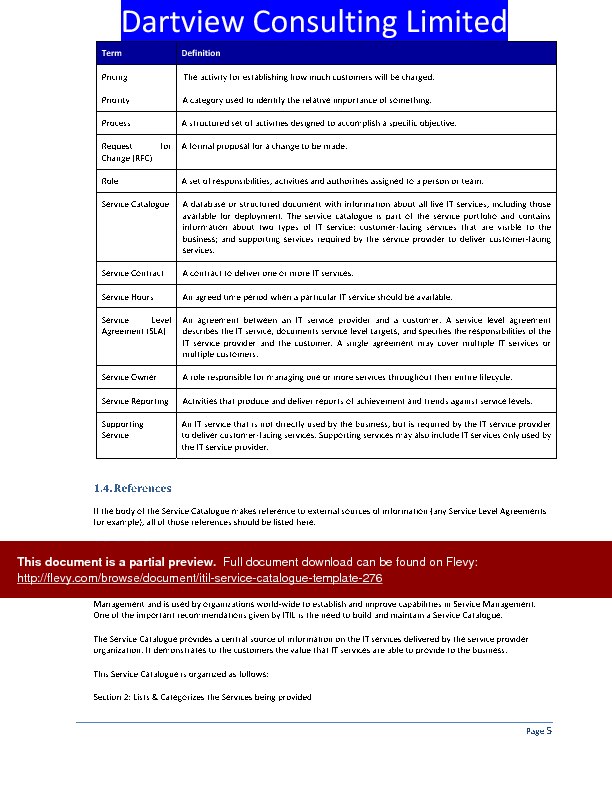
Glossary
• Service Catalogue - A structured document containing information about all live IT services.
• Customer-facing Service - An IT service visible to the customer, supporting their business processes.
• Supporting Service - An IT service required by the service provider to deliver customer-facing services.
• Service Level Agreement (SLA) - An agreement that defines service expectations between the service provider and the customer.
• Business Unit - A segment of the organization that owns assets and creates value for customers.
• Service Owner - The individual responsible for managing a service throughout its lifecycle.
• Service Description - A detailed account of what a service does and its expected outcomes.
• Escalation Contacts - Individuals to contact when service issues require additional resources.
• Business Impact - The effect of a service's availability or unavailability on business operations.
• Service Summary - A categorized overview of all services offered by the organization.
• Relationship Mapping - A visual representation of how services relate to customers and other services.
• Governance Framework - A set of policies and procedures for maintaining the service catalogue.
Source: Best Practices in ITIL Word: ITIL Service Catalogue Template Word (DOCX) Document, Dartview Consulting
This document is available as part of the following discounted bundle(s):

Save %!
Service Catalogue, SLA's and Service Desk
This bundle contains 3 total documents. See all the documents to the right.
Save %!
Best Practice (ITIL, Prince2, Risk)
This bundle contains 9 total documents. See all the documents to the right.
|
Download our FREE Digital Transformation Templates
Download our free compilation of 50+ Digital Transformation slides and templates. DX concepts covered include Digital Leadership, Digital Maturity, Digital Value Chain, Customer Experience, Customer Journey, RPA, etc. |









