Editor's Note: Take a look at our featured best practice, Digital Transformation Strategy (145-slide PowerPoint presentation). Digital Transformation is being embraced by organizations across most industries, as the role of technology shifts from being a business enabler to a business driver. This has only been accelerated by the COVID-19 global pandemic. Thus, to remain competitive and outcompete in today's fast paced, [read more]
* * * *
 One critical component that business owners often neglect is website security. Cyberattacks are more common than you think, and they are costly to clean up. In addition, they damage a brand’s reputation and make visitors think twice before coming back.
Reasons to Secure Your Site
Website security implies actions you can take to ensure that your data isn’t up for grabs by cybercriminals. It also prevents any exploitation of your site by the following means:
- DDoS Attacks
- Malware
- Blacklisting
- Exploitation of Weak Points
- Defacement
- Data Theft
- Phishing
- Hijacks
- Malicious Redirects
- SEO Spam
How to Secure Your Website
Protecting yourself as well as your visitors is vital. Thankfully, there are steps you can take to secure your website. What are the basic principles? Read on to learn more.
SSL Certification
By obtaining and installing an SSL certificate on your site, you’re ensuring that sensitive information such as email addresses and credit card numbers are kept private. An insecure site is suspicious to visitors and will deter them from venturing in. Adding a DigiCert SSL makes the site secure and legitimate upon which visitors can put complete trust.
Web Application Firewall (WAF)
It’s very common for smaller websites to be targets of malicious bots. These automated attacks look for vulnerabilities to exploit. They also drive DDoS attacks to slow or crash sites. Therefore, it’s vital to install a WAF to prevent these problems from occurring.
Website Security Scanner
To maintain site health, perform regular scans to search for malware, vulnerabilities, and other security holes. It’s crucial to mitigate any risks before they cause severe problems. These scan utilities will report any threats for you to act on right away.
Software Updates and Security Patches
If you run your site on a CMS like WordPress or Joomla, you’re at a higher risk of compromise. That’s why it’s extremely important to install updates and security patches when they are available. To reduce your workload and save time, opt for automatic installations.
Don’t Let Your Site Fall Into the Wrong Hands
By taking the steps outlined above, malicious hackers will steer clear from your website. Maintaining site health and security isn’t brain surgery, but it does require constant effort on your end.
18-page Word document
This Word Document provides a template for an IT Security & Governance Policy and is easily customisable. Areas cover are: Security, Data Back-Up, Virus Protection, Internet & Email usage, Remote & 3rd Party Network Access, User-Account Management, Procurement, Asset Management and IS Service
[read more]
Do You Want to Implement Business Best Practices?
You can download in-depth presentations on Cyber Security and 100s of management topics from the FlevyPro Library. FlevyPro is trusted and utilized by 1000s of management consultants and corporate executives.
For even more best practices available on Flevy, have a look at our top 100 lists:
These best practices are of the same as those leveraged by top-tier management consulting firms, like McKinsey, BCG, Bain, and Accenture. Improve the growth and efficiency of your organization by utilizing these best practice frameworks, templates, and tools. Most were developed by seasoned executives and consultants with over 20+ years of experience.
Readers of This Article Are Interested in These Resources
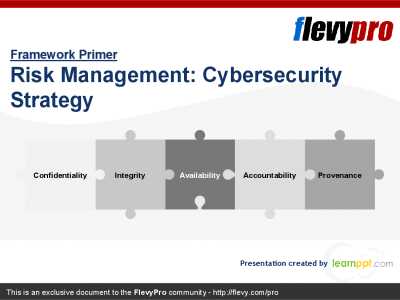
23-slide PowerPoint presentation
Cybersecurity is a growing threat and should be at the forefront in any IT Risk Management Strategy. As role of
The PPT outlines the critical elements of a robust cybersecurity strategy, emphasizing the importance of integrity, availability, accountability, and provenance of information. It
[read more]
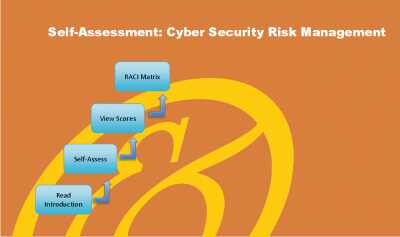
Excel workbook
National Institute of Standards and Technology (NIST) U.S. Department of Commerce Cyber Security Framework Aligned.
Governments, sectors, and organizations around the world are increasingly recognizing the NIST Cyber Security Framework (CSF) as a recommended cyber security baseline to
[read more]

53-slide PowerPoint presentation
Cybersecurity awareness is the understanding and knowledge of potential threats to information systems and the measures individuals and organizations can take to protect themselves from these threats. It involves being conscious of the risks associated with using technology and being proactive in
[read more]
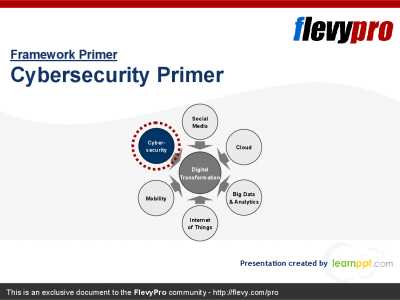
16-slide PowerPoint presentation
Cybersecurity is the protection of information systems from theft or damage to the hardware, the software, and to the information on them. The more we depend on the Internet and related technologies, the more we depend on their security.
As such, there can be no Digital Transformation without
[read more]