
 Click main image to view in full screen. Unlock all 16 preview images:
Assessment Dashboard - Cyber Security Risk Management – Excel XLSX
Excel (XLSX) + Zip archive file (ZIP)


BENEFITS OF THIS DOWNLOADABLE EXCEL DOCUMENT
- Diagnose Cyber Security Risk Management projects, initiatives, organizations, businesses and processes using accepted diagnostic standards and practices.
- Implement evidence-based best practice strategies aligned with overall goals.
- Integrate recent advances in Cyber Security Risk Management and process design strategies into practice according to best practice guidelines.
CYBER SECURITY EXCEL DESCRIPTION
National Institute of Standards and Technology (NIST) U.S. Department of Commerce Cyber Security Framework Aligned.
Governments, sectors, and organizations around the world are increasingly recognizing the NIST Cyber Security Framework (CSF) as a recommended cyber security baseline to help improve the cyber security risk management and resilience of their systems.
This Self Assessment provides conformance to the NIST CSF risk management practices, allowing you to properly protect your data.
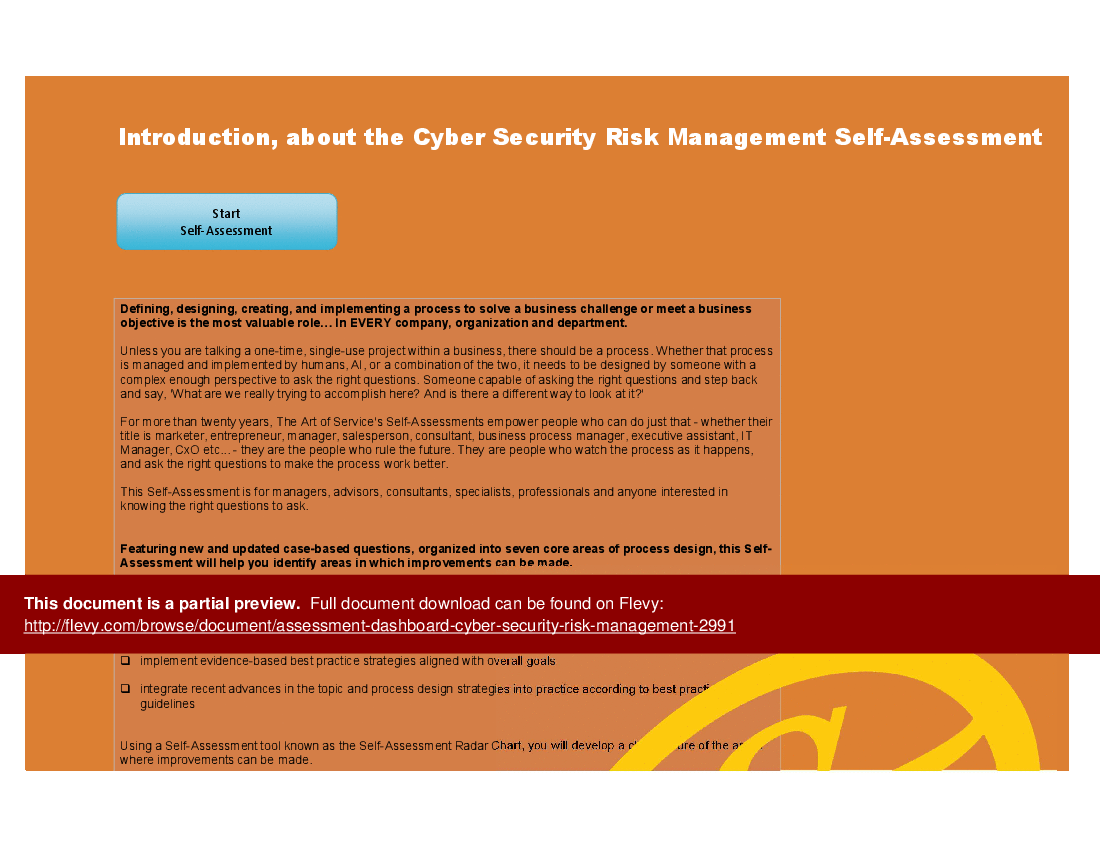
The Cyber Security Risk Management Self-Assessment will make you a Cyber Security Risk Management domain expert by:
1. Reducing the effort in the Cyber Security Risk Management work to be done to get problems solved
2. Ensuring that plans of action include every Cyber Security Risk Management task and that every Cyber Security Risk Management outcome is in place
3. Saving time investigating strategic and tactical options and ensuring Cyber Security Risk Management opportunity costs are low
4. Delivering tailored Cyber Security Risk Management advise instantly with structured going-forward plans.
All the tools you need to an in-depth Cyber Security Risk Management Self-Assessment. Featuring 913 new and updated case-based criteria, organized into seven core areas of process design, this Self-Assessment will help you identify areas in which Cyber Security Risk Management improvements can be made.
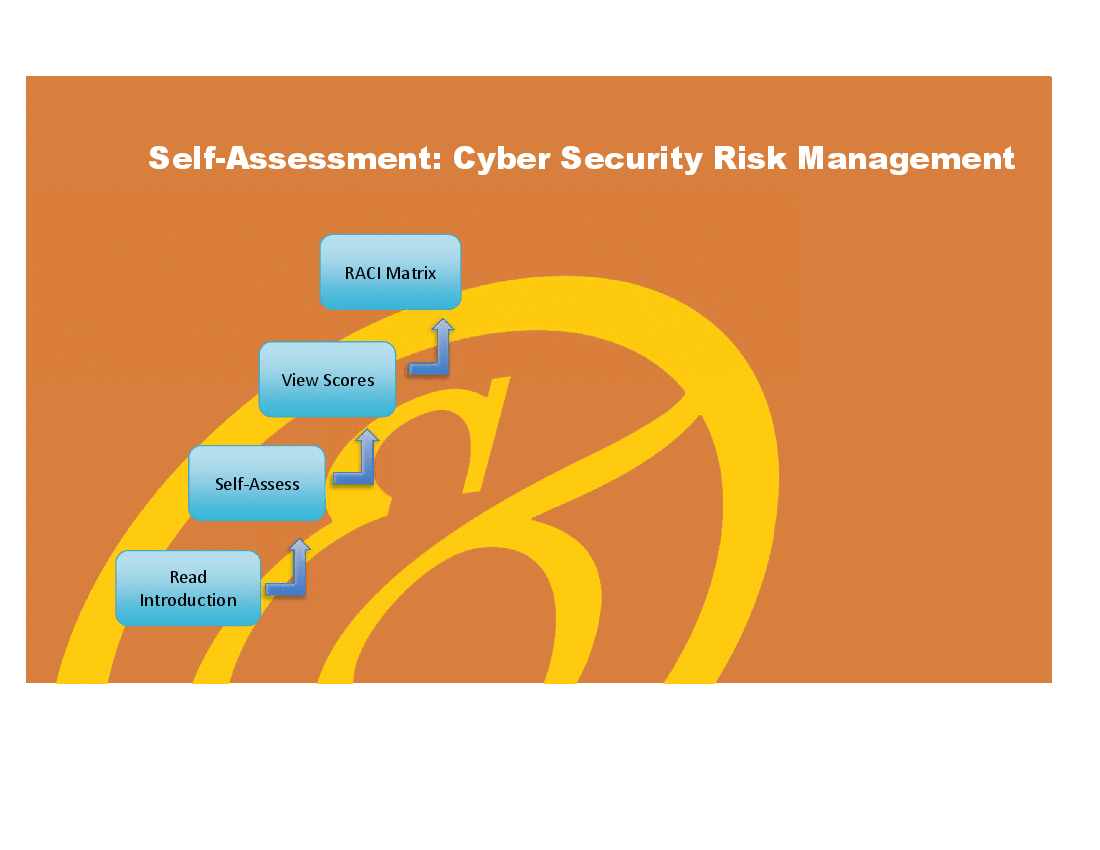
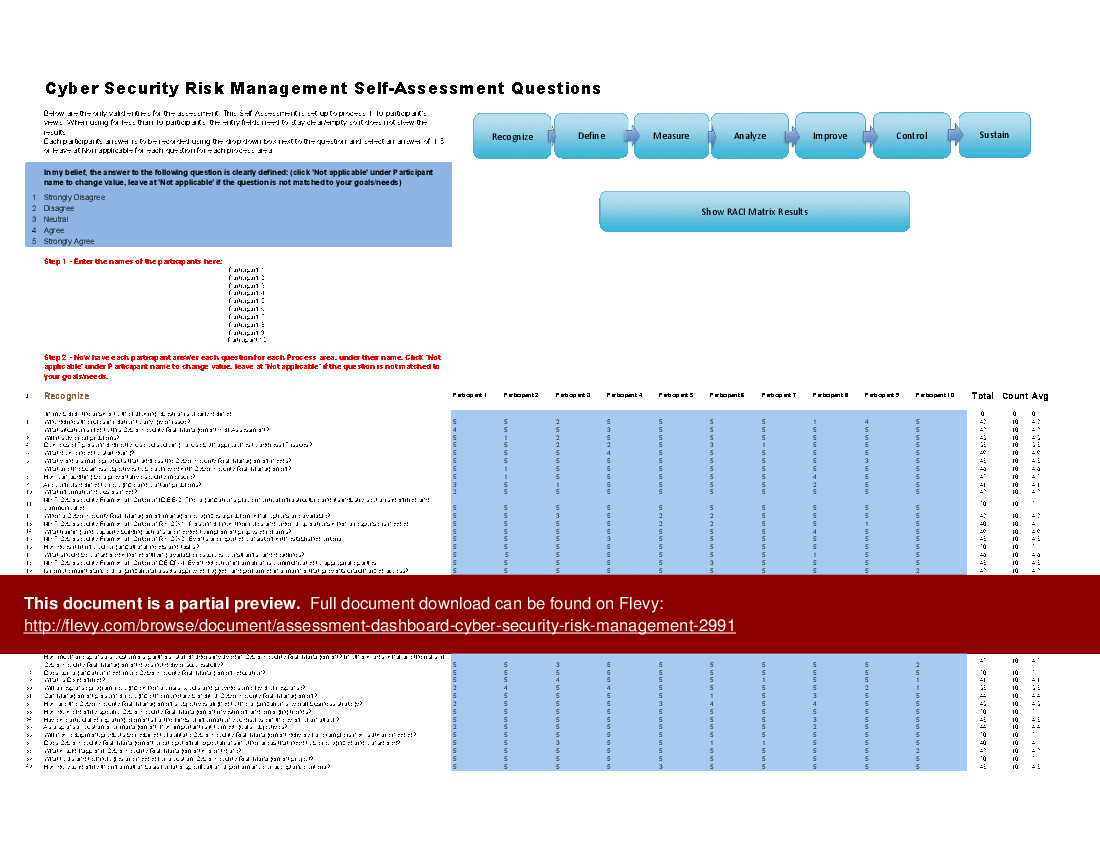
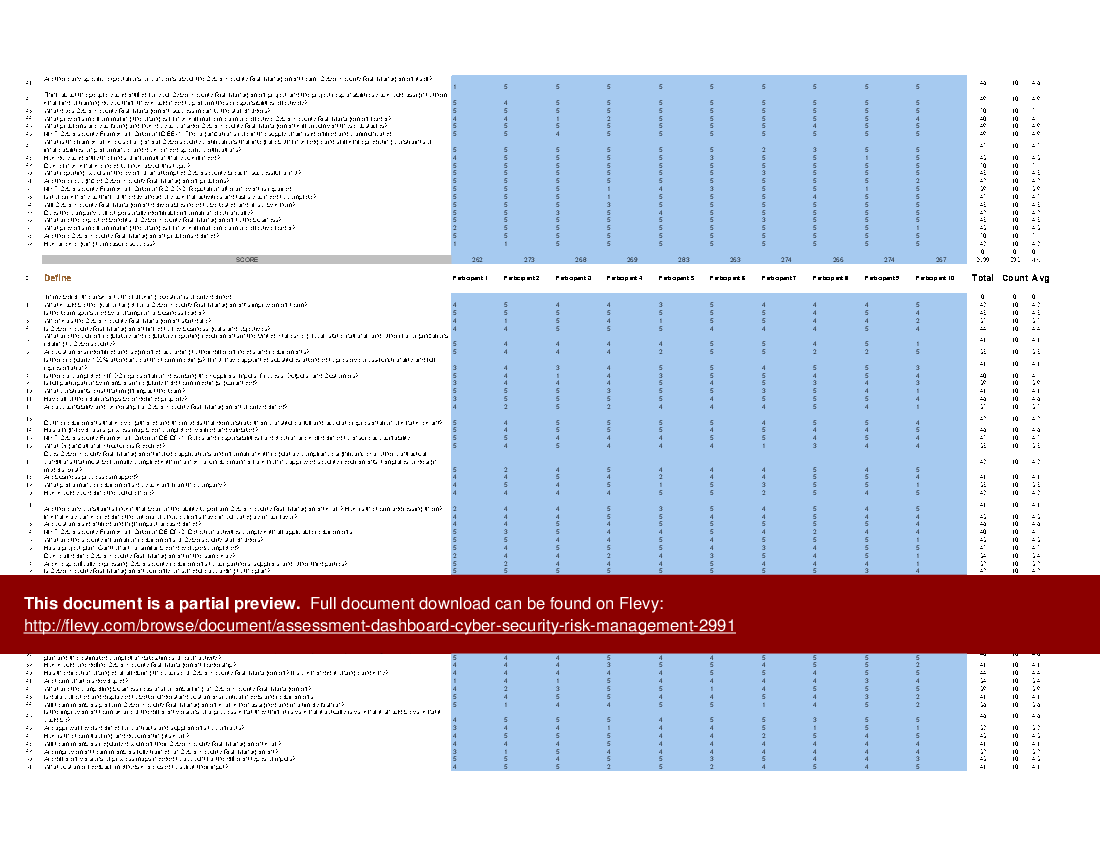
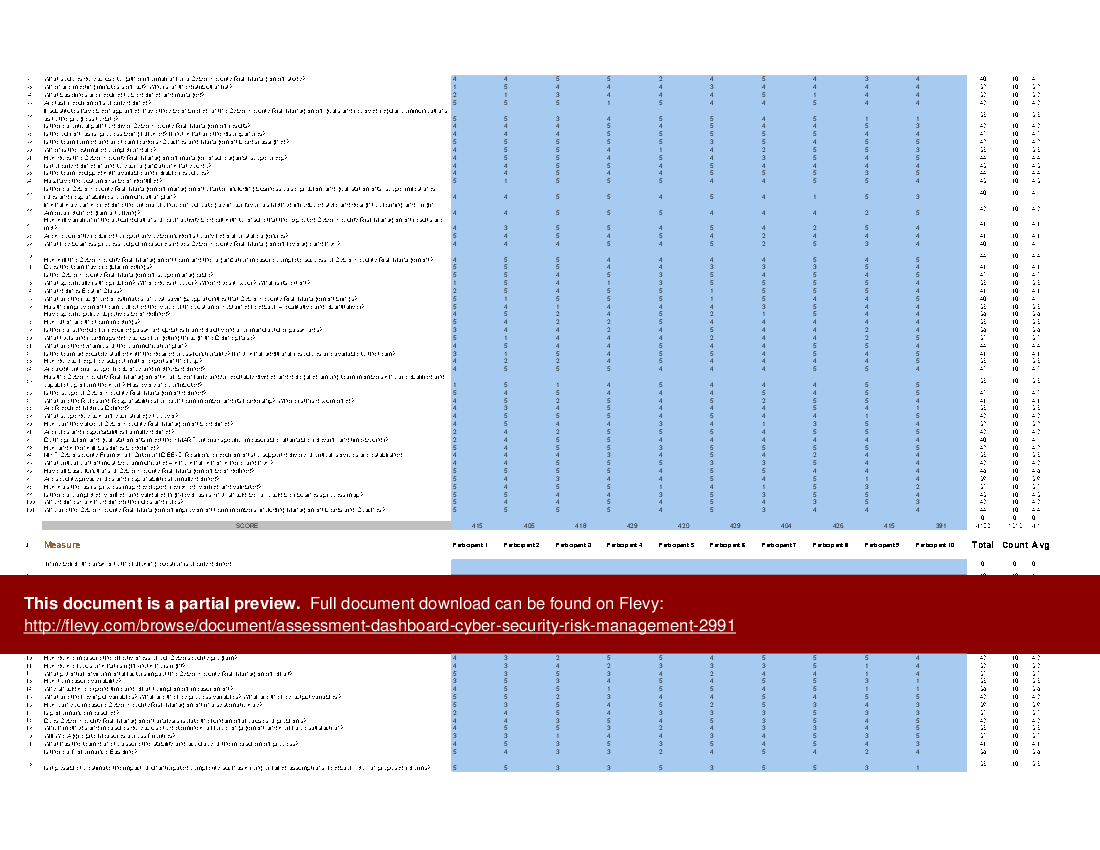
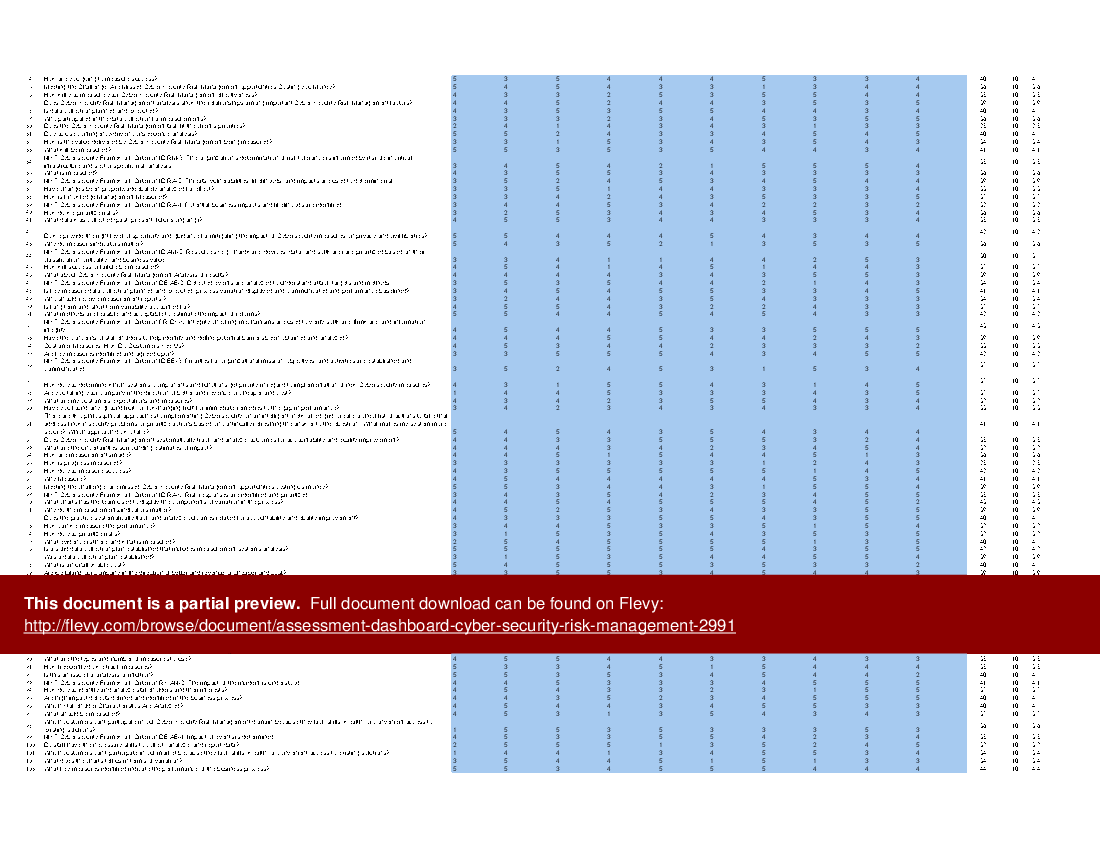
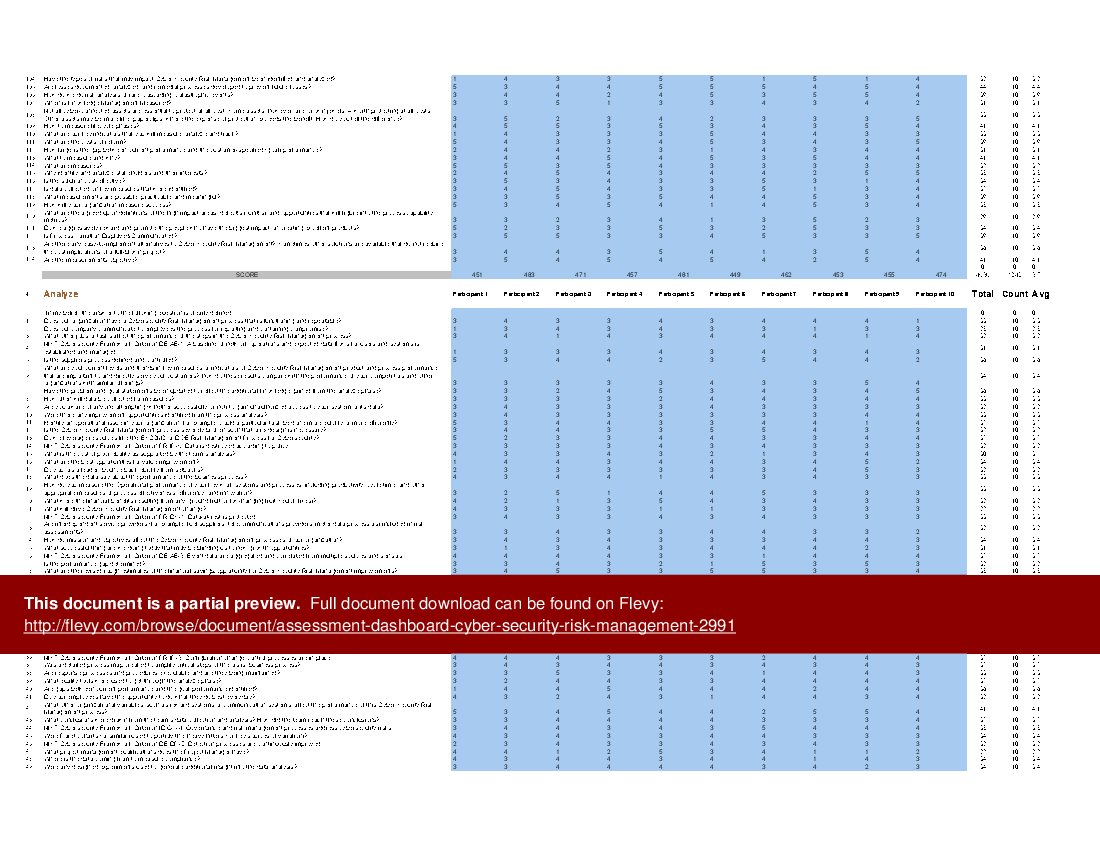
The Self Assessment tool is a comprehensive dashboard built in MS Excel. It ensures you don't miss anything with 913 criteria in 7 RDMAICS (Recognize, Define, Measure, Analyze, Improve, Control and Sustain) steps with easy and quick navigating and answering for 1-10 participants.
The above preview showcases an example of a completed version. The secondary document includes a blank template, as well as a detailed 140+ page PDF guide. The guide provides a convenient way to distribute and share among the participants to prepare and discuss the Self Assessment.
The Assessment Dashboard includes a detailed questionnaire to gauge your organization's cyber security posture. The results are visually represented in a radar chart, providing a clear overview of strengths and areas for improvement.
Got a question about the product? Email us at support@flevy.com or ask the author directly by using the "Ask the Author a Question" form. If you cannot view the preview above this document description, go here to view the large preview instead.
TOPIC FAQ
What are the core steps in a cyber security risk management self-assessment framework?
A structured self-assessment typically follows an iterative lifecycle: Recognize current risks, Define scope and objectives, Measure existing controls, Analyze gaps, Improve via remediation planning, Control implementation, and Sustain ongoing monitoring. The Assessment Dashboard organizes these into 7 RDMAICS steps.How does aligning a self-assessment to the NIST Cyber Security Framework help my organization?
NIST CSF alignment provides a common risk-management vocabulary and maps security practices to risk outcomes, supporting regulatory and stakeholder expectations. Using a NIST-aligned tool ensures assessment criteria and remediation actions are framed against NIST CSF conformance.What visual outputs should I expect from a cyber security self-assessment?
Common outputs include gap-analysis matrices, prioritized action plans, and visual summaries of maturity or posture—most notably radar/spider charts that show strengths and weaknesses across domains. The referenced product specifically produces a radar chart as a visual overview.What features matter when choosing an Excel-based cyber security assessment template?
Key features include framework alignment, comprehensiveness of criteria, participant collaboration support, included guidance, and deliverable formats. Look for explicit NIST alignment, a large criteria set, Excel dashboard functionality, and a companion guide—such as 913 criteria and XLSX format.What team size and materials should I consider when planning a facilitated self-assessment?
Consider the number of participants the tool supports, facilitation materials, and reference guides. Choose templates designed for collaborative scoring and discussion and that include participant-ready documentation; the Assessment Dashboard supports 1–10 participants and includes a 140+ page PDF guide.How can a NIST-aligned self-assessment support regulatory audit preparation?
A NIST-aligned assessment maps controls and gaps to recognized CSF categories, documents current-state evidence, and generates prioritized remediation plans—helping demonstrate due diligence and conformance. The Assessment Dashboard uses 913 criteria to support NIST CSF conformance documentation.After a security incident, how should I use a self-assessment to inform recovery and improvement?
Re-run or update the assessment to Measure and Analyze control effectiveness, Define remediation priorities, and sequence Improve and Control activities to prevent recurrence. Use the structured RDMAICS steps to translate findings into action and ongoing Sustain measures.Are commercial cyber security self-assessment tools more time- or cost-effective than building in-house templates?
Commercial templates can reduce setup effort, ensure coverage of standard tasks and outcomes, and provide ready facilitation guides—potentially lowering opportunity cost versus building from scratch. The Assessment Dashboard claims to reduce effort and includes 913 case-based criteria to accelerate assessments.Source: Best Practices in Cyber Security Excel: Assessment Dashboard - Cyber Security Risk Management Excel (XLSX) Spreadsheet, Gerard Blokdijk




























