IT Security & Governance Template   18-page Word document
$50.00

IT Security & Governance Template (18-page Word document) Preview Image
Flevy is the marketplace for business best practices.
IT Security & Governance Template (18-page Word document) Preview Image
Arrow   Click main image to view in full screen.

IT Security & Governance Template (Word DOC)

Word (DOC) 18 Pages

Top 1,000 Best Practice $50.00

Add to Cart


Immediate download
Fully editable Word
Free lifetime updates

CYBER SECURITY WORD DESCRIPTION

Editor Summary An 18-page Word document, the IT Security & Governance Template by Dartview Consulting provides a structured IT security policy framework and associated procedures. Read more

This Word Document provides a template for an IT Security & Governance Policy and is easily customisable. Areas cover are: Security, Data Back-Up, Virus Protection, Internet & Email usage, Remote & 3rd Party Network Access, User-Account Management, Procurement, Asset Management and IS Service Continuity Planning

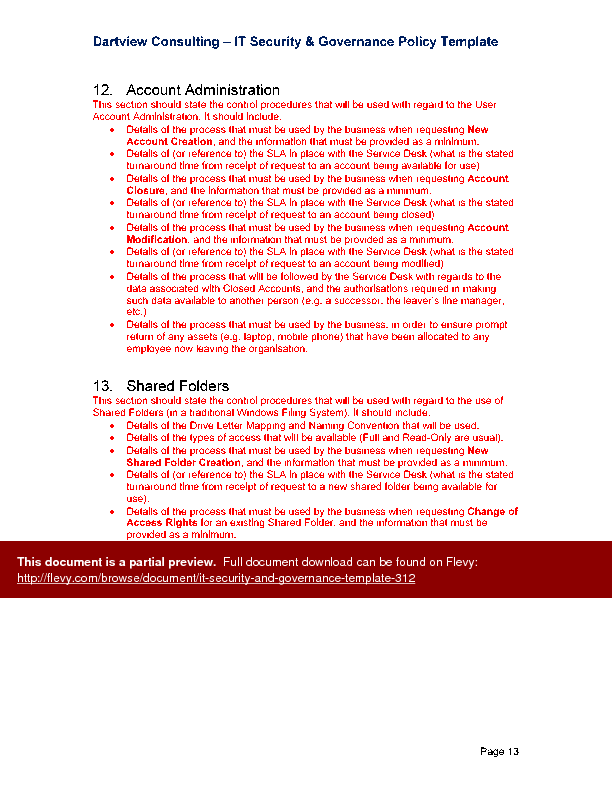
The template also includes detailed procedures for user account administration, ensuring that all processes from account creation to closure are meticulously documented. This section is critical for maintaining control over user access and ensuring compliance with internal policies. The document outlines the necessary steps and Service Level Agreements (SLAs) to be followed, providing a clear framework for managing user accounts efficiently.

Data storage and management are comprehensively covered, with guidelines on the use of shared folders, drive letter mapping, and naming conventions. The template specifies the types of access available and the procedures for requesting new shared folders or modifying existing ones. This ensures that data is stored securely and access is granted appropriately, minimizing the risk of unauthorized access.

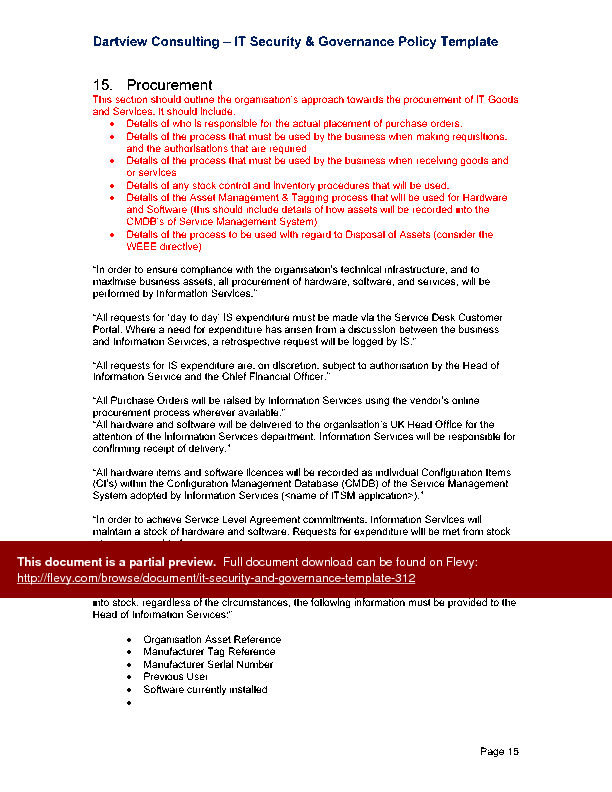
The procurement and asset management section provides a structured approach to acquiring IT goods and services. It includes details on the requisition process, stock control, and inventory procedures, as well as asset tagging and disposal methods. This section is essential for organizations looking to streamline their procurement processes and ensure that all assets are tracked and managed effectively.

Got a question about the product? Email us at support@flevy.com or ask the author directly by using the "Ask the Author a Question" form. If you cannot view the preview above this document description, go here to view the large preview instead.

MARCUS OVERVIEW

This synopsis was written by Marcus [?] based on the analysis of the full 18-slide presentation.


Executive Summary
The IT Security & Governance Policy Template provides a structured framework for managing information security within an organization. This document outlines the essential policies and procedures necessary to protect valuable information assets, ensuring compliance with relevant regulations and safeguarding the organization's reputation. By implementing this template, organizations can establish clear responsibilities, enhance employee awareness, and create a robust security posture against various threats. This template serves as a foundational tool for developing a comprehensive information security strategy.

Who This Is For and When to Use
•  IT Security Managers responsible for implementing security policies and frameworks
•  Compliance Officers ensuring adherence to legal and regulatory requirements
•  Risk Management Teams assessing and mitigating information security risks
•  Senior Management seeking to demonstrate commitment to information security

Best-fit moments to use this template:
•  During the development or revision of an organization's information security policy
•  When conducting a security audit to identify gaps in existing policies
•  As part of onboarding processes for new employees to ensure awareness of security protocols

Learning Objectives
•  Define the scope and purpose of the IT Security & Governance Policy
•  Establish clear roles and responsibilities for information security management
•  Identify and assess risks to information assets and implement appropriate controls
•  Develop incident reporting procedures to address security breaches effectively
•  Implement best practices for data management, including backup and retention policies
•  Enhance employee awareness regarding unauthorized software and internet usage

Table of Contents
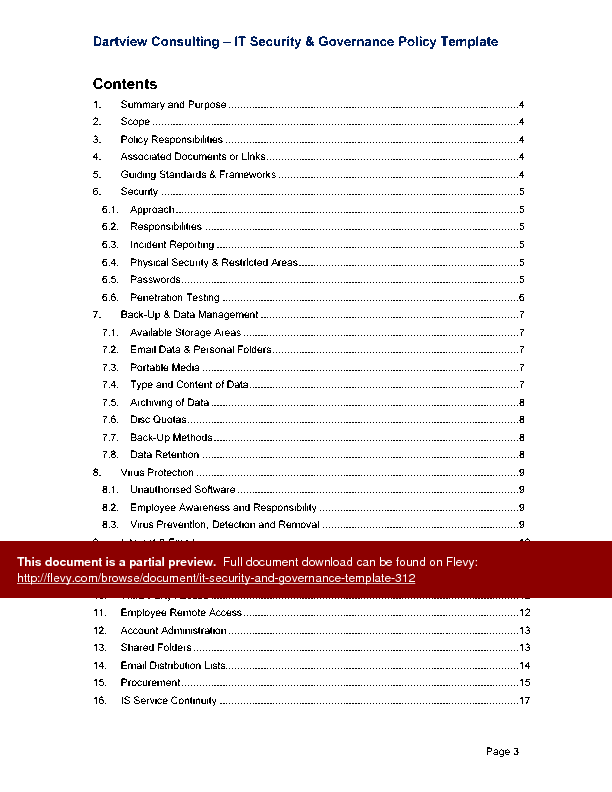
•  Summary and Purpose (page 4)
•  Scope (page 4)
•  Policy Responsibilities (page 4)
•  Associated Documents or Links (page 4)
•  Guiding Standards & Frameworks (page 4)
•  Security (page 5)
•  Back-Up & Data Management (page 7)
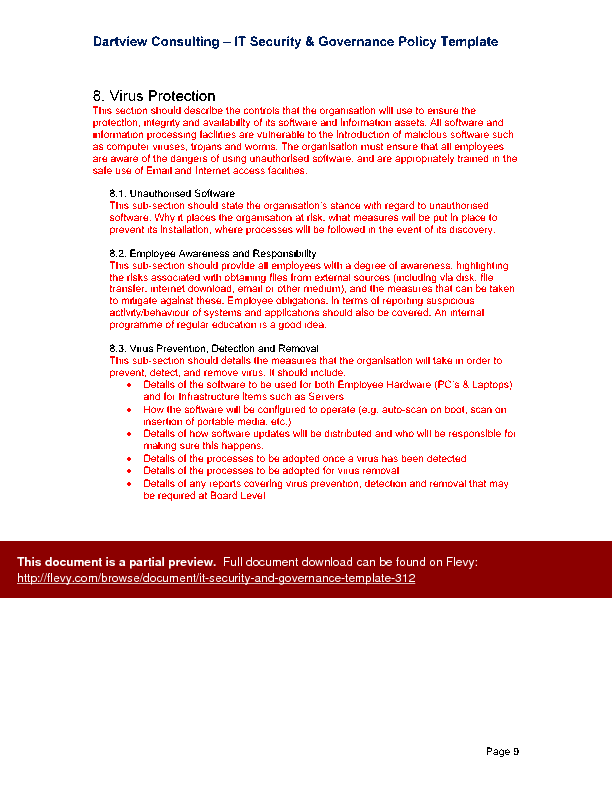
•  Virus Protection (page 9)
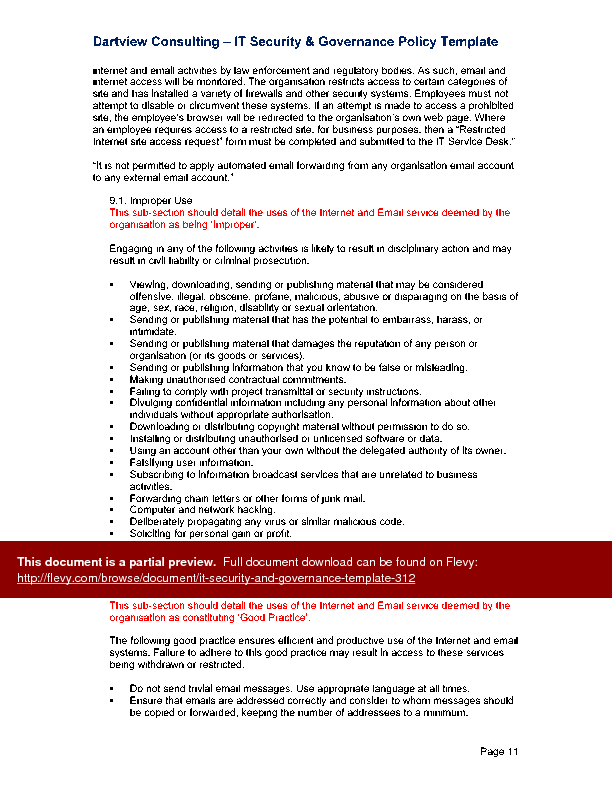
•  Internet & Email (page 10)
•  Third-Party Access (page 12)
•  Employee Remote Access (page 12)
•  Account Administration (page 13)
•  Shared Folders (page 13)
•  Email Distribution Lists (page 14)
•  Procurement (page 15)
•  IS Service Continuity (page 17)

Primary Topics Covered
•  Summary and Purpose - This section outlines the importance of managing information security and the commitment of senior management to support a comprehensive security policy.
•  Scope - Defines the applicability of the policy to all forms of information, emphasizing confidentiality, integrity, and availability.
•  Policy Responsibilities - Details the roles responsible for developing, reviewing, and maintaining the policy, ensuring accountability.
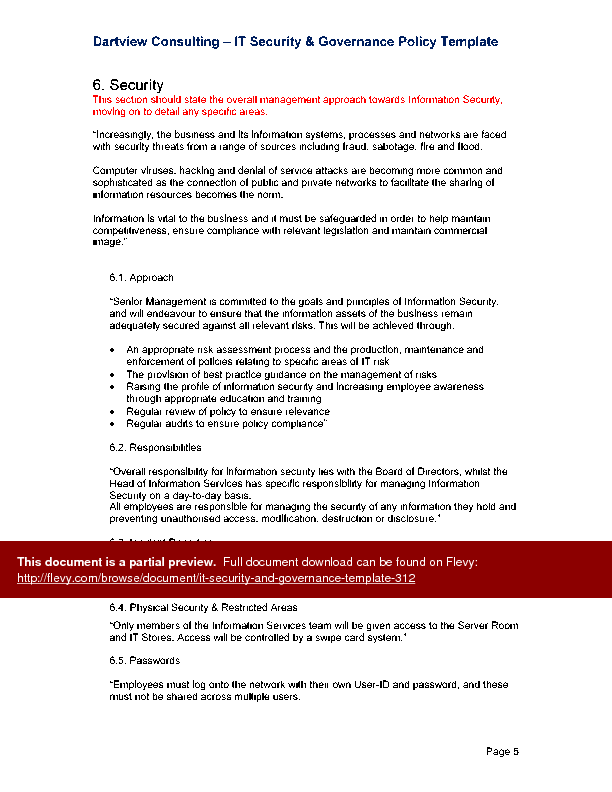
•  Security - Describes the overall approach to information security, including risk assessment, employee training, and policy compliance.
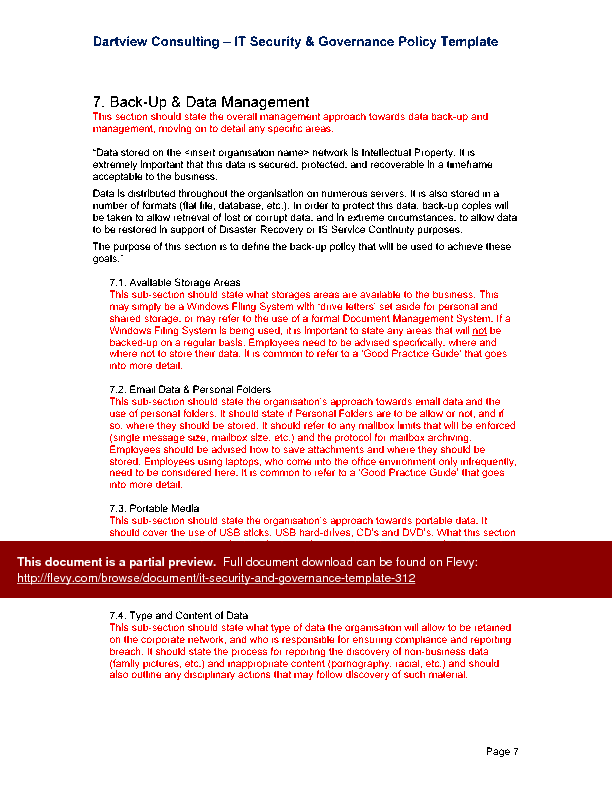
•  Back-Up & Data Management - Establishes guidelines for data backup, retention, and recovery to protect organizational intellectual property.
•  Virus Protection - Outlines measures for preventing, detecting, and responding to virus threats, ensuring software integrity and availability.

Deliverables, Templates, and Tools
•  IT Security Policy Template for organizational use
•  Incident Reporting Form for documenting security breaches
•  Risk Assessment Checklist to evaluate information security vulnerabilities
•  Data Backup Schedule Template for managing backup processes
•  Employee Awareness Training Materials to educate staff on security practices
•  Third-Party Access Request Form for managing external connections

Slide Highlights
•  Overview of the IT Security Policy emphasizing its importance and objectives
•  Risk Assessment Framework detailing the process for identifying and mitigating risks
•  Incident Reporting Workflow illustrating steps for reporting security breaches
•  Data Management Guidelines outlining best practices for data backup and retention
•  Employee Responsibilities Chart clarifying individual roles in maintaining security

Potential Workshop Agenda
Introduction to IT Security Policy (30 minutes)
•  Overview of the policy objectives and importance
•  Discussion on the roles and responsibilities of attendees

Risk Assessment and Management (60 minutes)
•  Identify potential risks to information assets
•  Develop strategies for mitigating identified risks

Incident Reporting and Response (45 minutes)
•  Review the incident reporting process
•  Role-playing scenarios for effective incident response

Customization Guidance
•  Insert organizational details in the scope section to tailor the policy
•  Adjust the frequency of policy reviews based on organizational needs
•  Customize the incident reporting procedures to align with internal processes
•  Update the guiding standards and frameworks to reflect current compliance requirements

Secondary Topics Covered
•  Incident Reporting Procedures for security breaches
•  Employee Remote Access Guidelines for secure connections
•  Third-Party Access Management to control external connections
•  Procurement Procedures for IT goods and services
•  IS Service Continuity Planning to ensure operational resilience

Topic FAQ

What are the essential sections I should expect in a corporate IT security policy document?

A corporate IT security policy typically covers purpose and scope, policy responsibilities, security management, backup and data management, virus protection, internet and email use, third-party and remote access, account administration, shared folders, procurement, and IS service continuity, mirroring sections from Summary and Purpose through IS Service Continuity in the template.

How should an organization structure its incident reporting process after a security event?

Incident reporting should require employees to notify a central IS Service Desk, capture and document the incident, investigate, and follow an established workflow for escalation and remediation. Use of a standardized Incident Reporting Form and an incident workflow ensures consistent handling and documentation with a named Incident Reporting Form.

What elements are important in a data backup and retention policy?

Important elements include defined backup methods, frequency, retention periods, recovery procedures, and roles responsible for backups. Policies should specify where backups are stored, recovery SLAs, and testing cadence; these are typically captured in a Data Backup Schedule Template.

How do I choose an IT security policy template for a small team with limited resources?

Prioritize templates that provide editable policy text plus operational tools: an Incident Reporting Form, Risk Assessment Checklist, Data Backup Schedule Template, account administration procedures with SLAs, and employee training materials. Flevy’s IT Security & Governance Template explicitly lists these deliverables, including the Risk Assessment Checklist.

How can I assess the value of a paid IT policy template compared with free resources?

Assess value by the breadth of included operational tools (policy text, incident forms, backup schedules, training materials), the ease of customization guidance, and coverage of account administration and procurement procedures. Favor resources that include concrete templates such as Employee Awareness Training Materials.

After a security breach, which policy sections should be prioritized for revision?

Prioritize incident reporting and response procedures, account administration and password management, backup and recovery processes, risk assessment documentation, and IS service continuity plans. Revisions should update the Incident Reporting Workflow and clarify responsibilities in the Policy Responsibilities section.

How can a security policy template be used for employee onboarding and access provisioning?

Use the template’s Summary and Purpose, Employee Responsibilities, Internet & Email, and Remote Access sections alongside Employee Awareness Training Materials to brief new hires. Incorporate account administration steps and SLAs into onboarding checklists to control account creation and closure; the template includes Employee Awareness Training Materials.

What controls should be applied to third-party and remote network access?

Controls should define permissible connection methods, authorization and approval processes, rules of engagement, and monitoring requirements. Use a formal Third-Party Access Request Form and documented Remote Access Guidelines to govern approvals and connection types with a Third-Party Access Request Form.

Document FAQ
These are questions addressed within this presentation.

What is the purpose of the IT Security & Governance Policy Template?
This template provides a structured framework for managing information security, ensuring compliance, and protecting valuable information assets within an organization.

Who is responsible for maintaining the IT Security Policy?
The functional responsibility for the development, review, and maintenance of the policy typically lies with a designated role, such as the Head of Information Services.

How often should the IT Security Policy be reviewed?
The policy should be formally reviewed on a regular basis, with the frequency determined by organizational needs and regulatory requirements.

What are the key components of the Security section?
The Security section outlines the overall management approach to information security, including risk assessment, employee training, and compliance audits.

How does the organization handle incident reporting?
All employees are required to report security breaches to the IS Service Desk, where incidents will be investigated and documented.

What guidelines are provided for data backup and retention?
The policy outlines procedures for data backup, including methods, frequency, and retention periods to ensure data recoverability.

What is the organization's stance on unauthorized software?
The policy prohibits the use of unauthorized software, detailing the risks and measures to prevent its installation.

How does the organization manage third-party access?
The policy specifies permissible methods of connection, authorization processes, and rules for third-party access to the corporate network.

Glossary
•  Information Security - The practice of protecting information from unauthorized access, use, disclosure, disruption, modification, or destruction.
•  Incident Reporting - The process of documenting and managing security breaches or incidents.
•  Data Backup - The process of creating copies of data to protect against loss or corruption.
•  Virus Protection - Measures taken to prevent, detect, and remove malicious software from systems.
•  Third-Party Access - The ability of external entities to connect to an organization's network or systems.
•  Employee Awareness - Training and education provided to employees regarding security risks and best practices.
•  Procurement - The process of acquiring goods and services, including IT resources.
•  IS Service Continuity - Planning and procedures to ensure the continued operation of information services during disruptions.
•  Risk Assessment - The process of identifying, analyzing, and evaluating risks to information assets.
•  Data Retention - Policies governing how long data is kept and the processes for its disposal.
•  Password Management - Guidelines for creating, storing, and protecting passwords.
•  Access Control - Mechanisms to restrict access to information and systems based on user roles.
•  Compliance - Adherence to laws, regulations, and standards governing information security.
•  Employee Responsibilities - Obligations of employees to protect organizational information and report security incidents.
•  Backup Methods - Techniques used to create copies of data for recovery purposes.
•  Security Frameworks - Established guidelines and standards for managing information security.
•  Data Management - The practice of collecting, storing, and using data effectively and securely.
•  Incident Response - Procedures for addressing and managing security incidents.
•  Network Security - Measures taken to protect the integrity and usability of network and data.
•  Information Assets - Valuable data and information that an organization needs to protect.
•  Employee Remote Access - Policies governing how employees can securely access corporate networks from remote locations.

Source: Best Practices in Cyber Security Word: IT Security & Governance Template Word (DOC) Document, Dartview Consulting


$50.00

Add to Cart
  

ABOUT THE AUTHOR

Additional documents from author: 19

Dartview Consulting, founded by Paul Smith-Allen, specializes in industry best practice frameworks, including ITIL, PRINCE2, and MOR.

Paul is a seasoned Change Professional certified in ITIL, PRINCE2, MSP, Lean 6 Sigma, Business Relationship Management and MOR with knowledge and experience established within the Construction, Utilities, Oil & Gas, Building Services, Facilities Management, and ... [read more]

Ask the Author a Question

You must be logged in to contact the author.

Click here to log in Click here register

Did you know?
The average daily rate of a McKinsey consultant is $6,625 (not including expenses). The average price of a Flevy document is $65.
Bundle and save! You can save up to % with bundles!

View bundle(s)


Trusted by over 10,000+ Client Organizations
Since 2012, we have provided business templates to over 10,000 businesses and organizations of all sizes, from startups and small businesses to the Fortune 100, in over 130 countries.
AT&T GE Cisco Intel IBM Coke Dell Toyota HP Nike Samsung Microsoft Astrazeneca JP Morgan KPMG Walgreens Walmart 3M Kaiser Oracle SAP Google E&Y Volvo Bosch Merck Fedex Shell Amgen Eli Lilly Roche AIG Abbott Amazon PwC T-Mobile Broadcom Bayer Pearson Titleist ConEd Pfizer NTT Data Schwab


Read Customer Testimonials

 
"As a niche strategic consulting firm, Flevy and FlevyPro frameworks and documents are an on-going reference to help us structure our findings and recommendations to our clients as well as improve their clarity, strength, and visual power. For us, it is an invaluable resource to increase our impact and value."

– David Coloma, Consulting Area Manager at Cynertia Consulting
 
"FlevyPro provides business frameworks from many of the global giants in management consulting that allow you to provide best in class solutions for your clients."

– David Harris, Managing Director at Futures Strategy
 
"Flevy.com has proven to be an invaluable resource library to our Independent Management Consultancy, supporting and enabling us to better serve our enterprise clients.

The value derived from our [FlevyPro] subscription in terms of the business it has helped to gain far exceeds the investment made, making a subscription a no-brainer for any growing consultancy – or in-house strategy team."

– Dean Carlton, Chief Transformation Officer, Global Village Transformations Pty Ltd.
 
"My FlevyPro subscription provides me with the most popular frameworks and decks in demand in today’s market. They not only augment my existing consulting and coaching offerings and delivery, but also keep me abreast of the latest trends, inspire new products and service offerings for my practice, and educate me "

– Bill Branson, Founder at Strategic Business Architects
 
"Flevy is our 'go to' resource for management material, at an affordable cost. The Flevy library is comprehensive and the content deep, and typically provides a great foundation for us to further develop and tailor our own service offer."

– Chris McCann, Founder at Resilient.World
 
"As a consultant requiring up to date and professional material that will be of value and use to my clients, I find Flevy a very reliable resource.

The variety and quality of material available through Flevy offers a very useful and commanding source for information. Using Flevy saves me time, enhances my expertise and ends up being a good decision."

– Dennis Gershowitz, Principal at DG Associates
 
"I have found Flevy to be an amazing resource and library of useful presentations for lean sigma, change management and so many other topics. This has reduced the time I need to spend on preparing for my performance consultation. The library is easily accessible and updates are regularly provided. A wealth of great information."

– Cynthia Howard RN, PhD, Executive Coach at Ei Leadership
 
"I am extremely grateful for the proactiveness and eagerness to help and I would gladly recommend the Flevy team if you are looking for data and toolkits to help you work through business solutions."

– Trevor Booth, Partner, Fast Forward Consulting


Save with Bundles

This document is available as part of the following discounted bundle(s):

Save %!
Governance, Risk & Due Diligence

This bundle contains 3 total documents. See all the documents to the right.

$60.00


Add Bundle & Save


Customers Also Bought These Documents


Customers Also Like These Documents

Explore Templates on Related Management Topics


Your Recently Viewed Documents
Download our FREE Digital Transformation Templates

Download our free compilation of 50+ Digital Transformation slides and templates. DX concepts covered include Digital Leadership, Digital Maturity, Digital Value Chain, Customer Experience, Customer Journey, RPA, etc.









