
 Click main image to view in full screen. Unlock all 10 preview images:
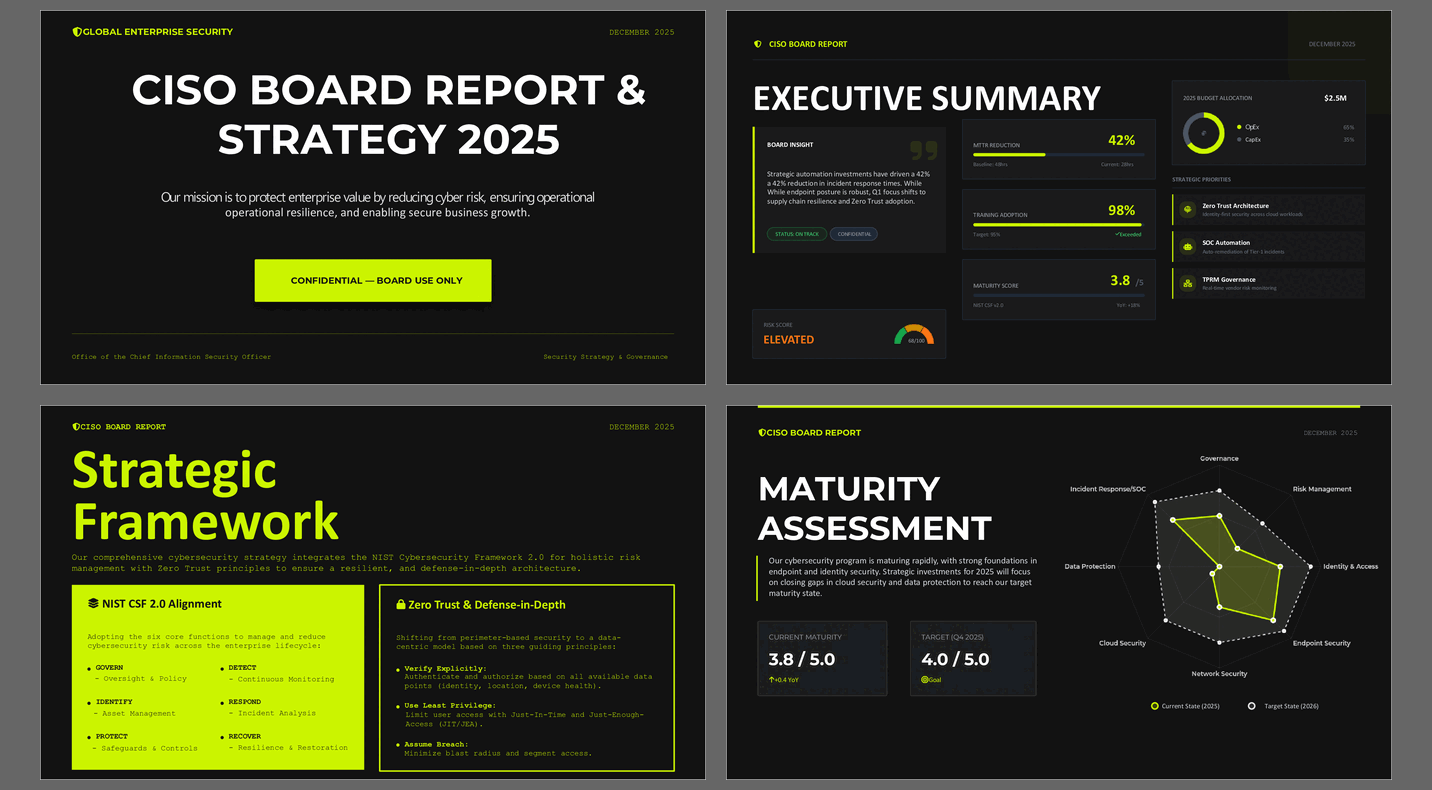
CISO Board Report & Cybersecurity Strategy Deck 2025 – PowerPoint PPTX Template
PowerPoint (PPTX) 32 Slides


BENEFITS OF THIS DOWNLOADABLE POWERPOINT DOCUMENT
- Translates technical cybersecurity concepts into executive-friendly narratives, enabling CISOs to secure board approval for budget, risk appetite changes, and strategic initiatives.
- Includes pre-built visualizations (risk heatmaps, maturity spiders, KPI dashboards, implementation roadmaps) that demonstrate a mature, data-driven approach to security governance.
- Accelerates board preparation by providing a complete, customizable template covering strategy, compliance, budget, team structure, and implementation roadmap--reducing presentation development from days to hours.
CYBER SECURITY PPT TEMPLATE DESCRIPTION
EXECUTIVE OVERVIEW
In the hyper-connected threat environment of 2026, cyber risk has evolved from an IT issue into a board-level business imperative. Recent industry data reveals that data breaches cost enterprises an average of $4.95 million per incident. The CISOs who succeed are those who translate security posture into business language that drives budget approval, risk appetite alignment, and strategic executive decision-making.
This comprehensive 32-slide PowerPoint deck provides your complete toolkit for delivering a board-ready cybersecurity strategy and risk management briefing. Designed for CISOs, VP Security, and Chief Risk Officers, it delivers everything needed to transform technical concepts into executive narratives that drive action.
WHY?
Industry research demonstrates that organizations with mature board-level security governance achieve:
50-60% reduction in incident response time (MTTR)
3-5x higher board confidence in risk management
40%+ improvement in security budget approval rates
Material reduction in cyber insurance premiums
Competitive advantage through cyber transparency and resilience
What Boards Demand in 2026:
Less technical metrics, more business narratives
Explicit connection between cyber risk and strategic objectives
Outcome-focused reporting, not technical status updates
Quantifiable cyber ROI and financial exposure forecasting
Clear governance with CEO-level accountability
TRANSFORMATIONAL BENEFITS
1. Executive Translation Framework
Converts complex technical concepts into board-digestible narratives, enabling CISOs to secure approval for budgets, risk appetite changes, and strategic initiatives. Eliminates the communication gap between security and the boardroom.
2. Instant Visual Credibility
Includes pre-built visualizations:
Risk heatmaps plotting likelihood versus business impact
NIST CSF 2.0 maturity spider charts
KPI dashboards with trend indicators
Quarterly implementation roadmaps
These visuals demonstrate a mature, data-driven approach to security governance that inspires confidence.
3. Radical Preparation Acceleration
Reduces board presentation development from days to hours. Comprehensive, customizable template covering:
Security strategy and vision
Compliance and regulatory framework
Budget structure and allocation
Team organization and RACI matrices
Phased implementation roadmap
4. Strategic Business Alignment
Connects every security investment to explicit organizational objectives:
Enable secure remote work
Protect customer data and trust
Ensure regulatory compliance (GDPR, PCI DSS 4.0, DORA, CPRA)
Preserve shareholder value and reputation
5. Financial Risk Quantification
Translates security risks into financial terms boards understand:
Annualized Loss Expectancy (ALE) calculations
Potential incident costs (direct, business interruption, penalties, reputation)
Risk-adjusted return framework
Competitive spending benchmarking
COMPREHENSIVE CONTENT – 32 PROFESSIONAL SLIDES
Strategic Executive Foundation (Slides 1-3)
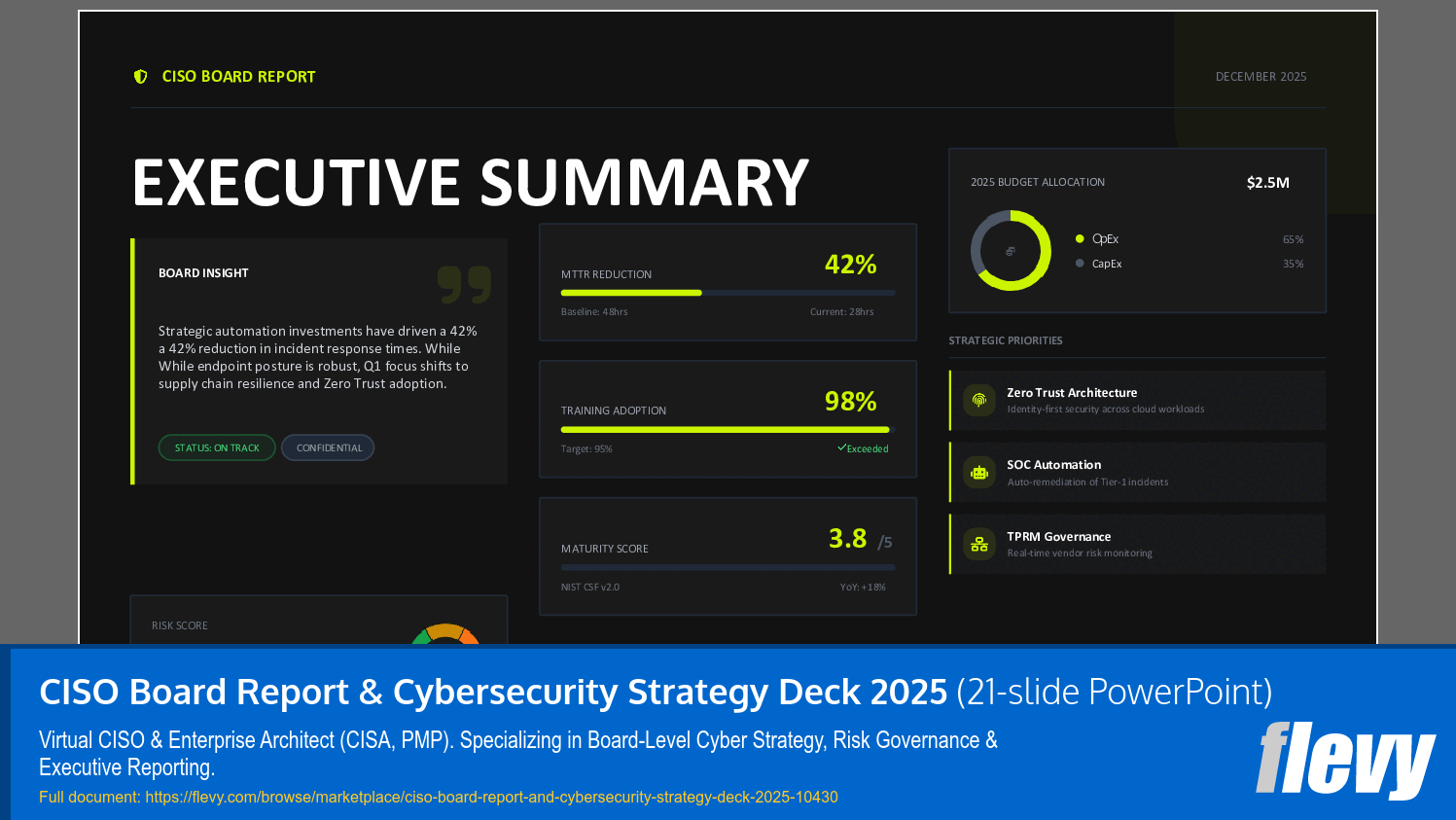
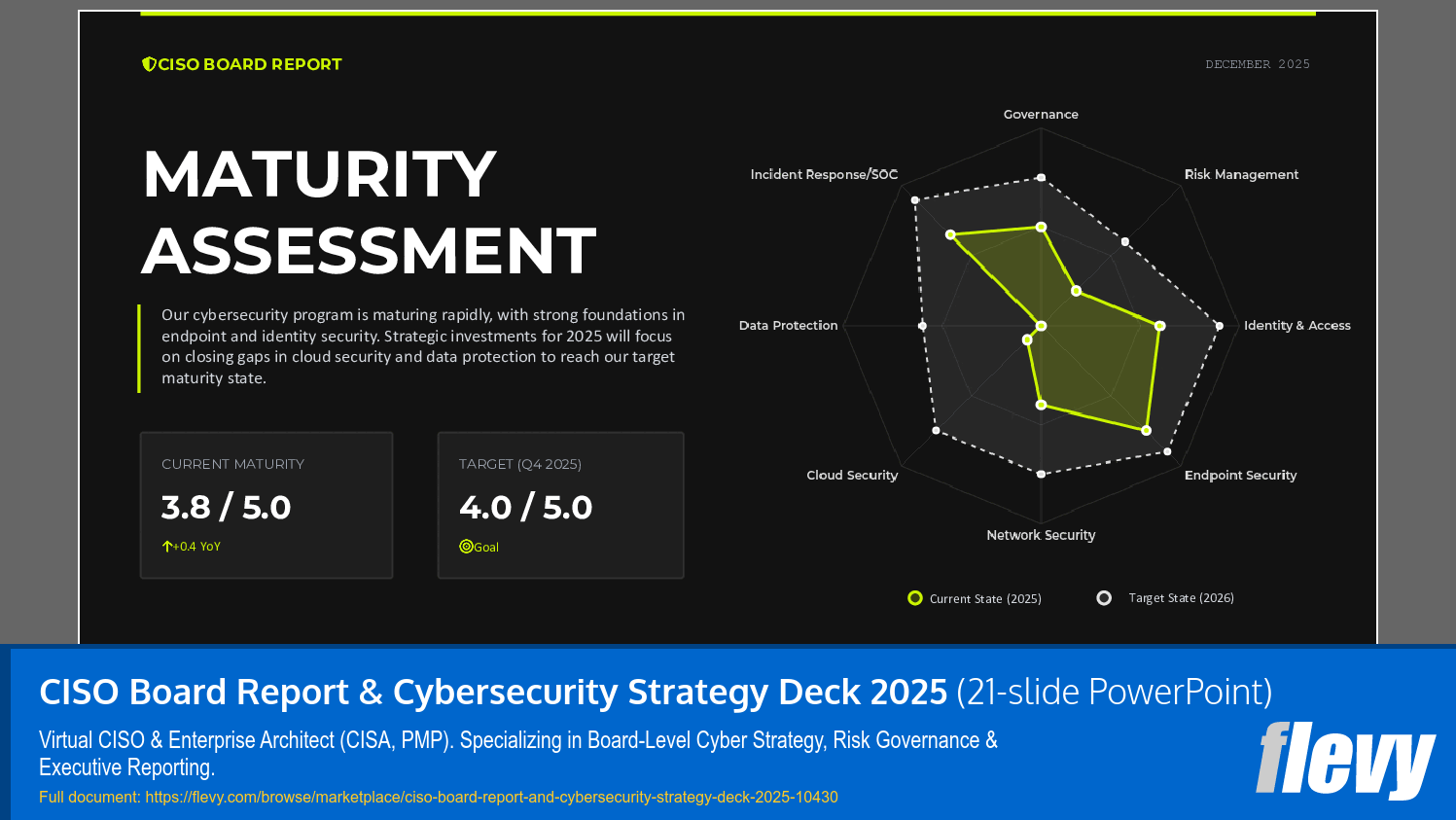
Risk score dashboard and maturity assessment
2025 strategic priorities at a glance
Board-relevant KPIs (MTTR, training adoption, maturity score)
Threat Landscape & Business Context (Slides 4-5)
Current threat vectors positioned as business imperatives
AI-driven attacks, supply chain targeting, cloud identity risks
Direct connection between cyber risk and shareholder value
Security Posture & Maturity Assessment (Slides 6-7)
Strengths, critical gaps, and NIST CSF 2.0 aligned scoring
Visual spider charts and maturity comparisons
Easy-to-understand visuals for non-technical boards
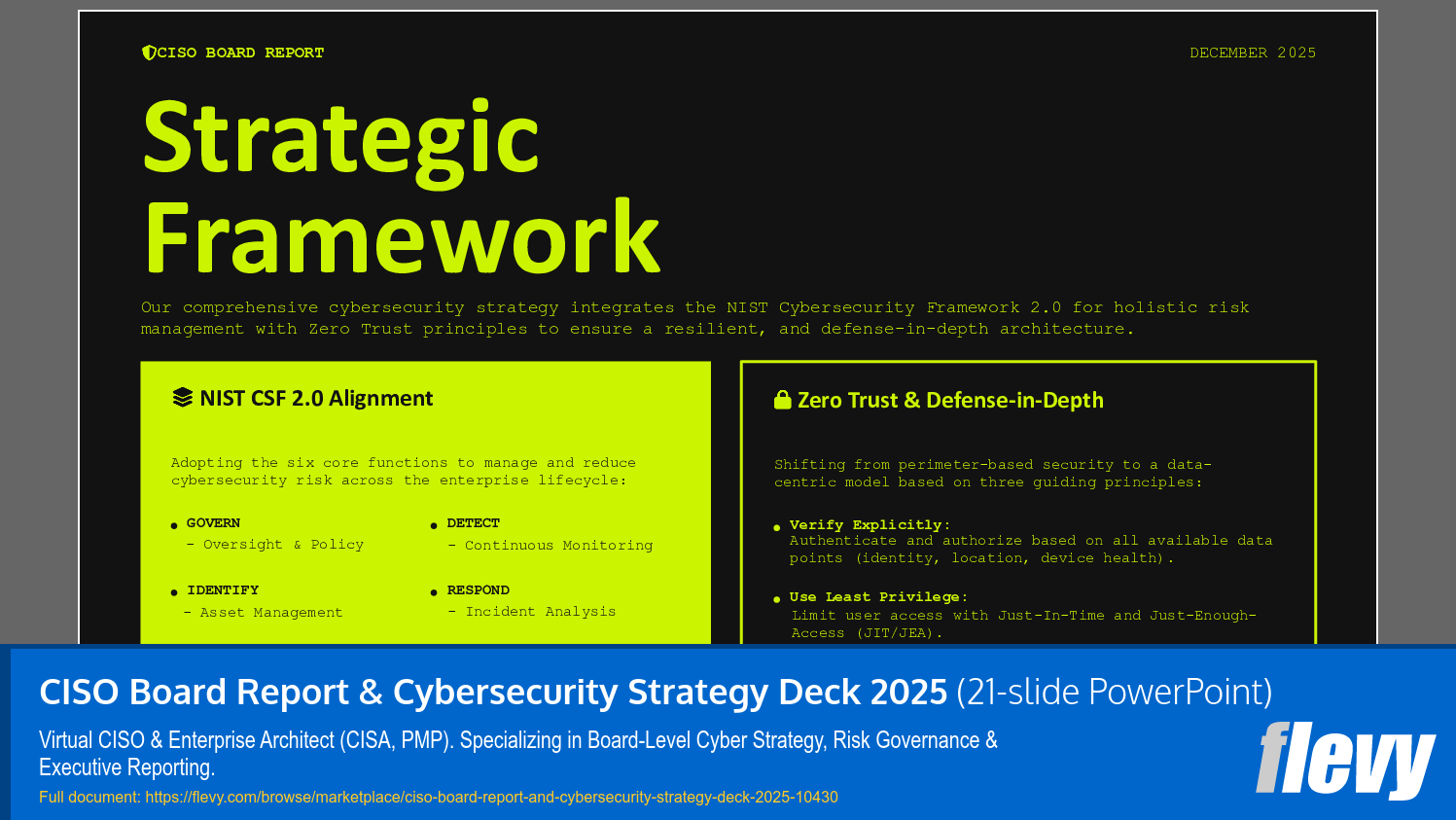
Strategic Framework & Roadmap (Slides 8-10)
NIST CSF 2.0 alignment with Zero Trust architecture
Clear diagrams and board-appropriate explanations
Phased 2025 implementation timeline (Q1-Q4)
Risk Visualization & Prioritization (Slide 11)
Top 10 Risk Heat Map with bubble chart format
Visual plotting of likelihood versus business impact
Format boards understand and act upon instantly
Strategic Objectives & 2025 Priorities (Slides 12-13)
Five prioritized focus areas: Zero Trust Phase 2, SOC Modernization, Cloud Maturity, TPRM, Security Culture
Clear success metrics and accountability measures
Operational KPIs & Metrics (Slides 14-15)
Data-driven performance indicators: MTTR, patch compliance, phishing click rates, incident counts
Trend indicators demonstrating continuous improvement
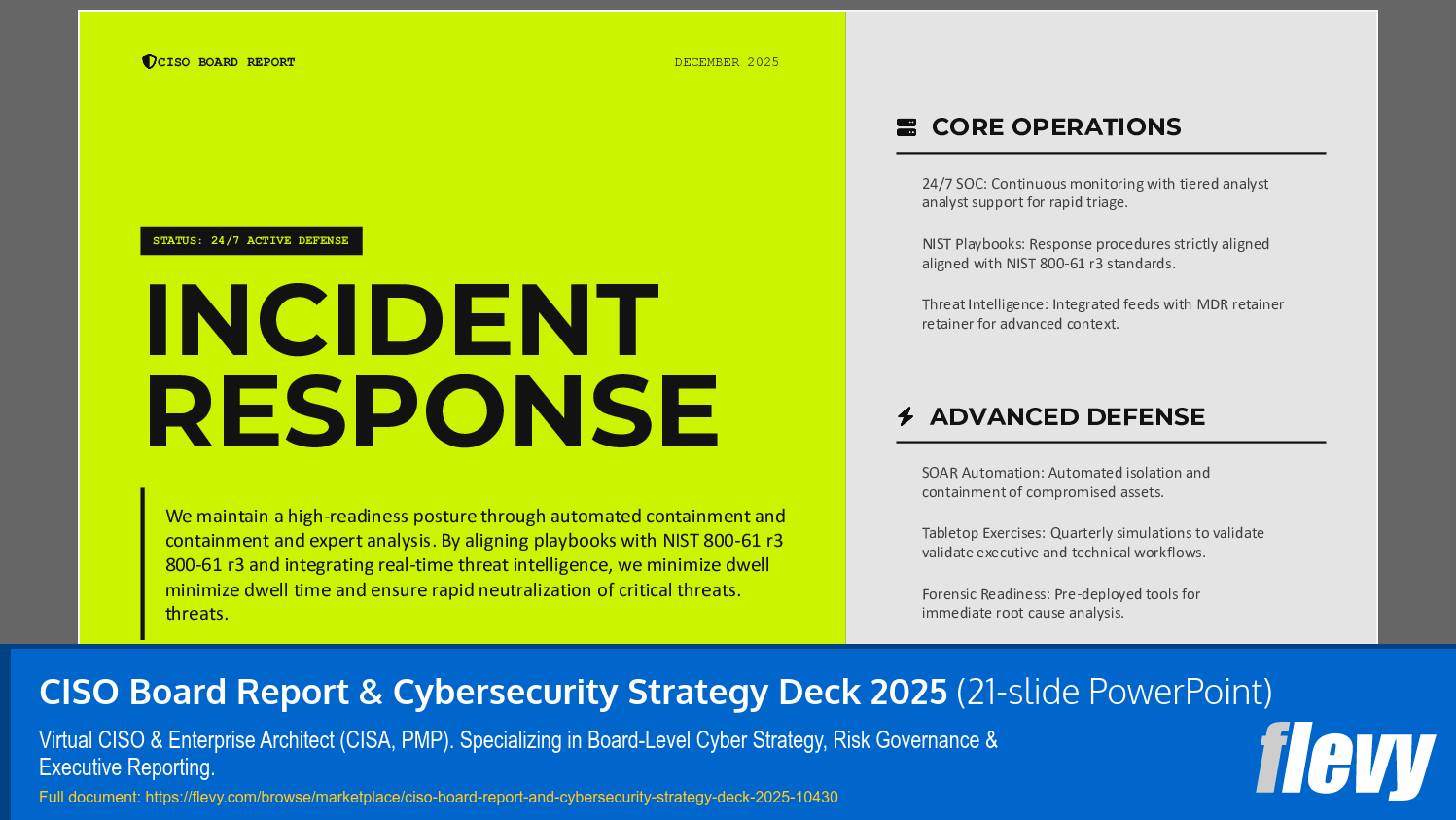
Incident Response & Defense Readiness (Slides 16-17)
24/7 SOC operations with NIST 800-61 aligned playbooks
SOAR automation and forensic readiness status
Board confidence in response capability
Compliance & Regulatory Roadmap (Slide 18)
Certifications achieved: SOC 2 Type II, ISO 27001:2022, GDPR compliance
In-progress initiatives: PCI DSS 4.0, CPRA, DORA
Clear regulatory status dashboard
Governance & Oversight Model (Slides 19-20)
Cyber governance structure and board committee alignment
RACI framework and reporting cadence
Clear accountability and escalation paths
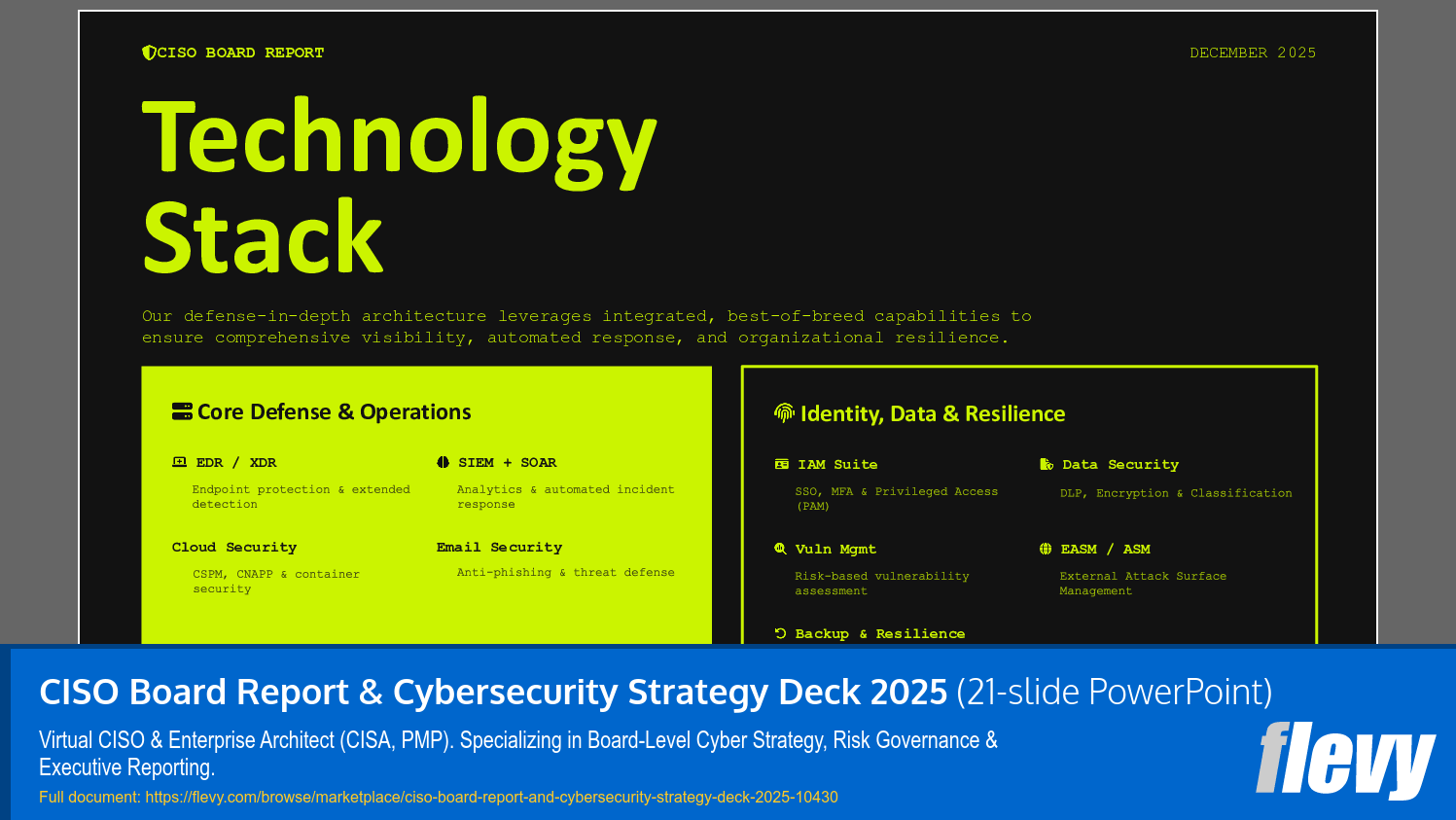
Technology & Budget Strategy (Slides 21-22)
Defense-in-depth architecture summary
Budget breakdown: OpEx vs. CapEx, function-based allocation
Demonstration of prudent financial stewardship
Implementation Roadmap (Slide 23)
Quarter-by-quarter milestones: Assess, Build, Scale, Optimize
Clear Q1-Q4 2025 deliverables
Board confidence in execution capability
Third-Party Risk Management (Slide 24)
Comprehensive TPRM lifecycle framework
Evidence-based assessment and continuous monitoring
Contractual enforcement and offboarding controls
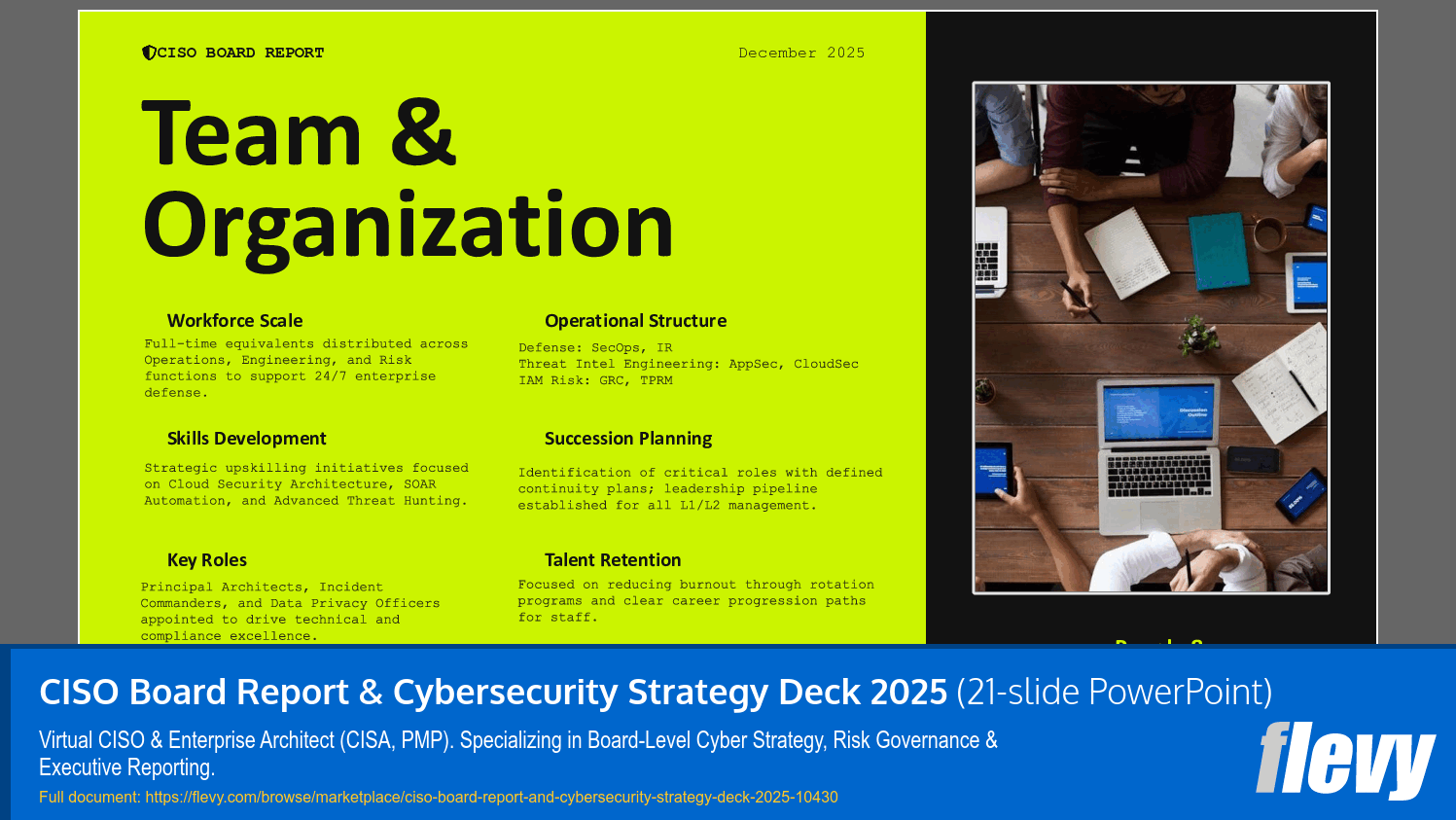
Team & Organization (Slide 25)
Workforce scale and operational structure
Skills development and succession planning
Talent retention strategies
Next Steps & Quarterly Cadence (Slide 26)
Clear approval requests and follow-up schedule
Q1, Q2, Q4 board meeting alignment
References & Sources (Slide 27)
External frameworks, threat intelligence, regulatory standards
Industry benchmarks and market data
Security Metrics & KPI Dashboard (Slides 28-32)
Detailed operational, strategic, and financial KPIs
Trend analysis and year-over-year comparisons
Visual analytics and strategic recommendations
Leading and lagging indicators
Real-time threat level and risk heatmap visualization
TARGET AUDIENCE
CISOs & VP Security presenting quarterly or annual strategy to boards
Chief Risk Officers quantifying cyber risk as material business threat
Management Consultants delivering board-level cybersecurity assessments
Transformation Leaders aligning security with digital transformation
Cybersecurity Entrepreneurs & Consultants developing executive-level advisory offerings
DESIGN EXCELLENCE
Executive-Grade Aesthetic: Modern, clean design with professional color palette suitable for Fortune 500 presentations
100% Editable: All charts, metrics, text, and diagrams fully customizable in PowerPoint
Modular & Flexible: Use all 32 slides for comprehensive quarterly review, or select slides 1-7 for a 10-minute executive brief
Visual-First Approach: Heavy use of heatmaps, bubble charts, radar charts, timelines reducing reliance on text-heavy content
BOTTOM LINE
Skip the 20+ hours of designing and developing board-ready security narratives. Obtain a battle-tested, professionally-designed deck that boards recognize and respect.
Customize with your risk data, budget figures, and timeline in just a few hours.
This is not just a presentation. It is your strategic arsenal for transforming cybersecurity from a cost center into a competitive asset.
WHAT YOU RECEIVE
Immediately downloadable PPTX file (32 slides)
Fully editable charts and visuals
Frameworks aligned with NIST CSF 2.0, ISO 27001, Zero Trust
Reusable templates for quarterly reporting
References and sources included (frameworks, threat intelligence, benchmarks)
IMPACT GUARANTEE
Organizations using structured board reports like this experience:
40%+ increase in budget approval rates
85% reduction in preparation time (days to hours)
3-5x higher board confidence in risk management
CISO positioned as strategic partner, not just tactical operator
Note: For personal and client use only. Resale, redistribution, or sharing of the original files or any modified versions is strictly prohibited.
Source: Best Practices in Cyber Security PowerPoint Slides: CISO Board Report & Cybersecurity Strategy Deck 2025 PowerPoint (PPTX) Presentation Slide Deck, Synergie Consultation | Cyber & GRC
Got a question about the product? Email us at support@flevy.com or ask the author directly by using the "Ask the Author a Question" form. If you cannot view the preview above this document description, go here to view the large preview instead.
PRESENTATION DEEP DIVE ANALYSIS
This deep-dive analysis was generated from the full 32-slide PowerPoint presentation.
Source: Best Practices in Cyber Security PowerPoint Slides: CISO Board Report & Cybersecurity Strategy Deck 2025 PowerPoint (PPTX) Presentation Slide Deck, Synergie Consultation | Cyber & GRC
ABOUT THE AUTHOR

Security architect and virtual CISO, CISA certified, with 20+ years of experience designing, implementing and auditing cybersecurity, IT governance and risk management programs in highly regulated environments.
I have worked on security and compliance initiatives for major Canadian organizations, including National Bank, Beneva, TELUS, DMR and CAA Québec. This background helps executives turn
... [read more]
Ask the Author a Question
You must be logged in to contact the author.




























