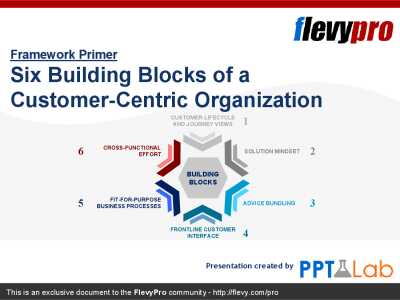
Editor's Note: Take a look at our featured best practice, Six Building Blocks of Digital Transformation (35-slide PowerPoint presentation). Digital Transformation touches practically every function in the entire organization. This thus requires an unprecedented amount of coordination among people, process, and technologies throughout the organization, leading to a difficult Transformation program.
The Six Building Blocks of [read more]
* * * *
Buyers increasingly ask AI assistants to compare providers, explain product categories, or recommend a shortlist before visiting a company website. A brand missing from those answers can lose consideration before a conventional search begins. Visibility depends on whether systems can find clear, credible material that answers those questions and connect it to the right business. A practical review starts by identifying the questions buyers ask and the evidence an AI system can use to provide relevant answers.
Track Prompts Buyers Actually Use
Buyers ask about product suitability, pricing factors, integrations, onboarding, and trade-offs, so a useful audit starts with real queries rather than broad category labels. A focused AI search visibility agency review can compare those questions with the company’s public content and flag missing answers, unclear claims, or weak attribution. The result is a practical content plan, not a promise of placement.
Record each prompt, the answer, any cited sources, and how the brand appears as a recommendation, comparison, or source. Repeat checks across buyer roles and variations in wording. One result is a snapshot, not a reliable measure of visibility. Include questions raised during demos, pricing discussions, and onboarding to keep the audit connected to actual buying concerns.
Make Answers Easy to Extract
AI-generated answers rely on material that addresses a question directly. Put the answer near the top of a page, then explain relevant conditions, exceptions, and details. Readers should be able to tell what a product does without decoding internal terms or promotional language.
Use descriptive headings that match buyer concerns, and keep each section focused on one answer. Define specialized terms at first use. Separate product facts from opinions, and support claims with context. Broad claims give systems few precise passages to draw on and leave buyers with more research. Give each product page a consistent name and description, so information remains clear across the website.
Build Proof into Every Claim
AI systems need reasons to trust a statement and its source. Name the people responsible for technical explanations, describe their relevant experience, and support claims with documentation, customer evidence, or original research when available. Keep those materials accessible and current.
Specific evidence carries more weight than an unsupported superlative. Explain how a feature works, which problem it addresses, and what its limitations are. For customer results, state the context and method so readers can judge whether an example fits their situation. Avoid claims that cannot be checked against a concrete source. When a claim changes, update the page and its supporting materials together.
Cover the Full Decision Path
Buyers rarely stop after asking what a product is. They want to know whether it fits their workflow, what setup it requires, how it compares with familiar options, and what happens after purchase. Map these follow-up questions across awareness, evaluation, and implementation.
Connect each answer to the next useful detail, such as a requirements page, comparison guide, or support explanation. This structure helps readers continue their research and gives AI systems a clear path through related subjects. Avoid repeating the same sales message across every page. Build the map from questions heard in calls, support tickets, and renewal conversations.
Use Formats Machines Can Parse
Text is not the only useful format, but every format needs accessible supporting information. A product video can explain a complex topic quickly; a transcript lets readers and automated systems review its details. Captions also make spoken information available without audio.
Add descriptive titles and summaries that state each asset’s subject plainly. Organize long recordings with chapters, and keep the transcript aligned with the final edit. These steps make content easier to review, quote, and maintain alongside related written material. Provide text descriptions for diagrams or demonstrations that depend on visual details.
Measure Citations and Refine Content
Track whether target prompts mention the brand, which pages or assets appear as sources, and how the answer describes them. Compare results over time with the same prompt set, then save examples of changes in citations or recommendations. Pair this review with site analytics, since a citation does not prove a visit or sale.
Use gaps to identify which content needs improvement. If an answer misstates a product feature, clarify the relevant page. If another company is cited for a common question, publish a direct, evidence-backed explanation. Recheck revised material after it is indexed, and retain earlier prompts and responses for comparison. Assign an owner and review date to each tracked answer.
Conclusion
AI recommendations depend on clear answers, attributable evidence, and content that connects related buyer questions. A brand cannot control every generated response, but it can make its expertise easier to find and interpret. Start with a short set of questions from sales and support, test the answers buyers see, and address the most consequential information gap first. This gives the team a specific task and a clear way to track progress.
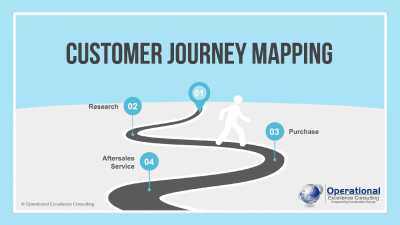
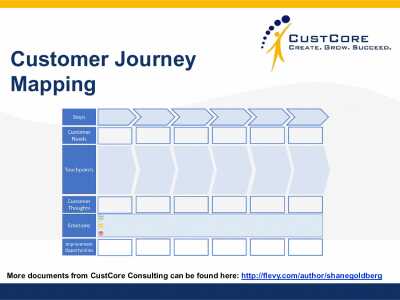
Customer Journey Mapping is the process of creating a graphical representation of the steps and stages a customer goes through to experience a product, service, an online experience, or any combination. It may focus on a particular part of the process or the end-to-end experience.
The journey [read more]
Do You Want to Implement Business Best Practices?
You can download in-depth presentations on Customer Journey and 100s of management topics from the FlevyPro Library. FlevyPro is trusted and utilized by 1000s of management consultants and corporate executives.
For even more best practices available on Flevy, have a look at our top 100 lists:
These best practices are of the same as those leveraged by top-tier management consulting firms, like McKinsey, BCG, Bain, and Accenture. Improve the growth and efficiency of your organization by utilizing these best practice frameworks, templates, and tools. Most were developed by seasoned executives and consultants with over 20+ years of experience.
Readers of This Article Are Interested in These Resources
This Guide will take you through step-by-step detailed instructions to help you create a Customer Journey Map - a visual representation of the experience that customers have with your organisation, product or service.
The step-by-step guide includes a comprehensive outline and templates for use [read more]
More and more organizations are shifting a traditional Product-focused model to becoming a Customer-centric Organization. To do this without incurring debilitating costs from added process and organizational complexity, the organization must be build a true Customer-centric Organization by [read more]
Emerging technology trends are driving businesses to Digital Transformation across industries. At the core of most Digital Transformation projects is the evolution of the Customer Experience, from a traditional linear process (with few touch points) to a continuous, circular process (with [read more]
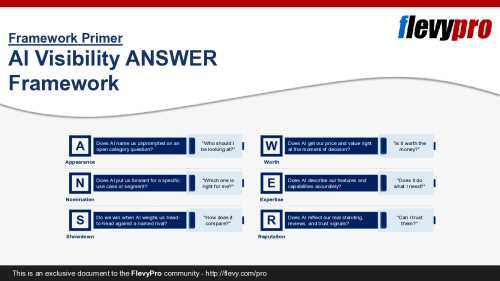
A fast-growing share of buyers now open an AI answer engine--ChatGPT, Perplexity, Google's AI answers, Claude, or Copilot--instead of a search engine, asking for an answer rather than a page of links. The engine names a few options, recommends one, and passes judgment on price and trust. [read more]
 Buyers increasingly ask AI assistants to compare providers, explain product categories, or recommend a shortlist before visiting a company website. A brand missing from those answers can lose consideration before a conventional search begins. Visibility depends on whether systems can find clear, credible material that answers those questions and connect it to the right business. A practical review starts by identifying the questions buyers ask and the evidence an AI system can use to provide relevant answers.