Editor's Note: Take a look at our featured best practice, Digital Transformation Strategy (145-slide PowerPoint presentation). Digital Transformation is being embraced by organizations across most industries, as the role of technology shifts from being a business enabler to a business driver. This has only been accelerated by the COVID-19 global pandemic. Thus, to remain competitive and outcompete in today's fast paced, [read more]
* * * *
The Imperative of IT Outsourcing in Digital Transformation
In today’s rapidly evolving business landscape, digital transformation is no longer optional but a critical survival strategy. Organizations across industries are leveraging technology to streamline operations, enhance customer experiences, and unlock new revenue streams. However, the complexity of technology infrastructure and the specialized skills required to manage it often exceed internal capabilities. This is where IT outsourcing emerges as a strategic enabler, allowing companies to access expert talent and advanced technological resources without the overhead of building large in-house teams.
A well-structured IT outsourcing partnership can accelerate digital transformation by providing scalable solutions tailored to organizational needs. For instance, Keytel Systems’s tech outsourcing team offers specialized expertise that helps businesses navigate the complexities of modern IT environments while maintaining agility and cost-effectiveness. Outsourcing not only delivers operational efficiencies but also frees internal teams to focus on core business priorities.
The growing reliance on IT outsourcing is reflected in market trends: the global IT outsourcing market is expected to reach $620 billion by 2027, growing at a compound annual growth rate (CAGR) of 8.5% from 2020 to 2027. This growth underscores how enterprises are increasingly depending on external providers to manage critical digital transformation initiatives effectively.
Cybersecurity: The Cornerstone of Digital Transformation
As organizations digitize their processes and data, the attack surface for cyber threats expands significantly. Cybersecurity has become a critical component of any digital transformation framework. Without robust security measures, companies risk data breaches, financial losses, reputational damage, and regulatory penalties. According to a recent report, the average cost of a data breach reached $4.45 million in 2023, highlighting the financial stakes involved.
To mitigate these risks, cybersecurity must be integrated into every phase of digital transformation initiatives. Partnering with specialists like Nortec Communications in the industry ensures that security frameworks are aligned with industry best practices and emerging threat landscapes. These collaborations provide continuous monitoring, vulnerability assessments, and incident response capabilities that are essential to safeguarding digital assets.
Moreover, cyber threats are becoming more sophisticated and frequent: cybercrime damages are projected to cost the world $10.5 trillion annually by 2025, making proactive defense mechanisms indispensable. This statistic reinforces the necessity of embedding cybersecurity deeply within digital transformation strategies.
Frameworks for Integrating IT Outsourcing and Cybersecurity
Successful digital transformation requires a holistic approach that combines IT outsourcing and cybersecurity within a unified framework. Here are several key components to consider:
1. Comprehensive Risk Assessment and Strategy Alignment
Before embarking on digital transformation, organizations must conduct thorough risk assessments to understand potential vulnerabilities and compliance requirements. This process involves mapping out critical assets, identifying threat vectors, and evaluating existing controls. Aligning this insight with business objectives ensures that IT outsourcing and cybersecurity strategies support broader goals.
Risk assessments should also consider third-party risks introduced through outsourcing. A survey found that 60% of data breaches involved vulnerabilities in third-party vendors, emphasizing the need for rigorous evaluation and continuous monitoring of outsourcing partners.
2. Vendor Selection and Governance
Choosing the right outsourcing partners is crucial. Organizations must evaluate vendors based on technical expertise, security certifications, track record, and cultural fit. Establishing clear governance structures, including service level agreements (SLAs) and security protocols, fosters accountability and transparency throughout the partnership lifecycle.
Effective governance also involves continuous audits and compliance checks. For example, vendors adhering to standards such as ISO 27001, SOC 2, and GDPR demonstrate a commitment to security and privacy that aligns with enterprise requirements.
3. Integration of Security into Development and Operations
Implementing DevSecOps practices embeds security into the software development and IT operations processes. This approach ensures continuous testing, monitoring, and improvement, reducing the likelihood of vulnerabilities in deployed applications and infrastructure.
DevSecOps also accelerates the digital transformation timeline by enabling rapid, secure software releases. According to a Puppet State of DevOps report, organizations practicing DevSecOps deploy code 200 times more frequently and recover from failures 24 times faster than their peers.
4. Continuous Monitoring and Incident Response
Digital transformation demands proactive security postures. Continuous monitoring using advanced analytics and threat intelligence enables early detection of anomalies. Additionally, well-defined incident response plans minimize damage and facilitate rapid recovery in case of breaches.
Integrating Security Information and Event Management (SIEM) systems and employing artificial intelligence for threat detection enhances the ability to respond to incidents swiftly. Organizations that implement mature incident response processes reduce the average cost of breaches by $2 million compared to those without such capabilities.
The Business Impact of IT Outsourcing and Cybersecurity Synergy
When effectively integrated, IT outsourcing and cybersecurity frameworks deliver measurable business benefits. Companies experience improved operational resilience, enhanced compliance with regulatory mandates, and increased customer trust. Forrester research found that organizations that adopt integrated outsourcing and security strategies reduce downtime by up to 50% and achieve 30% faster time-to-market for digital initiatives.
Moreover, outsourcing partners often bring innovative technologies such as artificial intelligence and automation to bolster cybersecurity defenses. This innovation not only strengthens protection but also optimizes resource allocation and cost management. For example, automation can reduce the time to detect and respond to threats by up to 80%, freeing security teams to focus on strategic tasks.
The synergy between IT outsourcing and cybersecurity also supports compliance with increasingly stringent data protection regulations such as GDPR, HIPAA, and CCPA. Outsourcing vendors with demonstrated compliance expertise help organizations avoid costly fines and maintain customer confidence.
Challenges and Best Practices
Despite the advantages, combining IT outsourcing with cybersecurity in digital transformation is not without challenges. Communication gaps, misaligned priorities, and insufficient visibility into third-party practices can undermine efforts. To overcome these hurdles, organizations should:
Foster collaborative relationships with vendors based on mutual trust and shared objectives.
Implement comprehensive training programs to build internal awareness of cybersecurity risks.
Utilize advanced tools for real-time monitoring and reporting.
Regularly review and update security policies to adapt to evolving threats.
Additionally, organizations must address the complexity of managing multiple vendors and technologies. Establishing a centralized vendor management office (VMO) can streamline coordination and ensure consistent standards across outsourcing engagements.
Transparency is another critical factor. Sharing threat intelligence between internal teams and outsourcing partners enhances situational awareness and improves collective defense capabilities.
Future Trends in IT Outsourcing and Cybersecurity for Digital Transformation
Looking ahead, the convergence of emerging technologies such as edge computing, 5G, and blockchain will further shape IT outsourcing and cybersecurity frameworks. Outsourcing providers will increasingly offer specialized services that address these innovations while maintaining stringent security standards.
Edge computing, for example, distributes data processing closer to the source, reducing latency but increasing the number of endpoints to protect. Outsourcing partners with expertise in securing edge environments will be vital for organizations adopting this model.
Similarly, 5G connectivity introduces new network architectures and potential vulnerabilities. Cybersecurity frameworks must evolve to address these challenges in real time.
Blockchain technology promises enhanced transparency and security for transactions and data sharing in digital ecosystems. Outsourcing providers integrating blockchain into their offerings can help clients leverage this technology securely.
Additionally, regulatory landscapes continue to evolve, compelling organizations to adopt more sophisticated compliance mechanisms. Automation and AI-driven security analytics will become indispensable for managing complex digital ecosystems. These tools will enable predictive threat modeling and adaptive defenses that keep pace with rapidly changing attack vectors.
Conclusion
Digital transformation is a multifaceted journey that demands strategic integration of IT outsourcing and cybersecurity frameworks. Leveraging expert partners empowers organizations to navigate technological complexities while safeguarding critical assets. By adopting comprehensive risk management practices, fostering strong vendor partnerships, and embedding security into operational workflows, businesses can achieve resilient and agile digital transformation outcomes that drive sustainable growth.
Embracing this integrated approach not only mitigates risks but also unlocks new opportunities for innovation and competitive advantage in an increasingly digital world. As the technology landscape continues to evolve, organizations that prioritize the synergy between IT outsourcing and cybersecurity-and collaborate with trusted partners such as -will be best positioned to thrive in the future.
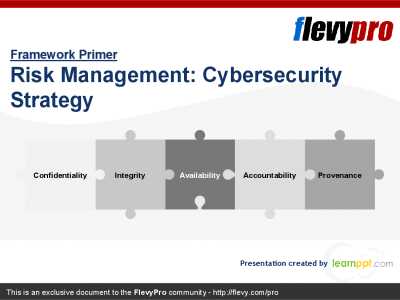
Cybersecurity is a growing threat and should be at the forefront in any IT Risk Management Strategy. As role of
The PPT outlines the critical elements of a robust cybersecurity strategy, emphasizing the importance of integrity, availability, accountability, and provenance of information. It [read more]
Do You Want to Implement Business Best Practices?
You can download in-depth presentations on Cyber Security and 100s of management topics from the FlevyPro Library. FlevyPro is trusted and utilized by 1000s of management consultants and corporate executives.
For even more best practices available on Flevy, have a look at our top 100 lists:
These best practices are of the same as those leveraged by top-tier management consulting firms, like McKinsey, BCG, Bain, and Accenture. Improve the growth and efficiency of your organization by utilizing these best practice frameworks, templates, and tools. Most were developed by seasoned executives and consultants with over 20+ years of experience.
Readers of This Article Are Interested in These Resources
This Word Document provides a template for an IT Security & Governance Policy and is easily customisable. Areas cover are: Security, Data Back-Up, Virus Protection, Internet & Email usage, Remote & 3rd Party Network Access, User-Account Management, Procurement, Asset Management and IS Service [read more]
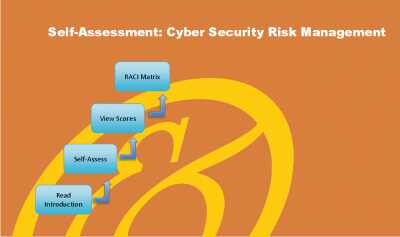
National Institute of Standards and Technology (NIST) U.S. Department of Commerce Cyber Security Framework Aligned.
Governments, sectors, and organizations around the world are increasingly recognizing the NIST Cyber Security Framework (CSF) as a recommended cyber security baseline to [read more]
Cybersecurity awareness is the understanding and knowledge of potential threats to information systems and the measures individuals and organizations can take to protect themselves from these threats. It involves being conscious of the risks associated with using technology and being proactive in [read more]
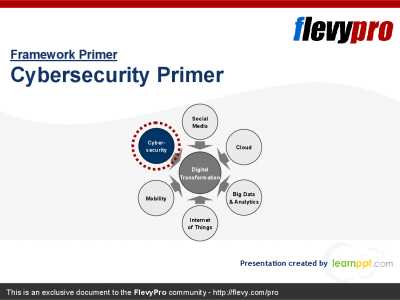
Cybersecurity is the protection of information systems from theft or damage to the hardware, the software, and to the information on them. The more we depend on the Internet and related technologies, the more we depend on their security.
As such, there can be no Digital Transformation without [read more]
 The Imperative of IT Outsourcing in Digital Transformation