
 Click main image to view in full screen. Unlock all 12 preview images:
Cybersecurity Operating Model Design & Organizational – PowerPoint PPTX Template
PowerPoint (PPTX) 60 Slides


CYBER SECURITY PPT TEMPLATE DESCRIPTION
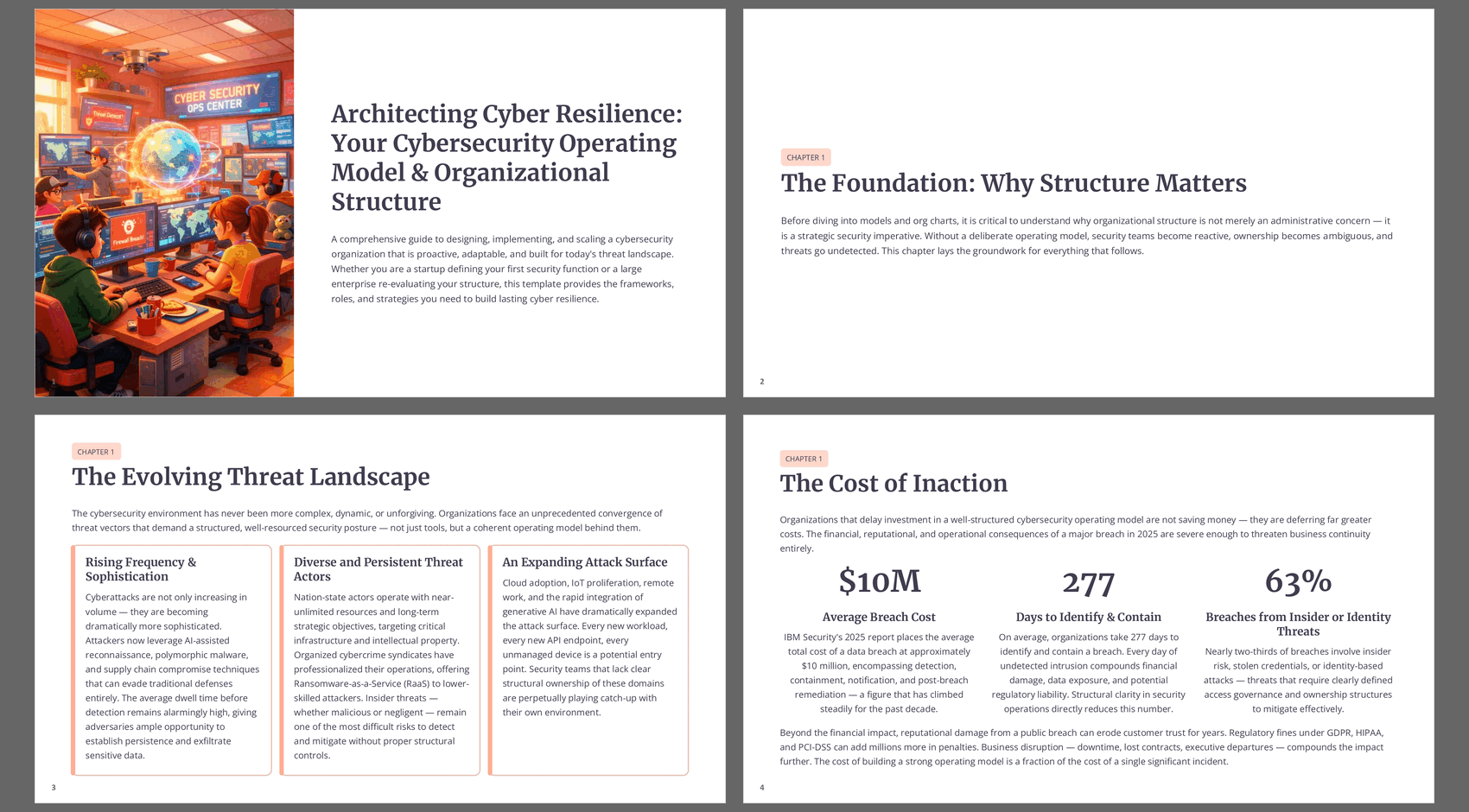
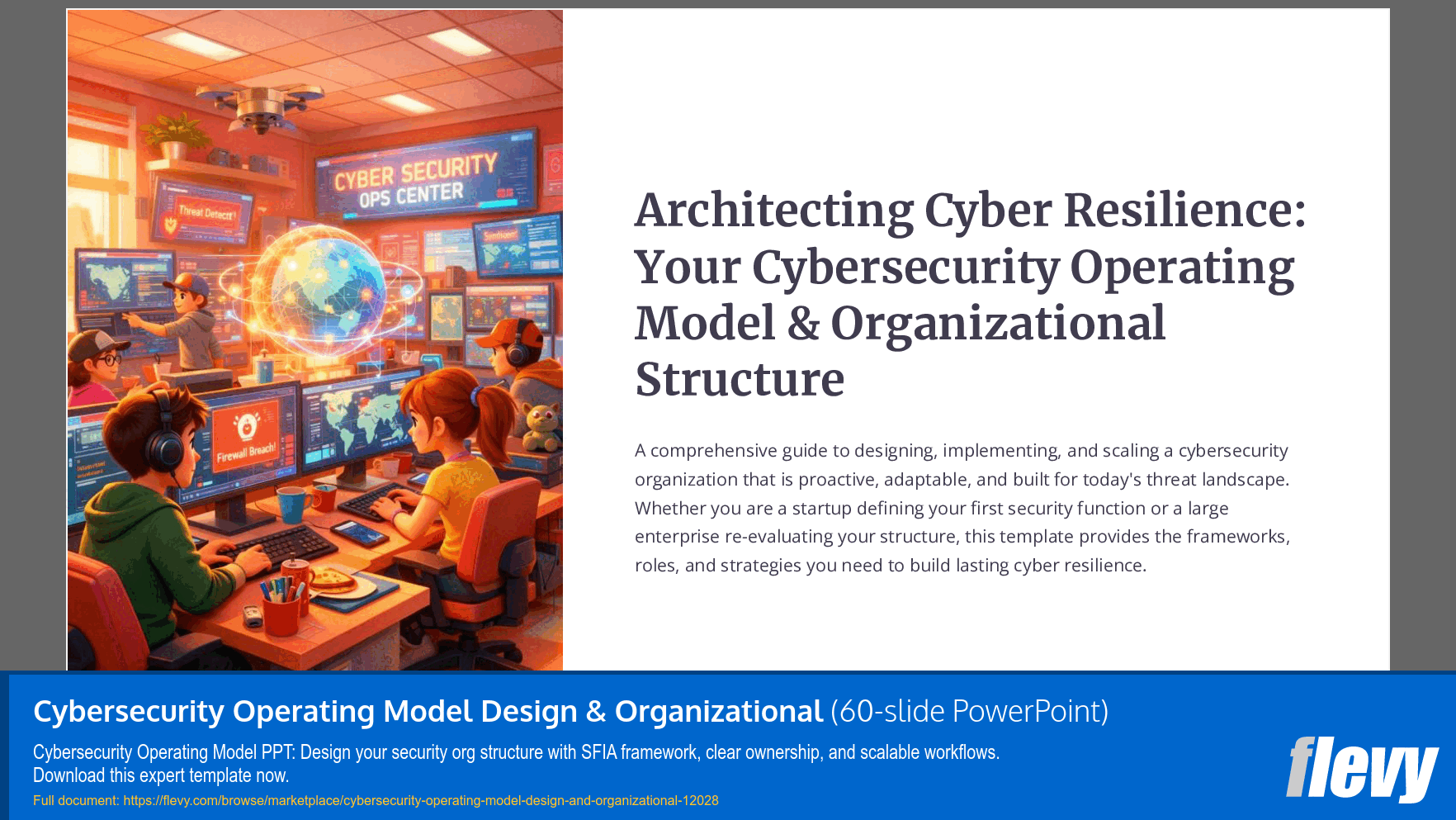
Architecting Cyber Resilience: Your Cybersecurity Operating Model & Organizational Structure
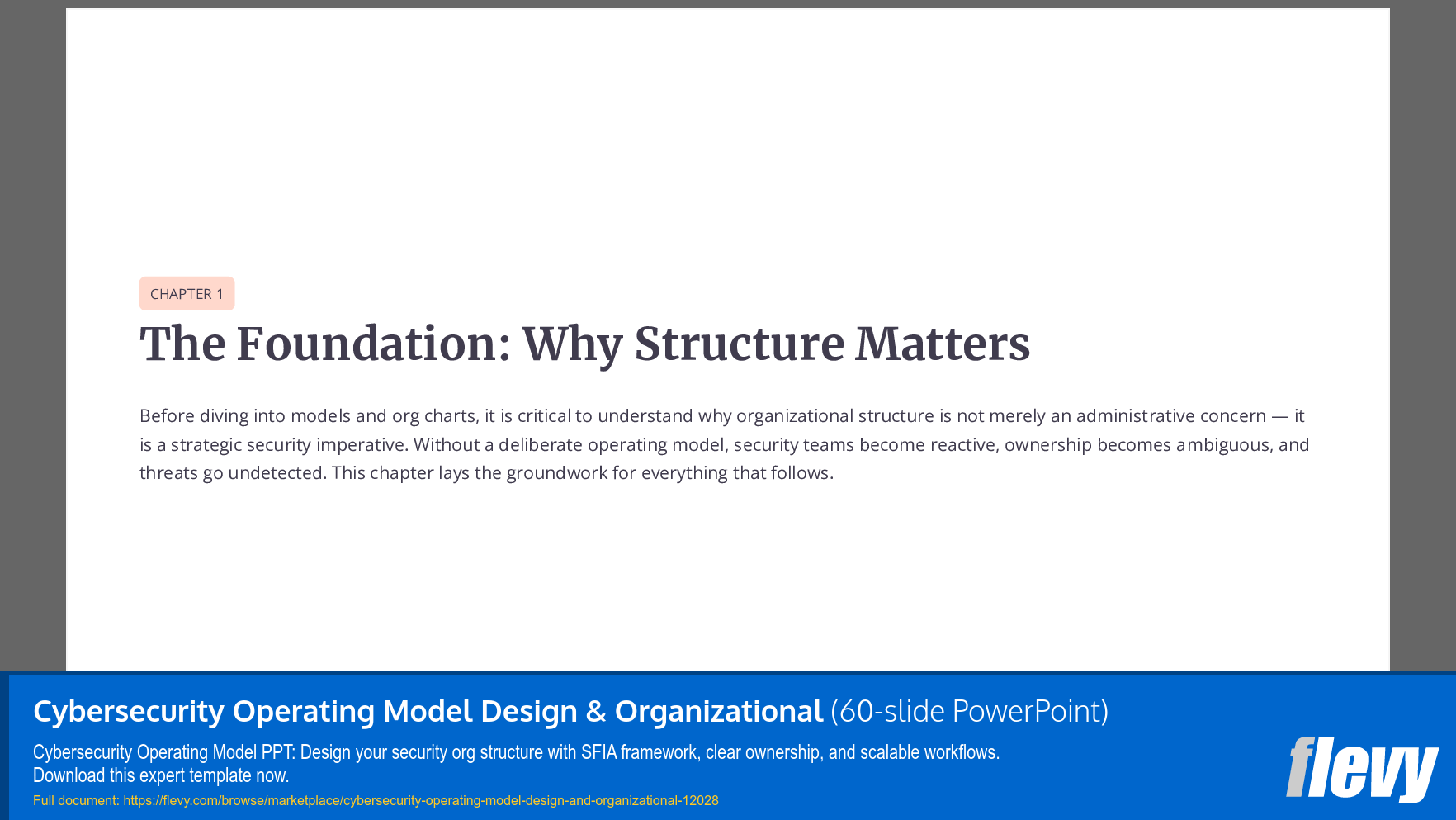
Chapter 1: The Foundation – Why Structure Matters
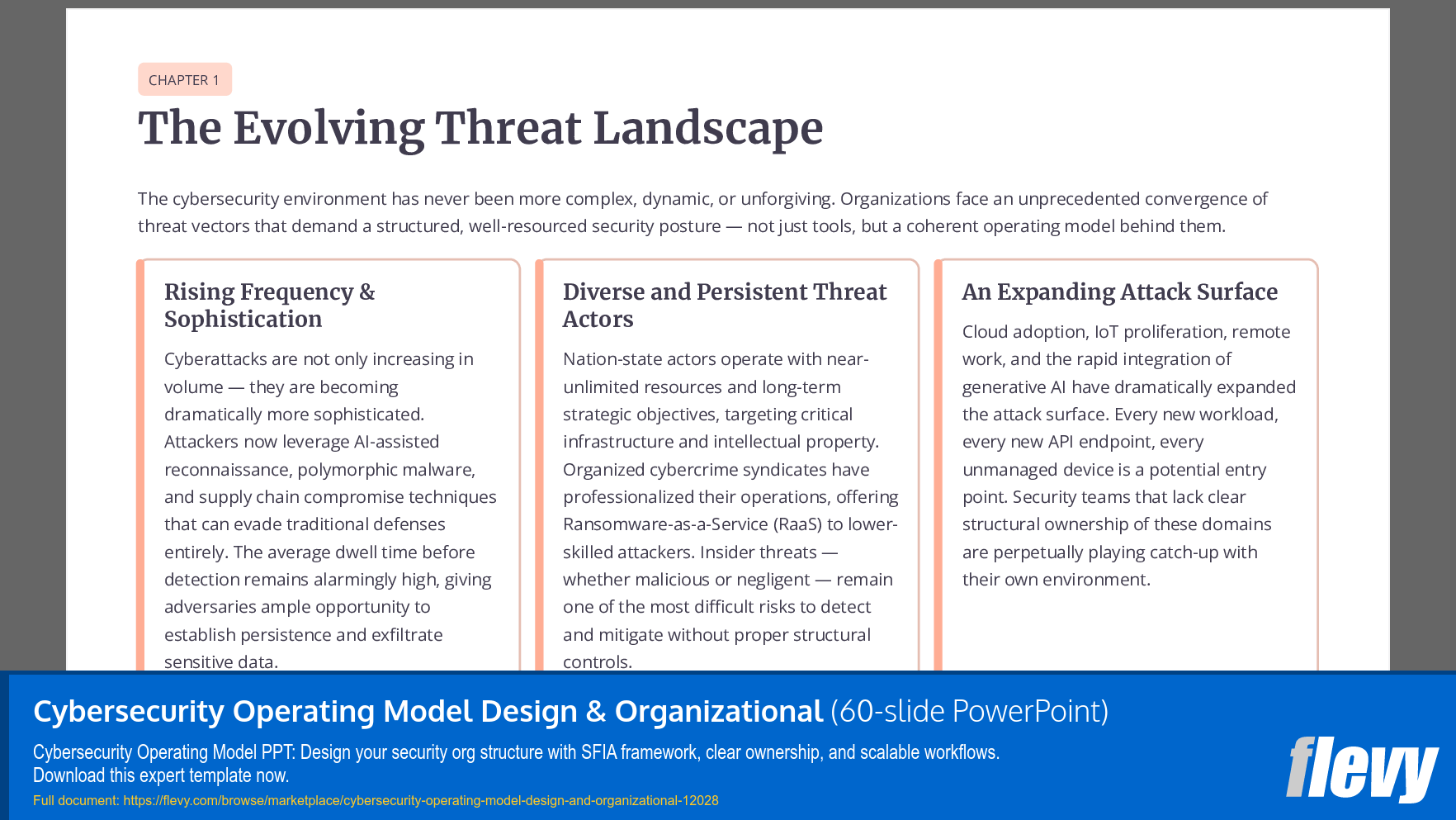
The Evolving Threat Landscape
• Cyberattacks are increasing in frequency and sophistication.
• Nation-state actors, organized crime, and insider threats pose significant risks.
• The attack surface is expanding with cloud adoption, IoT, and remote work.
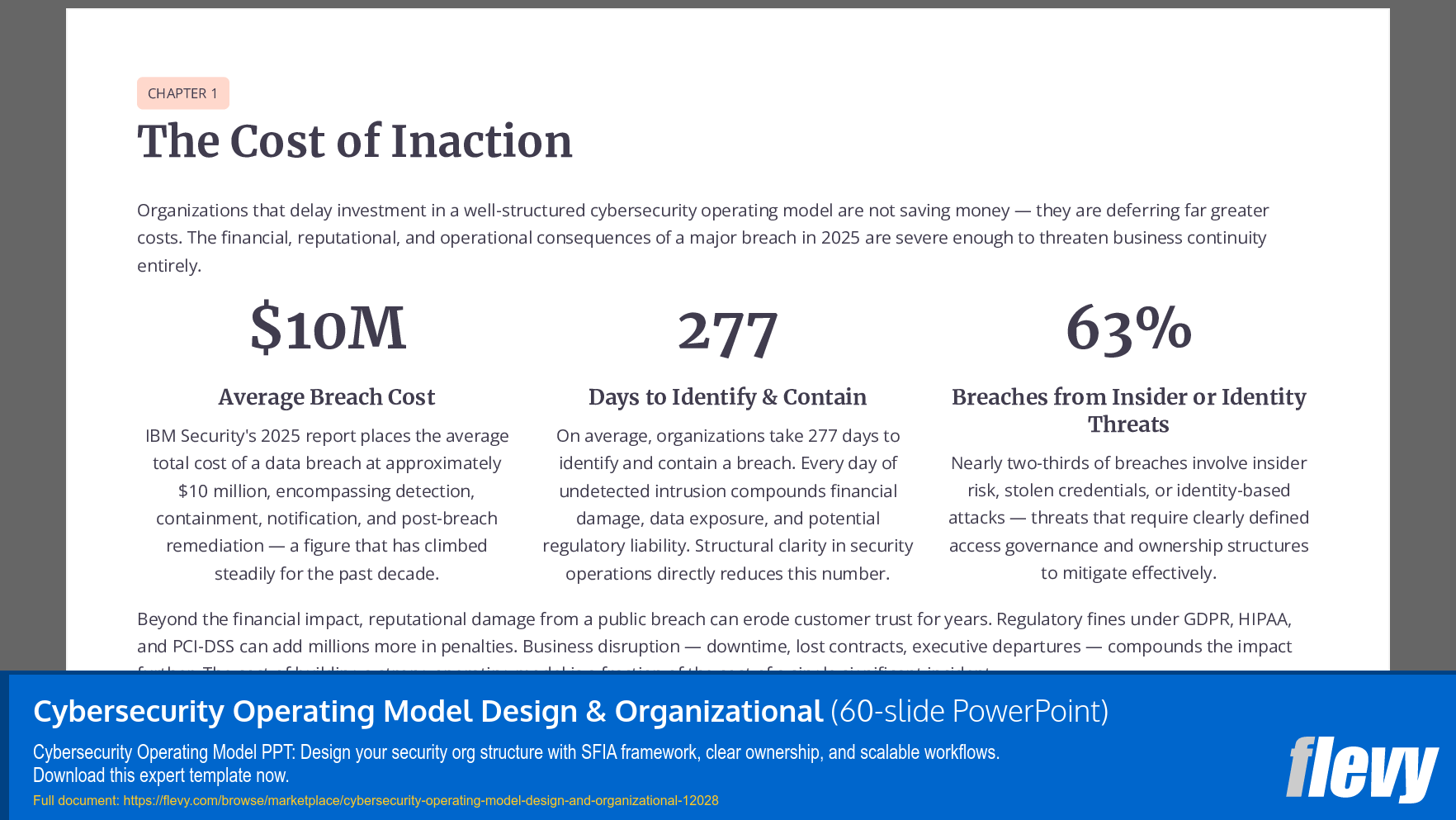
The Cost of Inaction
• Average cost of a data breach in 2025: $10 million (IBM Security)
• Significant financial losses, reputational damage, and regulatory fines.
• Business disruption and loss of customer trust.
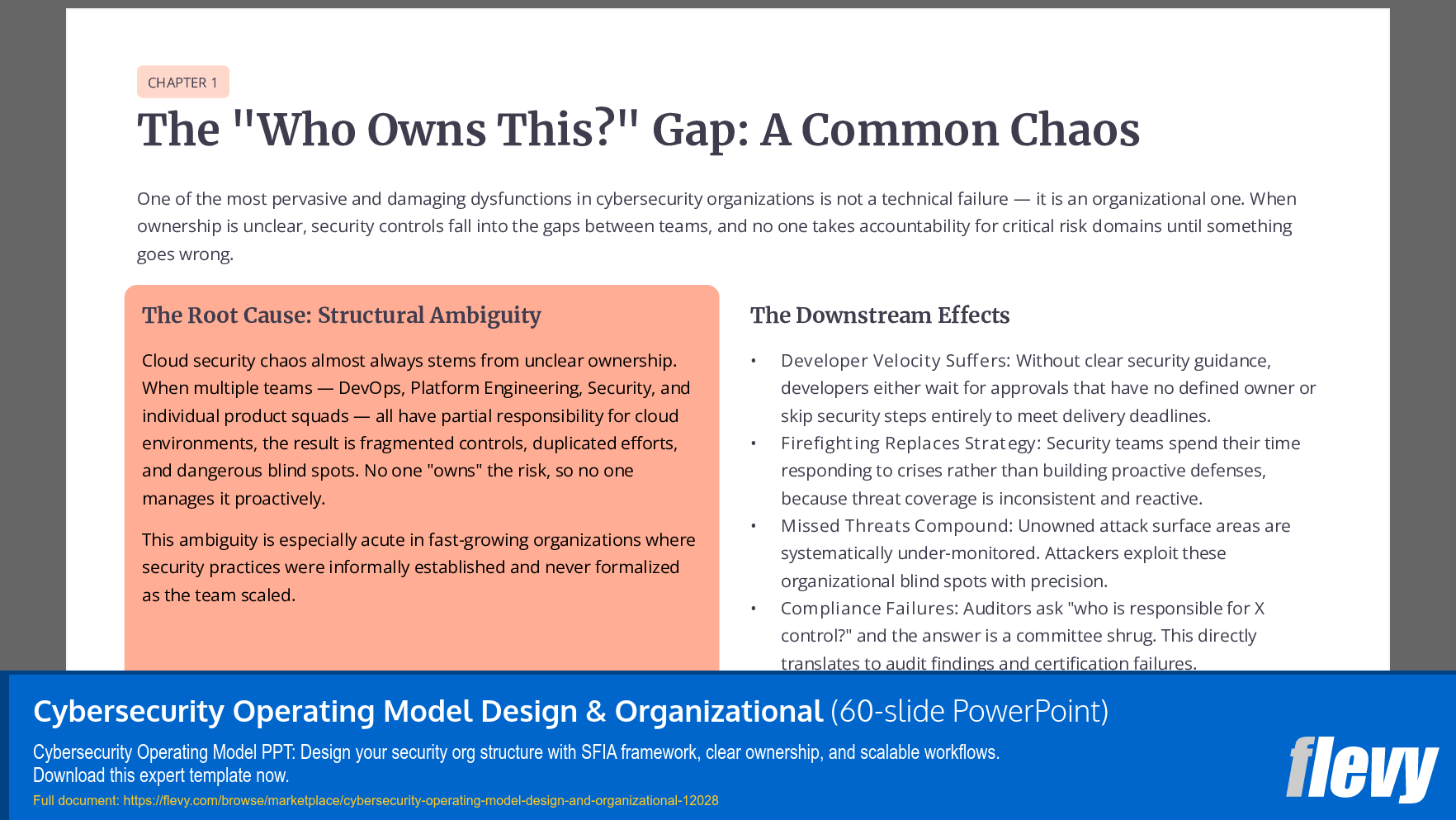
The "Who Owns This?" Gap: A Common Chaos
• CloudSec chaos often stems from unclear ownership.
• Lack of defined responsibilities leads to firefighting and missed threats.
• This impacts developer velocity, risk posture, and compliance.
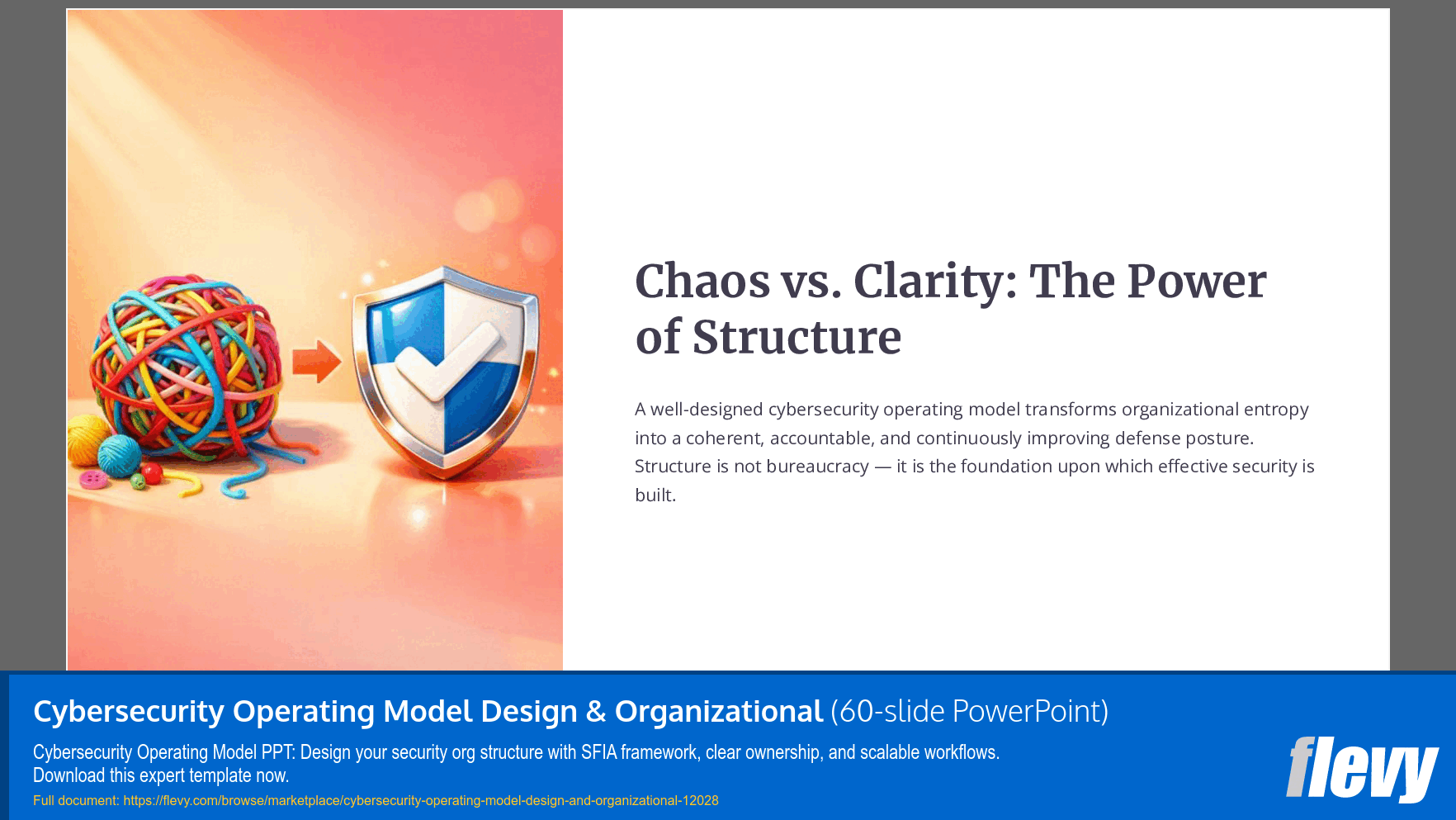
[image] A tangled ball of yarn with a security shield icon, text: "Chaos vs. Clarity: The Power of Structure"
Chapter 2: Core Principles of a Robust Operating Model
Security is Everyone's Responsibility
• Moving beyond a siloed security team.
• Integrating security into all business and technology functions.
• SFIA framework emphasizes skills across the organization.
Built-in, By Design, By Default
• Security must be embedded from the outset, not an afterthought.
• This applies to processes, technology, and organizational structure.
• Illustrated by the SFIA Security Operating Model graphic.
Scalability and Adaptability
• Models must evolve with organizational growth and changing threats.
• What works for 20 engineers breaks at 200.
• CloudSec models need to adapt to new technologies (containers, serverless, GenAI).
Clarity of Ownership and Predictable Workflows
• Mapping responsibilities reduces ambiguity.
• Enables smoother incident response and fewer last-minute issues.
• Crucial for compliance audits (SOC 2, ISO, HIPAA, PCI).
[image] A clear, well-organized flowchart with security checkpoints, text: "From Chaos to Control"
Chapter 3: Key Organizational Models for Cybersecurity
Model 1: Centralized Security
• Description: A single, dedicated security team manages all security functions.
• Pros: Clear command and control, consistent policy enforcement, efficient resource utilization for smaller organizations.
• Cons: Can become a bottleneck, may lack deep understanding of specific business unit needs, potential for slower response times as the organization scales.
• Best For: Startups and small to medium-sized businesses (SMBs).
Model 2: Hybrid Security
• Description: A central security team sets strategy and provides core services, while embedded security specialists or champions work within business units or engineering teams.
• Pros: Balances central oversight with distributed expertise, improves security integration into development, better scalability.
• Cons: Requires strong communication and coordination between central and embedded teams, potential for role confusion if not clearly defined.
• Best For: Growing organizations, companies with distinct business units or product lines.
Model 3: Federated Security
• Description: Security responsibilities are largely distributed to business units or product teams, with a small central team providing guidance, tooling, and oversight.
• Pros: Maximum agility and ownership within teams, security is deeply integrated into product development, highly scalable.
• Cons: Requires mature teams and strong security culture across the organization, risk of inconsistent security practices if not managed well, significant central governance needed.
• Best For: Large, complex, cloud-native organizations with mature security practices.
[image] Three distinct organizational charts representing Centralized, Hybrid, and Federated models.
When to Re-evaluate Your Model: Triggers for Change
• Developer bottlenecks and slow release cycles.
• Misaligned ownership and frequent "who owns this?" disputes.
• Strain on compliance and audit processes.
• Business Unit (BU) sprawl and inconsistent security across the organization.
Chapter 4: Defining Key Security Functions and Roles
Core Security Functions
• Security Engineering: Builds and defends core systems (AppSec, Infra, IAM, Crypto).
• Security Operations (SecOps): Detects, responds to, and automates against threats.
• Governance, Risk, and Compliance (GRC): Manages policies, risks, and regulatory adherence.
• Product Security: Secures code, libraries, pipelines, and partner teams.
• Threat Intelligence: Maps actors, TTPs, and provides actionable insights.
Role-by-Role Breakdown: Security Engineering Deep Dive
• Application Security (AppSec): SAST, secure reviews, bug triage, developer enablement.
• Threat Modeling: Architecture analysis and attack surface definition.
• Partner Security: Embedded security with product teams.
• CI/CD Security: Protects build pipelines, secret scanning, signing.
Role-by-Role Breakdown: Infrastructure Security Deep Dive
• Cloud Security: IAM boundaries, SCPs, IaC policies.
• Host Hardening: Hardened AMIs, OS security, EDR config.
• Network Architecture: Segmentation, egress policies, bastion/ingress rules.
• PKI Engineering: Internal CA, mTLS, cert rotation, SPIFFE/SPIRE.
Role-by-Role Breakdown: Security Operations Deep Dive
• Detection Engineering: SIEM pipelines, detections-as-code.
• Threat Intelligence: Actor mapping, TTPs, vulnerability research.
• Incident Response: Playbook execution, forensic analysis, communication.
• Security Monitoring: Continuous monitoring, alert triage.
[image] A complex network diagram showing interconnected security functions and roles.
The CISO's Role: Strategic Leadership
• Chief Security Officer (CSO) / Chief Information Security Officer (CISO).
• Strategic leadership, governance, and execution oversight.
• Separates governance from day-to-day operations.
Deputy CISO / CISO
• Oversees the entire security organization.
• Develops and implements security strategy.
• Manages budget and resources.
Chapter 5: Implementing Your Cybersecurity Operating Model
Step 1: Assess Your Current State
• Identify existing security functions and responsibilities.
• Analyze current organizational structure and reporting lines.
• Understand your organization's size, growth trajectory, and risk appetite.
Step 2: Define Your Target Operating Model
• Choose the model (Centralized, Hybrid, Federated) that best fits your organization.
• Clearly define roles, responsibilities, and reporting structures.
• Align security functions with business objectives.
Step 3: Develop a Phased Implementation Plan
• Prioritize key changes based on risk and impact.
• Start with foundational elements like clear ownership and core functions.
• Gradually introduce more specialized roles and advanced capabilities.
[image] A roadmap graphic with milestones for implementing a new operating model.
Step 4: Foster a Security-Aware Culture
• Implement comprehensive security awareness and training programs.
• Encourage open communication about security concerns.
• Recognize and reward security best practices.
Step 5: Leverage Technology and Automation
• Implement security tools for detection, response, and compliance.
• Automate repetitive tasks to improve efficiency and reduce errors.
• Utilize platforms that provide visibility across your cloud environment (e.g., Wiz).
Step 6: Establish Key Performance Indicators (KPIs)
• Measure the effectiveness of your security program.
• Examples: Mean Time to Detect (MTTD), Mean Time to Respond (MTTR), vulnerability remediation rates, compliance adherence.
• Use KPIs to drive continuous improvement.
[image] A dashboard displaying key cybersecurity metrics and KPIs.
Chapter 6: Adapting Your Model Without a Full Reorg
Strengthening Your Current Org: Practical Strategies
• Automation: Automate routine tasks and workflows.
• Guardrails: Implement automated controls and policies.
• KPIs: Define and track relevant metrics.
• Champions Networks: Empower security advocates within teams.
• Central Tooling: Provide shared security tools and platforms.
• CloudSec Councils: Establish cross-functional forums for decision-making.
The Power of Collaboration: Security & Engineering Alignment
• Security and Engineering must work hand-in-hand.
• Clear ownership reduces friction and speeds up development.
• DevSecOps principles are key.
[image] Two hands shaking, one representing Security, the other Engineering.
Chapter 7: Compliance and Governance in Practice
Navigating Regulatory Landscapes
• Understanding legal, regulatory, and contractual requirements (e.g., GDPR, CCPA, HIPAA).
• Mapping controls to frameworks like NIST Cybersecurity Framework.
• The NIST CSF Policy Template Guide provides a solid baseline.
Roles and Responsibilities: (NIST CSF)
• Clearly defining roles, responsibilities, and authorities for cybersecurity.
• Ensuring accountability at all levels of the organization.
Policy Management: (NIST CSF)
• Developing, communicating, and enforcing cybersecurity policies.
• Regular review and updates to reflect evolving threats and business needs.
[image] A document icon with a checkmark, representing approved policies.
Oversight and Continuous Improvement: (NIST CSF)
• Establishing mechanisms for ongoing monitoring and assessment.
• Using audit findings and performance metrics to drive improvements.
Chapter 8: The Future of Cybersecurity Organization
Emerging Trends
• AI and Machine Learning: Enhancing threat detection, response, and automation.
• Zero Trust Architecture: Shifting from perimeter-based security to identity-centric.
• Security for GenAI: Addressing unique risks of generative AI models.
• On-Chain Security: For blockchain and Web3 applications.
The Rise of Specialization
• As cloud surfaces expand, deeper specialization becomes necessary.
• From generalists to specialists in areas like Cloud Security Engineering, Product Security, Detection Engineering.
[image] A futuristic cityscape with digital security overlays.
The Importance of Skills Frameworks
• SFIA and similar frameworks provide a common language for digital skills.
• Essential for hiring, development, and organizational design.
Chapter 9: Case Studies & Templates
Case Study: High-Growth Cloud-Native Company
• Challenge: Rapid scaling, complex cloud infrastructure, regulatory obligations.
• Solution: Adopted a Hybrid model with embedded Cloud Security Engineers and a strong SecOps team.
• Outcome: Improved developer velocity, reduced incident response times, successful audits. (Based on Wiz playbook insights)
Case Study: Government Agency
• Challenge: Legacy systems, strict compliance requirements, diverse stakeholder needs.
• Solution: Implemented a Centralized model with a strong GRC function, leveraging NIST CSF. (Based on Info-Tech Research Group templates)
• Outcome: Enhanced security posture, streamlined compliance, clear governance.
[image] Split screen: Left side shows a modern tech office, right side shows a government building.
Template: Cloud Security Org Chart (Hybrid Model)
• CSO/CISO
• Deputy CSO/CISO
• Security Engineering (30)
Application Security (7)
Infrastructure Security (10)
IAM (4)
Cryptography (4)
• Security Operations (16)
Threat Detection & Response (7)
Threat Intelligence (2)
Incident Response (4)
• GRC & Policy (5)
Risk Management
Compliance
Security Awareness
Template: Key Responsibilities Matrix (RACI)
• Activity: Vulnerability Scanning
• Responsible: Security Engineering
• Accountable: CISO
• Consulted: Development Teams
• Informed: IT Operations
Template: Security Operating Model Components
• People: Skills, roles, training, culture.
• Process: Policies, procedures, incident response plans, risk management.
• Technology: Tools, platforms, automation, infrastructure.
• Governance: Oversight, compliance, metrics, reporting.
Chapter 10: The Path Forward – Your Action Plan
Key Takeaways for Your Organization
• Define clear ownership to eliminate chaos.
• Choose a model that scales with your growth.
• Embed security by design, not as an afterthought.
• Foster a culture where security is everyone's responsibility.
Build Your Resilient Future: Design Your Cybersecurity Operating Model Today.
• Action: Begin assessing your current state and defining your target model.
• Resource: Utilize templates and frameworks like Wiz, SFIA, and NIST CSF.
• Vision: Create a proactive, adaptable, and robust cybersecurity defense.
Got a question about the product? Email us at support@flevy.com or ask the author directly by using the "Ask the Author a Question" form. If you cannot view the preview above this document description, go here to view the large preview instead.
Source: Best Practices in Cyber Security, Target Operating Model PowerPoint Slides: Cybersecurity Operating Model Design & Organizational PowerPoint (PPTX) Presentation Slide Deck, Mohamed Alshamey
ABOUT THE AUTHOR

Senior Consultant in Cybersecurity GRC, Data Governance, Cybersecurity, Privacy, and Data Management, with over 20 years of experience in information technology, consulting, training, and technical capacity building. holds a PhD. In AI & Data Privacy, he has a master's degree in cybersecurity and is currently pursuing research focused on data privacy. possesses extensive expertise in ... [read more]
Ask the Author a Question
You must be logged in to contact the author.




























