Editor's Note: Take a look at our featured best practice, Digital Transformation Strategy (145-slide PowerPoint presentation). Digital Transformation is being embraced by organizations across most industries, as the role of technology shifts from being a business enabler to a business driver. This has only been accelerated by the COVID-19 global pandemic. Thus, to remain competitive and outcompete in today's fast paced, [read more]
* * * *
In today’s rapidly evolving business landscape, operational automation is no longer a luxury but a necessity. Organizations across industries are increasingly relying on automated systems to streamline workflows, enhance productivity, and reduce operational costs. From manufacturing floors deploying robotic process automation (RPA) to financial institutions leveraging artificial intelligence (AI) for fraud detection, automation technologies are transforming how businesses operate. However, the success of these automation initiatives hinges on two critical pillars: robust IT support and comprehensive cybersecurity measures. Without these foundational elements, automated operations are vulnerable to disruptions, inefficiencies, and security breaches that can undermine the entire enterprise.
This article explores how IT support and cybersecurity function as essential components of operational automation, highlighting their roles, challenges, and best practices. We will also examine real-world examples and data-driven insights to demonstrate why businesses must prioritize these areas to achieve sustainable automation success. Understanding the symbiotic relationship between IT support and cybersecurity is vital for organizations aiming to harness automation’s full potential while safeguarding their assets and reputation.
The Role of IT Support in Operational Automation
Operational automation involves integrating various technologies, such as robotic process automation (RPA), artificial intelligence (AI), and cloud computing, to perform repetitive tasks and complex workflows with minimal human intervention. While automation technologies promise increased efficiency, their deployment and maintenance require expert IT support. The complexity of integrating multiple systems, ensuring compatibility, and maintaining uptime demands a highly skilled IT workforce.
IT support teams are responsible for ensuring the seamless integration of automated systems with existing IT infrastructure. This includes setting up software and hardware components, troubleshooting technical issues, and performing regular updates to keep systems optimized. They also manage network connectivity, data storage, and system scalability to accommodate evolving business needs. Without expert IT support, automation projects can face significant downtime and performance bottlenecks, which can erode the anticipated cost savings and operational benefits.
For example, Contigo Technology’s experience has demonstrated how tailored IT support services can facilitate smooth automation transitions for businesses in Houston. Their approach involves proactive monitoring, rapid incident response, and strategic IT planning that align automation objectives with business goals. This level of support reduces the risk of system failures and enhances the overall reliability of automated processes, ensuring that automation investments deliver measurable returns.
According to a recent study, companies that invest in dedicated IT support for automation initiatives experience 30% fewer system outages and 25% faster issue resolution times compared to those that do not. Moreover, organizations with strong IT support report a 20% improvement in employee productivity, as automation tools function smoothly without constant manual intervention.
Cybersecurity: Protecting Automated Operations
As organizations automate critical business processes, the attack surface for cyber threats expands significantly. Automated systems often handle sensitive data, including financial records, customer information, and intellectual property. This makes them attractive targets for cybercriminals seeking to exploit vulnerabilities. The interconnectedness of automated systems means that a breach in one area can cascade, affecting multiple processes and causing widespread disruption.
Effective cybersecurity measures are essential to safeguard automated environments from malware, ransomware, phishing attacks, and insider threats. This involves implementing multi-layered defenses such as firewalls, intrusion detection systems, encryption, and access controls tailored to the unique challenges of automation technology. Cybersecurity strategies must also factor in the increased use of cloud services and third-party integrations, which introduce additional points of vulnerability.
Many organizations hesitate to fully embrace automation due to cybersecurity concerns. To mitigate these risks, it is crucial to partner with cybersecurity experts who specialize in protecting automated infrastructures. For instance, businesses can let Gravity handle your IT to ensure their automated workflows are shielded against evolving cyber threats while maintaining compliance with industry regulations. By leveraging specialized cybersecurity services, companies can conduct vulnerability assessments, implement real-time threat monitoring, and develop incident response plans aligned with automation environments.
Research indicates that cyberattacks targeting automated systems have increased by 50% in the past two years, underscoring the urgency of robust security protocols. Furthermore, the average cost of a data breach involving automated systems has risen to $4.35 million, demonstrating the financial risks associated with inadequate cybersecurity.
Integrating IT Support and Cybersecurity for Seamless Automation
Operational automation cannot succeed in isolation. The interplay between IT support and cybersecurity is critical to building resilient, efficient automated systems. IT support teams implement and maintain the technical frameworks, while cybersecurity teams protect these frameworks from malicious actors. When these functions collaborate effectively, businesses gain a competitive edge through uninterrupted and secure automation.
One best practice for integration is to develop a unified automation governance framework that encompasses IT service management and cybersecurity policies. This framework should define clear roles, responsibilities, and communication channels to prevent gaps and overlaps in coverage. For example, change management processes must incorporate cybersecurity reviews to ensure that any updates to automation workflows do not introduce new vulnerabilities.
Additionally, continuous training and awareness programs for IT and cybersecurity personnel are essential. Automation technologies evolve rapidly, and teams must stay updated on emerging threats and solutions. Investing in advanced monitoring tools that combine IT performance analytics with security event detection can also enhance visibility and response capabilities. These tools enable organizations to detect anomalies early, correlate performance issues with potential security incidents, and respond proactively.
Data shows that organizations with integrated IT and cybersecurity strategies for automation reduce operational risks by up to 40%, demonstrating the tangible benefits of this approach. Moreover, such integration improves compliance adherence by 35%, as automated systems are managed under consistent security and operational standards.
Overcoming Challenges in Automation Support and Security
Despite the clear advantages, many companies encounter challenges when aligning IT support and cybersecurity with operational automation:
Complexity of Systems: Automated environments often involve multiple platforms and third-party vendors, complicating support and security efforts. Coordinating among diverse technologies requires standardized protocols and open communication channels.
Resource Constraints: Smaller organizations may lack the budget or expertise to implement comprehensive IT and cybersecurity solutions. This can lead to gaps in coverage or reliance on outdated practices.
Rapid Technological Change: Keeping pace with new automation tools and emerging cyber threats requires ongoing investment in skills and infrastructure. Legacy systems may not be compatible with modern security frameworks, necessitating costly upgrades.
To overcome these obstacles, businesses should consider managed service providers (MSPs) that specialize in automation support and cybersecurity. MSPs offer scalable solutions that can be tailored to organizational needs, providing access to advanced technologies and expert personnel without the overhead of building internal teams. This approach enables companies to quickly adapt to changing requirements and maintain high levels of operational resilience.
Furthermore, adopting a risk-based approach to automation security helps prioritize efforts on the most critical assets and processes, maximizing the impact of available resources. Conducting regular risk assessments and penetration testing can identify vulnerabilities before attackers do, allowing organizations to strengthen defenses proactively.
In addition, fostering a culture of collaboration between IT support and cybersecurity teams is essential. Shared goals, joint planning sessions, and integrated workflows reduce silos and improve the overall effectiveness of automation initiatives.
Future Trends in IT Support and Cybersecurity for Automation
Looking ahead, emerging technologies such as artificial intelligence and machine learning are poised to revolutionize IT support and cybersecurity in automation. AI-driven IT support tools can predict system failures before they occur, enabling preemptive maintenance and reducing downtime. Similarly, machine learning algorithms can enhance threat detection by identifying unusual patterns that human analysts might miss.
The rise of zero-trust security models is also influencing automation strategies. By assuming that no user or device is inherently trustworthy, zero-trust frameworks enforce strict access controls and continuous verification, which are well-suited to complex automated environments.
Moreover, the increasing adoption of edge computing in automation presents new challenges and opportunities. IT support and cybersecurity teams must adapt to decentralized architectures where data processing occurs closer to the source, requiring distributed security measures and real-time support capabilities.
Organizations that proactively embrace these trends and invest in continuous improvement will be better positioned to maintain secure, efficient automation systems that drive competitive advantage.
Conclusion
Operational automation represents a transformative opportunity for businesses seeking efficiency and innovation. However, its success depends fundamentally on the strength of IT support and cybersecurity frameworks. These pillars ensure that automated systems operate reliably, securely, and in alignment with strategic objectives.
By investing in expert IT support-such as that exemplified by -and partnering with cybersecurity specialists who can, organizations can protect their automation initiatives from disruptions and cyber threats. Integrating these disciplines through governance, training, and technology enables businesses to realize the full potential of automation safely and sustainably.
As automation continues to reshape industries, those who prioritize robust IT and cybersecurity foundations will lead the way in operational excellence and resilience. Embracing this holistic approach not only mitigates risks but also empowers organizations to innovate confidently in an increasingly digital world.
This Word Document provides a template for an IT Security & Governance Policy and is easily customisable. Areas cover are: Security, Data Back-Up, Virus Protection, Internet & Email usage, Remote & 3rd Party Network Access, User-Account Management, Procurement, Asset Management and IS Service [read more]
Do You Want to Implement Business Best Practices?
You can download in-depth presentations on Cyber Security and 100s of management topics from the FlevyPro Library. FlevyPro is trusted and utilized by 1000s of management consultants and corporate executives.
For even more best practices available on Flevy, have a look at our top 100 lists:
These best practices are of the same as those leveraged by top-tier management consulting firms, like McKinsey, BCG, Bain, and Accenture. Improve the growth and efficiency of your organization by utilizing these best practice frameworks, templates, and tools. Most were developed by seasoned executives and consultants with over 20+ years of experience.
Readers of This Article Are Interested in These Resources
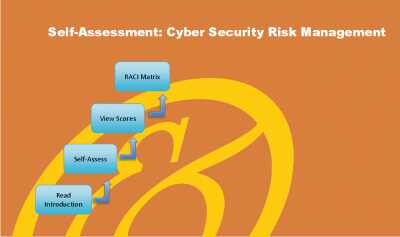
Cybersecurity is a growing threat and should be at the forefront in any IT Risk Management Strategy. As role of
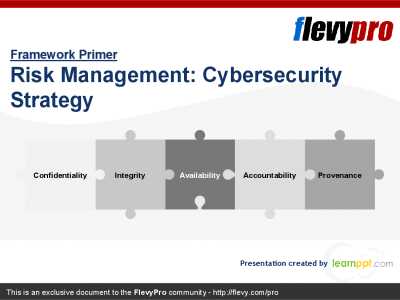
The PPT outlines the critical elements of a robust cybersecurity strategy, emphasizing the importance of integrity, availability, accountability, and provenance of information. It [read more]
Introducing the Ultimate Cybersecurity and IT Security Toolkit: Safeguarding Your Digital Fortresses
In today's interconnected world, cybersecurity is more critical than ever. The ever-evolving landscape of cyber threats demands robust protection measures for individuals and organizations alike. [read more]
National Institute of Standards and Technology (NIST) U.S. Department of Commerce Cyber Security Framework Aligned.
Governments, sectors, and organizations around the world are increasingly recognizing the NIST Cyber Security Framework (CSF) as a recommended cyber security baseline to [read more]
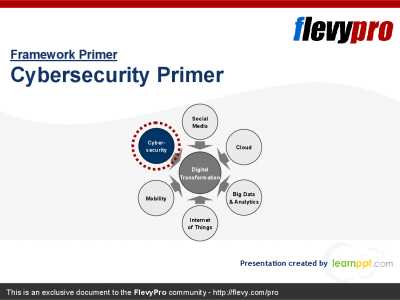
Cybersecurity is the protection of information systems from theft or damage to the hardware, the software, and to the information on them. The more we depend on the Internet and related technologies, the more we depend on their security.
As such, there can be no Digital Transformation without [read more]
 In today’s rapidly evolving business landscape, operational automation is no longer a luxury but a necessity. Organizations across industries are increasingly relying on automated systems to streamline workflows, enhance productivity, and reduce operational costs. From manufacturing floors deploying robotic process automation (RPA) to financial institutions leveraging artificial intelligence (AI) for fraud detection, automation technologies are transforming how businesses operate. However, the success of these automation initiatives hinges on two critical pillars: robust IT support and comprehensive cybersecurity measures. Without these foundational elements, automated operations are vulnerable to disruptions, inefficiencies, and security breaches that can undermine the entire enterprise.