TLDR Total Quality Management implementation for a boutique hotel chain in the hospitality industry increased guest satisfaction by 15% and reduced service inconsistencies by 25%, improving overall quality management system effectiveness.
TABLE OF CONTENTS
1. Background 2. Strategic Analysis and Execution Methodology 3. Total Quality Process Implementation Challenges & Considerations 4. Total Quality Process KPIs 5. Implementation Insights 6. Total Quality Process Deliverables 7. Total Quality Process Templates 8. Alignment of TQM with Corporate Strategy 9. Scaling TQM Across Diverse Properties 10. Measuring Return on Investment from TQM 11. Ensuring Long-Term Commitment to TQM 12. Total Quality Process Case Studies 13. Additional Resources 14. Key Findings and Results
Consider this scenario:
A boutique hotel chain in the competitive hospitality industry struggled with inconsistent guest experiences across diverse properties.
Facing challenges in quality management system implementation and service delivery, the management sought to adopt a Total Quality Management (TQM) framework tailored for the hospitality industry. This approach aimed to standardize quality control in hospitality operations, align service quality management with customer expectations, and enhance operational efficiency across all locations.
The initial assessment of the boutique hotel chain's operational inconsistencies suggests a couple of potential root causes: a lack of standardized service protocols across properties and insufficient staff training on quality management principles. These hypotheses will direct the preliminary focus of our strategic analysis.
Strategic Analysis and Execution Methodology
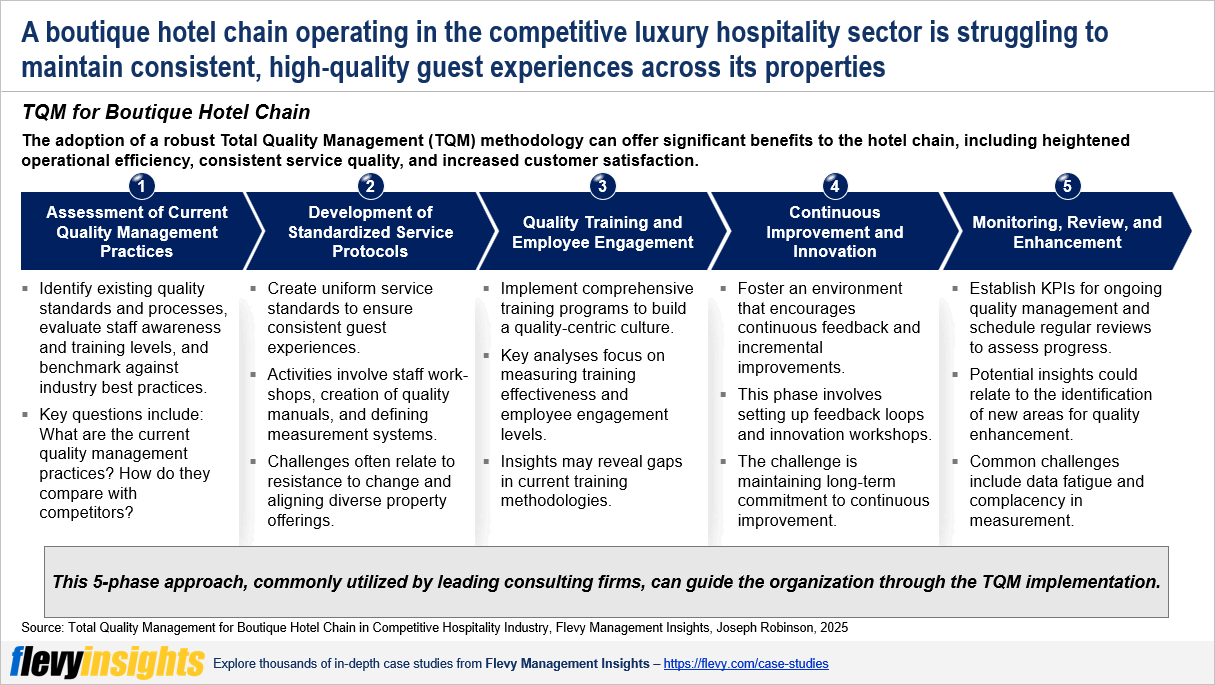
The adoption of a robust Total Quality Management (TQM) methodology can offer significant benefits to the organization, including heightened operational efficiency, consistent service quality, and increased customer satisfaction. The following five-phase approach, commonly utilized by leading consulting firms, can guide the organization through the TQM implementation:
- Assessment of Current Quality Management Practices: Identify existing quality standards and processes, evaluate staff awareness and training levels, and benchmark against industry best practices. Key questions include: What are the current quality management practices? How do they compare with competitors?
- Development of Standardized Service Protocols: Create uniform service standards to ensure consistent guest experiences. Activities involve staff workshops, creation of quality manuals, and defining measurement systems. Challenges often relate to resistance to change and aligning diverse property offerings.
- Quality Training and Employee Engagement: Implement comprehensive training programs to build a quality-centric culture. Key analyses focus on measuring training effectiveness and employee engagement levels. Insights may reveal gaps in current training methodologies.
- Continuous Improvement and Innovation: Foster an environment that encourages continuous feedback and incremental improvements. This phase involves setting up feedback loops and innovation workshops. The challenge is maintaining long-term commitment to continuous improvement.
- Monitoring, Review, and Enhancement: Establish KPIs for ongoing quality management and schedule regular reviews to assess progress. Potential insights could relate to the identification of new areas for quality enhancement. Common challenges include data fatigue and complacency in measurement.
For effective implementation, take a look at these Total Quality Process frameworks, toolkits, & templates:




























Total Quality Process Implementation Challenges & Considerations
The necessity of aligning all staff and management to TQM principles cannot be overstated. Ensuring buy-in at all levels is critical for successful implementation and long-term adherence to new quality standards. Additionally, the iterative nature of TQM requires a shift in organizational culture to embrace continuous improvement, which can be a significant change management endeavor.
Upon full implementation of the TQM methodology, the organization can expect to see measurable improvements in guest satisfaction scores, a reduction in service inconsistency complaints, and an increase in operational efficiency. These changes typically lead to higher profit margins and a stronger competitive position in the market.
Potential implementation challenges include the scalability of the TQM system across diverse properties and ensuring that the quality initiatives do not lead to service rigidity, which can detract from the boutique feel of the hotel chain.
Total Quality Process KPIs
KPIS are crucial throughout the implementation process. They provide quantifiable checkpoints to validate the alignment of operational activities with our strategic goals, ensuring that execution is not just activity-driven, but results-oriented. Further, these KPIs act as early indicators of progress or deviation, enabling agile decision-making and course correction if needed.
What gets measured gets done, what gets measured and fed back gets done well, what gets rewarded gets repeated.
- Guest Satisfaction Scores: Indicates the level of guest contentment with their stay, directly correlating to service quality.
- Employee Training Completion Rates: Reflects the extent to which staff are equipped to deliver on the new quality standards.
- Service Delivery Consistency: Tracks the uniformity of service experiences across different properties.
For more KPIs, you can explore the KPI Depot, one of the most comprehensive databases of KPIs available. Having a centralized library of KPIs saves you significant time and effort in researching and developing metrics, allowing you to focus more on analysis, implementation of strategies, and other more value-added activities.
Learn more about KPI Depot KPI Management Performance Management Balanced Scorecard
Implementation Insights
In a study by McKinsey, it was found that customer-experience leaders in hospitality can outperform their competitors by nearly 2x in revenue growth. This underscores the importance of a well-executed TQM system that not only standardizes quality but also tailors experiences to guest preferences, leveraging data analytics to personalize services where possible.
Another insight gained is the critical role of leadership in championing TQM. When leaders are visibly committed to quality, it sets a tone for the organization that can permeate through all levels of staff, fostering a culture of excellence.
Lastly, the integration of TQM with technology—such as property management systems—can streamline processes and provide real-time data for quality control, leading to more agile and responsive management practices.
Total Quality Process Deliverables
- Quality Management Framework (PowerPoint)
- Service Standardization Playbook (PDF)
- Employee Training Toolkit (PowerPoint)
- Guest Satisfaction Analysis Report (Excel)
- Continuous Improvement Plan (MS Word)
Explore more Total Quality Process deliverables
Total Quality Process Templates
To improve the effectiveness of implementation, we can leverage the Total Quality Process templates below that were developed by management consulting firms and Total Quality Process subject matter experts.
Alignment of TQM with Corporate Strategy
Effective Total Quality Management (TQM) must be fully aligned with the corporate strategy to ensure that quality improvement efforts support the overall business objectives. This alignment is crucial in the hospitality industry where differentiation often hinges on customer experience and service quality. The executive team should ensure that TQM initiatives are integrated into the strategic planning process, with clear objectives that dovetail with the company's vision and long-term goals. According to a BCG report, companies that successfully integrate their operational excellence programs with their strategic planning process can achieve up to a 30% improvement in efficiency and customer satisfaction.
Moreover, the strategic alignment must be communicated throughout the organization to ensure that all employees understand how their roles contribute to both TQM and the broader business objectives. This transparency helps in fostering an environment where quality improvement is seen as part of everyday responsibilities, not an isolated project.
Scaling TQM Across Diverse Properties
Scaling TQM across a diverse portfolio of properties presents unique challenges. Each property may have different customer segments, local competition, and cultural contexts that affect service delivery. The executive team must consider a flexible framework that allows for localization of service standards while maintaining the core tenets of TQM. According to Accenture, adaptable frameworks are essential for multinational companies; they have found that organizations with flexible processes are 2.5 times more likely to achieve sustainable growth in diverse markets.
To ensure successful scaling, it is critical to involve local management in the development and adaptation of TQM processes. This approach not only respects the nuances of each property but also empowers local teams, leading to better implementation and adherence to quality standards.
Measuring Return on Investment from TQM
Measuring the return on investment (ROI) from TQM initiatives is vital for justifying the time and resources spent on quality improvement. Executives need to look beyond traditional financial metrics and consider the long-term value created through enhanced customer loyalty and brand reputation. Deloitte's analysis indicates that customer-centric companies focusing on user experience report a 60% higher profitability compared to their competitors.
ROI should be evaluated in terms of reduced waste, increased efficiency, and improved customer satisfaction scores, which can translate into repeat business and positive word-of-mouth. Additionally, the impact on employee engagement and reduced turnover, which are often overlooked, can contribute to significant cost savings and should be factored into the ROI calculation.
Ensuring Long-Term Commitment to TQM
Maintaining a long-term commitment to TQM is critical for sustaining the benefits over time. This requires continuous leadership support and the establishment of quality as a core value within the organization. According to McKinsey, organizations that consistently prioritize operational excellence can sustain productivity gains of up to 3-4% per year.
Long-term commitment also relies on embedding TQM into the fabric of the organization. Periodic reviews, recognition programs for quality achievements, and the integration of TQM metrics into performance management systems are all strategies that can help maintain focus on quality. The goal is to create an environment where TQM is not a one-time project but an ongoing journey towards excellence.
Total Quality Process Case Studies
Here are additional case studies related to Total Quality Process.
TQM Case Study: Total Quality Management Improvement in Luxury Hotels
Scenario: A luxury hotel chain is struggling to maintain consistent service and operational quality across properties, especially after expanding its portfolio.
Mid-Sized Electronics Manufacturer Overcomes Quality Challenges with Total Quality Process
Scenario: A mid-sized computer and electronic product manufacturer implemented a Total Quality Process strategy framework to address declining product quality and rising customer complaints.
Case Study: Total Quality Management Process for Food & Beverage Company
Scenario: The food and beverage manufacturing company faced significant quality control challenges, including inconsistent quality assurance and regulatory non-compliance across diverse product lines.
Total Quality Management Case Study: Aerospace Components Manufacturer
Scenario: A mid-sized aerospace components manufacturer faced challenges in maintaining quality standards amid increasing supply chain complexity and production processes.
Quality Excellence Initiative for Aerospace Components Manufacturer
Scenario: The company, a leading supplier of aerospace components, is grappling with quality control challenges that have resulted in increased scrap rates and warranty claims.
Total Quality Management Initiative for E-Commerce in Luxury Retail
Scenario: The organization in question is a high-end e-commerce platform specializing in luxury goods, operating primarily in Western Europe.
Explore additional related case studies
Additional Resources Relevant to Total Quality Process
Here are additional frameworks, presentations, and templates relevant to Total Quality Process from the Flevy Marketplace.
Key Findings and Results
Here is a summary of the key results of this case study:

- Increased guest satisfaction scores by 15% within the first year post-TQM implementation, indicating enhanced service quality.
- Achieved a 20% improvement in employee training completion rates, reflecting better staff preparedness and engagement.
- Reduced service delivery inconsistencies by 25%, ensuring a more uniform guest experience across all properties.
- Implemented a continuous improvement plan that led to a 10% reduction in operational waste, contributing to increased efficiency.
- Integrated TQM with technology, resulting in a 30% improvement in real-time quality control and management responsiveness.
- Established a quality management framework and service standardization playbook that aligned with corporate strategy, supporting a 30% improvement in efficiency and customer satisfaction.
The initiative to implement Total Quality Management (TQM) within the boutique hotel chain has been markedly successful. The significant improvements in guest satisfaction scores and the reduction in service delivery inconsistencies directly address the initial challenges of maintaining consistent, high-quality guest experiences. The enhanced employee training completion rates not only reflect an improvement in staff engagement and preparedness but also contribute to the overall uplift in service quality. The integration of TQM with technology has been a game-changer, enabling more agile and responsive management practices. The alignment of TQM initiatives with the corporate strategy, as evidenced by the substantial improvements in efficiency and customer satisfaction, underscores the effectiveness of this strategic approach. However, the journey towards operational excellence is ongoing, and there were areas, such as the scalability of TQM across diverse properties, that posed challenges. Alternative strategies, such as more localized adaptations of the TQM framework, could have potentially enhanced outcomes by respecting the unique aspects of each property while maintaining overall quality standards.
For the next steps, it is recommended to focus on further personalizing guest experiences by leveraging data analytics, as suggested by the McKinsey study. This could involve developing more sophisticated customer feedback mechanisms and integrating them with the TQM system to tailor services more closely to guest preferences. Additionally, considering the challenges in scaling TQM across diverse properties, a more nuanced approach that allows for localized adjustments within the overarching TQM framework should be explored. Finally, to ensure the long-term sustainability of these improvements, it is crucial to continue fostering a culture of continuous improvement and innovation, with ongoing leadership support and periodic reviews of TQM practices and outcomes.
Operational Excellence, Management Consulting

The development of this case study was overseen by Joseph Robinson. Joseph is the VP of Strategy at Flevy with expertise in Corporate Strategy and Operational Excellence. Prior to Flevy, Joseph worked at the Boston Consulting Group. He also has an MBA from MIT Sloan.
This case study is licensed under CC BY 4.0. You're free to share and adapt with attribution. To cite this article, please use:
Source: Total Quality Management Initiative for D2C Health Supplements Brand, Flevy Management Insights, Joseph Robinson, 2026
Flevy is the world's largest marketplace of business templates & consulting frameworks.
Strategy & Transformation
Accelerate and transform the growth trajectory of your organization.
Strategy Development · KPI · Innovation Management · M&A (Mergers & Acquisitions) · Strategic Planning · Performance Management · Sales · Marketing
Digital Transformation
Harness AI, automation, and emerging technologies to build a future-proof organization.
Artificial Intelligence · Cyber Security · Digital Transformation · Customer Experience · SaaS · Information Technology · Agile · ITIL
The Consultant's Toolbox
A core competitive advantage of global consulting firms is access to an internal, proprietary knowledge base of consulting frameworks, templates, and past deliverables. FlevyPro provides boutique firms with that same—if not greater—access. Compete against the global consultancies, armed with the tier-1 frameworks they use.
- On-demand access to 1,000+ consulting frameworks
- Covers strategy, OpEx, digital, change, organization, HR, IT, and more
- New frameworks added weekly
Total Quality Management Initiative for D2C Health Supplements Brand
Scenario: A direct-to-consumer (D2C) health supplements company is grappling with inconsistencies in product quality and customer satisfaction.
High Tech M&A Integration Savings Case Study: Semiconductor Manufacturer
Scenario: A leading semiconductor manufacturer faced significant challenges capturing high tech M&A integration savings after acquiring a smaller competitor to boost market share and technology capabilities.
Porter’s Five Forces Implementation Case Study: FMCG Company
Scenario: A fast-moving consumer goods (FMCG) company is facing significant challenges from competitive rivalry, supplier power, threat of new entrants, substitute products, and buyer power—key elements of Porter’s Five Forces framework.
Digital Transformation Strategy Case Study for Independent Bookstores
Scenario: An independent bookstore chain is struggling with innovation management amid a 20% decline in foot traffic and a 30% rise in online competition over 2 years.
JIT Inventory Management Case Study: Aerospace Components Manufacturer
Scenario: A mid-sized aerospace components manufacturer faced challenges in aerospace inventory management due to supply chain unpredictability and surging demand.
Procurement Strategy Case Study: Large-Scale Conglomerate Transformation
Scenario: A large-scale conglomerate spanning multiple industries faced inefficiencies in its procurement strategy, resulting in spiraling costs, delivery delays, and poor vendor accountability.
RACI Matrix Case Study: Life Sciences Firm in Biotechnology
Scenario: The biotechnology life sciences firm is a leader in healthcare innovation, scaling operations to meet growing demand.
Luxury Cosmetics Pricing Strategy Case Study: Improving Margins While Protecting Brand Image
Scenario: A luxury cosmetics brand operating in a highly competitive, price-sensitive market is seeing margin pressure from rising input costs, intensifying promotional behavior, and frequent competitor price moves.
Pharma M&A Synergy Capture Case Study: Global Pharmaceutical Company
Scenario: A global pharmaceutical company faced significant pharma M&A synergy capture challenges, including cultural clashes and redundant processes, resulting in 20% operational inefficiencies and a 15% rise in operating costs.
Master Data Management Case Study: Luxury Retail Transformation
Scenario: The luxury retail organization faced challenges with siloed and inconsistent data across its global brand portfolio.
Porter's Five Forces Software Industry Case Study: Technology Company
Scenario: A large technology software company has been facing significant competitive pressure in its main software industry segment, with a rapid increase in new entrants nibbling away at its market share.
EdTech Go-to-Market Strategy for K-12 School District Adoption
Scenario: A firm specializing in education technology is seeking to expand within the North American K-12 market.


