
Editor Summary
Customer Loyalty is an 89-slide PowerPoint presentation that examines loyalty programs and customer retention, crafted in a McKinsey-, Bain-, or BCG-quality consulting format (consulting-grade; not affiliated).
Read moreIncludes customer loyalty assessment templates, CLV and share-of-wallet calculation frameworks, root cause analysis tools, segmentation models, and retention/satisfaction measurement methodologies. Target users include marketing executives, business consultants, customer experience teams, and data analysts. Used for strategic planning, program design, training, and workshops; sold as a digital download on Flevy with immediate digital download.
Use this deck when an organization must define or improve its loyalty strategy during strategic planning, loyalty program redesign, training, or workshops analyzing customer value and profitability.
Marketing executives developing targeted segmentation and loyalty initiatives for high-value customer cohorts.
Business consultants building loyalty economics models and customer lifetime value analyses to inform resource allocation.
Customer experience teams conducting root-cause analysis to reduce defection across touchpoints.
Data analysts measuring retention rates, share of wallet, and program effectiveness using CLV frameworks.
The slide-based, case-study and template-driven format mirrors consulting problem-solving used at McKinsey, Bain, and BCG.
Customer loyalty is all about attracting the right customer, getting them to buy, buy often, buy in higher quantities and bring you even more customers. However, that focus is not how you build customer loyalty. You build loyalty by:
• Keeping touch with customers using email marketing, thank you cards and more.
• Treating your team well so they treat your customers well.
• Showing that you care and remembering what they like and don't like.
• Rewarding them for choosing you over your competitors.
• Truly giving a damn about them and figuring out how to make them more success, happy and joyful.
This presentation provides an overview of customer loyalty and shows how the concepts and various supporting tools can be applied to maximize value from a company's customer base. It is an excellent tool for senior corporate managers, marketing professionals and business consultants to develop effective customer strategies.
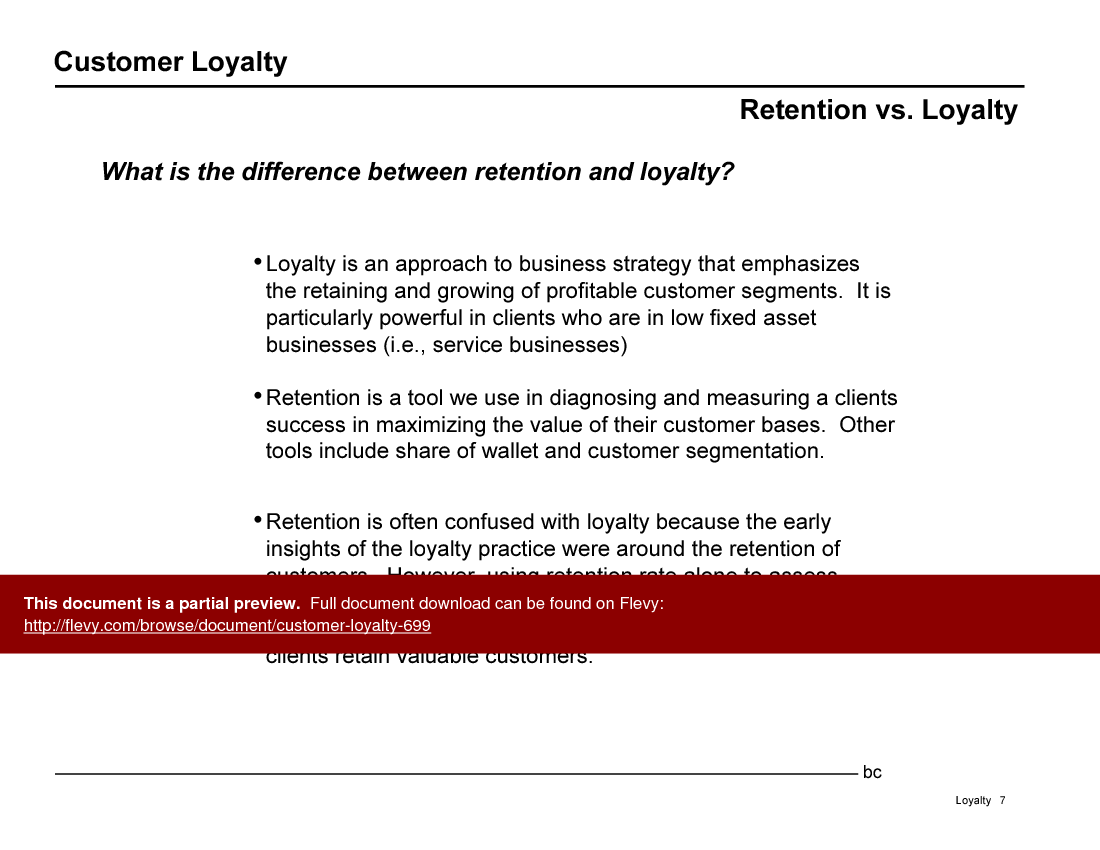
This comprehensive presentation delves into the intricacies of customer retention versus loyalty, offering a clear distinction between the two concepts. It emphasizes that while retention focuses on maintaining a customer base, loyalty is about fostering a deeper, more profitable relationship. The document provides detailed methodologies for calculating retention rates and customer value, ensuring that your strategies are data-driven and effective.
The presentation also includes case studies and industry-specific examples, such as the insurance and banking sectors, to illustrate the real-world application of these concepts. By understanding the profitability drivers and root causes of customer defection, you can implement targeted strategies to enhance customer satisfaction and loyalty. This resource is essential for any executive looking to optimize their customer base and drive long-term profitability.
Got a question about the product? Email us at support@flevy.com or ask the author directly by using the "Ask the Author a Question" form. If you cannot view the preview above this document description, go here to view the large preview instead.
MARCUS OVERVIEW
This synopsis was written by Marcus [?] based on the analysis of the full 89-slide presentation.
Executive Summary
This presentation titled "Customer Loyalty" offers a comprehensive exploration of loyalty programs, focusing on strategies to enhance customer retention and engagement. Crafted in a McKinsey, Bain, or BCG-quality format (consulting-grade; not affiliated), this slide deck equips corporate executives and consultants with actionable insights to maximize the value of their customer base. Users will learn to differentiate between customer retention and loyalty, understand loyalty economics, and implement effective loyalty strategies tailored to their business needs.
Who This Is For and When to Use
• Marketing executives seeking to enhance customer engagement strategies
• Business consultants focused on customer retention solutions
• Customer experience teams aiming to improve service delivery
• Data analysts responsible for measuring customer loyalty metrics
Best-fit moments to use this deck:
• During strategic planning sessions focused on customer engagement
• When developing or revising loyalty programs
• For training sessions on customer retention strategies
• In workshops aimed at analyzing customer value and profitability
Learning Objectives
• Define customer loyalty and its importance in business strategy
• Differentiate between customer retention and loyalty
• Analyze loyalty economics to drive profitability
• Develop targeted strategies for maximizing customer lifetime value
• Implement effective loyalty tools and methodologies
• Conduct root cause analysis to understand customer defection
Table of Contents
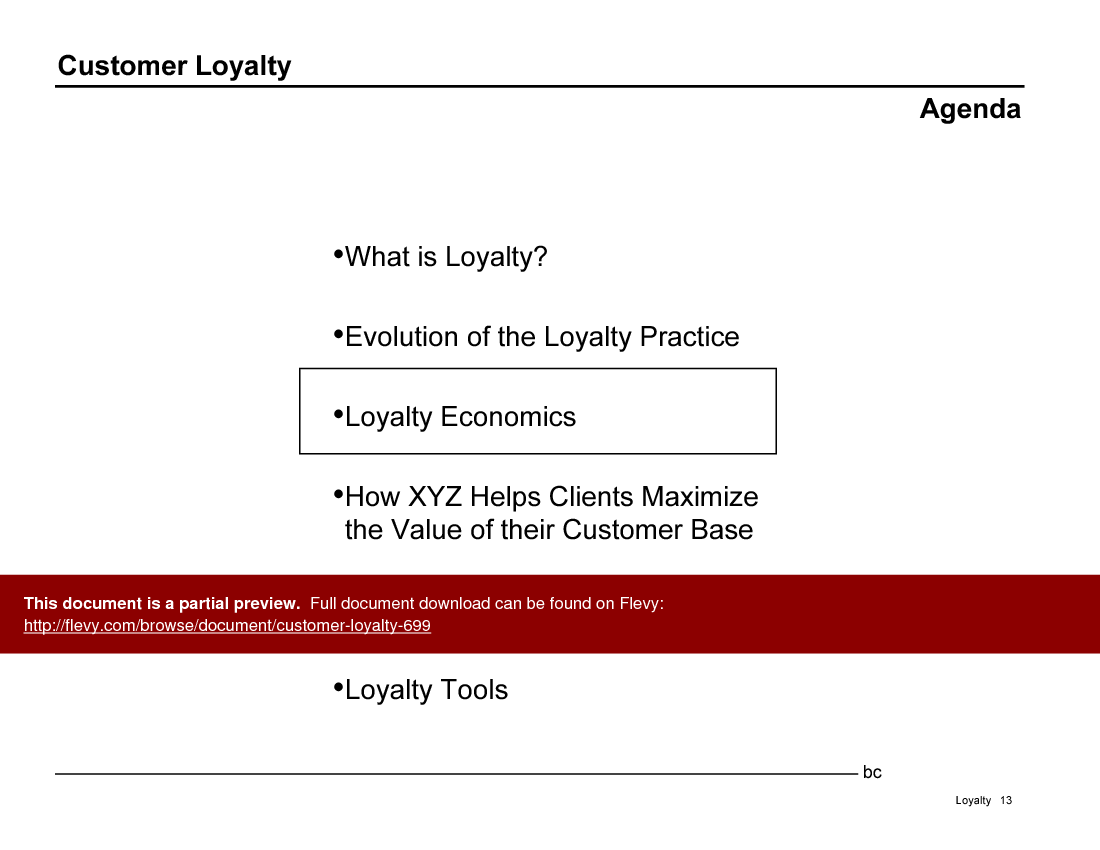
• What is Loyalty? (page 3)
• Evolution of the Loyalty Practice (page 6)
• Loyalty Economics (page 8)
• How XYZ Helps Clients Maximize the Value of their Customer Base (page 14)
• Example Case Study: Insure Inc. (page 44)
• Loyalty Tools (page 73)
Primary Topics Covered
• Definition of Loyalty - Loyalty emphasizes delivering superior value to key customers and employees, focusing on retention and growth.
• Evolution of Loyalty Practices - The shift from merely retaining customers to maximizing the value of customer segments has transformed loyalty strategies.
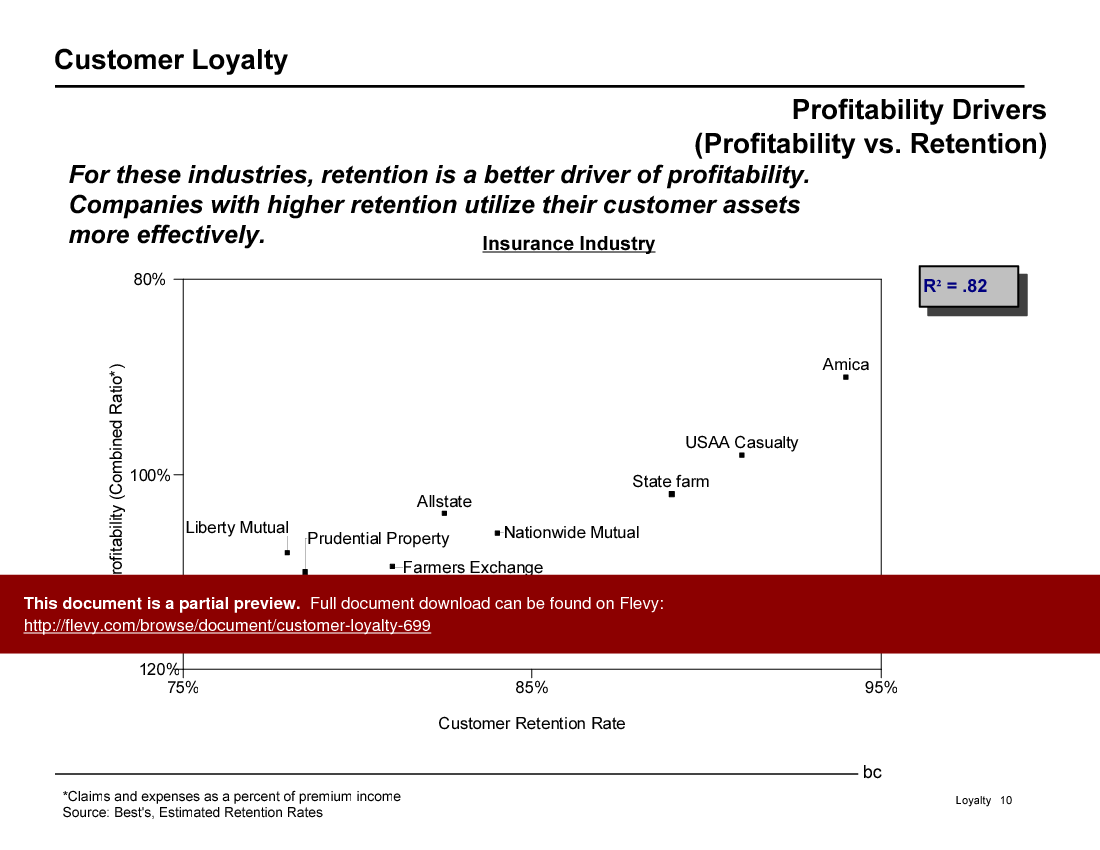
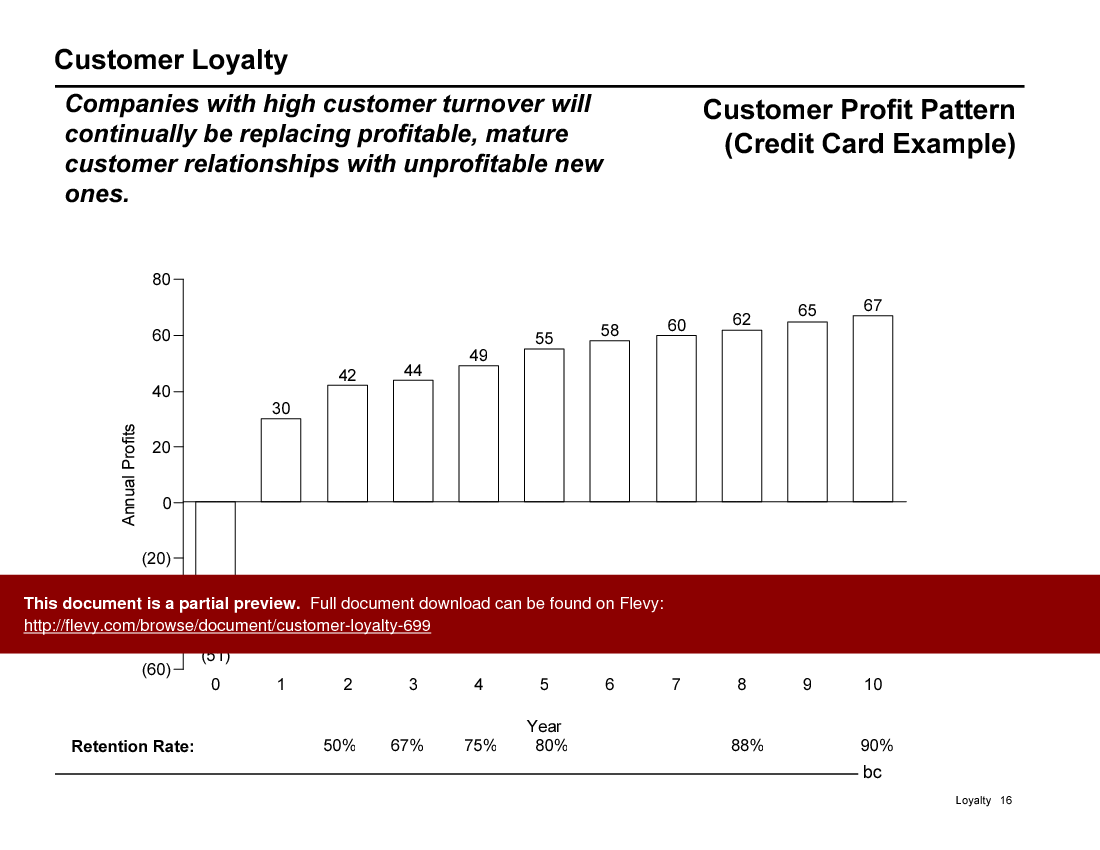
• Loyalty Economics - Understanding the financial implications of customer retention and the relationship between retention rates and profitability.
• Customer Lifetime Value - Calculating the long-term value of customers to inform retention strategies and resource allocation.
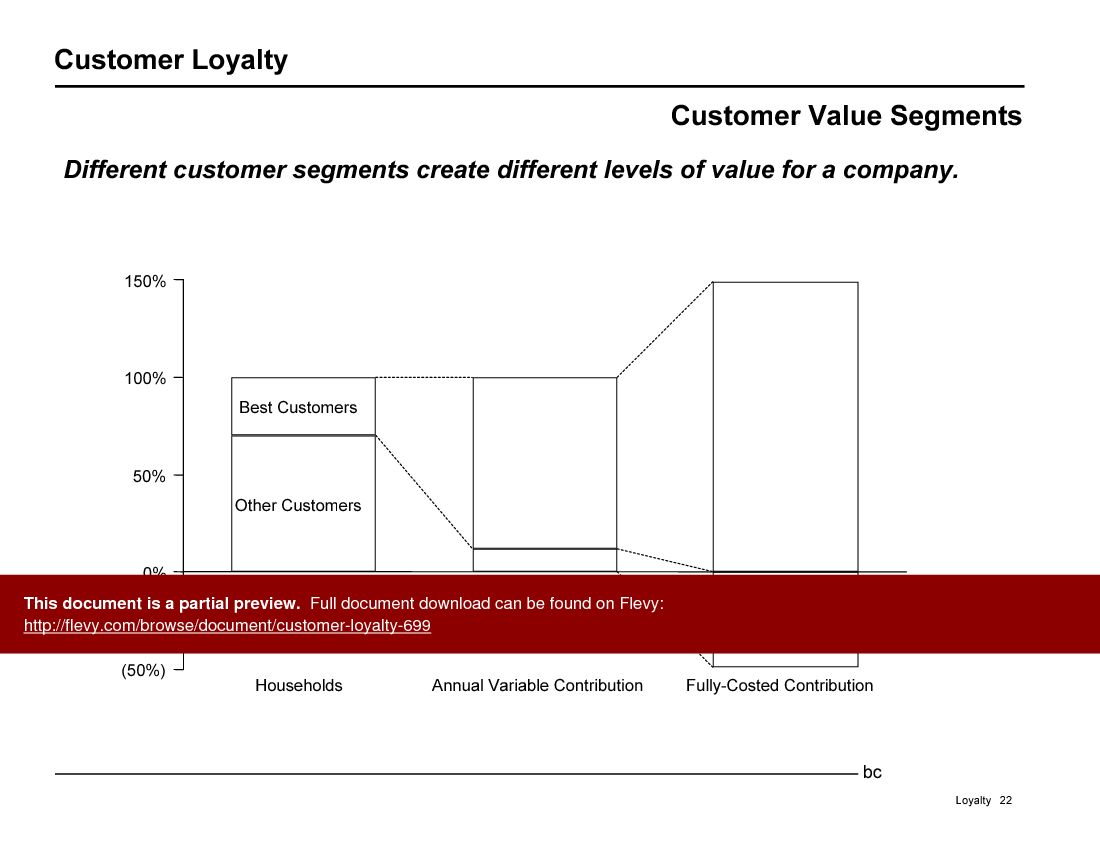
• Segmentation and Targeting - Identifying high-value customer segments for tailored loyalty initiatives.
• Root Cause Analysis - Analyzing reasons for customer defection to develop targeted retention strategies.
Deliverables, Templates, and Tools
• Customer loyalty assessment templates to evaluate current strategies
• Frameworks for calculating customer lifetime value and share of wallet
• Root cause analysis tools for identifying defection reasons
• Segmentation models for targeting high-value customers
• Methodologies for measuring retention rates and customer satisfaction
• Case study examples illustrating successful loyalty program implementations
Slide Highlights
• Overview of loyalty definitions and their strategic importance
• Graphs illustrating the evolution of loyalty practices over time
• Economic analysis showcasing the correlation between retention rates and profitability
• Case study insights from Insure Inc. demonstrating effective retention strategies
• Visual frameworks for customer segmentation and targeting
Potential Workshop Agenda
Understanding Customer Loyalty (90 minutes)
• Define loyalty and its significance in business
• Discuss the evolution of loyalty practices and their impact on strategy
• Explore loyalty economics and profitability drivers
Implementing Effective Loyalty Strategies (120 minutes)
• Analyze case studies of successful loyalty programs
• Develop segmentation strategies for high-value customers
• Conduct root cause analysis to identify defection reasons
Customization Guidance
• Tailor the customer segmentation models to fit specific business demographics
• Adjust the loyalty assessment templates to reflect unique business metrics
• Incorporate company-specific case studies to enhance relevance and engagement
Secondary Topics Covered
• The role of customer satisfaction in loyalty
• Strategies for improving customer service to enhance retention
• The impact of pricing strategies on customer loyalty
• Methods for measuring share of wallet across customer segments
• Insights into loyalty program design and implementation
Topic FAQ
What is the difference between customer retention and customer loyalty?
Retention refers to keeping customers active with a business over time, while loyalty emphasizes deeper, more profitable relationships and growth within high-value segments. Loyalty focuses on maximizing customer lifetime value rather than just preventing churn, highlighting metrics such as CLV and share of wallet in analyses.
What are the core components of loyalty economics I should analyze?
Loyalty economics centers on the relationship between retention rates and profitability, including customer lifetime value, acquisition costs, commission expenses, loss ratios, and tenure. These elements determine how retention improvements translate to profit, and they are commonly analyzed using CLV and retention-rate methodologies.
How is customer lifetime value (CLV) typically estimated for loyalty strategies?
CLV estimation uses frameworks that project total revenue from a customer over the relationship, factoring in retention rates, acquisition costs, and profitability drivers. Practical decks often provide templated CLV calculators and worksheets; Flevy's Customer Loyalty includes CLV calculation frameworks to support these estimates.
How can customer segmentation improve loyalty program effectiveness?
Segmentation identifies high-value customer groups so loyalty initiatives can be tailored to their needs, improving engagement and share of wallet. Effective segmentation links customer value metrics to targeted offers and communication plans, and the approach typically relies on segmentation models for targeting high-value customers.
What should I look for when choosing a customer loyalty toolkit for a six-week project?
For a short timeline prioritize ready-to-use assessment templates, prebuilt CLV and segmentation frameworks, root cause analysis tools, and clear customization guidance to adapt materials quickly. Access to case-study examples and editable templates helps accelerate delivery, such as customizable CLV and segmentation models.
How do I evaluate whether buying a loyalty template deck is worth the investment?
Assess whether the deck provides measurable artifacts you can reuse—CLV frameworks, retention-rate methodologies, segmentation models, and root-cause analysis tools—and whether it reduces prep time for strategy, training, or workshops. Value often comes from reusable templates and analytical tools such as CLV and root cause frameworks.
I need to stop a rising customer defection rate—what analytical steps should I take?
Start with measuring current retention and defection rates, segment customers to find where defection is concentrated, and run root cause analysis supported by qualitative interviews to identify drivers. Use those findings to prioritize interventions for the highest-value segments using root cause analysis frameworks and retention measurement.
What tools and methods help identify why customers defect from a brand?
Root cause analysis frameworks and qualitative customer interviews are commonly used to pinpoint defection reasons, supported by retention-rate measurement and segment-level profitability analysis. Structured toolsets that combine RCA with segment-specific data enable targeted remediation, such as root cause analysis tools and segmentation models.
Document FAQ
These are questions addressed within this presentation.
What is the difference between retention and loyalty?
Retention focuses on keeping customers, while loyalty emphasizes growing profitable segments and maximizing their value.
How can I measure customer loyalty effectively?
Utilize methodologies such as customer lifetime value calculations, retention rate assessments, and share of wallet analyses.
What are the key drivers of customer profitability?
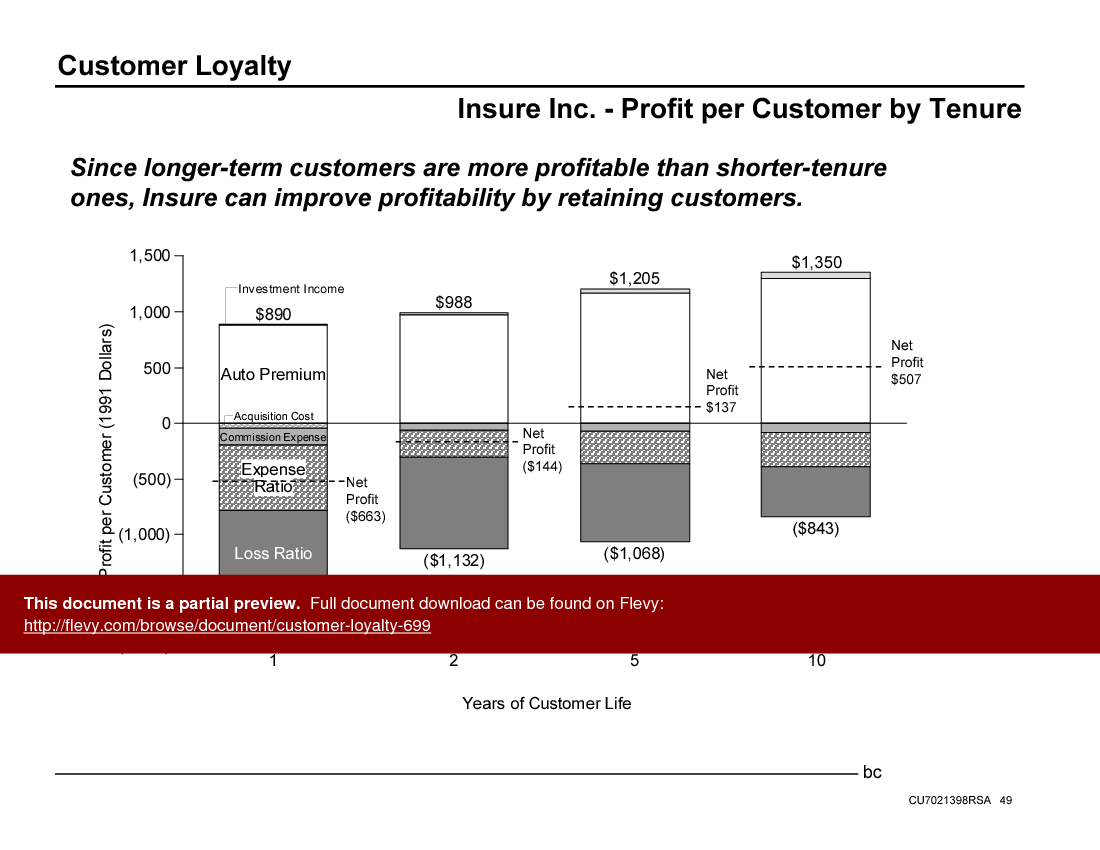
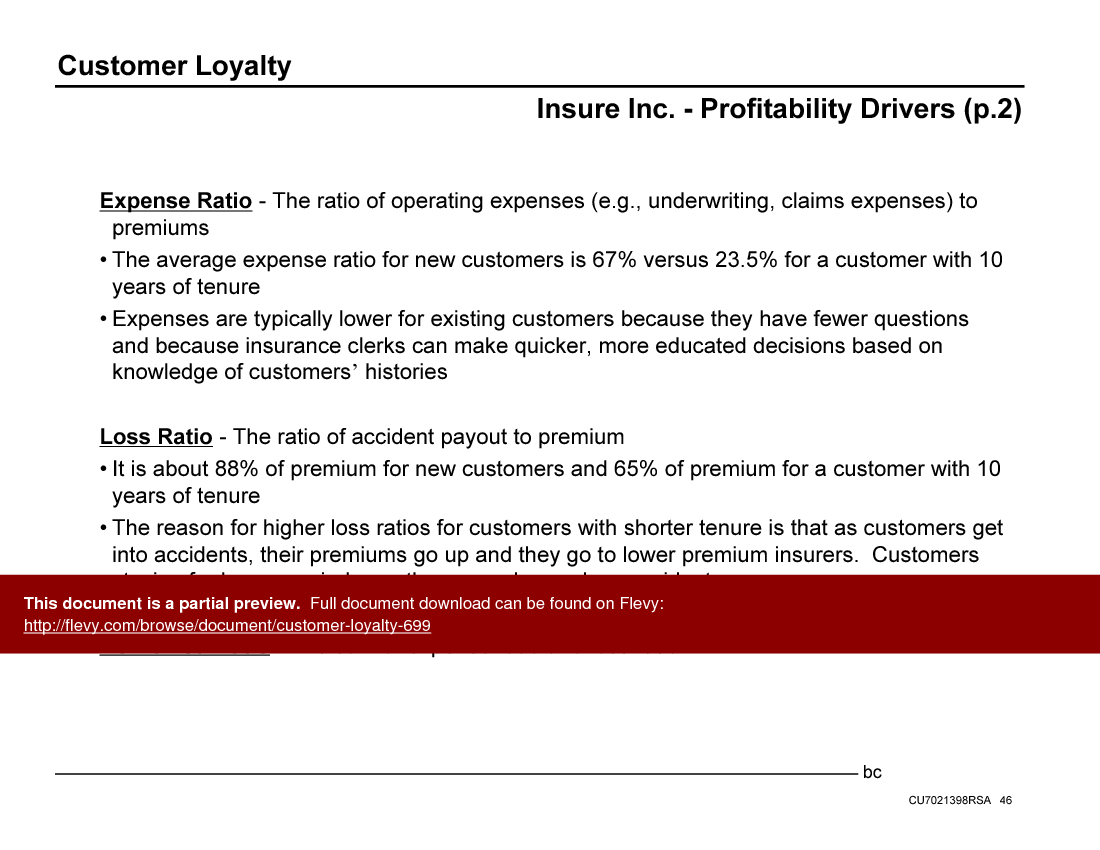
Key drivers include customer tenure, acquisition costs, commission expenses, and loss ratios.
How can segmentation improve loyalty strategies?
Segmentation allows businesses to tailor loyalty initiatives to specific customer needs, enhancing engagement and retention.
What tools can help analyze customer defection?
Root cause analysis frameworks and qualitative interviews can identify reasons for customer defection and inform retention strategies.
How does customer satisfaction relate to loyalty?
While customer satisfaction is important, it does not always correlate with profitability; loyalty requires deeper engagement and value delivery.
What is the role of pricing in customer loyalty?
Pricing strategies can significantly impact customer retention and loyalty, particularly in competitive markets.
How can I implement a successful loyalty program?
Focus on delivering superior value, understanding customer needs, and continuously measuring program effectiveness to adapt strategies.
Glossary
• Customer Loyalty - A commitment by customers to repurchase or continue using a brand.
• Retention Rate - The percentage of customers who continue to do business with a company over a specific period.
• Customer Lifetime Value (CLV) - The total revenue a business can expect from a single customer account throughout the business relationship.
• Segmentation - The process of dividing customers into groups based on shared characteristics for targeted marketing.
• Share of Wallet - The percentage of a customer's total spending within a category that is captured by a particular brand.
• Root Cause Analysis - A method used to identify the underlying reasons for customer defection.
• Profitability Drivers - Factors that influence the profitability of a customer or segment, including retention rates and acquisition costs.
• Customer Corridor - A framework for understanding the various touchpoints and interactions a customer has with a brand.
• Value Proposition - The promise of value to be delivered to customers, highlighting the benefits of a product or service.
• Customer Segmentation - The practice of dividing a customer base into groups to tailor marketing strategies effectively.
• Loyalty Program - A structured marketing strategy designed to encourage customers to continue to shop at or use the services of a business.
• Defection Rate - The percentage of customers who stop doing business with a company over a specific period.
• Customer Experience - The overall perception a customer has of a brand based on their interactions across various touchpoints.
• Customer Value - The perceived benefits that a customer receives from a product or service relative to its cost.
• Profit Margin - The difference between revenue and expenses, expressed as a percentage of revenue.
• Acquisition Cost - The total cost associated with acquiring a new customer, including marketing and sales expenses.
• Customer Satisfaction - A measure of how products and services meet or exceed customer expectations.
• Customer Engagement - The emotional connection between a customer and a brand, influencing loyalty and retention.
• Competitive Advantage - A condition that allows a company to produce goods or services better or more cheaply than its rivals.
• Customer Insights - Information about customer preferences and behaviors that can inform business strategies.
• Loyalty Metrics - Measurements used to assess the effectiveness of loyalty programs and customer retention strategies.
This PPT slide outlines a structured approach to enhancing customer loyalty through 2 main categories: Analytics and Implementation. In Analytics, key strategies include customer segmentation to identify distinct groups, decliner analysis to understand disengagement, and revenue sieve and channel share/growth analysis for revenue optimization. These analytics are essential for acquiring the right customers and maximizing their "share of wallet." The Implementation section focuses on actionable strategies such as targeted acquisition through tailored marketing, awareness building via advertising, loyalty programs for ongoing engagement, and dialogue marketing for two-way communication. Recovery units and new businesses indicate proactive retention strategies for at-risk customers. Integrating analytics with targeted implementation enhances customer acquisition, retention, and overall value proposition.
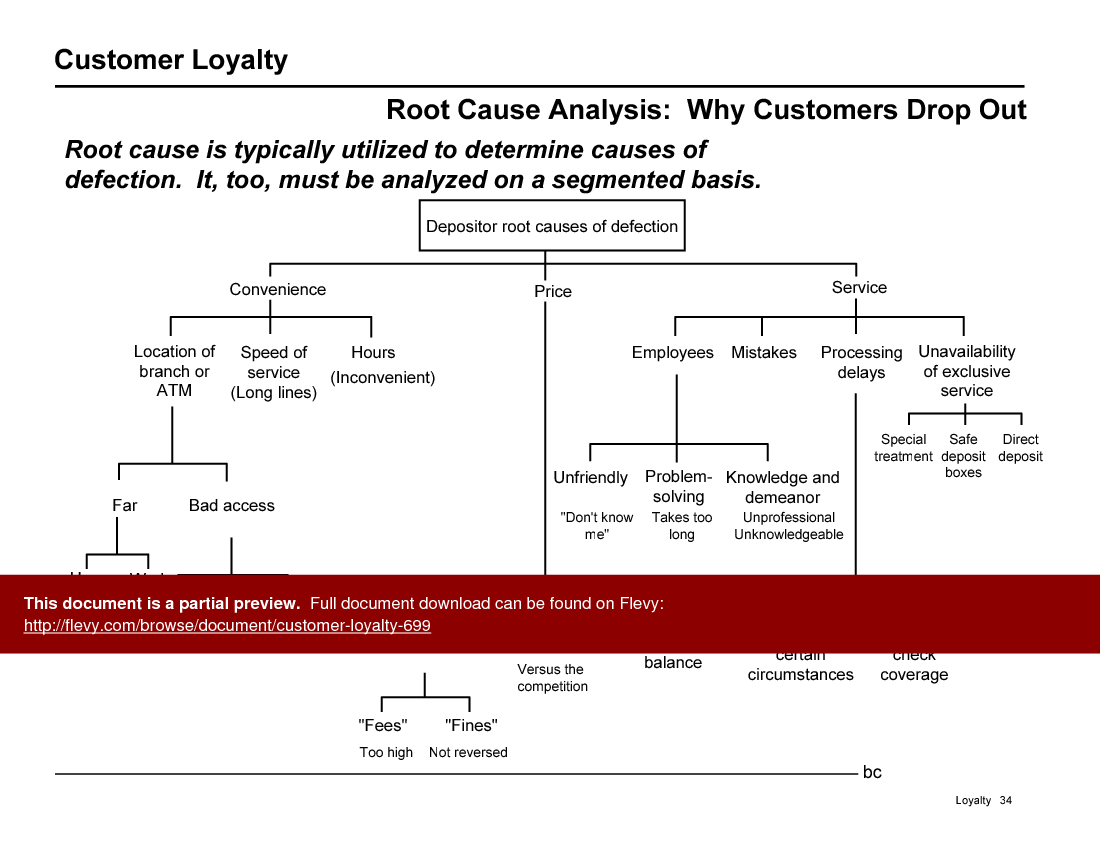
This PPT slide presents a root cause analysis framework for understanding customer defection in the banking sector. It categorizes reasons for defection into 3 primary areas: Convenience, Price, and Service.
Convenience factors include branch and ATM locations, service speed, and operational hours, all of which significantly impact customer satisfaction. The Price category focuses on charges and fees, highlighting the importance of competitive pricing, as high fees and interest rates can drive customers away.
Service examines how employee interactions, mistakes, and processing delays affect loyalty, noting that unfriendly staff and service delays can lead to dissatisfaction. Addressing these root causes is essential for financial institutions to enhance customer loyalty and reduce churn.
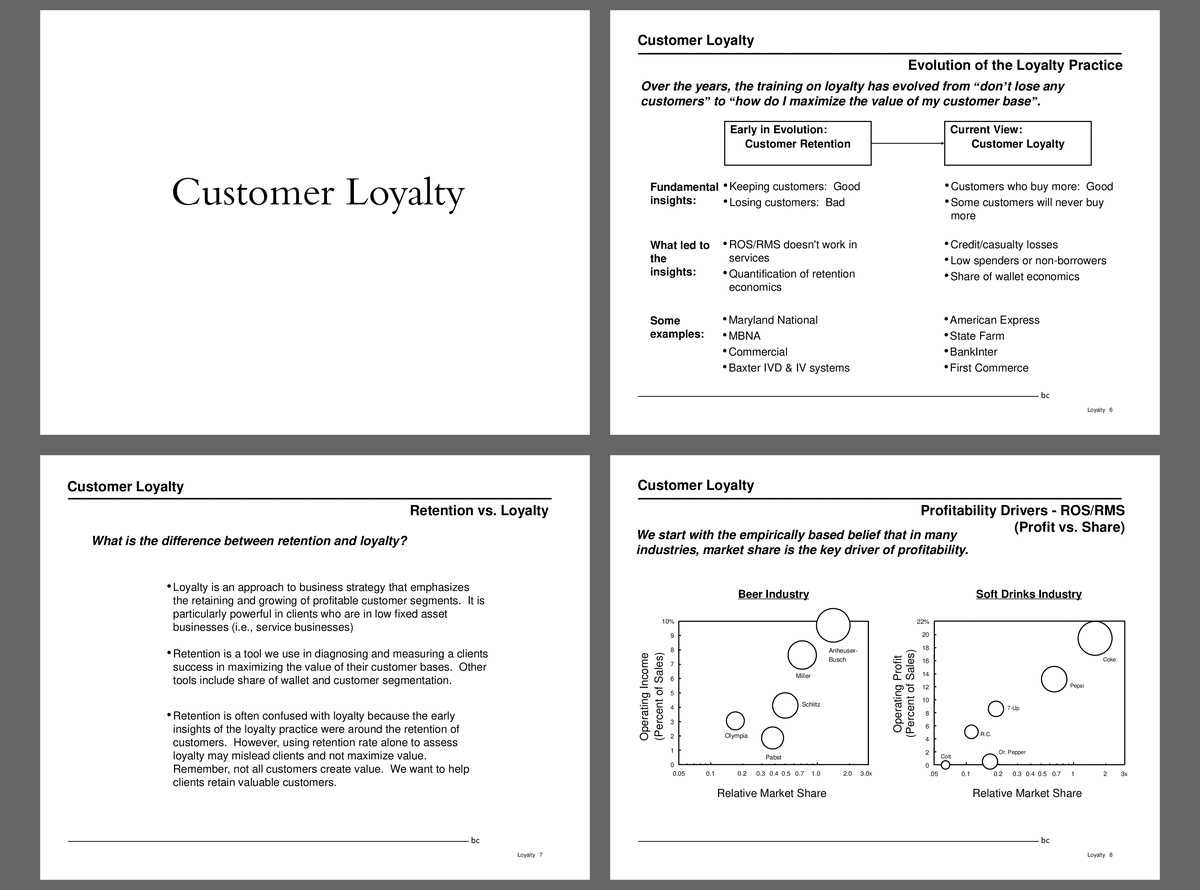
This PPT slide analyzes the evolution of loyalty practices, shifting from customer retention to a broader understanding of customer loyalty. Initially, the focus was on retaining customers, summarized under "Early in Evolution: Customer Retention." The current view, "Current View: Customer Loyalty," recognizes that not all customers contribute equally to business success, highlighting the importance of analyzing customer behavior and profitability. Traditional metrics like ROS/RMS were ineffective in service industries, necessitating the quantification of retention economics to assess customer value. Examples include Maryland National and MBNA for early retention focus, contrasted with American Express and State Farm, which illustrate the modern understanding of loyalty that incorporates customer spending behavior and share of wallet. This evolution helps organizations refine loyalty strategies, distinguishing between retention and maximizing customer value for effective engagement.
This PPT slide presents a comparative analysis of profitability drivers in the beer and soft drinks industries, focusing on the relationship between relative market share and operating income. The x-axis represents relative market share, while the y-axis indicates operating income as a percentage of sales. In the beer industry, major brands like Anheuser-Busch and Miller show a strong correlation between market share and operating income, with Anheuser-Busch leading in both metrics. In the soft drinks sector, Coke demonstrates the highest operating profit percentage, reinforcing that larger market share can enhance profitability. This analysis highlights the critical role of market share in driving profitability, guiding strategic decisions for companies aiming to improve market positions and financial outcomes.
This PPT slide presents the "customer sieve" model for diagnosing share of wallet "leaks," where customers divert spending to competitors. The framework is divided into 2 sections: Customer Sieve and Share of Wallet Frameworks. The Customer Sieve section features a flowchart categorizing customers based on store interactions, including visit frequency and annual spending at the discount store versus competitors. This segmentation enables granular analysis of customer behavior, visits, and average purchase per visit, leading to share of wallet assessment. The Share of Wallet Frameworks section highlights total wallet potential, distinguishing between aware and unaware customers, and emphasizes that unaware customers have no engagement potential. Resulting actions focus on improving selection, service assistance, convenience, and implementing promotions and advertising strategies to enhance customer loyalty and retention.
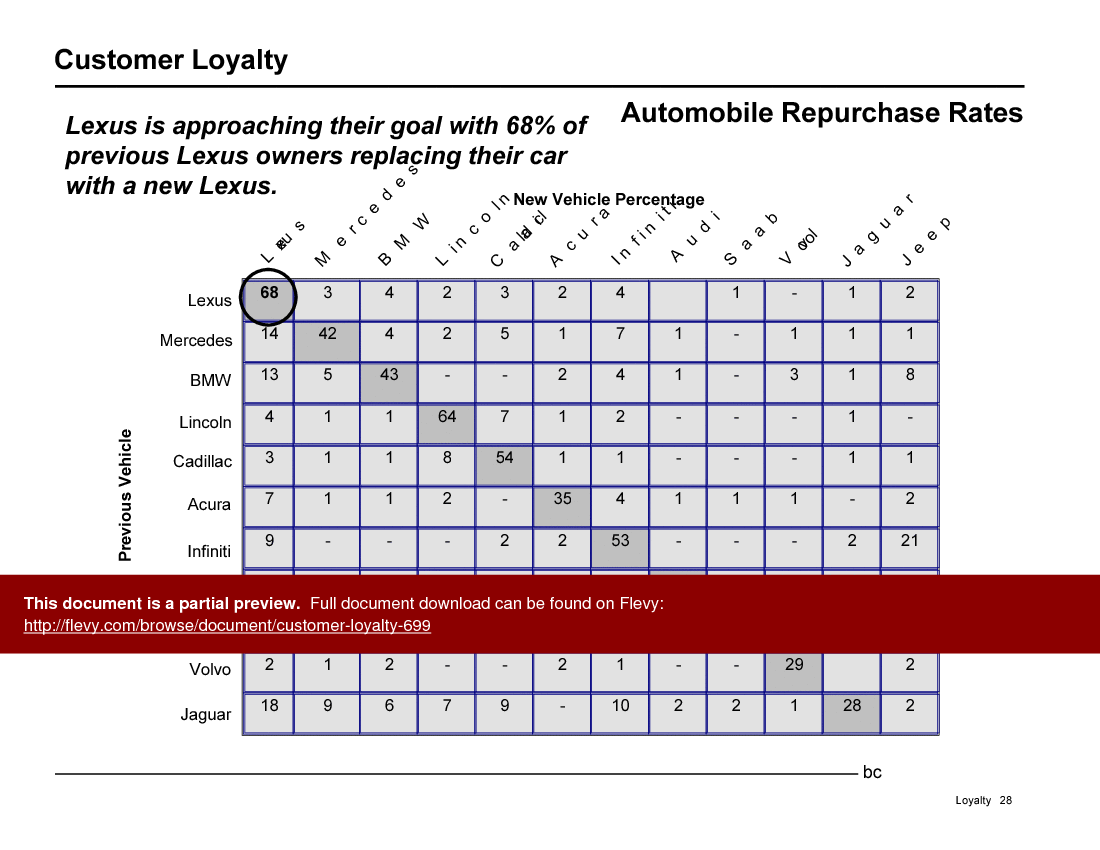
Lexus demonstrates a strong customer retention rate, with 68% of previous owners opting for a new model. A matrix outlines repurchase rates across automobile brands, showing Lexus leads, followed by Mercedes at 14% and BMW at 13%. Lincoln has a notable 64% repurchase rate, indicating strong brand loyalty. Other brands like Cadillac, Acura, and Audi show varying retention levels, while Saab and Jaguar struggle to retain customers. The percentages represent the proportion of previous vehicle owners choosing a new vehicle from the same brand, providing insights into brand loyalty dynamics in the automotive sector.
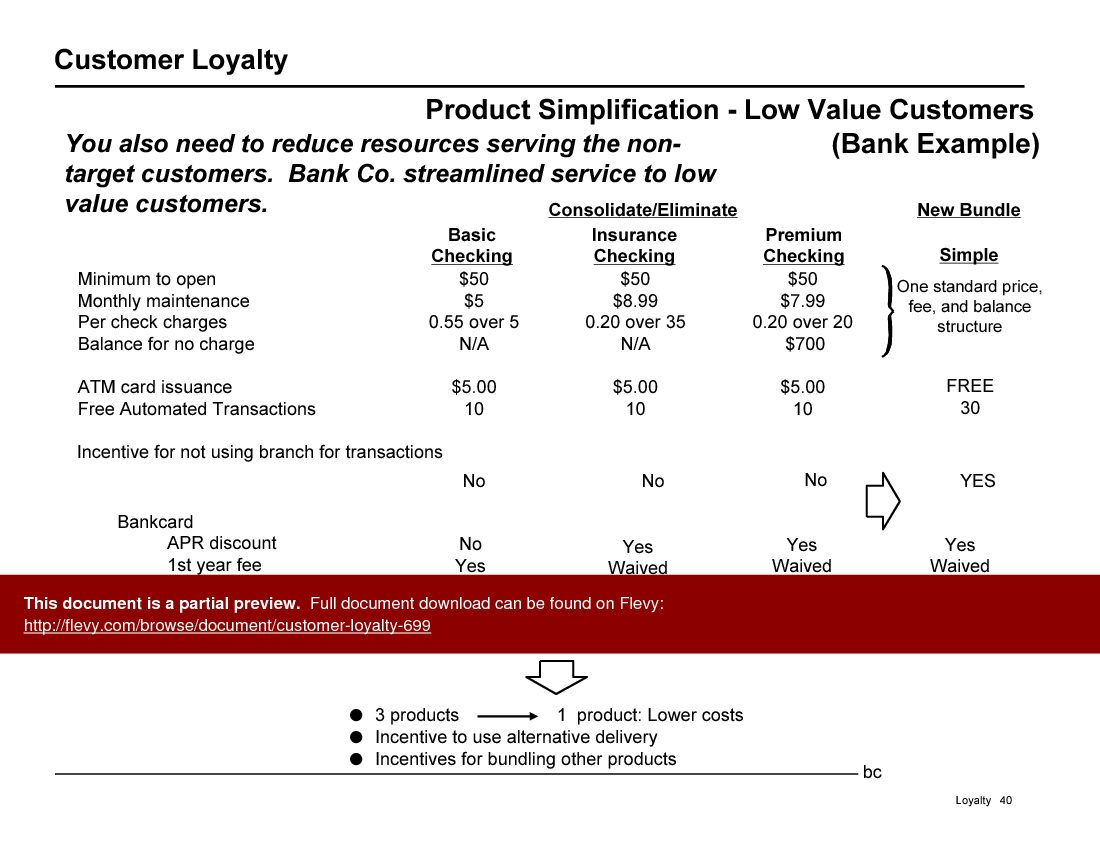
This PPT slide presents a framework for enhancing customer loyalty in banking institutions by addressing specific customer needs, such as recognition and appreciation. It translates these needs into actionable strategies, recommending higher service levels and better pricing to meet customer expectations. Recognizing life events that influence customer needs is crucial, prompting banks to reconsider qualifying criteria for discounts and bundled products. Specific actions include implementing infrequent overdraft fees and offering free checks to boost customer satisfaction. Successful implementation of these strategies encourages customers to consolidate their business with banks, fostering stronger relationships and increased retention.
This PPT slide analyzes the impact of a 5% increase in customer retention on customer net present value (NPV) across industries. The bar chart illustrates the percentage increase in customer NPV for various sectors. The insurance industry shows the highest impact, with a 5% retention boost leading to a 95% increase in customer NPV. Advertising agencies and bank branch deposits follow, with increases of 90% and 85%, respectively. Industries with recurring revenue models are particularly sensitive to retention improvements. In contrast, office building management and industrial brokerage see lower impacts, with increases of 40% and 45%. This disparity underscores the varying effects of customer loyalty on profitability, highlighting the need for tailored retention strategies.
This PPT slide examines the relationship between customer satisfaction and financial performance in service-oriented businesses. It challenges the assumption that higher customer satisfaction directly correlates with improved financial metrics. Three scatter plots illustrate this: the first shows a weak correlation between customer satisfaction indices and revenue, indicating that increased satisfaction may not lead to proportional revenue growth. The second plot reveals varying customer satisfaction levels against revenue change percentages, complicating the assumption that satisfied customers always drive revenue growth. The third plot indicates that customer satisfaction does not reliably predict profitability. Businesses must look beyond traditional satisfaction metrics and consider additional metrics to understand how customer behaviors impact financial outcomes, refining strategies in customer engagement and loyalty.
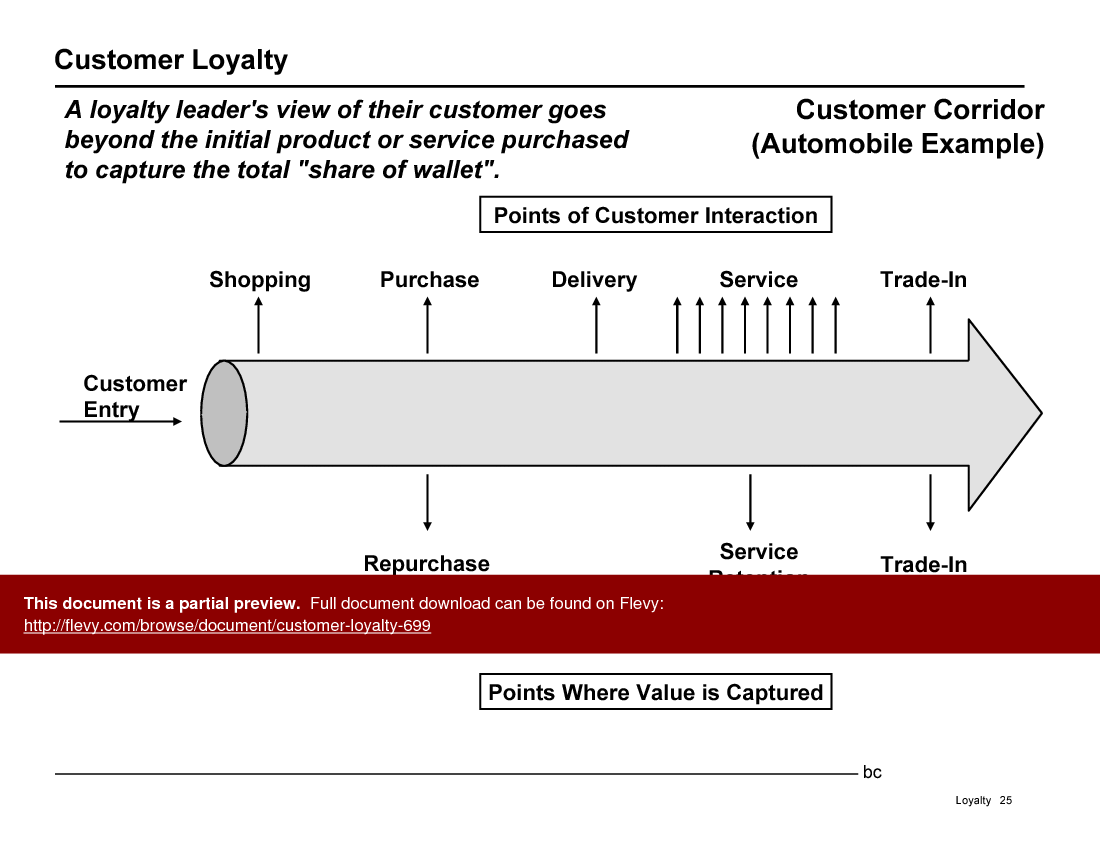
This PPT slide presents a framework for understanding customer loyalty in the automobile sector through the "customer corridor." It outlines stages of customer interaction: Customer Entry, Shopping, Purchase, Delivery, Service, Repurchase, and Trade-In. Each stage represents an opportunity to capture value, particularly the transition from Shopping to Purchase, which reflects the decision-making process. Enhancing experiences at these touchpoints can increase customer loyalty and share of wallet. Post-purchase interactions, such as Service and Trade-In, are vital for retention and repeat business. The concept of "Points Where Value is Captured" highlights that not all interactions yield equal returns, guiding executives to focus on maximizing customer lifetime value and tailoring strategies to enhance experiences and drive loyalty for sustained business growth.
This PPT slide outlines a strategic framework for understanding customer loyalty through 4 key components. Segmentation is critical; it recognizes that customer value varies, necessitating tailored strategies to enhance engagement and retention. Lifecycle needs involve capturing the full share of relevant wallet by distinguishing between dynamic and static purchase views, requiring ongoing tracking of evolving customer needs to inform product development and marketing strategies. Retention impact highlights the importance of factoring attrition rates into financial projections, as churn varies by segment and lifecycle stage, necessitating nuanced retention strategies. Finally, the concept of full potential emphasizes that customer behaviors are dynamic, suggesting that targeted value-sharing incentives can proactively foster loyalty and enhance customer lifetime value.
The "Customer Corridor" framework illustrates customer loyalty as a continuous journey through various interaction points: "Customer Entry," "Shopping," "Purchase," "Delivery," "Service," and "Trade-In." A loyalty leader must capture the total "share of wallet," recognizing that customer engagement extends beyond the initial purchase. The "Repurchase" stage shows that satisfied customers are likely to return, while "Service Retention" emphasizes ongoing support's role in fostering long-term loyalty. Value can be captured at multiple points along the corridor, highlighting the significance of post-purchase interactions on customer satisfaction and retention. This model is particularly relevant in the automobile sector, where relationships span years and involve multiple transactions, urging businesses to invest in each stage of the customer journey to maximize retention and profitability.
This PPT slide illustrates the profitability trend of Insure Inc. from 1989 to 1991, with profitability percentages ranging from -15% to +10%. Profitability starts at 5% in 1989, declines sharply to -2% in 1990, and further drops to -10% in 1991. This trend indicates significant challenges impacting financial performance, warranting management's immediate attention. The decline from positive to negative profitability within 2 years raises concerns about customer loyalty, operational efficiency, and market conditions. Understanding these factors is essential for executives aiming to implement strategies to reverse negative trends and enhance profitability.
Source: Best Practices in Customer Experience, Customer Loyalty PowerPoint Slides: Customer Loyalty PowerPoint (PPT) Presentation Slide Deck, Documents & Files
The average daily rate of a McKinsey consultant is $6,625 (not including expenses). The average price of a Flevy document is $65.
Trusted by over 10,000+ Client Organizations
Since 2012, we have provided business templates to over 10,000 businesses and organizations of all sizes, from startups and small businesses to the Fortune 100, in over 130 countries.

"One of the great discoveries that I have made for my business is the Flevy library of training materials.
As a Lean Transformation Expert, I am always making presentations to clients on a variety of topics: Training, Transformation, Total Productive Maintenance, Culture, Coaching, Tools, Leadership Behavior, etc. Flevy
It is well worth the money to purchase these presentations. Sure, I have the knowledge and information to make my point. It is another thing to create a presentation that captures what I want to say. Flevy has saved me countless hours of preparation time that is much better spent with implementation that will actually save money for my clients.
"
– Ed Kemmerling, Senior Lean Transformation Expert at PMG
"As a young consulting firm, requests for input from clients vary and it's sometimes impossible to provide expert solutions across a broad spectrum of requirements. That was before I discovered Flevy.com.
Through subscription to this invaluable site of a plethora of topics that are key and crucial to consulting, I
have been able to exceed expectations and deliver quality advice and solutions to my clients. The quality and expertise of the authors are exemplary and gives me great confidence to use as part of my service offerings.
I highly recommend this company for any consultant wanting to apply international best practice standards in their service offerings.
"
– Nishi Singh, Strategist and MD at NSP Consultants
"As an Independent Management Consultant, I find Flevy to add great value as a source of best practices, templates and information on new trends. Flevy has matured and the quality and quantity of the library is excellent. Lastly the price charged is reasonable, creating a win-win value for
the customer, Flevy and the various authors. This is truly a service that benefits the consulting industry and associated clients. Thanks for providing this service.
"
– Jim Schoen, Principal at FRC Group
"As a small business owner, the resource material available from FlevyPro has proven to be invaluable. The ability to search for material on demand based our project events and client requirements was great for me and proved very beneficial to my clients. Importantly, being able to easily edit and tailor
the material for specific purposes helped us to make presentations, knowledge sharing, and toolkit development, which formed part of the overall program collateral. While FlevyPro contains resource material that any consultancy, project or delivery firm must have, it is an essential part of a small firm or independent consultant's toolbox.
"
– Michael Duff, Managing Director at Change Strategy (UK)
"As a consulting firm, we had been creating subject matter training materials for our people and found the excellent materials on Flevy, which saved us 100's of hours of re-creating what already exists on the Flevy materials we purchased."
– Michael Evans, Managing Director at Newport LLC
"My FlevyPro subscription provides me with the most popular frameworks and decks in demand in today’s market. They not only augment my existing consulting and coaching offerings and delivery, but also keep me abreast of the latest trends, inspire new products and service offerings for my practice, and educate me
in a fraction of the time and money of other solutions. I strongly recommend FlevyPro to any consultant serious about success.
"
– Bill Branson, Founder at Strategic Business Architects
"As a consultant requiring up to date and professional material that will be of value and use to my clients, I find Flevy a very reliable resource.
The variety and quality of material available through Flevy offers a very useful and commanding source for information. Using Flevy saves me time, enhances my expertise and ends up being a good decision."
– Dennis Gershowitz, Principal at DG Associates
"As a niche strategic consulting firm, Flevy and FlevyPro frameworks and documents are an on-going reference to help us structure our findings and recommendations to our clients as well as improve their clarity, strength, and visual power. For us, it is an invaluable resource to increase our impact and value."
– David Coloma, Consulting Area Manager at Cynertia Consulting
Download our FREE Digital Transformation Templates
Download our free compilation of 50+ Digital Transformation slides and templates. DX concepts covered include Digital Leadership, Digital Maturity, Digital Value Chain, Customer Experience, Customer Journey, RPA, etc.