 The Critical Intersection of IT and Business Transformation
In today’s fast-changing marketplace, business transformation is essential for survival and growth. Organizations face intense pressure to innovate, optimize operations, and enhance customer experiences. At the heart of these imperatives is the strategic use of technology. As digital disruption reshapes industries, companies that fail to embrace transformation risk obsolescence. This reality highlights the critical importance of aligning IT support and consulting with broader business transformation strategies.
Technology has evolved from a mere support function to a core driver of competitive advantage. Yet, despite substantial IT investments, many organizations struggle to realize the full potential of transformation initiatives. This disconnect often arises from misalignment between IT capabilities and business objectives. IT support and consulting are frequently seen as separate, transactional services rather than integrated partners in change. When effectively integrated, however, these functions become powerful enablers that accelerate transformation and embed innovation into an organization’s DNA.
Achieving this alignment requires shifting from reactive problem-solving to proactive strategy execution. IT support must evolve beyond traditional break-fix roles to become a strategic asset that anticipates needs, mitigates risks, and optimizes performance. Similarly, IT consulting must go beyond technology recommendations to encompass business insights, change management, and value realization. Only through this holistic approach can organizations ensure technology investments translate into meaningful business outcomes.
Understanding the Role of IT Support in Business Transformation
Effective IT support extends far beyond basic troubleshooting and maintenance. Within business transformation, IT support serves as the backbone of modern enterprises, ensuring critical systems are operational, secure, and optimized to meet evolving demands. When aligned with transformation goals, IT support enables businesses to scale efficiently, adapt quickly to market changes, and confidently leverage emerging technologies.
For example, companies that get tech support from 7tech are better positioned to maintain system uptime and respond swiftly to technical challenges, minimizing disruption during transformation initiatives. For Sydney organisationz, choosing a managed service provider in Sydney adds the further advantage of local presence, same-time-zone support, and familiarity with Australian compliance requirements. This agility is crucial as organizations implement new digital platforms, migrate to cloud environments, or integrate advanced analytics. According to Gartner, 70% of digital transformation efforts fail due to lack of proper alignment between IT and business strategies. This statistic underscores the pivotal role IT support plays not just in maintaining technology but in enabling strategic execution.
Proactive IT support teams also identify operational bottlenecks and recommend automation opportunities. Such initiatives can lead to significant cost reductions-up to 30% in operational expenses according to McKinsey research. By automating repetitive tasks and streamlining workflows, IT support frees resources that can be redirected toward innovation and growth. Additionally, IT support ensures compliance with security and regulatory requirements, vital during transformation phases involving sensitive data or new technology deployments.
The evolving role of IT support includes monitoring system performance and user experience in real time, enabling rapid problem resolution before issues impact operations. This shift from reactive to proactive support requires investment in advanced monitoring tools, predictive analytics, and skilled personnel. When integrated with business objectives, IT support becomes a strategic partner that safeguards transformation investments and accelerates value realization.
The Strategic Value of IT Consulting
While IT support ensures systems run smoothly, IT consulting plays a strategic role in guiding transformation efforts from vision to execution. Consulting teams provide critical expertise in assessing business needs, designing technology roadmaps, and recommending solutions aligned with long-term objectives. Their role is to bridge the gap between business strategy and technological capabilities, ensuring IT investments are purposeful and deliver measurable outcomes.
Partnering with experts such as Charter Technology Solutions’ team of IT consultants allows organizations to leverage specialized knowledge and industry best practices. These consultants bring an external perspective that challenges internal assumptions, identifies blind spots, and introduces innovative approaches. According to Deloitte, organizations engaging IT consultants during transformation achieve 1.6 times higher ROI compared to those who do not. This statistic underscores the tangible business benefits of incorporating consulting expertise into transformation initiatives.
Beyond technology selection and implementation, IT consultants contribute critical change management capabilities. Successful transformation requires more than systems and processes; it demands cultural shifts and employee adoption. Consultants help design communication plans, training programs, and governance structures that facilitate smooth transitions. They also assist in risk management by identifying potential obstacles and developing mitigation strategies.
Furthermore, IT consulting supports continuous innovation by helping organizations stay abreast of emerging technologies such as artificial intelligence, blockchain, and the Internet of Things. Consultants evaluate how these technologies can be integrated into enterprise architecture to create new business models or enhance existing ones. This forward-looking approach ensures transformation efforts are not one-off projects but part of an ongoing evolution aligned with market trends.
Integrating IT Support and Consulting for Cohesive Transformation
To maximize impact, businesses must integrate IT support and consulting into a unified framework aligned with their transformation strategy. This integration facilitates seamless collaboration, reduces duplicated efforts, and ensures technology initiatives directly support business priorities.
Key steps to achieve this integration include:
- Establishing a Common Vision: IT teams, consultants, and business leaders must share a clear understanding of transformation goals. This alignment ensures IT initiatives support strategic priorities rather than operating in isolation.
- Developing Cross-Functional Teams: Including support technicians, consultants, and business unit representatives fosters innovation and rapid problem-solving. Cross-functional collaboration brings diverse perspectives and accelerates decision-making.
- Implementing Agile Methodologies: Agile promotes iterative development, continuous feedback, and adaptability-qualities essential for navigating transformation complexities. Agile also encourages transparency and stakeholder engagement.
- Investing in Training and Development: Equipping IT staff with skills in emerging technologies, project management, and business acumen is critical. Continuous learning ensures teams can support evolving business models and technology landscapes.
- Leveraging Integrated Tools and Platforms: Shared platforms for project management, communication, and data analytics enhance coordination between IT support and consulting. These tools provide real-time visibility into progress and enable data-driven decisions.
By following these principles, companies can reduce project failure rates and accelerate time-to-value. For instance, organizations with integrated IT and business transformation efforts report a 25% faster implementation of new digital capabilities. This acceleration improves competitiveness and boosts employee morale and customer satisfaction by delivering benefits sooner.
Overcoming Common Challenges
Despite clear benefits, aligning IT support and consulting with business transformation strategies presents challenges that must be proactively addressed.
- Siloed Departments: Organizational silos create communication gaps, conflicting priorities, and inefficiencies when IT support and consulting operate independently. Breaking down silos requires intentional design, shared goals, joint accountability, and leadership endorsement.
- Resistance to Change: Transformation often entails significant shifts in processes, roles, and culture. Employees may resist adopting new technologies or workflows without adequate engagement and support. Change management strategies-including transparent communication, training, and involvement in decision-making-are essential to overcoming resistance.
- Legacy Systems: Outdated infrastructure impedes innovation. Legacy systems can be inflexible, costly to maintain, and incompatible with modern solutions. Addressing this challenge may require phased modernization, cloud migration, or hybrid approaches balancing risk and agility.
- Budget Constraints: Limited financial resources can restrict IT initiative scope and pace. Demonstrating clear business value, prioritizing high-impact projects, and exploring innovative funding models such as outcome-based contracts help optimize resource allocation.
- Talent Shortages: The demand for skilled IT professionals often exceeds supply, making staffing support and consulting roles difficult. Investing in talent development, partnering with external providers, and leveraging automation can alleviate this constraint.
Addressing these challenges demands strong leadership commitment and a culture that embraces continuous improvement. Organizations must foster an environment where IT and business functions collaborate as partners rather than adversaries.
Measuring Success and Continuous Improvement
To ensure alignment remains effective, organizations must establish robust metrics capturing both IT performance and business outcomes. Metrics should be tailored to transformation objectives and provide actionable insights.
Relevant metrics include:
- System Uptime and Reliability: Measuring availability ensures IT support maintains operational continuity.
- Incident Resolution Times: Tracking responsiveness indicates support effectiveness and user satisfaction.
- User Adoption Rates: Assessing how quickly and extensively employees embrace new technologies reflects change management success.
- Business Impact Metrics: Evaluating revenue growth, cost savings, customer satisfaction, or market share changes ties IT initiatives directly to business value.
Regular reviews and governance forums should evaluate progress against these metrics. Leveraging data analytics tools deepens understanding of how IT initiatives influence transformation goals and identifies areas for refinement.
Continuous improvement cycles enable organizations to adapt strategies based on real-world outcomes, emerging trends, and stakeholder feedback. This dynamic approach sustains momentum and ensures transformation efforts remain relevant and impactful.
Conclusion
Aligning IT support and consulting with business transformation strategy is no longer a luxury but a necessity for companies seeking sustainable competitive advantage in the digital age. The integration of these functions creates a powerful engine that drives agility, innovation, and resilience.
By evolving IT support into a proactive strategic partner and leveraging IT consulting for expert guidance and change management, organizations can unlock the full potential of their technology investments. Establishing collaborative frameworks, investing in talent and tools, and overcoming common challenges position businesses to accelerate transformation and achieve superior outcomes.
Whether through partnering with trusted IT support providers or engaging expert consultants, the key is ensuring these roles work in harmony to advance strategic objectives. Businesses that master this alignment will not only survive but thrive amid ongoing disruption-turning technology into a catalyst for lasting growth and differentiation.
Do You Want to Implement Business Best Practices?
You can download in-depth presentations on ITSM and 100s of management topics from the FlevyPro Library. FlevyPro is trusted and utilized by 1000s of management consultants and corporate executives.
For even more best practices available on Flevy, have a look at our top 100 lists:
These best practices are of the same as those leveraged by top-tier management consulting firms, like McKinsey, BCG, Bain, and Accenture. Improve the growth and efficiency of your organization by utilizing these best practice frameworks, templates, and tools. Most were developed by seasoned executives and consultants with over 20+ years of experience.
Readers of This Article Are Interested in These Resources
32-slide PowerPoint presentation
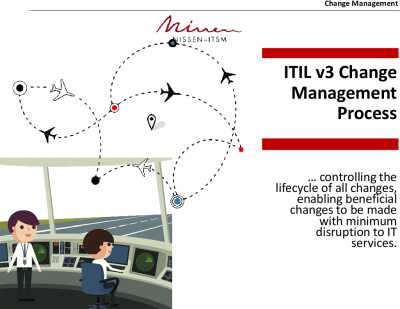
Change Management Process is essential Process in Service Transition. Process is contained in ITSM best practices.
Document describes the process in detail including Process flow, key definitions, process roles, CSFs, KPIs, Risks and Challenges.
This comprehensive PPT on Change Management
[read more]
Excel workbook
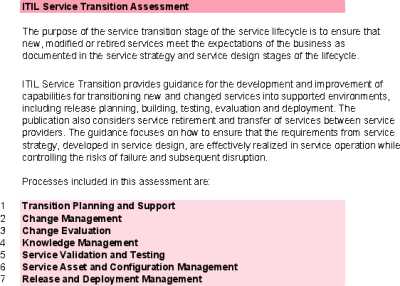
This Excel spreadsheet system with approx. 300 Questions allows you to conduct a Assessment of ITSM Service Transition processes:
1. Transition Planning and Support
2. Change Management
3. Change Evaluation
4. Knowledge Management
5. Service Validation and Testing
6. Service Asset and
[read more]
Excel workbook
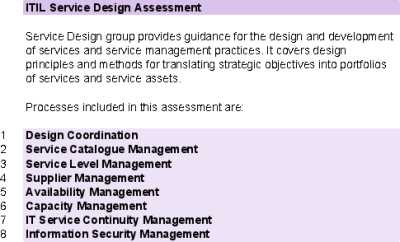
This Excel spreadsheet system with approx. 400 Questions allows you to conduct a Assessment of IT Service Design processes:
1. Design Coordination
2. Service Catalogue Management
3. Service Level Management
4. Supplier Management
5. Availability Management
6. Capacity
[read more]
27-slide PowerPoint presentation
Problem Management Process is a part of Service Operation.
This PowerPoint presentation contains detailed description of the Problem Management Process, including process steps, roles, KPIs, CSFs, interfaces with other processes.
This presentation provides a comprehensive overview of key
[read more]