Editor's Note: Take a look at our featured best practice, Design Thinking (225-slide PowerPoint presentation). DESIGN THINKING: MASTER FACILITATOR TOOLKIT (CERTIFICATION & TRAIN-THE-TRAINER)
Bridge the gap between strategic theory and frontline innovation. This exhaustive certification-level resource is a strategic discipline for solving the right problems in the right way. Designed for professional [read more]
* * * *
Digital transformation is often discussed through technology: cloud migration, automation, AI adoption, data platforms, enterprise systems, and new digital channels. These investments are important, but they do not guarantee successful transformation on their own. A digital initiative only creates value when people can actually use it, trust it, and integrate it into their daily work.
This is why user experience should be treated as a strategic layer of transformation, not as a final design step. Organizations may invest heavily in platforms, portals, dashboards, and internal tools, but if those systems are difficult to navigate or poorly aligned with user needs, adoption remains weak. A UI UX design agency can help companies evaluate digital products from the perspective of usability, customer experience, employee experience, and operational efficiency before expensive transformation decisions become locked in.
UX is not simply about aesthetics. It is about reducing friction between strategy and execution.
Digital Transformation Fails When Adoption Fails
Many transformation programs are designed around new capabilities. Leaders want better analytics, faster workflows, improved customer service, or more automated operations. However, a capability only matters if users adopt it.
A new platform may technically solve a business problem, but if employees avoid it, customers struggle with it, or managers cannot interpret its outputs, the value of the investment declines. This is one of the most common gaps in transformation: the system is delivered, but behavior does not change.
UX addresses this gap by focusing on how people interact with the new system in real conditions. It asks whether users understand the workflow, whether the interface supports decision-making, and whether the product fits existing operational habits.
UX Connects Business Strategy to Human Behavior
A transformation roadmap typically defines goals, capabilities, timelines, governance, and technology requirements. What it often lacks is a deep understanding of user behavior.
That missing layer matters. Business strategy describes what the organization wants to achieve. UX helps translate that ambition into practical interactions.
For example, if a company wants to improve customer self-service, UX determines whether customers can find answers without contacting support. If a company wants employees to use a new reporting dashboard, UX determines whether the dashboard makes insights clear. If a firm wants to digitize onboarding, UX determines whether new users can complete the process without confusion.
In this sense, UX is the bridge between strategic intent and user adoption.
The Role of Research in Better Transformation Decisions
Good UX begins with research. This may include interviews, journey mapping, usability testing, analytics review, stakeholder workshops, and service blueprinting. These methods help organizations understand where friction already exists and what users actually need from a future-state system.
Without research, transformation decisions often rely on assumptions. Leaders may believe a process is simple because they understand it internally. Customers or employees may experience the same process as fragmented, confusing, or unnecessarily slow.
UX research exposes these disconnects early. It helps teams prioritize improvements that will have the greatest impact on adoption and performance.
UX Audits as a Strategic Diagnostic Tool
A UX audit can be especially useful during transformation planning. Instead of redesigning everything at once, an audit evaluates the current digital experience and identifies usability issues, behavioral friction, conversion barriers, and workflow inefficiencies.
This creates a practical baseline. Leaders can see where existing systems fail users, where support costs are being generated, and where process complexity is damaging performance.
A UX audit is valuable because it turns subjective complaints into structured findings. Rather than saying “the system feels difficult,” teams can identify specific problems such as unclear navigation, redundant steps, weak mobile usability, poor form design, inconsistent labeling, or insufficient feedback messages.
These findings can then feed directly into a transformation roadmap.
Customer Experience and Employee Experience Are Connected
Digital transformation affects both customers and employees. Many organizations treat these as separate areas, but they are closely linked.
If an employee tool is poorly designed, employees may take longer to serve customers. If a customer portal is confusing, support teams receive more tickets. If internal dashboards are difficult to interpret, managers make slower decisions. Poor UX in one part of the organization often creates costs somewhere else.
A strong transformation strategy considers the whole experience ecosystem. It looks at how customer-facing tools, employee systems, operational workflows, and support processes interact.
The goal is not only to improve one screen or one app. The goal is to create smoother value delivery across the organization.
UX Supports Operational Efficiency
Operational efficiency is a major goal of digital transformation. Companies want to reduce manual work, improve speed, and make processes more scalable. UX directly supports those outcomes.
A well-designed workflow reduces unnecessary steps. Clear interfaces reduce training time. Better navigation reduces time spent searching for information. Strong form design reduces errors. Good dashboards shorten decision cycles.
These improvements may seem small individually, but across a large organization they compound.
For example, reducing two minutes from a repeated internal task may not sound strategic. But if hundreds of employees perform that task every day, the operational impact becomes significant.
Framework Thinking: Where UX Fits
Flevy readers are often familiar with structured approaches to business improvement. UX fits naturally into these frameworks because it provides a human-centered lens for strategy execution.
In a transformation program, UX can support:
Current-state assessment
User journey mapping
Pain point prioritization
Future-state workflow design
Prototype testing
Change adoption planning
Performance measurement
This makes UX useful not only for designers, but also for consultants, transformation leaders, product owners, and operating executives.
Why Prototyping Reduces Transformation Risk
Transformation programs often involve expensive technology decisions. Building too much before testing assumptions can create risk. Prototyping helps reduce that risk.
A prototype allows teams to test workflows, dashboards, portals, and service journeys before full implementation. Users can interact with a simplified version of the future experience and provide feedback early.
This helps identify problems before they become costly. It also helps stakeholders align around what the future system should actually do.
Prototyping is especially useful when the transformation involves complex workflows, multiple user roles, sensitive data, or cross-functional processes.
UX and Change Management
Digital transformation is also a change management challenge. People need to trust the new system, understand why it matters, and feel confident using it.
UX supports change management by making the new behavior easier to adopt. If the redesigned process is intuitive, users are less likely to resist it. If the system provides clear feedback and guidance, training becomes easier. If the product visibly improves the user’s work, adoption becomes more natural.
This does not replace communication, leadership alignment, or training. But it strengthens all of them because the product experience supports the change instead of undermining it.
Measuring UX Impact in Transformation Programs
UX should be measured, not treated as a subjective preference. Useful metrics depend on the transformation goal, but they may include task completion rates, time on task, support ticket volume, onboarding completion, error rates, conversion rates, employee satisfaction, customer satisfaction, and feature adoption.
Qualitative feedback is also important. Interviews and usability tests reveal why users behave the way they do.
A strong measurement approach combines both. Quantitative data shows where problems occur. Qualitative research explains why they occur.
The Strategic Value of Simplicity
As organizations become more digital, complexity increases. More systems, more integrations, more data, more workflows, and more user roles all create cognitive load.
Simplicity becomes a strategic advantage.
A simple digital experience does not mean a simplistic product. It means complexity has been organized in a way that users can manage. The system may be powerful, but the interface should guide users through that power without overwhelming them.
This is where UX contributes directly to business value. It helps organizations make sophisticated digital capabilities usable.
Conclusion
Digital transformation succeeds when technology, process, and human behavior align. UX is the discipline that helps make that alignment practical. It ensures that digital investments are not only technically implemented, but also usable, understandable, and adopted.
By integrating UX into transformation strategy, organizations can reduce risk, improve adoption, support operational efficiency, and create better customer and employee experiences.
In modern transformation programs, UX should not be treated as polish at the end. It should be part of the strategy from the beginning.
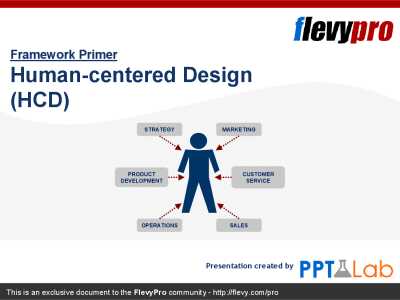
Human-centered design (HCD) is a management framework that takes into account the human perspective in all steps of the problem-solving process. When applied to business, HCD means to reshape the entire organization and its capabilities system around the Customer Experience. This includes [read more]
Do You Want to Implement Business Best Practices?
You can download in-depth presentations on User Experience and 100s of management topics from the FlevyPro Library. FlevyPro is trusted and utilized by 1000s of management consultants and corporate executives.
For even more best practices available on Flevy, have a look at our top 100 lists:
These best practices are of the same as those leveraged by top-tier management consulting firms, like McKinsey, BCG, Bain, and Accenture. Improve the growth and efficiency of your organization by utilizing these best practice frameworks, templates, and tools. Most were developed by seasoned executives and consultants with over 20+ years of experience.
Readers of This Article Are Interested in These Resources
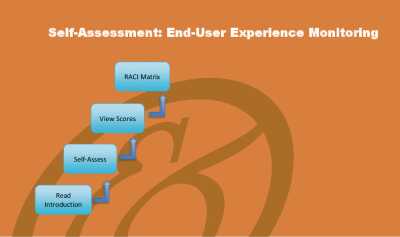
Save time, empower your teams and effectively upgrade your processes with access to this practical End-User Experience Monitoring Toolkit and guide. Address common challenges with best-practice templates, step-by-step work plans and maturity diagnostics for any End-User Experience Monitoring [read more]
A Kanban Board is a Lean & Agile Project Management tool used to implement Kanban to manage work at a personal or organizational level.
Kanban Boards visually depict work at various stages of a process using cards to represent work items and columns to represent each stage of the process. Cards [read more]
 Digital transformation is often discussed through technology: cloud migration, automation, AI adoption, data platforms, enterprise systems, and new digital channels. These investments are important, but they do not guarantee successful transformation on their own. A digital initiative only creates value when people can actually use it, trust it, and integrate it into their daily work.