 Every business depends on people, but some individuals carry significantly more responsibility, knowledge, and influence than others. They may lead major client relationships, generate a substantial share of revenue, oversee specialist operations, or provide the strategic direction that keeps the organization moving forward.
If one of those people becomes seriously ill or dies, the consequences can extend well beyond the personal tragedy. Projects may stall, customers may lose confidence, lenders may become concerned, and the business may face unexpected costs at exactly the point when its income is under pressure.
Key man insurance is designed to help address that risk. It is not a complete business protection strategy on its own, but it can play an important role in making a company more resilient.
What Is Key Man Insurance?
Key man insurance, also known as key person insurance, is a policy taken out by a business on the life or health of an individual whose contribution is considered critical to the company.
The business usually owns the policy, pays the premiums, and receives the payout if the insured person dies or suffers a qualifying serious illness, depending on the cover selected. The proceeds can then be used to manage the financial impact of their absence.
The “key person” does not have to be a director or shareholder. They could be:
- A founder whose expertise and reputation underpin the company
- A senior salesperson responsible for major accounts
- A technical specialist with rare or difficult-to-replace knowledge
- An operations leader who keeps essential processes running
- An employee whose relationships are central to winning or retaining business
The important question is not their job title. It is what would happen financially if they were suddenly unable to work.
Why the Loss of One Employee Can Create a Significant Financial Risk
Businesses often underestimate how much value is concentrated in particular people. A senior employee may influence revenue in ways that are not immediately visible on the balance sheet. They may have built trust with customers over many years, negotiated critical supplier arrangements, or made decisions that prevent costly mistakes.
Their departure can create several types of disruption.
Immediate Financial Pressure
Recruiting a replacement can be expensive, especially for highly specialized roles. The business may need to use external recruiters, increase salary offers, pay relocation costs, or invest in temporary support while the search is under way.
There may also be a period in which revenue falls. Customers could delay orders, move to competitors, or require reassurance before continuing their relationship with the company.
Loss of Knowledge and Relationships
Some knowledge is documented; much of it is not. A key employee may understand informal processes, customer preferences, technical systems, and commercial history that would take years for somebody else to develop.
This is particularly relevant in professional services, technology, manufacturing, construction, and other sectors where expertise and personal relationships form a large part of the company’s value.
Pressure from Lenders and Investors
If a business has borrowed money or is preparing to raise investment, the loss of a key individual may affect confidence in its ability to meet its obligations. A policy payout may provide useful liquidity, helping the company continue trading while it restructures or appoints a successor.
For companies assessing their wider risk exposure, specialist guidance on protection against the loss of a crucial employee can help clarify how key person cover may fit alongside other forms of business protection.
What Can a Payout Be Used For?
The proceeds from key man insurance are generally intended to support the business during a period of disruption. Their use will depend on the policy terms and the company’s circumstances, but possible applications include:
- Recruiting and training a replacement
- Covering temporary staff or consultancy costs
- Maintaining cash flow while revenue is affected
- Repaying or servicing business debt
- Reassuring customers, suppliers, and investors
- Funding a planned transition to new leadership
- Supporting the sale or restructuring of the business
This flexibility is important. The financial consequences of losing a key employee are rarely limited to one invoice or expense. A payout gives the company breathing space to make considered decisions instead of reacting under immediate financial pressure.
Key Man Insurance Is Part of a Wider Strategy
It is tempting to view insurance as the solution to every continuity risk. In reality, cover works best when combined with practical planning.
A business protection strategy should consider what happens if a key person dies, becomes critically ill, leaves unexpectedly, or is unavailable for an extended period. Different risks may require different responses.
For example, relevant measures could include:
Documenting Critical Knowledge
Encourage senior employees to record essential processes, account information, passwords, supplier details, and project histories in secure systems. This reduces dependence on one person’s memory and makes handovers more manageable.
Developing Internal Succession Plans
Identify potential successors for important roles and give them opportunities to gain experience. A succession plan does not need to be rigid, but it should address who could assume responsibility in the short and medium term.
Reviewing shareholder and Ownership Arrangements
Where key people also own shares in the business, shareholder protection may be appropriate. This can help remaining owners fund the purchase of shares if one shareholder dies, reducing the risk of ownership passing to an unsuitable or unknown party.
Checking Loan and Guarantee Obligations
Some business loans require life insurance or other protection arrangements. Business owners should understand whether existing policies are linked to specific debts and whether the level of cover remains adequate as borrowing changes.
How Much Cover Does a Business Need?
There is no universal formula. The appropriate level depends on the person’s financial contribution, the cost of replacing them, the likely revenue impact, outstanding liabilities, and the time needed to restore normal operations.
A useful assessment might ask:
- How much revenue or profit is directly connected to this individual?
- Which customer or supplier relationships could be affected?
- How difficult would recruitment be?
- How long might it take for a replacement to become effective?
- What debts or fixed costs would continue during the disruption?
- Would the business need to fund a strategic change in direction?
These figures should be reviewed regularly. A company that has grown, taken on new borrowing, or become more dependent on one individual may need to adjust its protection.
Tax treatment can also be complex. Whether premiums are tax-deductible and whether a payout is taxable may depend on the purpose of the policy, the structure of the business, and how the arrangement is documented. Professional financial and tax advice is therefore essential before putting cover in place.
A Practical Approach to Business Resilience
Key man insurance cannot replace leadership, knowledge, or customer trust. What it can do is provide financial capacity at a difficult moment, allowing a business to recruit, reorganize, and communicate with confidence.
The most effective approach is to begin with a risk assessment rather than a policy quotation. Identify the people whose absence could materially affect the company, estimate the likely financial impact, and then consider how insurance could complement succession planning, documentation, shareholder agreements, and emergency procedures.
Businesses do not have to predict every possible crisis. They do need to recognize where their greatest vulnerabilities lie. Protecting the organization against the sudden loss of a crucial employee is not simply an insurance decision; it is part of responsible continuity planning and long-term business management.
Do You Want to Implement Business Best Practices?
You can download in-depth presentations on Business Resilience and 100s of management topics from the FlevyPro Library. FlevyPro is trusted and utilized by 1000s of management consultants and corporate executives.
For even more best practices available on Flevy, have a look at our top 100 lists:
These best practices are of the same as those leveraged by top-tier management consulting firms, like McKinsey, BCG, Bain, and Accenture. Improve the growth and efficiency of your organization by utilizing these best practice frameworks, templates, and tools. Most were developed by seasoned executives and consultants with over 20+ years of experience.
Readers of This Article Are Interested in These Resources
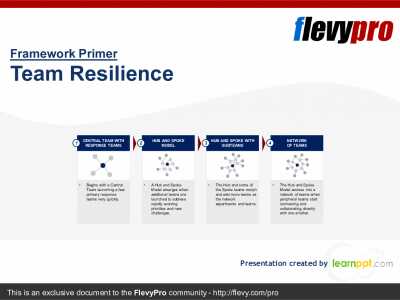
22-slide PowerPoint presentation
Uncertain times spur leaders to reflect on what kind of organization, culture, and operating model they need to put in place. This is to avoid returning to previous patterns of behavior and, instead, be able to embrace the next normal.
In this rapidly changing environment, people in
[read more]

75-slide PowerPoint presentation
ISO 22301:2019, Security and Resilience - Business Continuity Management System (BCMS), is an internationally recognized standard for organizations to implement and maintain effective business continuity plans, systems, and processes. This updated standard replaces the old ISO 22301:2012.
A
[read more]
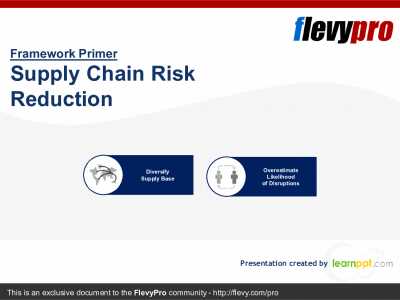
21-slide PowerPoint presentation
Through decades of Cost Cutting efforts, the Supply Chains of many organizations have become Lean and centralized--but, on the flip side, fragile and non-resilient. Lower costs have come at the price of higher risk.
The unparalleled disruption to global Supply Chains caused by COVID-19 has
[read more]
1264-slide PowerPoint presentation
Curated by McKinsey-trained Executives
Enhance Your Business with the Ultimate Operational Resilience Toolkit
In today's unpredictable and fast-paced business environment, operational resilience has become a critical aspect of any organization's success. Organizations face multiple
[read more]