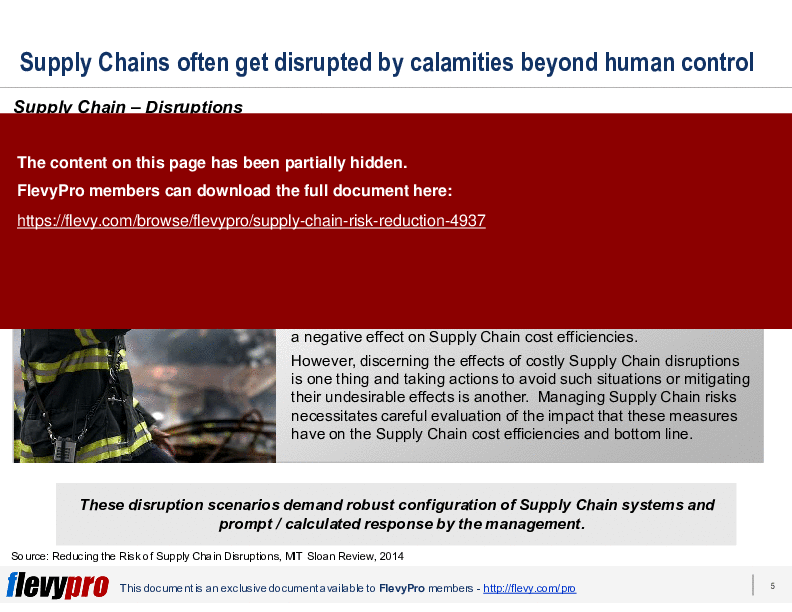

Through decades of Cost Cutting efforts, the Supply Chains of many organizations have become Lean and centralized—but, on the flip side, fragile and non-resilient. Lower costs have come at the price of higher risk.
The unparalleled disruption to global Supply Chains caused by COVID-19 has reminded us the necessity of Supply Chain Resilience and Supply Chain Risk Reduction.
As alluded to, the strategies to enhance the readiness level of Supply Chains and to reduce risks associated with disruption come with a price. These costs are critical to building the Supply Chain Resilience. However, they are considered a hindrance in the implementation of Risk Reduction Strategies by many leaders and thus preclude them from anticipating and managing Supply Chain Risks.
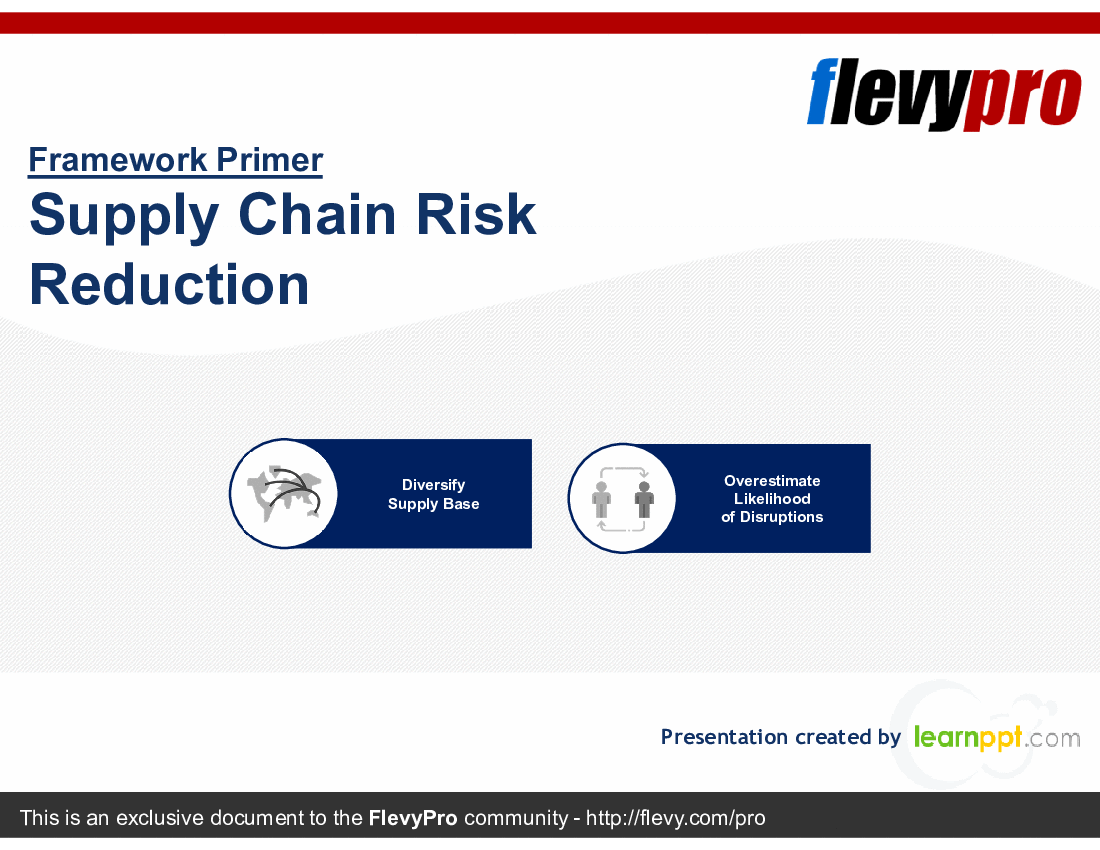
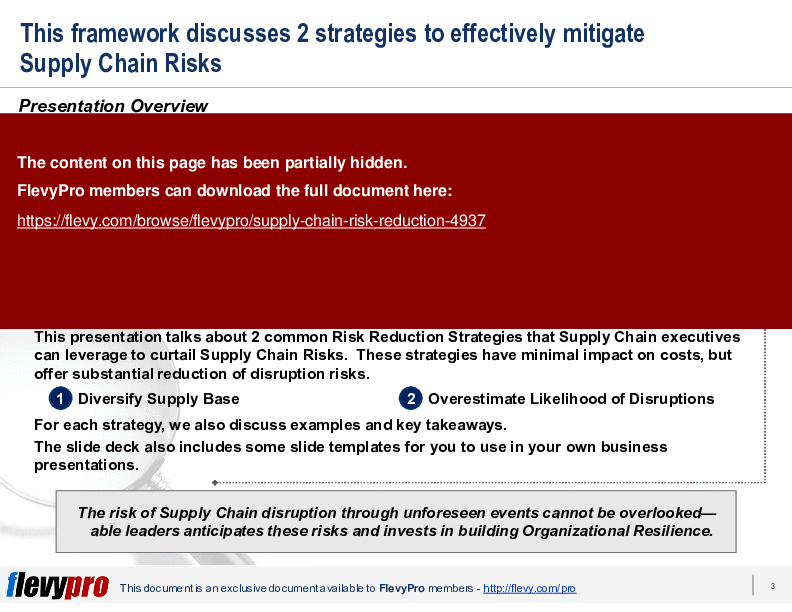
This presentation talks about 2 common Risk Reduction Strategies that Supply Chain executives can leverage to curtail Supply Chain Risks. These strategies have minimal impact on costs, but offer substantial reduction of disruption risks.
1. Diversify Supply Base
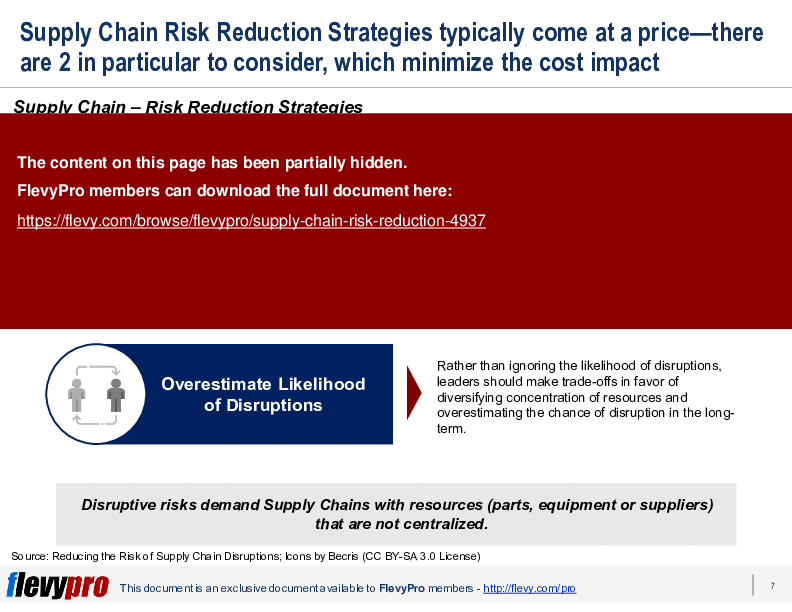
2. Overestimate Likelihood of Disruptions
For each strategy, we also discuss examples and key takeaways.
The slide deck also includes some slide templates for you to use in your own business presentations.
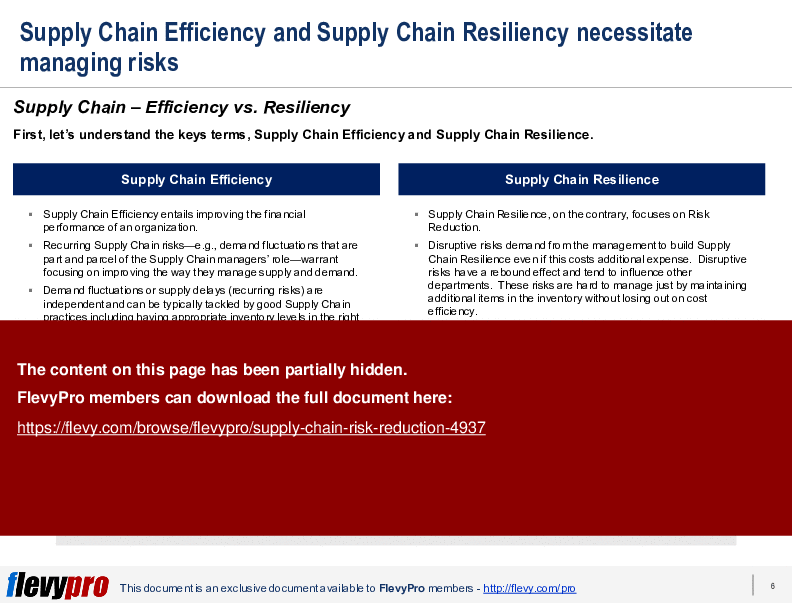
This PPT delves into the critical balance between Supply Chain Efficiency and Resilience. It provides a detailed comparison of the two, highlighting how efficiency focuses on cost reduction and performance improvement while resilience emphasizes risk reduction and preparedness for disruptive events. The presentation underscores the importance of not over-centralizing resources, which can lead to increased fragility and higher costs in the event of disruptions.
The framework also includes practical examples and case studies, illustrating how leading organizations have successfully implemented these strategies. It offers actionable insights and templates that can be customized for your specific business needs. This resource is indispensable for executives looking to fortify their supply chains against unforeseen disruptions while maintaining cost-effectiveness.
Got a question about this document? Email us at flevypro@flevy.com.
Executive Summary
The Supply Chain Risk Reduction presentation provides a strategic framework for mitigating risks in supply chains, emphasizing the importance of resilience in the face of disruptions. This deck outlines 2 primary strategies: diversifying the supply base and overestimating the likelihood of disruptions. By adopting these strategies, executives can enhance their organizations' readiness and reduce the potential impact of unforeseen events. The presentation includes actionable insights, case studies, and templates to facilitate implementation in various business contexts.
Who This Is For and When to Use
• Supply Chain Executives responsible for risk management and operational resilience.
• Procurement Managers focused on supplier diversification and risk mitigation.
• Operations Leaders aiming to enhance supply chain robustness against disruptions.
• Risk Management Professionals tasked with evaluating and managing supply chain vulnerabilities.
Best-fit moments to use this deck:
• During strategic planning sessions focused on supply chain resilience.
• When assessing current supplier relationships and diversification strategies.
• In workshops aimed at developing risk management frameworks for supply chains.
• For training sessions on best practices in supply chain risk reduction.
Learning Objectives
• Define the key concepts of supply chain resilience and risk reduction.
• Build a diversified supply base to mitigate disruption risks.
• Establish a framework for overestimating the likelihood of disruptions.
• Analyze case studies to identify successful risk management strategies.
• Create actionable plans to implement risk reduction strategies in supply chains.
• Evaluate the cost implications of various supply chain configurations.
Table of Contents
• Overview (page 3)
• Supply Chain (page 5)
• 1. Diversify Supply Base (page 9)
• 2. Overestimate Likelihood of Disruptions (page 13)
• Templates (page 17)
Primary Topics Covered
• Overview of Supply Chain Risks - Discusses the critical need for resilience in supply chains and the impact of disruptions on businesses.
• Diversify Supply Base - Highlights the importance of having multiple suppliers to reduce vulnerability and enhance operational flexibility.
• Overestimate Likelihood of Disruptions - Encourages organizations to prepare for potential disruptions by investing in contingency plans.
• Case Studies - Provides real-world examples of companies that successfully implemented risk reduction strategies.
• Cost-Benefit Analysis - Evaluates the trade-offs between cost efficiency and risk mitigation in supply chain management.
• Templates for Implementation - Offers practical tools and templates for organizations to apply the strategies discussed.
Deliverables, Templates, and Tools
• Risk assessment templates for evaluating supply chain vulnerabilities.
• Frameworks for developing a diversified supplier strategy.
• Guidelines for estimating the likelihood of disruptions.
• Case study summaries for reference in strategic discussions.
• Action plans for implementing risk reduction strategies.
• Presentation slides for internal training on supply chain resilience.
Slide Highlights
• Overview slide detailing the necessity of supply chain resilience.
• Case study slide featuring Toyota's experience with supplier reliance.
• Visual representation of the trade-offs between centralization and decentralization in supply chains.
• Summary slide of key takeaways from the risk reduction strategies.
• Template slide for organizations to customize their risk management plans.
Potential Workshop Agenda
Introduction to Supply Chain Risks (30 minutes)
• Overview of supply chain vulnerabilities and the need for resilience.
• Discussion on recent disruptions and their impacts on businesses.
Diversification Strategy Session (60 minutes)
• Identify current supplier relationships and potential gaps.
• Develop a plan for diversifying the supply base.
Disruption Likelihood Assessment (45 minutes)
• Analyze historical data on supply chain disruptions.
• Create a framework for estimating disruption probabilities.
Action Planning and Next Steps (30 minutes)
• Outline immediate actions for implementing risk reduction strategies.
• Assign responsibilities and set timelines for follow-up.
Customization Guidance
• Tailor the risk assessment templates to reflect your organization's specific supply chain dynamics.
• Adjust the case studies to include relevant examples from your industry.
• Modify the action plans to align with your organization's strategic goals and timelines.
• Incorporate internal metrics and terminology into the frameworks for clarity and relevance.
Secondary Topics Covered
• The role of technology in enhancing supply chain resilience.
• Strategies for managing supplier relationships during disruptions.
• Best practices for communication and coordination in crisis situations.
• The impact of global events on supply chain risk management.
• Continuous improvement methodologies for supply chain processes.
Topic FAQ
Document FAQ
These are questions addressed within this presentation.
What are the key strategies for reducing supply chain risks?
The primary strategies include diversifying the supply base and overestimating the likelihood of disruptions to enhance resilience.
How can organizations assess their current supply chain vulnerabilities?
Organizations can use risk assessment templates to evaluate supplier relationships, inventory levels, and potential disruption scenarios.
What are the benefits of diversifying the supply base?
Diversifying suppliers reduces reliance on single sources, mitigates risks associated with disruptions, and enhances operational flexibility.
Why is it important to overestimate the likelihood of disruptions?
Overestimating disruptions encourages organizations to invest in contingency plans, which can save significant costs in the event of an actual disruption.
How can case studies help in implementing risk reduction strategies?
Case studies provide practical examples of successful strategies, helping organizations learn from others' experiences and apply similar approaches.
What tools are available for implementing these strategies?
The presentation includes templates and frameworks that organizations can customize for their specific needs and contexts.
How do cost implications affect risk reduction strategies?
Organizations must balance the costs of implementing risk reduction strategies with the potential savings from avoiding disruptions.
What role does technology play in enhancing supply chain resilience?
Technology can provide real-time data, improve communication, and facilitate better decision-making during disruptions.
Glossary
• Supply Chain Resilience - The ability of a supply chain to prepare for and respond to disruptions.
• Diversification - The strategy of using multiple suppliers to reduce risk.
• Risk Assessment - The process of identifying and evaluating risks in the supply chain.
• Contingency Plan - A predefined strategy for responding to potential disruptions.
• Centralization - The concentration of resources in fewer locations to improve efficiency.
• Decentralization - The distribution of resources across multiple locations to enhance resilience.
• Cost Efficiency - The effectiveness of a supply chain in minimizing costs while maintaining performance.
• Supplier Relationship Management - The process of managing interactions with suppliers to optimize performance.
• Disruption - An unforeseen event that interrupts the normal flow of goods and services.
• Operational Flexibility - The ability of a supply chain to adapt to changes in demand or supply.
• Inventory Management - The process of overseeing and controlling inventory levels to meet customer demand.
• Supply Chain Dynamics - The interactions and relationships within a supply chain that affect its performance.
• Risk Mitigation - Strategies implemented to reduce the impact of potential risks.
• Business Continuity - The ability to maintain essential functions during and after a disruption.
• Supply Chain Vulnerability - The susceptibility of a supply chain to disruptions and risks.
• Cost-Benefit Analysis - A process for comparing the costs and benefits of different strategies.
• Crisis Management - The strategies and processes used to respond to emergencies and disruptions.
• Operational Efficiency - The ability to deliver products and services with minimal waste and maximum productivity.
• Supplier Diversity - The practice of sourcing from a variety of suppliers to enhance competition and innovation.
• Risk Management Framework - A structured approach to identifying, assessing, and mitigating risks in the supply chain.
Source: Best Practices in Supply Chain Management, Risk Management, Business Resilience PowerPoint Slides: Supply Chain Risk Reduction PowerPoint (PPTX) Presentation Slide Deck, LearnPPT Consulting
Did you need more documents?
Consider a FlevyPro subscription from $39/month. View plans here.
For $10.00 more, you can download this document plus 2 more FlevyPro documents. That's just $13 each.
|
Receive our FREE presentation on Operational Excellence
This 50-slide presentation provides a high-level introduction to the 4 Building Blocks of Operational Excellence. Achieving OpEx requires the implementation of a Business Execution System that integrates these 4 building blocks. |