
Supply Chain Resilience   23-slide PPT PowerPoint presentation slide deck (PPTX)
$29.00

Supply Chain Resilience (23-slide PPT PowerPoint presentation slide deck (PPTX)) Preview Image
Log in to unlock full preview.
Supply Chain Resilience (23-slide PPT PowerPoint presentation slide deck (PPTX)) Preview Image
Arrow   Click main image to view in full screen.

Supply Chain Resilience (PowerPoint PPTX Slide Deck)

PowerPoint (PPTX) 23 Slides FlevyPro Document

#3 in Supply Chain Analysis $29.00
FlevyPro price: FREE (included in subscription)
This framework is developed by a team of former McKinsey and Big 4 consultants. The presentation follows the headline-body-bumper slide format used by global consulting firms.
Add to Cart


Immediate download
Free lifetime updates

SUPPLY CHAIN ANALYSIS PPT DESCRIPTION

Editor Summary A 23-slide PowerPoint presentation titled Supply Chain Resilience that delivers a five-step methodology to improve supply chain robustness: identify strategic objectives, map vulnerabilities, integrate risk awareness into design, monitor resiliency, and track warning signs. Read more

Supply Chain "resilience" is the Supply Chain's ability to respond and recover quickly to potential disruptions. It can return to its original situation or grow by moving to a new, more desirable state in order to increase customer service, market share, and financial performance.

Resilience is currently an increasing concern in Supply Chain caused by globalization and, most recently, the COVID-19 pandemic. Our Supply Chain is globally being subject to diverse types of disturbances. The largest disruption to global Supply Chains in modern history is the 2020 COVID-19 pandemic, followed by the 2011 earthquake and tsunami in Japan. With the rising level of logistical complexity, the resiliency of the Supply Chain has not kept pace. These disturbances need to be handled in the right way, compelling the use of tools and approaches that can support resilient Supply Chain decisions.

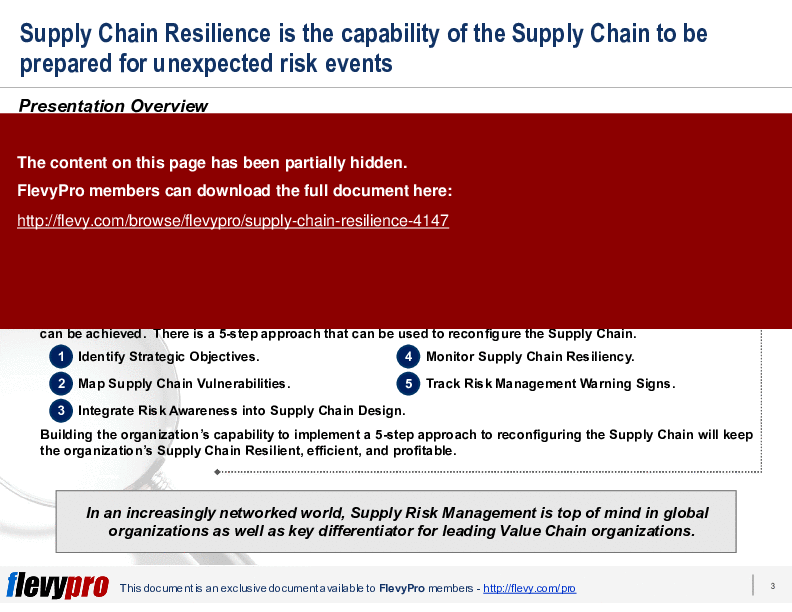
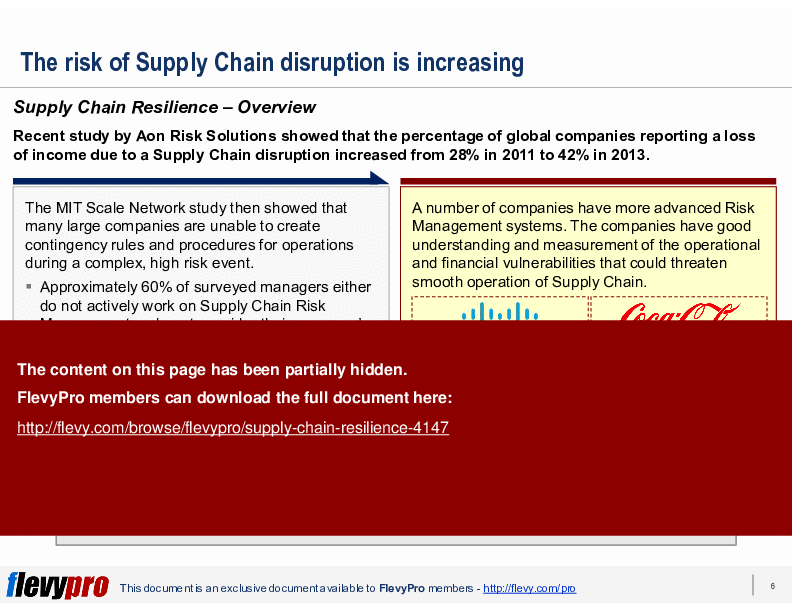
In an increasingly networked world, Supply Risk Management is top of mind in global organizations as well as key differentiator for leading Value Chain organizations.

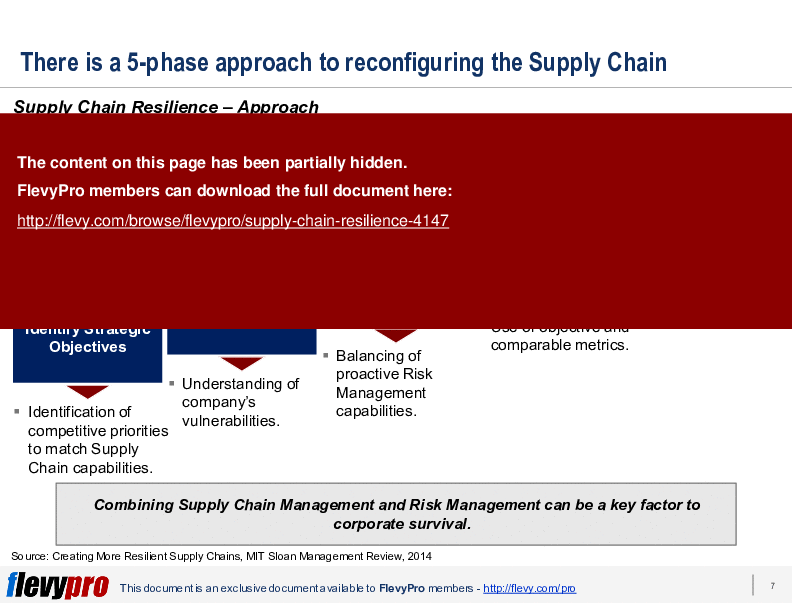
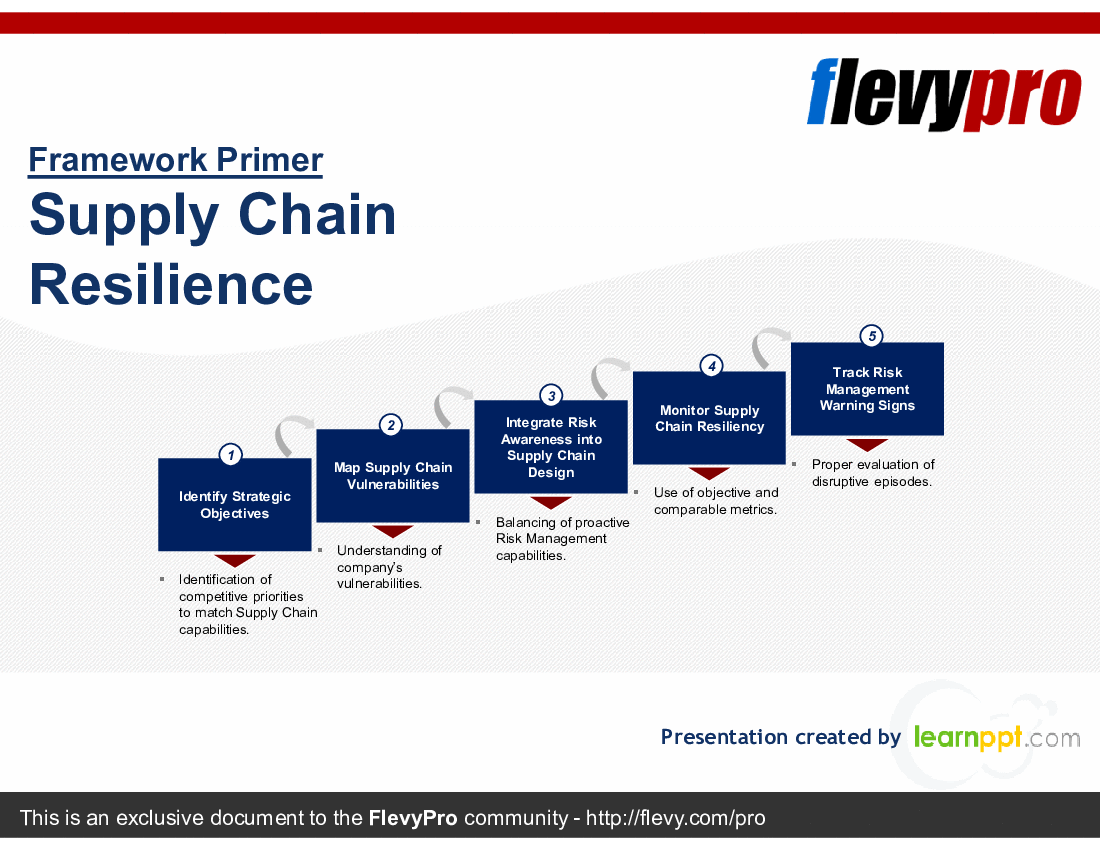
This presentation provides businesses the essential approach to improving Supply Chain Resilience. Through proper understanding and planning of increased risks of disruptions from events, reconfiguring of Supply Chain can be achieved. There is a 5-step approach that can be used to reconfigure the Supply Chain.

1. Identify Strategic Objectives.
2. Map Supply Chain Vulnerabilities.
3. Integrate Risk Awareness into Supply Chain Design.
4. Monitor Supply Chain Resiliency.
5. Track Risk Management Warning Signs.

Building the organization's capability to implement a 5-step approach to reconfiguring the Supply Chain will keep the organization's Supply Chain Resilient, efficient, and profitable.

This deck also includes slide templates for you to use within your own business presentations.

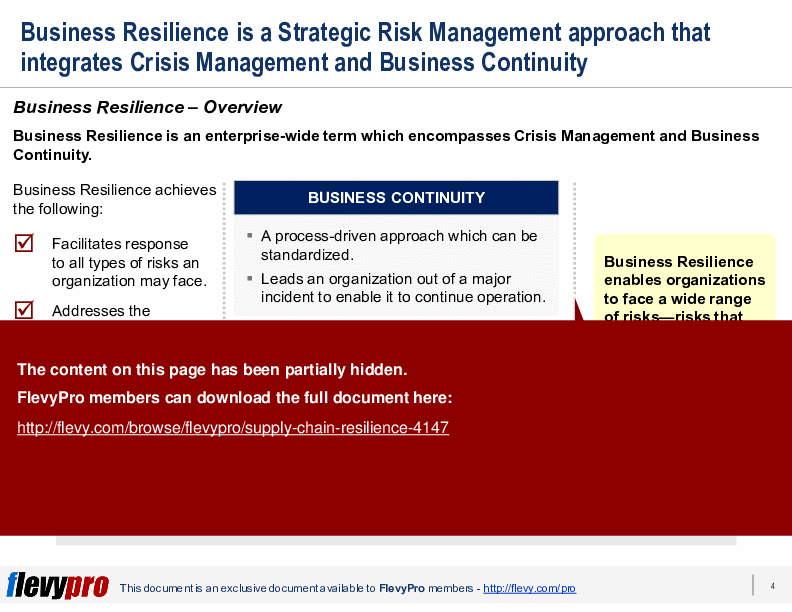
The PPT delves into the strategic integration of Crisis Management and Business Continuity, enabling organizations to face a wide range of risks. It highlights the increasing risk of Supply Chain disruptions and provides a comprehensive approach to mitigate these challenges.

Got a question about this document? Email us at flevypro@flevy.com.

MARCUS OVERVIEW

This synopsis was written by Marcus [?] based on the analysis of the full 23-slide presentation.


Executive Summary
The Supply Chain Resilience presentation provides a structured approach to enhancing supply chain robustness against unexpected disruptions. It outlines a five-step methodology designed to identify strategic objectives, map vulnerabilities, integrate risk awareness, monitor resilience, and track risk management warning signs. This framework is essential for organizations aiming to improve operational efficiency, customer service, and financial performance in an increasingly complex global environment.

Who This Is For and When to Use
•  Supply Chain Managers focused on risk management and operational continuity
•  Business Continuity Planners responsible for crisis management strategies
•  Operations Executives looking to enhance supply chain efficiency
•  Risk Management Professionals seeking frameworks for proactive risk assessment

Best-fit moments to use this deck:
•  During strategic planning sessions to align supply chain capabilities with business objectives
•  When assessing vulnerabilities in existing supply chain frameworks
•  In crisis management workshops to develop actionable resilience strategies
•  For training sessions aimed at integrating risk awareness into supply chain design

Learning Objectives
•  Define the concept of supply chain resilience and its importance in modern business
•  Identify strategic objectives that align supply chain capabilities with competitive priorities
•  Map vulnerabilities within the supply chain to enhance responsiveness
•  Integrate risk awareness into supply chain design for proactive management
•  Monitor supply chain resiliency using objective and comparable metrics
•  Track risk management warning signs to prepare for disruptive events

Table of Contents
•  Overview (page 3)
•  Supply Chain Resilience (page 3)
•  Phases to Supply Chain Resilience (page 7)
•  Templates (page 18)

Primary Topics Covered
•  Supply Chain Resilience - The capability of a supply chain to prepare for and recover from unexpected risk events.
•  Phases to Supply Chain Resilience - A five-step approach including identifying strategic objectives, mapping vulnerabilities, integrating risk awareness, monitoring resiliency, and tracking warning signs.
•  Risk Management Practices - Best practices for integrating risk management into supply chain operations.
•  Crisis Management - Strategies for responding to and recovering from disruptive incidents.
•  Business Continuity Planning - Frameworks for ensuring operational continuity during crises.
•  Case Studies - Real-world examples, including Cisco's response to disasters, illustrating effective supply chain resilience strategies.

Deliverables, Templates, and Tools
•  Strategic objectives identification template for aligning supply chain capabilities
•  Vulnerability mapping framework to assess supply chain weaknesses
•  Risk awareness integration checklist for proactive supply chain design
•  Monitoring metrics index for evaluating supply chain resiliency
•  Risk management warning signs assessment tool
•  Crisis management playbook template for responding to disruptions

Slide Highlights
•  Overview of the five-step approach to supply chain resilience
•  Detailed mapping of supply chain vulnerabilities
•  Integration of risk awareness into supply chain design
•  Monitoring systems for assessing supply chain resiliency
•  Case study on Cisco’s effective response to supply chain disruptions

Potential Workshop Agenda
Supply Chain Resilience Overview (60 minutes)
•  Discuss the importance of supply chain resilience
•  Review the five-step approach to enhancing resilience

Vulnerability Mapping Session (90 minutes)
•  Identify and map vulnerabilities in current supply chain frameworks
•  Develop mitigation strategies for identified vulnerabilities

Risk Management Integration Workshop (90 minutes)
•  Explore methods for integrating risk awareness into supply chain design
•  Create actionable plans for monitoring and tracking risk management

Customization Guidance
•  Tailor strategic objectives to align with specific organizational goals
•  Adapt vulnerability mapping frameworks to reflect unique supply chain structures
•  Modify monitoring metrics to suit industry-specific requirements
•  Incorporate organizational terminology into risk management templates

Secondary Topics Covered
•  The impact of globalization on supply chain resilience
•  Strategies for enhancing flexibility in supply chain operations
•  The role of technology in monitoring supply chain performance
•  Best practices for stakeholder communication during crises

Topic FAQ

What are the typical phases of a supply chain resilience program?

A common resilience program follows a phased approach: define strategic objectives, map supply-chain vulnerabilities, integrate risk awareness into design, monitor resiliency continuously, and track early warning signs of disruption. The Supply Chain Resilience deck organizes these into a five-step methodology.

How should my team map supply chain vulnerabilities?

Mapping vulnerabilities involves identifying weak nodes, single-source suppliers, logistical chokepoints, and recovery time exposures, then scoring and prioritizing risks. Use structured workshops and visual mapping to capture dependencies; Flevy's Supply Chain Resilience provides a vulnerability mapping framework to guide the process.

Which metrics effectively monitor supply chain resiliency?

Effective resiliency metrics measure recovery speed and supplier reliability: time-to-recover assessments, supplier performance evaluations, fill-rate or service-level indicators, and trend-based efficiency measures. The presentation includes a monitoring metrics index to standardize comparable resiliency measurements.

How can risk awareness be integrated into supply chain design?

Integrate risk awareness by embedding scenario planning, redundancy and flexibility requirements, supplier risk assessments, and decision triggers into design specifications. Document design choices and control points so teams can act proactively; the deck offers a risk awareness integration checklist to support this work.

What should buyers look for when choosing a supply chain resilience toolkit?

Buyers should seek a clear methodology, practical templates for objectives and vulnerability mapping, monitoring metrics, a warning-signs assessment, and a crisis-playbook for response exercises. A useful kit also includes case examples to illustrate application, such as a crisis management playbook template.

How do I structure a workshop to improve supply chain resilience?

A practical workshop agenda begins with a resilience overview (about 60 minutes), followed by a vulnerability mapping session (around 90 minutes) to identify gaps, and a risk-management integration workshop (90 minutes) to create monitoring and response plans; the deck supplies slide templates and timed agenda items.

What methods help track early warning signs of supply-chain disruption?

Establish a monitoring framework that aggregates supplier signals, logistics KPIs, market indicators, and exception reports; define thresholds for escalation and reactive playbooks. Use structured assessments to score and track warning signs over time, such as a risk management warning-signs assessment tool.

Which case studies illustrate effective supply chain resilience actions?

Case studies that show proactive planning and rapid response are most useful; the deck highlights Cisco's responses to disasters as an example of combining crisis management, supplier coordination, and resilient design choices, with practical lessons drawn from that example.

Document FAQ
These are questions addressed within this presentation.

What is supply chain resilience?
Supply chain resilience refers to the ability of a supply chain to prepare for, respond to, and recover from unexpected disruptions, ensuring continuity of operations.

Why is mapping vulnerabilities important?
Mapping vulnerabilities helps organizations identify weaknesses in their supply chain, allowing them to implement targeted strategies to enhance resilience and responsiveness.

How can risk awareness be integrated into supply chain design?
Risk awareness can be integrated by proactively identifying potential disruptions and designing supply chain processes that include built-in resiliency measures.

What metrics should be used to monitor supply chain resiliency?
Metrics should include time-to-recover assessments, supplier performance evaluations, and overall supply chain efficiency indicators.

How can organizations track risk management warning signs?
Organizations can track warning signs by establishing a framework for evaluating disruptive episodes and implementing reactive tools to respond effectively.

What role does crisis management play in supply chain resilience?
Crisis management is essential for preparing organizations to respond to and recover from disruptions, ensuring minimal impact on operations.

Can you provide examples of companies with effective supply chain resilience strategies?
Cisco is highlighted as a case study for its proactive measures in enhancing supply chain resilience, particularly in response to natural disasters.

What are the key components of a business continuity plan?
Key components include risk assessment, crisis response strategies, communication plans, and recovery procedures to ensure operational continuity during disruptions.

Glossary
•  Supply Chain Resilience - The ability of a supply chain to prepare for and recover from disruptions.
•  Risk Management - The process of identifying, assessing, and mitigating risks.
•  Crisis Management - Strategies for responding to and managing crises.
•  Business Continuity - Planning to ensure critical business functions continue during and after a disaster.
•  Vulnerability Mapping - The process of identifying weaknesses in a supply chain.
•  Monitoring Metrics - Measurements used to assess the performance and resilience of a supply chain.
•  Proactive Measures - Actions taken to prevent disruptions before they occur.
•  Reactive Tools - Tools used to respond to disruptions as they happen.
•  Stakeholder Communication - The process of informing and engaging stakeholders during crises.
•  Operational Continuity - The ability to maintain essential functions during a disruption.
•  Recovery Procedures - Steps taken to restore operations after a disruption.
•  Supply Chain Design - The planning and structuring of supply chain processes and components.
•  Performance Evaluation - Assessing the effectiveness of supply chain operations.
•  Disruptive Episodes - Events that significantly impact supply chain operations.
•  Risk Assessment - The process of identifying and evaluating risks.
•  Crisis Response - Actions taken to address and manage a crisis situation.
•  Resiliency Planning - Developing strategies to enhance supply chain resilience.
•  Operational Efficiency - The ability to deliver products and services effectively with minimal waste.
•  Flexibility - The capacity to adapt to changes and disruptions in the supply chain.
•  Globalization - The increasing interconnectedness of economies and supply chains worldwide.
•  Supply Chain Dynamics - The interactions and relationships within a supply chain.

SUPPLY CHAIN ANALYSIS PPT SLIDES

Strategic Blueprint for Strengthening Supply Chain Resilience

Proactive Risk Management in Supply Chain Disruptions

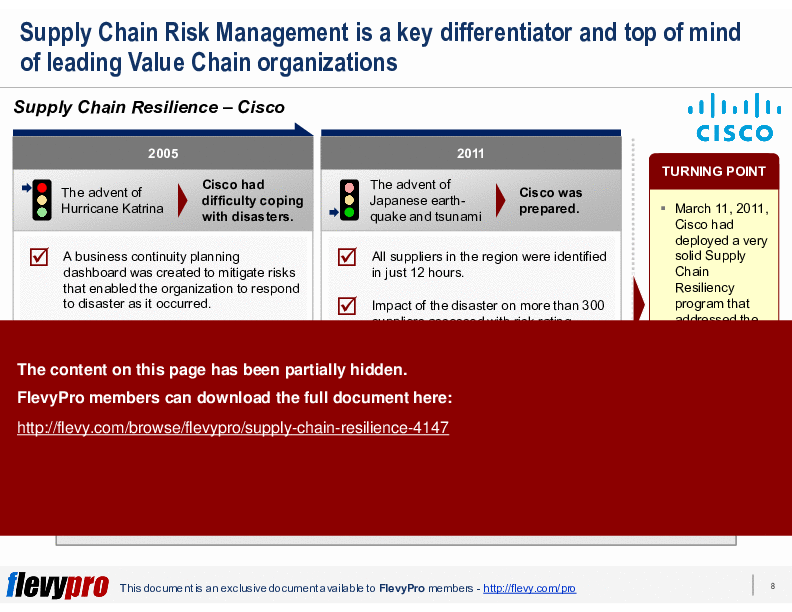
Cisco's Evolution in Supply Chain Risk Management

Enhancing Supply Chain Resiliency through Strategic Design

Identifying Vulnerabilities in Supply Chain Operations

Source: Best Practices in Supply Chain Management, Risk Management, Business Resilience PowerPoint Slides: Supply Chain Resilience PowerPoint (PPTX) Presentation Slide Deck, LearnPPT Consulting


$29.00
FlevyPro price: FREE (included in subscription)
This framework is developed by a team of former McKinsey and Big 4 consultants. The presentation follows the headline-body-bumper slide format used by global consulting firms.
Add to Cart
  

Did you need more documents?

Consider a FlevyPro subscription from $39/month. View plans here.

For $10.00 more, you can download this document plus 2 more FlevyPro documents. That's just $13 each.

ABOUT FLEVYPRO

This document is part of the FlevyPro Library, a curated knowledge base of documents for our FlevyPro subscribers.

FlevyPro is a subscription service for on-demand business frameworks and analysis tools. FlevyPro subscribers receive access to an exclusive library of curated business documents—business framework primers, presentation templates, Lean Six Sigma tools, and more—among other exclusive benefits.

Click here to learn more about FlevyPro and its benefits.

Did you know?
The average daily rate of a McKinsey consultant is $6,625 (not including expenses). The average price of a Flevy document is $65.


Trusted by over 10,000+ Client Organizations
Since 2012, we have provided business templates to over 10,000 businesses and organizations of all sizes, from startups and small businesses to the Fortune 100, in over 130 countries.
AT&T GE Cisco Intel IBM Coke Dell Toyota HP Nike Samsung Microsoft Astrazeneca JP Morgan KPMG Walgreens Walmart 3M Kaiser Oracle SAP Google E&Y Volvo Bosch Merck Fedex Shell Amgen Eli Lilly Roche AIG Abbott Amazon PwC T-Mobile Broadcom Bayer Pearson Titleist ConEd Pfizer NTT Data Schwab


Read Customer Testimonials

 
"One of the great discoveries that I have made for my business is the Flevy library of training materials.

As a Lean Transformation Expert, I am always making presentations to clients on a variety of topics: Training, Transformation, Total Productive Maintenance, Culture, Coaching, Tools, Leadership Behavior, etc. Flevy "

– Ed Kemmerling, Senior Lean Transformation Expert at PMG
 
"FlevyPro provides business frameworks from many of the global giants in management consulting that allow you to provide best in class solutions for your clients."

– David Harris, Managing Director at Futures Strategy
 
"Flevy.com has proven to be an invaluable resource library to our Independent Management Consultancy, supporting and enabling us to better serve our enterprise clients.

The value derived from our [FlevyPro] subscription in terms of the business it has helped to gain far exceeds the investment made, making a subscription a no-brainer for any growing consultancy – or in-house strategy team."

– Dean Carlton, Chief Transformation Officer, Global Village Transformations Pty Ltd.
 
"My FlevyPro subscription provides me with the most popular frameworks and decks in demand in today’s market. They not only augment my existing consulting and coaching offerings and delivery, but also keep me abreast of the latest trends, inspire new products and service offerings for my practice, and educate me "

– Bill Branson, Founder at Strategic Business Architects
 
"If you are looking for great resources to save time with your business presentations, Flevy is truly a value-added resource. Flevy has done all the work for you and we will continue to utilize Flevy as a source to extract up-to-date information and data for our virtual and onsite presentations!"

– Debbi Saffo, President at The NiKhar Group
 
"The wide selection of frameworks is very useful to me as an independent consultant. In fact, it rivals what I had at my disposal at Big 4 Consulting firms in terms of efficacy and organization."

– Julia T., Consulting Firm Owner (Former Manager at Deloitte and Capgemini)
 
"As a niche strategic consulting firm, Flevy and FlevyPro frameworks and documents are an on-going reference to help us structure our findings and recommendations to our clients as well as improve their clarity, strength, and visual power. For us, it is an invaluable resource to increase our impact and value."

– David Coloma, Consulting Area Manager at Cynertia Consulting
 
"[Flevy] produces some great work that has been/continues to be of immense help not only to myself, but as I seek to provide professional services to my clients, it gives me a large "tool box" of resources that are critical to provide them with the quality of service and outcomes they are expecting."

– Royston Knowles, Executive with 50+ Years of Board Level Experience


Customers Also Bought These Documents


Customers Also Like These Documents

Explore Templates on Related Management Topics


Your Recently Viewed Documents
Receive our FREE presentation on Operational Excellence

This 50-slide presentation provides a high-level introduction to the 4 Building Blocks of Operational Excellence. Achieving OpEx requires the implementation of a Business Execution System that integrates these 4 building blocks.