
The concept of Return on Investment (ROI) originated in the Manufacturing sector, where it's simple to measure time and output. Next to adopt the concept was the Banking industry, where it is used consistently. ROI calculation is now a common feature in every type, industry, and function of business.
Training necessitates spending a lot of effort and resources. Deliberating if the Training Program is going to be worth all its costs is a valid concern.
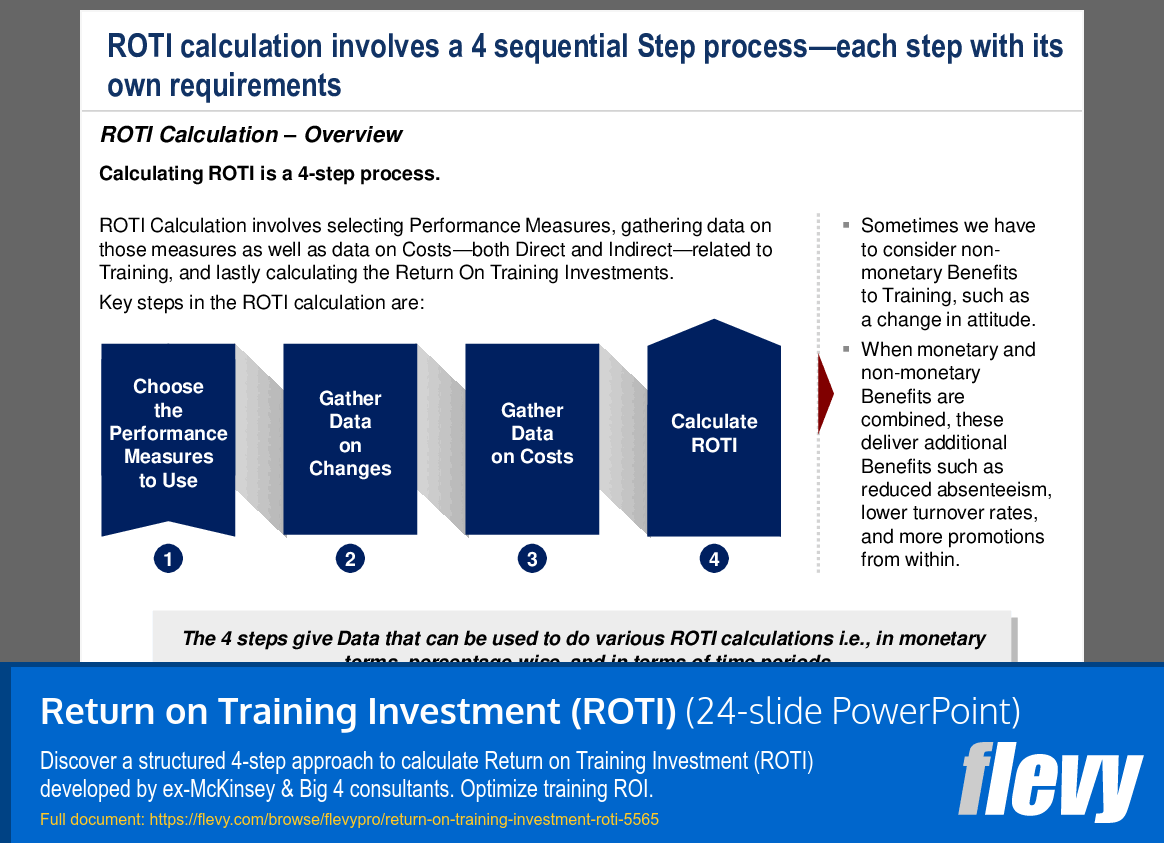
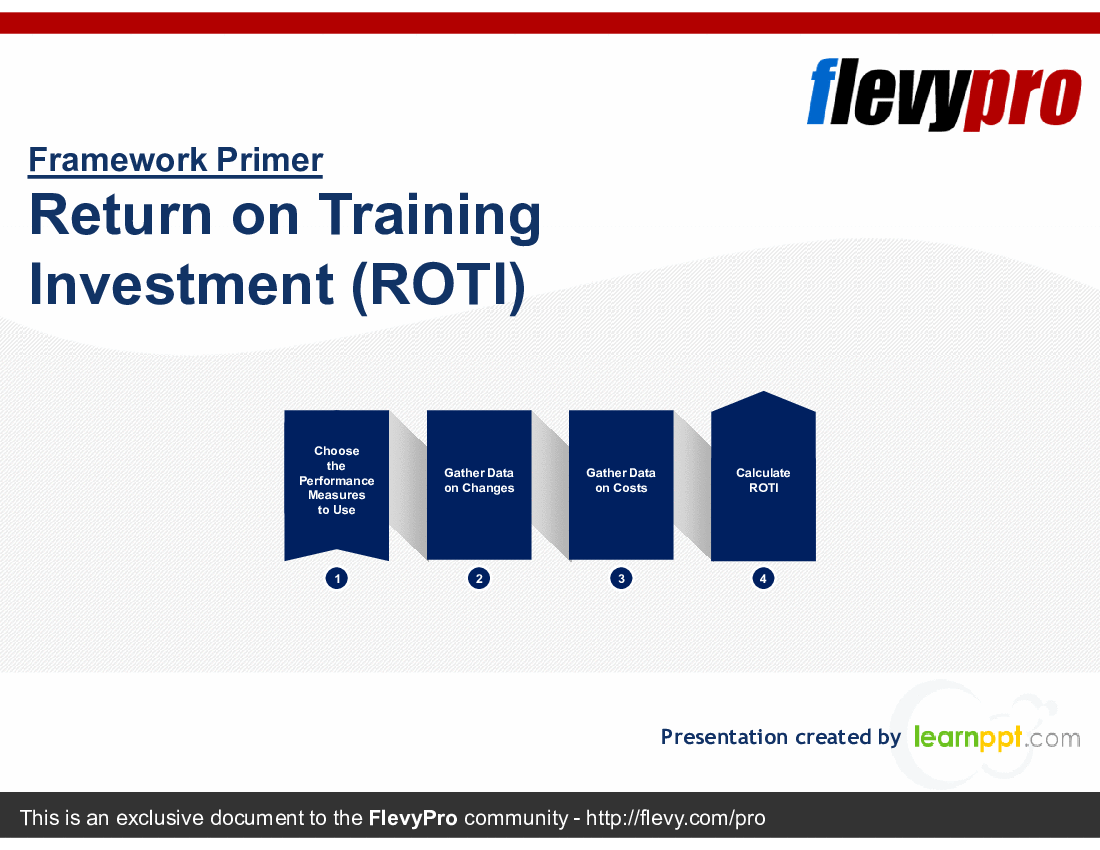
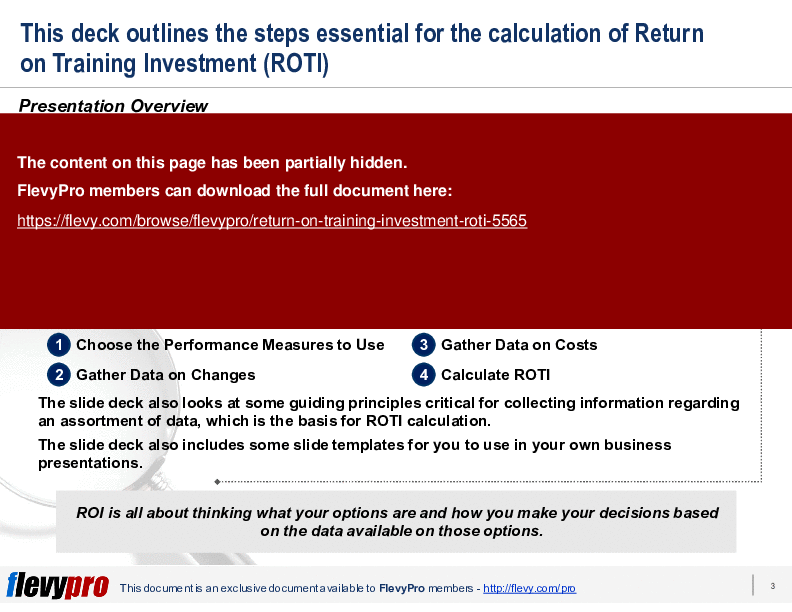
This presentation provides a detailed overview of the 4-step process for the calculation of Return on Training Investment (ROTI). This method of ROTI calculation is simple yet effective to ascertain the value derived—or failure to derive any financial benefits—from a Training Program. The 4-step of the ROTI calculation process are:
1. Choose the Performance Measures to Use
2. Gather Data on Changes
3. Gather Data on Costs
4. Calculate ROTI
The slide deck also looks at some guiding principles critical for collecting information regarding an assortment of data, which is the basis for ROTI calculation.
The slide deck also includes some slide templates for you to use in your own business presentations.
This comprehensive slide deck delves into the intricacies of calculating Return on Training Investment (ROTI), offering a structured 4-step approach to measure the financial impact of training programs. The methodology is designed to be straightforward yet robust, ensuring that executives can make informed decisions based on empirical data. The presentation also emphasizes the importance of selecting relevant performance measures, meticulous data gathering, and accurate cost classification, which are pivotal for a precise ROTI calculation.
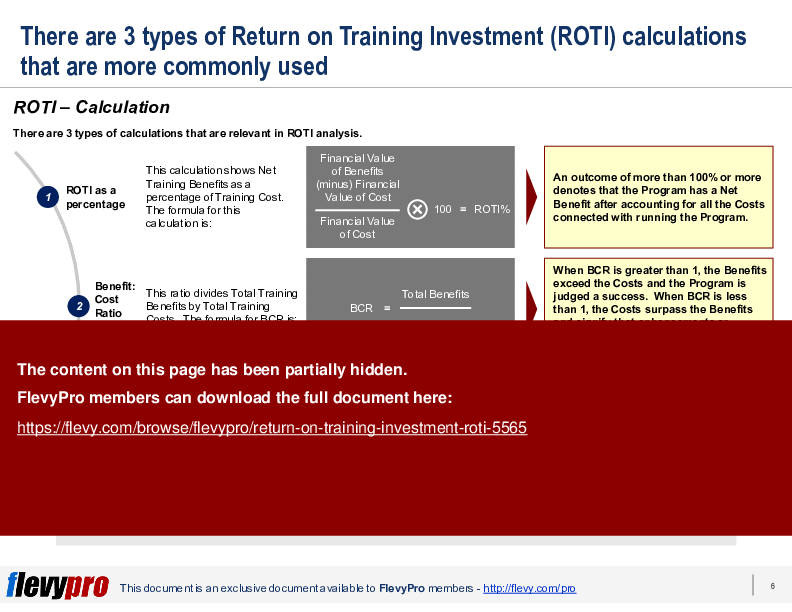
The PPT further explores various types of ROTI calculations, including percentage-based and benefit-cost ratio methods, providing clear formulas and practical examples. It highlights the significance of considering both monetary and non-monetary factors, such as training effectiveness and behavioral changes, in the analysis. The inclusion of slide templates facilitates customization for your specific business needs, making this an invaluable resource for any organization aiming to optimize its training investments.
Got a question about this document? Email us at flevypro@flevy.com.
Executive Summary
The Return on Training Investment (ROTI) presentation provides a structured, four-step approach to effectively calculate the ROTI, developed by experienced consultants from McKinsey and the Big Four. This framework is designed to help organizations assess the financial benefits derived from training programs against their associated costs. By implementing this methodology, corporate executives and training leaders can make informed decisions regarding training investments, ensuring that resources are allocated efficiently to maximize organizational performance.
Who This Is For and When to Use
• Corporate executives responsible for training budgets and ROI analysis
• Learning and development leaders tasked with evaluating training effectiveness
• HR professionals involved in training program design and assessment
• Finance teams analyzing the cost-effectiveness of training initiatives
Best-fit moments to use this deck:
• When planning new training initiatives to justify budget allocations
• During post-training evaluations to assess the impact on business performance
• In strategic discussions about ongoing training programs and their financial viability
Learning Objectives
• Define ROTI and its significance in evaluating training investments
• Identify appropriate performance measures for assessing training effectiveness
• Gather and analyze data on training costs and performance changes
• Calculate ROTI using established formulas and methodologies
• Communicate ROTI findings to stakeholders effectively
• Utilize ROTI analysis to inform future training decisions and strategies
Table of Contents
• Overview (page 3)
• ROTI (page 5)
• Key Questions (page 8)
• ROTI Calculation (page 13)
• Templates (page 20)
Primary Topics Covered
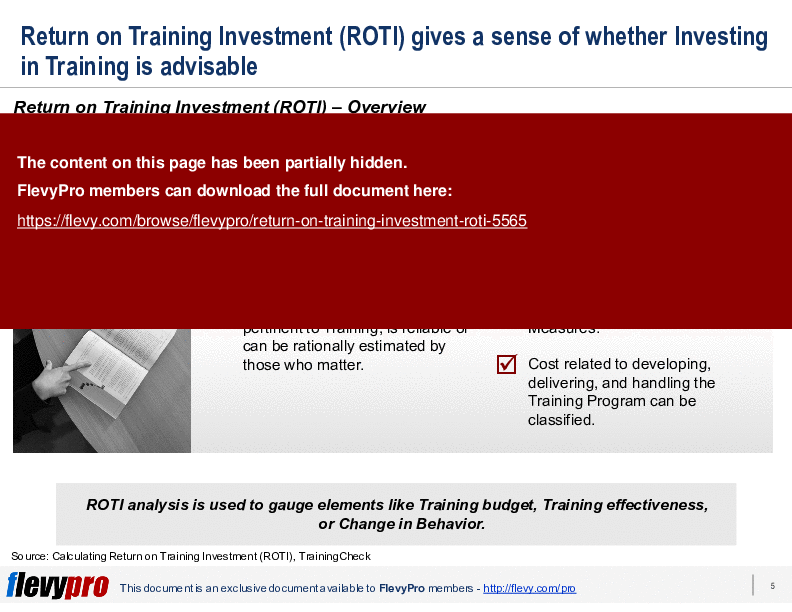
• ROTI Overview - ROTI compares the financial benefits of a training program against its total costs, helping organizations determine the value of their training investments.
• ROTI Calculation Process - A detailed, four-step process that includes selecting performance measures, gathering data on changes, collecting cost data, and calculating ROTI.
• Performance Measures - Identifying relevant metrics such as productivity rates, employee turnover, and customer satisfaction that can be attributed to training.
• Cost Classification - Understanding how to categorize training costs into direct and indirect expenses, ensuring comprehensive analysis.
• Data Gathering Techniques - Strategies for collecting reliable data on training outcomes and financial impacts, including stakeholder engagement.
• ROTI Communication - Techniques for presenting ROTI findings to stakeholders in a clear and impactful manner.
Deliverables, Templates, and Tools
• ROTI calculation templates for consistent application across training programs
• Performance measures checklist to guide the selection of relevant metrics
• Data collection plan template for organizing and tracking information gathering
• Cost classification framework to ensure comprehensive cost analysis
• Presentation slides for communicating ROTI findings to stakeholders
Slide Highlights
• Overview of the ROTI calculation process, outlining the 4 key steps
• Detailed breakdown of performance measures relevant to training evaluation
• Visual representation of cost classifications and their implications for ROTI
• Examples of successful ROTI calculations and their impact on training decisions
Potential Workshop Agenda
Introduction to ROTI (30 minutes)
• Overview of ROTI and its importance
• Discussion on training investment challenges
ROTI Calculation Workshop (90 minutes)
• Step-by-step guide through the ROTI calculation process
• Group activity to identify performance measures relevant to participants' organizations
Data Gathering and Cost Analysis (60 minutes)
• Techniques for effective data collection
• Classifying training costs and their implications for ROTI
Customization Guidance
• Tailor performance measures to align with specific organizational goals and training objectives
• Adjust data collection plans to fit the unique context of each training program
• Modify cost classification frameworks to reflect organizational structures and accounting practices
Secondary Topics Covered
• Non-monetary benefits of training and their impact on ROTI
• The role of stakeholder engagement in successful ROTI analysis
• Challenges in distinguishing training impacts from other business factors
Topic FAQ
Document FAQ
These are questions addressed within this presentation.
What is ROTI?
ROTI stands for Return on Training Investment, a metric used to evaluate the financial benefits of training programs against their costs.
How is ROTI calculated?
ROTI is calculated by comparing the financial benefits derived from training to the total costs associated with delivering that training.
What performance measures should I use?
Performance measures can include productivity rates, employee turnover, customer satisfaction, and other metrics relevant to the training objectives.
Why is data gathering important for ROTI?
Accurate data gathering ensures that the ROTI calculation reflects true training impacts, allowing for informed decision-making regarding future training investments.
What types of costs should be included in ROTI calculations?
Costs should be classified as either direct (e.g., training materials, facilitator fees) or indirect (e.g., employee time away from work), ensuring a comprehensive analysis.
How can I communicate ROTI findings effectively?
Use clear visuals and straightforward language to present ROTI findings, focusing on the implications for training investments and organizational performance.
What are the common challenges in ROTI analysis?
Challenges include accurately attributing performance changes to training, gathering reliable data, and ensuring stakeholder engagement throughout the process.
What is the significance of a ROTI percentage greater than 100%?
A ROTI percentage greater than 100% indicates that the training program generated more financial benefits than its costs, signifying a successful investment.
Glossary
• ROTI - Return on Training Investment, a metric for evaluating training effectiveness.
• Performance Measures - Metrics used to assess the impact of training on business outcomes.
• Direct Costs - Expenses directly attributable to the training program.
• Indirect Costs - Expenses related to training, but not directly attributable to it.
• Data Gathering - The process of collecting information necessary for ROTI analysis.
• Stakeholders - Individuals or groups with an interest in the training program's outcomes.
• Cost Classification - The categorization of training-related expenses into direct and indirect costs.
• Training Effectiveness - The degree to which training achieves its intended outcomes.
• Financial Benefits - Monetary gains derived from the implementation of training programs.
• Training Program - A structured approach to developing employee skills and knowledge.
• ROI - Return on Investment, a broader term encompassing various types of investment evaluations.
• Data Collection Plan - A strategy for gathering relevant data to support ROTI analysis.
• Cost Analysis - The process of identifying and evaluating costs associated with training.
• Stakeholder Engagement - Involving relevant parties in the ROTI analysis process to ensure comprehensive evaluation.
• Non-Monetary Benefits - Advantages of training that are not easily quantified in financial terms.
• Training Budget - The financial resources allocated for training initiatives.
• Training Outcomes - The results achieved from implementing training programs.
• Training Investment - The total resources expended on training initiatives.
• Training Evaluation - The assessment of training programs to determine their effectiveness and impact.
• Training Metrics - Quantifiable measures used to assess the success of training initiatives.
• Training Strategy - A plan outlining how training will be implemented and evaluated within an organization.
Source: Best Practices in Training, ROI PowerPoint Slides: Return on Training Investment (ROTI) PowerPoint (PPTX) Presentation Slide Deck, LearnPPT Consulting
Did you need more documents?
Consider a FlevyPro subscription from $39/month. View plans here.
For $10.00 more, you can download this document plus 2 more FlevyPro documents. That's just $13 each.
|
Download our FREE Organization, Change, & Culture, Templates
Download our free compilation of 50+ slides and templates on Organizational Design, Change Management, and Corporate Culture. Methodologies include ADKAR, Burke-Litwin Change Model, McKinsey 7-S, Competing Values Framework, etc. |