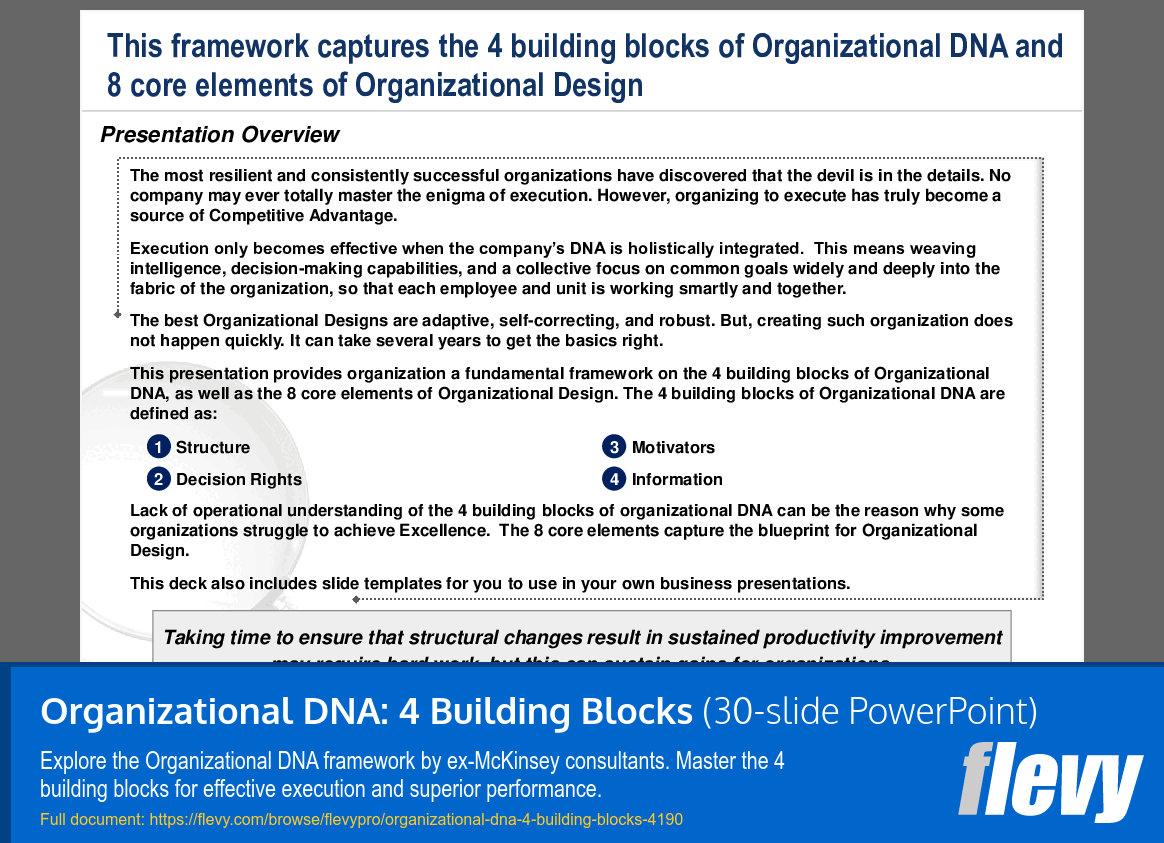

The most resilient and consistently successful organizations have discovered that the devil is in the details. No company may ever totally master the enigma of execution. However, organizing to execute has truly become a source of Competitive Advantage.
Execution only becomes effective when the company's DNA is holistically integrated. This means weaving intelligence, decision-making capabilities, and a collective focus on common goals widely and deeply into the fabric of the organization, so that each employee and unit is working smartly and together.
The best Organizational Designs are adaptive, self-correcting, and robust. But, creating such organization does not happen quickly. It can take several years to get the basics right.
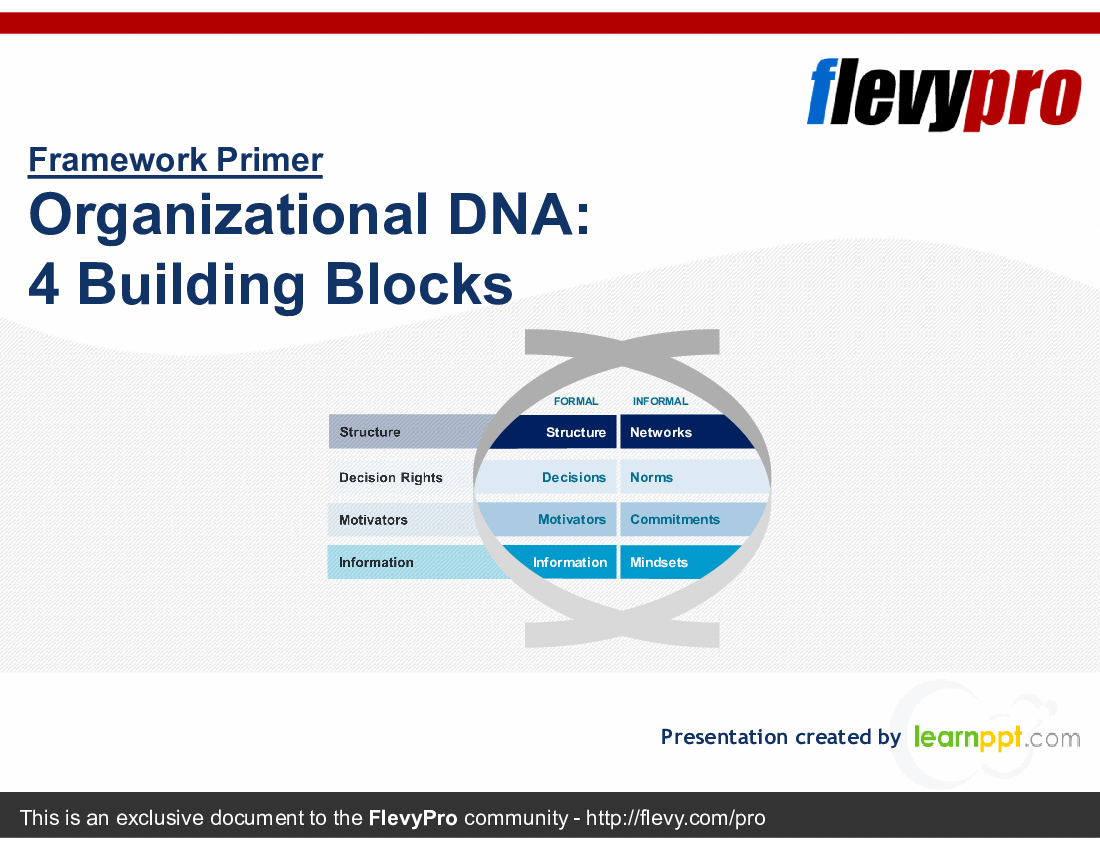
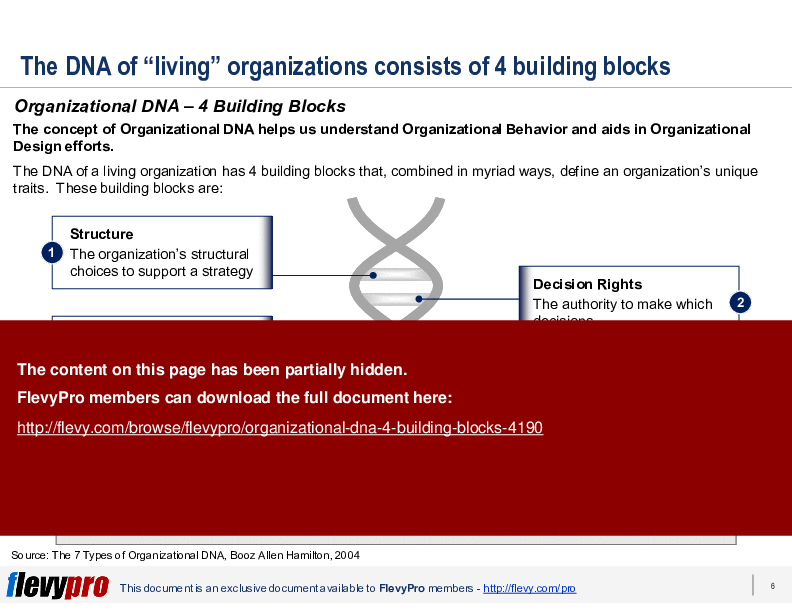
This presentation provides organization a fundamental framework on the 4 building blocks of Organizational DNA, as well as the 8 core elements of Organizational Design. The 4 building blocks of Organizational DNA are defined as:
1. Structure
2. Decision Rights
3. Motivators
4. Information
Lack of operational understanding of the 4 building blocks of organizational DNA can be the reason why some organizations struggle to achieve Excellence. The 8 core elements capture the blueprint for Organizational Design.
This deck also includes slide templates for you to use in your own business presentations.
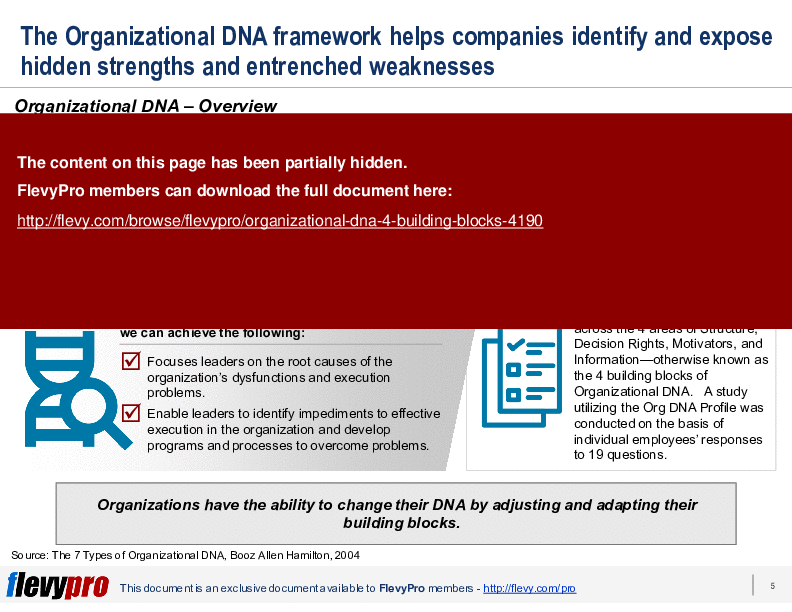
The Organizational DNA framework is a powerful tool for diagnosing and addressing the root causes of organizational dysfunction. By focusing on the four building blocks—Structure, Decision Rights, Motivators, and Information—leaders can pinpoint specific areas that need improvement. This approach enables organizations to systematically address inefficiencies and align their structure with strategic objectives.
This presentation also delves into the eight core elements of Organizational Design, providing a comprehensive blueprint for achieving superior performance. The deck includes practical slide templates, making it easier for you to communicate these concepts in your own business presentations. Investing time in understanding and applying these principles can lead to sustained productivity improvements and long-term success.
Got a question about this document? Email us at flevypro@flevy.com.
Executive Summary
The "Organizational DNA: 4 Building Blocks" presentation provides a structured framework for understanding and enhancing organizational effectiveness. Developed by ex-McKinsey consultants, this presentation outlines the critical components that define an organization's DNA, focusing on 4 essential building blocks: Structure, Decision Rights, Motivators, and Information. By mastering these elements, corporate executives and consultants can drive superior performance and ensure effective execution across their organizations. This presentation also includes templates for practical application in business settings.
Who This Is For and When to Use
• Corporate executives seeking to improve organizational effectiveness
• Change management leaders tasked with implementing structural adjustments
• Consultants focused on organizational design and performance improvement
• HR professionals aiming to align motivators with business objectives
Best-fit moments to use this deck:
• During organizational redesign initiatives to clarify roles and responsibilities
• In strategy sessions aimed at enhancing decision-making processes
• When developing performance measurement systems to motivate employees
• At workshops focused on improving information flow and resource allocation
Learning Objectives
• Define the 4 building blocks of Organizational DNA and their significance
• Analyze how structural choices impact organizational strategy and performance
• Establish clear decision rights to enhance accountability and efficiency
• Develop effective motivators that align employee performance with organizational goals
• Enhance information flow to facilitate better decision-making and resource management
• Create a comprehensive framework for organizational design that incorporates both formal and informal elements
Table of Contents
• Overview (page 1)
• Organizational DNA (page 2)
• 1. Structure (page 3)
• 2. Decision Rights (page 12)
• 3. Motivators (page 15)
• 4. Information (page 18)
• Elements of Organizational Design (page 20)
• Templates (page 24)
Primary Topics Covered
• Structure - The organization’s structural choices to support a strategy, including how business units are organized.
• Decision Rights - The authority to make decisions and how clear decision rights can enhance organizational performance.
• Motivators - Systems that measure and motivate people to apply decision rights effectively.
• Information - The importance of enhancing information flow for efficient resource utilization.
Deliverables, Templates, and Tools
• Organizational structure template to visualize and assess current configurations
• Decision rights matrix to clarify authority and responsibility across functions
• Motivators framework to align incentives with performance goals
• Information flow diagram to identify and improve data transfer processes
• Organizational design assessment tool to evaluate alignment with strategic objectives
• Presentation templates for communicating findings and recommendations
Slide Highlights
• Overview of the Organizational DNA framework and its significance
• Detailed breakdown of the 4 building blocks and their interconnections
• Case studies illustrating the impact of structural choices on performance
• Visual aids demonstrating the decision rights matrix and its application
• Templates for assessing and redesigning organizational elements
Potential Workshop Agenda
Understanding Organizational DNA (90 minutes)
• Introduction to the 4 building blocks
• Group discussion on current organizational challenges
• Interactive exercise to map existing structures
Designing Effective Decision Rights (60 minutes)
• Presentation on decision-making authority
• Breakout sessions to develop a decision rights matrix
• Sharing insights and best practices
Enhancing Motivators and Information Flow (90 minutes)
• Overview of motivators and their impact on performance
• Workshop to create a motivators framework
• Strategies for improving information flow across the organization
Customization Guidance
• Tailor the organizational structure template to reflect specific business units and reporting lines
• Adjust the decision rights matrix to align with your organization's governance model
• Modify the motivators framework to incorporate unique performance metrics relevant to your industry
• Adapt the information flow diagram to capture key data transfer points within your organization
Secondary Topics Covered
• The role of informal networks in organizational effectiveness
• Best practices for aligning organizational design with strategic goals
• Techniques for fostering a culture of accountability and transparency
• The impact of organizational design on employee engagement and retention
Topic FAQ
Document FAQ
These are questions addressed within this presentation.
What are the 4 building blocks of Organizational DNA?
The 4 building blocks are Structure, Decision Rights, Motivators, and Information. Each plays a critical role in defining how an organization operates and performs.
How can this framework improve organizational performance?
By understanding and optimizing the 4 building blocks, organizations can enhance decision-making, motivate employees effectively, and streamline information flow, leading to improved performance.
Can this presentation be customized for specific industries?
Yes, the templates and frameworks provided can be tailored to fit the unique needs and challenges of different industries.
What is the significance of decision rights in an organization?
Clear decision rights help delineate authority and responsibility, reducing confusion and enhancing accountability, which can lead to better performance outcomes.
How does the structure of an organization impact its strategy?
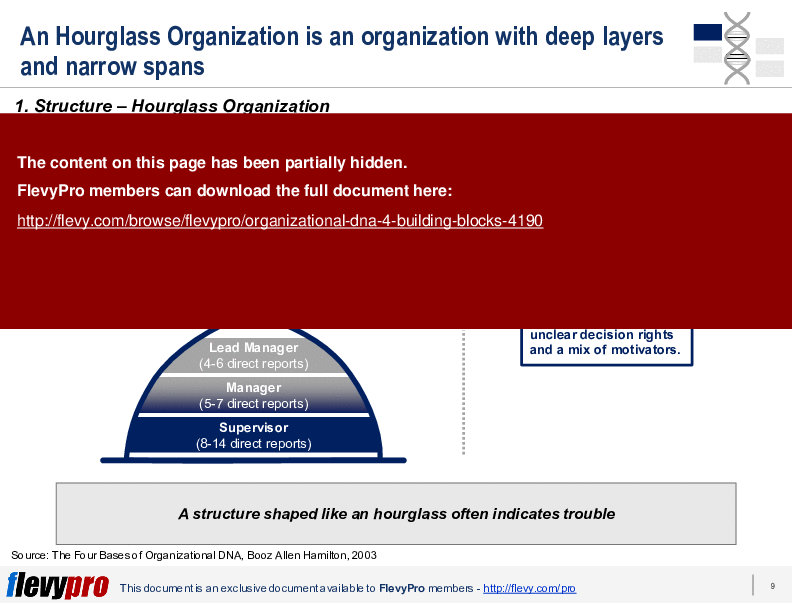
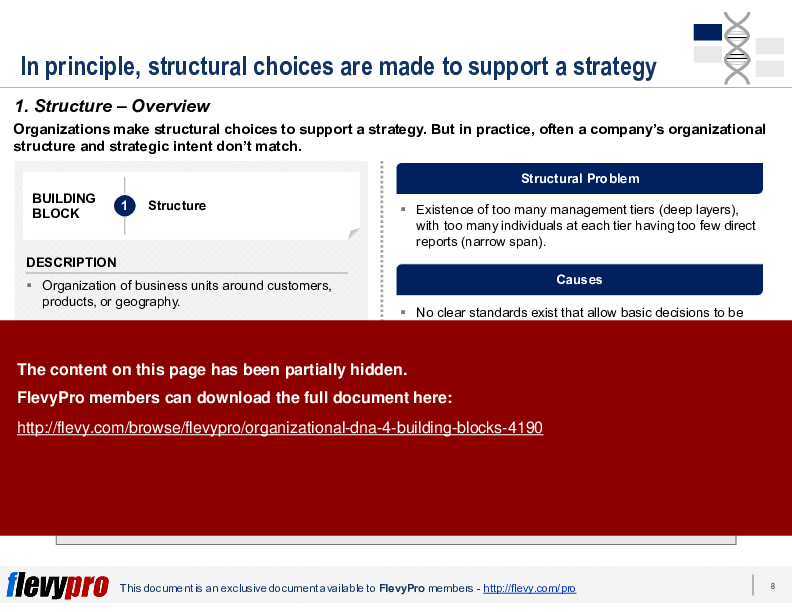
An organization’s structure must align with its strategic goals; mismatches can lead to inefficiencies and hinder execution.
What tools are included in the presentation?
The presentation includes templates for organizational structure, decision rights, motivators, and information flow, which can be utilized in practical applications.
How can I assess my organization’s current design?
Use the organizational design assessment tool included in the presentation to evaluate alignment with strategic objectives and identify areas for improvement.
What are the benefits of enhancing information flow?
Improved information flow facilitates better decision-making, resource allocation, and overall organizational efficiency, contributing to competitive advantage.
Glossary
• Organizational DNA - A framework that defines the unique traits of an organization through its structure, decision rights, motivators, and information.
• Decision Rights - The authority assigned to individuals or teams to make decisions within an organization.
• Motivators - Systems and incentives that drive employee performance and engagement.
• Information Flow - The process of transferring data and knowledge within an organization to facilitate decision-making.
• Organizational Design - The arrangement of roles, responsibilities, and processes within an organization to achieve strategic goals.
• Structure - The formal arrangement of roles and responsibilities within an organization.
• Networks - The informal relationships and collaborations that exist within an organization.
• Commitments - The shared vision and objectives that inspire employee contributions.
• Mindsets - The beliefs and assumptions that influence how employees perceive their work.
• Norms - The unwritten rules and expectations that govern behavior within an organization.
• Performance Metrics - Standards used to measure the effectiveness and efficiency of organizational processes.
• Accountability - The obligation of individuals to report on their performance and take responsibility for their actions.
• Governance - The framework of rules and practices that guide decision-making within an organization.
• Engagement - The emotional commitment of employees to their organization and its goals.
• Efficiency - The ability to achieve maximum productivity with minimum wasted effort or expense.
• Effectiveness - The degree to which an organization meets its goals and objectives.
• Strategic Alignment - The process of ensuring that all aspects of an organization are aligned with its strategic goals.
• Change Management - The approach to transitioning individuals, teams, and organizations to a desired future state.
• Cultural Influence - The impact of an organization’s culture on employee behavior and performance.
• Self-Correcting - The ability of an organization to adapt and improve over time based on feedback and changing conditions.
• Resilience - The capacity of an organization to withstand and recover from challenges and disruptions.
Source: Best Practices in Organizational Design, Organizational Behavior, Organizational Structure PowerPoint Slides: Organizational DNA: 4 Building Blocks PowerPoint (PPTX) Presentation Slide Deck, LearnPPT Consulting
Did you need more documents?
Consider a FlevyPro subscription from $39/month. View plans here.
For $10.00 more, you can download this document plus 2 more FlevyPro documents. That's just $13 each.
|
Download our FREE Organization, Change, & Culture, Templates
Download our free compilation of 50+ slides and templates on Organizational Design, Change Management, and Corporate Culture. Methodologies include ADKAR, Burke-Litwin Change Model, McKinsey 7-S, Competing Values Framework, etc. |