
Behavioral Strategy Primer   22-slide PPT PowerPoint presentation slide deck (PPT)
$29.00

Behavioral Strategy Primer (22-slide PPT PowerPoint presentation slide deck (PPT)) Preview Image
Log in to unlock full preview.
Behavioral Strategy Primer (22-slide PPT PowerPoint presentation slide deck (PPT)) Preview Image
Arrow   Click main image to view in full screen.

Behavioral Strategy Primer (PowerPoint PPT Slide Deck)

PowerPoint (PPT) 22 Slides FlevyPro Document

#3 in Behavioral Strategy $29.00
FlevyPro price: FREE (included in subscription)
This framework is developed by a team of former McKinsey and Big 4 consultants. The presentation follows the headline-body-bumper slide format used by global consulting firms.
Add to Cart


Immediate download
Free lifetime updates

BEHAVIORAL ECONOMICS PPT DESCRIPTION

Editor Summary Behavioral Strategy Primer is a 22-slide PowerPoint presentation that outlines a structured 4-step approach to improve organizational decision making by addressing cognitive biases. Read more

What is Behavioral Strategy?

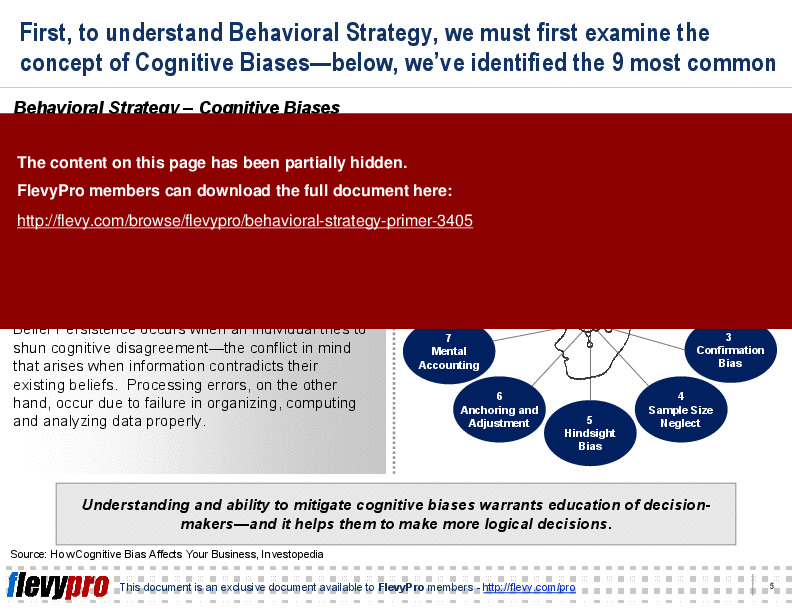
First, to understand Behavioral Strategy, we must first examine the concept of Cognitive Biases. There are 2 different types of biases in people that cause them to stray from rational decision making: cognitive and emotional. Cognitive biases arise due to incomplete information or the inability to analyze the available data. These preconceived notions can be categorized as either Belief Persistence or Processing Errors.

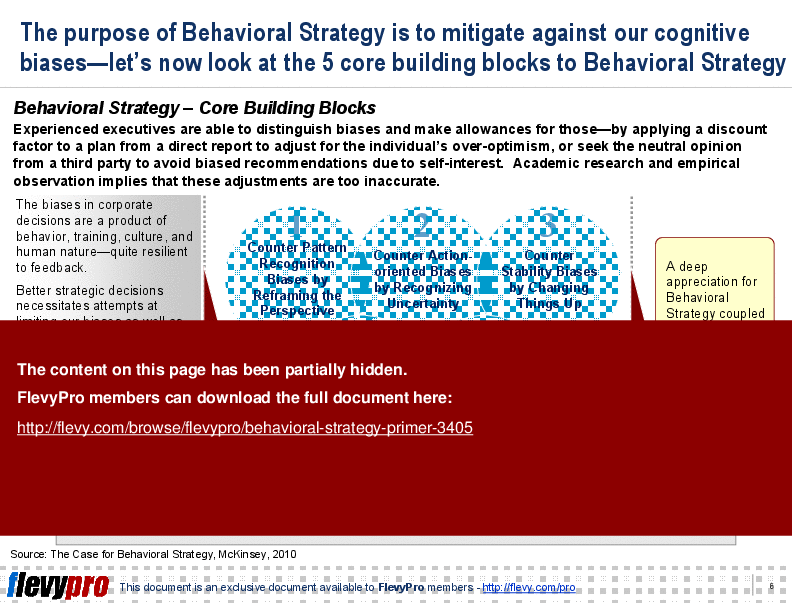
This PowerPoint presentation on Behavioral Strategy begins with an explanation of Cognitive Biases and identifies the 9 most common Cognitive Biases. The purpose of Behavioral Strategy is to mitigate against our cognitive biases.

However, research reveals that executives tend to overlook human biases while making decisions. These biases cause the people to move away from rational decision making. In order to better manage these tendencies, executives need to identify the biases prevalent in their organizations and embrace practices to minimize their bearing on strategic decisions. This is where Behavioral Strategy comes in.

To understand and develop an effective Behavioral Strategy, we first examine the 5 building blocks of Behavioral Strategy. They provide key principles and practices to neutralize Cognitive Biases. These building blocks represent specific counter actions leaders should take to remove potential biases.

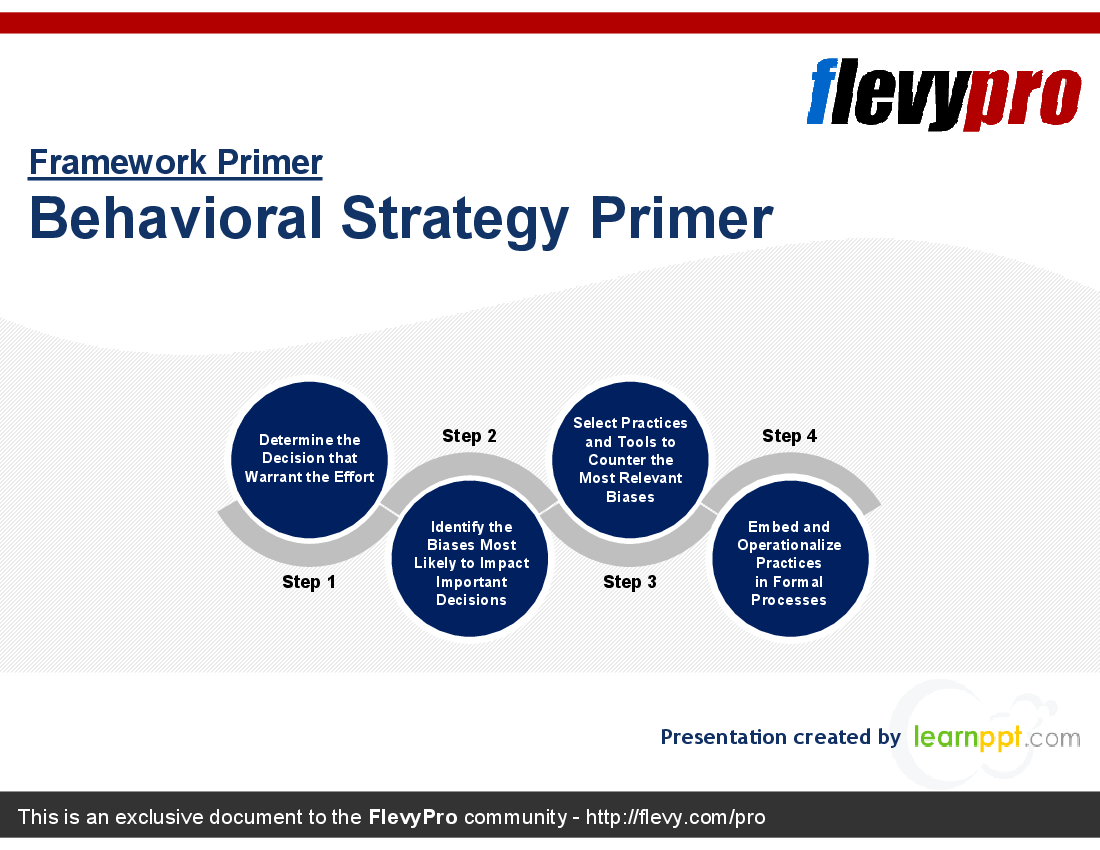
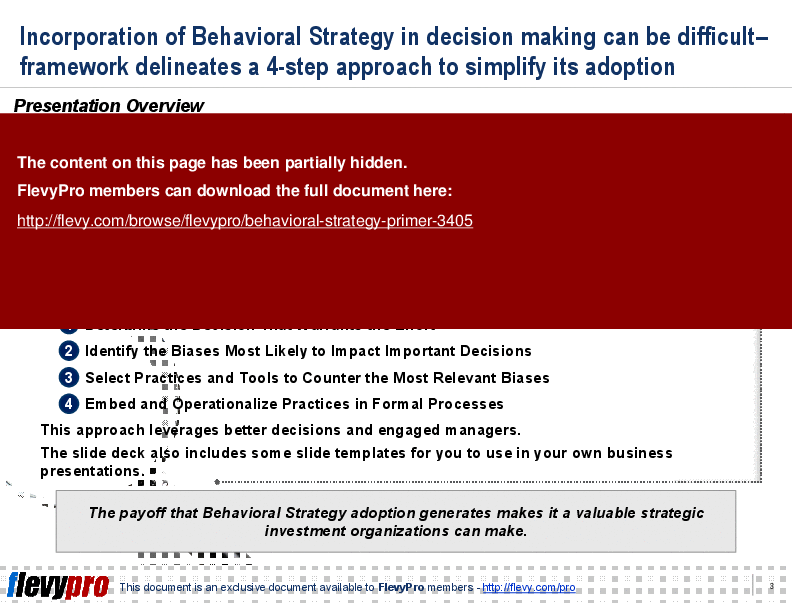
This Behavioral Strategy PPT also presents a 4-step approach to adopting Behavioral Strategy in Decision Making:

1. Determine the Decision That Warrants the Effort
2. Identify the Biases Most Likely to Impact Important Decisions
3. Select Practices and Tools to Counter the Most Relevant Biases
4. Embed and Operationalize Practices in Formal Processes

This approach leverages better decisions and engaged managers. Each step is explained in depth. To truly improve decision making and overcome biases, we need to follow this structured approach to formulate and implement an actual Behavioral Strategy.

This Behavioral Strategy PPT deck also includes some slide templates illustrating the 5 Building Blocks of Behavioral Strategy and the 4-step Approach to Behavioral Strategy. In fact, you can re-purpose the majority of these Behavioral Strategy slides in your own business presentations.

This presentation provides a comprehensive overview of the 9 most common cognitive biases and the 5 core building blocks to mitigate them. It also includes actionable templates that can be easily repurposed for your own strategic initiatives.

Got a question about this document? Email us at flevypro@flevy.com.

MARCUS OVERVIEW

This synopsis was written by Marcus [?] based on the analysis of the full 22-slide presentation.


Executive Summary
The Behavioral Strategy Primer is a comprehensive presentation designed to enhance decision-making processes by addressing cognitive biases that often hinder rational thinking. Created by former consultants from McKinsey and the Big 4, this resource outlines a structured 4-step approach for embedding behavioral strategies within organizations. Executives will learn to identify critical decisions, recognize biases, select appropriate countermeasures, and operationalize these practices to improve decision quality and foster a culture of engagement.

Who This Is For and When to Use
•  Corporate executives seeking to enhance decision-making frameworks
•  Strategy teams focused on integrating behavioral insights into business processes
•  Change management leaders aiming to foster a culture of open dialogue and critical thinking
•  Consultants advising organizations on strategic decision-making improvements

Best-fit moments to use this deck:
•  During strategic planning sessions to refine decision-making processes
•  When addressing past decision failures to identify and mitigate biases
•  In workshops aimed at fostering a culture of critical thinking and engagement

Learning Objectives
•  Define the concept of Behavioral Strategy and its importance in decision-making
•  Identify common cognitive biases that affect organizational decisions
•  Develop strategies to counteract identified biases in decision-making processes
•  Implement a structured approach to embed behavioral practices within formal processes
•  Foster a culture of open discussion regarding biases and decision-making challenges
•  Evaluate the effectiveness of behavioral strategies in improving decision outcomes

Table of Contents
•  Overview (page 3)
•  Behavioral Strategy (page 5)
•  Approach to Behavioral Strategy Adoption (page 10)
•  Templates (page 15)

Primary Topics Covered
•  Cognitive Biases - Understanding how cognitive biases, such as confirmation bias and anchoring, impact decision-making processes.
•  Behavioral Strategy Framework - A structured approach to integrating behavioral insights into strategic decisions.
•  4-Step Adoption Process - A clear methodology for implementing behavioral strategies: determining key decisions, identifying biases, selecting countermeasures, and embedding practices.
•  Cultural Change - The significance of fostering a culture that encourages open discussions about biases and decision-making.
•  Practical Tools - Templates and tools to assist in the application of behavioral strategies in real-world scenarios.

Deliverables, Templates, and Tools
•  Decision-making framework template for identifying critical decisions
•  Bias identification checklist to evaluate decision-making processes
•  Action plan template for selecting and implementing countermeasures
•  Guidelines for embedding behavioral practices into organizational processes
•  Workshop materials for engaging teams in discussions about cognitive biases

Slide Highlights
•  Overview of cognitive biases and their implications for decision-making
•  The 4-step approach to adopting Behavioral Strategy illustrated with practical examples
•  Case studies showcasing the impact of behavioral strategies in organizations
•  Templates designed for immediate application in business contexts

Potential Workshop Agenda
Understanding Cognitive Biases (60 minutes)
•  Introduction to cognitive biases and their effects on decision-making
•  Group discussion on personal experiences with biases in decision processes

Implementing Behavioral Strategies (90 minutes)
•  Overview of the 4-step adoption process
•  Breakout sessions to develop action plans for embedding strategies

Evaluating Decision Outcomes (60 minutes)
•  Sharing insights on the effectiveness of implemented strategies
•  Identifying areas for continuous improvement in decision-making

Customization Guidance
•  Tailor the decision-making framework to align with your organization's specific strategic priorities
•  Adjust bias identification tools to reflect the unique challenges faced by your teams
•  Incorporate organizational terminology and metrics into templates for consistency

Secondary Topics Covered
•  The role of emotional biases in decision-making
•  Strategies for fostering a culture of critical thinking
•  Techniques for measuring the effectiveness of behavioral strategies
•  Insights into the long-term benefits of adopting a Behavioral Strategy

Topic FAQ

What are the core steps to adopt a behavioral strategy in an organization?

Adopting a behavioral strategy follows a four-step approach: determine which decisions warrant effort, identify the biases most likely to affect those decisions, select practices and tools to counter the relevant biases, and embed those practices into formal processes; this sequence is described as the 4-step adoption process.

Which cognitive biases should leaders prioritize for mitigation efforts?

Leaders should prioritize biases that commonly impair judgment in organizations, such as confirmation bias and anchoring, and consider categories like belief persistence and processing errors. The deck highlights the 9 most common cognitive biases to guide prioritization, including both cognitive and emotional biases.

How can I measure whether behavioral interventions improve decisions?

Measurement focuses on comparing decision outcomes and team engagement before and after implementation. The presentation recommends evaluating changes in decision quality alongside levels of manager and team engagement to assess impact, using decision outcomes and team engagement levels as core metrics.

What are the building blocks of a behavioral strategy I should know about?

The presentation defines 5 building blocks that represent concrete counteractions leaders can take to neutralize biases. These building blocks provide principles and practices for leaders to apply when designing interventions, and the deck provides templates illustrating all 5 building blocks.

What features should I look for when buying a behavioral strategy toolkit?

Look for practical templates and tools you can apply in meetings and workshops: a decision-making framework template, a bias identification checklist, an action plan template, guidance for embedding practices, and workshop materials. These specific tools are included in Flevy's Behavioral Strategy Primer.

How long does a typical behavioral strategy workshop take and how is it structured?

The sample workshop agenda in the deck totals about 210 minutes (3.5 hours), split into sessions: a 60-minute introduction to cognitive biases, a 90-minute implementation and breakout session on the 4-step adoption process, and a 60-minute evaluation and continuous-improvement discussion.

I need to address a past decision failure—how should I begin using behavioral strategy?

Start by determining which past decisions merit review, use a bias identification checklist to diagnose likely cognitive or emotional biases, select countermeasures and document them in an action plan, then embed changes into formal processes; Flevy's Behavioral Strategy Primer maps this sequence into its 4-step approach.

How customizable are the templates for different organizational contexts?

The deck provides templates and explicit customization guidance: tailor the decision-making framework to strategic priorities, adjust bias identification tools for team-specific challenges, and incorporate organizational terminology and metrics into templates included in the deck.

Document FAQ
These are questions addressed within this presentation.

What is Behavioral Strategy?
Behavioral Strategy is an approach that integrates insights from behavioral economics to improve decision-making by addressing cognitive biases.

How can this presentation help my organization?
This presentation provides a structured framework for identifying and mitigating biases in decision-making, leading to improved strategic outcomes.

What are cognitive biases?
Cognitive biases are systematic patterns of deviation from norm or rationality in judgment, which can adversely affect decision-making.

How do I implement the 4-step approach?
Begin by determining key decisions, identify relevant biases, select appropriate countermeasures, and embed these practices into formal processes.

Can this framework be customized for my organization?
Yes, the templates and tools provided can be tailored to fit your organization's specific needs and context.

What types of decisions should I focus on?
Focus on repetitive yet high-risk decisions and one-off strategic decisions that significantly impact your organization.

How do I measure the effectiveness of Behavioral Strategy?
Evaluate decision outcomes and team engagement levels before and after implementing the strategy to assess its impact.

What resources are included in the presentation?
The presentation includes templates, checklists, and action plans that can be directly applied to your organization's decision-making processes.

Glossary
•  Cognitive Bias - A systematic pattern of deviation from norm or rationality in judgment.
•  Behavioral Strategy - An approach that incorporates behavioral insights to enhance decision-making.
•  Decision-Making Framework - A structured process for making strategic decisions.
•  Bias Identification Checklist - A tool for recognizing cognitive biases in decision processes.
•  Action Plan - A detailed strategy for implementing behavioral practices.
•  Cultural Change - The shift in organizational culture to support open discussions about biases.
•  Engagement - The involvement and commitment of team members in decision-making processes.
•  Templates - Pre-designed documents to facilitate the application of strategies.
•  Workshop Materials - Resources for conducting training sessions on behavioral strategies.
•  Continuous Improvement - Ongoing efforts to enhance decision-making processes.
•  Emotional Bias - Biases that arise from emotional responses rather than rational analysis.
•  Long-Term Benefits - The sustained advantages gained from implementing behavioral strategies.
•  Strategic Priorities - The key focus areas that guide organizational decision-making.
•  Team Dynamics - The interactions and relationships among team members that affect decision outcomes.
•  Performance Metrics - Measures used to evaluate the effectiveness of strategies.
•  Stakeholder Engagement - The involvement of individuals or groups that have an interest in the decision-making process.
•  Risk Assessment - The identification and evaluation of potential risks in decision-making.
•  Feedback Mechanisms - Processes for gathering input and insights on decision outcomes.
•  Implementation Strategy - A plan for executing behavioral practices within the organization.
•  Best Practices - Proven methods or techniques that lead to superior outcomes in decision-making.

BEHAVIORAL ECONOMICS PPT SLIDES

Core Building Blocks of Behavioral Strategy

Key Principles to Mitigate Executive Decision Biases

Identifying Key Decision Types in Behavioral Strategy

Source: Best Practices in Decision Making, Cognitive Bias, Behavioral Economics PowerPoint Slides: Behavioral Strategy Primer PowerPoint (PPT) Presentation Slide Deck, LearnPPT Consulting


$29.00
FlevyPro price: FREE (included in subscription)
This framework is developed by a team of former McKinsey and Big 4 consultants. The presentation follows the headline-body-bumper slide format used by global consulting firms.
Add to Cart
  

Did you need more documents?

Consider a FlevyPro subscription from $39/month. View plans here.

For $10.00 more, you can download this document plus 2 more FlevyPro documents. That's just $13 each.

ABOUT FLEVYPRO

This document is part of the FlevyPro Library, a curated knowledge base of documents for our FlevyPro subscribers.

FlevyPro is a subscription service for on-demand business frameworks and analysis tools. FlevyPro subscribers receive access to an exclusive library of curated business documents—business framework primers, presentation templates, Lean Six Sigma tools, and more—among other exclusive benefits.

Click here to learn more about FlevyPro and its benefits.

Did you know?
The average daily rate of a McKinsey consultant is $6,625 (not including expenses). The average price of a Flevy document is $65.


Trusted by over 10,000+ Client Organizations
Since 2012, we have provided business templates to over 10,000 businesses and organizations of all sizes, from startups and small businesses to the Fortune 100, in over 130 countries.
AT&T GE Cisco Intel IBM Coke Dell Toyota HP Nike Samsung Microsoft Astrazeneca JP Morgan KPMG Walgreens Walmart 3M Kaiser Oracle SAP Google E&Y Volvo Bosch Merck Fedex Shell Amgen Eli Lilly Roche AIG Abbott Amazon PwC T-Mobile Broadcom Bayer Pearson Titleist ConEd Pfizer NTT Data Schwab


Read Customer Testimonials

 
"As a consultant requiring up to date and professional material that will be of value and use to my clients, I find Flevy a very reliable resource.

The variety and quality of material available through Flevy offers a very useful and commanding source for information. Using Flevy saves me time, enhances my expertise and ends up being a good decision."

– Dennis Gershowitz, Principal at DG Associates
 
"As a young consulting firm, requests for input from clients vary and it's sometimes impossible to provide expert solutions across a broad spectrum of requirements. That was before I discovered Flevy.com.

Through subscription to this invaluable site of a plethora of topics that are key and crucial to consulting, I "

– Nishi Singh, Strategist and MD at NSP Consultants
 
"My FlevyPro subscription provides me with the most popular frameworks and decks in demand in today’s market. They not only augment my existing consulting and coaching offerings and delivery, but also keep me abreast of the latest trends, inspire new products and service offerings for my practice, and educate me "

– Bill Branson, Founder at Strategic Business Architects
 
"Flevy is our 'go to' resource for management material, at an affordable cost. The Flevy library is comprehensive and the content deep, and typically provides a great foundation for us to further develop and tailor our own service offer."

– Chris McCann, Founder at Resilient.World
 
"[Flevy] produces some great work that has been/continues to be of immense help not only to myself, but as I seek to provide professional services to my clients, it gives me a large "tool box" of resources that are critical to provide them with the quality of service and outcomes they are expecting."

– Royston Knowles, Executive with 50+ Years of Board Level Experience
 
"As an Independent Management Consultant, I find Flevy to add great value as a source of best practices, templates and information on new trends. Flevy has matured and the quality and quantity of the library is excellent. Lastly the price charged is reasonable, creating a win-win value for "

– Jim Schoen, Principal at FRC Group
 
"As a small business owner, the resource material available from FlevyPro has proven to be invaluable. The ability to search for material on demand based our project events and client requirements was great for me and proved very beneficial to my clients. Importantly, being able to easily edit and tailor "

– Michael Duff, Managing Director at Change Strategy (UK)
 
"The wide selection of frameworks is very useful to me as an independent consultant. In fact, it rivals what I had at my disposal at Big 4 Consulting firms in terms of efficacy and organization."

– Julia T., Consulting Firm Owner (Former Manager at Deloitte and Capgemini)


Customers Also Bought These Documents


Customers Also Like These Documents

Explore Templates on Related Management Topics


Your Recently Viewed Documents
Download our FREE Strategy & Transformation Framework Templates

Download our free compilation of 50+ Strategy & Transformation slides and templates. Frameworks include McKinsey 7-S, Balanced Scorecard, Disruptive Innovation, BCG Curve, and many more.









