
This framework is developed by a team of former McKinsey and Big 4 consultants. The presentation follows the headline-body-bumper slide format used by global consulting firms.
Editor Summary
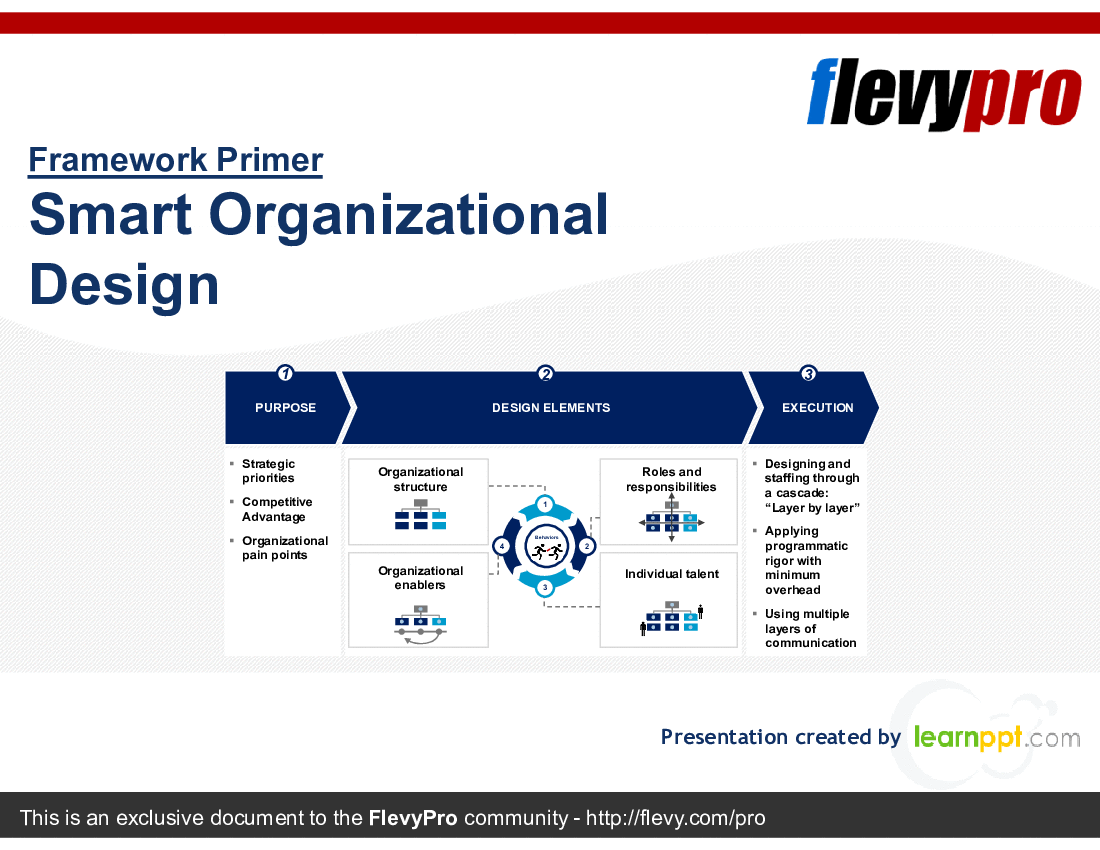
Smart Organizational Design is a 27-slide PowerPoint presentation by LearnPPT Consulting that outlines a 3-step framework for reorganization: (1) Purpose — define why reorganization is necessary; (2) Design Elements — determine the behaviors critical to support reorganization; (3) Execution — how to implement the Smart Organizational Design.
Read moreThe deck also discusses Critical Success Factors and includes slide templates for business presentations, sold as a digital download on Flevy and targeted at transformation leads, HR leaders, strategy executives, and management consultants.
Use this presentation when organizations face digital disruption, intensified competition, or repeated change programs that underperform and require a behavior-focused reorganization approach.
Transformation leads crafting a reorganization business case and defining the “why” for change through a Purpose statement.
HR leaders specifying behavior-based role expectations and interventions aligned to desired outcomes.
Strategy executives aligning structure and behaviors to strategic priorities and customer needs.
Management consultants preparing implementation plans and stakeholder-aligned execution steps using slide templates.
The 3-step methodology — clarifying purpose, defining design elements (behaviors), and execution planning — follows a structured phase-based approach common in management consulting.
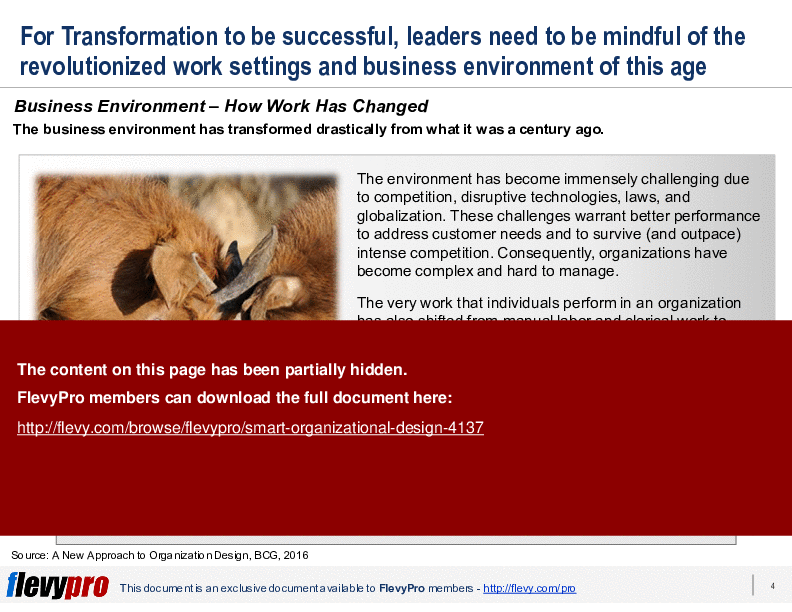
Business environment has transformed drastically and has become immensely challenging due to competition, disruptive technologies, laws, and globalization. These challenges warrant better performance to address customer needs and to survive—and outpace—intense competition.
Consequently, organizations have become more complex. The work that individuals perform in an organization has also shifted from manual labor and clerical work to knowledge-based experiential work. Traditional workforce was required to adhere to commands and stick to routines. The workforce, today, is more empowered and innovative.
In order to stay competitive or beat the rivals, Transformation and Change programs are constantly underway in organizations across the globe. However, a large percentage of these programs fail to achieve the desired outcomes. One of the main factor attributed to this failure is utilizing traditional approaches to reorganization, which have become archaic and ineffective in this Digital Age.
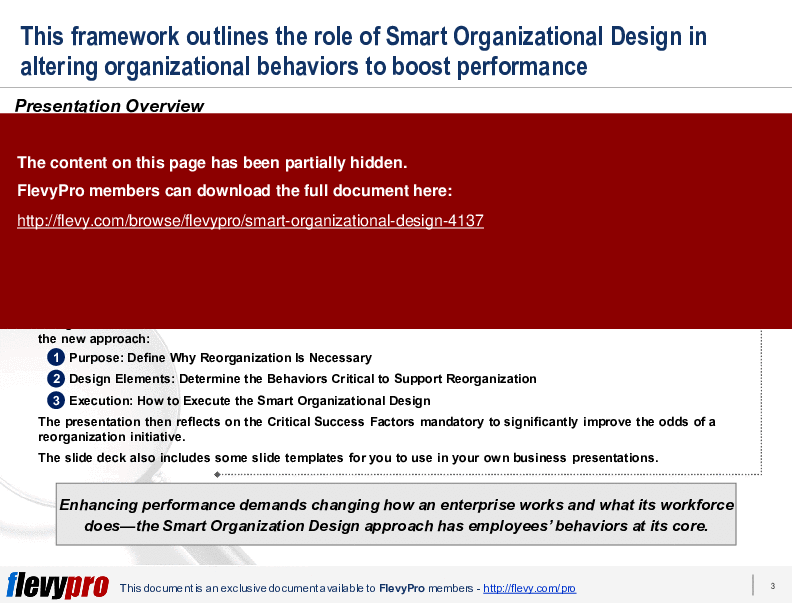
This presentation deliberates on a new approach to reorganization—the Smart Organizational Design—the principles that govern the new approach, and provides a comprehensive overview of the 3 steps that are critical to implement the new approach:
1. Purpose: Define Why Reorganization Is Necessary
2. Design Elements: Determine the Behaviors Critical to Support Reorganization
3. Execution: How to Execute the Smart Organizational Design
The presentation then reflects on the Critical Success Factors mandatory to significantly improve the odds of a reorganization initiative.
The slide deck also includes some slide templates for you to use in your own business presentations.
The Smart Organizational Design framework emphasizes the importance of aligning organizational behaviors with strategic goals. It provides actionable insights into creating a context that fosters desired behaviors, ensuring that every layer of the organization is optimized for performance. The approach is built on understanding the underlying assumptions of traditional organizational design and shifting focus to behavior-driven performance. This PPT is a must-have for leaders aiming to drive sustainable change and achieve high-impact results in a competitive business landscape.
What does "behavior-driven organizational design" mean and how does it differ from traditional design approaches?
Behavior-driven organizational design centers on aligning the behaviors required for performance with strategy, rather than relying solely on structure or reporting lines. It creates context to foster desired behaviors and shifts away from command-and-routine assumptions of traditional models, implemented via the 3-step Smart Organizational Design framework: Purpose, Design Elements, Execution.
When is it appropriate to start a reorganization project focused on behaviors rather than structure?
Organizations should consider a behavior-focused reorg when market disruption, technology change, or ongoing transformation programs show gaps between expected and actual performance. The first step is clarifying why reorganization is necessary and articulating that rationale in the Purpose phase, which is Step 1 of the framework.
What are common reasons reorganization initiatives fail under traditional approaches?
Failures commonly stem from applying archaic command-and-routine models to modern knowledge-based work, neglecting empowered, innovative employees, and failing to align behaviors with strategic needs. The Smart Organizational Design approach addresses these issues by re-centering on behavior-driven performance across the framework’s 3 steps.
How should leaders define the "Purpose" for a reorganization to gain alignment?
Leaders should define Purpose by articulating why reorganization is necessary relative to customer needs, competitive survival, and strategic priorities. This step requires a clear rationale tied to desired outcomes and serves as the foundation for subsequent behavior and execution design in Step 1: Purpose, as described in Flevy's Smart Organizational Design.
What practical methods exist to translate strategic goals into desired behaviors?
Practical methods involve identifying the specific behaviors that enable strategic goals, creating contexts (structures, processes, incentives) that encourage those behaviors, and mapping them across organizational layers. The Smart Organizational Design calls this conversion out explicitly in its Design Elements phase, which is Step 2 in the framework.
What should I expect from guidance on Critical Success Factors in an organizational design resource?
Guidance should highlight factors that materially improve odds of success, such as clarity of purpose, behavior alignment, and executable plans. The presentation reflects on these Critical Success Factors and locates them in the final section of the 27-slide deck in Flevy's Smart Organizational Design.
How can pre-built slide templates speed up reorganization communications and planning?
Slide templates standardize how Purpose, Design Elements, execution milestones, and success metrics are presented to stakeholders, reducing prep time and improving clarity. Flevy's Smart Organizational Design includes slide templates designed for business presentations and the full package is a 27-slide PPT.
What should I evaluate when buying an organizational design template in terms of cost versus value?
Evaluate whether the template covers the full reorg lifecycle you need (rationale, behavior design, execution), includes materials to present to stakeholders, and is authored by a practitioner. Flevy's Smart Organizational Design specifies the 3-step structure, discusses Critical Success Factors, and is delivered as a 27-slide PPT by LearnPPT Consulting.
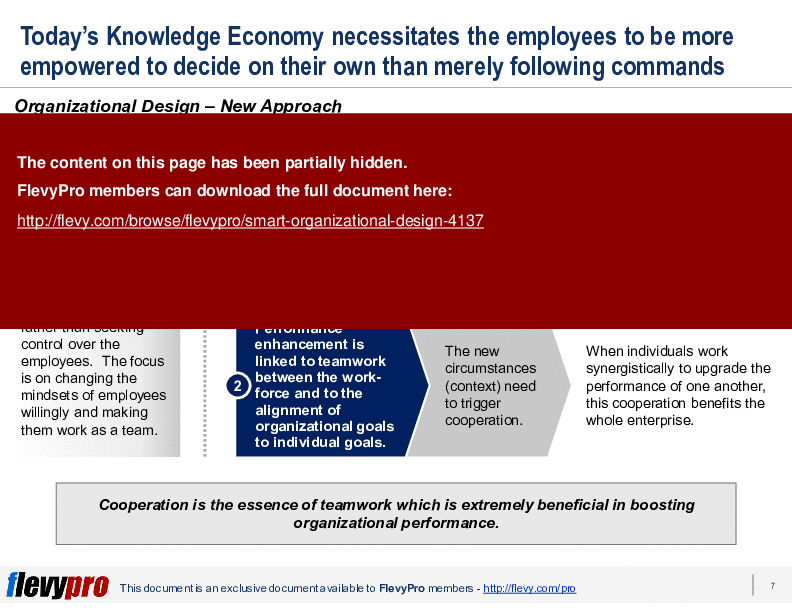
This PPT slide outlines a contemporary approach to Organizational Design (OD) that aligns employee interests with organizational goals. In a knowledge-driven economy, empowering employees to make independent decisions enhances engagement and productivity. Performance is closely tied to employee behaviors, influenced by their specific circumstances, necessitating environments that foster thriving behaviors. Teamwork and collaboration are essential, as performance improvement depends on how well individuals align personal goals with organizational objectives. This alignment fosters cooperation, crucial for collective success. Organizations should rethink strategies for employee engagement and performance management, adopting a holistic approach to OD to navigate modern workplace complexities and drive sustainable success.
This PPT slide outlines 6 critical success factors for enhancing organizational transformation. First, aligning organization design with strategic goals ensures structural support for business objectives. Second, clarifying roles and responsibilities increases accountability and reduces confusion among employees. Third, utilizing individuals with the right skills is vital for effective execution of transformation initiatives. The fourth factor promotes a cascaded approach to organization design, fostering buy-in from all levels and enhancing implementation success. Fifth, minimizing risks during implementation requires early identification of potential pitfalls for effective mitigation. Lastly, maintaining momentum throughout the transformation process is essential to prevent stagnation and ensure lasting change.
The BCG survey assesses organizational complexity across 7 dimensions: strategy and purpose, structure and layers, activities and roles, people and interactions, processes and systems/IT, decision-making, and steering systems and KPIs. Respondents identified effective metrics and management systems as the most complex challenge, indicating difficulties in establishing clear performance indicators. Strategy and purpose ranked second, highlighting the struggle to align organizational goals with execution. Workforce interactions were also complex, suggesting communication and collaboration issues. Interestingly, organizational structures and management layers were rated least complex, implying that true complexity lies in strategy implementation and team dynamics. Simplifying processes and roles is essential for enhancing engagement and effectiveness. Leaders should focus on reducing unnecessary complexities to foster a streamlined workforce.
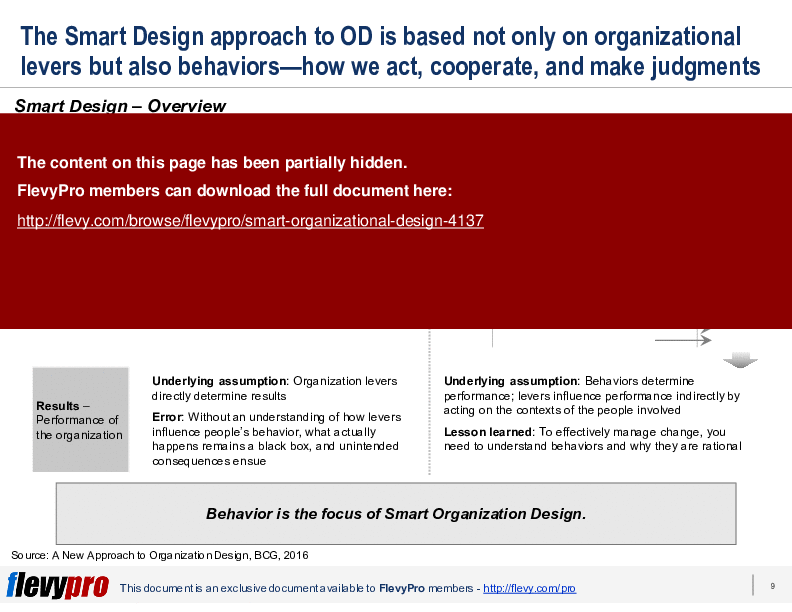
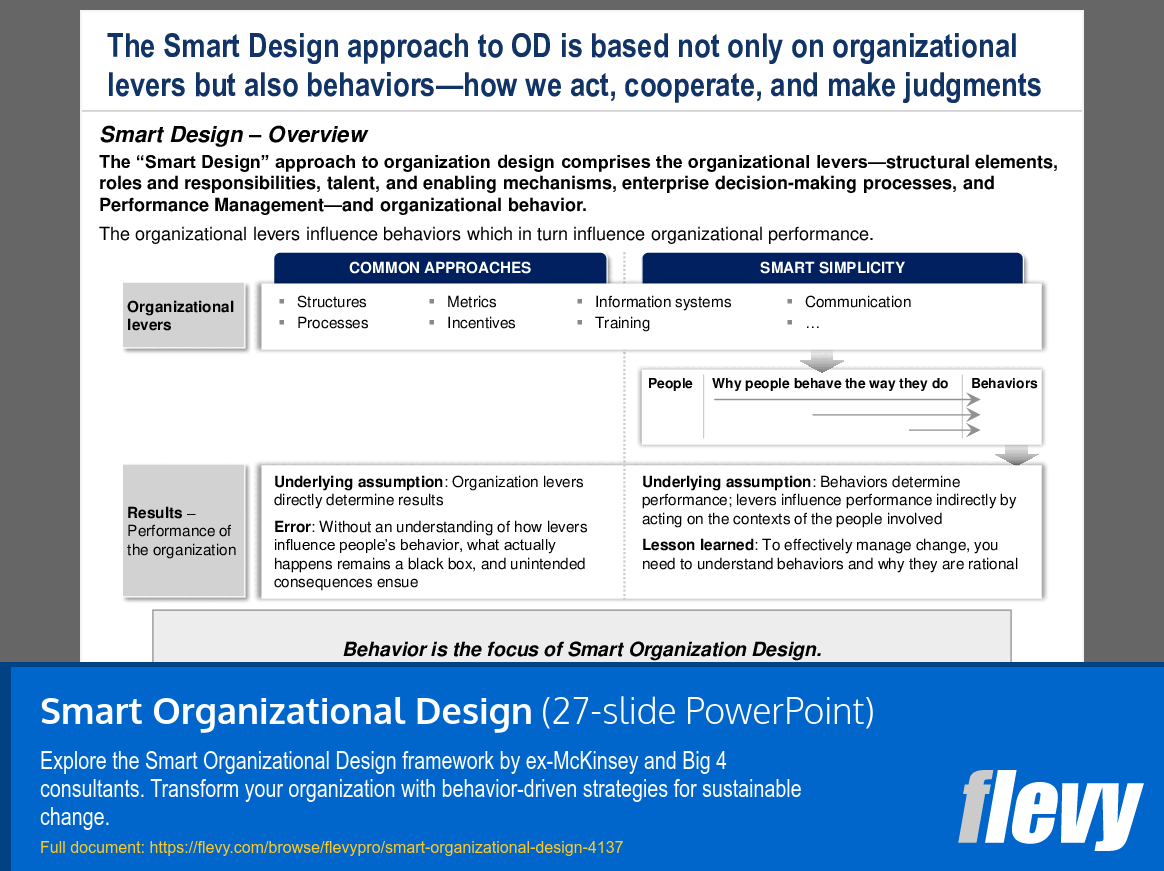
The "Smart Design" approach to organizational design (OD) emphasizes the dual focus on organizational levers and behaviors. Effective OD integrates structural elements—such as roles, responsibilities, structures, metrics, and processes—with an understanding of how behaviors influence performance outcomes. Organizational levers directly determine results,, but without grasping their impact on behavior, outcomes can remain unclear, leading to unintended consequences. Understanding why individuals behave in certain ways is essential for managing performance effectively. Leaders must comprehend the behaviors at play and the rationales behind them to navigate change successfully. This approach encourages a holistic view of organizational design that accounts for the complexities of human behavior.
This PPT slide outlines 4 essential components of Smart Organizational Design that influence employee behavior: "Behaviours," "Organizational Structure," "Roles and Responsibilities," and "Individual Talent."
"Organizational Structure" focuses on management reporting lines, spans of control, and hierarchical layers, impacting power dynamics and the chain of command. "Roles and Responsibilities" emphasizes clear accountabilities to foster teamwork and cooperation, enhancing collaboration towards organizational goals.
"Individual Talent" highlights the alignment of skills and motivations with specific roles, crucial for effective responsibility discharge and overall performance. Lastly, "Organizational Enablers" includes decision-making processes, performance management systems, and talent management strategies necessary for promoting desired behaviors.
This framework illustrates how organizational design shapes employee behavior, critical for achieving strategic objectives.
This PPT slide categorizes traditional organizational design approaches into "Hard" and "Soft" methodologies. The "Hard" Reorganization Approach, based on Frederick W. Taylor's principles, focuses on structures, processes, systems, and rewards,, but often fails to enhance performance due to a disconnect between rigid structures and employee engagement. In contrast, the "Soft" Reorganization Approach, influenced by Elton Mayo's research, emphasizes interpersonal relationships and team dynamics, motivating employees through team-building and training initiatives. This approach fosters improved communication and a more engaged workforce. Organizations are encouraged to balance structure and employee autonomy to create a more effective and responsive environment.
Source: Best Practices in Organizational Design, Organizational Behavior PowerPoint Slides: Smart Organizational Design PowerPoint (PPTX) Presentation Slide Deck, LearnPPT Consulting
This framework is developed by a team of former McKinsey and Big 4 consultants. The presentation follows the headline-body-bumper slide format used by global consulting firms.
For $10.00 more, you can download this document plus 2 more FlevyPro documents. That's just $13 each.
ABOUT FLEVYPRO
This document is part of the FlevyPro Library, a curated knowledge base of documents for our FlevyPro subscribers.
FlevyPro is a subscription service for on-demand business frameworks and analysis tools. FlevyPro subscribers receive access to an exclusive library of curated business documents—business framework primers, presentation templates, Lean Six Sigma tools, and more—among other exclusive benefits.
The average daily rate of a McKinsey consultant is $6,625 (not including expenses). The average price of a Flevy document is $65.
Trusted by over 10,000+ Client Organizations
Since 2012, we have provided business templates to over 10,000 businesses and organizations of all sizes, from startups and small businesses to the Fortune 100, in over 130 countries.
Read Customer Testimonials
"As a young consulting firm, requests for input from clients vary and it's sometimes impossible to provide expert solutions across a broad spectrum of requirements. That was before I discovered Flevy.com.
Through subscription to this invaluable site of a plethora of topics that are key and crucial to consulting, I
have been able to exceed expectations and deliver quality advice and solutions to my clients. The quality and expertise of the authors are exemplary and gives me great confidence to use as part of my service offerings.
I highly recommend this company for any consultant wanting to apply international best practice standards in their service offerings.
"
– Nishi Singh, Strategist and MD at NSP Consultants
"I have used Flevy services for a number of years and have never, ever been disappointed. As a matter of fact, David and his team continue, time after time, to impress me with their willingness to assist and in the real sense of the word. I have concluded in fact
that it is not at all just a repository of documents/resources but, in the way that David and his team manage the firm, it is like dealing with consultants always ready to assist, advise and direct you to what you really need, and they always get it right.
I am an international hospitality accomplished senior executive who has worked and lived during the past 35 years in 23 countries in 5 continents and I can humbly say that I know what customer service is, trust me.
Aside from the great and professional service that Flevy's team provide, their wide variety of material is of utmost great quality, professionally put together and most current.
Well done Flevy, keep up the great work and I look forward to continue working with you in the future and to recommend you to a variety of colleagues around the world.
"
– Roberto Pelliccia, Senior Executive in International Hospitality
"[Flevy] produces some great work that has been/continues to be of immense help not only to myself, but as I seek to provide professional services to my clients, it gives me a large "tool box" of resources that are critical to provide them with the quality of service and outcomes they are expecting."
– Royston Knowles, Executive with 50+ Years of Board Level Experience
"As a niche strategic consulting firm, Flevy and FlevyPro frameworks and documents are an on-going reference to help us structure our findings and recommendations to our clients as well as improve their clarity, strength, and visual power. For us, it is an invaluable resource to increase our impact and value."
– David Coloma, Consulting Area Manager at Cynertia Consulting
"Flevy is now a part of my business routine. I visit Flevy at least 3 times each month.
Flevy has become my preferred learning source, because what it provides is practical, current, and useful in this era where the business world is being rewritten.

many challenges and there is the need to make the right decisions in a short time, with so much scattered information, we are fortunate to have Flevy. Flevy investigates, selects, and puts at our disposal the best of the best to help us be successful in our work.
"
– Omar Hernán Montes Parra, CEO at Quantum SFE
"FlevyPro has been a brilliant resource for me, as an independent growth consultant, to access a vast knowledge bank of presentations to support my work with clients. In terms of RoI, the value I received from the very first presentation I downloaded paid for my subscription many times over! The
quality of the decks available allows me to punch way above my weight – it's like having the resources of a Big 4 consultancy at your fingertips at a microscopic fraction of the overhead.
"
– Roderick Cameron, Founding Partner at SGFE Ltd
"As an Independent Management Consultant, I find Flevy to add great value as a source of best practices, templates and information on new trends. Flevy has matured and the quality and quantity of the library is excellent. Lastly the price charged is reasonable, creating a win-win value for
the customer, Flevy and the various authors. This is truly a service that benefits the consulting industry and associated clients. Thanks for providing this service.
"
– Jim Schoen, Principal at FRC Group
"As a consulting firm, we had been creating subject matter training materials for our people and found the excellent materials on Flevy, which saved us 100's of hours of re-creating what already exists on the Flevy materials we purchased."
Download our free compilation of 50+ slides and templates on Organizational Design, Change Management, and Corporate Culture. Methodologies include ADKAR, Burke-Litwin Change Model, McKinsey 7-S, Competing Values Framework, etc.